Last night was Hollywood’s biggest event. The 87th Academy Awards have come and gone and as always they have left us with plenty to talk about. Behind the glamorous dresses, spiffy tuxedos, pristine hair, and sparkling jewels are the movies, supposedly the best from the previous year although that is rarely the case. This year’s group of nominees weren’t the most exciting or inspired batch but the night did offer some entertainment and a rare surprise or two.
Prior to the show I shared my predictions for the big six categories HERE. In the end I only missed one pick out of the six. Otherwise it went pretty much as I had planned. Here is a rundown of the big six categories followed by some random thoughts on the night itself.
BEST PICTURE
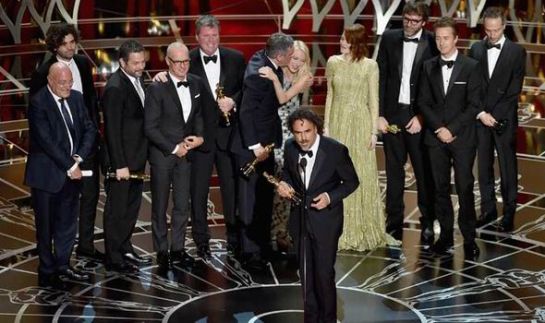
WINNER – “Birdman”
MY PREDICTION – “Birdman”
RUNDOWN – The winds shifted from “Boyhood” to “Birdman” several weeks ago and the writing was on the wall. I have to say I was disappointed. “Birdman” isn’t a bad movie but it isn’t nearly as profound as it wants to be. “Birdman” is a visual wonder and features strong performances, but it’s a hollow movie that wins with its flash and showiness. “Boyhood” is a much quieter, more subtle film that doesn’t stroke the creative egos the way “Birdman” does. I’ve said it elsewhere, Richard Linklater doesn’t make routine Oscar-type films and that’s a good thing. He makes smaller personal pictures that don’t cater to Oscar voters. It makes sense that he wouldn’t win for the wonderful “Boyhood”. Meanwhile “Birdman” will go down as one of the lesser films to win the big award in my worthless opinion.
BEST DIRECTOR
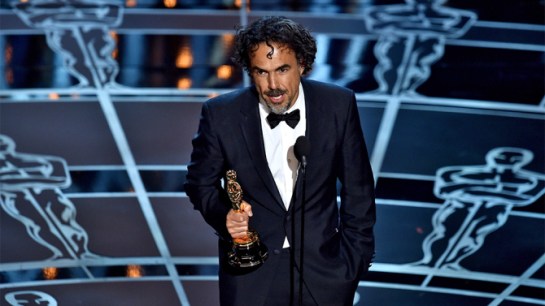
WINNER – Alejandro González Iñárritu
MY PREDICTION – Alejandro González Iñárritu
RUNDOWN – In recent years good directing seems to be equated to the visual side of the craft. It’s an overly simple way of viewing the art of direction, but it is the reason Iñárritu won for “Birdman”. From a sheer technical point of view “Birdman” is an accomplishment and its hard to argue with Iñárritu’s win. I just hope that some day the category will broaden its idea of what directing is.
BEST ACTOR

WINNER – Eddie Redmayne
MY PREDICTION – Michael Keaton
RUNDOWN – When making my prediction I noted that Eddie Redmayne and his performance in “The Theory of Everything” had gained a lot of momentum. But I didn’t think he had enough to overcome Michael Keaton’s early lead and veteran status. Well, I was completely wrong. Redmayne’s win surprised a lot of people, but I would never call it undeserved. He gives an excellent performance which seems tailor-made for the Academy.
BEST ACTRESS
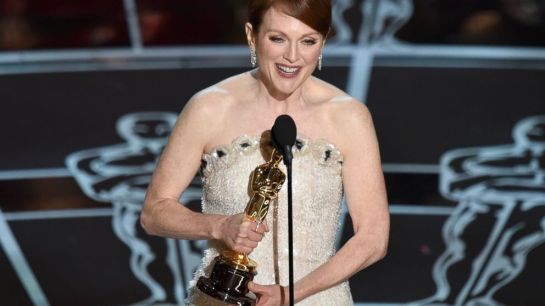
WINNER – Julianne Moore
MY PREDICTION – Julianne Moore
RUNDOWN – I still haven’t seen “Still Alice” so it’s hard to be objective. It’s also hard to imagine that Moore isn’t deserving. This was a no brainer and Moore had this one in the bag before the show began. I still wish Cotillard could have won, but that was never going to happen.
BEST SUPPORTING ACTOR

WINNER – J.K. Simmons
MY PREDICTION – J.K. Simmons
RUNDOWN – I can’t imagine anyone not having Simmons picked to win this on their Oscar ballot. He has won every single award leading up to the Oscars so his win last night was no surprise at all. And how can you not root for the guy? A premiere character actor who gave one of the best speeches of the night.
BEST SUPPORTING ACTRESS

WINNER – Patricia Arquette
MY PREDICTION – Patricia Arquette
RUNDOWN – Yet another win that shouldn’t have surprised anyone. Arquette is so good as the heart and soul of “Boyhood”. It’s such a shame the film was brushed off by the Academy voters but at least they got this right. Hats off to Arquette for a wonderful and authentic performance.
Now here are a few random thoughts:
- Neil Patrick Harris was wonderful in the show’s opening musical number.

- Neil Patrick Harris was pretty awful after the show’s opening musical number.
- Love seeing “Ida” win Best Foreign Language Film. It was expected but also well deserved. And Pawel Pawlikowski talking off the orchestra was fabulous.
- The performance of “Glory” was so good. But then along came Common. Him aside, it was still a moving production but clearly one to show the other nominees they had no chance.
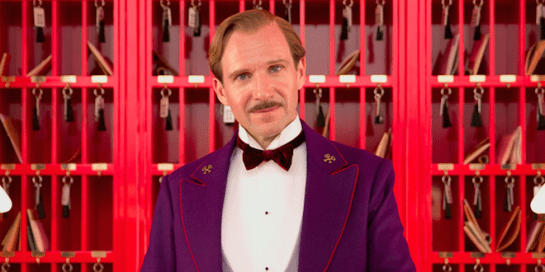
- It was a really good night for “The Grand Budapest Hotel”. A grand total of four well deserved and satisfying wins. That makes me happy.
- Neil Patrick Harris could have used a few lessons in taste. Making fun of a woman’s dress who just shared her son’s suicide story wasn’t needed.
- At first Sean Penn looked like he might be stoned. Then he made the tacky Green Card joke about Iñárritu and I was sure he was stoned.
- That was Lady Gaga singing! That was really Lady Gaga singing! I mean it! That was really, really Lady Gaga singing! Bravo!

- The long drawn out briefcase gag should have died a very early death.
- I understand the nominees who use their acceptance speeches to further a cause they are passionate about. But sometimes I love those humble, contrite, ‘thank you’ speeches more.
- One moment John Travolta is hilariously poking fun at his recent Oscar mishaps. The next moment he’s awkwardly fondling Idina Menzel’s face. Weird.
- Congrats to Alexandre Desplat for winning a Best Original Score for “The Grand Budapest Hotel”. To makes music that perfectly fits into Wes Anderson’s quirky world is no easy task.
- Meryl Streep didn’t win (thank goodness), but that didn’t stop them from finding ways to mention or show her every time you turn around. I wonder what she’ll be nominated for next year?
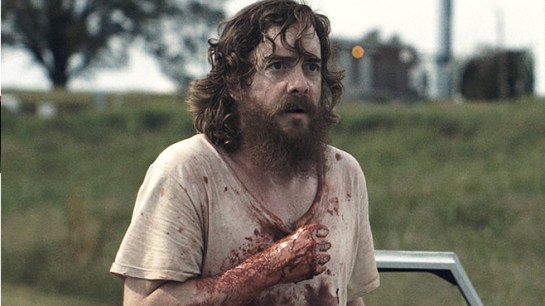
- While I was still holding out hope, sadly Dick Poop went home empty-handed last night. There is no justice in this world.
- “Birdman” winning Best Original Screenplay over “The Grand Budapest Hotel” is an absolute head-scratcher. It was by far “Birdman’s” weakest component and no where nearly as creative, layered, and insanely original as “Budapest”. But it’s the Oscars. Whatcha gonna do?

- “The Lego Movie” still had a great showing. The performance of “Everything is Awesome” was a hoot and they brought their own Lego Oscars. Snub the Academy!
- Loved seeing Patricia Arquette win and I was anxious for her speech, but reading word-for-word off of a piece of paper made it feel a tad emotionless despite its good message.
- “Interstellar” wins the Oscar for Best Visual Effects (as if there was another choice). Glad to know the Academy at least remembered it came out last year. Sigh…
- Can I go ahead and start the petition to have Robert Downey, Jr. as next year’s Oscar host. He may not do it, but can you imagine how he would bring the house down???

So there’s a brief breakdown and some random thoughts on the 87th Academy Awards. With a few exceptions it was a predictable night. Plenty of questionable winners but a few pleasant surprises. What did you think of Hollywood’s big show?