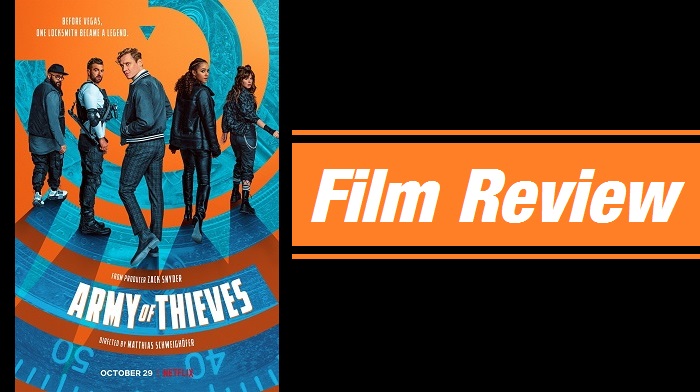
REVIEW: “Army of Thieves” (2021)

(CLICK HERE to read my full review in the Arkansas Democrat-Gazette)

Just weeks after releasing his much talked about “Justice League” cut, filmmaker and self-promoter extraordinaire Zack Snyder announced he was doing a movie for Netflix that would lay the foundation for a brand-new cinematic universe. The movie was “Army of the Dead”, a surprisingly fun action-horror romp that played a lot like a “Kelly’s Heroes”, “The Italian Job”, “Dawn of the Dead” mash-up. Snyder wasted no time announcing the next installment – a prequel centered around one first film’s more memorable characters. It would be called “Army of Thieves” and the burgeoning franchise faithfuls wouldn’t have long to wait.

“Army of Thieves” is set roughly six years before the events of “Army of the Dead” which places it near the start of the zombie outbreak. But don’t expect the undead to play a role here. Instead, this is a heist movie centered around the comically skittish safecracker Ludwig Dieter (Matthias Schweighöfer). The movie fills in his backstory, revealing what led him into criminal safecracking and how he ended up chosen for the Las Vegas job in the first film. I’m not sure anyone was clamoring for a Dieter origin story, but we got one nonetheless.

“Army of Thieves” introduces us to the jittery German before he became Ludwig Dieter. Here he’s introduced as a lowly bank teller, failed YouTuber, and safecracking enthusiast named Sebastian. After posting a video on his channel about renowned yet tortured safe designer Hans Wagner, Sebastian is surprised by a comment containing a mysterious invitation to what turns out to be a high-stakes underground safecracking competition (are those a thing?).
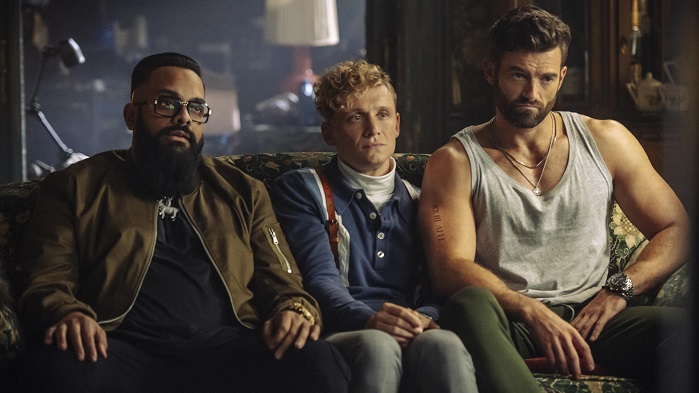
Image Courtesy of Netflix

Sebastian goes and predictably wins, but it turns out to be more than a competition. He’s unwittingly auditioning for a professional thief named Gwendoline (Nathalie Emmanuel) who’s planning a ambitious heist that requires a skilled safecracker. Tired of his boring everyday routine and ready to break free from the monotonous and the mundane, Sebastian agrees to join her and her crew of thieves.

The rest of Gwendoline’s band of criminals are Korina (Ruby O. Fee), a master hacker because you need to get past those pesky security systems; Rolph (Guz Khan), a skilled driver to ensure a clean and swift getaway; and the preening Brad Cage (Stuart Martin), who Gwendoline describes as “our very own real-life action hero.” All three bring personality and flavor to the story, but they’re more cogs than meaningful characters.

The job is a tricky one – break into the late Hans Wagner’s three master safes affectionately named Rheingold, Valkyrie and Siegfried. They’re located in “secure” banks in Paris, Prague and St. Moritz which provides the catalyst for some good old-fashioned movie globetrotting. But hot on their heels is Interpol Agent Delacroix (Jonathan Cohen), a wildly overcooked character whose dogged pursuit of Gwendoline and her crew is driven by motivations that are never all that convincing.
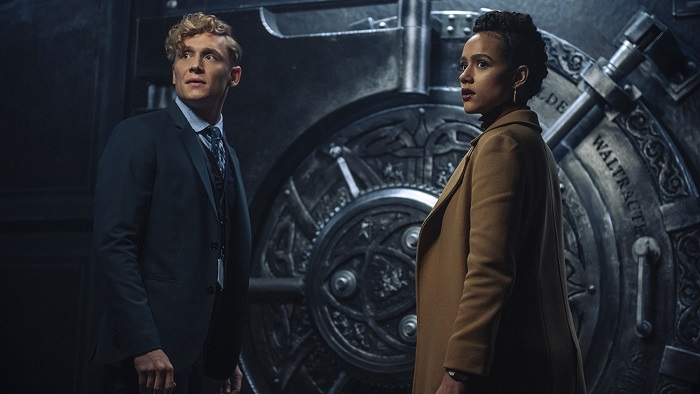
Image Courtesy of Netflix

In addition to being the film’s star, Schweighöfer also directs with a sleek Eurocentric style that makes for a nice contrast to Snyder. Not only does “Army of Thieves” have a different look, but Schweighöfer brings along a much lighter touch. Snyder’s movie had plenty of funny moments (most from Schweighöfer himself), but this film goes heavier with the humor and even throws in a romantic angle that’s sweet but too thinly sketched for us to buy into.

There aren’t many surprises in “Army of Thieves” meaning there’s not much suspense. You see it most in the individual heist sequences. For banks that go to all the trouble to have one of the most impenetrable and complex safes ever made, you would at least expect a mildly competent security apparatus. Yet the heists (though framed as daring) are laughably easy to pull off. A hack or two here, a glaringly obvious diversion there. Done. In fairness, each safe gets a little more challenging, but it’s still hard to find much tension.

Interestingly, outside of three unbilled cameos, there’s very little in “Army of Thieves” linking it to its franchise predecessor. We do get a few passing nods to the zombie uprising happening overseas and Sebastian occasionally has these random dreams of being attacked by the undead. But in a sense part of this movie’s charm is that it feels like its own thing. Sure, it’s pretty lightweight and utterly preposterous. But it has its moments and the performances from both Schweighöfer and Emmanuel elevate things enough to hold our attention. “Army of Thieves” premieres today (October 29th) on Netflix.

VERDICT – 3 STARS

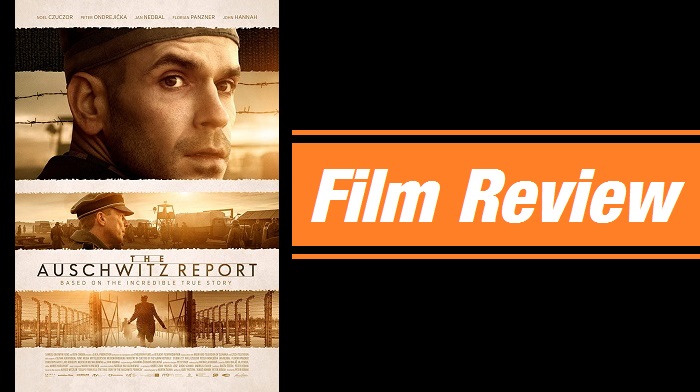
REVIEW: “The Auschwitz Report” (2021)

It goes without saying that Holocaust movies make for difficult viewings. It also goes without saying that the number of films dealing with the Holocaust are too many to count. Ever since the breadth of the Nazi atrocities against the Jews were revealed, filmmakers from all over the globe have tackled the Holocaust from numerous points of view and have mined countless inspirational and sobering true stories from both inside and outside of the concentration camps.

For a variety of different reasons, some are quick to dismiss Holocaust movies or simply avoid them altogether. Personally, I’m glad filmmakers are still reminding us of horrors we should never forget while also heralding the true stories of heroism and sacrifice from so many who suffered, endured or resisted such abominable evil. As long as there are stories to tell, I hope filmmakers will continue to tell them.

The new Slovak drama “The Auschwitz Report” shares those same beliefs even beginning with philosopher George Santayana’s timeless words “Those who cannot remember the past are condemned to repeat it.” The film comes from director Peter Bebjak and sets its focus on a daring escape of two prisoners Alfred Wetzler (Noel Czuczor) and Rudolph Vrba (Peter Ondrejička). During the war, news of the concentration camps was slow getting to the allies and the Nazi’s went to great links to hide their savagery. Wetzler and Vrba were determined to get news of the atrocities to the outside world – to share the truth hidden behind the veil of Nazi deception and propaganda.

The film’s three-act structure begins on April 7, 1944. The opening scene shows hundreds of Jews – cold, pale, their heads shaved and in dirty striped prison rags – being herded around two prisoners seated and tied to their chairs. “This is what happens to those who try to escape from my camp,” the Nazi officer yells. I’m sure you can guess the outcome. This is Auschwitz. A place of inexplicable barbarity; where the sound of a train whistle sends chills and death is as common as air.

Throughout the first act, Wetzler and Vrba spend most of the time hiding in a small hole underneath a stack of lumber. Bebjak instead focuses on the men from his barracks who stood their ground and refused to reveal the pair’s whereabouts despite tremendous physical and psychological torture at the hands of a depraved Nazi commander (played by Florian Panzner). Bebjak doesn’t sugarcoat the horror, highlighting some of the camp’s brutal rituals while throwing in a handful of effectively uncomfortable flashbacks which show the camp’s processing of new prisoners. It’s harrowing stuff.

The second act moves to the actual escape – more specifically Wetzler and Vrba’s struggles to survive in the cold and rugged woods as they make their way to the border. Along their arduous journey the duo finds help from sympathetic strangers – a young woman in the forest, a kindly couple in a small village, a soldier with connections to the Red Cross. The third act centers on their efforts to convince allied representatives of what was really happening in Auschwitz. In reality, the VRBA-Wetzler Report was one of the first in-person accounts to shed light on the death camps. And their report is directly credited with saving around 120,000 Hungarian Jews set to be sent to Auschwitz.

“The Auschwitz Report” does feel very much like a Holocaust movie (for obvious reasons), but it sets itself apart with some shrewd and thoughtful filmmaking choices. Its three-pronged story leaves a lot of details on the side, but it does a good job centralizing the story around particular acts of bravery. There is a strange collage of audio clips playing over the end credits that makes some questionable equivalents, but for the most part Bebjak message is one of courage and determination. It’s also a searing historical piece that stresses the enormous effort it took to get the world to see what was happening at the hands of the Nazis.

Bebjak also uses an array of clever and powerful visual flourishes to convey his points. There’s a striking mixture of handheld camera an wide-angle shots that are particularly potent during the scenes within Auschwitz. We also see Bebjak playing with perspective, using intense closeups, and shooting from unconventional and often disorienting angles. He and DP Martin Žiaran put a lot of effort into the film’s visual language and often rely on the camera as much as the cast to convey the intensity of emotions.

Co-written by Bebjak, Jozef Pastéka and Tomás Bombík, “The Auschwitz Report” pulls yet another remarkable story from the inhumanity that was the Holocaust. You can’t help but wonder about some of the details that are left behind as the narrative progresses. But at the same time, the film keeps you glued to its story – one that highlights the very best of human nature and the absolute worst. It makes for a sobering call to remembrance and a stern warning against repeating the sins of our often ugly past. “The Auschwitz Report” is available now in select theaters and on VOD.

VERDICT – 4 STARS

REVIEW: “A Classic Horror Story” (2021)

The vaguely titled “A Classic Horror Story” is an Italian horror film recently released on Netflix from the directing duo of Roberto De Feo and Paolo Strippoli. It highlights one of the streaming platform’s most welcomed strengths – its embrace of international cinema which includes a plethora of movies from nearly every genre and from all across the globe. Of course not every movie is five-star classic (not even closer really), but they give subscribers a chance to sample the many flavors of filmmaking from around the world.

When it comes to “A Classic Horror Story”, the title pretty much tips us off that this isn’t a movie striving for originality. It’s not reinventing the wheel or introducing anything new to the horror genre. In fact it proudly shows off its influences which include “The Texas Chainsaw Massacre”, “Cabin in the Woods”, and even a touch of “Midsommar”. That’s really nothing new especially for the horror genre where movies borrow from other movies all the time. Here the filmmakers put it out there in the title card so we know exactly what to expect. Or do we?

Image Courtesy of Netflix

Its story begins in a roadside diner where a young woman named Elisa (Matilda Anna Ingrid Lutz) is having second thoughts about going through with a scheduled abortion. She’s on her way to her parents house in Calabria and is waiting on her ride-share carpool to pick her up. An old RV finally pulls in driven and owned by the chatty Fabrizio (Francesco Russo), an aspiring filmmaker who is recording the trip for his travel blog. They’re joined by the obligatory jerk Mark (Will Merrick) and his girlfriend Sofia (Yuliia Sobol) who are on their way to a wedding. Also Riccardo (Peppino Mazzotta), a moody doctor with some hefty family drama back home.

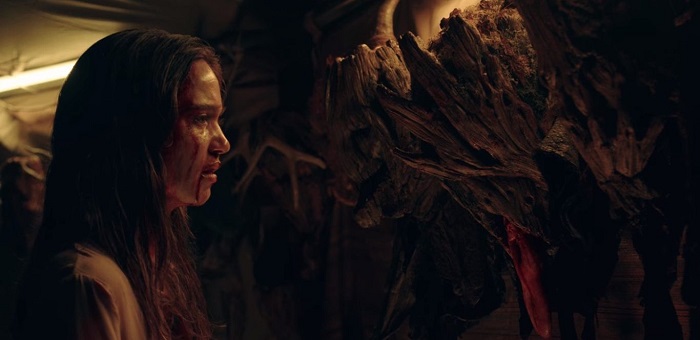
The five set off through the winding Italian hills. But everything goes south when the RV slams into the tree knocking them all unconscious. When they finally come to, Mark’s leg is busted up and (more shockingly) instead of being near the road the RV is sitting in the middle of a large open field deep in the woods. And that sets up the next hour-plus that purposely leans into more horror tropes than I can number. There’s a dense eerie forest, the RV won’t start and there’s no cell phone service, there are macabre cult markings, and what’s the deal with this bizarrely shaped cabin?

While none of those things will be new to fans of the genre, De Feo and Strippoli meld them together pretty well. There’s even a little meta commentary that lands better than it should. They also add some impressive visual touches seen mostly in the lighting, some crafty uses of perspective, and some creative camera movements. We end up with a good-looking movie made with a hint of Hooper, a touch of Barker, even a dash of Shyamalan. But it borrows from/pays homage to A LOT of other films – so many that it’s hard to root out this movie’s own identity. The familiarity doesn’t kill our fun, but it does lessen the impact. “A Classic Horror Story” is streaming now on Netflix.

VERDICT – 3 STARS
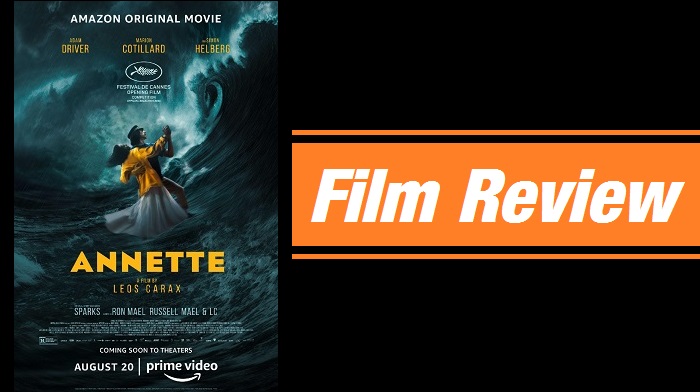
REVIEW: “Annette” (2021)

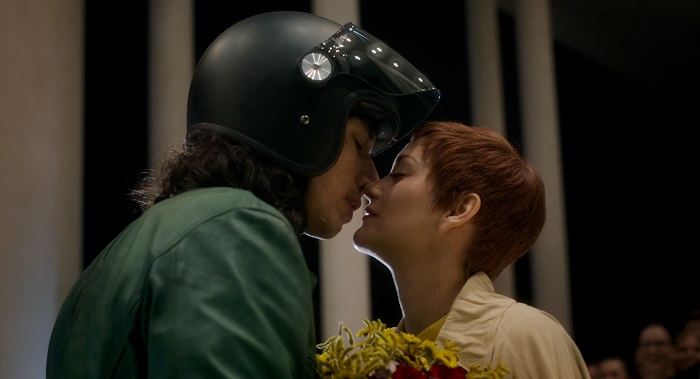
The eccentric and experimental style of Leos Carax was an interesting choice to open this year’s Cannes Film Festival. But it also made sense. His out-of-competition film “Annette” had already screened for some critics which generated a healthy amount of buzz. In addition to a small but vocal following, the movie also brought two with it big international stars, Adam Driver and Marion Cotillard. Toss in the film’s uniquely offbeat European flavor and Cannes suddenly sounds like the perfect place to open.

Carax’s last film was the audacious but maddening “Holy Motors”, a movie that still defies definition (though many have tried and made compelling cases for it). “Annette” is somewhat similar. You could call it a dark avant-garde musical fantasy. You could also call it a 140-minute study of self-loathing and self-destruction. You might even be able to stretch it into a searing deconstruction of celebrity relationships. Whatever you want to call it, Carax teams with the equally unconventional Sparks brothers to create something as polarizing as it is creative; something equally enchanting and perplexing.

Co-written by Carax and the Sparks siblings (aka Russell and Ron Mael), “Annette” has a strange Hollywood allure while still very much feeling like an art house oddity. This interesting but not always co-equal synergy is encapsulated best in the movie’s opening – a catchy musical number featuring Carax, the Maels and the film’s cast. The song “So May We Start?” begins in a recording studio before spilling out into the LA night. Through one long continuous take, the group saunters along for a couple of city blocks, singing the bars with a casual and carefree spirit. That’s about as playful and lighthearted as “Annette” gets.

Image Courtesy of Amazon Studios

From there the movie slides into the peculiar rhythms of its narrative. This strangely structured collage of sequences and lyrics tells the story (with varying degrees of success) of Henry and Ann. Played with an elegant touch by Cotillard, Ann is an opera singer with a beautiful soprano voice that fills seats and captivates audiences. While Carax’s representation of opera isn’t the most flattering, he portrays Ann as genuinely talented; a rising star who is beloved by the public and the obsessed press.

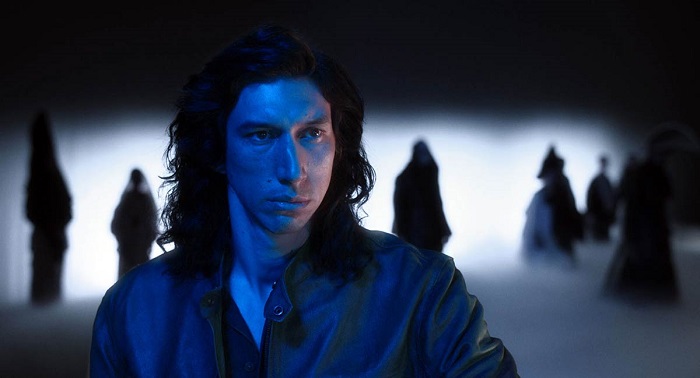
Contrast that with Driver’s miserable and insecure Henry. He’s a comedian (although not a very good one) with his own stage show that taps him as “The Ape of God”. His act sees him moping around in a green bath robe and house slippers engaging the audience with his nihilistic musings and gloomy self-analysis. When we first meet Henry his show is a moderate success. But while Ann’s career is blooming, his is slowly withering. Her shows are steadily selling out while his are being cancelled.

Ann and Henry’s relationship exists from the outset and we’re given practically nothing about what brought the two together. In Henry’s routine bouts with self-doubt, he’s constantly asking himself (in song) “what does she see in me?” It’s a good question, not because there is something glaringly undesirable about Henry. But because we know little to nothing about their history together. Even more, we never really get to hear or feel much from Ann’s perspective. One of the biggest frustrations with the film is that Ann is often a blank slate. We know she loves Henry but we don’t know why. We know something drew her to him but we don’t know what. In many ways she just exists as a piece of Henry’s story. Cotillard is terrific, but her character begs for more depth.

Image Courtesy of Amazon Studios

The two eventually marry and have a daughter, a creepy wooden marionette they name Annette. But as Henry’s career crumbles, he finds himself succumbing to jealousy, arrogance and self-pity. Soon the character is careening down some dark and unpredictable paths which Carax emphasizes both narratively and visually. And it all unfolds through a little speech but mostly singing. Not through what you would consider full songs (with a few exceptions). More so lines of dialogue sung instead of spoken. And too often the tunes are nothing more that one line repeated over and over again. I mean you can only hear “We love each other so much” so much.

Where Cotillard’s approach is delicate and graceful, Driver fearlessly attacks the material, swallowing up every scene with his physicality and intensity. His lone struggle is his singing. It only took one scene in “Marriage Story” to show the world he could sing. But here he struggles at times to get in tune with the Mael brothers’ weird musical arrangements which leads to moments that distract more than they immerse. But those aren’t Driver’s fault and as a whole his performance is astounding. The always welcomed Simon Helberg pops up playing a self-deprecating accompanist, but it’s deep into the movie before he’s given anything to do.

The last act of the film vacillates between something magical and utter absurdity as Annette’s role broadens. It does end with a powerful final exchange that I won’t dare spoil, but that ends things on a strong foot. It’s the kind of finish the movie desperately needed and a kind of scene the movie could use more of. As it stands “Annette” is a mixed bag with too much artistry to dismiss and too many flaws to overlook. Adam Driver is a force and while it’s hard to say he “saves” the movie, he certainly keeps it afloat. The film’s musical component is far less impressive. Other than the opening ditty you’ll be hard-pressed to find another song that will stick with you, much less one you’ll want to listen to over and over again. Perhaps the filmmakers aren’t interested in selling soundtracks, but when the music is so central to the film’s language, you tend to expect something a little more memorable. “Annette” opens in select theaters August 6th before streaming on Amazon Prime August 20th.

VERDICT – 2.5 STARS

REVIEW: “Awake” (2021)

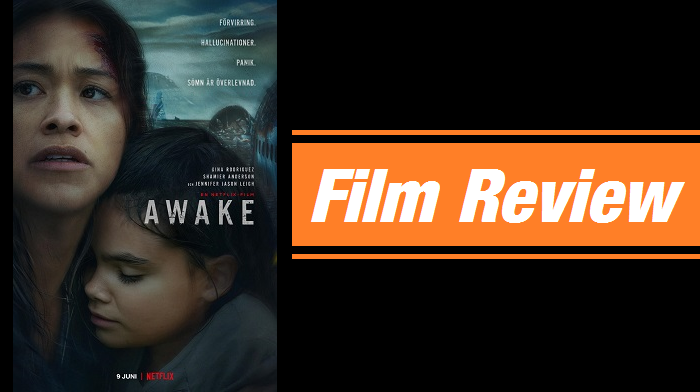
Gina Rodriguez gets a hefty lead role in the newly streaming Netflix film “Awake”, a sci-fi action-thriller built around a weirdly intriguing premise. The movie is directed by Mark Raso from a screenplay he wrote with his brother Joseph. Raso’s previous film was 2017’s road-trip drama “Kodachrome”, also for Netflix. “Awake” is a much different animal – a movie that seems to have some big ideas and plenty of genre ambition. But it’s so scattered and lacking much-needed detail that it’s impossible to fully buy into the world the movie creates.

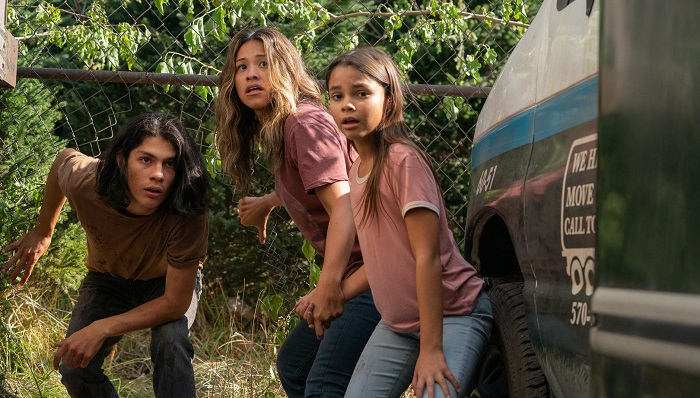
Rodriguez gives it her all playing Jill, a former soldier and a single mother with a troubled past. Like so much of “Awake”, most of Jill’s history is skimmed over and barely touched on leaving us with a fairly incomplete image of who she is. We know her husband is dead. We know that her mother-in-law (Frances Fisher) has custody of her two kids, the younger dinosaur-loving Matilda (Ariana Greenblatt) and her disgruntled estranged oldest Noah (Lucius Hoyos). And when we first meet Jill we see her smuggling pills out of a university lab where she works as a security guard and then selling them to street dealers.

Image Courtesy of Netflix

The movie loads Jill up with all of that baggage in the first ten minutes and then forgets it the rest of way. Instead she becomes a mother protecting her children after a mysterious event plunges the world into chaos. Essentially something similar to a massive EMP knocks out power across the globe – electricity, automobiles, computers, basically anything with electronics is shut down. It also takes away people’s ability to sleep, something the movie never comes close to explaining in a sufficient way. But obviously it’s bad news. “Without sleep your mind will bend and bend until it breaks”.

Jennifer Jason Leigh pops up as Dr. Murphy, a psychiatrist and a sleep deprivation expert who got Jill the job at the university and now wants her to come help at a remote facility nicknamed “the Hub”. There Murphy and a team of doctors are studying the only known person who can still sleep. What they don’t know is that young Matilda can also sleep. Refusing to let her daughter become a lab rat, Jill flees with her children into the crumbling society encountering a number of increasingly desperate (and in most cases hostile) people groups along the way. Mad scientists, a nudist cult, grubby backwoods rednecks, a so-warped-it’s-silly version of evangelical churchgoers – just some of the threats Raso throws at this family of three.

Image Courtesy of Netflix

If you try hard enough you can find the occasional thematic morsel to chew on. What happens when morality gives way to despair? How far is too far in the world of medicine and science? Stuff like that. But by the end I wasn’t convinced the movie had much interest in wrestling with anything weighty. Instead it all unwinds in a violent finale that has to be a lot more unsettling on paper than on screen. And the long-awaited “explanation” turns out to be no real explanation at all. Bummer.

“Awake” constantly teases us with its interesting ideas and you stick with it even through the rough patches in hopes of a satisfying payoff. Unfortunately the payoff never comes. It’s as if the Raso brothers came up with a cool and compelling story concept but were unsure how to tell it. So we get an intriguing mess that hopes viewers are interested enough to stay with it but not interested enough to want answers to the most basic questions. Oh, and the head-scratching gaps in logic, some cringy attempts at little girl humor, and the frustrating plot-holes don’t really help. “Awake” premieres today (June 9th) on Netflix (www.netflix/awake).

VERDICT – 2 STARS

REVIEW: “Athlete A” (2020)

AHposter

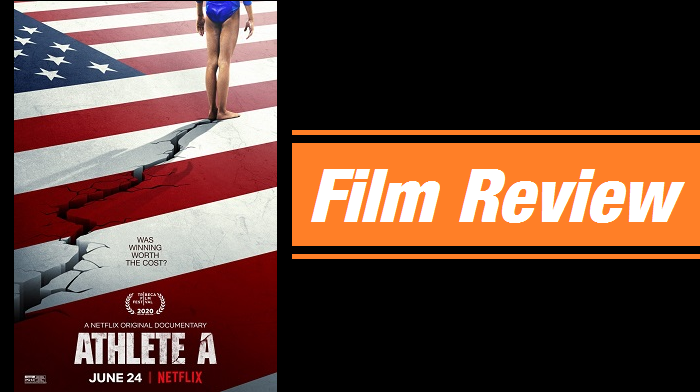
Last year as my first few batches of awards season screeners started arriving they included several movies that had slipped by me during the year. One was “Athlete A”, a Netflix documentary chronicling the the sex abuse scandal that rocked the United States Gymnastics national team. It turned out to be one of the better documentaries from a year full of really good ones.

“Athlete A” comes from the co-directing duo of Bonni Cohen and John Shenk. They not only detail the timeline of the abuse specifically from the once esteemed Dr. Larry Nassar, but they show the dedicated work of the Indianapolis Star’s investigative team in uncovering this appalling scandal. And in a day when the media is under such intense scrutiny, much of it justified, it’s a testament to the value of true investigative journalism in unearthing corruption and in this case sickening abuse.

The film allows plenty of time for the voices of Nassar’s victims, now adult women, who bravely bring the story’s sobering reality into focus. Nassar was the highly respected team doctor for the national team who shrouded his sexual abuse of young gymnasts under the guise of medical procedures. After allegations were made against him by Maggie Nichols the US Gymnastic officials remained silent attempting to minimize the damage. For 15 full months after the allegation, Nassar was allowed to continue treating and abusing young girls before action was finally taken against him.

ATHLETE1

Image Courtesy of Netflix

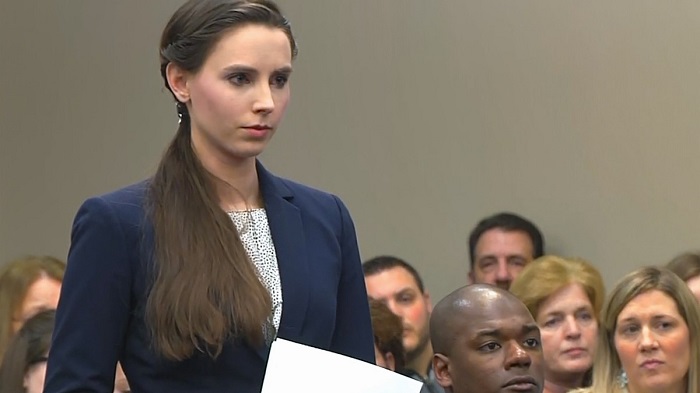
In addition to speaking with the victims and their families, Cohen and Shenk speak to the journalists who investigated and eventually rooted out the story. Not only did they uncover Nassar’s abuse but also the negligence of the USA Gymnastics officials in protecting their girls and taking their abuse claims to the authorities. We also hear from attorneys who prosecuted Nassar’s case and we get to see those powerful courtroom images of the victims bravely coming forward to face their abuser. I remember those clips from news broadcasts and they still pack the same emotional punch today.

“Athlete A” is a pretty standard documentary in terms of style and structure, but it makes up for it where it really counts. Cohen and Shenk get us close to the victims and their pain, follows the determined journalists, and pulls no punches when it comes to the perpetrators. Along the way they take much needed jabs at the ‘win at all costs’ mentality that permeates so many youth sports especially in America. “We love winners in this country.” They reveal how the lines between tough coaching and abuse are blurred and how easy we’ll turn a blind eye when our team is winning. Those are the harmful mindsets that can allow things like this to take place. “Athlete A” is streaming now on Netflix.

VERDICT – 4 STARS

4-stars