REVIEW: “Artemis Fowl” (2020)

FOWLposter

Full disclosure, I had never heard of “Artemis Fowl” prior to its feature film announcement. I knew nothing of Irish author Eoin Colfer’s popular series of children’s novels that featured a total of eight books released from 2001 to 2012. So I can honestly say I came into Disney’s $125 million adaptation with fresh eyes and bearing no allegiance to the source material. I actually prefer seeing movies that way.

The first plans to turn “Artemis Fowl” into a movie began brewing back in 2001. For ten years it languished in development hell until resurfacing in 2011 with Saoirse Ronan attached. Disney grabbed the rights in 2013, hired Kenneth Branagh to direct in 2015, booted Harvey Weinstein in 2017, and set the film for a 2019 release. It was delayed until May 2020 but the COVID-19 pandemic led to the cancellation of its theatrical release. Instead it was released last Friday on Disney’s streaming platform. After seeing it, that’s probably where it belongs.

“Artemis Fowl” is essentially a fruitless franchise launch for a series I doubt we will ever see again. Disney clearly have aspirations, the blatant sequel setup ending proves that. But I can’t imagine this film rousing a passionate enough fanbase for there to actually be more installments. From the very start it stumbles out of the gate, never gaining its footing and ultimately failing to capture the wonder of its magical fantasy setting.
FOWL1

Photo Courtesy of Disney

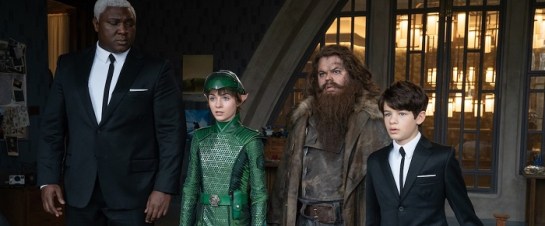
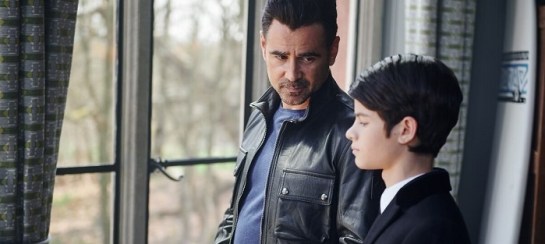
Nestled on the scenic coast of Ireland is the remote Fowl Manor, home to wealthy antiquities collector Artemis Fowl, Sr. (Colin Farrell). Now from what I read this widowed father is supposed to be a “criminal mastermind” but the film does a terrible job of convincing us. I’m still not sure what he did to earn himself such a lofty underworld title. Nonetheless, he lives in the mansion with his only son Artemis II (Ferdia Shaw), a 12-year-old child prodigy whose lone desire is to be with his often absent father.

While on one of his business trips Artemis Sr. goes missing at sea amid news media reports that he was involved in the theft of numerous priceless artifacts. Artemis Jr. receives a call from a shadowy cloaked figure who has kidnapped the senior Fowl and threatens dastardly harm if the young boy doesn’t retrieve something called the Aculos which his father had stolen. Leaning on his dad’s fantastical teachings on the magical world of fairies, trolls, sprites and goblins, Artemis Jr. sets out to find the Aculos and rescue his pop.

Another story thread is set in the subterranean world of Haven City. It’s a high-tech civilization ran by fairies, most notably a cranky, gravelly-voiced Judi Dench who is more convincing as a three pack-a-day smoker than a hard-as-nails fairy police commander. Turns out the Aculos was stolen from them and they want it back. Unseasoned officer Holly Short (Lara McDonnell) is sent on a mission to retrieve it, her mission crosses over with Artemis Jr.’s, and so on. Other not-so-entertaining characters include Josh Gad as an oversized dwarf and Nonso Anozie as the Fowl family’s butler (but don’t you dare call him “butler”). The rest of the cast have such little resonance you’ll barely notice them.
FOWL2

Photo Courtesy of Disney

While Branagh’s direction won’t win any awards, it’s the screenplay (from Conor McPherson and Hamish McColl) that really drags this thing down. Aside from the blandest storytelling and the most cookie-cutter characters, the dialogue is mind-numbing. Not in the sense of terrible lines (although we get plenty of those), but in the relentless voice-overs, narration, and exposition. Practically everyone in this movie speaks in stilted overly-explanatory language and nearly every line is treated as a critical information dump. At times it feels more like a college lecture than a movie script as things are spelled out to the most minute detail.

Case in point, we get exchanges like this:

What is that?”

A creature that consumes humans in 2.97 seconds and fairies in less than 1.”

Mercifully that is one of the shortest examples I could find but it makes the point. “Artemis Fowl” doesn’t give its audience any credit for being able to figure things out nor does it leave anything to the imagination.

Aside from that we get an incredibly cold and dry lead performance from Shaw. I don’t want to drum on a young actor, but the lack of charisma and charm he brings to his character makes him hard to digest as a serious protagonist. Add to that an astonishingly shallow villain so thinly-sketched that we basically forget about her for most of the movie. Her origins, her motivations, her end goal – who knows and frankly who cares.

Now it’s 100% possible young children may love “Artemis Fowl”. In fact I’m almost certain some will. So if you have kiddos this is a pretty harmless time-passer especially as part of your Disney+ subscription. But I can’t review the film through their eyes, only mine. And it’s hard to give this movie a pass when so many others have appealed to children while being enjoyable and competently made.

VERDICT – 1.5 STARS

1-5-stars

REVIEW: “All Day and a Night” (2020)

AllDay

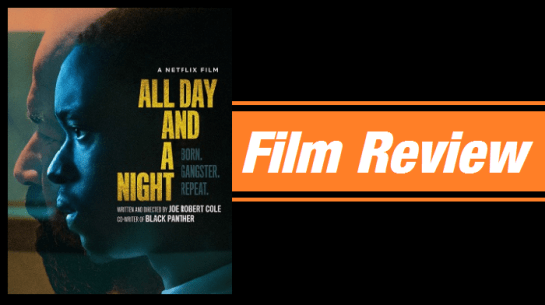
While watching the new Netflix Original “All Day and a Night” I kept thinking about John Singleton’s “Boyz n the Hood”. That film immersed its audience in the poverty, drug trade, and gang violence of South Central Los Angeles. But those things were never its focus. Instead “Boyz” worked so well because it was all about the people trapped within that hard, violent world. Singleton never lost sight of them for a second.

“All Day and a Night” seems to take inspiration from that 1991 Singleton picture. But I wouldn’t call it a “Boyz” for a new generation. “All Day” (written and directed by Joe Robert Cole) has good intentions and its message is a noble one. Yet despite its propulsive story, I couldn’t get the ring of familiarity out of my ear. From its depiction of urban gangland to the entire narrative path. Even the characters mirror others we’ve seen before. Remember the three friends at the center of “Boyz”: the good kid, the bad egg, and the lead character in between? They’re all here.

AllDay1

Photo Courtesy of Netflix

The movie opens with a double-murder and the rest of the film spends its time bouncing back-and-forth between the lead-up to the homicide and the consequences. Jahkor (Ashton Sanders) guns down a husband and wife in front of their young daughter. In court he sits coldly, defiant and showing no remorse as his guilty conviction is read. Once in prison he begins to reflect on what got him there and what the future may hold.

The flashbacks go as far as 13 years earlier in Oakland, California where young Jahkor (Jalyn Hall) gets picked on in school and then beaten at home by his drug addict father (Jeffery Wright) for not taking up for himself. So instantly we see the seeds of violence and revenge being planted at a young age.

Jump ahead to a few weeks before the murder. Jahkor (Sanders), an aspiring rapper, finds himself at a crossroads. With his music career going nowhere he feels the pull to follow his childhood friend TQ (Isaiah John) working for a local gang leader Big Stunna (Yahya Abdul-Mateen II). On the other hand he and his girlfriend Shantaye (Shakira Ja’nai Paye) are expecting a baby which inspires him to go straight and get a job. But the film goes to great lengths to show that the deck is stacked against Jahkor, and the opening scene leaves little suspense to how things turn out.

All Day And A Night

Photo Courtesy of Netflix

The father-son dynamic and the cyclical nature of street violence is what drives the movie. This is best realized in the prison scenes where Jahkor and his father are both incarcerated. It’s where Wright (thankfully) dials back his performance from an almost cartoonish gangsta caricature to a man reckoning with the life choices he has made. Compare Wright’s portrayal to Isaiah John’s gangbanging TQ who is far more reserved and even more convincing.

Aside from its familiarity the movie is also hampered by a handful of ham-fisted scenes including a heavy-handed exchange in the shoe store where Jahkor works and a weird police interrogation that weirdly and inadvertently makes a case for racial profiling. The opening scene is powerful and starts things off with a jolt, and there are several other good bits scattered throughout the picture. But the connecting narrative tissue just isn’t that strong and it leaves the movie feeling like a lesser version of others that came before it.

VERDICT – 2.5 STARS

2-5-stars

REVIEW: “A Good Woman is Hard to Find” (2020)

INHERITposter

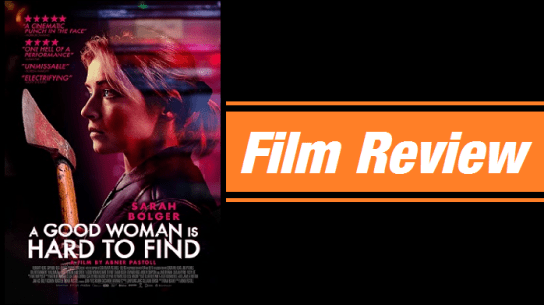
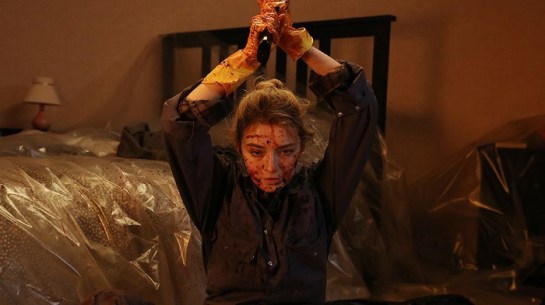
The taut Irish crime-thriller “A Good Woman is Hard to Find” opens with a closeup of a young woman, her face covered in dried blood and her eyes full of concern. She steps into the shower revealing blood on her arms and back. It’s clearly not her own. This is how director Abner Pastoll introduces us to Sarah (played by Sarah Bolger), by giving us a glimpse into her traumatic future.

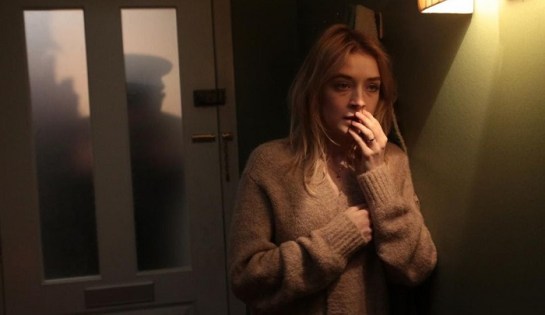
Hop back a few days. Sarah is a recently widowed mother of two still devastated by her husband’s recent murder. Her 9-year-old son hasn’t spoken a word since witnessing his father being stabbed to death. The local police aren’t any help, telling her “Just let sleeping dogs lie.” Her cold, surly mother (Jane Brennan) isn’t much better, thinking Her daughter should just get over it. “You’re too soft Sarah” she barks. “You always were.” So much for a family support system.

Woman1

Things get even worse when a scar-faced hood named Tito (Andrew Simpson) bursts into Sarah’s apartment after stealing drugs from some neighborhood pushers. He stashes the dope in Sarah’s bathroom and threatens to hurt her kids if she doesn’t play along. Tito comes back periodically to pick up more drugs from his stash and to give Sarah a 40% cut she didn’t ask for. She wants no part of Tito’s dealing, but the money helps her put food on the table.

Here’s the thing, you don’t steal drugs from drug dealers, especially violently psychotic ones like Leo Miller (a borderline cartoonish Edward Hogg). He runs a local nightclub which is nothing more than a cover for his drug operation. The goons Tito stole the dope from worked for Leo. Gulp. Guilty by association (despite it being outside of her control), Sarah finds herself caught in the middle. But she’s determined not to let her kids lose another parent, regardless of what it takes.

WOMAN2

Just recently I was chatting with a friend of the site about Sarah Bolger and my unfamiliarity with her work. Here she gives an eye-opening performance, quiet when it needs to be and fierce once the movie catapults her character into some dark demanding places. She’s the backbone of the movie, appearing in nearly every scene, and giving us a firm, relatable rooting interest. She’s so good here.

The not so great title aside, Pastoll, Bolger and screenwriter Ronan Blaney tell a gritty crime story that takes some unexpectedly grisly turns (it’s not for the squeamish). Yet despite the second half’s thick coat of blood and violence, “A Good Woman” is just as much a story about motherhood, deglamorized and grounded in real experience. In many ways the scenes showing Sarah’s economic and social struggles are the most potent. They do clash a bit with the final act’s gory revenge-fantasy vibe, but we never lose sight of the mother-children dynamic. And Bolger keeps us glued to the screen throughout.

VERDICT – 3.5 STARS

3-5-stars

REVIEW: “Arkansas” (2020)

Originally set to debut at the South By Southwest film festival, Clark Duke’s feature film directorial debut “Arkansas” was forced to change course and now it drops on VOD this week. Duke (a Glenwood, Arkansas native) is probably best known for his roles in a string of irritating raunchy comedies. But “Arkansas” is a labor of love for the 34-year-old who not only directs and co-stars, but spent several years co-writing the script and even longer pitching his film and getting it financed.


“Arkansas” is based on John Brandon’s 2009 novel about two bottom-rung drug runners working for a mysterious country kingpin they’ve never met named Frog (played in the film by Vince Vaughn). Duke’s version plays like a Tarantino, Coen brothers, and Jeff Nichols collaboration. It isn’t as clean or as together as their films, but its messiness is part of its charm. And Duke’s home-grown perspective adds a layer of Deep South authenticity that is crucial to the movie’s success.

What a lot of people don’t know about organized crime in the South is that it’s not that organized.” This early line of narration comes from Liam Hemsworth’s Kyle to describe what some have called the “Dixie Mafia”. In this rural underworld drug pushers use glorified gofers to move their powdery product between states. Kyle works near the bottom of Frog’s organization, but finally gets a promotion and is sent to Little Rock where he meets with fellow newbie Swin. The two are given their first job – driving a flatbed of Frog’s dope to Corpus Christi, Texas.

Arkansas1

Photo Courtesy of Lionsgate

The pair make quite the odd couple. Kyle is a rugged, no-nonsense straight-shooter while Swin is an eccentric charmer wrapped in a Hawaiian shirt and a man bun. Before the two can make it out of Arkansas they’re intercepted by a park ranger named Bright (John Malkovich) who actually works for Frog. He informs the boys they are now a part of his crew and gives them covers as park peons – mowing, emptying trash, directing campers. But Bright warns them: follow his instructions, don’t try to run away, and most importantly keep low profiles.

Remember that early line about organized crime in the South, specifically the “it’s not that organized” part? Things get a little complicated after a local girl named Johnna (Eden Brolin) catches Swin’s eye. But things work into a full-on lather after the boys botch a seemingly simple drug/money exchange in Louisiana. Violence, some iffy choices, and one agitated drug lord sets up the movie’s central conflict and propels the story into some pretty unexpected directions.

Duke breaks his movie down into chapters although only one actually feels unique within the story structure. It’s a leap back in time to show Frog’s rise from a West Memphis pawn shop owner pushing bootleg cassette tapes to the boss of his own drug trafficking outfit. Along the way we see Frog learning the ropes from his mentor in the dope trade (Michael K. Williams) and eventually taking off to form his own crew. Of course the entire flashback chapter sets the table for Frog’s inevitable impact on the main storyline.

Arkansas2

Photo Courtesy of Lionsgate

“Arkansas” is a film full of intriguing characters and great faces. Hemsworth is great giving what’s arguably the best performance of his career. Duke is the perfect foil, bringing levity and a surprising amount of heart. Brolin offers a sweet naïveté. Malkovich is a wily veteran actor who chews scenes in the best of ways. Vaughn is fun, imposing, and looks right at home in western shirts and bolo ties. And I haven’t even mentioned Vivica A. Fox playing the ambiguously named ‘Her’. All of the characters benefit from the hint of playfulness Duke and his co-writer Andrew Boonkrong bring to the script. But as the age-old phrase “violence begets violence” informs us, there is an unavoidable dark edge to this kind of story.

That balance between a Southern black comedy and a gritty crime thriller is one of the most impressive things about Clark Duke’s entertaining debut. Combine that with vibrant characters, great performances (especially from Hemsworth), and the rich flavor of its setting. Oddly, it’s both helped and hurt by its lack of polish and some of the dialogue is a little hard to chew. But it’s still a fantastic first feature effort that both respects and has fun with rural America.

VERDICT – 4 STARS

4-stars

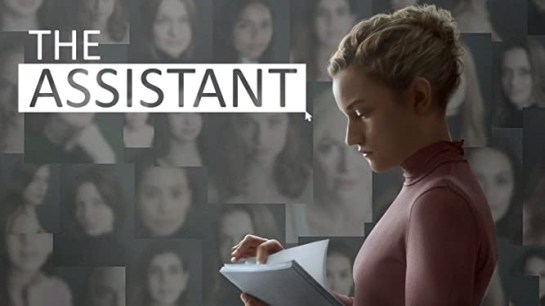
REVIEW: “The Assistant” (2020)

AssistantPOSTER

I had heard nothing but good things about Kitty Green’s feature film debut “The Assistant”. Unfortunately the COVID-19 outbreak cut short its theater run well before it made its way to many of the smaller markets. So I’ve been anxiously waiting for my chance to finally check out this #Me Too era drama that attempts to tackle head-on the long unchecked problem of workplace harassment.

Kitty Green had a couple of documentaries under her belt but was inspired to venture into feature films following the 1997 Harvey Weinstein revelations. After much study on workplace harassment she began writing the script for “The Assistant”. Unlike last year’s “Bombshell”, a movie smitten with its bomb-throwing at the expense of its characters, “The Assistant” feels far more rooted in truth and calibrated to a real-world setting that leaves you both unsettled and infuriated.

ASSISTAnt1

Photo Courtesy of Bleeker Street

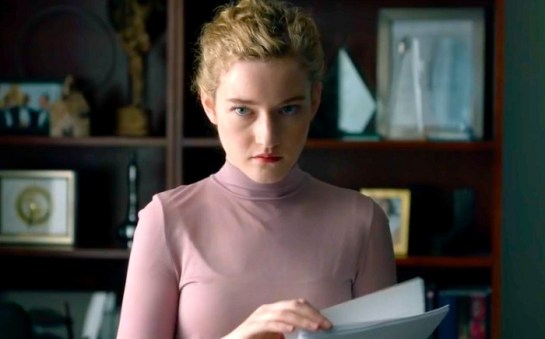
The film follows a young woman named Jane played by the remarkably restrained Julia Garner. She’s only five weeks into her new job at a movie production company working as an assistant for a big-time Weinstein-ish film mogul. We learn all we need to know about him through her observations, from secondhand grumblings in the office, and his verbally abusive and patently unfair scoldings over the phone. In one of Green’s many interesting touches, Jane’s boss is never seen or named. The allusion is obvious but by not showing him Green allows us to put a face on the man. Also, it keeps the story’s focus where it belongs – on Jane.

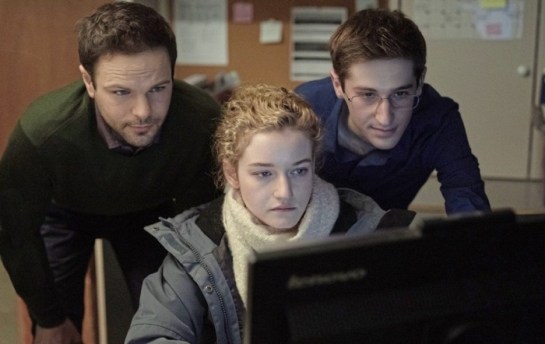
But nothing is more informative for the audience than the workplace environment Green shrewdly creates. The story takes place over the course of one work day starting with Jane’s early morning commute from her home in Astoria to the offices in Manhattan. She is the one responsible for getting to work early, turning on the lights, booting the computers, and starting the coffee pot. Interestingly she’s one of three assistants but hardly on equal ground with the other two, both smarmy males. She’s the one expected to wash dishes in the break room, empty the trash, and pick up lunch – chores often unfairly relegated to women.

Assistant3

Photo Courtesy of Bleeker Street

Green takes us through the day nearly free of dialogue. What we get comes mostly in the form of office chatter surrounded by the ambient sounds of clacking keyboards, copy machines, and telephones. But it’s far from weightless. So much can be gleaned from Green’s sharp focus and purposely icy point of view. The indignities, disrespect, and condescension start subtle but add up and take full form as the movie goes on.

The one dialogue-rich exception comes when Jane goes to see the company’s Human Resource officer played by Matthew Macfadyen. What follows is a scene dripping with discomfort and anxiety as his disarming sincerity quickly gives way to a slyly manipulative and coldly calculated shift of blame. It’s one of the best written scenes of the year and both Garner and Macfadyen come at it with just the right balance. Neither overplay or underserve the material, conveying the scene’s meaning with masterful restraint.

Assistant2

Photo Courtesy of Bleeker Street

More on Julia Garner – she’s a revelation here and the movie doesn’t work without her precise and measured performance. Critically acclaimed for her role in the Netflix series “Ozark”, Garner is tasked here with being our eyes and ears while also defining her character, not through the usual dramatic storytelling, but through what she experiences onscreen. It’s a tricky part but from the very beginning Garner puts us in Jane’s shoes and maintains a sense of empathy throughout.

“The Assistant” may be low-key but its message is loud, clear and profoundly relevant. Kitty Green has created a timely, hard-hitting drama free of Hollywood gloss and anchored in the real-world experiences too many women are forced to endure. Don’t misconstrue the film’s observational perspective with slowness. Green takes a very calculated approach to her subject and the results are candid, insightful, and eye-opening.

VERDICT – 4.5 STARS

4-5-stars

REVIEW: “Atlantics” (2019)

AtlPOST.png

In 2019 French-African director Mati Diop had the distinguished (and overdue) honor of being the first black woman to compete for the main prize at the Cannes Film Festival. Impressively, her first feature film “Atlantics” finished in second place behind Bong Joon Ho’s exceptional “Parasite”. That’s quite the debut.

“Atlantics” is a genre defying drama that opens like a documentary and ends as a poignant supernatural romance. In between we get a police procedural, a creepy ghost story, an examination of class injustice, and a rarely-seen look at Europe’s refugee crisis. Diop sets her film in the Senegalese coastal capital of Dakar where an ultra-modern skyscraper is being built. This is where we first meet a poor construction worker named Souleiman (Ibrahima Traore).

Atlanticsposter

Photo Courtesy of Netflix

The film opens at a pretty high temperature as we see Souleiman and other frustrated laborers confronting their foreman. It turns out they’ve been stiffed out of three months worth of wages by the wealthy businessman in charge who refuses to answer the foreman’s calls. Discouraged and fed up, Souleiman and his friends head back to their village on the outskirts of the city.

Diop makes a surprising shift by introducing Ada (Mame Bineta Sane) and making her the lead character. She and Souleiman are in love but cultural/religious tradition has her set to marry the wealthy Omar (Babacar Sylla). The day before her arranged wedding Souleiman and several fellow construction workers vanish after secretly hopping a boat for Spain. Strange events begin to occur following their disappearance including a series of fires which police detective Issa (Amadou Mbow) is called to investigate.

It’s here that Diop makes yet another unexpected shift which I won’t spoil. It’s an interesting twist (if you want to call it that) even if it doesn’t come across as fully thought out. It brings a supernatural element that’s never really explained in a satisfying way. I’m not saying I need rules and thorough guidelines to how things like this work in a movie. But here it’s required that we simply go with it and I couldn’t help but have some questions.

Atlantics2

Photo Courtesy of Netflix

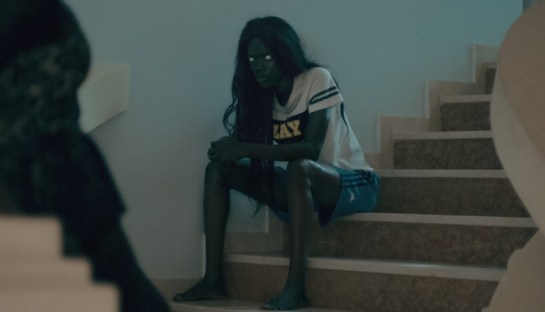
While the final act of “Atlantics” may lack some narrative detail, the film as a whole lacks nothing when it comes to its visual style. Diop has such a clear and perceptive eye. She and cinematographer Claire Mathon use the camera as an essential storytelling tool. Some scenes are shot with a dreamy haze imbuing them with an evocative, otherworldly quality. Others simply focus on the gentle ceaseless sway of the Atlantic Ocean as various levels of sunlight dance on the surface.

The metaphor-rich imagery speaks to many of the feelings at the heart of Diop’s film – loneliness, betrayal, an ever-present longing. But they also convey a silent rage towards the many injustices vividly portrayed throughout this haunting tale. It’s one of several indicators that this the work of smart and savvy filmmaker we all should keep our eye on.

VERDICT – 3.5 STARS

3-5-stars