REVIEW: “A Hidden Life” (2019)

HIDDENposter

It’s probably safe to say that Terrence Malick is an acquired taste. Many sing the praises of his eloquent visuals and deeply meditative style of filmmaking. Yet I know others who find his films to be boring, overly long, and essentially plotless. While the boring part is up for debate, it’s kinda hard for even the most ardent Malick apologists to argue against the other two points.

At the same time those are some of the Malickian trademarks I love most. With the exception of his last two feature films, I tend to enjoy Malick’s lengthy, extensive meditations. Sure, there are times when you would like to see him surrender more control to his editor. But when he’s hitting his marks I find his work to be breathtaking. And even though plot is hardly his focus, he has such command of his own unique visual language that it’s easy for me to get lost in the artistry.

RG-10_00660.NEF

His latest film “A Hidden Life” is certainly lengthy, clocking in at a hefty three hours. But it does see Malick going a slightly different route by following a more structured narrative. The film is still filled with his signature contemplative voice-overs and captivating gazes across divine landscapes. But it also sees him focused on telling a more traditional story, one of righteousness versus evil, which is served by all of the distinct flourishes we have come to expect.

“A Hidden Life” tells the true story of Franz Jägerstätter, a conscientious objector who refused to fight for Nazi Germany or pledge his loyalty to Hitler. Inspiration was taken from a collection of Jägerstätter’s letters to his wife from prison compiled and edited by theologian Erna Putz. In the process of telling this profoundly moving story of quiet resistance, Malick delivers his most deeply spiritual exploration since “The Tree of Life”. And through this cinematic journey he begs us, not just to see, but to feel the love, fear, pain and longing through this central couple.

Franz is played by August Diehl whose tender minimalism gives us clear insight into his character’s soul. Everything is well when we first meet Franz. He lives with his wife Fani (Valerie Pachner) and their three daughters in the small village of Radegund cozily nestled in an Alpine valley in northern Austria. It’s a hard-working life but one filled with beauty, love, and contentment. Malick’s opening act is exquisite, full of warmth and images which remind us that no other filmmaker’s camera is as in tune with the majesty of nature as his. But the imagery is not without purpose. It’s meant to help convey the idea of serenity and happiness. “We lived above the clouds,” Fani recalls.

HIDDEN4

One afternoon their halcyon existence changes when Fani hears the distant hum of plane engines over their valley. War has come and brought with it fear and uncertainty. Franz willingly accepts the call for a brief stint of military training, but he quickly begins questioning what he sees as an unjust war. “What has happened to our country?” he asks Fani in one of the many letters Malick will incorporate into his film for the rest of the way.

Franz returns to the valley carrying the weight of his convictions. How could he fight in a war built around unspeakable evil yet call himself a servant of Christ? What should he do if draft papers come his way? How will standing up for his beliefs effect those whom he loves? The joy that once filled his heart gives way to worry, uncertainty, and inner-conflict. Many of the villagers turns against him and his family branding them traitors. Franz seeks counsel from the church but is told by the bishop (compromised by his own fear) “You have a duty to the fatherland. The church tells you so.”

As a literal and metaphorical storm brews in the distance it becomes clear that bad news is on the way. Franz is called to active duty and ordered to report to the Wehrmacht garrison in Enns. But after refusing to take the Hitler oath he is immediately thrown into prison. Fani, back home tending to the farm and taking care of their daughters, is notified of Franz’s arrest and through a series of letters the two begin dealing with their circumstances. It’s here that Malick captures an even deeper expression of their faith and love for one another.
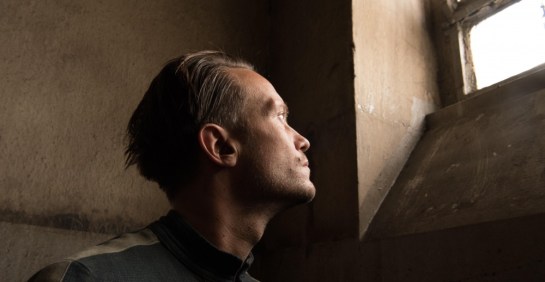
HIDDEN3E

Malick’s sweeping impressionistic gaze does more than just capture stunning scenery. It’s true he and cinematographer Jörg Widmer swoon over snow-capped mountains, cascading waterfalls, and lush green valleys. But here it’s more than simple musings on nature. Early on the scenes help convey love, peace, and happiness. But later with Franz in prison and Fani laboring in the fields, the scenery (though still exquisite) looms in the background like a haunting memory. Again, unlike some of his recent films, Malick uses his intensely visual approach (along with James Newton Howard’s elegant and gentle score) to feed the narrative and bring life and depth to his characters.

“A Hidden Life” is a Terrence Malick movie through and through. Stirring and meditative, intimate and challenging. But here he is guided by one man’s inspirational journey. Malick gives us a three-dimensional portrait of a rare type of hero, told through a true story of faith, family, and the unquenchable human spirit in the face of tremendous persecution. Malick’s storytelling methodology may still be an issue for those with little patience. But I was spellbound from the very start and found this to be one of the most soul-stirring movie experiences of the year.

VERDICT – 5 STARS

5-starss

5star

REVIEW: “A Simple Favor”

FAVORposter

If you’re following director Paul Feig’s hit-and-miss trajectory “A Simple Favor” was on schedule to be a good movie. Turns out it’s considerably more okay than good. There is just enough dark wit, plenty of snappy dialogue, and an entertaining off-beat tone that makes it fairly fun. But despite those strengths, Feig’s film still comes off as a needlessly abrasive Lifetime Original.

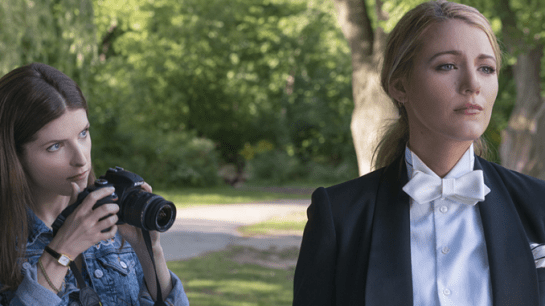
“A Simple Favor” would be a disaster if not for the chemistry between its two leads. Anna Kendrick plays a single mother named Stephanie whose nerdy quirks and can-do spirit doesn’t exactly ingratiate her to her son’s home room teacher and other parents. This role isn’t a stretch for Kendrick who basically plays this type of perky character in every movie she’s in. But to her credit she’s good at them.

FAVOR2

Stephanie hits it off with the most unlikeliest of moms – Emily Nelson (played by Blake Lively). She’s a glamorous and overly crass diva who is married to hunky novelist Sean (Henry Golding in what is becoming a pretty routine role for him). Stephanie is quickly seduced by the boozy Emily’s high fashion, fancy home, and care-free attitude. Emily’s interest in Stephanie is harder to figure out and becomes even more of a puzzle once Emily up and vanishes.

From there the movie essentially turns into “Gone Girl” minus the suspense. Feig and writer Jessica Sharzer try to nurture a layer of mystery, but it’s hard to buy any of what they’re selling. You know pretty early that plenty of twists are on the way and the movie doesn’t do a great job of hiding them. And by the time you get to the ridiculous finale it feels like Feig is just throwing a bunch of endings against the wall and seeing which one sticks.

FAVOR1

But again, the chemistry between Kendrick and Lively keeps the film afloat. Neither of their characters make much sense and their actions often leave you scratching your head. But both seem to be having a lot of fun. Minus her astonishingly poor judgement and glaring naïveté, Kendrick’s Stephanie adds the most levity especially when she’s shooting her video blog. Lively is often pointlessly racy, but she shows off a savagely fun personality.

But again, I end up right back in the same place. It’s an odd movie that’s all over the genre map yet it doesn’t firmly land anywhere. It certainly has its moments but I couldn’t help but think it could have worked better if it dove further into its zany black comedy. As it is, “A Simple Favor” doesn’t do enough with its two snappy lead performances and it loses its way the further it goes.

VERDICT : 2.5 STARS

2-5-stars

REVIEW: “Ad Astra”

AdPOSTER

What a time to be Brad Pitt. Not only has he delivered some of the year’s best supporting work in Quentin Tarantino’s “Once Upon a Time in Hollywood”, but now he headlines James Gray’s fascinating space adventure “Ad Astra”. Both performances could (and should) give the 55-year-old Pitt plenty to look forward to come Oscar night.

“Ad Astra” (which is a Latin phrase meaning ‘to the stars’) is Gray’s followup to his brilliant yet under-appreciated “The Lost City of Z”. It’s a cerebral slice of science fiction in the vein of modern space-related think pieces like “Interstellar”, “Gravity” and “Arrival”. Interestingly, each of those three films ended up being my favorite movies from their respected years. So clearly I’m a sucker for these types of stories when they are done well.

Ad1

© 20th Century Fox Pictures All Rights Reserved

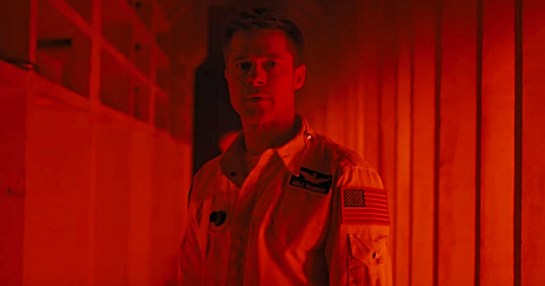
Set in the near future, Pitt plays Major Roy McBride, a steely and intensely dedicated astronaut who lives by the mantra ‘The Mission Always Comes First‘. We learn early that his devotion to his work has earned him the respect of his peers but it has cost him his marriage (Liv Tyler portrays his wife in a handful of brief yet effective flashbacks). As a result Roy finds himself in a self-inflicted state of isolation and emotionally detachment.

Roy is the son of Clifford McBride (Tommy Lee Jones), a highly decorated astronaut famous for leading the first ever manned mission to the outskirts of our solar system. The expedition was called the Lima Project and Clifford’s objective was to answer the big question: Is there intelligent life outside of earth? But it has been sixteen years since the last communication with the Lima Project leading most to believe Clifford and his team are dead.

AD2

© 20th Century Fox Pictures All Rights Reserved

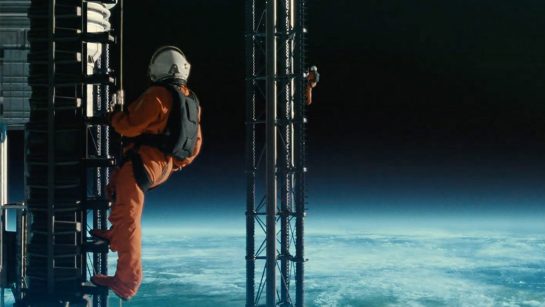
The film begins with a jaw-dropping introduction. Roy is working on a communication array high in our upper atmosphere when a massive pulse from deep space triggers a deadly electrical surge. On earth tens of thousands are killed and Space Command scrambles to find the source of the pulse. They trace it to Neptune, which happens to be the last known location of the Lima Project. Command calls in Roy informing him his father may be alive and causing the life-threatening surges. Roy agrees to a top secret mission to Mars where he will try to establish communications with his father. Externally its a matter of saving our solar system. Internally it’s a chance for Roy to reckon with the personal void left by his estranged father.

“Ad Astra” certainly isn’t the first movie to use space as an allegory for a variety of meditative themes. Here James Gray digs into the psyche of a fractured man wrestling with deeply compartmentalized emotions and space is the perfect setting for his expressions of emptiness and solitude. He’s a man full of mixed feelings. One minute he proudly states “I do what I do because of my dad.” But later, in one of his many internal monologues, we hear Roy lament the thought of becoming the very man who left him years ago. And as his ship ventures through the vast darkness of space, the troubling similarities between father and son shine bright.

AD3

© 20th Century Fox Pictures All Rights Reserved

There is a striking similarity between Roy’s mission and the hunt for Colonel Kurtz in Frances Ford Coppola’s “Apocalypse Now”. Instead of snaking down a Vietnamese river in a patrol boat, Roy ventures through space in hopes of answering the film’s central mystery – What happened to his father? Is he alive? Did he go insane? Is he responsible for what is called “a crisis of unknown magnitude“? Of course with “Ad Astra” there is significantly more going on under the surface. The heart of Gray’s film is profoundly human. Its interests lie in exploring our most intimate human connections and showing what happens when those connections are broken. It’s a soulful meditation on the lasting effects of parental abandonment and the ache of loneliness can be felt in every frame.

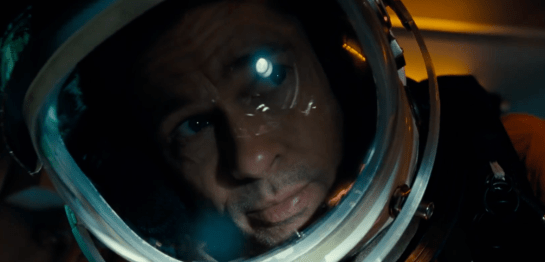
Gray’s tightly focused, minimalist approach is sure to surprise (or disappoint) those looking for more traditional science fiction. He tells his story with an indie film intimacy but that doesn’t mean we aren’t given bursts of deep space tension and plenty of exquisite images. We’ve witnessed cinematographer Hoyte Van Hoytema’s brilliance in movies like “Dunkirk” and “Interstellar”. Here he dazzles through his audacious uses of light, color and physics. His penetrating close-ups are just as compelling, never losing sight of the human element.

AD4

© 20th Century Fox Pictures All Rights Reserved

Without question Pitt’s performance is the heart and soul of “Ad Astra”. It’s brilliantly understated; quiet and restrained with the perfect amount of pathos. Pitt imbues Roy with a delicate stoicism and it’s amazing how much he can say through his weary, melancholic eyes. And despite his character’s confident and controlled facade, Pitt’s haunting portrayal captures a fragility that’s essential to Roy’s journey.

In such a franchise-soaked landscape it’s no surprise “Ad Astra” didn’t blow up the box office (It debuted alongside a Downton Abby film and the fifth Rambo installment). Plus it’s a James Gray movie which means it doesn’t pander to common conventions or popular expectations. And that’s what I love about this film. It’s uniquely its own thing and Gray isn’t afraid to challenge us to think and feel. It’s a technical marvel that’s rich with evocative visuals. It’s a tender rumination on the immeasurable value of our closest human relationships. It’s an inspirational call to introspection, forgiveness, and individuality. And that just scratches the thematic surface of this magnificent and unforgettable sci-fi experience.

VERDICT – 5 STARS

5star

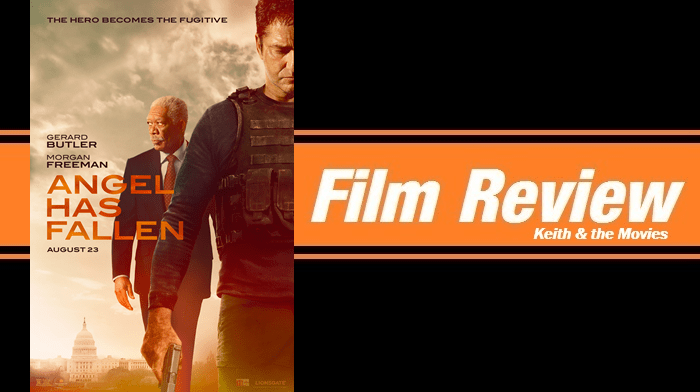
REVIEW: “Angel Has Fallen” (2019)

Ever heard of the phrase ‘a glutton for punishment’? Of course you have. But just in case, Oxford defines it as “a person who is always eager to undertake hard or unpleasant tasks“. Tasks like, I don’t know, watching Gerard Butler movies? By that definition I’m a walking example of ‘a glutton for punishment’.

I really can’t blame anyone but myself. It’s not like Butler doesn’t have a pretty telling track record. But I have this twisted fascination with his movie career which is marked by a bevy of stinkers and the extremely rare gem. And in case you’re wondering if his latest “Angel Has Fallen” is one of the gems…I wouldn’t go that far.

ANGEL1
Image Courtesy of Lionsgate

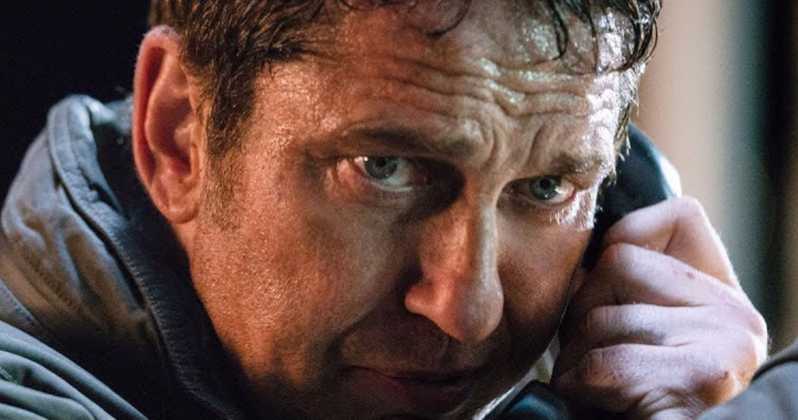
This is the third film in Butler’s Has Fallen series (for lack of a better title). It sees him reprising his role of Secret Service Superman Mike Banning. To be honest I had fun with the first film “Olympus Has Fallen”. It was a silly, fun throwback to the meat-headed action movies of the early 90’s. “London Has Fallen” failed miserably at capturing what made the first film entertaining. “Angel” falls somewhere in the middle.

Stuntman turned director Ric Roman Waugh helms this sequel that essentially follows the same blueprint as the previous films. Mike Banning is recommended by President Alan Trumball (Morgan Freeman) to replace the retiring Secret Service Director (played by the always fun Lance Reddick). But as the series has shown us, the job can take a pretty big toll and Banning’s body and psyche is letting him know it. Hilariously this seemingly important story-thread vanishes once the action kicks in.

While out on a country fishing trip, an assassination attempt is carried out with a swarm of high-tech drones. Banning barely saves the President’s life but everyone else including his Secret Service team are killed. The two lone survivors are taken back to Washington where the President is comatose and Banning finds himself framed for the attack. It doesn’t take much investigating before a tunnel-visioned FBI Agent Thompson (Jada Pinkett Smith) puts Banning under arrest. So much for all of that ‘service to his country’ bull.

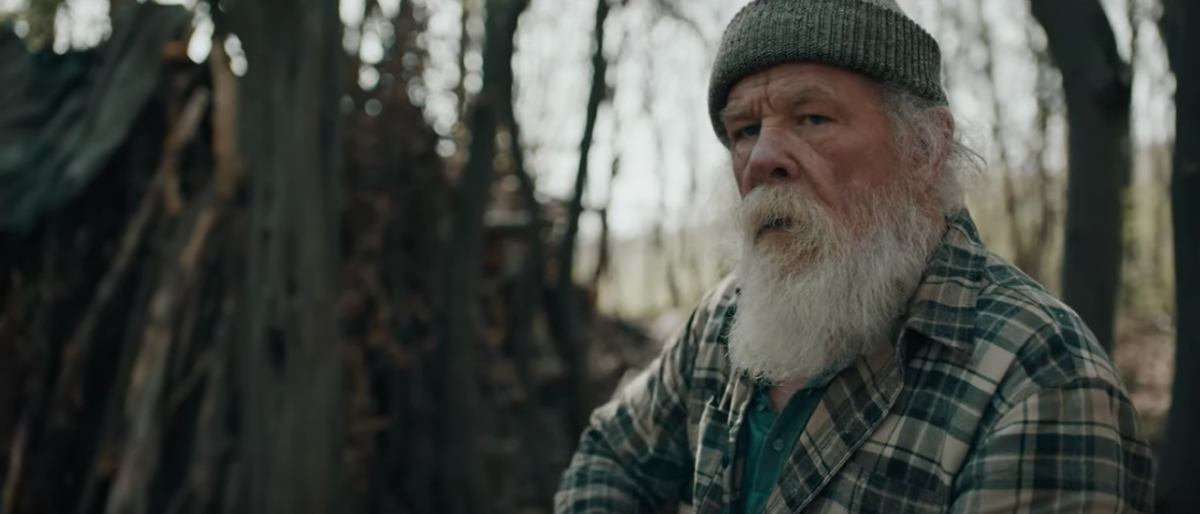
Of course like any good Gerry Butler movie, Mike doesn’t take it sitting down. He breaks out of custody and sets out to find who framed him and who wants the President dead. He has to seek the help of the last person he wants to see – his father Clay (Nick Nolte), a wooly, off-the-grid mountain hermit who (as you can probably guess) ran out on his family when Mike was a child. That is clearly the go-to offense for scorned fathers in movies. Nolte’s character adds a little levity but there is little new or fresh about him beyond that.

ANGEL2
Image Courtesy of Lionsgate

As you should expect, “Angel Has Fallen” leans heavily on its action. Some of it is fairly exciting and well shot. Other times it can be pretty generic, even frustrating especially when the scene-killing shaky-cam kicks in. And it’s all built around a paper-thin plot full of logic-defying silliness and ridiculous conveniences that are just there to get the story from Point A to Point B. By the way, am I the only one who wants to scream when a character won’t say the most obvious and necessary thing simply because a storyline hinges on their silence?

So basically this is another film worthy of being in Gerry Butler’s filmography. But feeling like a silver-lining kind of guy, I will say this is a step up from most of Butler’s recent efforts. Nolte earns a few chuckles, I really liked Danny Huston as one of Banning’s old military buddies, and the action can sometimes muster up some thrills. But that’s about all. Silly plot contrivances and head-scratching character decisions end up standing out more than the action. And for a movie like this, that’s not a good thing.

VERDICT – 2 STARS

2-stars

REVIEW: “Always Be My Maybe”

ALWAYSPOSTER

“Crazy Rich Asians” opened up a much-needed window into the Asian-American experience. It was also charming and surprisingly funnier that I expected. I was anxious to see what films would follow in its footsteps to broaden the field and offer up new perspectives.

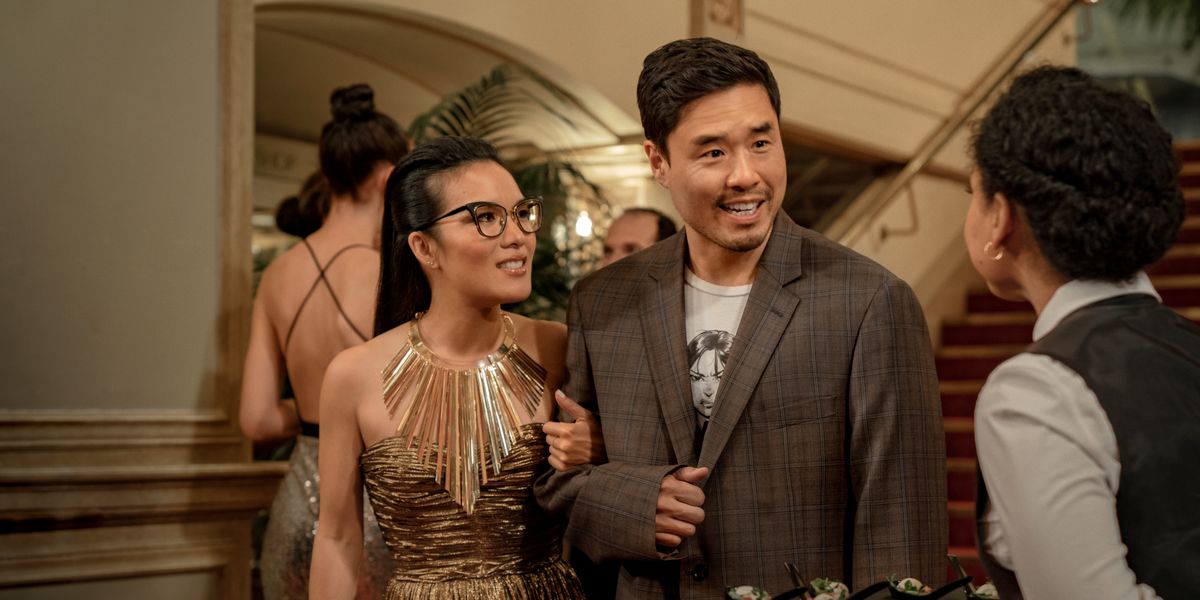
One such film is “Always Be My Maybe”, a Netflix romantic comedy and directorial debut of Nahnatchka Khan. The film follows Sasha (Ali Wong) and Marcus (Randall Park) who as children grew up as best friends and next-door neighbors in San Francisco. An argument during their late teen years pushed them apart and (As many kids do) they went their separate ways.

ALWAYS1

Sixteen years later Sasha is a celebrity chef and rising star in the culinary world. She’s engaged to hunky but narcissistic Brandon (Daniel Dae Kim) and is about to open her new restaurant in the Bay Area. Marcus is still in San Francisco, content living with and working for his widowed father and spending his spare time smoking weed and playing with his neighborhood band.

Their lives have went in dramatically different directions, but when they unexpectedly cross paths again it’s clear that deep down they are still the same people who once had such a tight-knit bond. Now they will have to navigate through sixteen years of baggage and their own stubbornness to see if things can finally work out between them.

“Always Be My Maybe” stands or falls or the chemistry of its two leads. The entire story is dependent on it which is both good and bad. It’s good simply because Wong and Park are great together. Their conversations and needling banter flows naturally and (much like with Ethan Hawke and Julie Delpy in The Before trilogy) you can sense their contributions to the writing process. But it’s bad in that many of the film’s weaker scenes are when they are apart.

You could also argue that the comedy itself is too uneven. Most of the time it’s simply amusing relying heavily on the playful back-and-forths between Sasha and Marcus. But when a certain red-hot entertainment phenomenon appears, the comedy takes a different form, moving from amusing to laugh-out-loud hilarious. Yes, Keanu Reeves pops up for a short time and unquestionably steals the show. And once he’s gone we downshift from hilarious back to amusing. Hardly a huge issue, but it sure leaves you itching for the Keanu-level humor to come back.

ALWAYS2

Several other nagging issues hold the film back. As most of these films tend to be, “ABMM” is utterly predictable almost from the start and you can see it checking off numerous socially hip boxes. We also get the outspoken best friend character which must be a modern rom-com necessity. Michelle Buteau gives a good performance and she has a handful of good lines, but it’s the same old character we’ve seen a billion times and who is only there to fill a role.

But back to Wong and Park. They may not be able to fully cover all of the movie’s issues, but they make “ABMM” worth your time. Their easy-going chemistry works great with the film’s relaxed rhythms. But that’s about all the movie has to offer. If you’re hungry for anything deeper or more original you’re probably not going to leave satisfied.

VERDICT – 2.5 STARS

2-5-stars


REVIEW: “Ash is Purest White”

ASHposter

In Jia Zhangke’s three-chapter drama “Ash is Purest White” our focus is placed on a woman named Qiao (Tao Zhao). We observe as she navigates three very different phases of her life, all to a shifting Chinese landscape. It’s a cynical yet strikingly realistic portrayal of love, devotion, and the consequences that can come with them.

It’s hard not to be drawn in by Jia Zhangke’s intoxicating visual technique. Just as much story is told through the poetic gaze of his camera as through the film’s dialogue. This approach demands a capable, multifaceted central performance and we certainly get it from Tao Zhao. The sheer range of emotion and experience she brings is truly impressive. She crafts a character full of grit and determination, but also sensitive and mournful.

ASH2

The film begins in 2001 where Qiao lives a life of plenty with her boyfriend Bin (Liao Fan). He has considerable clout as a crime boss in Datong where local industry is succumbing to China’s sweeping economic change. Bin runs his crew by a strict code of ethics which demands respect and honor among thieves. But his rule hits a wall when he is beaten by a gang of young thugs. In a quick moment of sacrifice, Qiao saves Bin’s life but ends up in prison for her efforts.

From there Qiao’s journey makes two significant stops on Zhangke’s timeline. First in 2006 where she is released from prison and setting out to find Bin who she hasn’t heard from since being incarcerated. The final stop is present day where we find Qiao and Bin’s relationship taking on yet another drastically different form. Throughout her journey Qiao shows a quiet ferocity and unshakable ability to take care of herself. At the same time you see a growing melancholy as certain truths become clearer to her.

Again, you can’t help but notice the parallels between the film’s central relationship and the dramatic evolution of the country itself. China’s cultural and economic transitions play out mostly in the background but Zhangke’s camera has a way of making them a part of the story. They are broad changes with seemingly no regard for the people they leave behind. And there is an unmistakable harmony between them and what we see between Qiao and Bin.

ASH1

Whether his focus is on a love story or the criminal underworld, Zhangke’s storytelling has a hypnotic quality to it. With a few rare exceptions, his film features no dramatic highs or lows. It gets in no hurry and moves to its own slow and steady rhythm, perhaps too slow at times. But even as it wanders there is no shortage of captivating visuals or thoughtful character work to take in.

“Ash is Purest White” is full of empathy, longing, and a surprising amount of restraint considering the film’s gangster element and the eruptive metaphor within its title. It’s an auteur’s epic spotlighting a personal journey through a land of intense modernization. And the feeling it conveys through the camera and Tao Zhao’s performance is cinema in its purest form.

VERDICT – 4 STARS

4-stars