REVIEW: “A Quiet Place”

QUIET POSTER

From the very outset “A Quiet Place” develops a central conceit which it fully embraces throughout its tight, lean 95-minute runtime. But while it’s undoubtedly a genre flick, this John Krasinski directed horror thriller has more of an emotional punch than you would expect.

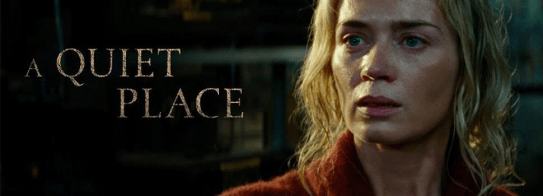
In addition to directing, Krasinski also co-writes and stars alongside his real-life wife Emily Blunt. They play Lee and Evelyn Abbott who live on a remote farm in a not-to-distant future. The human race has been ravaged by creatures with no sight who hunt via their heightened and lethal sense of hearing. The Abbott’s along with their daughter Regan (Millicent Simmonds) and son Marcus (Noah Jupe) are still coping with grief after a family tragedy while trying to survive in a world where the slightest sound could mean immediate death.
QUIET1

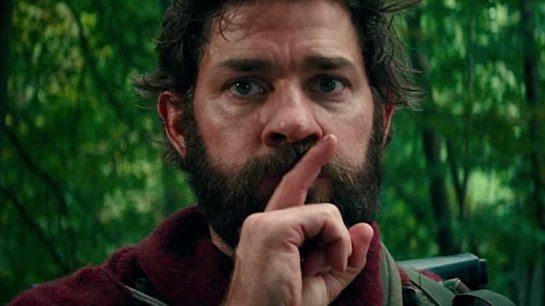
The great trick of this film is causing us (the audience) to lock in to every sound we hear. We become much more attentive and attune to what we hear rather than what we see. Krasinski does a great job of leading us in that direction both with the sound design and some clever visual cues. It’s also seen in numerous details – trails of sand to silence their steps, crocheted Monopoly pieces, etc. The most everyday things take on a new perspective in this world.

It goes without saying this adds a natural tension to “A Quiet Place”. Even in quieter scenes (no pun intended) the dread of an accidental bump or the smallest sound constantly looms in the background. Krasinski leans heavily into it without going overboard. When sound is employed it can be pretty profound and Marco Beltrami’s score ratchets up the intensity by both adding to the stillness and accentuating the terror. Yet at it’s core you can see the film constantly tipping its hat to the silent film era.

The movie also works because of the small but superb cast who flesh out their characters despite having little dialogue. Kasinski conveys so much through his tired and concerned eyes. Blunt knocks it out of the park as an emotional anchor for her family. But there is also Millicent Simmonds, great in last year’s “Wonderstruck” and just as good here. The young actress (who is deaf in real life) is a fundamental piece of the story and Simmonds is asked to juggle a range of emotions. She does so magnificently.

A QUIET PLACE

And this gets to where “A Quiet Place” scores the most points – the characters themselves and its story of family. Many have looked for more political meaning, but I find it most piercing when observing the family dynamic. I couldn’t help but sympathize with Krasinski’s Lee, a man who would do anything to protect his family, especially his children, yet on some levels struggles to connect with them. Blunt speaks to this particularly in one line where she says “Who are we if we can’t protect them? We have to protect them.” These characters and their relationships matter. The film does a keen job of making us care about what happens to each of them.

You could call “A Quiet Place” an old-fashioned horror picture. It’s smart, light on gore, but heavy on tension. It knows its premise and fully embraces it. Never does it feel the need to give us tedious and uninteresting exposition nor does it overstay its welcome. There are a few instances where you could question the movie’s logic, but for the most part Krasinski cleverly covers all of his bases. In the end he delivers an exhilarating and surprisingly heartfelt experience that is a huge win for the horror genre as a whole.

VERDICT – 4.5 STARS

4-5-stars

REVIEW: “All the Money in the World”

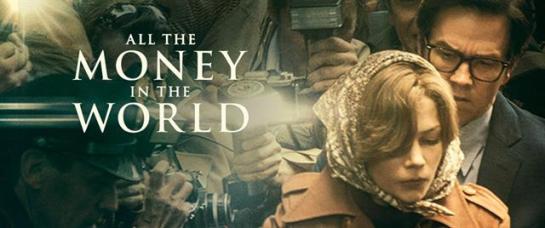
MONEY POSTER

Ridley Scott’s “All the money in the World” was a fascinating news story before it ever hit the screens. Kevin Spacey was cast in the key supporting role of J. Paul Getty. But after several sexual assault allegations the decision was made to replace Spacey even though he had shot all his scenes and appeared in the early ad campaign. Christopher Plummer (Scott’s original first choice) was brought in just a month from the scheduled release to reshoot Spacey’s scenes. The movie’s release date was only knocked back three days.

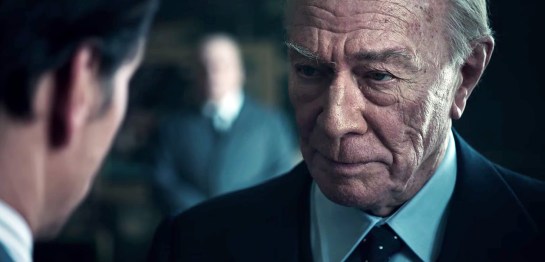
It was a gutsy but principled gamble by Scott and company and it paid off. Plummer is outstanding and has already earned several nominations around the awards circuit. Plummer’s J. Paul Getty is the film’s the most compelling character.

MONEY

The story opens in Rome, 1973. Paul Getty (played by Charlie Plummer, no relation), the 16 year-old grandson of oil mogul and well-known ‘richest man in the world’ J. Paul Getty, is abducted by a van full Calabrian thugs. The kidnappers contact Paul’s mother Gail (Michelle Williams) and demand $17 million in ransom money. The problem is she doesn’t have it. A series of flashbacks reveals an ugly divorce with Paul’s father where Gail chose full custody of their children over the Getty’s money.

Gail approaches her cold-hearted ex-father-in-law but is stunned when he denies her the ransom money. At one point he says “I have none to spare”. A few scenes later he’s revealing plans to build himself another lavish estate. Screenwriter David Scarpa doesn’t give Plummer a ton of screen time but every scene he’s in has energy and bite. Ultimately this isn’t J. Paul’s movie. Gail quickly becomes the centerpiece and our emotional connection.

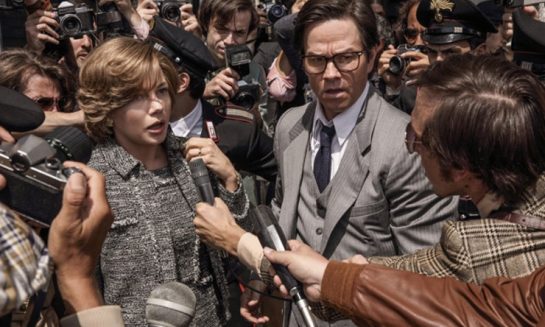
J. Paul won’t part with his money but he does send his oil broker, a former CIA operative, Fletcher Chase (Mark Wahlburg) to help Gail negotiate a release. In the meantime young Paul is taken to a remote countryside location in Italy where he gains the sympathy of his head captor Cinquanta (played by fantastic French actor Romain Duris). He and Gail begin negotiations but both sides are hindered by powerful outside forces driven by their own motivations.

MONEY2

This “Inspired by True Events” story is based on John Pearson’s book “Painfully Rich: The Outrageous Fortunes and Misfortunes of the Heirs of J. Paul Getty”. Scott’s treatment starts a little slow and it takes some time to get its footing. But once it does it zips along and becomes a good suspenseful crime thriller with several cool touches. For example, Scott’s portrayal of the paparazzi instantly hearkens back to Fellini’s “La Dolce Vita”. There is also the undeniable 70s vibe that shines through, not just in look but also in the style of the storytelling.

Perhaps the biggest reason “All the Money” works is because Ridley Scott steps out of the way and puts his full trust in his actors and the script. There are fine performances throughout, particularly from Plummer and Duris. And Michelle Williams is more than capable of carrying a bulk of the story. As you would expect from a Scott picture the production is superb, and while the story is slow out of the gate, once it gets going it’s a pretty invigorating ride.

VERDICT – 3.5 STARS

3-5-stars

REVIEW: “Alone in Berlin” (2017)

berlinposter

For me the strengths of Vincent Perez’s “Alone in Berlin” are fairly obvious – a unique and heart-wrenching true story and two superb acting talents as its leads. That was more than enough the keep me attached to this slow-boiling World War 2 drama.

Brendan Gleeson and Emma Thompson play Otto and Anna, a German husband and wife living in 1940 Berlin. The two are devastated upon receiving the news that their only son Hans is killed during battle. His death puts stress on their already dry marriage and each mourn in their own lonely way. But their loss also gives them a new perspective on the growing war unfolding around them.

berlin22

As the Nazi influence begins to reflect across Berlin the couple witness things that intensify their repulsion and disillusionment. Otto begins writing anti-Nazi messages on postcards and secretly leaving them all around the city. At first it’s a therapeutic emotional release to help him cope, but soon it also becomes about duty. And when Anna joins him, their dangerous quest expands while also bringing them closer together as husband and wife. It gets even riskier when the Nazi’s hire a principled German police detective (Daniel Brühl) to track down those responsible.

First the performances, it should surprise no one that both Gleeson and Thompson are wonderful. Gleeson conveys the emotionally worn Otto through his tired, somber eyes and dispirited mannerisms. Thompson portrays Anna as a determined woman but one who clearly feels the weight of her sorrow. Their performances are so rich and grounded that you never doubt either character or any of their motivations. Brühl is also good in a role that he has played before.

berlin2

For the most part the story steers clear of depicting the war’s atrocities. They are mostly handled from a distance. But in the handful of scenes where they do hit the screen, the impact is effective. Some who yearn for a harsher visual representation of the horrors may find Perez’s film too sanitary. It’s a response I’ve seen towards other films that sought to tell a more confined, individual story. I don’t agree. Perez keeps his focus on his two central characters and the film is better for it.

One gripe is that the film moves a bit slow at times and it often relies to heavily on its two leads. But that doesn’t make it any less inspirational and heartbreaking. “Alone in Berlin” tells a poignant story that is unique and authentic. As a fan of films set in this period, I was plenty satisfied with what Perez and company deliver and hopefully more people will give it a look.

VERDICT – 4 STARS

4-stars

REVIEW: “A Ghost Story”

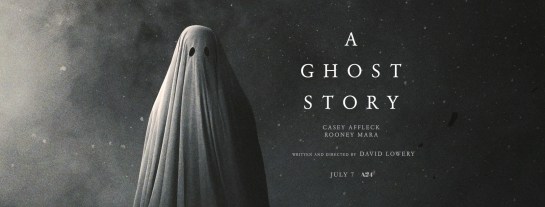
GHOSTposter

When looking at the last three feature films from writer/director David Lowery you’re immediately struck by how dramatically different one movie is from another – 2013’s romantic crime thriller “Ain’t Them Bodies Saints”, last year’s Disney fantasy adventure “Pete’s Dragon”, and now his latest film, a meditative supernatural drama “A Ghost Story”.

Lowery’s dabbling in new areas of cinema makes sense. Throughout his time in filmmaking he has worn many hats – writer, director, editor, cinematographer, producer, and even actor among other things. So it’s no surprise seeing him try something new. But “A Ghost Story” (which he writes, directs, and edits) is so  unique and, quite frankly, unlike anything I’ve seen in a long time.

ghost1

As is always the case, the less you know about the film the better, but it rings especially true here. Still it should be said that “A Ghost Story” flips any genre norm on its head. There is nothing conventional or routine about it. Some are certain to check out before it’s done. Lowery is okay with that. In an interview with Yahoo! Movies, he stated that he hopes audiences will stick with it, but knows some will not. Thankfully it didn’t influence his creative choices otherwise “A Ghost Story” wouldn’t be the daring, profound experience it is.

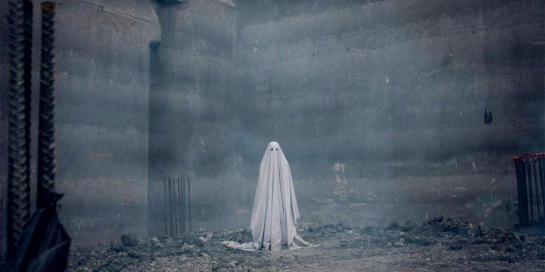
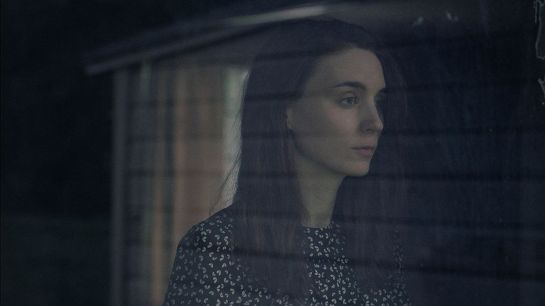
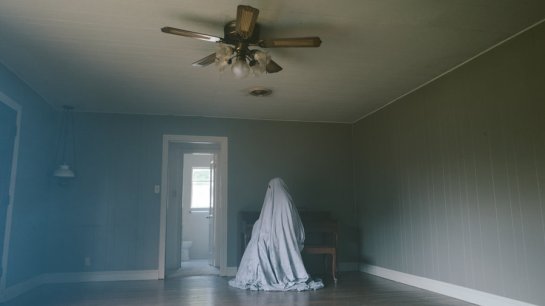
The film reunites Lowery with Rooney Mara and Casey Affleck (from “Ain’t Them Bodies Saints”). We never know the names of their characters, only that they are a husband and wife living in a modest suburban home. Their lives are shattered when Affleck’s character is killed in a car wreck. We wakes up as an invisible white-sheeted ghost and returns to his home. There he observes Mara’s character navigate through her various stages of grief.

Mara’s work here is quiet but astounding. It’s light on dialogue, soulful and evocative. Lowery often puts his camera in the observer’s role, leaving it on her through long extended takes. Many times the ghost stands silently in the background watching her every move and emotion. Throughout these scenes the film’s mood steadily grows heavier. Yet it’s not without humor. The absurdity of the ghost costume (a long white sheet with two cut-out eyeholes) is an intentional move. Lowery has described humor as a great “gateway emotion”. The costume is a wacky but welcomed entry point.

GHOST2

This is also where Lowery begins to play around with time, something that becomes more pronounced as the story progresses. We see it through the unfolding narrative but also in the incredibly clever construction of individual scenes. It’s even relayed through some aesthetic choices. For example the entire film is presented like a vintage snapshot – squared borders with rounded edges. The framing is reminiscent of something pulled out of time.

Around the midway point the film makes a notable but fluid shift that challenges the audience on an entirely different level. The mournful, tragic mood doesn’t go away, but Lowery expands his interest beyond a simple exploration of love and loss. We are never spoon fed the meaning to everything we see. Instead we’re prodded to react to and interpret the movie for ourselves. As we do, the haunting, meditative atmosphere remains with the exception of one scene, a half-drunken nihilistic party lecture. It is the single longest sequence of dialogue in the entire film. Unfortunately it pulled me out of the movie’s carefully maintained tone. But only briefly.

ghost3

And then you have Daniel Hart’s fabulous score. It’s easily my favorite of the year so far. There are many moments where Lowery leans heavily on the music and often puts it in the place of dialogue. It’s a brilliant composition of emotions that ranges from eerie and haunting to tranquil and calming. Hart has worked with Lowery on his previous two films and their incredible chemistry is beyond question.

“A Ghost Story” isn’t for everyone and I’ll be interested to see how people react. I was under its spell from the start and found it to be both beautiful and tragic. Its story is patient and personal; its presentation audacious and impressionistic. And I was captivated by David Lowery’s unwillingness to embrace our expectations. This is the story he wanted to tell and it turns out to be one of the year’s biggest surprises and delights.

VERDICT 4.5 STARS

4-5-stars

REVIEW: “Alien: Covenant”

ALIEBPOSTER

2012’s “Prometheus” provoked an interesting range of responses. The “Alien” prequel riled up a segment of the franchise faithfuls who were anxious for Ridley Scott’s return to the terrifying acid-for-blood xenomorphs he created. Many lukewarm fans found themselves drawn to Scott’s slow-moving meditative philosophizing. Others were caught in the middle, unable to come down on either side.

For the sequel it’s clear the producers were hungry for the Ridley Scott from 1979 who gave us the smothering, frightening sci-fi/horror original. New writers Josh Logan and Dante Harper make sure we get that. But Scott doesn’t hand over the entire vision. He’s still interested in thematic exploration and mythologizing. “Alien: Covenant” ends up being a peculiar and semi-fascinating hybrid of both.

ALIEN1

As mentioned “Covenant” is the second film in the prequel series. It begins with a short prologue featuring Guy Pearce’s business mogul with a god complex Peter Weyland and a newly activated android who takes the name David (Michael Fassbender reprising his role). It’s a gorgeous flashback sequence that introduces creation, an idea that plays prominently into the rest of the film.

Roughly ten years after the events of “Prometheus” we hop aboard the Covenant, a ship on a colonization mission to a distant earth-like planet on the far side of the galaxy. It’s precious cargo – 1,000 human embryos and 2,000 colonists all in stasis. The ship is hit by a (science junkies help me out here) neutrino burst which forces the the android Walter (Fassbender in a dual role) to wake the crew early. The vessel takes damage and there are several casualties including the ship’s captain.

While making repairs the crew picks up a mysteriously familiar radio signal tracked to a nearby uncharted but seemingly habitable planet. Captain Oram (Billy Crudup), the insecure acting leader, decides to investigate against the objections of Daniels (Katherine Waterston), the original captain’s widow and Oram’s second in command. To this point you could call “Covenant” a methodical slow-burn which I loved. After a beautifully shot dropship landing, the expedition team of scientists and military make their way to the planet’s surface. This sets up the film’s shift from patient and ponderous to an all-out “Alien” movie.

alien2

To no one’s surprise the team encounters the xenomorphs and even a new form of terror called neomorphs. They are a spore-born and more feral version of their counterparts. And of course that leads to a series of gory and obligatory facehugs, chest bursts, tail slashes – the usual alien carnage. I’ll happily admit I found parts of it intense and exciting. Problem is none of the victims are fleshed out enough for us to care. I think back to Scott’s original “Alien” and even James Cameron’s “Aliens”. I can tell you the names of most of those characters and even put a face to them. Aside from Walter, Daniels, Oram, and Danny McBride’s Tennessee (he’s the one with the cowboy hat) none of the crew offer anything other than potential alien fodder. Such a missed opportunity.

From there the movie doesn’t completely settle for a traditional final act. There is one story thread that runs throughout the crew culling that feeds Scott’s hunger for mythology and origin. It’s a great angle that introduces the story’s true antagonist. It also gives Fassbender the room to shrewdly expand his characters. Waterston is good but Fassbender steals the show. It’s a tricky duel performance that brings subtle, unique nuances to both David and the updated model Walter.

ALIEN3

Other story angles offer promise but are completely dropped. Take the ship full of husbands and wives and the 1,000 human embryos in cold storage. A lot of fun ideas there begging to be explored. And then there are these out-of-the-blue mentions of Oram’s faith. Again they tease an interesting deeper story but there isn’t much to take away from what little we get. “I saw the devil once as a child.” – the most random of Oram’s quotes that we never get back to.

“Covenant” maneuvers through its ups and downs to land an ending that leaves me genuinely excited for the next chapter. And despite missing some opportunities there is still plenty that Scott and company get right. Perhaps “Prometheus” was too big of a departure for some die-hard fans. “Covenant” tries to lure them back with good action and effects while still giving time to Scott’s philosophical ruminations and mythology building. A lot of that works. It’s the in-between stuff that misses the mark.

VERDICT – 3.5 STARS

3-5-stars

REVIEW: “The Accountant”

account-poster

A title like “The Accountant” doesn’t exactly scream action and thrills. Instead it triggers thoughts of financial statements and tax analysis. Not exactly riveting cinema, right? But who says you can’t have a movie with just as many ledgers and spreadsheets as guns and bullets? Okay perhaps that’s an exaggeration, but you get what I mean. The idea is pretty outlandish.

Despite sounding preposterous “The Accountant” is a solid bit of entertainment. It’s a heavily plotted thriller featuring mobsters, hitmen, corporate CEOs, Treasury agents, and of course number crunchers. As it peels back layer upon layer of its story (much of it through flashbacks), it makes a strong effort to cover every base in order to maintain even the smallest level of plausibility. At the same time it’s pretty honest about what it wants to be. It just wants to be a little too much.

The Accountant

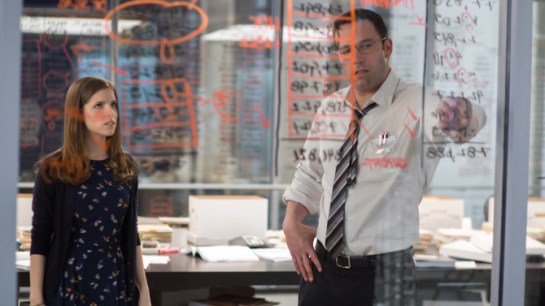
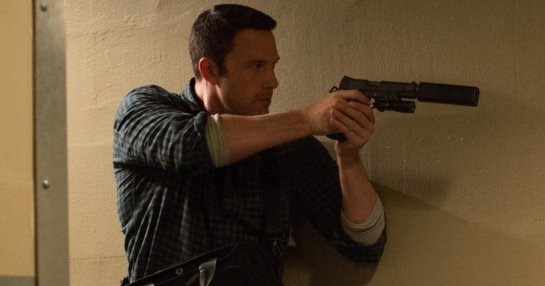
Ben Affleck stars as Christian Wolff, a forensic accountant working out of a strip-mall in Plainfield, Illinois. Christian has high-functioning autism which is detailed through a series of childhood flashbacks. It inhibits his social skills and causes him distress if he is unable to carry out a task to its end. But it also contributes to his accelerated comprehension of mathematics and deduction. The film has a surprisingly warm and respectful touch in its handling of autism and its effects.

Here’s where things take a twist. As an accountant Christian does more than just help farm families with their tax returns. He also traces insider financial fraud for some of the world’s biggest criminal organizations. This attracts the attention of Ray King (J.K. Simmons) of the Treasury Department who blackmails a young Treasury agent (Cynthia Addai-Robinson) into helping locate and identify the man known only as “The Accountant”.

Christian is given his assignments by a mysterious Siri-like voice over the phone. He’s sent to audit Living Robotics after the company’s accountant Dana Cummings (Anna Kendrick) discovers discrepancies with their financial numbers. Christian must maneuver through the relationships of the company’s CEO (John Lithgow), his sister and associate (Jean Smart), and his best friend and company CFO (Andy Umberger). Christian’s discoveries thrusts him and Dana into a web of corporate corruption with violent reverberations. And with his life in jeopardy, Christian reveals yet another layer to his character – a much more lethal layer.

account2

Director Gavin O’Conner’s previous two films couldn’t be more different – the surprisingly great MMA family drama “Warrior” and the not so good Natalie Portman western “Jane Got A Gun”. With “The Accountant” he has a lot to juggle, more than in his previous two films combined. For the most part he keeps the many moving parts and duel storylines in sync. At the same time we get a few too many conveniences that we are supposed to buy into. It also relies too heavily on the flashbacks, most likely a result of simply having too much story to tell.

By the film’s end you almost get the sense that they are teasing a franchise. Several pieces are put in place that invite a sequel. “The Accountant” does plenty right – a good cast with good performances; bursts of intense well-shot action (occasionally laced with bits of dry humor); a dense but thoughtful story. Give me more of that and I will come back for another movie. But here’s a thought, maybe not so thickly plotted next time. More isn’t always better.

VERDICT – 3.5 STARS

3-5-stars