

Countless high quality documentaries have been made about World War 2, Adolph Hitler, the Holocaust, etc. Their importance can’t be understated especially as we grow further away from that period of time. Over the years documentarians have challenged viewers with their insightful explorations from an assortment of angles. Jonathan Martin’s “World War II in Color” is a superbly exhaustive series. Claude Lazmann’s “Shoah” and Marcel Ophüls’ “The Sorrow and the Pity” are seminal works on the Jewish Holocaust. I could go on.
“After Hitler” puts its unique focus on a scarred post-war Europe delving into the war’s emotional, economic, societal, and political after-effects. Co-writer and director David Korn Brzoza covers a lot of ground starting in late 1945 and moving to the end of the decade. An incredible collection of colorized video footage from across the continent paints the picture of a weary, ravaged but optimistic people.

But their optimism is quickly squashed as many countries face painful and often violent new realities. Brzoza and narrator Vincent Lindon present an array of truths concerning the new landscape of Europe – dark and disturbing pictures that have often gone forgotten. And exploration isn’t reserved for the countries Hitler’s Naziism terrorized. A big chunk of the documentary highlights Germany and the disaster left there by Hitler’s reign.
“After Hitler” hits its audiences with some brutal facts: the astonishing number of war orphans, a death toll of nearly 40 million European men, women, and children, disturbing ethnic post-war retaliations. This just scratches the surface of what Brzoza reveals. Deeper revelations from the Nuremberg trials, mass displacement, starvation – the scars of World War 2 are visualized in bone-shaking reality.

There is also the political side which the film pays close attention to particularly in the second half. Starting with Churchill’s prediction and early warnings of Stalin’s rise. From there we see the rise of Communism, the birth of the single-party state, and eventually the solidification of the Iron Curtain. Brzoza shows that not only did Hitler’s devastating aggression dramatically change the landscape of Europe, but it opened the door for a new threat that would define the landscape for years to come.
There is one sobering quote from the film regarding post-war Europe that has stuck with me – “It’s as if before the page can be turned it must be stained with violence.” Brzoza does a superb job of realizing that. “After Hitler” does indeed cover a lot of ground and for the most part does so sufficiently. There were subjects that I wish the film sat down and explored more thoroughly, but for such a comprehensive undertaking it does a fine job. The ending is a bit abrupt, but it puts all the pieces together and smartly connects one violent decade to the ominous next one.
VERDICT – 4 STARS

 Kamini Zantoko (known simply as Kamini) is a French rapper of Congolese decent who became an internet sensation with his music videos depicting life in rural France. His first single was 2006’s “Marly-Gomont”, a song about growing up in a small Picard village of the same name. The humor-filled rap was actually based on Kamini’s life experience. As a young boy his father moved him and his family to Marly-Gomont to become the town’s doctor.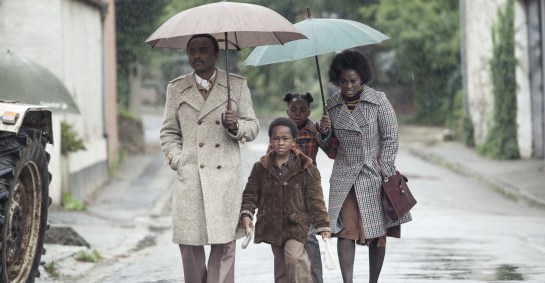













 Keith & the Movies