REVIEW: “Beasts of No Nation”

BEAST poster

If there is one thing that profoundly comes across in Cary Fukunaga’s searing war drama it is that war has a cost – an intense human cost. In the case of Agu, the preadolescent lead character in “Beasts of No Nation”, it’s about the loss of family, the loss of childhood, the loss of innocence.  It is a bleak, uncomfortable, yet thoroughly arresting portrait of child soldiering that never tiptoes around the revulsion of its subject matter.

This was a seven-year project for Fukunaga where he worked as writer, director, and cinematographer. It is a fictional piece based on a 2015 debut novel by Nigerian author Uzodinma Iweala. Fukunaga knew he wasn’t making a movie for the masses. This simply isn’t the type of material that people will flock to see. But that is just one reason to respect the talented 38-year old who previously made the terrific “Sin Nombre” but is probably best known as the director for the first season of “True Detective”.
BEAST1

To bring the film to light Fukunaga and company had to navigate numerous hurdles. Some were related to financing or securing distribution. But there were also problems tied specifically to shooting in Eastern Ghana – malaria, theft of equipment, and near-death experiences. Fukunaga would later call it the hardest thing he has tackled, but the movie flourishes due to the rich authenticity of the locations.

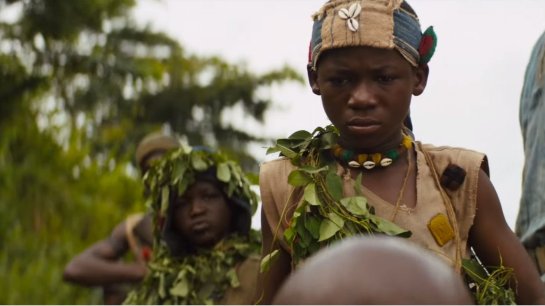
The film opens with a sequence that haunts the rest of the story. Young Agu (played with eye-opening purity by newcomer Abraham Attah) and his friends are running around with the hull of an old television. They implore potential buyers to watch through the hollowed out screen while they play out different TV shows on the other side. Kung Fu, soap operas, 3-D. It’s a playful and spirited sequence built around the vitality of childhood. It plants a picture in our minds that slowly erodes as the film moves forward.

Agu lives in an unnamed West African village with his parents, big brother, baby sister, and disabled grandfather. The village lives under the illusion of safety in what is called a “buffer zone”. But reality lurks on each side of them in the form of opposing forces in a violent civil war. Inevitably the war bleeds over into the village and the savagery that follows sees Agu’s family killed. He flees into the jungle where he is eventually found by a rebel faction and their charismatic leader known only as Commandant (played with a forceful, seductive swagger by Idris Elba).

BEAST2

Commandant recruits the reluctant Agu into his army of child soldiers who he calls his “warriors”. He starts by breaking down any barrier of innocence and then preying on Agu’s vulnerability. He’s a hypnotic snake oil salesman who his soldiers see as larger-than-life. We also visualize him that way although our lofty perspective is tainted by the other evil side of him we see. He is a ruthless and vile egotist who takes his army from village to village, teaching them to slaughter, to pillage, and to do whatever sadistic bidding he may require. We get scenes reminding us of their innocence, but they are swallowed up by the horrors Commandant leads the children to do. Elba is phenomenal in showing us this brutal, mythical force and then later the insecure and self-destructive layers that threaten to undo him.

Fukunaga doesn’t take the easy way out, but he also doesn’t relish in the blood and violence. Everything has meaning and each atrocity we see through Agu’s eyes strips away more of his hold on right and wrong. The morality struggle is excruciating to watch and the film’s reliance on young Attah is bold. But even more audacious is the performance from the 14 year-old first time actor who channels more authentic emotion and inner-conflict than the most seasoned vet.

BEAST3

I also appreciate how “Beasts” doesn’t launch itself into the political realm. Some critics have knocked the film for not talking about a specific conflict or focusing on a specific regime. They speak as if the film loses some of its potency as a result. I completely disagree. Fukunaga has said he didn’t want this to be “an issues film”. But that doesn’t mean there isn’t a conscious meaning to much of what we see. And the film’s avoidance of politics allows for a more personal and impacting story to be told.

“Beasts of No Nation” is a movie you may not want to see a second time, but it’s one you must see a first time. Experiencing Agu as our eyes and ears; experiencing his struggles, fears, and dissent down this dark and violent path is  crushing. But buried deep within this story is a glimmer of hope. It is at times unrecognizable and unfathomable, but it’s there and it keeps us deeply connected to this young boy. “Beasts” may not make tons of money and it may not get a lot of talk come awards time. It should. This is one of the more emotional cinematic experiences of the year and easily one of the best films. It deserves an audience.

VERDICT – 4.5 STARS

4.5 STARS


REVIEW: “Bridge of Spies”

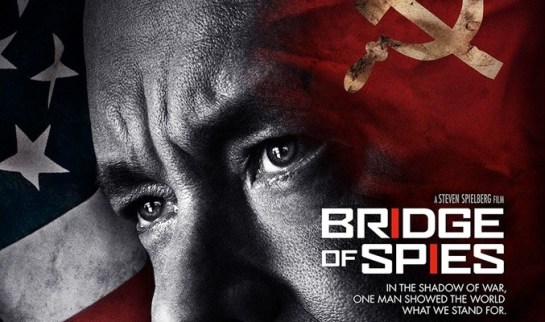
SPIES poster

A Steven Spielberg and Tom Hanks collaboration is a sure-fire attention getter. Such is the case with “Bridge of Spies”, an old school Cold War espionage drama made to bloom as awards season approaches. The trailers are a tad misleading. This is a dialogue-driven thriller that crafts its suspense through its many scenes of political back-and-forths, judicial wrangling, and contentious negotiations.

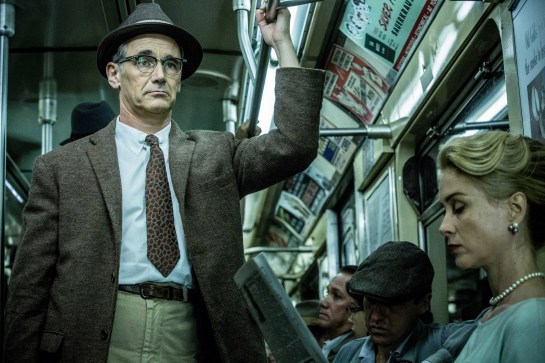
The story is based on the embarrassing U-2 incident which occurred in 1960 under the watch of President Dwight Eisenhower. It actually begins three years prior after a Soviet spy named Rudolph Abel (Mark Rylance) is captured by the FBI. Wanting to give the appearance of a fair trial, the government appoints insurance attorney James Donovan (Hanks) to represent him. The prosecution, the judge, the government, and the media all seek to make an example out of Abel. Donovan sees things different.

SPIES1

Donovan is a man of principle and stands firm in his belief that everyone including Abel deserves due process. This sparks outrage among government agencies, the American public, and even Donovan’s own family. This is the film’s early focus. We spend a lot of time with the development of Donovan and Abel’s relationship and the uphill battle they face in the courts of law and public opinion.

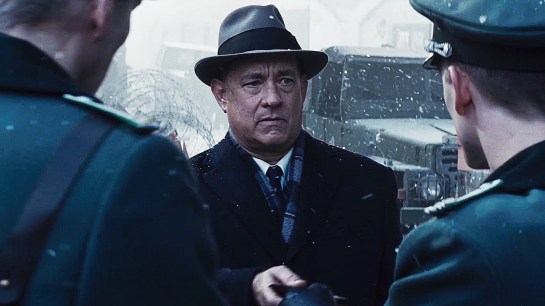
Spielberg begins breaking away to young pilots being trained for a top secret reconnaissance mission over the Soviet Union. Among them is Francis Gary Powers who is shot down and taken prisoner by the Soviets. Fearing that Powers will give up vital intelligence, the government sends Donovan to East Berlin where he is to negotiate a hostage exchange – Abel for Powers.

Negatively, these breakaways are intended to provide context to Donovan’s mission, but they don’t offer much. None of the characters we get in these scenes are all that interesting or compelling. Even Powers himself offers nothing more than a face to the negotiations. This wasn’t a major flaw but it did seem like wasted time and it made the film drag a bit.

SPIES2

Also, one of the most fascinating parts of the story was the ‘fish out of water’ element – an insurance lawyer in hostile territory negotiating between two global enemies. But I never got the sense that Donovan was too worried or fearful. Certainly there are scenes where he feels the pressure, but I would have loved to see more tension, uncertainly, and internal struggle. Instead he handles his tasks as he would any normal insurance settlement back home.

I don’t think the blame for that goes to Hanks. His performance is superb. There is no doubt that this role is right in his comfort zone. Donovan’s down-to-earth everyday man qualities are no problems for Hanks. He has been a master of that type of character for years. I also loved the subdued performance from Mark Rylance, a fine British theater actor. His Abel manages to be the most interesting person on screen even though he offers practically no flash at all.

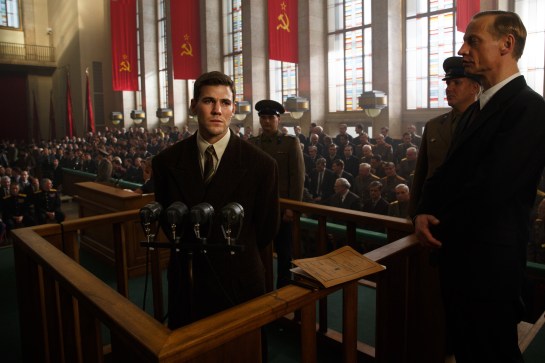
in DreamWorks PIctures/Fox 2000 PIctures' dramatic thriller BRIDGE OF SPIES, directed by Steven Spielberg, Francis Gary Powers (Austin Stowell) is an American U-2 pilot shot down over the Soviet Union.

And then there is Spielberg. There is such satisfaction in watching a master of his craft work. The film was written by Mark Charman (and polished up by Joel and Ethan Coen). Spielberg lets their script breathe by directing with tremendous restraint. He grants his actors room to work and allows the story to unfold at an organic pace. There is practically none of that overpowering Spielberg flair that we have seen in the past. Just steady and compelling storytelling nestled in a wonderfully rendered Cold War setting.

Don’t let the trailers fool you. “Bridge of Spies” is no thrill a minute edge-of-your-seater. Instead it is a talky yet quietly made period drama. It is a fine reflection of vintage moviemaking mixed with a riveting story. It may never be heralded among Spielberg’s very best, but it does feature many of his best filmmaking traits (shaky political subtext aside). And mixed with a fine performance from Hanks, it seems primed and ready for the inevitable attention it will get come awards time.

VERDICT – 4 STARS

4 Stars

REVIEW: “Bone Tomahawk”

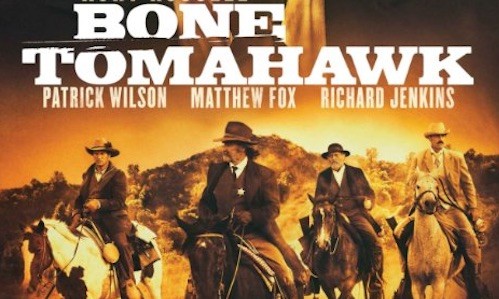
BONE POSTER

Some movies are beyond categorizing. They simply can’t be kept within the bounds of a single genre. It is a tricky thing to do well and I have always enjoyed it when a movie pulls it off. The bizarrely titled “Bone Tomahawk” may be this year’s biggest example of that. This unique genre-jumping concoction could best be described as an action, horror, comedy, western, thriller. To fail to emphasize any of those components would be to fail in accurately describing this wild movie.

Is 2015 the year of the subversive western? Earlier this year we had “Slow West” and “The Salvation”, two well made films that dared to do unique and different things in the western sandbox. “Bone Tomahawk” blows the sandbox to smithereens. Writer and director S. Craig Zahler (perhaps better known for his novels and heavy metal music) makes an impressive directorial debut as he juggles genre and tone to give us a film we can never quite figure out. Every time I felt I had figured out what it was, “Bone Tomahawk” would pull the rug out from under me.

BONE1

While fleeing a posse, two murderous and thieving scoundrels (amusingly played by David Arquette and Sid Haig) stumble across a mysterious burial ground. Only Arquette’s character survives and he flees to the small town of Bright Hope. Unbeknownst to him, savages from a clan of hill-dwelling cannibals follow him to the town. They butcher a stable boy and kidnap three people. Among those taken is Samantha O’Dwyer (Lili Simmons) wife of Arthur O’Dwyer (Patrick Wilson).

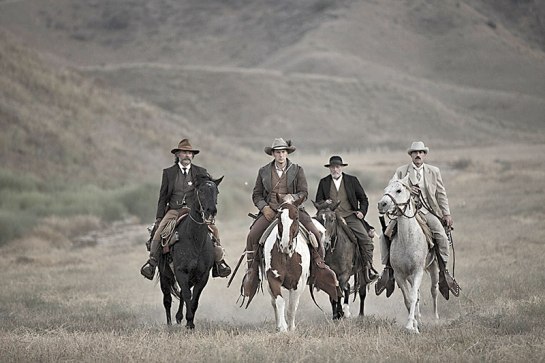
Kurt Russell ventures back into the wild west playing Sheriff Hunt. He and his insistent and loyal deputy Chicory (played with humorous precision by Richard Jenkins) prepare a rescue. Arthur joins their venture as does John Brooder (Matthew Fox), the town’s dapper dandy with his own violent baggage. This ragtag posse of sorts begin the three day trek to find their people unaware of the horrors that may lie ahead.

Zahler’s vision for his film is fed to us in small parts. In one moment it will feel like a traditional western. In another moment it is a suspenseful thriller. Then a subtle yet hysterical bit of dry or dark humor makes it seem like something else altogether. Also the film will occasionally hit you with a scene of gruesome horror, something akin to a B-movie cult film. Fortunately all of these work within the bounds of Zahler’s vision.

BONE2

The film also surprises with its patient, slow-burning storytelling. The intensity ratchets up in the final act, but prior to that there is a surprising amount of quality character development. For Zahler his characters are clearly a main focus and he smartly anchors them with a small but impressive cast. Kurt Russell is effortlessly superb and obviously comfortable with this type of role. Richard Jenkins is an absolute treat – a pleasant mix of humor and humanity. The underappreciated Patrick Wilson is very good in what is in many ways the main character. And Matthew Fox really impresses. At first he looks a bit too stiff for his character, but over time as layers are peeled back, Fox shows a noteworthy range. He is a lot of fun.

I’m not sure how big of an audience there is for a movie like “Bone Tomahawk”. In no ways does it bow to convention or crowd pleasing. It is far from formulaic. It certainly doesn’t follow any familiar blueprint. It does meander a bit in the middle which does make it a tad longer than it needs to be, but it still manages to be something absorbing and strikingly unique. Just go into it expecting the unexpected because that is exactly what you are going to get.

VERDICT – 4 STARS

4 Stars

2015 Blind Spot Series – “The Bicycle Thief”

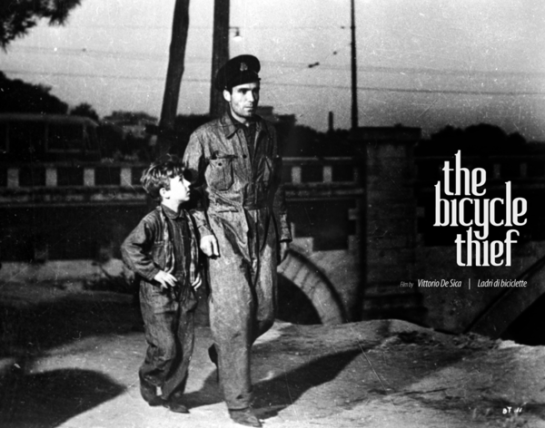
BIKE POSTER

“The Bicycle Thief” came out during a difficult time of recovery and transition. It was November of 1948 and World War 2 was over. Italy was in political and economic turmoil. It was this setting that inspired the filmmakers of Italian neo-realism. Director Vittorio De Sica was first known as an actor but began directing films in 1940. “The Bicycle Thief” was a drastic change from his first films and the shifting Italian social structure along with the influence of friend and screenwriter Cesare Zavattini lead De Sica to embrace the neo-realist perspective on filmmaking.

“The Bicycle Thief” has long been considered the masterpiece of movement and the film received an honorary Academy Award at a time when there was no category for  foreign language films. The film is a clear example of Italian neo-realism. It deals in humanity and truth allowing the drama to come naturally through these things. There is no emotional manipulation or deception. Every scene in “The Bicycle Thief” feels grounded in reality at times to the discomfort of the audience.

Another neo-realist signature found throughout the film is the avoidance of sound stages and studio sets. De Sica shot his scenes on location which was partially due to budget, but it also took this truthful story to the places where it was happening. Every scene is grounded in the paralyzing poverty that the Italian people of the time would undoubtedly relate to. This gets back to the truth and humanity of the movement which sought to reveal, expose, and enlighten. Currents of social politics and commentary flow throughout the film energized by the ground-zero locations and realities.

BIKE1

Sticking with the neo-realism approach De Sica avoided using professional actors for his roles. His star Lamberto Maggiorani was actually a factory worker who had brought his son to the set to try out for the role of young Bruno. Enzo Staiola, the boy eventually cast as Bruno, was spotted on the street corner watching the film being made while selling flowers with his father. For De Sica a real-world authenticity could be brought from untrained actors that you would never get from trained professionals. His perspective reminded me a lot of French auteur Robert Bresson.

The simplicity of the story may surprise you. It is very basic and direct yet its succinct 93 minutes never feel lightweight. In fact it translates human emotion and experience in ways that few movies have. Maggiorani plays Antonio, a husband and father desperate to find work in post-war, poverty-plagued Rome. We first see Antonio standing in an employment line filled with anxious men trying to provide for their families. Antonio lands a job offer pasting movie posters and advertisements around town. For him it’s the chance to finally get his family on the right track.

Bike2

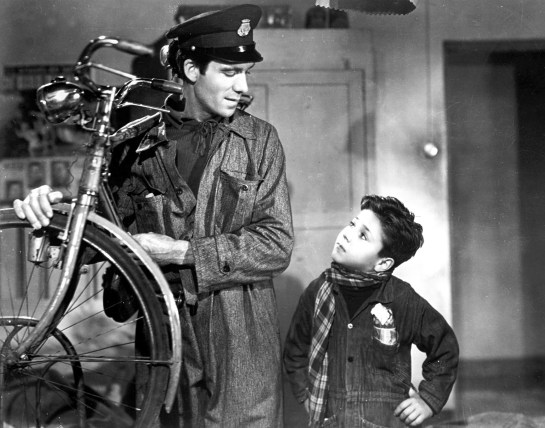
Unfortunately the job requires a bicycle and Antonio recently pawned his to put food on his table. His understanding and hardworking wife Maria (Lianella Carell) pulls the sheets from the beds and takes them to the pawn shop in order to get the bike back. A proud Antonio heads out to work the next morning. But as you can guess the bicycle is stolen leaving Antonio in a terrible position. Along with the help of his adoring son Bruno (Staiola) Antonio sets out to find the bicycle – a difficult task spanning different neighborhoods around the city.

The story follows a very straightforward path and Antonio encounters people with similar desperate circumstances. At times we see things through the eyes of a follower – a simple observer of Antonio’s determined attempt to reclaim his bike and his dream of providing a better life for his family. Other times I felt as if we were seeing things through the eyes of young Bruno – having the hardships of life opened up to him without a filter and watching his heroic father find what is rightfully his. But De Sica snaps us back to reality with several scenes between father and son that are truly heartbreaking. We realize that this isn’t a lighthearted affair and real life is hard and uncompromising.

In the end “The Bicycle Thief” paints a bleak picture of a troubling cycle. It takes abject poverty and theft and links them together to form a depressing revolving door. Some have used the film strictly for social commentary. Others have criticized the film saying it needed more of an edge. Personally I think “The Bicycle Thief” is better served as a story – one rooted in truth and one that holds up a mirror to the human experience and compels us to see the reality of it. Movies that can do that are rare, especially these days. That is why films like “The Bicycle Thief” remain timeless and special.

VERDICT – 4.5 STARS
TEST star

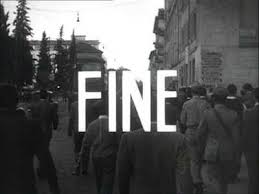
BIKE end

REVIEW: “The Birds”

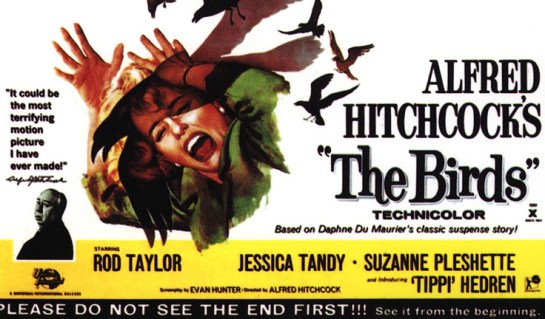
BIRDS POSTER

One of Alfred Hitchcock’s most recognized films is “The Birds” from 1963. In many ways “The Birds” could have been an absolute mess. The concept itself (loosely based on a story by the English author and playwright Daphne du Maurier) could be considered silly and absurd on the surface. In fact many ideas such as this in the hands of many modern day filmmakers end up as originals on channels like Sci-Fi Network.

But “The Birds” isn’t silly, absurd, and it certainly isn’t a mess. It’s a great film that shows what a master filmmaker can do even with what may seem like the craziest concept. Hitchcock liked the idea of random bird attacks from du Maurier’s story and he was enthusiastic about visually creating it on screen. He instructed screenwriter Evan Hunter to create a broader story with more defined characters. The end result was an effective thriller filled with Hitchcock’s signature style and suspense.

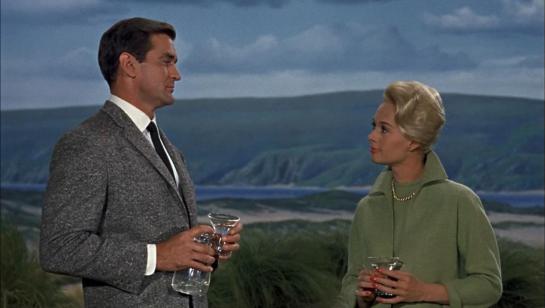
Birds1

The film featured the screen debut of Tippi Hedren. She plays Melanie Daniels, a beautiful San Francisco socialite who meets a lawyer named Mitch (Rod Taylor) in a pet shop. He’s there to buy a pair of lovebirds, but he ends up more interested in Melanie. They don’t have the best encounter and Mitch ends up leaving empty-handed. Later Melanie second guesses her reaction and after finding a pair of lovebirds traces Mitch to Bodega Bay. Her stay there spans several days and during this time violent encounters with birds begin and later intensify. Soon Melanie, Mitch, and the entire community find themselves terrorized by a wide assortment of fowl.

Hedren was a great choice to play Melanie which clearly emphasized Hitchcock’s eye for talent. Hitchcock was ultra protective of his young female lead and over the following few years their tense relationship would lead to a great deal of controversy. But in “The Birds” Hedren fits nicely into Hitch’s cinematic world. Her performance never resembles that of a newcomer and her pairing with the more seasoned Rod Taylor was a good fit. There some good supporting performances as well particularly from Jessica Tandy and Suzanne Pleshette. I also loved the assortment of peculiar townfolk which gave the community such quirky life.

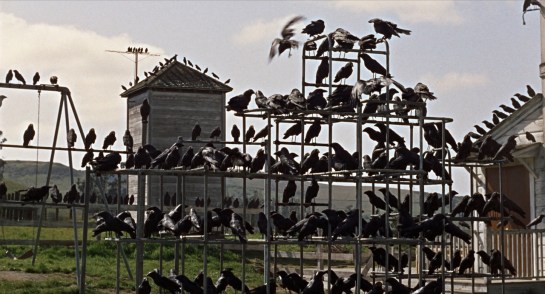
Birds2

Speaking of quirky, the film starts out with a subtle quirky vibe. But as Hitchcock moves us forward the story evolves into something much different. He moves into suspense where he sucks us in with his crafty and methodical buildup before plunging into what could be called shock horror. Through some amazing special effects and his unmatched eye for the camera, Hitchcock unleashes several scenes of unsettling terror that still hold up today. The film is often overlooked and underappreciated especially when lined up next to his other works. But rewatching the film and experiencing again the visual style used to create some of the film’s great scenes reminded me that the movie can’t be shoved aside.

There are a handful of narrative question marks that just don’t make a lot of sense. Also the ending, while stylish and pleasing to a degree, does feel a bit hollow and it left me wanting more out of it. These gripes may be enough to keep it from being considered the director’s best, but they certainly don’t soil the movie as a whole. Actually it’s quite the opposite. “The Birds” remains a wonderful experience. It takes a somewhat wacky concept and brilliantly creates a society turned on its head by the unlikeliest of terrors. Some today may not find it to be as unnerving or as horrifying as it was to those first audiences, but if you allow yourself to get swept up buy the buildup and the ultimate payoff “The Birds” is still extremely satisfying.

VERDICT – 4 STARS

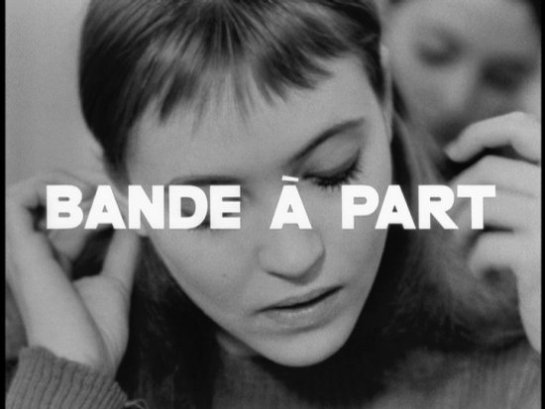
REVIEW: “Bande à part” (“Band of Outsiders”)

OUTSIDERSposter

“Band of Outsiders” was Jean-Luc Godard’s seventh film and a unique entry into the French New Wave movement. Viewed by some as Godard’s most accessible movie, “Band of Outsiders” is a playful, saucy romp which has influenced a variety of filmmakers through the decades that have followed. While the film may be considered a bit lighter than some of Godard’s other work, many of the director’s signature touches can be clearly seen.

Friends Franz (Sami Frey) and Arthur (Claude Brasseur) recruit the reluctant Odile (Anna Karina) to help them pull off a heist. Odile lives in a villa with her Aunt Victoria and a mysterious wealthy man named Stoltz. One day she tells Franz of a large stash of money kept inside the villa. Franz and Arthur devise a plan to steal the money and Odile serves as their insider. But it grows more and more obvious that she doesn’t want to go through with it. She’s not a criminal. She’s actually sad, lonely, and looking for some validation to her life. That’s the only reason she connects with Franz and Arthur.

OUTSIDERS

Things are made more interesting by the fact that both men are smitten with Odile (at least to some degree). Franz is low-key and clearly in love with her. Arthur is a rude, rebellious, hellion so naturally Odile falls for him. Godard doesn’t give us the standard tensions or follow the same path as most movies featuring this kind of love triangle. It doesn’t become the focal point of the story. It’s simply a component of their relationships that slightly persuades how things turn out.

While the heist is the ultimate goal, the film is about these three characters. Godard treats them as…well…a band of outsiders. They each seem to be living in their own make-believe worlds. They seem to treat life as if it were a movie. We even get moments where Franz and Arthur act out scenes from gangster films. On one hand the trio shows a fresh and energetic approach to living that’s seen best in their frolicking around Paris. On the other hand there is the naive indifference they have to reality and consequences. Only Odile seems to struggle with this.

While the characters and their relationships are the central focus, there is the heist angle which is also unique and unconventional. At times the film feels like a prototypical American crime drama that has been infused with French New Wave irreverence and style. The story sets its aim on a pretty familiar target, but Godard’s auteur’s approach gives us more than the normal heist movie tropes. Our trio are the most inadequate and unprepared people to be trying such a score. We see it in their lackluster planning and in the disastrous end results.

OUTSIDERS2

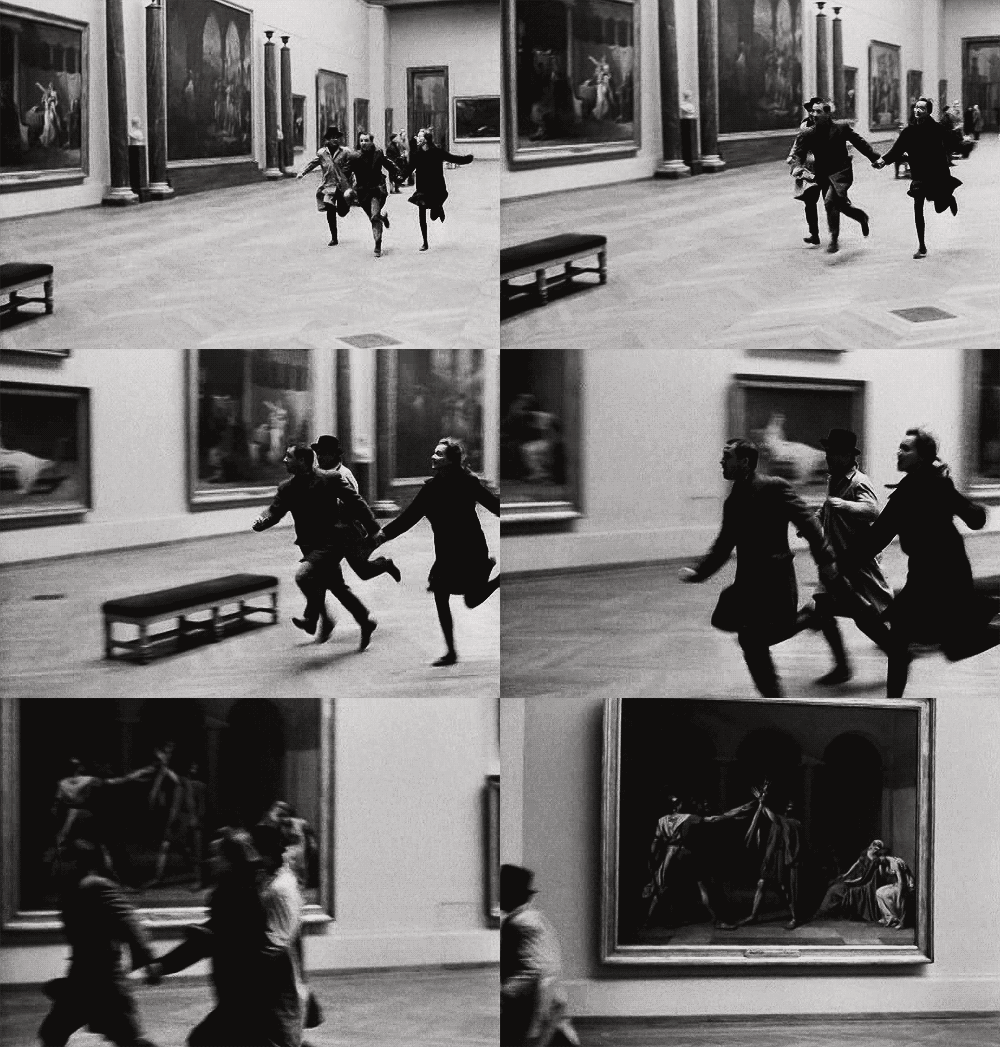
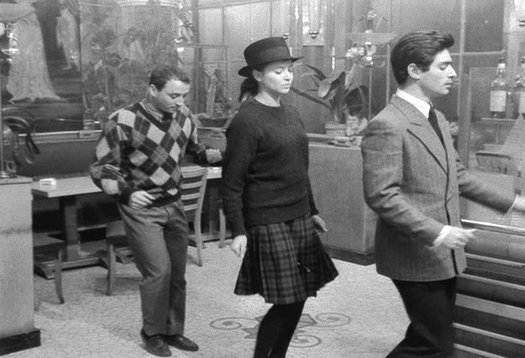
As with most of Jean-Luc Godard’s movies, there are certain moments that make the film unquestionably his. There is a great cafe sequence featuring a fun and crafty ‘moment of silence’ and the famous “Madison Dance” which inspired Quentin Tarantino’s dance sequence in “Pulp Fiction”. There is the equally famous ‘record-breaking’ race through the Louvre museum – a chipper and playful moment just before things take a darker and more realistic turn. And of course there are numerous artistic references to poetry, music, and film.

I could mention several other things that make “Band of Outsiders” a good film. I could mention the wonderful performances led by the magnetic Anna Karina (she was Godard’s wife at the time and his camera loves her). I could mention the film’s smart and effective blend of excitement and pathos. But ultimately it comes down to a fine filmmaker, good material, talented performers, and that spirited French New Wave perspective. For me that’s a perfect recipe for a great movie.

VERDICT – 4.5 STARS