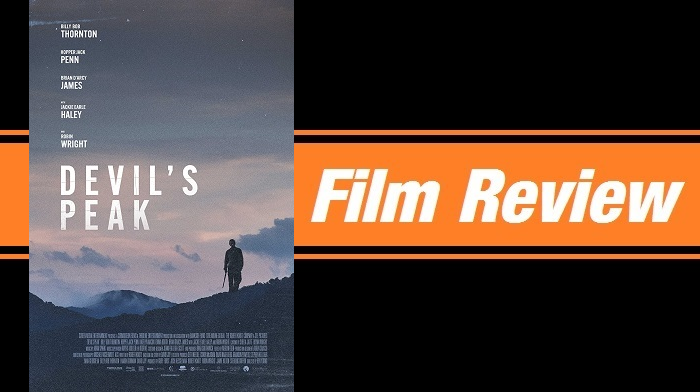
Based on the novel “Where All Light Tends to Go” by David Joy, “Devil’s Peak” is a modest crime thriller set in poverty-stricken, drug-infested rural Appalachia. It’s not the first movie to examine this troubled yet compelling region in the Eastern United States, but director Ben Young and screenwriter Robert Knott have some interesting pieces to work with. Unfortunately the material is plagued with overly simple story beats, thinly sketched characters, and an inescapable air of familiarity.
The story takes place in Jackson County, North Carolina and the roles are filled by a solid ensemble. Hopper Penn plays Jacob McNeely, the son of a hardcore drug dealer named Charlie (Billy Bob Thornton) who has had the impoverished local community by the throat for years. Jacob runs an auto body shop which is really a front for the father’s drug ring. We learn Charlie has had his son selling crystal meth since he was nine-years-old. It’s the family business.
But Jacob has a decency inside that sets him apart from his father. It comes out in his affection for his troubled mother and Charlie’s ex-wife Virgie (Robin Wright). We also see it in his love for his girlfriend Maggie (Katelyn Nacon) who is about to go to college in Wilmington. She’s the daughter of a crooked politician (Brian d’Arcy James) who’s not too keen on his daughter’s choice of a boyfriend. Jackie Earle Haley chips in as the local sheriff named Dwight while Emma Booth plays Charlie’s live-in girlfriend Josephine.
Much of “Devil’s Peak” focuses on the dysfunctional family tension between Jacob, Charlie, and Virgie. To no surprise Thornton, with his shaved head and bushy jet-black goatee, has no trouble playing a vile and irredeemable menace. It’s an effective performance that’s a little cartoonish but fittingly repellent. Wright brings more nuance, playing a junkie trying to overcome the mistakes of her past. Sadly Wright is dealt a bad hand and isn’t given much to work with. Penn isn’t quite as convincing. As Jacob struggles to get out from under his family name, Penn struggles to earn our empathy. His somewhat muted performance isn’t able to muster the excitement or emotion that the character and the movie needs.
“Devil’s Peak” could have taken its characters in a number of interesting directions. Instead it plays it safe, telling a story that follows its one trajectory to the very end. And despite the commitment of the cast, even the characters crumble under the weight of formula. To its credit, Young’s pacing ensures it’s never boring. But with so little under its Southern Gothic exterior, it’s hard to find much to get excited about. “Devil’s Peak” is now available on VOD.
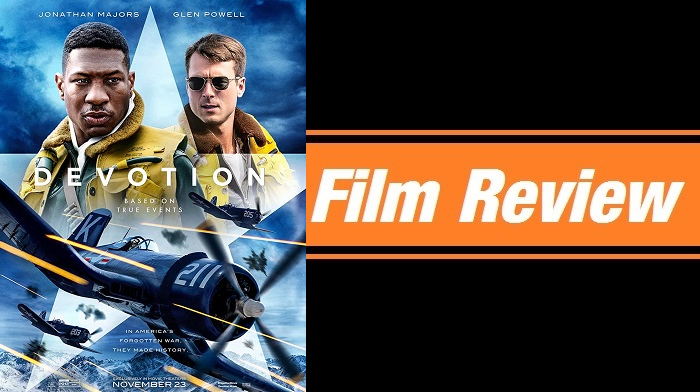
Two rising stars, Jonathan Majors and Glen Powell shine in “Devotion”, a war-drama based on the inspiring friendship between fighter pilots Jesse Brown and Tom Hudner. Jesse LeRoy Brown was the first African-American pilot to complete the U.S. Navy’s flight training program. Along with his wingman and devoted friend Tom Hudner, the pair would become two of the Navy’s best pilots during the Korean War, with Brown earning the Distinguished Flying Cross.
Directed by J.D. Dillard and written for the screen by Jake Crane and Jonathan A. Stewart, the film is based on the novel “Devotion: An Epic Story of Heroism, Friendship, and Sacrifice” by Adam Makos. Dillard hones in on a segment of Jesse Brown’s life, starting from the time he met Tom Hudner at Quonset Point Naval Air Station in Rhode Island. He shows their eventual friendship, but even more time is put on Jesse’s struggle as a black man in the desegregated military of 1950.
Image Courtesy of Columbia Pictures
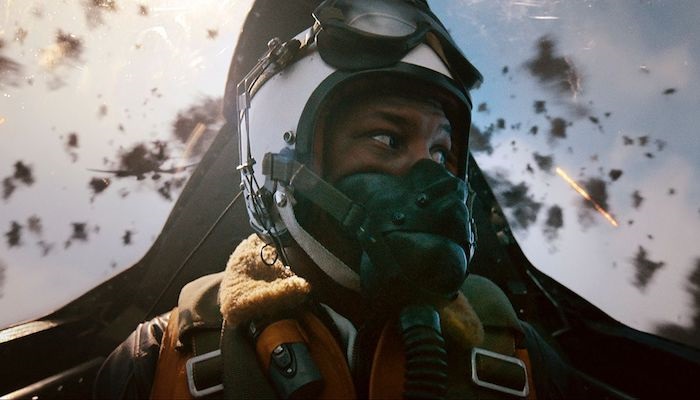
If you’ve seen the trailer you know “Devotion” has some war-time action and air combat scenes (they’re exhilarating and worth seeing on the biggest screen possible). But the meat of the movie is Jesse’s experience and the unexpected friendship forged with his wingman. For that reason, more time is spent building the characters (especially Jesse) and some of the story’s key relationships. And while it may take a little while to get off the ground, this development is crucial and ends up significantly helping things down the line.
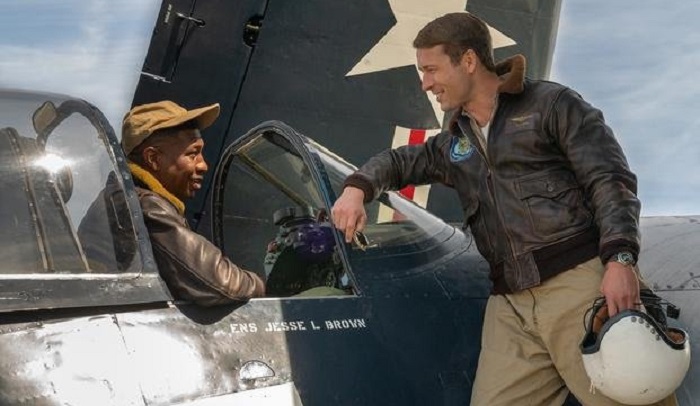
When we meet Jesse (played with dignity and quiet resolve by Majors), he’s already an accomplished pilot who is generally respected for his skills yet still looked down on by many due to the color of his skin. New to his squad is Tom Hudner (an utterly convincing Powell) who is immediately assigned to be Jesse’s wingman. On top of earning Jesse’s trust in the air, the naive but genuine Tom also seeks to earn his trust as a man. But it takes some time, especially as we get a better understanding of the adversity Jesse has fought to overcome for his entire life.
While showing Jesse’s military service is a big part of the story, we also get a few touching moments with him at home with his wife Daisy (a really good Christina Jackson) and their young daughter. In many ways she’s his anchor, and the film uses her inclusion to reveal another side of Jesse – one as equally important to the story as his piloting scenes. Then there is the racial tension which comes in all sizes. Sometimes it comes from snide remarks that may seem harmless, especially when Jesse appears unfazed. But the film makes it clears that there’s no such thing as harmless racism, and over time it has taken a toll on Jesse despite his best efforts to hide it.
Image Courtesy of Columbia Pictures
The movie is also helped by the strong chemistry between Majors and Powell which makes what unfolds between their characters feel genuine and true. While the movie could have put a little more time into fleshing out Hudner, his eventual friendship with Jesse doesn’t come across as a made-for-screen concoction. There are actual barriers they must break down and hurdles they’re forced to navigate. It’s an honest and thoughtfully conceived relationship that’s cemented in the final 20 minutes when they’re called into combat as the Korean War intensifies.
The big fighter plane scenes leading up to the finale are a thrilling mix of practical and digital effects that look amazing and thrusts us into the heart of air combat. I’d be lying if I didn’t admit to wanting more of it. But the heart of “Devotion” is with the characters, namely Jesse Brown. Dillard, Crane, and Stewart never lose sight of that which makes this more than your standard-issue war movie. Instead it shares the story of someone we all should know about while highlighting a friendship that we all could learn from. “Devotion” is now showing in theaters.
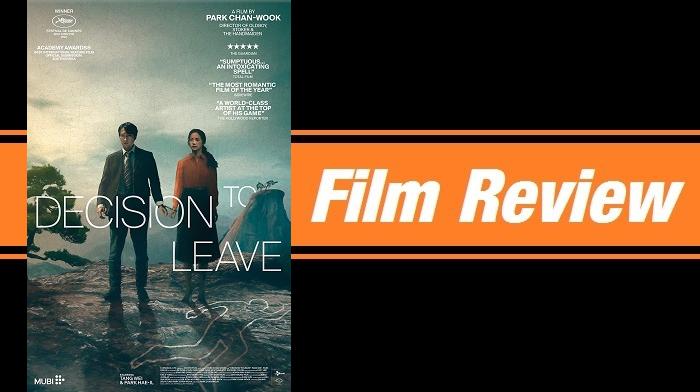
South Korean auteur Park Chan-wook is a very distinct filmmaker, yet he’s one who is impossible to put into a box. He has certain signatures fans will often look for. For example, he’s well known for his use of extreme violence, and it’s often fused with pitch-black humor. His subject matter and themes can be notoriously bleak and brutal. And his characters are often defined by their complexities and usually driven by some form of revenge.
But for every ”Oldboy” there is something dramatically different like “Joint Security Area” or “Stoker” (a vastly underrated 2013 English-language thriller). Now the 59-year-old Park is back with “Decision to Leave”, his first feature film since 2016’s “The Handmaiden”. It’s coming off a terrific festival run with Park winning Best Director at Cannes. Better yet, this very well may be his best film to date.
Park’s fans will notice the filmmaker’s fingerprints all over “Decision to Leave”, from his treatment of characters to his sheer technical savvy. His story (which he co-wrote with Jeong Seo-kyeong) revolves around two emotionally intricate people and their complicated relationship that uncoils over the movie’s 138 minutes. It’s not always clear where Park is going. But a big part of the movie’s allure is trying to piece together its knotty human puzzle while navigating the shifting emotions and shaky morality. It’s made even better with Park’s precision and DP Kim Ji-yong’s arresting visual language as our guide.
Image Courtesy of MUBI
Among the many joys of watching “Decision to Leave” is taking in Park’s use of genre. Early on his film plays like a Hitchcockian crime noir, complete with a hardboiled detective and a seductive femme fatale. Later it evolves into a simmering psychological romance – one that makes for an exquisite examination of obsession and the many forms it can take. Along the way we get pinches of dark humor that often come in the most unexpected moments. But it’s also a movie with a steady ache and full of longing. It all comes together into one spellbinding web that constantly has us questioning what we’re being shown.
Hae-jun (Park Hae-il) is a Busan homicide detective who’s dedicated to his work at the expense of his marriage. He and his wife of 16 years, Jung-an (Lee Jung-hyun) have a stable relationship and a comfortable life. But their marriage has lost its spark. Hae-jun spends weekdays in the city close to his work, only coming home on weekends. There is no noticeable tension or hard feelings. They’re simply a couple who have grown apart, and they don’t know what to do about it.
Rather than finding fulfillment in his marriage, Hae-jun finds it in his work. So naturally he’s quick to jump on a new murder case. He’s sent to investigate the death of a mountain climber who plummeted from the top of a tall, oddly flat-topped mountain peak. After examining the scene, Hae-jun pays a visit to the deceased’s beautiful Chinese-speaking wife, Seo-rae (an absolutely magnetic Tang Wei). She doesn’t come across as mournful or even surprised by her husband’s death which immediately pique’s Hae-jun’s curiosity.
Image Courtesy of MUBI
Over time, that curiosity slowly evolves into an unhealthy obsession. Hae-Jun begins staking out Seo-rae’s home and following her to work where she’s a caretaker for the elderly (make note of that – there are no wasted details in a Park Chan-wook film). Soon he’s bringing her into the police station for dinner over “questioning”. The deeper we get into the story the more infatuated Hae-Jun gets. He begins using his detective status as a means of satisfying that infatuation. Never mind that he’s supposed to be determining whether Seo-rae shoved her husband off the mountain ledge.
Most interesting is that Seo-rae is perfectly aware of Hae-Jun’s evolving feelings for her, and she’s not above using them to her advantage. Yet over time she too shows a growing affection. How deep are her feelings? Despite the simmer between them, it’s always hard to tell. Seo-rae is a beguiling mystery, and much of what makes Tang Wei’s performance so great is her ability to keep so much hidden. One minute she has us convinced Seo-rae is crooked and playing Hae-Jun like a fiddle. But then she’ll catch us off guard with an unexpected line. Sometimes it’s a simple look. Tang Wei keeps us asking the question – is this a psychological chess match or is it a forbidden love story? Maybe a little bit of both.
Park keeps us guessing throughout. Even later on when it appears everything is taking form, he broadsides us with another jolt – one that eases the film towards a powerful and heart-rending conclusion. It’s an ending perfectly tuned for a movie so full of melancholy and longing. And the final few minutes offer yet another example of Park’s impeccable control of his characters and also his audience. “Decision to Leave” is now showing in select theaters.
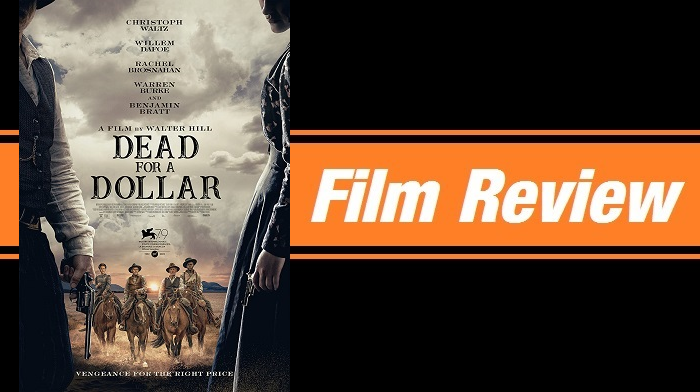
Walter Hill making a new Western excited me. A cast that includes Christoph Waltz, Willem Dafoe, Rachel Brosnahan, and Benjamin Bratt was icing on the cake. That’s a lot of talent for “Dead For A Dollar”, a modestly budgeted embrace of a once thriving movie genre. As with the 80-year-old Hill’s past hits and misfires alike, “Dead For A Dollar” is effortlessly watchable. It’s straightforwardness and casual pace might be a hurdle for some. But there’s something about its easy-going style and intoxicating milieu.
One of the film’s most noticeable distinctions is how it often looks, sounds, and plays like an old Western serial. The sharp digital look, the framing of specific shots, the scene-to-scene transitions, even some of the dialogue seem like callbacks to classic television. It’s a cool style choice that actually fits well with Hill’s leisurely storytelling. For example, a big chunk of the movie has characters simply hanging out, waiting for the story’s inevitable climax, almost like filler episodes in a TV series.
But unlike filler episodes which are known for their lack of story progression and character development, Hill gives us plenty to soak up in these stretches of supposed downtime. It’s where his potpourri of players and the world where they exist begins to take form. It’s where grievances can be started or settled over a good card game. It’s also where everyone (and I mean everyone) packs a six-shooter, and they love talking about them just as much as using them.
Image Courtesy of Quiver Distribution
As for the story (conceived by Hill and Matt Harris), you’ll need more than ten fingers to count all the tropes you’ll come across. But this is no copy-and-paste effort. Hill is too savvy of a filmmaker for that. And while the story is soaked in nostalgia, Hill isn’t beholden to it. Instead “Dead For A Dollar” is a movie you absorb as you watch a filmmaker honor yet subtly subvert a genre he clearly loves. Equally fun is recognizing Hill’s many influences, whether it’s the simple nuts-and-bolts ethos of Budd Boetticher (to whom the movie is dedicated) or the violent jolts of Sam Peckinpah. Yet Hill still adds plenty of his own flavor, especially in the extended action-fueled finale that has his fingerprints all over it.
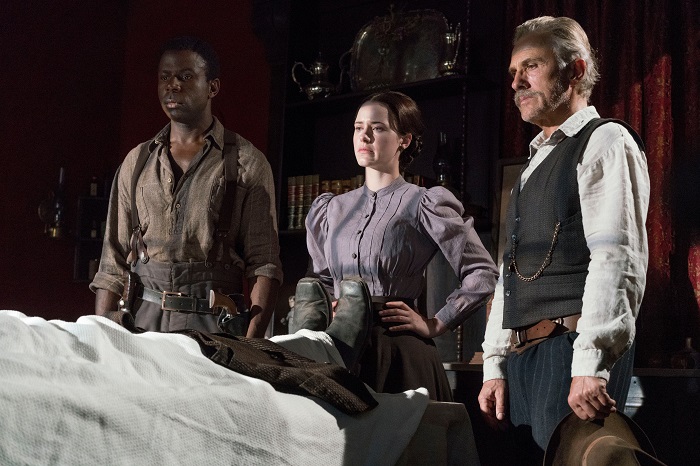
Set in 1897, renowned bounty hunter Max Borlund (Waltz) is called on by a prominent businessman named Martin Kidd (Hamish Linklater). According to Kidd, a buffalo soldier named Elijah Jones (Brandon Scott) abducted his wife Rachel (Brosnahan) and crossed the border into Mexico. He says Jones has demanded $10,000 which he refuses to pay. So he wants Max to go to Mexico and bring his wife back. The job may not fully pass the smell test, but it seems pretty cut-and-dry so Max accepts.
Since Elijah is also wanted for desertion, the army sends the chatty sharpshooter Alonzo Poe (Warren Burke) to accompany Max. The two cross the border, eventually catching up to Elijah and Rachel, and then escort them to a one-horse Mexican town where Max sends word to Martin that he’s found his wife and apprehended her abductor. As they wait for Martin to arrive, another side of Rachel and Elijah’s story emerges. Soon Max, a bounty hunter of principle with an affection for honesty, begins to question everything he’s been told.
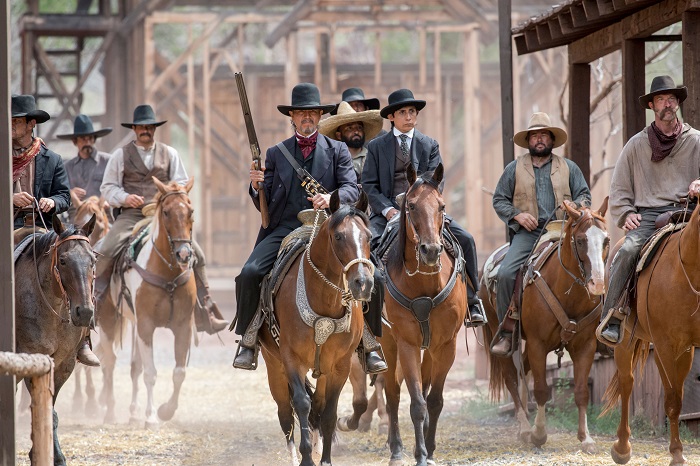
Also in town is Joe Cribbens (Dafoe), a shady type from Texas who was just released from an Albuquerque prison. He’s come south to lay low a bit and play cards. But it just so happens that Max Borlund was the man who put him in prison, and Joe is the kind who holds a grudge. Add to the mix Tiberio Vargas (Bratt), a ruthless outlaw who (along with his gang of faceless final-act fodder) runs the territory and takes a special interest in the gringos new to town.
Image Courtesy of Quiver Distribution
It all makes for a combustible formula that (in true Western fashion) moves from a simmer to a boil. While we wait for the inevitable showdown (a beautifully staged extended flourish of gunfire and retribution) Hill and his cast have a good time unpacking this eclectic batch of characters. Waltz’s well-measured restraint is a solid foil for Dafoe’s gravelly scene-munching. Both are pitch-perfect. Brosnahan is a fearless straight-shooter and a strangely fascinating antithesis to the usual Western femme. And the steely Bratt, gets some fun mileage out of a fairly cookie-cutter heavy.
With “Dead For A Dollar”, Hill treats us to a buffet of gorgeous imagery, sweeping us away with his stunning widescreen vistas and sucking us in with his artfully blocked interiors. Nearly every scene radiates an alluring sepia-tinted glow reminiscent of an vintage photograph but with startling clarity. There’s never a shortage of pretty things to see.
“Dead For A Dollar” may not satisfy those hungry for a fresh spin on the classic Western. But there’s beauty in the way it tips its Stetson to its influences. And it’s not like Hill doesn’t have a few ideas of his own. Take the well-meaning revisionism that doesn’t play out as well as it could, yet adds a spirited contemporary twist. And then you have Hill himself. Just the richness of his style and his sheer filmmaking know-how makes this worth watching. Add in all its other strengths and you have a movie sure to be dismissed by some but cherished by others. Count me in latter camp. “Dead For a Dollar” opens today in select theaters.
For many, the new film “Don’t Worry Darling” went from highly anticipated to widely scorned in a snap, and all it took was a seemingly innocuous FaceTime message between Olivia Wilde and Shia LaBeouf. Navigating the gossipy, social media driven hoopla that followed to get into the actually movie itself may be a chore. But if you get beyond the pre-release tabloid noise you’ll find a saucy psychological thriller with lots going on under its shiny, well-made surface.
Olivia Wilde’s sophomore directorial effort is a nice step-up from her much beloved yet frustratingly banal debut “Booksmart”. Unlike her first film, here it feels like Wilde is doing more than just copying and pasting from other movies. With “Don’t Worry Darling” she swings for the fences. And while she may not hit all of her marks, I love the ambition and the willingness to extend herself in some gutsy new directions. And the results aren’t half bad either.
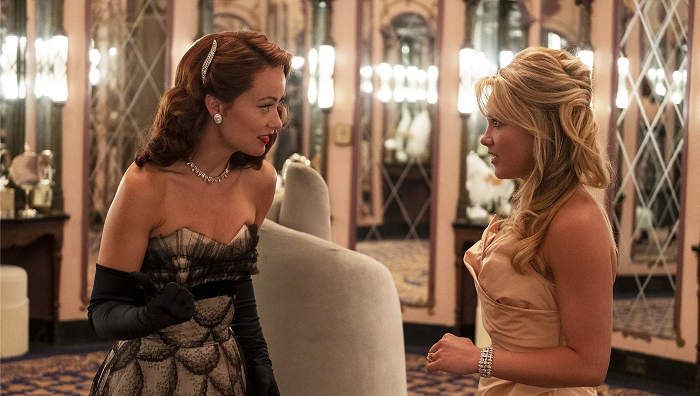
Wilde’s ingenuity and imagination is seen everywhere, but most notably in her visual approach. She and cinematographer Matthew Libatique give their sun-bathed suburb a utopian glow. Everything about their immaculate 1950s veneer (the palm trees, the landscaping, the homes, etc.) is pristine to the point of artificiality. It’s a perfect representation of the pre-fabricated world these privileged few have made for themselves.
But Wilde’s crafty visual technique goes beyond simply capturing setting. It also brings the neighborhood to life and lets us know that something is off with both the community and its residents. Strategic close-ups, an assortment of effective camera movements, and some really clever framing show off the director’s verve. But it also enhances the storytelling, building up some really good tension and even doing the emotional heavy lifting in a few specific scenes.
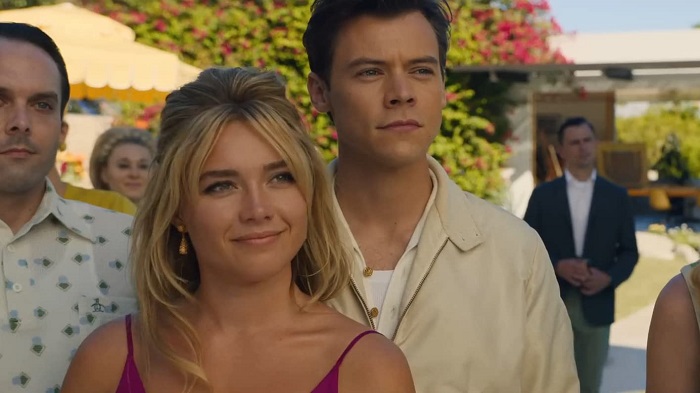
It’s hard to watch “Don’t Worry Darling” and not get instant “Stepford Wives” vibes. More than that, the entire film plays like an early season episode of “The Twilight Zone”. Florence Pugh gives a tenacious performance playing Alice, a devoted housewife to her husband Jack (Harry Styles). The couple live in a lush remote suburb in the middle of what looks like the California desert. The men all work for a vaguely defined initiative called The Victory Project (they work with “progressive materials” whatever that is). The women stay at home, cleaning and cooking until their husbands return from their workday.
In this cozy coterie women have all their needs met and are pampered with nice homes, beautiful dresses, and a bustling social life. But make no mistake, this is a community custom-made for men and built on the malignant ideal of old-fashioned subjugation. This only grows clearer as the story progresses. Yet everyone seems onboard, in large part due to their unwavering trust in the charismatic head of The Victory Project, Frank (Chris Pine). His pop-star presence and persuasive speeches of nonsensical mumbo-jumbo is all it takes to sell his misleading vision to his starry-eyed residents.
But Alice is noticeably different than the other ladies on her block. She’s intuitive and strong-willed. And she’s not the kind to sit idly by and ignore her suspicions. So when she begins noticing some cracks in the community’s idyllic facade, she investigates. And that’s a no-no in a place with such little regard for a woman’s agency. Soon Alice is looking for answers to questions she’s not supposed to be asking which draws the attention of a concerned Frank. And it leads to friction in her marriage as Jack must decide if his loyalties lie with his wife or his privileged lifestyle.
From that synopsis alone you probably have a good sense of some of the themes Wilde and screenwriter Katie Silberman are exploring. But “Don’t Worry Darling” is surprisingly rich and some of its more clever themes don’t become clear until late in the film. That’s when we get the big final-act twist that may lose points for originality, but that does pose some thoughtful questions (I’ll leave them for you to discover).
The cast is a lot of fun and includes Wilde herself playing Alice’s next-door neighbor and best friend, Gemma Chan who doesn’t get much to do, but who has one absolutely brilliant dinner table moment, and an underused Nick Kroll. Pine is mysterious and alluring. And despite what’s been said, Harry Styles is perfectly serviceable as Jack. But it always comes back to Pugh whose fierce yet grounded performance anchors the movie. She’s such an extraordinary actress who possesses the instincts of a seasoned screen veteran despite being only 26-years-old. And it’s those instincts that keep things in check when the movie veers too far off track.
It’s unfortunate that the overblown behind-the-scenes drama has overshadowed “Don’t Worry Darling”. And you can’t help but wonder how much it has influenced those deciding whether to buy a ticket. It’s a shame because Olivia Wilde takes some impressive strides forward as a director, and Florence Pugh shows yet again why she’s one of the most exciting young actresses working today. The film has its flaws. But if you tune out the noise and give it a shot, I think you’ll find there’s a lot to like. “Don’t Worry Darling” is out now in theaters.
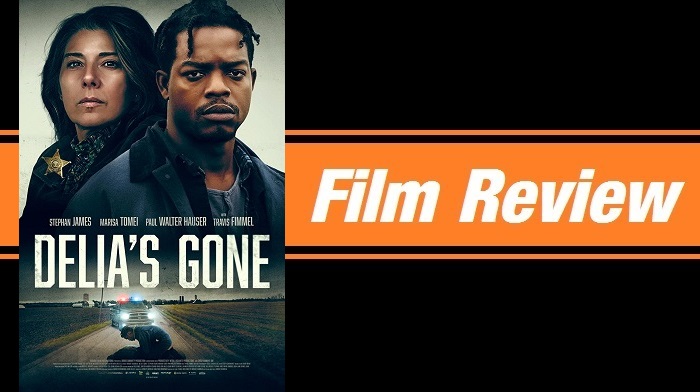
With “Delia’s Gone”, writer-director Robert Budreau combines crime thriller elements with a compelling character study to form a story that works as both a murder mystery and a pointed small town introspection. But it’s the man at the center, Louis, who makes it all work, and it’s through his eyes that we’re able to see and understand the small but progressively ugly world he’s forced to navigate. And it’s through him that the themes of loss, injustice, and resilience boil to surface.
Over the years filmmakers haven’t shied away from portraying autism in their movies. But while these films have been sensitive and respectful in their depictions, they often make a similar mistake. They hone in on the external traits rather than the intense internal struggles that mark their day-to-day lives.
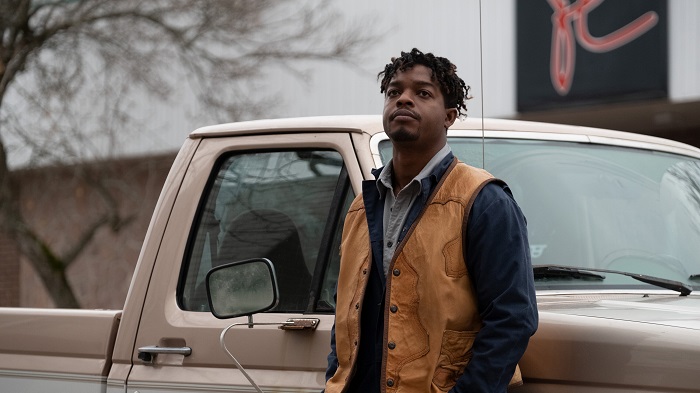
“Delia’s Gone” doesn’t fully avoid those trappings. In fact much of star Stephan James’ lead performance relies on those very external tics and verbal barriers. But Budreau’s script builds a story around Louis that gives us a sense of the chaos brewing in his mind as he tries to process his circumstances and curb his growing anxiety. It’s far from comprehensive and there are a few times where we lose that internal connection with Louis. But Budreau is both thoughtful and sincere in his treatment, and James (so good in “If Beale Street Could Talk”) keeps his performance grounded and true.
Set in small-town Ohio, Louis (a gentle soul with ASD) lives with his troubled sister Delia (Genelle Williams). The two are close, but Delia’s struggles with addiction is taking a toll on her. One evening she surprises Louis with news that she has decided to leave town. Upset and against his better judgement, Louis gets into Delia’s booze cabinet. “It makes me mean,” he says of alcohol early on – a line of dialogue we’re clearly meant to catalog in our minds.
Louis wakes up the next morning and finds blood on his hands and the living room ransacked. He goes to check on Delia only to find her dead on the kitchen floor. Within minutes the town’s sheriff Fran (Oscar-winner Marisa Tomei) and her deputy, Bo (Paul Walter Hauser) arrive and take Louis into custody. With little investigation and even less defense, Louis is convicted and sentenced to five years in prison for involuntary manslaughter.
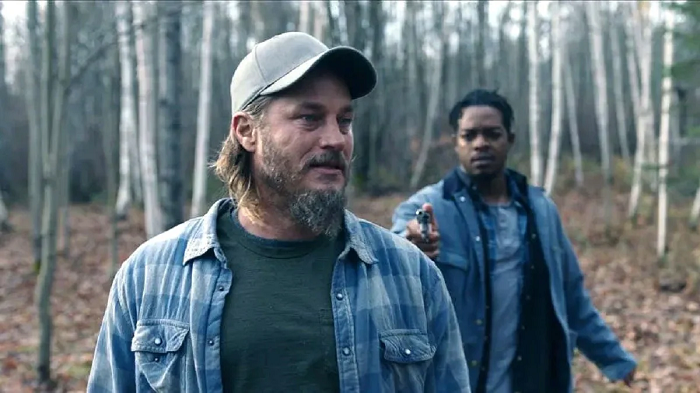
The story then jumps ahead seven years with Louis having served his sentence and now living in a special care facility. He’s surprised by a visit from Stacker Cole (Travis Fimmel), a man from his hometown. Stacker is a man burdened by guilt and looking for some degree of absolution. He tells Louis he has information about the night Delia died. But before he can share it, Louis gets aggressively upset and Stacker is asked to leave. Shortly after, Louis leaves the facility and sets off for his hometown, determined to find answers about his sister’s death.
From there Budreau ramps up the mystery side of his story as Louis follows crumbs of information that lead him to other players intent on hiding the truth. Fran re-enters the picture, now as a state police detective, as does Bo who replaced her as sheriff. Everyone we meet in the second half seems to know more than they’re willing to share, and while we begin to get an idea of where the story is heading, Budreau is able to keep things under wraps until the finale. And while the reveal may not have the jolt it could have, what transpires packs a pretty good punch.
With Budreau’s deliberate pacing and strong character focus along with terrific performances throughout (especially from James and Fimmel), “Delia’s Gone” turns out to be a well-conceived and dramatically rich drama. And while I couldn’t always make sense of certain characters, they feel very much rooted in this world. And we do too, which is yet another reason the movie works so well. “Delia’s Gone” is out now in theaters. “Delia’s Gone” is out now in theaters.










 Keith & the Movies