REVIEW: “Foxcatcher”

FOX POSTER

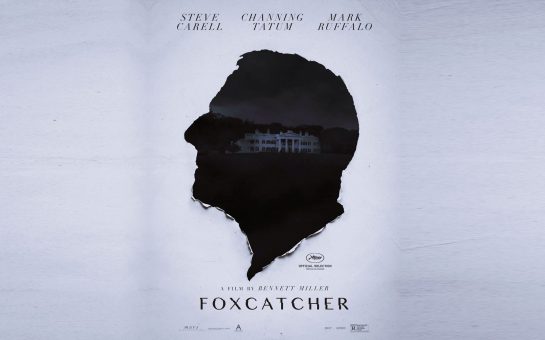
Director Bennett Miller may not make a lot of movies, but when he does his films seem destined for attention. He only has four to his credit including the critically acclaimed “Capote” and “Moneyball”. His latest is “Foxcatcher” and it has already caught the attention of critics and won several prizes on the festival circuit. Miller seems drawn to a special type of biopic. “Capote”, “Moneyball”, and now “Foxcatcher” are biographical dramas about people or relationships that are outside of the normal box.

Mark Schultz (Channing Tatum) and David Schultz (Mark Ruffalo) are close-knit brothers who have each won Olympic gold medals in wrestling. Mark, who seems a bit slow, lives in his older brother’s shadow. There’s an early scene where Mark is giving a less than rousing speech at an elementary school. Afterwards we get an exchange between him and the school secretary revealing that it was actually David who they invited to speak. David is the only person in Mark’s otherwise rudderless life.
FOXCATCHER1

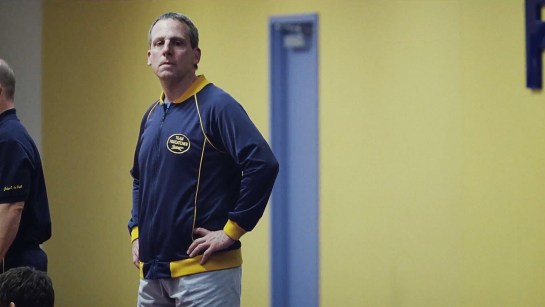
Enter Steve Carrell as millionaire and wrestling enthusiast John du Pont. Carrell is almost unrecognizable in his facial prosthetics and awkward mannerisms. Du Pont invites Mark to join his Foxcatcher amateur wrestling team where he will coach and train for the Olympics. He will receive a big salary and his own lavish home on du Pont’s humongous estate. David declines to go with him, but he encourages Mark to go, believing it could be a really good thing for him. Mark joins Team Foxcatcher and over time develops a close relationship with du Pont.

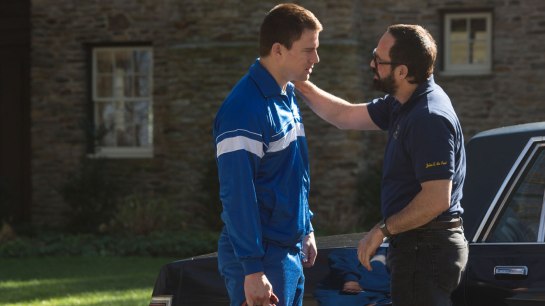
A big chunk of the film focuses on the relationship between Mark and du Pont. Mark finally finds a place where he feels needed and important. He begins to see du Pont as a loving and caring father figure. On the other hand du Pont’s actions and motivations always seem a bit dubious. There is a disingenuous and self-serving air that follows him and at times Mark seems to be his personal and emotional experiment. Du Pont often manipulates and toys with the fragile-minded Mark.

The story shifts a bit after du Point turns on Mark and embarrasses him in front of other wrestlers. Du Pont then seeks out David and convinces him to join Team Foxcatcher which causes Mark to distance himself even more. The rest of the movie centers around the various conflicts between these three personalities – the butting of heads, the frustrations, the lack of trust. Miller presents the unfolding drama slowly and methodically and for the most part it works. The narrative is driven by these three characters and its easy to get caught up in this odd twisted story.
Fox2

And since the film is driven by these three key characters, good performances are a necessity. We certainly get that. Carrell shows an entire new side and a diversity that he has hinted at in the past. Ruffalo has become one of Hollywood’s steadiest actors. Here he gives the most grounded performance of the three. But the big surprise for me was Channing Tatum. I know the guy has a huge following, but I have yet to be convinced that he is a good actor. Well, that was until now. He does great work handling a complex and pivotal character.

“Foxcatcher” isn’t a perfect movie but it’s a very good one. There are a couple of slow patches and the film doesn’t completely stick the ending. At the same time the story is always compelling and watching Carrell, Tatum, and Ruffalo engage this material is a treat. “Foxcatcher” has given Bennett Miller yet another chance to define himself as a filmmaker. This is a movie that definitely fits within his comfort zone and I just wonder what strange and unusual true story Miller is going to tell us next.

VERDICT – 4 STARS

REVIEW: “Force Majeure”

FORCE POSTER

I wasn’t familiar with Swedish filmmaker Ruben Östlund, at least until I watched his recent film “Force Majeure”. Now I find myself anxious to seek out his other work. “Force Majeure” has left that kind of impression – a stinging film with a glossy appearance at first glance but with something far more sharp and jagged underneath. The film has certainly grabbed attention, winning a Jury Prize at Cannes and being nominated for Best Foreign Language Film at this year’s Golden Globes. Surely an Oscar nomination will follow.

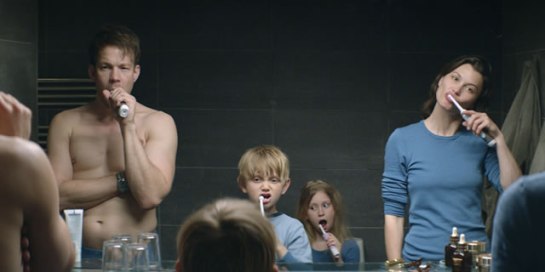
Östlund wrote and directed the film and he handles his material with a scalpel. He carefully dissects his small cast of characters, particularly a husband and wife who are on a ski trip with their two young children. Right from the start we pick up on several interesting things about Tomas (Johannes Kuhnke) and his wife Ebba (Lisa Loven Kongsli). The posh mountain resort where they stay and their fancy ski gear seem to indicate that they are financially secure. There are also references that seem to indicate Tomas is a business man and this trip is a much needed opportunity to spend time with his family. And that’s all we get – only hints about their past. It’s all we need.

Force 3

On the surface it seems we are seeing a happy and healthy family. But Östlund takes us well beyond the window dressing. Several cracks in the facade begin to show, but it truly comes to light as they are having lunch on a terrace with a breathtaking view of the mountains. Fun family small talk and chatter soon gives way to fear after a controlled avalanche gets too close to the restaurant. In a self-centered panic Tomas runs away from their table leaving Ebba to protect their children. It’s a harrowing scene. It turns out that everyone is okay and they even return to eating their lunch. But in this scene the true catastrophe has revealed itself and it has nothing to do with raging snow.

Östlund breaks the film down in five chapters posing as the days of their vacation. Each day the central relationship shows more stress. Instead of laughs and enjoyment, the vacation days feature blank stares and only the required conversation. Whenever the couple do try to talk it inevitably turns back to the avalanche. Ebba is determined that Tomas admit what happened. Tomas responds by denying Ebba’s interpretation of the events. This even bleeds over into an awkward dinner they have with an old friend named Mats (Kristofer Hivju) and his girlfriend Fanni (Fanni Metelius).

FORCE1

There is also the perspective of the children. We rarely get into their heads, but when we do it’s potent and devastating. Östlund doesn’t use the kids to get cheap emotional reactions. Instead we get them in small but powerful portions. They know what is happening. They feel the tension. We feel their fear and concern. At times both of their parents put them on the backburner making them the ultimate victims.

The story of “Force Majeure” is told with an audacious tenacity. Östlund’s focus never strays and he bucks all kinds of conventions in order to wring out every drop of authenticity and veracity from his characters and his story. Even the gorgeous French Alps setting doesn’t distract us from the deeper focus. The mountainous landscapes are stunningly beautiful while at the same time ominously threatening. Even they serve as a metaphor for this seemingly lovely but volatile family situation.

FORCE2

“Force Majeure” also stands out due to Östlund’s remarkable technique. With the exception of a few tracking shots showing the family skiing, Östlund’s camera rarely moves. He frames his scenes by strategically placing his camera in a still position then allowing the scene to play out. The camera doesn’t twitch. It doesn’t turn. It simply observes. This technique results in several well-conceived and methodical scenes, but also a number of long simple takes that relay just as much emotion and information.

At the heart of “Force Majeure” lies a bitter and uncomfortable reflection of a relationship in crisis. As we go along things grow gloomier and I began to think of Michael Haneke, or at least a lighter version of him. There is definitely pain and anguish and we are left with an uncertainty that leaves things up in the air. But all of that is okay because “Force Majeure” is such a brutally honest film and it doesn’t use kid gloves when handling its material. It’s that unbridled truth that makes this such a potent and powerful movie.

VERDICT – 4.5 STARS

REVIEW: “Funny Games” (1997)

funny games poster

Michael Haneke has a reputation for torturing the characters in his movies as well as his audiences. I’ve found this critique to be a bit harsh, but after seeing his 1997 Austrian psychological thriller “Funny Games”, it’s a little easier to see where people are coming from. Haneke’s signature style and filmmaking techniques are all employed here, but what separates this film from others of his I’ve seen is the gruesome and torturous ordeal that we have to endure. Granted, there are varying elements to this in many of Michael Haneke’s movie but nothing quite like this. But that doesn’t mean this is a bad film. It’s an unsettling but riveting movie that never let’s go of you. But be warned, it’s not an easy movie to digest especially for more sensitive audiences.

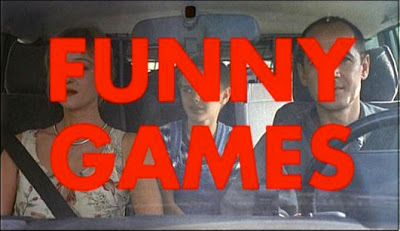
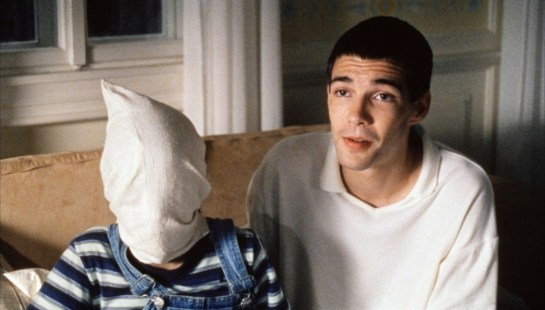
The movie begins with Georg (Ulrich Mühe), his wife Anna (Susanne Lothar), and their son Georgie (Stefan Clapczynski) heading to their lakeside vacation home. Upon arrival they greet their strange acting next-door neighbor who is accompanied by two unfamiliar preppy young men. The family goes on to their lake house where they begin to settle in. Georg and Georgie head down to the lake to get their boat ready for sailing while Anna prepares dinner. That’s when the two young men, Peter (Frank Giering) and Paul (Arno Frisch) show up and begin giving Anna a hard time. After Georg and Georgie return things turn really bad and Peter and Paul put the family through a hellish game of psychological torture that goes beyond cruel.

FUNNY GAMES1

There’s no need to go further into the story because it would unquestionably spoil things. Let’s just say “Funny Games” evolves into a voyeuristic and often times uncomfortable experience. But to be honest that’s exactly what Michael Haneke is trying to create and it is most effective. I found myself squirming in my seat several times and Giering and Frisch are quite menacing but in a very different way that we usually see. Haneke and his two young actors are able to sell us on uncertainty and we have a hard time reading and a harder time predicting the actions of Peter and Paul. Frisch gives a stand-out performance as the more talkative and calculated of the two. Surprisingly his fantastic work didn’t lead to a bigger career. Giering is also very good as the quieter and seemingly more subservient Peter. It was at the time considered a breakout performance. Sadly he would die only a few years later after bouts with alcoholism and severe emotional issues.

I alluded earlier to Haneke’s specific filmmaking techniques including using still cameras and letting his scenes play out. It’s heartily employed here. So often Haneke strategically sets his cameras and then requires us to watch as his characters go through a variety of different situations. In “Cache” it was through the video camera of a mysterious and unknown provocateur. In his most recent film “Amour” we often times are forced to observe the difficulties and indignities of an elderly couple trying to manage a crippling illness. But it’s at an entirely different level in “Funny Games”. We watch a nice middle-class family being psychologically terrorized and in a sense we are enduring it too. It’s not an easy watch and there doesn’t seem to be an ounce of mercy coming from script or the camera.

FUNNY GAMES2

But perhaps the most fascinating thing about “Funny Games” are the numerous references to movies, movie plots, and movie structures made by Paul and Peter. Then there is Paul’s obvious awareness that he is in an actual movie. I don’t intend to go any further because it’s something better experienced than told about. But these little additions do more to make the audience feel like observers which gets to the big point Haneke is making with this picture – the fascination with violence in the media. In fact there’s one point where Peter even says “We mustn’t forget the importance of entertainment”. The line fits perfectly in the situation, but it’s also directed at us. Haneke attempts to prove that very point by exposing the audience and I have to say he got me.

You certainly can’t call “Funny Games” a fun movie and its not the type of film that you’ll want to watch over and over. It’s a disturbing thriller that I found to be smart and compelling but also brutally painful and sometimes emotionally unbearable. As someone growing more and more appreciative of Haneke’s work, I did find “Funny Games” to be a mesmerizing film. Sure it’s unsettling but it intends to be and it does make some interesting points in very sly and crafty ways. I certainly wouldn’t call this a film for everyone, but its unconventional and unashamed boldness really impressed me. It’s another winner from Haneke. Just be aware of what you’re getting into.

VERDICT – 4.5 STARS

REVIEW: “Fruitvale Station”

FRUITVALEPOSTER

For those who may not know, “Fruitvale Station” is a docudrama based on the shooting death of 22-year old Oscar Grant by a Bay Area Rapid Transit police officer. The shooting took place on January 1, 2009 and was caught on numerous cell phone videos from witnesses. The incident would spark protests, unfortunate rioting, and dialogues about a number of feelings and concerns. Some have said this is was a racially motivated crime. I’m not sure there is definitive proof of that. Others have said the shooting resulted from Grant resisting arrest. I don’t think there is any way this tragedy can be fully placed on Oscar Grant’s shoulders. One thing is for certain, a young African-American man, a father, lost his life and it should have never happened.

“Fruitvale Station” marks the filmmaking debut from Ryan Coogler. He was drawn to the story and spent time with Grant’s family in order to develop a deeper more human profile. Coogler stated “I wanted the audience to get to know this guy, to get attached, so that when the situation that happens to him happens, it’s not just like you read it in the paper, you know what I mean? When you know somebody as a human being, you know that life means something.” It’s a smart approach that gives the film a real emotional kick. But some have criticized the overly sympathetic portrayal of Oscar saying that is glosses over some of his real personal and legal problems.

Fruitvale

When you go in the docudrama direction, especially when tackling such a potent incident, you open yourself up that kind of criticism. I did feel Coogler was softening the edges a bit in order to draw more empathy from the audience. That said, it never took away the hurt I felt for the family, the discomfort of watching the police aggression, or the sadness brought on by Oscar’s death. The film does a good job of drawing those emotions from us. Is the film emotionally exploitative at times? I think so. A few scenes are a bit heavy-handed and a more seasoned filmmaker would have probably avoided them. Still the overall impact of the film is strong despite these issues.

This movie is a remarkable feature film debut for Coogler but he’s not the only revelation found in “Fruitvale Station”. 26-year old Michael B. Jordan is excellent. Known mainly for his work in television and in last year’s “Chronicle”, Jordan has caught a lot of attention playing Oscar Grant. There is a raw authenticity to what he is doing on screen that works perfectly with the role. He’s joined on screen by Academy Award winner Octavia Spencer who also helped produce the film. She plays Oscar’s mother and once again she is very good. Melonie Diaz does great work as well playing Oscar’s wife Sophina.

Minus a few small stumbles, which can be expected from a first time filmmaker, “Fruitvale Station” is still an emotionally powerful film that puts a spotlight on an unfortunate tragedy. Coogler makes a strong directorial debut but Michael B. Jordan also makes a statement in what should be a breakthrough performance. Even though I felt slightly manipulated as the story was moving along, the tense and gutwrenching ending was no less devastating. In the end this movie works, and it’s impossible not to be effected by it.

VERDICT – 4 STARS

REVIEW: “Frances Ha”

Frances-Ha poster

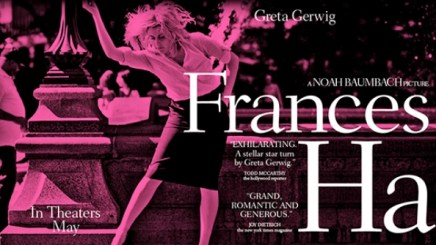
“Frances Ha” is a movie that will either drive you insane or put you under its spell. It’s a movie filled with quirky conversations and some slightly eccentric characters each with their own set of problems. On the surface that may not sound like everyone’s cup of tea. But it really works because it revolves around a fascinating main character named Frances. She’s played by Greta Gerwig, an actress I really appreciate, and her central performance is what drives the film.

It could be said that nothing really happens in “Frances Ha”. The modest story follows Frances who at first shares a New York City apartment with her best friend Sophie (Mickey Sumner). Frances is a hapless struggling dancer who finds her circumstances more difficult after Sophie moves out. We watch her try to find an affordable place to stay. We watch her try to land a stable job. We watch her try and make new friends. But Frances could be called insecure and socially awkward. This leads her to try too hard to make impressions. This results in uncomfortable and often times embarrassing situations for her.

There is a big comedy element to this film so much of that is often played for laughs. But there is a subtle and sympathetic undercurrent that flows throughout the film. At times I genuinely felt for Frances as she stumbled over her words or didn’t know when to stop talking. One part of me was laughing while the other part felt guilty for doing so. Gerwig gets a ton of credit for that. She co-wrote the script alongside director Noah Baumbach and she has a real strength for playing this type of character. Sure, some may find her gawkiness annoying but not me. I truly found myself caring about this character.

FRANCES

Baumbach does a great job contributing to the solid script but he also deserves credit for his direction. He chose to film in black-and-white and it really suits the picture. There are also numerous tips of the hat and homages ranging from Woody Allen to French New Wave cinema. For example, the black-and-white combined with the numerous New York City locales is an unmistakable tip of the hat to “Manhattan”. The film is also unique due to its rapid fire editing. It jumps from scene to scene, never staying in one place too long. But surprisingly it really works in this film and Baumbach is artful in his use.

“Frances Ha” certainly isn’t breaking new ground and some may not find its peculiarity all that entertaining. It does spin its wheels in spots and it may not blow you away with its ambition. But sometimes a movie doesn’t need to do those things to be successful. That’s the case with this film. “Frances Ha” works because of its intriguing central character, a great performance from Greta Gerwig, and a really interesting technical approach from Noah Baumbach. That was more than enough to make me really appreciate “Frances Ha”.

VERDICT – 4 STARS

REVIEW: “Fast and Furious 6”

FAST 6 poster

I’ve tried on a few occasions to watch the earlier movies in the Fast and Furious franchise but I could never get into it. The whole underground street racing scene has never appealed to me and the barrage of Skittles colored cars and bikini-clad women gyrating in slow motion got old quick. Now clearly the series has an ardent following as evident by the four total movies that fit this description. I just couldn’t count myself among them.

But in 2011 the series took a sharp turn in the right direction with the release of “Fast Five”. Gone were the street car racing raves and gratuitous skin shots (with the exception of one obligatory homage of sorts). Instead director Justin Lin and writer Chris Morgan made the film into a full-blown old school action picture only with vehicles as the main weapon of choice. It was a great move and I had a ton of fun with it.

So that brings us to “Fast and Furious 6” (yes, there have actually been six of these films). Lin And Morgan return as does franchise stalwarts Vin Diesel and Paul Walker. After making his franchise debut last time, Dwayne “The Rock” Johnson returns as do many other faces that franchise faithfuls are sure to recognize. The good news is “Fast and Furious 6” sticks to the same formula as the last picture. It’s loud, preposterous, and seemingly custom made for the summer popcorn season. I don’t think it’s as good as “Fast Five”, but it’s still a fuel-injected good time.

Fast 6 3

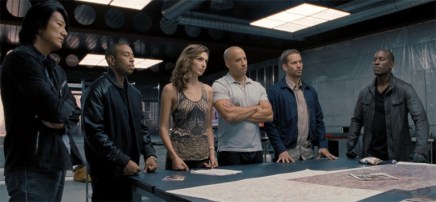
Once again an international location is chosen and our cast is thrown in it. Last time it was Rio. This time it’s London, England. Dom Toretto (Diesel) and Brian O’Conner (Walker) are still wanted men. They’ve both settled down in the Canary Islands with hopes of putting their former lives behind them. But that quickly changes when DSS agent Luke Hobbs (Johnson) appears at Dom’s doorstep with news that an old acquaintance has appeared and is working for a powerful ex-military criminal named Owen Shaw (Luke Evans). Dom is persuaded to get his team back together and help Hobbs stop Shaw and find out about this mysterious person from his past.

There are several things about this film that are a given. Diesel grinds up his handful of lines in his familiar deep and gravelly voice. The Rock is given an endless supply of hammy tough guy one-liners and corny testosterone-laced analogies. And Paul Walker still has that sheepish and boyish vibe going. The rest of Dom’s crew aren’t asked to do any heavy lifting and that’s a good thing. Neither Sung Kang or Chris “Ludacris” Bridges are particularly good actors and Tyrese Gibson’s comic act grew old quick. But none of these performances are why people will go to see this film.

But I do want to talk about the two newcomers to the Fast and Furious world. I’ve just recently noticed him but I quite like Luke Evans. He gives a rock solid performance here as the main baddie. While his character is really nothing more than a thief and his overall motivations are shallow, Evans brings a pretty menacing quality to the role. And then there’s Gina Carano. Can I just go ahead and say I LOVE Gina Carano? Once again she’s tough as nails and she holds her own among the macho types. Just like Steven Soderbergh in the movie “Haywire”, director Justin Lin keeps her within her comfort zone and never stretches her beyond her bounds. She’s one of the high points for me and she gets her scenes to shine.

Fast 6 1

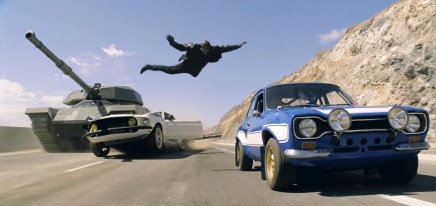
But enough about the acting. “Fast and Furious 6” is a straightforward action picture built upon some ludicrous yet spectacular set pieces and more flipping, jumping, and crashing of cars than you can count. The movie aims to be even more outlandish than the previous film and it succeeds. But it still keeps you glued to the screen as the vehicular mayhem amps up with each big sequence. Sure it’s sometimes dumb and always over the top. Some of the dialogue is high-end cheese at its finest and the jokes often fall flat. But it still delivers the pedal to the metal, “ride or die” adrenaline rush that has made it such a guilty pleasure.

I still say this film isn’t as fluid or as polished (if you can call any of these movies polished) as “Fast Five”. But I appreciate that the movie never pretends to be anything other than what it is. The filmmakers know the type of movie they’re making and there is no pretension or artifice at all. That’s key for the audience as well. If you know what kind of movie this is, you’ll know what to expect. Don’t think you’re getting a film with deeper, thought-provoking themes and top-tier performances. Understand that this film and this series is all about the wild ride and if you’re willing to get into the car, you’re going to have a good time.

VERDICT – 3.5 STARS