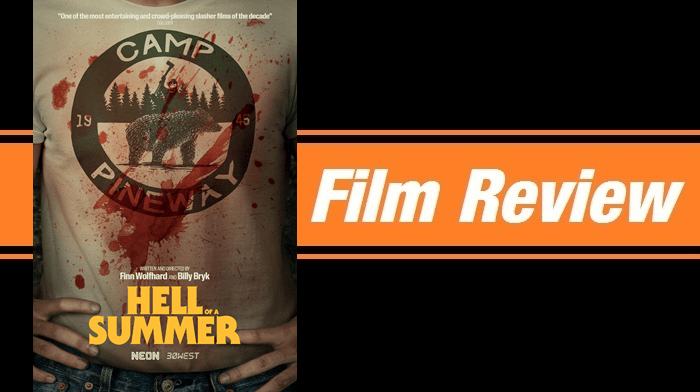
REVIEW: “Hell of a Summer” (2025)

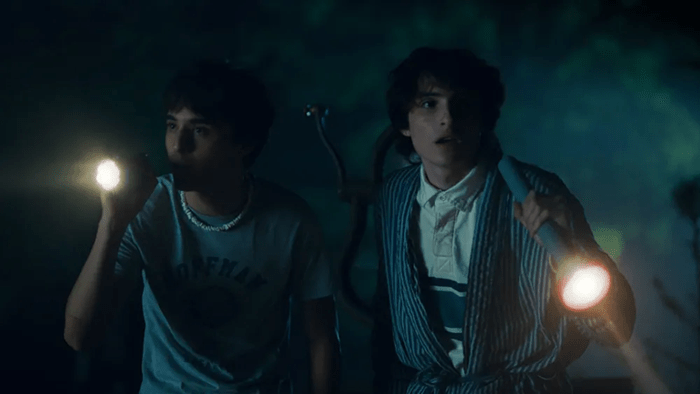
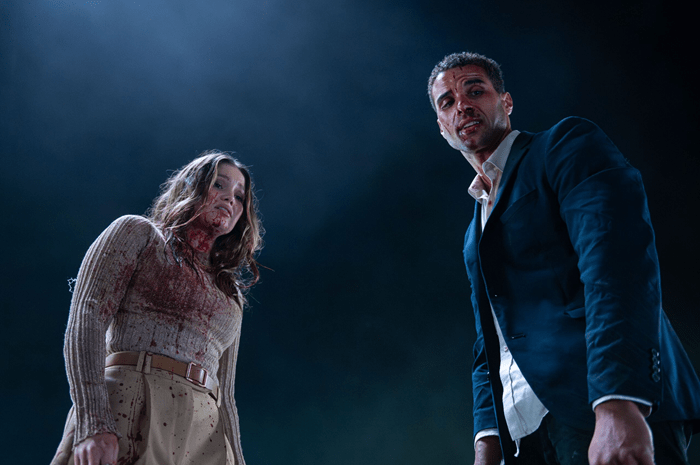
Independent distributors Neon and A24 have a long history of releasing prestigious indies that are hits with critics and awards voters alike. At the same time, neither have been afraid to delve into genre, especially the diverse and blood-soaked world of horror. The latest example is Neon’s “Hell of a Summer”, a horror-comedy homage of sorts from co-directors, co-writers, co-producers, and co-stars Finn Wolfhard and Billy Bryk.

To the young filmmakers’ credit, Bryk and Wolfhard show off a genuine appreciation for the slasher genre. But outside of a few funny lines and some well-executed gags, they aren’t able to bring along anything fresh or unexpected. And they aren’t able to put their own stamp on what is well-worn material. Even more, they never quite commit to either the horror or the satire. So the movie ends up stuck somewhere in the middle, excelling in neither but not really floundering either.

Image Courtesy of NEON

“Hell of a Summer” embraces nearly every summer camp slasher trope, putting a playful spin on some of them and leaning a bit too heavily on others. The film’s biggest strength is found in the goofy but endearing Fred Hechinger. He plays Jason Hochberg, a 24 year-old whose low-bar dream is to one day become a camp leader. In fact he’s so determined that he chose his seventh straight summer at Camp Pineway over an internship at a law firm, much to the chagrin of his frustrated mother (Susan Coyne).

Jason arrives at Pineaway Camp to work another summer for the owners, John (Adam Pally) and Kathy (Rosebud Baker). What he doesn’t know is that the couple have been mercilessly murdered by an unseen killer in the film’s prologue. Jason takes it upon himself to take charge until John and Kathy arrive. But that’s easier said than done, especially on Counselor Weekend where his fellow camp counselors would rather party than do any of Jason’s planned activities.

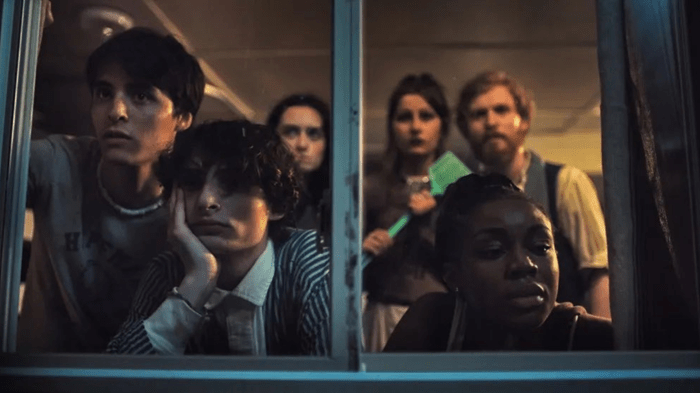
Outside of Jason, the counselors are a collection of slasher movie archetypes whose purpose should come as no surprise. There’s the image-obsessed Bobby (Bryk), the lovestruck Chris (Wolfhard) and the girl he’s crushing on, Shannon (Krista Nazaire), the tough guy, Mike (D’Pharaoh Woon-A-Tai), the TikTok pretty girl, Demi (Pardis Saremi), the kindly outcast, Claire (Abby Quinn), the theater brat, Ezra (Matthew Finlan), the weird girl who loves the occult, Noelle (Julia Lalonde), the moody kid with a peanut allergy, Ari (Daniel Gravelle), and the raging vegan, Miley (Julia Doyle).

Image Courtesy of NEON

In fairness, nearly everyone has at least one funny line to deliver which turns out to be one of the movie’s saving graces. But in reality they’re just fodder for the masked killer who pops back up and starts murdering the counselors in often underwhelming ways. The mystery of the killer’s identity immediately becomes a central part of the story. Unfortunately the reveal is a shallow, uninspired letdown which leaves a ton of questions and ends things on a yawn-worthy note.

Outside of several funny lines and a really good Fred Hechinger performance, “Hell of a Summer” has a hard time standing out in a memorable way. It can’t quite muster the same appeal as the blood-soaked genre movies it clearly admires. And it doesn’t have enough of its own flavor to come across as something original. But Bryk and Wolfhard show impressive flashes as young filmmakers, especially when it comes to snappy humor. And while they still have a ways to go in some areas, the pair show an energy and commitment that will only help them going forward.

VERDICT – 2 STARS

REVIEW: “Heart Eyes” (2025)

For those moviegoers worried that we’re running short of psychopathic masked serial killers, fear not. “Heart Eyes” is here, a wild genre hybrid that mixes ingredients from sappy romantic comedies and blood-saturated slasher movies. It’s a gleefully self-aware date night cocktail that derives much of its enjoyment through its giddy embrace of numerous genre tropes. To put it simply, director Josh Ruben knows and delivers on his assignment.

Ruben, along with screenwriters Phillip Murphy, Christopher Landon and Michael Kennedy, fashion a movie so in tune with its own silliness that you can’t help but get onboard. You’ll laugh at the goofy gags and abject absurdity as much as you’ll recoil at the jolting violence and gruesome gore. But most surprising is how a movie that is both a romcom parody and a shameless splatterfest can be this shrewdly scripted and devilishly charming.

Olivia Holt is sturdy and committed playing Ally, a twenty-something former med student who now works as a Seattle marketing executive. Things aren’t going well at work following a bad ad pitch and now her tyrannical boss (Michaela Watkins) is threatening to fire her. Meanwhile her love life isn’t much better. Ally recently broke up with her boyfriend, but she can’t quite stalking his social media accounts.

Image Courtesy of Sony Pictures Releasing

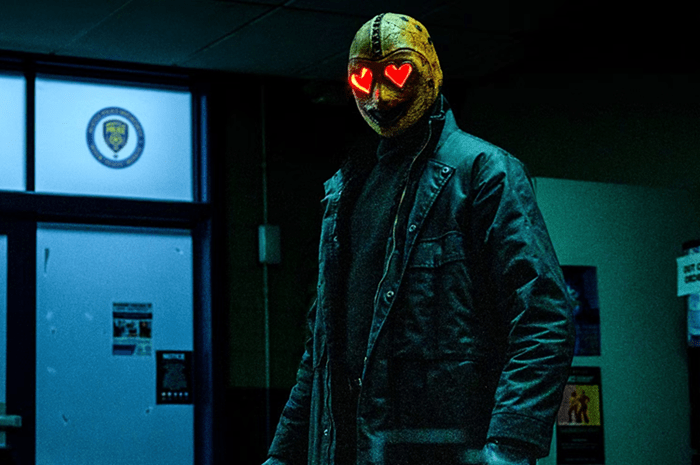
Elsewhere, news reports tell of a bloodthirsting maniac on the loose in Seattle. The media has dubbed him the “Heart Eyes Killer” and for obvious reasons – he wears a crude leather mask with two hearts for eyeholes. He targets random cities for his annual Valentine’s Day killing sprees, hunting and slaughtering romantic couples for reasons that (of course) will eventually come to light in the final act. First it was Boston, then Philly, and now it’s Seattle.

Ally’s boss demands she redo her ad campaign and pairs her with a hunky hotshot named Jay (Mason Gooding). Following a rather unpleasant working dinner, Ally spots her former beau outside of the restaurant with his new girlfriend. In an impulsive move, she plants a kiss on Jay in hopes of making her ex jealous. But she inadvertently gets the attention of Heart Eyes who’s watching from the bushes.

The killer mistakes Ally and Jay for a couple and makes them the focus of his Valentine’s evening festivities, chasing the two around the city and butchering anyone who happens to get in his way. One of my favorite running gags involve the two repeatedly trying to convince Heart Eyes that they are not together. Yet in classic romcom fashion, that changes over the course of the night as Ally and Jay get a little closer with every near-death encounter.

Image Courtesy of Sony Pictures Releasing

As you watch “Heart Eyes”, romcom and slasher tropes are scattered like Easter eggs and spotting them is a big part of the fun. The swell of sappy love songs, the aggressively awkward meet-cute, the jabbering best friend (Gigi Zumbado). On the other side you get the slow walking but always present killer, an array of hapless victims, bumbling police officers (played by Jordana Brewster and Devon Sawa) who are no help at all. This just scratches the surface of what you’ll find.

“Heart Eyes” is a mashup in its truest form. It artfully combines the well established frameworks of romantic comedies and slasher movies into one wildly entertaining confection. To no surprise its story is a little shallow, and the end reveal isn’t all that satisfying. But Holt and Gooding make for a likable and root-worthy duo while Heart Eyes is an especially brutal killer, using a variety of weaponry to deliver some truly creative carnage.

Again, the filmmakers know what kind of movie they’re making. Ruben and company have clearly watched a number of romcoms and they possess an obvious love the slasher genre. Now sprinkle in an assortment of well-timed and genuinely funny jokes and you have “Heart Eyes”, a movie that knows its target audience and is happy to feed them exactly what they’re hungry for. “Heart Eyes” opens in theaters today.

VERDICT – 3.5 STARS

REVIEW: “Homestead” (2024)

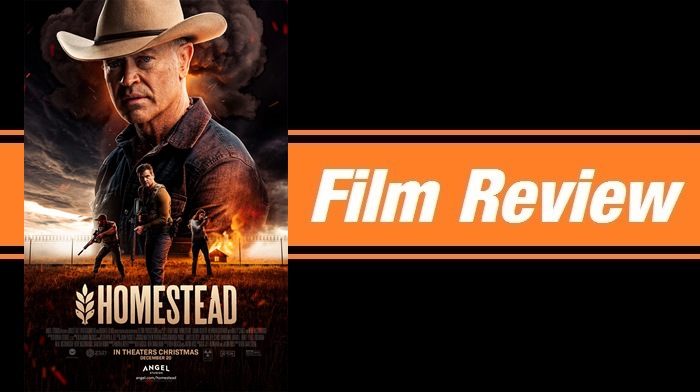
Director Ben Smallbone gets some compelling material to work with in “Homestead”, a post-apocalyptic drama that has all the makings of an immersive big screen experience. The film takes its inspiration from the popular 2018 novel Black Autumn by Jeff Kirkham and Jason Ross. The book was the first in a 10-volume series which is now being adapted into an eight-episode streaming series by Angel Studios.

That last bit speaks to a hurdle “Homestead” has a tough time clearing. The movie does some solid tablesetting from building up the story’s complex world to introducing the characters who inhabit it. But just as the story reaches its dramatic crescendo, the film comes to a sudden halt. That’s because it’s all working towards the streaming series. There’s nothing inherently wrong with that. But it shortchanges those hoping for a more complete big screen experience.

Written for the screen by Phillip Abraham, Leah Bateman and Jason Ross, the movie opens with a jolt as a nuclear bomb is detonated near Los Angeles. Soon after, the nation’s power grid is hacked and communications are cut off. These early signs of a crumbling society plunge the entire country into chaos. Fear leads to panic which leads to violence as desperate people scramble for supplies. Meanwhile information remains scarce, leaving the population spiraling into oblivion.

Image Courtesy of Angel Studios

Amid the turmoil we’re introduced to Jeff Eriksson (Bailey Chase), a combat hardened former Special Forces operator whose had a tough time setting aside his military persona since retiring. Despite his best efforts and the encouragement of his wife Tara (Kearran Giovanni), Jeff has struggled to connect with his kids, especially with his oldest son, Abe (Tyler Lofton). After the bomb is detonated, Jeff’s soldier side kicks into full gear. He gathers his family and heads to a place called Homestead.

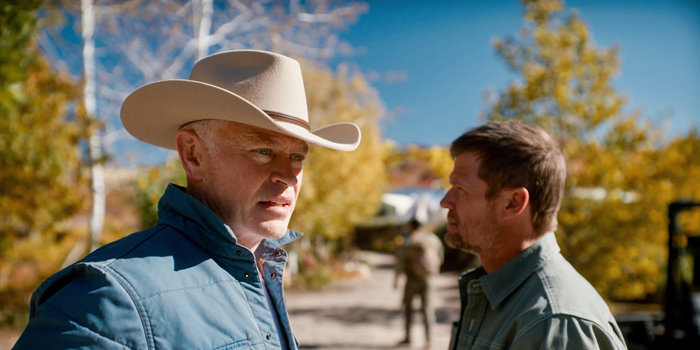
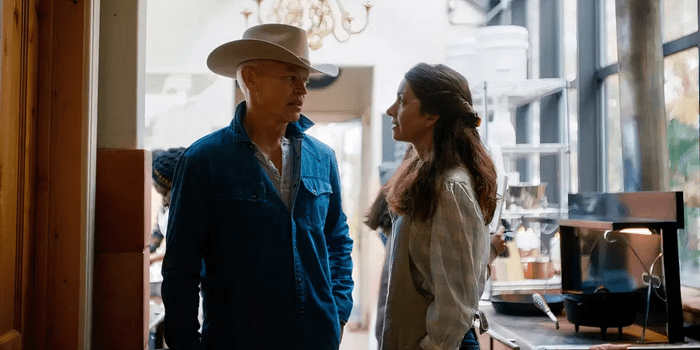
Nestled on a sprawling property in the Rocky Mountains, Homestead is a massive fortified estate owned by a wealthy landowner named Ian Ross (Neal McDonough). Ian and his God-fearing wife Jenna (Dawn Olivieri) have been preparing for this day by building his own solar power system, indoor gardens for growing food, a warehouse stocked with rations, and an arsenal full of weapons. He even took the precaution of hiring Jeff and former members from his unit to lead his security force if something were to ever go down.

Early on, “Homestead” leads you to believe it’s some doomsday survivalist tale heralding the virtue of those with the foresight to be ready for the inevitable apocalypse. But as it turns out, the movie is smarter than that. It fairly quickly introduces a number of legitimate moral quandaries that none of their military background or end-of-the-world readiness prepared them for.

Image Courtesy of Angel Studios

Much of the film’s conflict is between Ian and Jeff – two men who see their situation through dramatically different lenses. Ian is determined to protect Jenna and their daughter Claire (Olivia Sanabia) at all costs. But he has genuine empathy for those unprepared and optimism that the government will eventually come to their aid. Jeff is a rock-hard realist who struggles to maintain a grasp on his humanity. His tactics are well-meaning but cold and forceful to the point that he’s unable to see beyond “the mission” at hand.

Things ratchet up more as refugees begin arriving at Homestead’s gates. The human dilemma becomes a significant plot point and adds an element to their situation that Ian never considered. His decisions get even tougher when more hostile threats arrive. The story takes a few unfortunate diversions including a schmaltzy teen romance that clashes with the rest of the movie. But overall Smallbone does a good job developing the drama and building tension.

Yet there’s still the nagging issue of the film playing like a big screen pilot episode with so much left unfinished. There are several story threads that are left dangling because they’re clearly intended for the series (take Jeff’s daughter and her prophetic visions). In fairness, the filmmakers never hide their intent and this isn’t the first film meant to frame what’s to follow. But “Homestead” needs a more solidifying third act and a payoff that does more than direct us to a streaming platform. Still, the movie succeeds in several ways, and it’s hard not to be absorbed in the dramatically rich setup we’re given.

VERDICT – 3 STARS

REVIEW: “Heretic” (2024)

Psychological horror and Hugh Grant. Now that’s a combination I couldn’t possibly turn down. It also happens to be the recipe for one of the year’s most intriguing movies. In “Heretic” Grant plays a suave and mannered Englishman who lures two young Mormon missionaries into a harrowing game of cat-and-mouse. It’s a juicy role custom-made for this second phase of Grant’s exceptional acting career.

“Heretic” comes from the writer-director duo of Scott Beck and Bryan Woods whose last film was 2023’s underrated science-fiction thriller “65”. “Heretic” is a much different movie. It’s a frightening examination of belief or (depending on your perspective) unbelief. We’ve seen countless horror movies centered around religious fanatics who wield their “faith” in all sorts of dark nefarious ways. Beck and Woods flip the script leading to something strikingly fresh yet equally chilling.

Image Courtesy of A24

“Heretic” opens by introducing us to two twentysomething missionaries from the Church of Jesus Christ of Latter-day Saints. There’s the devout Sister Paxton (Chloe East) and the slightly more worldly Sister Barnes (Sophie Thatcher). The pair venture to a house on the outskirts of town in response to a request for more information about the church. As a storm begins brewing the two girls rap on the front door and soon greeted by Mr. Reed (Grant), a cheerful Brit with a skeptical interest in religion.

Mr. Reed invites the girl to come in out of the weather to which they politely decline, telling him they’re not allowed to come inside unless another woman is present. He informs them his wife is in the kitchen tending to a freshly baked pie which is enough to convince them. Obviously it’s a bad idea – we know it immediately. But Grant’s infectious natural charm is such that even we can feel the tug of persuasion with each playful smile and kindly word.

As the three have a seat in the living room, the girls begin their well-rehearsed presentation. But Mr. Reed cordially interrupts with a variety of questions of his own, some about church history and Mormon doctrine, others about things as simple yet intentional as favorite fast food restaurants. It’s a fascinating exchange that slowly begins to reveal Mr. Reed’s (and the movie’s) more sinister intentions.

I wouldn’t dare reveal much more. As mentioned above, their genial conversation turns into a psychological game of cat-and-mouse before eventually giving way to an even darker and nastier third act. Sister Paxton and Sister Barnes are forced to navigate the thorny ground of belief versus disbelief if they are to make it out of Mr. Reed’s labyrinthine house alive.

Image Courtesy of A24

While the final 20 minutes or so takes a slightly more traditional horror movie form, “Heretic” never loses its welcomed originality or simmering sense of dread. The smart and crafty script is one of the year’s best, tackling the themes of faith and skepticism while also diving into the subject of extreme obsession.

While “Heretic” is well-written and well-directed, it’s the performances that may be its ace in the hole. Grant is the standout, juggling effortless charm with unnerving sadism to deliver some of the year’s best work. He’s also devilishly funny, even hitting us with a Jar Jar Binks impression none of us knew we wanted. But East and Thatcher hold their own, heightening the stakes by effectively conveying both innocence and dread. All three are terrific and are crucial threads in the terrifying web Beck and Woods have spun.

VERDICT – 4 STARS

REVIEW: “Here” (2024)

Robert Zemeckis and Tom Hanks have a history of making some pretty good movie magic together. 1994’s “Forrest Gump” won six Academy Awards. 2000’s “Cast Away” remains a personal favorite of mine. 2004’s “The Polar Express” has become a perennial Christmas classic for many. And regardless of what my film critic colleagues say, 2022’s live-action “Pinocchio” had more than enough heart, charm, and creative vision to “justify its existence”.

Now Zemeckis and Hanks team up for the fifth time with “Here”, a warm-hearted drama built around a gutsy high-concept idea that works in more ways than it doesn’t. The film is based on a six-page comic strip by Richard McGuire that was published in 1989 and turned into a graphic novel in 2014. Written for the screen by fellow Oscar winners Zemeckis and Eric Roth, “Here” is a bold and ambitious adaptation that may not reach the full potential of its concept, but that swings for the fences nevertheless, challenging cinematic norms and touching our souls along the way.

A part of me wonders if we’ve grown too cynical and jaded for a movie like “Here”. Not so much for its technical conceit, but for its earnest and open-hearted vision. There’s little resembling a cohesive plot. Instead “Here” functions as a thematically rich experience you absorb and relate to. It can be sweet and unashamedly sentimental. But it’s also honest and straightforward with its intentions.

Image Courtesy of TriStar Pictures

With “Here”, Zemeckis presents a multi-generational saga that explores the various phases of life, the persistence of time, the immeasurable value of family, and the power of unfailing love in light of our human fallibility. And it all unfolds through the lens of a single static camera with a fixed point-of-view, set upon one small parcel of New England land. As the camera sits stationary for the duration of the film, centuries of life play out before our eyes, most involving a single family and the colonial house they share.

“Here” takes a non-linear approach to storytelling, artfully moving us back-and-forth to different points on the timeline while telling several stories along the way. We see the house being built in 1911 and meet the first of several generations of residents, an aviation enthusiast (Gwilym Lee) and his disapproving wife (Michelle Dockery). A little later it’s occupied by an easygoing inventor (David Flynn) and his high-energy wife (Ophelia Lovibond). And in our current day, it’s a young couple (Nikki Amuka-Bird and Nicholas Pinnock) and their teenage son (Cache Vanderpuye). We also get (briefly), dinosaurs, Native Americans, and Ben Franklin.

But the bulk of its time follows the Young family. In 1943, Al (Paul Bettany) and his wife Rose (Kelly Reilly) buy the house after he returns from World War II. Al is a heavy drinker and struggles with PTSD. But he’s a hard worker who desperately wants to provide for his family. Meanwhile Rose proves to be the home’s stabilizing force. They go on to raise three kids in the house, one of them being Richard (Tom Hanks), the film’s most prominent character.

Image Courtesy of TriStar Pictures

Richard meets and falls for Margaret (fellow “Forrest Gump” alum Robin Wright) who he brings home to meet his family. Later, after discovering Margaret is pregnant, the two get married and end up living with Al and Rose. Before long their daughter Vanessa is born. From there we follow the ebb and flow of the Young family’s life playing out in their living room. And similar to the bustling world outside of their big bay window, there’s a lot of beauty, chaos, and change to behold.

As Zemeckis plays hopscotch across his timeline, he uses a variety of young performers and digital de-aging technology to follow his characters through various stages of their lives. The effects work can occasionally be jarring, but it’s often mind-blowing. Meanwhile the evocative score from Alan Silvestri (yet another “Forrest Gump” alum) is teeming with warmth yet with an ache that’s befitting of the realities being explored.

“Here” is an experiment for you to sit back and emotionally savor as it chronicles the circle of life with all of its joy, sorrow, and bittersweetness. It’s not a movie custom-made for social media buzz. It doesn’t milk the celebrity status of hot young stars. It doesn’t cater to any edgy popular trend. It’s simply a movie about life where we watch significant events unfold on screen that distinctly relate to our own real-world experiences. It’s all conveyed through amazing visual craft and a cast putting every bit of themselves into realizing a powerful shared vision. “Here” is in theaters now.

VERDICT – 4 STARS

REVIEW: “Hold Your Breath” (2024)

The directing duo of Karrie Crouse and Will Joines make impressive feature film debuts with “Hold Your Breath”, a psychological horror-thriller set during the devastating Dust Bowl of the 1930s. Anchored by a wrenching Sarah Paulson lead performance, “Hold Your Breath” combines devastating elements from American history with familiar genre tropes to form a well-made and thematically rich movie. It’s a little too ambitious, but I appreciate its big swings.

Set in 1933, Paulson plays Margaret, a mother with two daughters struggling to get by in the dust-ravaged Oklahoma panhandle. With their farmland decimated, Margaret’s husband Henry has been forced to take a far-away job in hopes of earning money to send back home. That leaves Margaret, her oldest daughter Rose (Amiah Miller), and her hearing-impaired youngest, Ollie (Alona Jane Robbins) to scrape by with one old cow, no crops, and no way to leave their situation.

Image Courtesy of Searchlight Pictures

Margaret loves her daughters and does everything in her power to protect and provide for them. She’s also seen as a stabilizing presence in their small rural community. But deep down she has issues of her own that torment her. She’s been haunted by the same reoccurring dream since losing their first child to Scarlet Fever. And as their circumstances get worse, Margaret begins to lose her grip on reality. Or is there something else at work – something malevolent and sinister.

That burning question drives much of “Hold Your Breath”. There’s a lot going on in the story (written by Crouse) narratively, thematically, and psychologically. There are constant threats – some real and others imagined. There are the howling dust storms, children getting sick, potential starvation, and even the sudden appearance of a mysterious preacher named Wallace (Ebon Moss-Bachrach) who claims to be a friend of Henry’s. It all leads to an intensifying sense paranoia that culminates in a harrowing and heart-rending final act.

A key strength of the film is found in its recreation of the Dust Bowl era. Crouse and Joines shot in several locations around New Mexico in order to capture the stark barren landscapes of 1933 Oklahoma. They’re just as attentive when it comes to conveying the punishing conditions. The dust storms are ferocious and you can almost taste the grit in your mouth and feel the wind-blown sand stinging your eyes.

Image Courtesy of Searchlight Pictures

Then you have the film’s meticulous attention to details. It’s seen most in the terrific costume and production designs. But also in seemingly small things, such as Margaret using strips of fabric to seal their house from the sand. Or the masks they sometimes wear outside that are plucked directly from old archived photos. It all adds a heavy layer of realism to a movie than (especially in the second half) leans heavy on the psychological.

Thematically, “Hold Your Breath” has a lot it’s trying to say. Motherhood, grief, societal pressure, and isolation are just some of the topics that Crouse and Joines touch on. Some of them are more present than others but none are deeply explored – a side-effect of having too much on their minds. But the movie has some notably tense and unsettling moments, most seasoned by the eerie tones of composer Colin Stetson. And the committed performances from Paulson and Miller add a resonance that gives the movie its emotional kick. “Hold Your Breath” premieres October 3rd on Hulu.

VERDICT – 3.5 STARS