
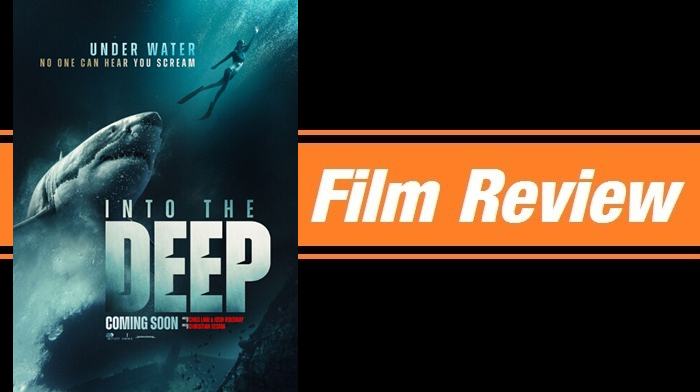
As icy temperatures have most of my area in a deep freeze, I was certainly open to a relaxing summer movie set on the warm seas. Enter “Into the Deep”, the latest in the ever-growing shark thriller sub-genre. This particular one comes with a fun addition that longtime film fans will certainly enjoy. The cast features Richard Dreyfuss who (of course) also starred in the most well-known shark movie of all time, “Jaws”.
While that makes for a fun connection, it goes without saying that “Into the Deep” is no “Jaws”. In fairness it’s no “Jaws the Revenge” either. To the credit of director Christian Sesma and screenwriters Chad Law and Josh Ridgway, this deep-water thriller has some interesting ideas. Yet the film turns into a mostly forgettable shark movie that’s hampered by shaky execution and some noticeable budget constraints.

Cassidy (Scout Taylor-Compton) is an oceanographer who has been haunted by nightmares since losing her father to a horrific shark encounter when she was a little girl. Her husband Gregg (Callum McGowan) comes up with the not-so-good idea of returning the the scene of his wife’s trauma to dive for gold believed to be in an old shipwreck. Easily convinced to face her lifelong fears, Cassidy agrees to accompany her husband which (of course) proves to be a terrible idea.
Gregg gets them a ride on a tub captained by his old friend Benz (Stuart Townsend) who is accompanied by his two paper-thin and underdeveloped chums, Itsara (Lorena Sarria) and Ed (David Gray). Once out to sea, the group gears up for their first dive. But to no surprise, its interrupted by a shiver of hungry great white sharks who immediately attack our hapless divers. They manage to make it back to the boat but not before one of them is seriously injured.
As the terrified friends try to figure out what to do, they’re surprised by a boat of heavily armed pirates led by a cold-blooded and borderline cartoonish American named Jordan (Jon Seda). He and his menacing entourage are in the area to retrieve 80 kilos of heroin from the ocean floor, and the last thing they need are some pesky divers finding it before they do.
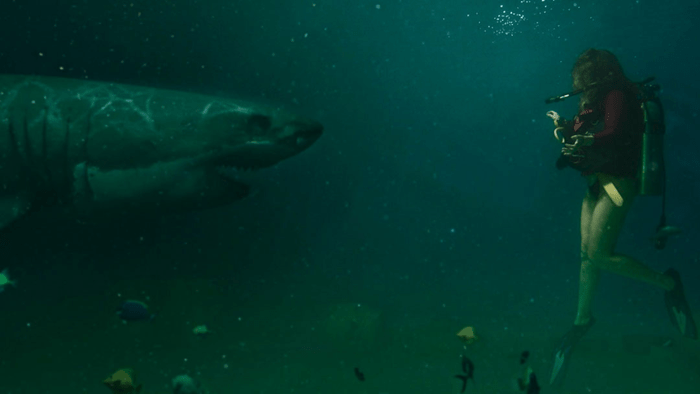
Surprisingly, the story’s main tension shifts to be between Cassidy’s bunch and the drug-running pirates. But the sharks are never too far out of the picture and soon make their presence known again in a ferocious yet unintentionally comical way. Where does Richard Dreyfus fit in you ask? He plays Cassidy’s grandfather, Seamus who is mostly relegated to a series of ham-fisted flashbacks that do more to slow the movie down than add anything impactful.
I’m guessing most people will come to “Into the Deep” for the wild shark action. Unfortunately it mostly underwhelms. You hate to be too hard on a movie with such obvious budget limitations. But it’s impossible to look past the shoddy visual effects which are highlighted by some of the worse (and admittedly hilarious) digital blood you’ll see. Sadly once you take away what should have been one of the movie’s biggest strengths, you’re left with nothing to help you overlook its other blemishes.
VERDICT – 2 STARS



















 Keith & the Movies