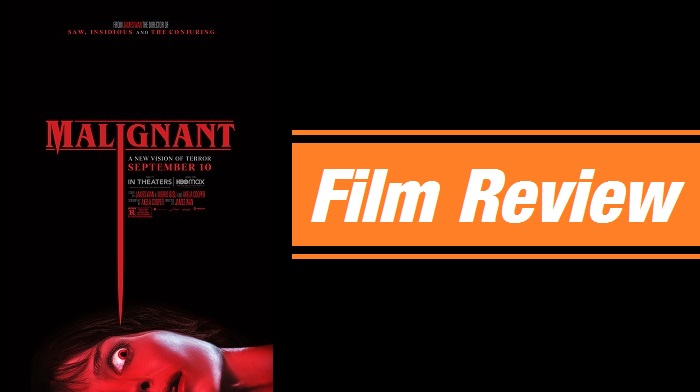
REVIEW: “Malignant” (2021)

CLICK HERE to read my full review in the Arkansas Democrat-Gazette

James Wan not only cut his teeth in the horror genre, but he’s also the man behind the camera of such franchise-launching movies as “Saw”, “Insidious” and “The Conjuring”. All three were modestly budgeted but wildly popular chillers. Wan stepped away from the spooky stuff to helm two major tentpole blockbusters, both big successes – 2015’s “Furious 7” and 2018’s “Aquaman”. Warner Bros. quickly signed him up for a second “Aquaman”, but before diving back into the big budget waters, Wan returns to his roots with “Malignant”, a devilishly creepy horror flick with a fun and nasty edge to it.

I suppose you could call me as a fan of Wan’s horror stuff. I generally like the first “Saw” but not its countless sequels, the two “Insidious” movies were fine yet nothing that ever stuck with me, and I truly love the two Wan-directed “Conjuring” films. They are what stoked my excitement for “Malignant”. But what’s best about his latest venture are the many things it does different; those things that set it apart and make it feel like something fresh (and more than a little bonkers).

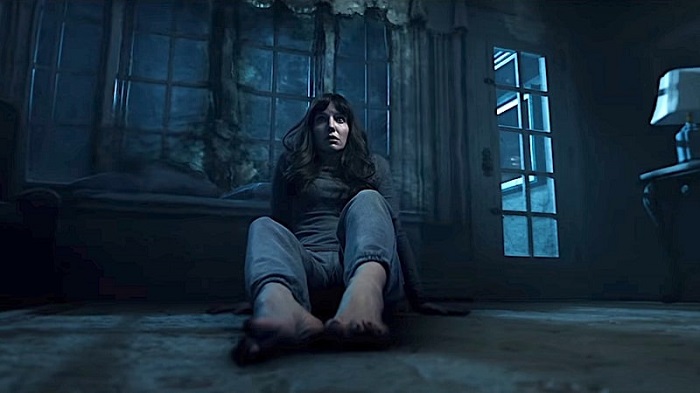
Among my favorites of Wan’s many sly touches is how he teases us with an opening fifteen minutes that doesn’t feel new at all. In fact, it comes across an standard haunted house horror fare – kitchen appliances turning on by themselves, lights flickering throughout the house, the floors creaking and doors mysteriously opening. It’s all so intentionally unremarkable and (with the exception of one really cool overhead camera trick) it sees Wan retreading old ground that he himself helped make conventional.

Image Courtesy of Warner Bros.

But then “Malignant” surprises us with the first of several unexpected turns as Wan starts to show what he’s really up to. And along the way its story (conceived by Wan, his wife Ingrid Bisu, and the film’s screenwriter Akela Cooper) takes on a number of different genre-inspired forms – that of a grisly crime thriller, a murder mystery, a supernatural horror, a slasher flick and something more that I won’t dare give away (PSA – avoid spoilers at all cost).

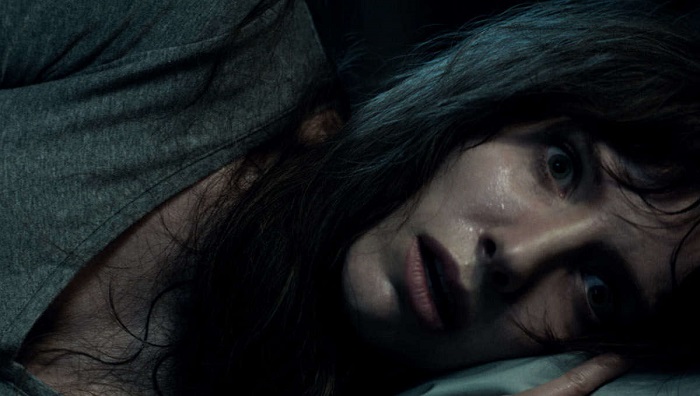
English actress Annabelle Wallis plays Madison Mitchell, a pregnant Seattle woman who we learn has suffered three miscarriages in two years. Her understandable anxiety isn’t helped by her cruel and abusive husband Derek (Jake Abel). In an especially violent outburst, Derek slams Madison so hard against the wall it leaves her head gashed open. Later that night he gets his comeuppance at the hands of a brutal shadowy spirit.

The police chalk it up to a home invasion, but after learning of Derek’s abuse and noticing no signs of forced entry, they begin investigating Madison. In the meantime Madison begins having tormenting visions of gruesome murders as they’re happening in real-time across the city. The eerie way Wan and his effects team capture her visions is just one of several eye-popping touches you’ll find scattered throughout the movie.

Image Courtesy of Warner Bros.

I’m reluctant to share much more because “Malignant” is a movie that begs to be discovered. Part of the fun is in how the crafty storytelling lures us into thinking we have everything figured out only to prove us wrong over and over again. And as more truths are unearthed, Wallis ably navigates us through her emotionally knotty character arc, channeling terror in a way that’s more than simply screaming on cue. It’s a solid performance.

Everything comes together in a wild go-for-broke final act that you’ll never see coming. It’s as batty and gore-soaked as anything you’ll watch this year and earns every bit of the movie’s R-rating. It’s also a ton of fun. The last twenty minutes sees Wan and company gleefully letting loose with the kind of 80’s B-movie grotesquerie that once lined the horror section at your local video store.

It’s such a fitting finish for a movie that’s so proud of its influences – a movie that tips its hat to giallo and embraces camp without a moment of hesitation. It all makes ”Malignant” a movie that’s impossible to label or categorize. At the same time it’s not some cheap and messy hodgepodge of horror sub-genres. There’s a method to James Wan’s madness and he’s a nimble enough filmmaker to make it all work. What can I say, I kinda loved it. “Malignant” is now showing in theaters and on HBO Max.

VERDICT – 4 STARS

Classic Movie Spotlight: “My Favorite Wife” (1940)

FAVORITE WIFE POSTER

How can any true movie fan not love the screwball comedies of the 1930s and 1940s? The once popular genre was recognized for its witty rapid-fire dialogue, wacky situations, bold and brash female leads, occasional slapstick humor and a feverish battle of the sexes.

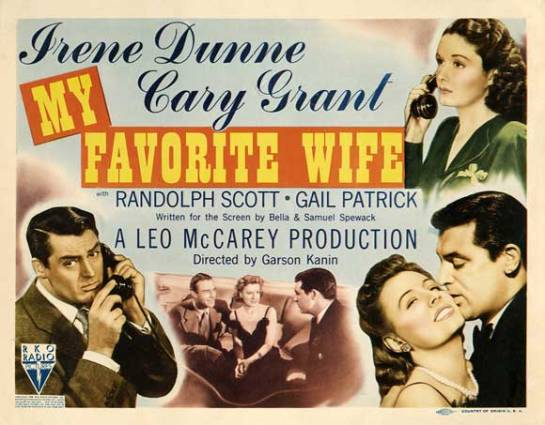
During this zesty time for comedies many actors and actresses saw their careers flourish including screen legend Cary Grant. In “My Favorite Wife” Grant matches wits with Irene Dunne in what is a shining example of what makes this hysterical sub-genre so attractive.

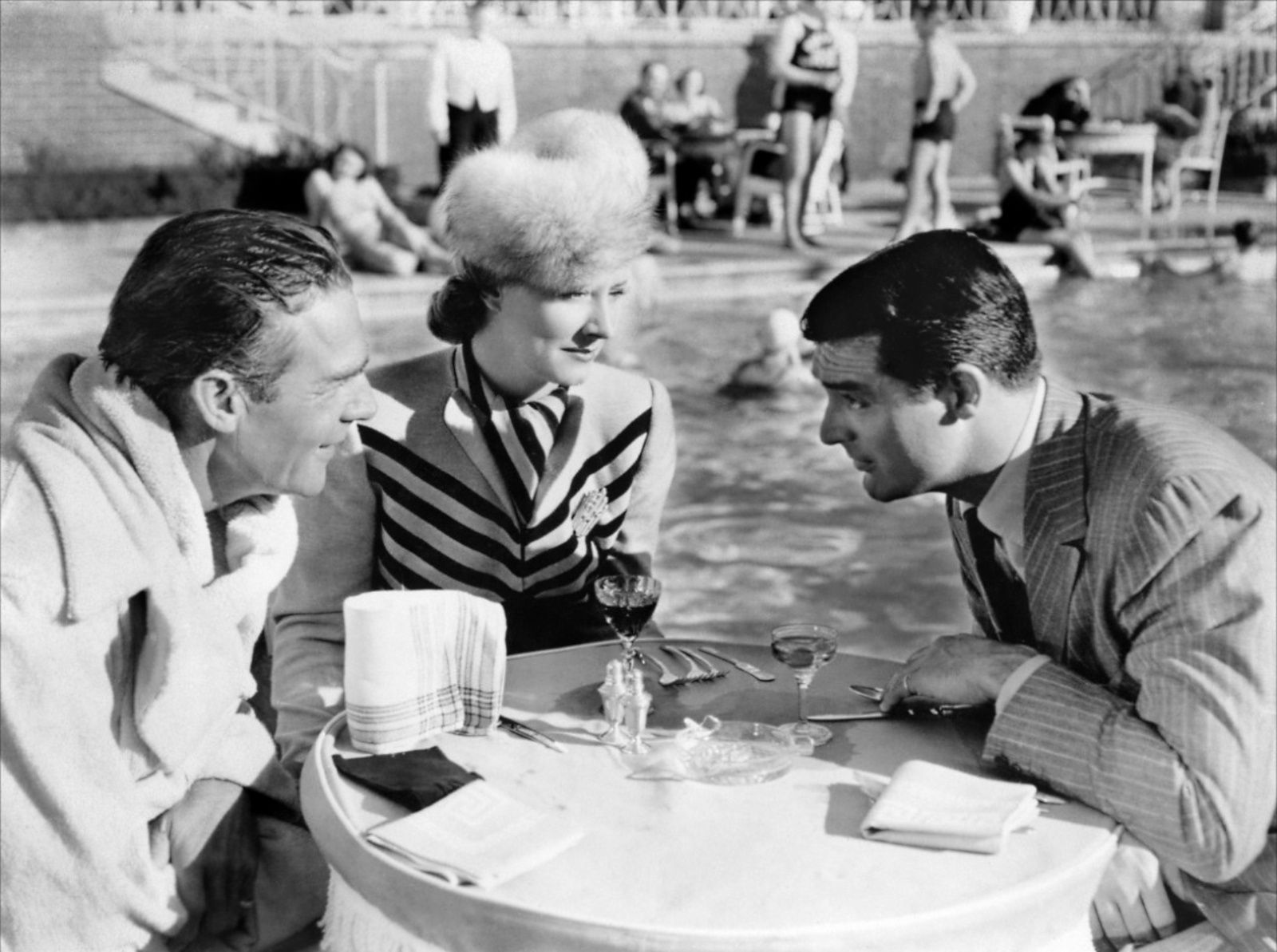
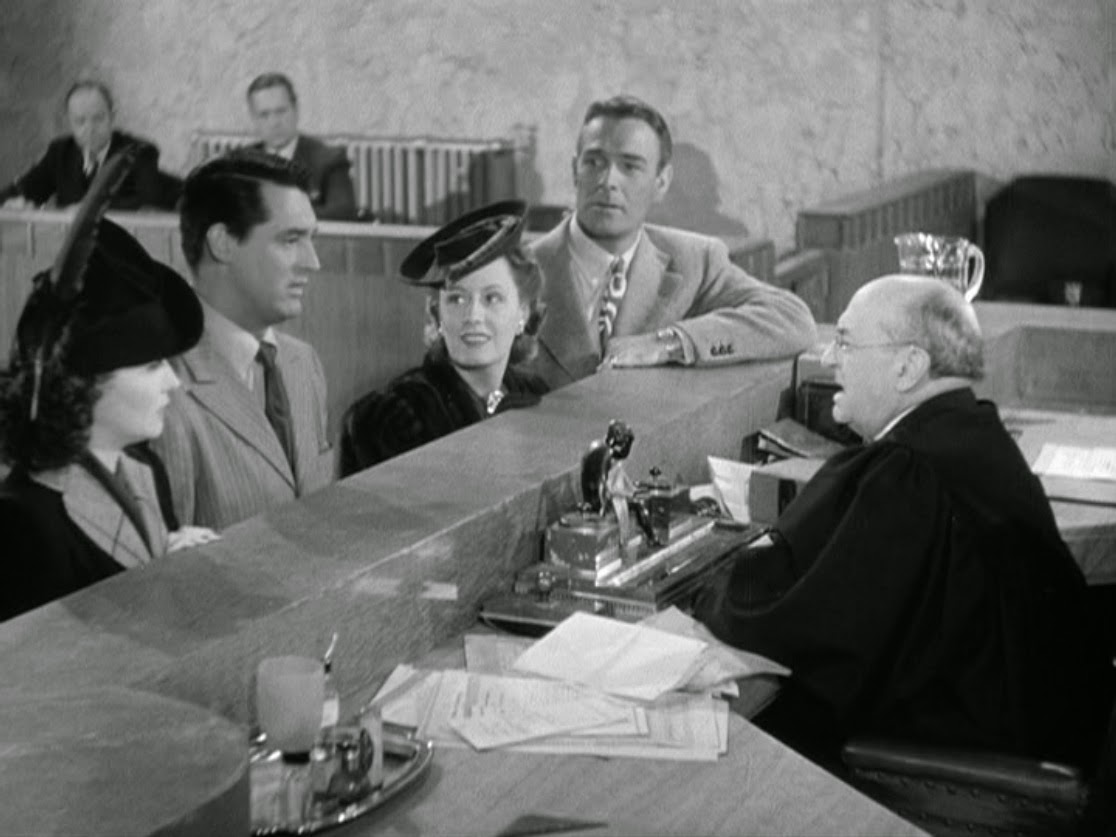
The movie starts with arguably the funniest courtroom scene ever filmed. Nick Arden (Grant) is before a judge seeking to have his wife Ellen (Dunne) declared legally dead after being missing at sea for seven years. He’s there with Bianca (Gail Patrick) who he plans to marry after the judge’s ruling. Everything goes as planned, but as with most screwball comedies the harmony doesn’t last long. You see, Ellen isn’t really dead and she shows up after being rescued from a deserted island.

Wife1

When Ellen reveals herself to Nick things get pretty complicated. He’s crazy about her yet he doesn’t know how to end it with Bianca. It also doesn’t help that he’s a bit spineless and cowardly. Of course he drags things out leading to one comedic complication after another. And there you have what makes this movie so great – the nutty situations, the back-and-forth banter and the hilarious head-butting between the two leads.

One of the biggest strengths of “My Favorite Wife” lies in its screenplay. It’s smart, crafty and it avoids the annoyances found in many of today’s “comedies”. The film is plump with great scenes and hilarious lines. For instance take the opening courtroom scene. Veteran character actor Granville Bates plays the grumpy and cantankerous Judge Bryson. He steals the scene with his grumbling and impatience. It’s a perfect tablesetter for the fun and playful tone that carries through the rest of the picture.

Wife2

Of course a movie likes this has to have good performances from capable leads. I’ve already talked about Cary Grant and as expected he is fabulous. He has his usual charisma and that impeccable comedic timing he would become known for. But the real star just may be Irene Dunne. Some have called Dunne the greatest actress to never bring home an Oscar. Watch her here and you’ll get it. She matches Grant line for line and gag for gag. Randolph Scott and Gail Patrick are also a lot of fun in solid supporting roles.

“My Favorite Wife” is a really good film featuring sharp and sometimes corny wit and some really fun performances. Even though it was nominated for three Academy Awards, the film is rarely mentioned among the great screwball comedies of the time. And while I’ll admit that it may be missing that special ‘something’ that makes it truly great, I still think it’s a load of fun and it’s a movie that any lover of comedy should seek out.

VERDICT – 4 STARS

4-stars

REVIEW: “Midnight in the Switchgrass” (2021)

There are a couple of early moments in “Midnight in the Switchgrass” that tease a gritty and multi-layered crime thriller. But that potential is all but squashed in the first twenty minutes or so. Instead of something fresh and engaging, we end up with a glaringly inert and poorly acted potboiler that treads way too much familiar ground. Strangely enough, it manages to be watchable despite never being anything more than aggressively average.

Directed by Randall Emmett working from a script by Alan Horsnail, “Midnight in the Switchgrass” begins the same way many of these stories do – with the body of a young woman found under a bridge. Turns out she’s one of several female victims reported missing and later found dead in the Pensacola area. It has all the markings and fits the profile of a serial killer. Florida State Police officer Byron Crawford (Emile Hirsch) knows it and immediately connects it to the other killings.

Yet for some inexplicable reason Crawford’s chief refuses to pursue it and wants Crawford to just drop the case. Seriously! There’s never a reason given and no logical answer why. And when Crawford ignores the orders and investigates anyway, his insubordination is never met with an ounce of department pushback. There are no warnings, no repercussions. Nothing! It ends up being one of several meaningless details that are only in the movie because they’re written on the page.

Image Courtesy of Lionsgate

Elsewhere Megan Fox and Bruce Willis play a couple of FBI agents running stings in the area to catch sex traffickers. Fox’s Agent Lombardo works as the undercover bait luring the pervs into their trap while her partner Agent Helter (Willis) listens in helplessly from the car. Helter has lost the stomach for their work and is ready to pack up for an easier assignment in Seattle. But when their operation crosses paths with Crawford’s investigation, Lombardo insists on sticking around and seeing it through.

Amid the sea of crime movie cliches and bland dialogue are a number of performances that are as unconvincing as the story itself. Hirsch gets third billing but he’s really the star of the movie, showing some nice restraint while sporting a truly awful and exaggerated Deep South accent. Willis continues his run of sleepwalking performances, completely detached and only there to add some name recognition. To Fox’s credit, she puts all she can into her role but finds herself chained (both literally and figuratively) to a script that puts her into some unwinnable positions. Cringy dialogue and some bad character beats (especially with her beau Machine Gun Kelly) are too much for her to overcome.

My favorite performance comes from Lukas Haas who plays the killer, a normal middle-America truck driver with a wife and young daughter. Haas is convincing both as a loving husband and father and as a creepy sociopath and killer. He provides a startling reminder that even the most normal exteriors can hide unspeakable evil. But Haas can only do so much, and soon even his storyline runs face-first into bad writing. It’s a recurring issue that handcuffs the movie from the very start. “Midnight in the Switchgrass” is now available on VOD”.

VERDICT – 1.5 STARS

REVIEW: “Mama Weed” (2021)

Tell me if this brief synopsis grabs you: Isabelle Huppert plays a meager police interpreter who seizes an opportunity that transforms her into one of the biggest dope suppliers in Paris. Sounds wacky, right? Yet that’s all I needed to be onboard with “Mama Weed”, an upcoming film with a title that really says it all. It’s such a peculiar match of actress and story. At the same time I don’t know how any fan of the ever reliable Huppert couldn’t be intrigued.

“Mama Weed” is an adaptation of Hannelore Cayre’s 2019 crime novel “The Godmother”. It’s directed by French filmmaker Jean-Paul Salomé who clearly understands what he has in Huppert. He leans on the veteran actress and wisely lets her carry the bulk of load. And as she usually does, the Oscar-nominated Huppert (one of most effortlessly natural actresses in the business) slides into her role and gives a thoroughly entertaining performance; one that manages to make this amusingly eccentric story believable.

Image Courtesy Music Box Films

Huppert plays Patience Portefeux, a French-Arabic translator who oversees phone surveillance for the Paris Police Department’s narcotics division. The demanding workload has her monitoring tapped phone lines both at the precinct and at home, yet she barely gets paid enough to scrap by. Patience already owes her steely landlord Colette (Nadja Nguyen) two months of back rent and the €3200 a month nursing home is ready to send her ailing mother (Liliane Rovère) to a cheaper facility if she doesn’t catch up on her payments.

While listening in on some Moroccan traffickers Patience learns that one of their drivers is the son of her mother’s favorite nurse Kadidja (Farida Ouchani). Instead of passing the intel to the cops, a sympathetic Patience tips off Kadidja who then warns her son just in time for him to ditch his truckload of hashish before the police bust him. It’s here that Salomé goes full “Breaking Bad” meets “Jackie Brown”. With the help of the police’s resources and her newly adopted drug-sniffing dog, Patience tracks down the hidden hash and secretly moves it to the storage room in her apartment building. She then decks out like Arab royalty, dupes two low-rung pushers (Rachid Guellaz and Mourad Boudaoud) into moving her product, and just like that she has her own lucrative trafficking network.

Now if Patience’s sudden turn to crime sounds a little abrupt and out-of-the-blue, the movie (mostly) has it covered. There is a passing mention of her late husband being involved in some kind of criminal racket. And when she was a child her parents did some things “that a cop wouldn’t have approved of” just to put food on the table. So you could say crime is in her blood. Are a few lines of dialogue enough to setup such a dramatic change in her character? Maybe not, yet the movie has a sly way of getting you to look past it.

Image Courtesy of Music Box Films

The funniest part of it all is how believable Huppert makes it. Middle-aged and unassuming – her character is hardly the person you would expect to become a drug kingpin. And she uses that to her advantage, along with her insider connections and her lukewarm ‘romance’ with the police chief Philippe (Hippolyte Girardot), to constantly stay one step ahead of the cops. She’s also a woman pushing back on the hand she’s been dealt, not quite as full of confidence as she leads on, but bold enough to literally risk everything for some degree of independence.

While undeniably catchy, the movie’s American title “Mama Weed” isn’t the most accurate (Patience is actually pushing hash, not weed and I learned there is a difference). It’s French title “La daronne”, translated “The Mom”, is much more fitting. It more directly speaks to the demure and unsuspecting presence that Patience utilizes to great effect. And Huppert is the perfect actress to pull it off. Mixed with Salomé’s light but engaging touch, she gives the movie a firm anchor and provides us with a character who is easy to latch onto. “Mama Weed” opens in select theaters this Friday (July 16th).

VERDICT – 4 STARS

REVIEW: “Monster” (2021)

In the new Netflix movie “Monster” director Anthony Mandler uses a non-linear structure to tell the story of young black student wrongly charged in the murder of a bodega owner. The film premiered way back at the 2018 Sundance Film Festival and was eventually acquired by Netflix. Based on a Walter Dean Myers novel of the same name, “Monster” maneuvers through its sometimes heavy-handed dialogue to deliver a well-meaning and often crushingly effective legal drama.

The film is told from the perspective of 17-year-old Steve Harmon (a terrific Kelvin Harrison Jr.). The film opens a few minutes after he has been arrested for playing a role in the robbery of a Harlem bodega that left its owner dead. As Steve narrates we watch the overwhelmed high school honor student and aspiring filmmaker as he is processed by police. Soon he’s sitting across from his state appointed public defender (Jennifer Ehle). These unsettling early moments set us up for the nearly 100 minutes of tension that comes baked into the material and directly from Mandler’s style of storytelling.

Image Courtesy of Netflix

The story (written by Radha Blank, Cole Wiley, and Janece Shaffer) bounces us back-and-forth across the timeline. We visit and revisit Steve’s time in prison, in the court room, at home with his loving parents and young brother, out with his neighborhood friends, and in his high school film class where his dedicated teacher Mr. Sawicki (Tim Blake Nelson) inspires him to follow his dreams. While some of the time-jumping seems unnecessary, it’s ably handled and it does keep the film from feeling like a conventional retread.

The film is driven by the richly layered lead performance from Harrison Jr. who has already established himself as a powerful young actor. Here he manages to channel innocence, ambition, youthful spirit, fear, frustration, hopelessness, and resolve all through a single densely conceived character. The movie also sports a rock-solid supporting cast in addition to Ehle and Nelson. Jeffrey Wright and Jennifer Hudson are really good as Steve’s loving parents. Just as good is Rakim “A$AP Rocky” Mayers who takes a fairly cookie-cutter bad egg part and makes it interesting. We even get John David Washington in a small but menacing role.

Image Courtesy of Netflix

Clever touches from cinematographer David Devlin help convey the film’s frequently shifting mood. The harsh sterile grays of the courtroom, the glow of the sun beaming through the neighborhood trees, the warmth of home with his family, the cold isolation of prison. Devlin’s camera takes some of the load off of Harrison Jr. by helping the audience to see things the way Steve sees them.

“Monster” is a timely and thoughtful critique of America’s justice system told with startling clarity from the perspective of a young black man. While the movie landscape has been inundated with these kinds of social dramas, Mandler does enough with a well-worn genre and by-the-books premise to make the movie feel reasonably fresh. It doesn’t completely avoid the cringy on-the-nose dialogue (take the soulless white prosecutor eyeing Steven and coldly uttering “he looks the part to me“), but it tells a moving story and is worth watching for the strong performances alone. “Monster” is now streaming on Netflix.

VERDICT – 3.5 STARS
REVIEW: “The Man in the Hat” (2021)

It’s hard to watch “The Man in the Hat” and not think of the great Jacques Tati. The late French mime, actor, and filmmaker conceived some of my very favorite comedies, several of them centering around his bumbling yet good-natured Monsieur Hulot character. Tati’s films were known for their meticulously choreographed visual gags and their distinct lack of dialogue. The comedy element of “The Man in the Hat” isn’t as broad or pronounced as something like “Monsieur Hulot’s Holiday” or “Jour de fete”. But it taps into some of the same things that made those Tati films so special.

The wonderfully expressive Ciarán Hinds plays the titular protagonist in what is essentially a dialogue-free role. But the seasoned Irish actor is more than capable of conveying all the emotions we need through his gentle manner, tender smiles, and melancholy gaze. Other than that it’s a grunt here, a mumble there, and one barely audible “Merci”.

Image Courtesy of Gravitas Ventures

We first meet the man sitting at a cafe in a cozy seaside town with nothing but a newspaper and a framed picture of a woman. Later, as the sun sets over the warmly lit harbor, he still sits at the same table, now munching on dinner. That’s when he observes a puttering Citroën Dyane pull up next to the water. Out of it pours five full-grown men who toss what appears to be a dead body into the sea. Realizing they’ve been seen, the five men approach the cafe which sends the man scurrying. He hops into his dark blue Fiat 500 and so begins this relaxed charm-soaked jaunt across the French countryside.

As the man travels the narrow country backroads of rural France, his hat on his head and the woman’s picture safely sitting next to him in the passenger’s seat, we’re treated to a delectable medley of music, food, and scenery. And just as captivating is the rich and unique assortment of people the man meets on his journey, many turning up again and again as he drives from town to town. Among them, a sad forlorn man in a soggy suit, a curious young couple with a tape measure, the five suspicious men in the Citroën Dyane, and perhaps most notably a beguiling women in a red dress on a bicycle (played by Sasha Hails).

In one sense the movie is a tasty roadtrip comedy, more amusing than laugh-out-loud funny. There’s also a lightly-breaded mystery baked into the story that encourages us to wonder. Who is the woman in the picture? Where is the man going? What does it all mean? And then there are the more life-affirming elements that seem particularly welcomed in these divided times. Armed with a buoyant spirit and a steady observant rhythm throughout, the movie asks us to stop, sit down, and appreciate the simple things that are too often taken for granted.

All of this comes from the creative minds of John-Paul Davidson and Stephen Warbeck who serve as both co-writers and co-directors. Their predominantly wordless odyssey is as beautiful as it is easy-going, with DP Kaname Onoyama’s camera showing just as much affection for the characters as it does the lush rolling hills or the stunning scenic overlooks. And he shoots each little town in a way that somehow accentuates their character and charm. None of it is aggressively picturesque, but it’s a key component that’s grafted into the very fabric of the story.

Image Courtesy of Gravitas Ventures

Just as important is the music. “The Man in the Hat” marks Warbeck’s directorial debut but he’s no stranger to cinema. An accomplished composer, Warbeck won an Oscar for his “Shakespeare in Love” score. Here he uses an eclectic blend of strings, horns, accordion, and piano to create one of his film’s most essential languages. Together with a couple of well placed songs, the entire musical arrangement is a soothing blend of local sound and emotional resonance. It’s simple yet effective and it’s my favorite soundtrack of the year so far.

In case you can’t tell, I loved “The Man in the Hat”. Davidson and Warbeck have made a simple yet savory feast for the senses that feels plucked out of a bygone era of cinema history. The film is a tender and heartfelt reminder to appreciate the little things in life and to hold onto the special moments. It reminds us of how the smallest acts of kindness can effect someone’s life in a profound way. The man’s touching adventure is filled with people from all walks of life who are willing to lend a hand. Perhaps in a day where people cling to their differences and are quick to tear each other apart, these messages are more needed more than we realize. “The Man in the Hat” opens in select theaters and on VOD this Friday (May 14th).

VERDICT – 4.5 STARS