REVIEW: “My Octopus Teacher” (2020)

OCTOposterr

The engaging and now Oscar-nominated documentary “My Octopus Teacher” is a beautiful, moving, and reflective experience. It’s also a little crazy and doesn’t do much to hide its aggressive tugs on your heartstrings. This Netflix Original from co-directors Pippa Ehrlich and James Reed has garnered a lot of praise since its September release on the streaming giant’s platform. It’s easy to see why.

The film is more or less a reflection of a middle-aged man named Craig Foster. He tells the story of his encounter and unlikely ‘friendship’ with a small octopus just off the coast in West Cape, South Africa. For over 325 straight days, Craig would visit a small underwater kelp forest in an area called “The Cape of Storms”. There lived a female common octopus (Octopus Vulgaris if you go by its funky binomial name). Over the course of his daily visits an unlikely yet amazing bond forms, one that genuinely transforms this man’s life.

OCTO1

Image Courtesy of Netflix

We don’t get much in terms of backstory, only that Craig grew up in the ocean but left as an adult to pursue documentary filmmaking. During a film shoot in the Central Kalahari Desert he meets some indigenous master trackers intimately in-tune with nature in a way he once was. 18 years pass and Craig sits at a crossroads, losing his faith in himself and watching his relationship with his family suffer. So he heads back to West Cape, to the place where he felt so connected to the bigger world as a boy.

Craig begins his dives into the cold waters with no wetsuit and no oxygen tank – just swim trunks, flippers, snorkel, and a camera. There he meets the octopus who slowly becomes comfortable with his presence. Before long the fear and apprehension vanishes and the documentary turns into a surreal underwater buddy movie of sorts. Some of the sweetest images emerge as the two grow closer and the octopus shows affection perhaps never seen from an animal known for being anti-social.

At the same time the waters are full of predators, namely swarming Pajama Sharks. Craig’s firm belief in the natural order keeps him from intervening once his octopus friend finds herself in peril. It’s an admirable position but one that raises some fascinating moral-ish questions, especially during the scenes where Craig sits back and films the octopus’ fight for survival. Would it hurt if a bigger human predator ran off the smaller predator? Does attracting the octopus with his presence contribute to the creature’s vulnerability? Does Craig owe it to his underwater friend to protect her if she’s out of her safe place to see him?

OCTO2

Image Courtesy of Netflix

One thing you’ll immediately notice is that “My Octopus Teacher” features some truly exquisite ocean photography. The film is masterfully shot by DP Roger Horrocks, a nature doc veteran whose camera creates a vivid underwater tapestry of sea-life that encompasses so much more that just one man and a mollusc. Equally transporting is the elegant score by documentary composer Kevin Smuts. It’s hard not to be swept away by the look and sounds that really emphasize the subtle majesty of the setting and the emotional undercurrent to the story.

“My Octopus Teacher” clocks in at just a little over 80 minutes but it packs a lot of heart and goodwill into that short running time. As I said, the whole thing is a little crazy and it would be hard to believe if this weren’t a documented true story. Strangeness aside, there’s also a lot of sincerity and personal feeling behind Craig’s story. You genuinely believe this was a life-changing experience for this man and the film’s final scenes with Craig and his son really bring that truth home. “My Octopus Teacher” is now streaming on Netflix.

VERDICT – 4 STARS

4-stars

REVIEW: “My Wonderful Wanda” (2021)

WANDAposter

Two families from two completely different worlds collide in Bettina Oberli’s biting satire “My Wonderful Wanda”. The Swiss film had its world premiere at Tribeca where it won a special jury mention in the Nora Ephron Award category. Now this prickly yet often witty dramedy makes it way to the States sporting a wacky “Knives Out” vibe but with a distinct European flavor.

The story (co-written by Oberli and Cooky Ziesche) centers around a Polish single mother named Wanda (played by a well measured Agnieszka Grochowska). She works as a caretaker for Josef Wegmeister-Gloor (André Jung), a 70-year-old family patriarch who was left paralyzed following a severe stroke. Her unique arrangement with the Wegmeister-Gloor family has her traveling to their lakeside villa in Switzerland where she stays for a month or so before going back to her village in Poland to tend to her two young boys. Leaving her sons is tough but she needs the money and the wealthy Wegmeister-Gloors pay well even if they don’t always appreciate ‘the help’.

WANDA1

Image Courtesy of Kino Lorber

It doesn’t take long to notice the movie’s interest in class and it becomes a central theme that runs throughout Oberli’s ‘three chapters and an epilogue’ structure. Wanda and the Wegmeister-Gloors exist on opposite ends of the social and economic ladders – something Wanda is constantly reminded of by her casually insensitive and often oblivious employers. Yet despite the varying degrees of blue-blooded haughtiness in the Wegmeister-Gloor household, Wanda’s presence highlights how empty their lives have become. And when a particular part of her ‘care’ for Josef leads to her becoming pregnant with his child, the upper-crust rancor really kicks in.

While Wanda is the main character, the Wegmeister-Gloor ménage all have key roles to play and each come with their own individual complexity. Josef is a youthful spirit trapped inside a failing body and he likes Wanda more than his own family (“Don’t leave me with these lunatics,” he pleads). Yet his ‘affection’ for her always comes second to his own sense of privilege. Josef’s wife Elsa (Marthe Keller) genuinely cares for her family but is far too adsorbed in their social standing. “We have a reputation to uphold,” she declares after hearing of Wanda’s pregnancy. Their jittery son Gregor (Jacob Matschenz) is the reluctant heir to his father’s company, but is far more interested in birdwatching and Wanda. Then there’s the snobbish and entitled daughter Sophie (Birgit Minichmayr) who only seem to care about her inheritance and who callously refers to Wanda as “the Pole” whenever she’s not around.

WANDA2

Image Courtesy of Kino Lorber

Considering all of that, you would expect this to be a movie with a clear-cut hero and villains. After all, Wanda is a woman just trying to take care of her family while the Wegmeister-Gloors exude an air of superiority. But Oberli smartly keeps from overtly vilifying anyone. The film clearly (and rightly) sets our sympathies with Wanda. But even she makes some icky decisions that are hard to get behind. So we end up with an assortment of richly layered characters. Some we want hug, others we want to (figuratively) choke. But most importantly we understand them because Oberli and Ziesche take time and allow them to be more than one-note character types.

Things get pretty crazy in the last chapter when Wanda’s parents and her two sons pay a surprise visit to the Wegmeister-Gloor estate. It’s here that the movie’s clash of class and culture goes full-frontal. Yet (as with everything else in the film) Oberli keeps it all in check, never allowing things to go over-the-top and never losing the all-important human element. And as everything comes to a head, the film’s comical and combative vibes gives way to a overarching sense of sadness and uncertainty. It makes for a fitting finish to a movie that (for the most part) succeeds in blending levity and solemnity. “My Wonderful Wanda” opens April 23rd in select cities.

VERDICT – 4 STARS

4-stars

First Glance: “My Salinger Year”

SALINGERposter

I don’t want to be ordinary. I want to be extraordinarily.” Can’t blame anyone for that. It’s a life goal of the lead character in the upcoming drama “My Salinger Year”, written and directed by Philippe Falardeau. The film is based on the memoir of Joanna Rakoff and follows her days working for one of New York’s oldest literary agencies during the mid 1990s. But at its core the movie is about a young woman finding herself and mustering the courage to follow her own dreams regardless of the uncertainties attached to them.

The movie stars Margaret Qualley who broke out as a hitchhiking hippie in Quentin Tarantino’s “Once Upon a Time in Hollywood”. Here she plays Joanna, a twenty-something aspiring writer from Berkeley who we first see arriving in New York City to visit an old friend. She’s quickly drawn in by her romanticized idea of a writer’s life in New York. “Isn’t that what writers did? she ponders, “live in cheap apartments and write in cafés?”. It’s enough to keep Joanna in the Big Apple, leaving her old life and her boyfriend Karl (Hamza Haq) behind in California.

SILNGER1

Image Courtesy of IFC Films

She gets a job as an assistant at a renowned literary agency in New York. It’s ran by Margaret (Sigourney Weaver), a savvy and cantankerous professional with a comical distaste for the digital age. But she knows the business and runs a tight ship. Joanna gets put to work doing dictations and opening fan mail for the agencies star client, the notoriously reclusive J.D. Salinger, author of “The Catcher in the Rye”. She’s instructed to read the letters and then answer them with one of several carefully prepared form letters informing the sender that Mr. Salinger doesn’t accept mail from fans. It’s hardly a job for a writer but it does put her on a much-needed path of self-discovery.

Qualley brings a sweetness and naivete to Joanna that shows itself in her professional and personal life. She and Weaver have a terrific business-like chemistry and Qualley mixes well with several good faces around the office. Away from her job Joanna meets and falls for a millennial hipster and fellow writer named Don (Douglas Booth) who she meets at a “socialist bookstore”. Much like the bohemian living, Don fits an illusion Joanna has, this time of a relationship that sounds ideal but that (much like her job) puts her dreams on the backburner. Together, all of these things makes her think the trendy New York writer’s lifestyle isn’t all it’s cracked up to be.

SALINGER1

Image Courtesy of IFC Films

The biggest encouragement Joanna gets comes from none other than J.D. Salinger himself. She is familiar with his name but not his work. She’s never even read “The Catcher in the Rye”. But the unsolicited wisdom and advice the author gives her during passing phone conversations plant seeds of inspiration. Falardeau chooses to never show us Salinger’s face, tapping into the hermit’s enigmatic reputation. It’s an interesting choice that works better than expected. One choice that doesn’t quite work are the first-person montages of Salinger fans who have written to the author only to get Joanna’s form letter as a reply. They add faces to the letters, but outside of that the scenes are jarring inclusions and its hard to sense what the movie is going for.

“My Salinger Year” is a charming and earnest drama that tells its story with a warm sincerity but muted emotions. Qualley is good here and often better than the material which rarely gives her character opportunities to express her feelings in a satisfying way. There seems to be so much left inside of Joanna that’s alluded to but never explored. Still, Qualley imbues Joanna with a wide-eyed enthusiasm that makes her easy to root for. And Weaver’s Margaret is the abrasive slice of reality that brings Joanna down to earth and opens her eyes to the real world. Together they’re quite the entertaining pair. “My Salinger Year” opens March 5th in select theaters and on VOD.

VERDICT – 3 STARS

3-stars

REVIEW: “The Map of Tiny Perfect Things” (2021)

PERFECTposterrrr

Tell me if you’ve heard this one before: a guy is trapped in an unending time loop where he’s forced to live the same day over and over again. Pretty familiar, right? We saw it in the terrific comedy gem “Groundhog Day”. We saw it last year in the not-so-terrific “Palm Springs”. We saw it in the fun sci-fi action flick “Edge of Tomorrow”. Now we get a Valentines season teen rom-com that attempts to bring its own flavor to the well-worn premise and does so with pretty mixed results.

“The Map of Tiny Perfect Things” is directed by Ian Samuels and written by Lev Grossman. The film is an adaptation of Grossman’s own short story and stars two young up-and-comers with enough charisma and chemistry to keep things interesting. Unfortunately it’s not quite enough the shake the feelings that we’ve seen this narrative, these characters, and their inevitable relationship several times before. Still there’s something to say about good performances and their ability to infuse life into an otherwise shaky story. And to Grossman’s credit, he adds some needed emotional weight in the final 15 minutes that makes this more than some meaningless retread.

PERFECT1

Image Courtesy of Amazon Studios

The story begins by introducing us to Mark, a spirited high school teen played by Kyle Allen (who looks old enough to be out of college but be that as it may). Mark wakes up every morning to the exact same day, one that continually repeats itself before resetting each night at midnight. Mark has been in the loop long enough that he’s attuned to every detail, every event, every conversation. You could say he’s the king of his own ‘temporal anomaly’ where everyone but him follows the script and then rinses and repeats.

But there’s a ripple in Mark’s cyclical existence when he sees Margaret (Kathryn Newton), a rogue addition to this tightly scripted world. Realizing he’s not the only person with free will stuck in the loop, Mark is immediately enamored and full of questions. Where did she come from? Does she know how this happened? What has she been doing all of this time? Does she think he’s cute? After following her around a bit Mark finally introduces himself. At first his playful enthusiasm clashes with Margaret’s distant curiosity. He’s an open book, laying everything out without a second thought. She’s harder to read and with things in her life she would rather keep to herself.

PERFECT2

Image Courtesy of Amazon Studios

Of course the two soon develop a peculiar connection which the movie spends the bulk of its time exploring. A long stretch of the story ends up playing like a conventional YA romantic comedy, surviving on the charms and chemistry of Allen and Newton. Both are really good but they can only keep the movie afloat for so long. But just as the movie starts to sink (and I was about to check out), Samuels and Grossman inject it with feeling and pathos. The story adds some layers to the characters, particularly Margaret, that helps us to see them as more than just another cutesy teen movie couple. And while it doesn’t fully avoid the temptation to slap on a little sap, the ending lands well enough and makes the rest of the film (rough patches and all) seem more meaningful.

“The Map of Tiny Perfect Things” isn’t something that will stick with you long, but it does (barely) save itself in its final act. Even more, for those who don’t know them, it’s a nice introduction to two talented young stars with a load of potential. I think it’s safe to say Allen and Newton have promising careers ahead of them. I doubt this movie will go down as one of their best, but if you’ll stick with it through the rocky and not-so-original middle you’ll find it endears us to these characters in a thoughtful and surprising way. “The Map of Tiny Perfect Things” is now streaming on Amazon Prime.

VERDICT – 3 STARS

3-stars

REVIEW: “Malcolm & Marie” (2021)

MMposter

John David Washington and Zendaya have both seen their acting careers take major leaps forward over the past few years. The 36-year-old Washington’s big breaks have come a little later in life following his college and professional football career. Now he’s following in his father’s sizable footsteps especially after nabbing noteworthy leading man roles in Spike Lee’s “BlackKklansman” and Christopher Nolan’s “Tenet”.

The 24-year-old Zendaya started in the entertainment business at an early age, appearing in a number of kids television shows and movies. But her big screen breakout came in 2017 when she was cast in “Spider-Man: Homecoming”. Since then she’s appeared in “The Greatest Showman”, “Spider-Man: Far from Home”, and the highly anticipated remake of “Dune” (assuming it does eventually come out).

MALCOLM & MARIE

Image Courtesy of Netflix

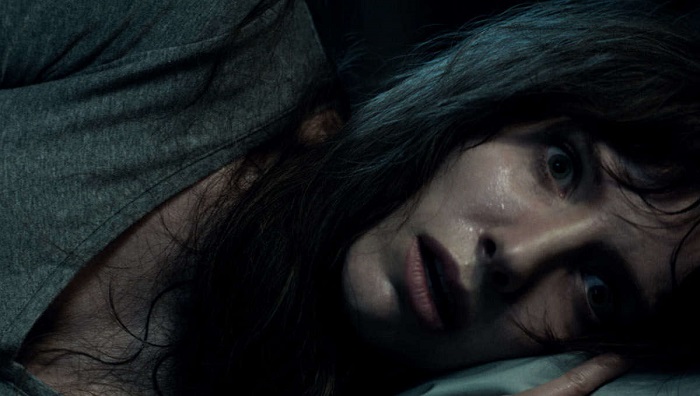
The two stars come together in the new Netflix film “Malcolm & Marie”, an exquisitely shot chamber piece about a couple laying bare their tumultuous relationship over the course of a single fight-filled night. The film is written and directed by Sam Levinson who unquestionably has the commitment of his two lone cast members. But despite its charismatic co-leads, “Malcolm & Marie” devolves into an endurance test for the audience, one that grows more and more unlikable as it winds on.

Washington plays Malcolm, a filmmaker coming off a successful premiere screening of his new movie. Zendaya plays his girlfriend Marie who attended the premiere with him but was left with a sour taste in her mouth. The story begins with the couple arriving at a posh ultra-modern house provided by the production team behind Malcolm’s movie. Malcolm’s plan is to spend the night celebrating with his girl. So the first thing he does is grab a drink, cranks up some James Brown, and playfully dances from one room to another.

Marie is hardly as enthusiastic. She walks straight to the bathroom then to the kitchen where she puts on a box of mac-and-cheese to boil. Malcolm’s dizzying good mood leads to the first of two long-winded tangents about pedantic white film critics. A visually uninterested Marie listens to his rambling but clearly has something else on her mind, namely Malcolm forgetting to thank her during his speech at the premiere. While not mentioning her rightfully irks Marie especially since she believes she was the inspiration for his film, it just cracks the door for what becomes a night of fighting, fighting, and more fighting.

“I promise you, nothing productive is going to be said tonight“, Marie warns Malcolm before the venom starts to spew. Boy she wasn’t kidding. From there Levinson feeds us a steady buffet of profanity-laced tirades, meltdowns, and savage arguments with each of the two characters using long monologues to tear each other apart. It’s a toxic and unceasing back-and-forth that both Washington and Zendaya work hard to sell. But regardless of how convincing their performances are, it’s not easy to buy all that they’re saying and you can only take so much high-volumed vitriol before the characters become insufferable.

MM2

Image Courtesy of Netflix

Levinson’s script may drown us in animosity and resentment, but it does succeed in opening up his characters. Malcolm and Marie’s fights (and the occasional short breathers in between) tell us quite a bit about them, picking at scabs from their pasts and exposing their anxieties and insecurities. Then you have Levinson shooting on the experience of black filmmakers and the frustrations they feel when labeled, pigeonholed, and forced into categories because of the color of their skin. While equally loud and abrasive, these scenes do give us one of the few points of agreement between Malcolm and Marie – a shared disrespect for “Karen from the LA Times”, a white film critic indelibly entrenched in Malcom’s (and Levinson’s) headspace. But like everything else, even that turns into a disagreement between them.

“Malcolm & Marie” was filmed early into the COVID-19 lockdown on a minuscule budget, with a two person cast, one location, and a very limited crew (Zendaya actually did her own hair and makeup). The film offers up some alluring visual compositions, using the monochrome and the house’s walls of windows to do some interesting things with the camera. But regardless of how good the movie looks, by the end I was simply exhausted from the yelling. I was left cold and unconvinced of the central relationship. And I was left asking what was the point? Is it that love is hard? That love is messy? Both of those things are true, but I can’t help but think there are better and more bearable ways of conveying those themes. “Malcolm & Marie” is streaming now on Netflix.

VERDICT – 2 STARS

2-stars

SUNDANCE REVIEW: “Mass” (2021)

MassPOSTER

“Mass” has generated a ton of well-deserved buzz following its world premiere at this year’s Sundance Film Festival. Writer-director Fran Kranz makes his feature film debut with this crushing close-to-home drama about two couples still coping with the loss of their sons years after a deadly school shooting. The film is driven by Kranz’s masterful script and four powerhouse performances. The material is heavy, the emotions are raw, and everyone brings the kind of honesty that a subject like this demands.

I can’t imagine taking on a topic like this was easy. But Kranz was compelled to tackle it following the Parkland school shooting in 2018. In penning the script he chose to focus on the aftermath rather than the shooting itself. In doing so he’s able to give time to the other victims – those who have had loved ones taken away from them through these senseless and unfathomable acts of violence. The characters Kranz gives us are so authentic they could be any number of real-world people who have been impacted by this stomach-churning trend.

The movie begins with the camera resting on a small town Episcopalian church. Inside, staff members led by the affable but slightly neurotic Judy (Breeda Wool), prepare one of their rooms for a meeting. Four chairs and a table are set up the center of the room. Water and snacks in the corner. A very businesslike social worker named Kendra (Michelle Carter) comes in and examines the room, rearranges the chairs, and scans for any emotional triggers. She’s well aware of what’s about to take place and she needs everything to be exactly right. Kranz doesn’t lay everything out right away, but he gives us clues to point us in the right direction. Essentially Kendra is a mediator bringing two sides together and the room is a neutral site where they can meet.

Just as Kendra has the room to her liking the first couple arrives. Jay (Jason Isaacs) and his wife Gail (Martha Plimpton) enter the church already looking worn down and emotionally spent. They’re there but reluctantly, seemingly following the advice of their therapist back home. “Don’t interrogate. Don’t be vindictive.” they repeatedly remind themselves. Within moments the second couple arrive, Richard (Reed Birney) and Linda (Ann Dowd), equally unsure about being there and a bit apprehensive. They too come with an incredibly heavy weight on their shoulders, one that forever connects them to the couple across the table.

MASS

Kendra leaves and the next 90 minutes are spent in the room with the four pain-ridden adults. After navigating through some awkward and uncomfortable small talk, Kranz and his characters start to unpack the real reason they have come together. Both families lost their sons in the same mass school shooting years earlier. Jay and Gail’s son Evan was among the many killed inside the school that day. For Richard and Linda the sobering difference is that their son Hayden did the killing.

In a remarkable show of restraint, Kranz keeps the conversations that follow firmly grounded and crushingly real. There’s nothing big or showy about them and there’s no waving to awards season voters. The closest he comes to a “big scene” is in a key moment with Gail, but it’s so deftly handled by Plimpton that you never second-guess it. That’s really the marvel of the film as a whole. You never second-guess any of it. Not the characters, not the interactions, not the emotions. Everything is rooted in truth. There’s not a hollow moment or a single false note.

It goes without saying that movies like this inevitably sink or swim on the backs of their cast. In “Mass” the four central performances are nothing short of magnificent with each screen veteran doing career-best quality work. Each performance is perfectly calibrated and distinctly personal to each particular character. Isaacs barely suppresses Jay’s frustration as he still tries to grasp the logic behind the shooting, quoting studies on the human brain while readily admitting he’s ill-equipped to understand them. Plimpton has less dialogue but her pained expressions tell us everything. Gail is holding so much inside of her that she could burst at any second. Dowd is so earnest in portraying a shattered woman tortured by her inability to reconcile the son she loved with the murderer he became. And Birney brilliantly balances Richard’s thinly veiled exasperation with his crippling sense of guilt.

“Mass” is a harrowing and emotionally draining chamber piece that may test your endurance. Kranz takes that into consideration, occasionally stepping out of the room to let us catch our breath. But despite the film’s challenging material, it doesn’t end without a ray of hope. It may just be a glimmer, but when dealing with something of such gravity and when the very notion of hope feels so foreign it’s a welcomed touch. And it works here because it feels genuine and it doesn’t undermine everything that came before it. It’s also fragile and far from guaranteed. By the end we still aren’t sure of what’s ahead for these four people or how their lives will play out. But that small sliver of hope gives us something to cling to.

In the end Kranz doesn’t pretend to have all the answers and he smartly makes his film about people rather than hot topics. There are references to the things that are often thrust to the center of these discussions – guns, violent video games, the internet. But the truth is something deeper has changed within our society. Something has polluted our ways of seeing each other, our ways of communicating. Our ability to respect, empathize, and show compassion has dulled. Why? We as a nation and a society are much like the four people in the church room. We don’t have an answers and we’re still looking. The key difference is they’ve been affected in the most devastating way imaginable and their experience should be an eye-opener for the rest of us.

VERDICT – 4.5 STARS

4-5-stars