Denzel Day #10 : “The Mighty Quinn” (1989)

QUINN poster

In 1989 you could say Denzel Washington was on the cusp of super stardom. His film “The Mighty Quinn” came right on the heels of “Cry Freedom” and his first Academy Award nomination and right before “Glory” and his first Oscar win. Everything was clicking for Washington and his career was set to take off.

“The Mighty Quinn” is one of Washington’s movies that kinda gets lost in the shuffle. Perhaps that’s due to it being book-ended by two attention-getting Oscar-nominated pictures. Or maybe it’s because the film really doesn’t stand out at all. That may sound like a sharp criticism, but it really isn’t. “The Mighty Quinn” is simply a light and laid-back crime caper that doesn’t reinvent the wheel but that has fun doing what it’s doing.
QUINN2

The film is based on Arthur H. Z. Carr’s 1971 crime novel “Finding Maubee” and its title is inspired by a Bob Dylan penned folk-song. It’s directed by a relatively unknown Carl Schenkel but written by Hampton Fancher who is best known for co-writing Ridley Scott’s “Blade Runner” and its eventual sequel “Blade Runner 2049”. Needless to say this is a MUCH different movie.

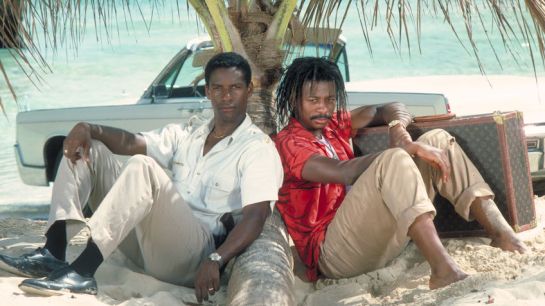
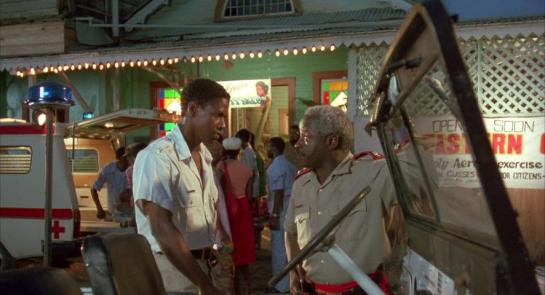
Washington plays Xavier Quinn, the chief of police on a Caribbean island with a strong Jamaican resemblance. The people respect Chief Quinn and he’s in good standing with the local governor (Norman Beaton). The only bump in the road is at home with his frustrated wife Lola (Sheryl Lee Randolph) who is tired of his job and the lack of time he spends with her and their son.

Things take a turn when a wealthy American businessman is brutally murdered at a fancy island resort. The stuffy and smug owner Thomas Elgin (James Fox) works to sweep the the crime under the rug and the local government is quick to oblige. They immediately pin the murder on a local free-spirited con-artist and Quinn’s childhood friend Maubee (Robert Townsend). Quinn doesn’t buy it and sets out to uncover the truth amid loads of corruption of cover-ups.

QUINN1

The film has much of what you want out of a crime thriller but there is also a subtle playfulness to it. You see it in the vibrant locations, in the interesting array of locals, in the steady wave of island music, and most of all in Washington’s performance. He brings a fun and interesting flavor to his character, balancing serious intensity with well-tempered humor. Sure his accent sometimes wanders off, but he’s still a great fit.

Once again, when looking at Denzel Washington’s filmography it’s understandable how “The Mighty Quinn” may have fallen between the cracks. It’s not the kind of movie that would draw a lot of attention especially when placed next to other films from the actor’s impressive body of work. It’s also unfortunate because this is a fun movie that sets the table for some of the roles Washington would later become famous for.

VERDICT – 3.5 STARS

3-5-stars

Denzel Day #7 : “Malcolm X” (1992)

MalcolmBIG

Over a span of two months each Wednesday will be Denzel Day at Keith & the Movies. This silly little bit of ceremony offers me a chance to celebrate the movies of a truly great modern day actor – Denzel Washington.

It may not seem like it today, but getting “Malcolm X” made was no easy task for filmmaker Spike Lee. Bringing this highly controversial figure’s life to the big screen brought heat from all sides. Lee was criticized by defenders of Malcolm X who feared how he would be portrayed. Many in the white community disapproved siting Malcolm X’s comments and positions deemed by many to be racist and anti-Semitic.

Interestingly Lee even ran into trouble with Warner Bros. who failed to give him the full funding needed to finish the film he wanted to make. With outside help and a lot of determination, Lee finally was able to get his movie across the finish line complete with a 3 hour 20 minute running time.

Malcolm1

Lee (who also served as co-writer and co-producer) based much of his film on Alex Haley’s 1965 book “The Autobiography of Malcolm X”. He already had the right man in place to play the titular lead character even before he signed on to direct – Denzel Washington. Petty concerns over Washington’s height and darker complexion were quickly tossed aside once people saw his performance. This was the second of four collaborations between Spike Lee and Denzel Washington and their sharp chemistry together was immediately evident.

Out of the gate “Malcolm X” comes across as very much a standard biopic. But to Lee’s credit he’s not just feeding us information by simply making stops across the timeline. He wants to put us in Malcolm’s shoes. He wants to represent to us the circumstances and influences that shaped the man who eventually turned from a small-time thief and hustler into a powerful civil rights firebrand.

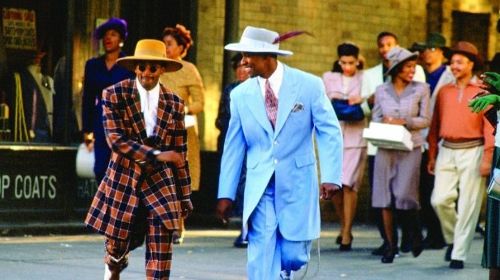
He was born Malcolm Little but during “the war years” he was known as Red. After running afoul of a low-level Harlem gangster, Red flees to Boston where he and his hipster pal Shorty (played by Lee) prowl the nightlife in bright zoot suits and with white women on their arms. Soon they begin running numbers and committing petty burglaries which lead to his arrest and a 10-year prison sentence.

Malcolm2

These scenes are broken up by powerful although sometimes klunky flashbacks which present key moments from Malcolm’s upbringing. They include the murder of his father (framed as a suicide but widely believed to be by the KKK), his separation from his siblings by the state, and his mother’s resulting mental illness. He grew up in foster homes where he was a bright kid and a good student even being voted class president. Yet in one scene a white teacher tells him his aspirations of being a lawyer were unrealistic. Instead he should do something more “fitting for a negro“, something like carpentry. These life experiences give form to the man Malcolm would soon become.

Prison proves to be a turning point for Malcolm (and the film). He falls under the spell of a persuasive fellow inmate who introduces him to the doctrines of the Nation of Islam. On one hand it leads him to reevaluate his life, putting aside his past vices. On the other hand he is seduced by the teachings of NOI leader Elijah Mohammad (Al Freeman, Jr) who advocated the complete separation between whites and blacks. He put a needed spotlight on injustices both past and present. But he also taught that all whites are “devils” and that unity among races was not the answer.

The remainder of the movie focuses on Malcolm’s rise through the NOI ranks and into the national spotlight as his powerful speech and ability to control a crowd draws attention from all sides. Lee takes us through the incendiary comments and public controversies; Malcolm’s eventual riff with the jealous NOI leadership; the transformation of his sweeping indictments and personal prejudices to a more thoughtful and inclusive point of view. And of course his assassination on the night of February 21, 1965.

Malcolm3

This would all make for an interesting historical essay but what makes it work as a piece of cinema is the humanity Lee and Washington brings to the character. We see it most through the deep-digging personal scenes between Malcolm and his wife Betty. She’s played by a superb Angela Bassett who brings an emotional resonance to every scene she’s in. Washington is as convincing in the intimate moments as he is when brandishing Malcolm X’s unbridled, fiery tongue on a street corner or behind a pulpit. It’s a brilliantly multi-layered performance that opened a lot of eyes.

Spike Lee’s epic-sized biopic covers a lot of ground. The first half is a bit long even though none of its scenes feel wasted. It’s the second half where things really pick up and the complexities of Malcolm X take shape. Lee paints a fascinating portrait of a man hardened by racial injustice, drawn to a divisive ideology, and then opened to a new way of seeing things. In Lee’s portrayal the Malcolm who once said “The only thing I like integrated is my coffee” is not the same man we see later.  And while he was still clear-eyed regarding the vile and often violent nature of racism, he sought more unified ways of confronting it. In the end that’s what makes the film all the more tragic.

VERDICT – 4 STARS

4-stars

REVIEW: “Ma” (2019)

MaPOSTER1

2019 has featured several talented actors/actresses unexpectedly taking on roles of creepy, unhinged maniacs. First was Isabelle Huppert in “Greta” followed shortly after by Dennis Quaid in “The Intruder”. The latest is Octavia Spencer in “Ma” and let’s just say she takes crazy to a whole new place.

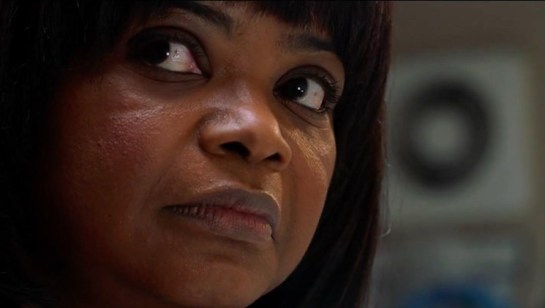
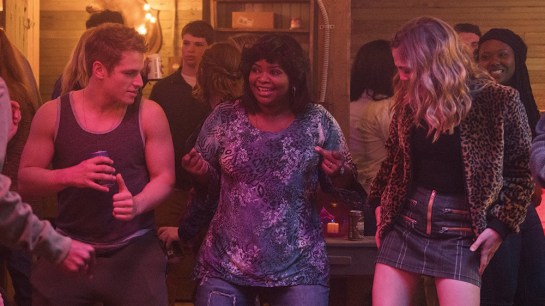
Spencer is such a good actress and she can elevate almost any material she is given. And the fact that she almost rescues “Ma” from its missteps is a true testament to her talent. Her character Sue Ann gains the nickname Ma from local teens after she buys them booze and then later opens up her basement to be their secret party hot-spot. No parents, no police, and no protection from Ma as she slowly comes unglued.

MA1

But before we get to Ma we are introduced to Maggie (Diana Silvers) who is prepping for her first day at a new school. She quickly hits it off with a group of friends who perfectly embody Hollywood’s shallow and overused perception of teens. They’re dense, obnoxious boozehounds that check all the boxes – the muscular meathead, the beautiful but rude blonde, the nice (but objectively dumb) guy, and so on. The prospect of spending a big chunk of the film’s 100 minutes with them isn’t that appealing.

As the movie progresses Ma gains the trust of even more local teens. Her parties get wilder and we the audience grow more suspicious. Probably because Ma’s behavior steadily gets weirder and weirder, so much so that even our group of dim-witted teenagers begin noticing. And along the way some pretty effective flashbacks are tossed in to give reason to Ma’s madness.

Writer Scotty Landes puts a lot on the shoulders of backstory and much of your reaction to “Ma” could be shaped by how much you care about the reveals. Outside of that, most of the fun is found in Spencer’s performance which ranges from menacing to darkly funny. Several other familiar faces pop up including Juliette Lewis as Maggie’s single-parent mom, Luke Evans as a concerned parent, and Allison Janney in a small but very Allison Janney-like role.

Film Title: Ma

The teen characters don’t fare quite as well and a lot of their back-and-forths are pretty uninspired. I mean there is only so much you can pull from what can best be described as run-of-the-mill teen stock characters. There is simply not enough about them that is original or even remotely interesting.

“Ma” is a Blumhouse film that follows the company’s very successful blueprint – make a horror movie with a minuscule budget and then secure a wide release so that almost any box office total is profitable. “Ma” will turn a profit (mainly due its tiny $5 million budget) but it hasn’t pulled in the audience’s quite like other Blumhouse pictures. I’m not surprised. I actually went into “Ma” expecting more than what I left with. Spencer carries the film on her back but even she can’t keep the film from being viewed as a missed opportunity.

VERDICT – 2.5 STARS

2-5-stars

REVIEW: “Midsommar”

MIDposter

Ari Aster earned a lot of well-deserved attention with his 2018 feature film debut “Hereditary”. It was a dark and unsettling bit of psychological horror that he wrote and directed. The film was greeted with high praise from critics, a little more mixed reactions from audiences, yet most were anxious to see what he would do next.

Well now we know. Aster’s follow-up film “Midsommar” sees him staying within the psychological horror sphere. But here he adds a ton more weirdness and clearly aims to push the envelope by being more shocking and disturbing than with his previous film (and that’s saying something). Unfortunately these ambitions push things too far, and “Midsommar” becomes a classic case of creative overkill.

The movie gets off to an incredibly strong start. Much like “Hereditary”, this film is built upon the fractured psyche of its lead character. An extremely well done prologue lays the foundation for us. Florence Pugh plays Dani, a young woman broadsided by a horrific family tragedy. Devastated and emotionally frail, she looks to her not-so-comforting boyfriend Christian (Jack Reynor) for support. But his hollow sympathy can’t hide that he would rather be spending time with his three equally self-absorbed buddies (played by William Jackson Harper, Vilhelm Blomgren, and Will Poulter).

MID1

These early scenes are fabulous mainly due to Pugh’s powerful performance. Her projections of grief, anxiety, and vulnerability are both natural and thoroughly convincing. And through these scenes Aster gives us a vivid understanding of Dani’s relationship with Christian. The dialogue subtly yet shrewdly captures a form of psychological abuse we rarely see on screen.

All of that sets the audience up for the acid-trip remainder of the film. Christian and his pals plan a trip to Sweden, to a remote country commune where one of the friends was raised. They reluctantly allow Dani to tag along. Once there they will get to witness a special 9-day festival which takes place every 90 years.

It doesn’t take long to notice something is a little off. At first things appear innocent enough as the white frocked commune members go about their peculiar daily rituals. But what looked like a group of harmless flower children turns out to be a macabre pagan cult with deeply sinister motivations and a special need for “outsiders” at their festival.

Aster begins this leg of his journey with a great grasp on mystery and setting. Early on, the slow drips of information and ever so subtle reveals work well to keep us in a constant state of suspicion and wonder. Aster completely sells us on the perpetually sun-soaked delirium, the off-kilter tone, and the increasingly eerie atmosphere. It’s truly phenomenal filmmaking right up to the point where Aster loses himself to an obsession to be bizarre and make us squirm in our seats.

The final third of the film whole-heartedly commits to progressively getting weirder by the moment. And while always visually impressive, the main characters (most notably Dani) get lost among the madness. During this time you could argue that the commune becomes the centerpiece yet we still learn practically nothing about them. Instead Aster seems more focused on scarring us with imagery than challenging us with thought-provoking themes.

MID2

This is probably best seen in an absurdly graphic sex ritual that desperately screams out for attention. Reynor told Indiewire “I wanted as much as we could go for” and there lies the problem. You can see and recognize them REALLY going for it – seeing how far they can push the limits. It badly wants to be shocking and unsettling. I found it to be excessive, off-putting and void of any discernible meaning whatsoever. For me it was a frustrating sign that Aster had completely lost his focus.

Sadly a few other things bring “Midsommar” down. With the exception of Christian, the other supporting characters are barely more than thinly conceived filler. And even Reynor’s performance lacks energy or charisma. That leaves Pugh, a fantastic actress giving a fantastic performance, but who is buried in a final act that’s more interested in visual nuttiness.

There are several questions you could ask that would show cracks in the story’s foundation. But still, movies like this usually beg to be dissected and discussed. “Midsommar” is a bit maddening in its reluctance to provide that kind of food for thought. Is it a movie about grief, emasculation, mental health, spiritual awakening? The movie seems to inadvertently ask “Who cares? Just watch another unnerving scene where the creepy Swedish cult does something else bizarre.” Pugh and the film’s incredible first half deserves better.

VERDICT – 2.5 STARS

2-5-stars

REVIEW: “Murder Mystery”

MURDERposter

One of the greatest compliments I can give “Murder Mystery” is that it is considerably more tolerable than most of the dreck Adam Sandler churns out. That may not sound flattering (and to be honest it isn’t), but when you’ve grown accustomed to Sandler films being insufferable slogs, ‘tolerable’ is a pretty big step in the right direction.

Just to be clear, that doesn’t mean “Murder Mystery” is a good movie. It features many of the same problems that plague most of Sandler’s stuff. It just happens to be slightly less offensive to your intelligence and ever so slightly amusing (on occasions) – just enough to keep you with it until the end.

MURDER1

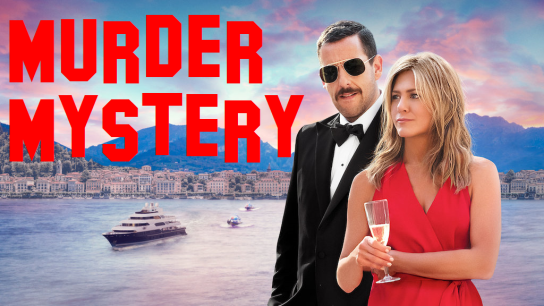
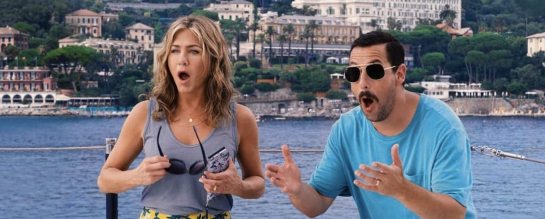
Sandler plays Nick Spitz, a New York police officer who can’t pass his detective exam. Jennifer Aniston plays his wife Audrey, a hairdresser who after 15 years is still waiting on her husband to fulfill his promise of a honeymoon in Europe. On their anniversary Nick surprises Audrey (not by choice) by telling her he has booked their long-awaited trip.

You have to be impressed with Sandler’s ability to get together with a bunch of friends, travel to beautiful locations, and have production companies pay for the whole thing all under the guise of making a movie. Here Italy is the vacation spot…errr shooting location of choice. On their flight Nick and Audrey meet Charles Cavendish (Luke Evans), a suave and debonair aristocrat who invites them to join him on his family’s yacht to celebrate his billionaire uncle’s upcoming wedding.

But what starts as hobnobbing with the rich and famous turns into a Eurotrip filled with (you guessed it) murder, betrayal, and an assortment of the prime suspects – the fiance, a jealous son, a scorned lover, a movie star, a Maharajah, a race car driver, a military Colonel and his Russian bodyguard. Shenanigans ensue and in classic whodunnit style the possible killers are mysteriously killed off one-by-one. And wouldn’t you know it, it’s the Spitzes who find themselves being framed for the murders.

“Murder Mystery” doesn’t have a lot to offer but at least the cast is having a good time. The row of suspects featuring Evans, Gemma Arterton, Luis Gerardo Méndez, Adeel Akhtar, Shiori Kutsuna, John Kani, and Ólafur Darri Ólafsson seem to be enjoying themselves. And something can be said for the natural and seemingly effortless chemistry between Sandler and Aniston.

MURDER2

Unfortunately the fun they’re having doesn’t exactly carry over to us. The screenplay was written by James Vanderbilt, the same guy who wrote 2007’s fantastic “Zodiac”. He and director Kyle Newacheck wisely keep things moving at a quick and snappy pace. It’s a good idea because if you slow down and give the story too much thought, it’s pretty easy to check out of it.

While “Murder Mystery” is a decent step up from what Adam Sandler has become known for, it still falls short of being what could be called a genuinely funny movie. It’s not fresh enough to be called original and not smart enough to be called a parody. It’s the kind of movie that you don’t necessarily have to labor through, but it will be completely forgotten by the end of the day.

VERDICT – 2 STARS

2-stars

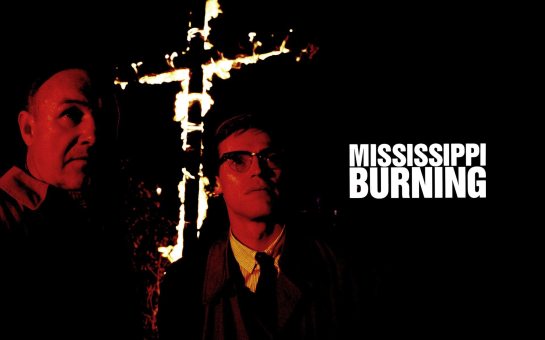
RETRO REVIEW: “Mississippi Burning” (1988)

burningposter

It was interesting to finally revisit 1988’s “Mississippi Burning” after so many years especially in light of the recent wave of fresh new filmmakers offering their own points of view on racism and the historical stain it has left on America’s social fabric. It was a movie that faced more than its share of criticisms, some thoughtful and others unfair.

The film is based on a true story about three young civil rights workers who went missing in 1964 Mississippi. The title comes from “MIBURN”, the code name given to the missing persons investigation by the FBI after the workers’ burnt-out car was discovered. It would become one of the signature cases in the long and painful road towards racial justice.

burning1

Many of the criticisms were unfortunate especially considering the type of movie “Mississippi Burning” is. There were complaints, even boycotts aimed at the film’s inaccuracies, its choice of story perspective, and its lack of a central black character. And then there was the unwarranted white savior accusation, as if the situation in that small Mississippi town had been dramatically changed for the better by the end of the film. This was never meant to be a documentary. It’s clearly a fictionalization intended as a suspenseful police drama but with the guts to hold up a mirror to the segregated south.

Director Alan Parker starts his film with an impeccably shot opening sequence. At dusk three young men are driving down a country road in Jessup County, Mississippi. Within seconds three vehicles are barreling down on them. The foreboding beats of Trevor Jones’ score and Peter Biziou’s tension-soaked cinematography lets us know that something bad is about to happen.

burning2

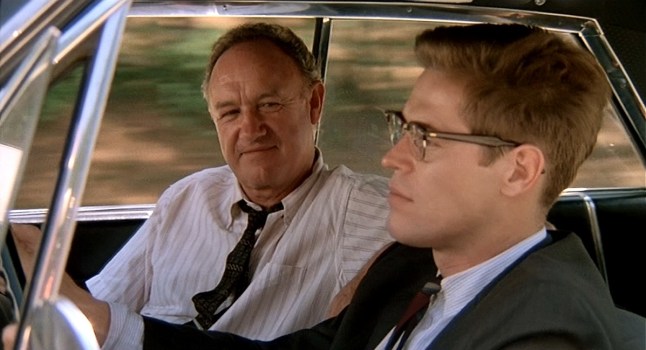
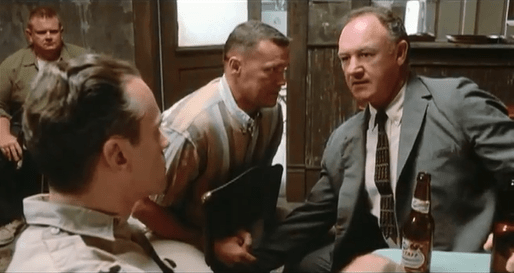
The boys go missing and the FBI sends Agent Rupert Anderson (Gene Hackman), a brash but seasoned g-man with southern connections of his own and Agent Alan Ward (Willem Defoe), a by-the-numbers bureau guy fresh out of the Justice Department. Their approaches to the investigation are drastically different. Anderson wants to melt into the community, getting information by mixing with the locals at the barbershop or the Main Street cafe. Ward wants to use every government resource at his disposal. That includes over 100 FBI agents who converge on the small Mississippi town much to the chagrin of Sheriff Stuckey (Gailard Sartain). He and his slimeball Deputy Pell (Brad Dourif) put up every wall of jurisdiction they can and work hard to convince the townsfolk that the feds don’t belong there.

Anderson and Ward find themselves in a boiling hotbed of deeply ingrained racism. With the KKK running free and a seemingly complicit local law enforcement, finding clues to the missing boys’ whereabouts proves difficult. This touches on one of most heart-shattering elements to the story which involves the black community and their unwillingness to share information with the feds.

This reveals a terrible circle of injustice. Anderson and Ward can’t tighten the screws on racist local suspects unless the black folks will talk to them. The black folks won’t talk to them for fear of violent retaliation from the racist locals. Anyone in the black community who speaks out ends up hurt or killed. Their families are terrorized and their homes burnt to the ground. As Anderson tells a discouraged Ward, “They have to live here long after we’re gone.” It’s a revealing truth that the film handles well.

burning3

As a crime thriller “Mississippi Burning” maintains a simmering level of suspense. Interestingly the suspense lies more in how things play out rather than what the outcome will be. The longer the movie goes the worse things get. Hope dwindles and patience begins to wear thin. Several key players factor in most notably Deputy Pell’s wife (played by an excellent Frances McDormand who received her first Oscar nomination). We also get a young Michael Rucker playing a hate-fueled yokel with a disgustingly long leash.

But it all comes back to the two leads. DaFoe works at the perfect temperature for his character, a principled man with a sharp blend of smarts and naïveté. But it’s Hackman who steals the show reminding us of just how good of an actor he is. Effortlessly natural at every turn, convincingly fiery when needed, and with loads subtle flourishes that make his performance stand out.

VERDICT 4.5 STARS

4-5-stars