REVIEW: “The Mandalorian” Season 3 (2023)

Disney and Lucasfilm struck gold in 2019 with their terrific streaming series “The Mandalorian”. The sprawling space western was an immediate hit and a much needed win for the Star Wars universe which was still smarting from some of the reactions to their more recent movies. Season 2 followed in 2020 and it was met with similar excitement and praise (the two share the same 93% rating on Rotten Tomatoes). Needless to say, the anticipation for Season 3 was high.

The first season had a fairly simple roadmap. Most of the episodes were like self-contained adventures that followed bounty hunter Din Djarin and young Grogu as they made stops around the galaxy. The season’s easy-to-follow structure was perfect for casual Star Wars fans who didn’t need to be well-versed in the franchise’s history and lore to understand what was going on. Season 2 was much the same, although it did introduce some new characters and began opening up other corners of the galaxy that would play parts in Favreau and Filoni’s greater vision for their Mandalorian universe.

And then came Season 3 with its different feel and much broader scope. Many viewers have had a hard time connecting with this season and have struggled with writer, creator, and showrunner Jon Favreau’s storytelling. Granted, there is plenty to question regarding the season’s structuring. Yet every episode has purpose and expands the Mando-Verse in a number of interesting ways.
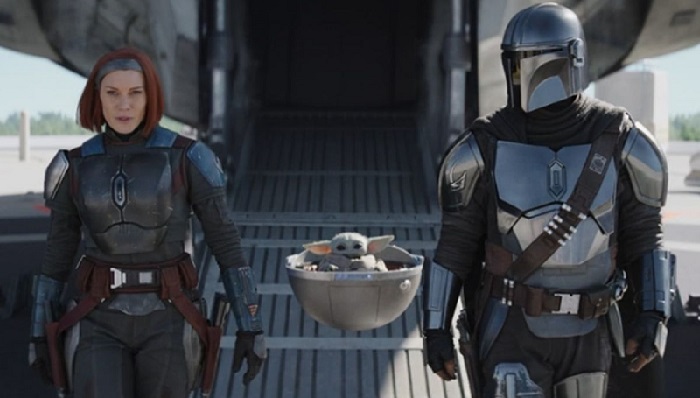
Image Courtesy of Lucasfilm Ltd.

Without question, these latest eight episodes will resonate more with the seasoned Star Wars fan. It demands at least some understanding of the sequel trilogy, the animated shows, Mandalorian lore, the franchise’s history with cloning, etc. in order to fully grasp where it goes (and is going). That’s a big ask, especially for those who simply want more of Din and Grogu bouncing around the galaxy facing new threats and giving us cute gif-worthy moments to enjoy.

But Favreau and company have bigger ambitions. They are building up an interconnected world that will extend into other shows and culminate in a Dave Filoni directed feature film that was recently announced at Star Wars Celebration. You can certainly tell in Season 3 as nearly every episode expands the Star Wars universe in some kind of way. That’s not to say it doesn’t have its issues. Favreau gives us a lot of meat but too much is left on the bone. He doesn’t go as in-depth on some things as he needs to and he doesn’t always communicate well with his audience. It leaves certain story angles feeling underserved, and it’s sure to leave some viewers in the dark.

But what can I say? I love this kind of stuff. I love combing over the episodes, connecting the dots to past Star Wars material, and trying to figure out where things are going to land. In other words, I’m the target audience. And even if the structure is a little wonky and the storytelling a bit demanding, the geek in me found a lot to enjoy in Season 3. And not just from the story stuff, but also the great assemblage of characters, the many scenes of thrilling action, and the jaw-dropping visual effects which are easily the best of the series so far.

Image Courtesy of Lucasfilm Ltd.

Pedro Pascal steps back behind the beskar helmet and armor, reprising his role as bounty hunter Din Djarin. In this season his journey goes from seeking reinstatement into his Mandalorian clan to playing a key part in unifying the fractured Mandalorian tribes so they can reclaim their home world of Mandalore. Along the way he reconnects with such familiar faces as Greef Karga (Carl Weathers) and Carson Teva (Paul Sun-Hyung Lee). And then of course there are the shadier sorts such as the villainous Moff Gideon (Giancarlo Esposito), the slimy Elia Kane (Katy O’Brian) and the curious Penn Pershing (Omid Abtahi).

But it’s the Mandalorians who take center stage in Season 3. We once again meet The Armorer (Emily Swallow), Axe Woves (Simon Kassianides), Paz Vizla (Tait Fletcher), and Koska Reeves (Mercedes Varnado). Of them all, Bo-Katan Kryze (Katee Sackhoff) is given the biggest boost. Over the course of the eight episodes, Bo-Katan finds her courage, shows her resolve, and proves herself to be the unifying leader her people need. She’s a terrific character dating all the way back to The Clone Wars animated series, and it has been great seeing her get her live-action due

Sprinkled throughout the season are a number of other delights: Anzellan mechanics, R5-D4 facing his anxiety, a…remodeled IG-11, and of course the infinitely lovable Grogu. He’s not as big of a player this season and it’s still bizarre that his big reunion with Din took place in another series (“The Book of Boba Fett”). But he still has a significant presence and he’s given some meaningful character progression.

Image Courtesy of Lucasfilm Ltd.

It should be said that a couple of much-talked-about episodes have divided many viewers. One hones in on Dr. Pershing who is now part of the New Republic’s amnesty program. The episode may seem extraneous, but it actually sheds a lot of light on some of the New Republic’s flaws. And it gives us our first hints on some darker forces at work. Then there’s the reasonably fun yet glaringly contrived “Guns for Hire” marked by its distracting Jack Black and Lizzo cameos. The episode is bookended by a couple of good moments, but otherwise it’s the weakest of the eight.

When taken as a whole “The Mandalorian” has delivered once again with terrific characters old and new, extraordinary visuals, and the kind of Star Wars action fans crave. This season tapped into much of what many of us enjoy about the series while also exploring new parts of this incredible galaxy that so many of us love. That said, I can see it being catnip for diehards and confusing for more casual viewers. But even with its occasional wonkiness and a handful of questionable choices, I found myself locked into every episode. Even better, it ended with a bang and it left me hungry for more. Hopefully we won’t have to wait long. All three seasons of “The Mandalorian” are streaming now on Disney+.

VERDICT – 4 STARS

REVIEW: “Mafia Mamma” (2023)

(CLICK HERE for my full review in the Arkansas Democrat-Gazette)

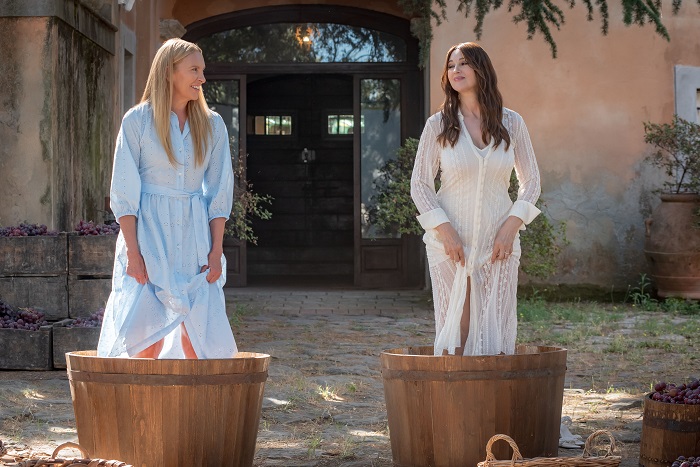
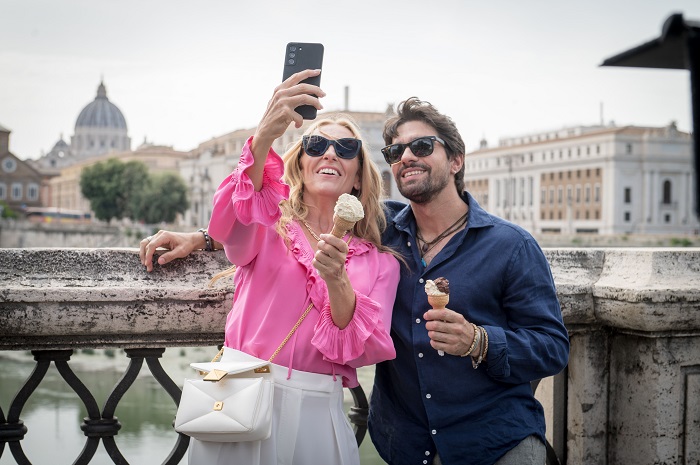
The very title “Mafia Mamma” doesn’t exactly encourage optimism. To the film’s credit it does offer up an enticing cast, namely Toni Collette and Monica Bellucci. But even they are eventually brought down by the progressively bad material. Good actors can carry a movie, but even they need a little something to work with. “Mafia Mamma” leaves everyone high and dry. I will say it looks like they had a good time shooting it. I wish I could say the same about watching it.

The film is written for the screen by Michael J. Feldman and Debbie Jhoon who are working from an original story by Amanda Sthers. It’s directed by Catherine Hardwicke who handles things well enough from the technical side of things. But the management of the film’s ever-shifting tone is another thing altogether. It’s all over the map to the point that it has no real identity. One minute it’s a mobster movie; a minute later it’s a raunchy comedy; yet a minute later it hits you with grisly violence. It’s hard to make out what the movie wants to be. I’m guessing it looked better on paper than in how it turned out.

Image Courtesy of Bleecker Street

I really like Toni Collette, but she’s handed an impossible task. The movie attempts to take her character Kristin on a wild and crazy journey of self-discovery and empowerment. Yet they spend the bulk of the film’s 101 minutes making her out to be weak, shallow, and borderline insufferable. And regardless of how good of an actress Collette is, even she can’t take ten minutes at the end of the film and turn her character into a believably strong and self-reliant woman.

We first meet Kristin as a kind-hearted yet slightly naive woman living on the West Coast with her dolt of a husband Paul (Tim Daish) and her college-bound son Domenick (Tommy Rodger). She works an unfulfilling job as a marketing strategist for a pharmaceutical company where she’s constantly overlooked due to the boy’s club mentality of her male counterparts. Meanwhile her brash and outspoken best friend (because it seems we always need a brash and outspoken best friend character) Jenny (Sophia Nomvete) pushes her to get a backbone and start looking out for herself.

Kristin is surprised by a phone call from a woman named Bianca (Bellucci) who tells her the grandfather she doesn’t even know, Giuseppe Balbano (Alessandro Bressanello), has died and she’s needed in Italy to help settle his affairs. Obviously it doesn’t make sense considering she hasn’t been to Italy or seen any family there since she was a baby. But with her marriage souring and her work stalling she decides to go. I mean who knows, maybe she can have her own “Under the Tuscan Sun” moment.

Once she arrives in beautiful sun-soaked Italy Kristin discovers the first of several family secrets. She learns that her grandfather wasn’t the winemaker he masqueraded as. He was actually a powerful mafia don who was killed in a gunfight along with the head of the rival Romano gang. With a potential mob war looming, both families scramble for new bosses. Next in line to lead the Romanos is Carlo Romano (Giuseppe Zeno). It’s a little more complicated for the Balbanos.

Image Courtesy of Bleecker Street

Hungry to lead the Balbanos is the late Don’s hot-headed and ambitious nephew, Fabrizio (Eduardo Scarpetta). But in a video recording left behind by the late Don Giuseppe, he shares his last wishes – he inexplicably wants Kristin, his only grandchild, to take his place as head of the family and entrusts his loyal general Bianca to ensure it happens. Obviously, nothing about his decision makes sense. Why would any mafia don hand over his entire operation to someone he hasn’t laid eyes on in decades? It’s so ridiculous that you keep waiting for what feels like a pretty obvious twist that never comes.

For the rest of the way the mostly suspense-free story haplessly bops along, tossing in some mostly thrill-free action and taking some mostly laugh-free swings at humor. Sadly nothing it throws at the screen really sticks. The ‘fish out of water’ stuff gets old pretty quick. The sudden jolts of gore feel more haphazard than thought out. And so many of the characters are stuck as lame caricatures with no relatable qualities whatsoever. Those things might be easier to overlook if the movie was half as funny as it tries to be. Sadly, it’s not. “Mafia Mamma” is out now in theaters.

VERDICT – 1.5 STARS

REVIEW: “Murder Mystery 2” (2023)

(CLICK HERE to read my full review in the Arkansas Democrat-Gazette)

It can be a little challenging to understand Netflix’s metrics for what constitutes a financial success on their platform. To my knowledge the streaming leader hasn’t really opened up about their formula. But rather than box office ticket sales, they seem to mostly rely on viewer counts, click rates, and (of course) revenue, specifically new subscribers coinciding with an original film’s release. And most certainly production budgets have to figure in.

Some believe reviews play a part, which is funny considering Netflix signed and extended a lucrative development deal with Adam Sandler’s Happy Madison Productions whose films are routinely hammered by critics. Obviously it’s because Sandler’s films are (by some measure) profitable. Take his 2019 comedy “Murder Mystery”. While I don’t think Netflix ever formally announced the film’s production budget, they did share that it broke a number of the platform’s streaming records at the time despite a pretty tepid reception from critics.

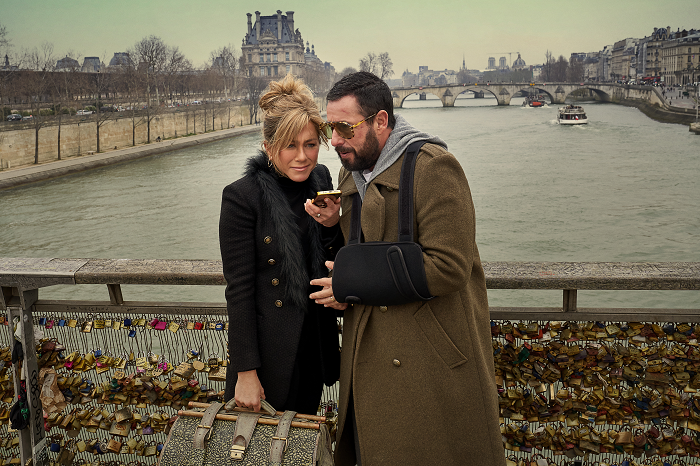
But whether on the big screen or a streaming service, we live in an age of sequels which leads to “Murder Mystery 2”, the latest lightweight Sandler concoction that sees him and several of his friends enjoying more vacation time on Netflix’s dime. This time it’s to the Caribbean and Paris. That means we’re guaranteed some gorgeous sun-soaked island vistas and the beautiful sites of the City of Lights. Unfortunately that’s about all we get.

Image Courtesy of Netflix

“Murder Mystery” wasn’t a great movie, but it wasn’t a terrible watch either. In fact, it had its moments and was significantly more tolerable than much of what has come out of the Happy Madison camp. But nothing about its slack and uninspired sequel clicks. It feels as if Sandler and company are simply cashing checks and coasting. There’s no doubt the cast is having a good time. Unfortunately the fun they seem to be having doesn’t exactly carry over to us.

Following the events of the first film, husband and wife Nick (Sandler) and Audrey (Aniston) Spitz have quit their jobs and gone into the private detecting business. But unfortunately for them, business hasn’t been good. Audrey thinks they need to be officially licensed if they want to make it as private dicks. Nick thinks all they need is better marketing. It never occurred to them that maybe they simply aren’t very good at it. Regardless, their struggles has led to some tension in their marriage.

Then they get a call from The Maharajah (Adeel Akhtar), a billionaire Indian businessman and wannabe rapper from the first film. He tells them he’s about to get married to a French woman named Claudette (Mélanie Laurent – how did she get involved in this?) and invites them for an all expenses paid stay on his private island to attend their wedding. Mutually agreeing that they need a break from “work”, Nick and Audrey take his offer and are whisked away on their posh tropical getaway.

Image Courtesy of Netflix

Things seem to be going great until the night of the bride and groom’s extravagant rehearsal dinner. A bodyguard is murdered and the Maharajah is kidnapped and taken off the island. Without much thought, Nick and Audrey immediately deduce that someone on the inside is working with the kidnappers. Their list of suspects includes the soon-to-be married Claudette, the Maharajah’s antisocial sister Saira (Kuhoo Verma), a womanizing former soccer player Francisco (Enrique Arce), and a snooty rich countess named Sekou (Jodie Turner-Smith).

Returning screenwriter James Vanderbilt attempts to give each suspect some semblance of a motive. But he and director Jeremy Garelick (replacing Kyle Newacheck) spend so little time on developing their characters (and even less on their story) that it’s impossible to invest much into any supposed mystery. Things only get worse when Nick and Audrey jaunt off to Paris, working with SAS Agent Miller (Mark Strong in a thankless role) to lure out the kidnappers.

After inundating us with lazy gags, lame stereotypes, and unoriginal plot turns, everything culminates in a hopelessly silly action sequence at the Eiffel Tower where the very few pieces of the mystery come together in the most unimaginative way possible. And if that wasn’t enough, the movie ultimately ends with a shamelessly cheap cliffhanger that turns out to be a fitting nail in the coffin of this paper-thin and woefully unfunny whodunnit. “Murder Mystery 2” premieres today on Netflix.

VERDICT – 1.5 STARS

RETRO REVIEW: “The Mechanic” (1972)

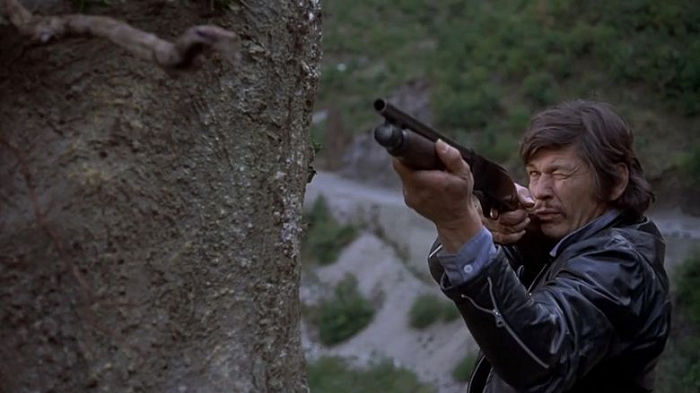
“The Mechanic” was the second of six movies Charles Bronson and director Michael Winner made together. The action thriller came fresh off the heels of their 1972 revisionist Western “Chato’s Land” and just a couple of films before their most noted collaboration “Death Wish”. Although it received mixed reviews at the time of its release, “The Mechanic” has long been appreciated by Bronson fans and even inspired a 2011 remake starring Jason Statham.

Among the film’s most memorable features is its riveting opening. At just over 15 minutes, with no dialogue, and shrewdly shot by cinematographer Richard Kline, we watch as a highly skilled contract killer (Bronson) sets up shop in an upstairs room above a city pawn shop. There he monitors a man in an apartment directly across the street from his. The assassin notes every detail of the man’s room and memorizes his routine. Then we watch as he meticulously executes his assignment with lethal precision.

The hitman is Arthur Bishop, who is also known as a “mechanic”. He takes exclusive contracts from an international crime syndicate referenced only as “the Association”. Arthur is an expert at his craft, known for his dependability and efficiency. While killing for hire is an ugly job, it pays well, allowing Arthur to live a life of comfort. When not planning and carrying out hits, he loses himself in what he enjoys most – art, a good pipe, and his red silk pajamas.

Image Courtesy of United Artists

But we also see signs that Arthur’s work is taking a toll. He takes antidepressants and even ends up in the hospital after an anxiety attack. He frequently visits a call girl (played by Brosnan’s wife at the time, Jill Ireland) to help with the loneliness and isolation his job demands. He pays her to pretend to be in love with him, faking a romantic relationship and even writing fake love letters to help him feel something similar to affection.

Arthur is contacted by his bosses who want one of their owned whacked. They put out a contract on Harry McKenna (Keenan Wynn), an old acquaintance of Arthur’s father who has gotten crossways with the higher-ups. Despite being friendly with his target, Arthur carries out the job without hesitation. As a result, Harry’s cocky and entitled 24-year-old son Steve (Jan-Michael Vincent) inherits his father’s fortune.

If you’ve seen a mob movie or two you may think you know where the story is heading – an angry son sets out to get revenge on the man who killed his father. But writer Lewis John Carlino doesn’t go the predictable route. Instead he throws us a twist. Instead of a quest for vengeance, Steve wants to learn more about his father’s business. He’s especially interested in contract killing. So he seeks out Arthur, knowing he did some work for his father but not knowing he’s the guy who killed him. Or does he? We don’t know, and Carlino does a good job keeping us wondering.

Arthur ends up breaking one of his rules and takes Steve on as his apprentice. It creates an interesting dynamic and builds a satisfying tension. We’re left asking a number of questions. How much does Steve know? Is Arthur letting his guard down? What will the crime bosses do once they get wind that Arthur has brought an unvetted newcomer into their fold? Winner does a good job planting those questions in our minds and unveiling the eventual answers.

Image Courtesy of United Artists

The movie bogs down a little once Arthur begins teaching and training Steve in his new craft. Yet these scenes do have value as they help give shape to the relationship between the two characters. But things pick up pretty quick after Arthur takes Steve on his first job, and later when the two head to Naples to knock off a mobster who’s about to talk to the local police. Each scenario is flavored by some good action, particularly one thrilling off-road motorcycle chase, and an even more exciting car chase and shoot-out across the Italian countryside.

Through it all Bronson leads with his signature tough-guy grit and stoicism. It’s a really good performance for a role that was right in his wheelhouse. Vincent, who had a successful but troubled career, is a little more inconsistent. He starts to settle in later in the movie, but early on his attempts at portraying Steve’s spoiled narcissism is a bit spotty.

As for Winner’s direction, he does a solid job building up and bringing together the story and its characters. Aside from a sluggish middle patch, the pacing is good and the payoff is still a satisfying punctuation mark. “The Mechanic” remains a solid entry in Bronson’s filmography and one that sits comfortably in the middle of arguably the best five-year run of the late actor’s four-decade-plus career. I love that it still holds up after 50 years, and it still shows why Charles Bronson was once considered the quintessential movie tough guy.

VERDICT – 3.5 STARS

RETRO REVIEW: “Mister Scarface” (1976)

“Mister Scarface” is very much a movie of its time. Inevitably some will read that as a criticism, and I understand why. Movies don’t always age well,. But it also seems that people’s ability (or in many cases willingness) to not only see past but admire a movie’s limitations, especially among today’s younger audiences, has waned. That’s a shame. But for anyone who loves genre history, genre filmmaking, and genre storytelling, there’s much to enjoy in this breezy Italian poliziottesco noir.

Poliziotteschi (also called Euro-crime and spaghetti crime) movies were born out of a consummation between the violent French crime films of the late 1960s, the quick rise of exploitation flicks, and the resurgence of mobster movies. They were also heavily inspired by Italy’s real-life political and social turmoil of the day. Cynicism and frustration was prevalent, and many filmmakers chose to express it in their work. Among them was director and screenwriter Fernando Di Leo.

“Mister Scarface” came near the end of Di Leo’s feature film career yet it very much falls in line with many of his previous crime movies. Written by Di Leo and Peter Berling, the story follows Tony (Harry Baer) who collects protection movie for a local mob ran by Don Luigi Cerchio (Edmund Purdom). Tony has grown tired of the small-time work. He’s ready to earn some real dough so that he can realize his dream of moving to Rio de Janeiro and living high with his brother Ric (Al Cliver).

After a powerful rival mob boss, known by the moniker Mister Scarface (a movie-stealing Jack Palance), knowingly cuts Luigi a hot check to cover his gambling losses, Tony sees an opportunity. While Luigi is hesitant about confronting Scarface, Tony convinces his boss to give him a shot, hoping it will move him up the gang’s ladder. He recruits Ric and Napoli (Vittorio Caprioli), one of Luigi’s enforcers. But rather than winning the boss’ trust, the trio puts Luigi in Scarface’s crosshairs which ends up triggering a violent mob war.

It may sound pretty by-the-book, but Di Leo packs quite a bit into the film’s taut 98 minutes. Minus a giggle-worthy exception or two, the script is pretty crafty in the way it immerses us into its Italian gangland. It’s done through a propulsive story that throws a few twists our way as it steamrolls towards an action-fueled showdown in an old abandoned slaughterhouse. It’s such a well-conceived and well-executed climax.

But Di Leo immerses us most through his characters. While none of them can be deemed “good people”, Di Leo’s affection for them is evident and infectious. Before long we find ourselves sympathetic towards this guy or rooting for that guy. Of course this is a gangster flick meaning many of them are going to die. And in several cases (to Di Leo’s credit) we actually care. A few really good performances help. Some of the acting is shaky (at best). But we get especially strong work from Purdom, Caprioli, and of course Jack Palance who exudes gravitas, swagger, and menace.

Admittedly, there are a few unintentionally funny bits that I couldn’t help but laugh at. Take Tony riding around the city of Rome in a red dune buggy (one that immediately called to mind memories of Hanna-Barbera’s Saturday morning cartoon “Speed Buggy” from the 70s). Not sure why they went with a dune buggy in the big city, but ok. And then there’s Tony’s fighting which is a funky mix of karate and interpretive dance. And his goofy banter doesn’t help.

Without question, the movie’s age and budget bleed through (in some instances more so than others). But in terms of genre and the filmmakers who helped shape them, “Mister Scarface” has all the savory poliziotteschi ingredients. It’s certainly not Fernando Di Leo’s best film, and it’s tame next his other mob movies such “The Boss” and “The Italian Connection”. But it’s such a fun watch, especially for those who not only recognize the history of genre filmmaking, but who also celebrate it.

VERDICT – 3.5 STARS

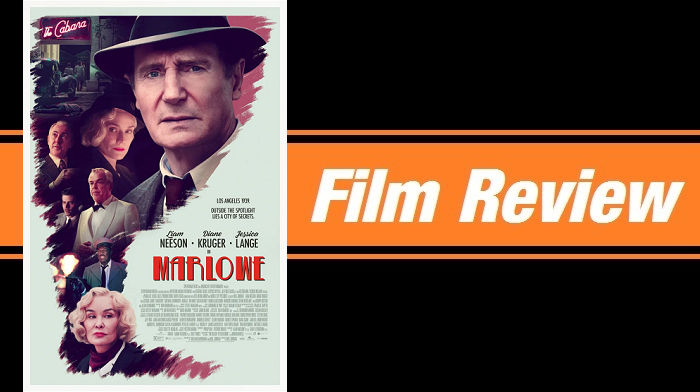
REVIEW: “Marlowe” (2023)

When it comes to genre films (and in this case I use the term “genre” lightly), I’m a real sucker for classic noir. The ones with the cynical antihero protagonists (often hard-boiled private detectives), the simmering femme fatales, the seedy settings and even seedier side characters, the intricate crime-centered plots, the cool straight-shooting dialogue. It’s a “genre” that has mostly faded into the sunset, but that (thankfully) still pops up every now and then. Case in point: Liam Neeson’s new film “Marlowe”

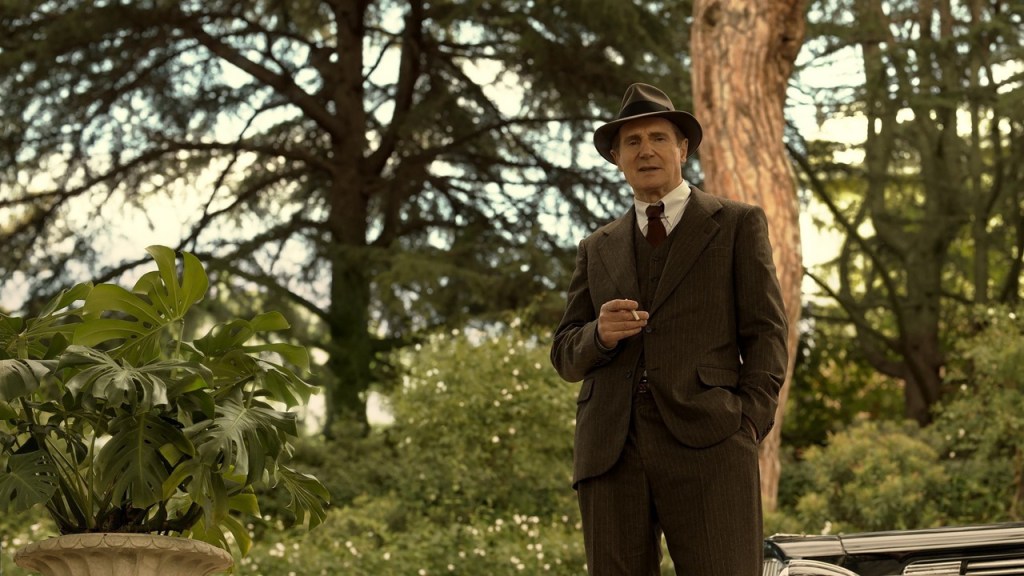
Considering the trajectory of his career, it’s hard to imagine Neeson leading an old-school film noir. He certainly has the world-weary look and gravelly grumble. But seeing him in a rumpled three-piece suit and fedora, driving around 1939 Los Angeles in a Ford Coupe is an adjustment. Yet here he is alongside an intriguing cast that includes Diane Kruger, Jessica Lange, Alan Cumming, Danny Huston, and Adewale Akinnuoye-Agbaje.

Directed by Neil Jordan (“The Crying Game”) and written by William Monahan (“The Departed”), “Marlowe” is an adaptation of John Banville’s 2014 novel The Black-Eyed Blonde. As its title gives away, the film’s lead character is none other than Philip Marlowe, the tough-minded wise-cracking private eye created in the 1930s by novelist and screenwriter Raymond Chandler. He’s appeared in several films throughout the years and has been played by such stars as Humphrey Bogart, James Garner, Elliott Could, and Robert Mitchum. Now Neeson gives him a whirl in what is the 100th film of the actor’s career.

Image Courtesy of Open Road Films

Set in Bay City, Los Angeles (inspired by Santa Monica in Chandler’s world), Philip Marlowe once enjoyed working as an investigator for the district attorney’s office. But that went south, and now he gets by as a self-employed private detective, often taking cases from the area’s wealthy and unscrupulous. Neeson turns out to be a pretty good Marlowe, blending in nicely with the terrific period production design and nailing the character’s look, demeanor, and pessimism.

One morning, Marlowe is visited by Mrs. Clare Cavendish (Kruger), a wealthy heiress who hires him to find her lover, a prop guy for Pacific Film Studios named Nico Peterson (François Arnaud). Mrs. Cavendish informs Marlowe that she’s married, and despite having an “understanding” with her husband (Patrick Muldoon), she prefers discretion. And just like that we have our femme fatale, a role that Kruger has a blast with.

Marlowe takes the case and immediately starts poking around. It doesn’t take him long to discover that Nico Peterson is dead – the victim of a hit-and-run outside the front gate of the Corbata Club, an exclusive members-only establishment managed by a suit named Floyd Hanson (a delightfully shady Huston). So with Nico dead, that means the case is closed, right? Not so fast. After Marlowe fills in Clare, she tells him she knows Nico has been pronounced dead by the authorities. But she claims to have recently saw him very much alive on the streets of Tijuana.

From there it’s all about putting together the many pieces of the puzzle as Jordan shuffles us from one person to the next, each with information to share. Some are reliable; just as many aren’t. They’re an interesting batch and everyone Marlowe meets gives him (and us) reasons to be suspicious. In addition to Huston’s Floyd Hanson, there’s Clare’s acerbic mother Dorothy Quincannon (Lange who’s great), a former movie star living off her former glory. There’s a gangster named Lou Hendricks (Cumming) and his loyal driver Cedric (Akinnuoye-Agbaje). And there’s Lynn (Daniela Melchior), Nico’s sister who’s caught between a rock and a hard place. They all speak in riddles and keep their cards close to the vest.

Image Courtesy of Open Road Films

And of course you have Clare herself who like all femme fatales has her secrets and is always holding something back. I enjoyed Kruger’s performance, but her relationship with Marlowe needs more sizzle. It’s mostly due to how Marlowe is written. Jordan and Monahan’s version is older, tired, and is feeling his age. “I’m getting too old for this,” he sighs after disposing of a couple of goons “Taken” style. It’s a profile that fits Neeson, but it inevitably tempers the sexual tension. Yet it’s kinda nice that we’re not force-fed some obligatory romance.

As for the look of the film, Barcelona and Dublin do a surprisingly satisfactory job filling in for Southern California. They may not capture the authenticity of something like “L.A. Confidential” or “Chinatown”, but they get the job done in large part thanks to DP Xavi Gimenez whose sun-baked vision of the Golden State is at times exquisite. Then there are his visual touches that are catnip for classic noir fans like me – the way the sun casts strips of shadow through window blinds. Or the bright glow of a neon sign reflecting off the rain-puddled pavement.

Those looking for a reimagining of Chandler’s world could very well leave disappointed. “Marlowe” isn’t meant to be some revisionist exercise in the mold of Altman’s “The Long Goodbye”. It’s more of an celebratory ode; a proudly unashamed pastiche rooted more in an obvious love for classic noir than some impulse to update it. Sadly, for that reason it’ll take some hits. But it turns out to be exactly what this sucker was hoping for.

VERDICT – 4 STARS