REVIEW: “Men” (2022)

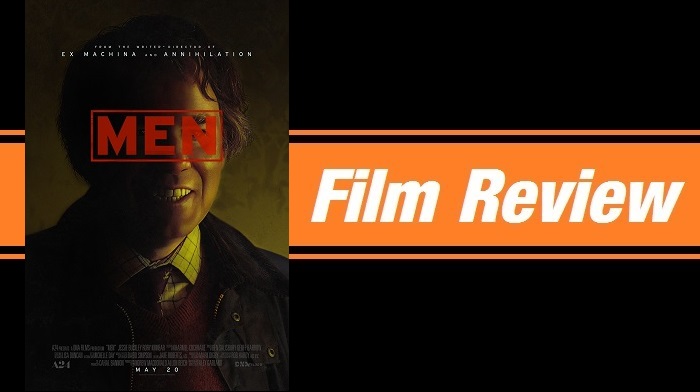
Alex Garland has put together an interesting career as a novelist, a screenwriter, a television producer, a writer and story supervisor for video games, and of course film directing. His past screenplays include “28 Days Later” and its sequel “28 Weeks Later”, “Never Let Me Go”, and “Dredd”. He became a full-fledged writer-director in 2014 with the highly acclaimed “Ex Machina” followed by the fascinating “Annihilation”. Now he’s back with the equally intriguing “Men”.

“Men” is a surreal-ish folk horror film that can best be described as an admirable mess. It takes some big swings resulting in a terrific setup, and it features some bold creative choices that you can’t help but admire. Jessie Buckley (as always) gives a powerful performance and does a superb job anchoring us in her character’s hellish reality. And Rory Kinnear’s chameleon-like presence (playing different faces of the film’s multi-headed monster) will make your skin crawl. There’s lots to like here.

What’s disappointing is how surprisingly little the film has to say aside from men are bad, they’ve always been bad, and from the looks of things they’ll always be bad, at least from the experience of Buckley’s Harper Marlowe. But rather than engaging his audience and stirring them to think, Garland’s straightforward pared-down approach leaves us asking the wrong kinds of questions as we look for meaning outside of his blunt messaging.

Image Courtesy of A24

Now don’t get me wrong, I don’t say that as a man who left the theater cradling his bruised ego. I fully expected that to be the message of the movie (the aggressively direct and accusatory title left little doubt). In fact, I was excited to see how Garland explored that notion through the experience of Buckley’s character. But I also expected more depth and nuance. Themes of grief, guilt, and loss barely crack the surface. And if you strain you can see some of Garland’s reoccurring interests in identity and isolation. But all of those things are clearly secondary concerns.

Buckley’s Harper is a compelling character and one we eagerly get behind despite learning painfully little about her. Traumatized after watching her husband James (Paapa Essiedu) fall (or did he jump?) to his death from their high-rise apartment, Harper heads out to the countryside for a time of healing. She rents a remote country manor owned by a strange but cordial man named Geoffrey (Kinnear). It’s an idyllic place nestled among rolling green pastures, lush forests, and it’s only a stones throw from a nearby village. It seems like the perfect place for Harper to recalibrate.

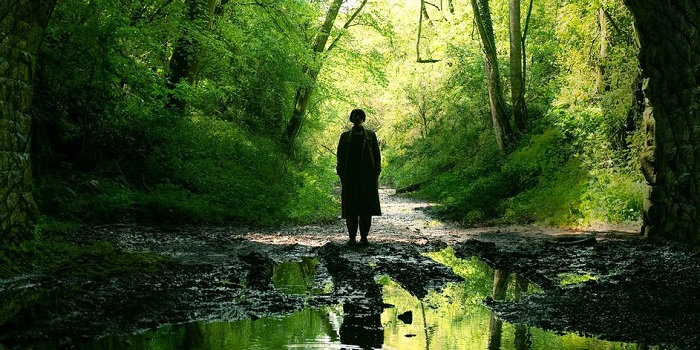
Garland and his go-to DP Rob Hardy hone in on the area’s natural beauty with one postcard quality image after another. But they also infuse those same images with a persistent sense of unease. Take when Harper goes out for a walk shortly after arriving. The richly verdant scenery is stunning, but the sense of dread grows with each step she takes. She finally makes it home, but doesn’t notice the fully naked man (also Kinnear) who follows her out of the woods and begins skulking around her Airbnb.

Image Courtesy of A24

Later while visiting an old local church, Harper encounters a handsy vicar (also Kinnear) who seems to blame her for her husband’s death. Afterwards she stops by the village pub where she encounters several other unsavory men (all played by Kinnear) – a policeman, a bartender, and a redneck. She’s even berated by a young delinquent boy with Kinnear’s likeness digitally projected on the kid’s face (it’s effectively creepy but at times glaringly fake).

Kinnear gives each of his characters their own distinct personalities, but there’s also a startling similitude between them. Each represent different shades of twisted masculinity and each push their own self-absorbed sense of empowerment over Harper. It’s a thoroughly engrossing setup but one barely explored. Instead it’s all streamlined into an on-the-nose metaphorical finish – a grotesque body-horror climax that left one poor soul sitting in my row shuttering in discomfort. It’s utterly bonkers but very obvious. And it’s the kind of ending that grabs attention but doesn’t provoke the kind of deep thought it clearly wants to.

As I left “Men” I remember wondering to myself about the movie’s point-of-view? Was it Harper’s or Garland’s or both? If it’s Harper’s, then the film misses out on an opportunity to really explore her experiences and the layers of abuse found in them. If it’s Garland’s, then the cynical “Men” takes the cheap and easy approach to its subject. If it’s both…. well, remember that “admirable mess” I mentioned above. It’s a shame because the movie starts off really strong. But it’s glaringly obvious ending isn’t nearly as crafty as it tries to be, and no amount of zany grotesquery can quite make up for it. “Men” is out now in theaters.

VERDICT – 2.5 STARS

REVIEW: “Montana Story” (2022)

(CLICK HERE for my full review in the Arkansas Democrat-Gazette)

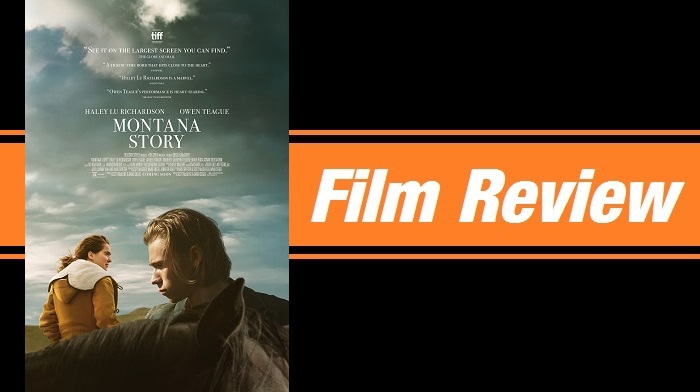
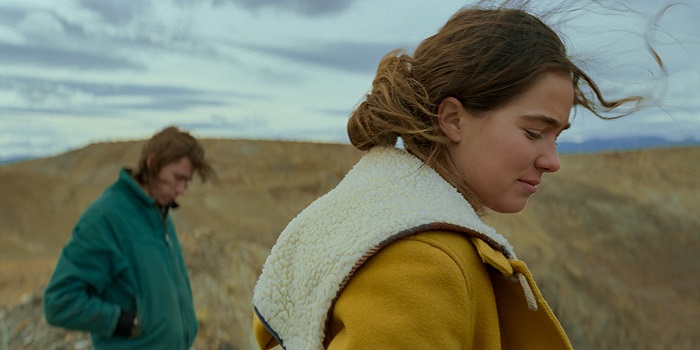
The terrific Haley Lu Richardson’s latest is “Montana Story” and it’s the kind of earnest low-key family drama that I have a real soft spot for. Co-directed, co-written, and co-produced by David Siegel and Scott McGehee, “Montana Story” is a movie loaded with emotion yet handled with remarkable restraint. It makes sense considering the very story itself is about deeply buried pain, bitterness, and trauma. But not every filmmaker can resist the urge to soak this type of story in melodrama. Thankfully Siegel and McGehee do.

“Montana Story” actually premiered last September at the Toronto International Film Festival but is just now getting its U.S. release. It was filmed in late 2020 under strict pandemic protocols and shot over a six week period in Montana’s Paradise Valley. It’s a setting that fits nicely with the quiet melancholic beats of the storytelling. And the sweeping landscapes (wonderfully captured by DP Giles Nuttgens) represent a lot more than just pretty scenery.

Image Courtesy of Bleeker Street

The story revolves around two estranged siblings who return to their family’s river valley ranch where their father lies on his deathbed, comatose following a massive stroke. Cal (Owen Teague) is a civil engineer from Cheyenne who arrives at the ranch to get his father’s affairs in order. The first sign of tension comes with Cal’s desire to reconnect with the family’s 25-year-old stallion Mr. T before seeing his father who lies in his study connected to an assortment of life-sustaining machines. There he’s treated by a hospice nurse named Ace (Gilbert Owuor) and his longtime housekeeper Valentina (Kimberly Guerrero).

Cal ends up with a lot on his plate. It turns out his father was a lawyer who helped shield companies from government oversight. His shady business dealings led to him filing bankruptcy and having to borrow against the ranch to get by. Now Cal will have to sell the ranch just to cover his father’s medical bills. And with no one left to care for Mr. T, Cal is left with no choice but to have a vet come to put down their beloved horse (an obvious yet rich reoccurring analogy).

But Cal is shocked when his sister Erin (Richardson) suddenly arrives unannounced. The two haven’t spoken in seven years, since the day Erin ran away from home following a horrible incident that ripped their family apart. “I just want to see him one more time,” she says using all the strength she can muster to hold in her enmity. And when she gets word that Cal plans on euthanizing Mr. T, the friction between siblings comes to a boil as the ugliness of their family’s history slowly comes into focus.

At times “Montana Story” looks and plays like a neo-Western (minus the gunfights and Stetsons). Other times it almost feels like a deconstruction of the genre. The movie is full of symbolism and impossible to miss metaphors while several side characters offer a unique indigenous perspective. And so many things bring texture and depth to the story – Mr. T, the gray Lexus belonging to Carl’s late mother, their deceptively idyllic farmhouse nestled in the shadows of the beautiful mountains. All of it adds meaningful layers that Siegel and McGehee use to great effect.

Image Courtesy of Bleeker Street

But the heart of the movie is Cal, Erin, and their frayed relationship. Richardson and Teague take well-measured approaches to their roles and do a good job conveying the very different yet intrinsically linked pain and resentment buried within their characters. Both give understated performances and the sibling chemistry between them is true and organic. Richardson is especially convincing as a wounded soul who’s strong but carrying a lot of baggage.

A part of me wishes Siegel and McGehee would have done more with the supporting players as they all seem to have interesting stories to tell. But in the end I appreciate their choice to stick to their two central characters and the trauma, resentment and disappointment that binds them. We know where things are heading; that an emotional eruption is all but inevitable. But the movie never overplays the tension. The story remains focused and the performances are rich enough to give us glimmers of hope for a reconciliation.

VERDICT – 4.5 STARS

REVIEW: “Memory” (2022)

(CLICK HERE to read my full review in today’s Arkansas Democrat-Gazette)

Liam Neeson has made quite a career out of these breezy modestly budgeted action thrillers. Even though they often hit many of the same beats and usually follow a very similar formula, Neeson makes them work mainly because he’s such a likable fit for those kinds of roles. And starting with 2008’s “Taken,” the charismatic gravelly-voiced Irishman has earned himself a legion of fans.

But there are signs that Neeson’s “action hero” brand could be running out of steam. Look no further than “Blacklight” from earlier this year. It was a case of Neeson and his formula showing their age. The movie was (to put it kindly) a slog and didn’t even make back half of its $43 million production budget. It’s sad to see because Neeson is a good dramatic actor (just check out 2019’s underseen “Ordinary Love” for a more recent reminder). But this leg of his onscreen journey may be winding down.

Yet here we are, only two months removed from “Blacklight,” with yet another Neeson action thriller. This one’s called “Memory” and despite everything I just said, it actually gave me reasons to be optimistic. First, it’s directed by Martin Campbell, the man behind one of my very favorite Bond movies, “Casino Royale” (yes, I know he also did “Green Lantern” but set that one aside for a moment). Second, it sports a compelling supporting cast that includes the often underrated Guy Pearce and Monica Bellucci, known by many for her role in the Matrix films but who has had an impressive career, mostly internationally.

Image Courtesy of Open Road Films

And then there’s the story. Yes, “Memory” offers up several of the same tropes associated with most other Neeson flicks. But this one has an interesting twist. The script (written by Dario Scardapane) is based on a 1985 novel by Jef Geeraerts called “De zaak Alzheimer.” It also borrows from a 2003 Beligian big screen adaptation of Geeraerts’ book called “The Alzheimer Case.” The story centers on a seasoned contract killer and his early- stage dementia. That alone brings the level of humanity Neeson’s last film desperately needed.

As it turns out, “Memory” does play differently from most of Neeson’s catalog. Interestingly, while Neeson is the star, nearly as much time is spent with Pearce who plays an FBI agent trying to make sense of the dead bodies suddenly turning up across his city. His side of the story is mostly a crime procedural. And as you can probably guess, his investigation inevitably puts him on the trail of a cognitively impaired hitman who still possesses “a particular set of skills.”

Neeson plays Alex Lewis, an aging assassin who fulfills contracts for a number of high-paying criminal organizations. The opening scene set in Guadalajara, Mexico shows that he is still more than capable of doing his job. But he’s having memory lapses, which is the last thing you want in such a detail-oriented profession. For that reason he’s ready to get out of the game. But back in El Paso, Alex is quickly reminded by one of his employers that this isn’t a line of work you can just walk away from.

Later Alex is given another contract. But when the target turns out to be a 13-year-old girl named Beatriz Leon (Mia Sanchez), he refuses the job. “I don’t hurt children … ever,” he growls (you gotta love an assassin with principles). It turns out that Beatriz is a key witness in a drug trafficking case being put together by federal agent Vincent Serra (Pearce, brandishing one bad mustache and an even worse haircut).

Image Courtesy of Open Road Films

As expected, Alex’s employers don’t take kindly to his insubordination, and Alex doesn’t take kindly to their attempts at killing him for it. Soon the corpses are stacking up as Alex offers payback to the baddies who put him on their hit list. And he quickly learns that there are some powerful people calling the shots, tops being a prominent real estate mogul named Davana Sealman (Bellucci). But Alex’s memory loss makes him sloppy, and soon both Sealman and Serra are hot on his trail.

As the story unfolds, Campbell is given several narrative threads to tie together. Along the way he tackles a number of themes with varying degrees of success. The movie hits on several things including America’s leaky justice system, our government’s inept handling of the southern border, child sex trafficking, and of course late- age dementia. That last one is the trickiest, but thankfully the movie treats it with the dignity and respect it needs. And Neeson’s portrayal is tempered and subdued, never exaggerating Alex’s deteriorating condition or overplaying it.

As far as the performances, Neeson and Pearce get the bulk of the work and both manage the sometimes shaky material well. Bellucci has a strong presence, but sadly she isn’t given much to do. After them, the performances take a pretty big dive which only accentuates the stock character feel of many of the supporting players. Some elements of the story play the same way — like beats we’ve seen in countless other movies and television shows. But give Campbell some credit. He brings some much-needed drama and grit to a pretty familiar formula. And who knows, maybe there’s still a little life left in these Neeson brand movies.

VERDICT – 3 STARS

REVIEW: “My Best Friend Anne Frank” (2022)

Dutch filmmaker Ben Sombogaart directs the new Netflix drama “My Best Friend Anne Frank”. The movie is inspired by the real-life friendship between Anne Frank and Hannah Goslar. And while it’s a mostly fictional account, Sombogaart approaches the subject with sincerity and sensitivity.

But this isn’t just another Anne Frank movie. The story is really about Goslar and her own remarkable true story. One that may not have gotten as much attention as her more famous best friend’s, but it’s remarkable nonetheless (the 93-year-old Goslar is still with us today and resides in Jerusalem).

Working from a screenplay by Marian Batavier and Paul Ruven, the story is based on “Memories of Anne Frank: Reflections of a Childhood Friend” by American author Alison Leslie Gold. The story chronicles this friendship which began in 1942 at the 6th Montessori School in Nazi-occupied Amsterdam. After moving from Germany following the election of Adolf Hitler, Anne Frank (Aiko Mila Beemsterboer) and her family moved to Amsterdam. At school, she met and became close friends with Hannah Goslar (Josephine Arendsen).

Image Courtesy of Netflix

The movie’s fractured structure bounces us back-and-forth between two key times in the lives of these friends. One is set in happier days where the inseparable Hannah and Anne playfully bounce around the city. They act silly, talk about boys, and dream about traveling the world. But in the background, ominous signs of what’s to come are everywhere as the Nazi presence intensifies.

These scenes are interesting because Sombogaart doesn’t sugarcoat or romanticize Anne’s personality. At times we see her as rebellious, cruel, and even a bit of a bully. This really comes out when the high-energy Anne tries to impress the most popular girl in school, often at Hannah’s expense.

Quite the opposite, Hannah is shy and kind-hearted. She spends much of her time helping her pregnant mother (Lottie Hellingman) take care of her baby sister Gabi. Meanwhile Hannah’s tense and distracted father (Roeland Fernhout) is clearly burdened with the knowledge of what he knows is on the way. Forbidden to leave a country that doesn’t want them, he knows it’s only a matter of time before his family will be rounded up like many other Jewish families from his neighborhood.

Image Courtesy of Netflix

The other timeline takes place a year or so later. Rather than the bustling streets of Amsterdam or the warmth of home, these scenes are set within the heavily guarded walls of Bergen-Belsen concentration camp in northern Germany. There, Hannah and Gabi struggle to survive amid the cold, cruel conditions. But little does Hannah know, her friend Anne, thought to have left for Switzerland with her parents, is in another part of Bergen-Belsen. One that’s considerably harsher and far more savage.

Sombogaart’s choice to shuffle us between these two timelines makes sense, but it doesn’t feel necessary. It works for the most part, but it makes the movie feel out of rhythm, especially in the first half. That said, DP Jan Moeskops does some interesting things visually to help differentiate the two periods. Take the sharp contrast in colors – the brighter sun-soaked glow of the Amsterdam scenes versus the bleak, grim browns and grays of the camp. Alongside Moeskops’ camera are the beautiful strings and aching piano chords from Merlijn Snitker’s simple yet affecting score. Together they help drive the emotions Sombogaart is going for.

“My Best Friend Anne Frank” may have structural issues and there are some slow patches, especially in the early camp scenes. But Ben Sombogaart’s vision conveys the sadness and the tragedy that was such a significant part of Hannah Goslar’s life. And while not as well known as her friend Anne Frank, Sombogaart presents Goslar’s story as one worthy to be told. And knowing she’s still alive today makes this all the more moving. “My Best Friend Anne Frank” is now streaming on Netflix.

VERDICT – 3.5 STARS

REVIEW: “Master” (2022)

“Master” was one of a handful of movies I regretfully missed during this year’s Sundance Film Festival. The tense and at times perplexing thriller was quickly snatched up prior to Sundance by Amazon and is now available on their Prime streaming platform. The film is written and directed by first-time filmmaker Mariama Diallo who pulls from reflections on her own feelings and experiences to craft a movie with a strong premise but that can’t quite get out of its own way.

“Master” can best be described as a social horror thriller with a lot to say about race, class, gender and academia. But while its themes are potent, its messy execution ends up undercutting its effectiveness. We’re left with a movie that has a captivating vision but that never seems sure of how to bring that vision to life. Its social commentary is hampered by the film’s borderline hokey characterizations and its sledgehammer-like subtlety. Meanwhile the tacked-on horror elements are underserved and get in the way of the movie’s deeper aims.

Image Courtesy of Amazon Studios

The movie (written and directed by Diallo) follows the experiences of three black women at the esteemed (and predominantly white) Ancaster University. The always wonderful Regina Hall plays faculty member Gail Bishop, Ancaster’s new and first black house master. At first Gail is proud of her hard-earned new status and takes pride in creating a welcoming environment for the students under her care.

Yet despite her best efforts, Gail struggles to fully gel with her all-white colleagues who proudly flaunt their self-defined wokeness amid an array of far-from-subtle microaggressions which range from disturbing to downright corny. These scenes are a weird mix – opening up some of the movie’s most essential topics then undercutting them with over-the-top portrayals that almost feel satirical but clearly aren’t meant that way.

Then there’s Jasmine Moore (played by the delightful Zoe Renee), a wide-eyed freshman who arrives at Ancaster in a denim jacket, khaki pants, blue converse, and a big infectious smile. Smart and outgoing, Jasmine has big dreams and works hard to fit in. But she is often met with condescension by her white dorm-mates and even gets mean looks from the black cafeteria workers. In one of the stranger turns, Jasmine is inexplicably assigned the exact dorm room where the college’s first black undergraduate died back in the 1950s.

The third woman is Liv Beckman (Amber Gray), an English professor applying for tenure at the University. Though friends with Gail, Liv is the far more spirited of the two both in style and personality. It’s one reason the university is hesitant to grant her tenure. Another reason is a recently filed dispute accusing Liv of targeting Jasmine by giving her a bad grade. Liv’s story plays more prominently in the second half but sadly goes from mysterious to absurd.

Image Courtesy of Amazon Studios

As the movie weaves the three women and their stories together, the themes really come to the surface. Sometimes they’re effectively chilling and uncomfortable. Other times they can be needlessly heavy-handed. And then there’s the entire horror element that tosses in everything but the kitchen sink to try to make things creepy – a maggot infestation, a creepy Mennonite community, a maggot infestation, some silliness about a witch who picks out one freshman each year to possess (or something like that).

In the end, none of the horror stuff is the slightest bit unsettling and it feels tacked on in a vain attempt to fit genre expectations. The moments of true horror comes in the discomfort of watching these three women be swallowed up by an oppressive social structure. But it’s too often curtailed by the glaring on-the-nose dialogue and characterizations. For that reason “Master” never quite reaches the potential it teases, despite the best efforts of a fine cast. “Master” is now streaming on Amazon Prime.

VERDICT – 2 STARS

REVIEW: “Morbius” (2022)

I still haven’t fully figured out how Sony’s Spider-Man Universe connects with the broader Marvel Cinematic Universe. Some parts seem more connected than others while other parts don’t seem connected at all. Oh well. To be honest, I’ve lost interest in trying to figure it all out. In a nutshell both universes are (somehow) related and “Morbius” and the most recent installment.

Unfortunately, it’s not a particularly good installment. It’s not terrible either. Certainly not as bad as Sony’s last effort (“Venom: Let There Be Carnage”). But it’s hardly a movie you’ll be rushing out to see again.

“Morbius” always seemed like an unusual and risky choice. And from the very start, it never felt like the studio was all that certain on how to approach the movie and on when to release it. Granted, COVID-19 played a big part in some of its delays. Still, there was a hesitancy from Sony that was hard to miss especially in their promotion of the film. And even the earliest trailers seem desperate, name-dropping Venom and revealing Michael Keaton’s Vulture just to grab the attention of the lucrative superhero genre’s fan base.

Image Courtesy of Sony Pictures

It feels like “Morbius” has been about to come out for years. One of the great blessings about its release is that I’ll no longer have to sit through its trailers which found their way in front of every single movie I would see at the theater (I could almost recite them word for word). And while my interest in the movie had waned, I still held out hope regardless of the lashing it took during early screenings (much of it from the Marvel Studios faithful).

“Morbius” is directed by Daniel Espinosa and despite the mixed reactions, I enjoyed his last three movies (“Safe House”, “Child 44”, and “Life”). This is a much different venture for Espinosa and it shows. At times his movie plays great and sports its own unique style which really comes out in some of the action scenes. But there are just as many moments that feel disjointed, rushed, or uninspired. The result is a mixed bag.

Jared Leto is a nice fit playing Dr. Michael Morbius who suffers from a rare debilitating blood disease he has had since birth. Gifted since childhood, Michael gained notoriety in the medical science world for developing a life-saving synthetic blood. Since then he has used his talents to try and find a cure for his disease. Helping him is his scientist partner and (potential) love interest Dr. Martine Bancroft (Adria Arjona). And funding his work is his wealthy friend and surrogate brother Milo (Matt Smith) who happens to share the same illness.

Strangely, Michael’s serum seemingly comes out of the blue. All we really know is that it involves vampire bats from Costa Rica and the mixing of bat DNA with human DNA. As Michael explains to Milo, it’s “highly experimental, morally questionable and very expensive”. When a sickly and desperate Michael injects himself with the serum, he does indeed cure his disease. But he also gains superhero strength, sonar-like sensitivity, and a rather disturbing appetite for human blood.

In one sense it’s tempting to praise the movie for cutting through the scientific mumbo-jumbo associated with Michael’s work. There are a couple of scenes where he’s recording medical logs explaining his symptoms. But for the most part Espinosa and screenwriters Matt Sazama and Burk Sharpless mercifully skip past that stuff. On the other hand, it’s such a weird and wild approach to medicine yet we get nothing to form the basis of his experiments. A guy turns himself into a living vampire and we’re just supposed to go with it.

Image Courtesy of Sony Pictures

Of course every superhero story needs a villain and here it comes in the form of Milo. Frightened by what he has become, Michael tries to protect Milo by refusing to give him the serum. But Milo gets his hand on a vial and injects himself. While Michael sees his vampire condition as a curse, Milo fully embraces it which pits the close friends against each other. Like most of the characters, Milo lacks some needed depth. Matt Smith’s performance is solid even though the script pulls him in some weird directions. Sadly, the bond between Milo and Michael (which should have added emotional weight to their conflict) barely gets beyond surface level, leaving Smith and Leto with little to explore.

Visually there are some cool stylish touches that I liked quite a bit. They’re unlike anything we’ve seen before in the crowded superhero movie space. But the drab and murky color palette doesn’t always help. And there are times where the CGI heavy action can be hard to decipher. Take the final 15 minutes which can be really hard to make out, right up to the film’s jarringly abrupt ending. Meanwhile Arjona offers a good supporting presence even if she isn’t given much to do. And there’s Tyrese Gibson in the thankless role of a generic FBI Agent trying to track Michael down after bodies drained of blood begin showing up across the Big Apple. Gibson is more of a plot device than an authentic character.

Of course there are also two obligatory post credits scenes that confused me more than excited me. Sure, they tease interesting things to come. But they also reminded me of how convoluted this Sony/MCU collaboration has been. “Morbius” does little to change that. Leto is certainly up for the role, and I can see where he could have done something special with a better script and more focused direction. As it is, “Morbius” is a ‘middle of the road’ Marvel movie. One that ultimately teases more than it’s able to deliver. “Morbius” opens in theaters tomorrow.

VERDICT – 2.5 STARS