REVIEW: “Next Goal Wins” (2023)

My biggest question going into “Next Goal Wins” was simple. Is this a return to form for director Taika Waititi. The director of such deliciously quirky treats such as “What We Do in the Shadows”, “Hunt for the Wilderpeople”, and “Jojo Rabbit” found himself drawn into the moneymaking blockbuster machine known as the Marvel Cinematic Universe. The results weren’t great. “Thor: Ragnarok” was tolerable yet frustrating. “Thor: Love and Thunder” was an abysmal mess.

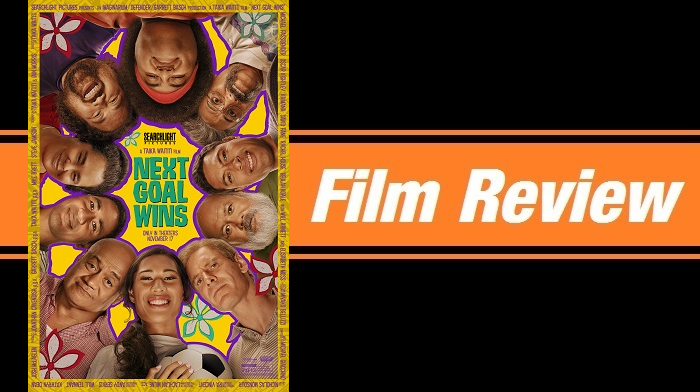
So following on the heels of “Love and Thunder” is the feel-good sports comedy “Next Goal Wins”. So I ask again – is it a return to form for the undeniably talented Waititi? Well, not exactly. Instead it’s a mind-boggling misfire that sees the filmmaker more absorbed in his preoccupations than with telling a good story. It’s even more bewildering that a filmmaker so notorious for doing his own thing would make a film this glaringly by the numbers.

Image Courtesy of Searchlight Pictures

The movie has a great lead in Michael Fassbender and the story (written by Waititi and Iain Morris) starts promising. Inspired by true events and (at least for a time) laced with Waititi’s wacky sense of humor, “Next Goal Wins” sees Fassbender playing Thomas Rognen, a volatile American soccer coach on the outs with the United States Soccer Federation. But rather than straight-up fire him, the board, which includes his estranged wife and her new beau (played by the woefully underused Elisabeth Moss and Will Arnett), assign him to the most undesirable job in all of football.

In the 2001 World Cup Qualifiers the American Samoa national team suffered the worst defeat in the history of international football – a 31-0 drumming by Australia. Believe it or not, since then they’ve only gotten worse. In fact, we learn they’ve never scored a goal in the history of their team. Enter the boozy, soured, and frustrated Thomas who has been sent to American Samoa to coach their national team.

Early on Waititi teases us with an amusing fish out of water culture-clash comedy. There are some hilarious bits with Fassbender’s embittered and self-centered Thomas clanging against the deeply religious and hard-working Samoan locals. Equally funny are some of the early scenes with Thomas and his team, a talentless but good-hearted bunch who are as bad on the field as their reputation says. Yet they never lose the support of Tavita (Oscar Kightley), the President of the Football Federation of American Samoa who gives Thomas a single task – just score one goal.

But this is where the storytelling starts to go off track as Waititi’s more obsessive interests derail other facets of his movie. Take Thomas and his team. You would think their relationships would form the core of the story. Well, they do but only in a broad sense. Instead Waititi gets caught up in telling an on-the-nose side story involving a transitioning faʻafafine player named Jaiyah (played by Kaimana). So much so that most of the other players are nothing more than faces. We’re supposed to care about them, but hardly anyone other than Jaiyah gets a backstory or even a personality. Even Waititi’s camera stays so fixated on Jaiyah that the rest of the team feel like tag-alongs.

Image Courtesy of Searchlight Pictures

But not only do the majority of the relationships get shortchanged, so does the entire sports angle itself. Nothing about it comes across as authentic mainly because Waititi doesn’t put the time or effort into making it believable. We never see any kind of practice or preparation that would make us believe the American Samoan team could ever function in a qualifying match much less score a goal. That’s because Waititi’s interests are elsewhere.

That would be fine except Waititi wants us to buy into the film’s big feel-good finish – a lazy, super cheesy, emotionally inert retread of ground covered by countless other sports movies. We get the big game, the lovable underdogs, the mean and overly cocky opposing team, the moment where all seems lost, the big inspirational speech, and the rousing triumph where the music swells as everyone goes wild. It’s a surprisingly unoriginal and frustratingly hollow ending from a filmmaker trying to skate by on just representation and a few good gags. Or maybe he doesn’t expect much from his audience. Either way, Waititi’s latest misses the net by a mile. “Next Goal Wins” hits theaters November 17th.

VERDICT – 2 STARS

REVIEW: “Nyad” (2023)

True stories of triumphing over adversity can be catnip for filmmakers. The very idea comes with so many plot points and story beats already baked into it. It’s especially true for sports stories. Netflix’s “Nyad” seeks to inspire by telling the genuinely amazing true account of long-distance swimmer Diana Nyad. Unfortunately it’s told through what amounts to a rather lukewarm sports drama that also passes as a pretty standard-issue biopic.

The movie is based on Nyad’s best-selling autobiography “Find a Way”. It’s co-directed by Jimmy Chin and Elizabeth Chai Vaserhelyi working from a script by Julia Cox. The story sticks close to a well-used formula. We’re introduced to the impossible feat. We get the training sequences. There are the failed attempts leading to the agony of defeat. And then there’s the rise from the ashes for that inspirational one last try. It’s so by the numbers that you’ll be one step ahead for pretty much the entire movie.

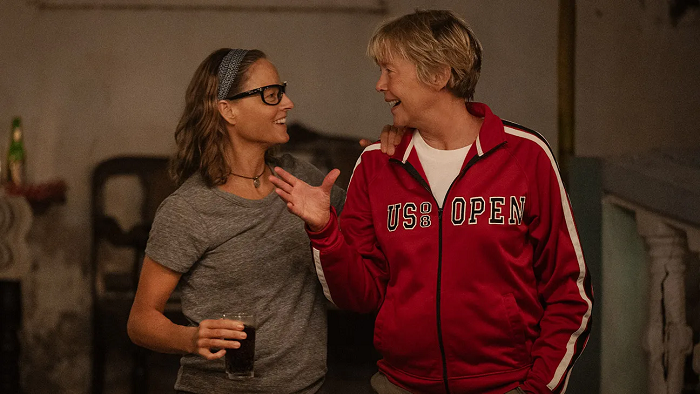
Some of the film’s focus is on the friendship between Diana (Annette Bening) and Bonnie Stoll (Jodie Foster). Early on there’s almost a buddy movie vibe as Chin and Vaserhelyi lay out this potentially compelling relationship. They’re an interesting pair with Diana portrayed as stubborn, selfish, and narcissistic and Bonnie as buoyant, loyal, and supportive to a fault. The problem is, outside of one big scene, there is little-to-no real emotional resonance between them.

Image Courtesy of Netflix

The film opens with archived news footage chronicling Nyad’s many swimming accomplishments. But the one thing she had yet to do was make the 103-mile non-stop swim from Cuba to Key West, Florida. In fact, no one had. We learn that Diana had attempted and failed when she was 28-years-old. Now in her early sixties she’s ready to try again. Why you ask? The movie sloppily cobbles together something vaguely resembling an motivation. It involves hazy flashbacks to an abusive childhood and an even hazier allusion to fulfilling her destiny.

There’s clearly some compelling backstory to explore but the filmmakers seem far more interested in getting Diana into the water. First comes convincing Bonnie to get onboard as her coach (and enabler, depending on how you look at it). From there we’re sped through training and conditioning sequences. And despite mentioning the daunting task of raising $500,000 dollars in sponsorship money, it too is rushed and mostly happens off-screen.

After that it’s all about the small supporting cast of characters falling in line with Diana’s single-track obsession. Other than Bonnie, the only remotely memorable one of the bunch is the crusty but capable navigator John Bartlett (Rhys Ifans) who captains her support boat. Everyone else just seems to be along for the ride. There are a few clashes, especially after the first couple of failed attempts. But they’re mostly repeats of the same argument and they usually end with Bonnie or John giving in with little real resistance.

Image Courtesy of Netflix

Things pick up a bit once the “action” begins. Diane’s first couple of runs are pretty exciting as she battles both the sea and her body. But over time even these scenes lose their appeal as each new attempt grows increasingly repetitive (by the fifth try we’re rooting for her to make it just so there won’t be a sixth). The film’s final 30 minutes are particularly tedious and offer nothing new other than one ridiculous CGI underwater sequence and that inevitable moment of triumph where the music swells and everyone cheers.

As far as the performances, both Bening and Foster are solid although nowhere near career-best levels. Bening deserves a ton of credit for her deep commitment to her role, especially physically. Yet there’s little nuance in her performance and dramatically she’s often stuck in one gear. Foster is allowed a little more range but even she is handcuffed by a script that plays it safe and often shortchanges character-building.

Chin and Vaserhelyi are terrific filmmakers as evident by their films “Meru” and “Free Solo”. Sadly we only see flashes of it in “Nyad”. The movie skims over the more interesting details of its characters and their lives, caving to more formulaic feel-good storytelling that we’ve seen in countless sports movies and biopics. It’s a shame because it’s such an extraordinary true story that deserves more than such a conventional treatment. “Nyad” releases in select theaters on October 20th before streaming on Netflix November 3rd.

VERDICT – 2 STARS

REVIEW: “Nowhere” (2023)

Director Albert Pintó takes a minimalist concept and stretches it to its limits in “Nowhere”, a new Spanish-language survival thriller that’s now streaming on Netflix. Written by the five-person team of Ernest Riera, Miguel Ruz, Indiana Lista, Seanne Winslow, and Teresa Rosendoy and anchored by a gutsy lead performance from Anna Castillo, “Nowhere” takes its audience on a journey that can be as inspiring as it is ridiculous.

“Nowhere” is set in a dystopian society where shortages of food, water, and everyday resources has plunged the world into chaos. This has given rise to a vaguely sketched tyrannical regime who are savagely carrying out their new world order. It includes rationing goods and rounding up pregnant women and children as part of something resembling population control.

In Spain, Nico (Tamar Novas) and his very pregnant wife Anna (Castillo) are attempting to flee the country for Ireland where there is still a semblance of freedom and resistance. The couple pay all the have to some unsavory human smugglers. But through a rather harrowing and down-right brutal series of events, Nico and Mia are separated and she finds herself all alone in a shipping container aboard a huge cargo ship.

Image Courtesy of Netflix

While out at sea, a violent storm sends her shipping container plunging into the turbulent waters. From there this mostly single-setting survival story plays out as a pregnant Mia attempts to stay alive inside the floating container with only a small bag of supplies and four to five crates of who-knows-what. She faces numerous hurdles including water seeping inside, a lack of food, and of course her pregnancy which offers its own set of unique challenges.

Castillo puts the movie on her back and gives an intensely committed performance. Mia shows incredible determination and fortitude as her situation grows more dire by the second. Sometimes watching her navigate the dangers she faces adds real tension to the movie. But things can come off as a little too convenient and even borderline absurd on occasions. But Castillo holds our attention and gives us a sympathetic protagonist who’s easy to root for.

Pintó’s direction is solid and he knows he has a good thing in Castillo. The movie lags a bit in the middle and would have been more effective if it were trimmed down a bit. As for the story, it doesn’t offer much depth to its world although what’s teased is interesting. And while “Nowhere” very much tells a survival story, it also has some interesting things to say about guilt, grief, and motherhood. All said, it’s a nice get for Netflix. And it surprisingly does a lot with a pretty simple idea. “Nowhere” is now streaming on Netflix.

VERDICT – 3 STARS

REVIEW: “No One Will Save You” (2023)

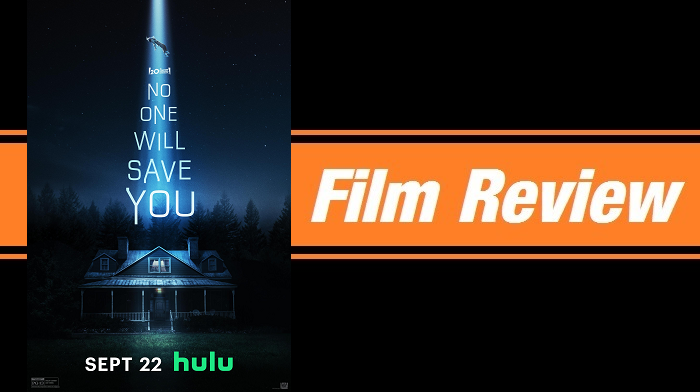
I really enjoy taut and tense thrillers. I’ve long loved quality science-fiction. I’m always up for a good horror movie. These three genres (and more) come together in “No One Will Save You”, a terrific new Hulu Original film from writer-director Brian Duffield. This mesmerizing mash-up surprises at every turn, defying predictability and keeping us guessing all the way through to its final shot. What an unexpected treat.

Duffield deserves a ton of credit for shrewdly using everything at his disposal to create, develop, and sustain a gripping and suspense-filled genre experience. His film is artfully scripted, visually striking, and anchored by an emotionally rich and mostly wordless performance by a truly sublime Kaitlyn Dever.

Image Courtesy of 20th Century Studios

Dever plays Brynn Adams, a quiet and reclusive young woman living alone in her family’s homeplace in the country. She’s somewhat of a pariah in her nearby community. So much so that her anxiety kicks in whenever she’s around the cold and leering locals. What’s going on? Why the unfriendly reception? Why has she been ostracized? This is the first of a handful of mysteries that Duffield patiently unfold over the course of his film’s lean 93 minutes.

At home, Brynn finds comfort in being alone. She spends time working on a model replica of the town – something she and her late mother once had fun doing together. She also writes letters to her best friend Maude who we learn died ten years earlier. These things may sound weird but for Brynn they’re almost therapeutic. Plus it keeps her busy while alone in the country, where lately the only excitement has been the strange circle of dead grass that suddenly popped up in her well-manicured yard.

One night Brynn is awakened by a loud banging outside her house. At first she thinks it’s varmints in the trash cans. But when she discovers her front door open and hears footsteps downstairs, it’s clear she has an intruder. From here the movie takes on the feel of a home invasion thriller. But Duffield doesn’t let us settle in. He quickly reveals that her intruder isn’t from this planet. It’s an alien which sends the film in a much different direction than I was expecting.

Image Courtesy of 20th Century Studios

This really is a case of ‘the less you know the better’ so I’ll leave you to discover the numerous surprising twists and turns for yourselves. I will say that many of the film’s classic sci-fi inspirations are impossible to miss and it possesses a tasty B-movie flavor that hearkens back to so many movies I cut my cinematic teeth on. But it’s what Duffield does with those inspirations that is so impressive. He takes a lot of familiar pieces and fits them together into something truly his own.

As I watched “No One Will Save You” thoughts of “The Twilight Zone” kept swirling around in my mind. At times the similarities are uncanny. I found myself routinely blown away by Duffield and DP Aaron Morton’s knack for framing one stunning shot after another. I was captivated by the storytelling which relies on its visual language and the intensely expressive Kaitlyn Dever rather than dialogue. And as a lover of genre filmmaking, I was giddy with excitement every time the movie took another unexpected turn. Like I said – what a treat. “No One Will Save You” is streaming now on Hulu.

VERDICT – 4 STARS

REVIEW: “The Nun II” (2023)

Despite being a genuine fan of the wickedly fun Conjuring Universe, I have to admit it’s a bit of a mixed bag. The three centerpiece films (“The Conjuring”, “The Conjuring 2”, and “The Conjuring 3: The Devil Made Me Do It”), based on the real-life exploits of paranormal investigators Ed and Lorraine Warren, are delightfully fun slices of period horror. It’s the spin-offs that have been hit-or-miss.

A prime example is 2019’s “The Nun”, a movie that had so much working for it – a great setting, a terrifying supernatural antagonist, and a terrific and often underrated lead in Taissa Farmiga. But it ended up suffering due to the film’s unremarkable storytelling that consistently milked the same handful of overused horror tricks. It wasn’t a bad movie. It simply left so much of its potential untapped.

Still I was pretty excited to hear that Warner Bros. had green lit a sequel. “The Nun II” sees Farmiga returning as Sister Irene, the young nun who miraculous survived the horrifying events at Saint Cartha abbey (see the first film). Four years have passed and she is now a part of a new convent. She’s found happiness yet she keeps her experiences at Saint Cartha a secret.

Image Courtesy of Warner Bros.

But following the gruesome death of a priest in Tarascon, France, the church calls on her to travel to the French monastery and investigate. She’s accompanied by the rebellious Sister Debra (unconvincingly played by a miscast Storm Reid). The two learn that the monastery is now a girl’s boarding school and among those employed there is a hunky handyman named Maurice (Jonas Bloquet) who has ties to Saint Cartha. He has his eye on Kate (Anna Popplewell), a teacher with a sweet young daughter, Sophie (Katelyn Rose Downey).

As you can probably guess, Sister Irene finds herself once again face-to-face with Valak (Bonnie Aarons), the demon nun first introduced in “The Conjuring 2”. But before that happens several pieces have to fall in place first. Unfortunately not all of them do. There are a handful obvious plot holes that are hard miss and making sense out of everything is no easy task. Yet the movie remains engaging. Director Michael Chaves pulls off some nifty tricks and sustains a genuinely creepy atmosphere throughout.

Taissa Farmiga (the real-life sister of Vera Farmiga who plays Lorraine Warren in the three Conjuring films) remains a crafty bit of casting. And while it’s hard to buy into the church fully entrusting Sister Irene with such an investigation seemingly on a whim, Farmiga’s performance is good throughout and she wins our investment even when the writing seems unsure about where to take her character. Farmiga is a real strength.

I also enjoyed the gonzo final 15 minutes where Chaves lets it rip, offering up some good jolts within his killer horror set pieces. That said, the movie still stumbles in key places. In the case of “The Nun II”, its biggest problem centers around the story itself which at times feels stitched together rather than fully thought out. It also commits the sin of leaving its titular character, the truly unsettling Valak, on the sidelines for far too long. It all makes for a sequel that is a nice step up from its predecessor, yet one that still hasn’t fully realized its terrifying potential. “The Nun II” opens today exclusively in theaters.

VERDICT – 2.5 STARS

REVIEW: “National Lampoon’s Christmas Vacation” (1989)

(Originally Reviewed in 2012)

Fans of the “Vacation” films have followed the Griswold family on a cross-country vacation, a European vacation, and even a Las Vegas vacation. “National Lampoon’s Christmas Vacation” is arguably the funniest of the “Vacation” movies and focuses on their attempt at a “good old-fashioned family Christmas”. Of course anyone familiar with the Griswolds knows this is easier said than done, especially with the well-meaning but blundering patriarch Clark at the helm. For audiences the results are pretty hilarious.

Chevy Chase reprises his role as Clark Griswold. He’s still not the sharpest knife in the drawer, but a he’s good husband and father. As mentioned, this time he sets out to have a traditional family Christmas. That includes venturing out in the wild to find a real Christmas tree, aggressively decorating the outside of his house with Christmas lights, and inviting his parents and in-laws to his home for the holidays. Naturally Clark’s lovable ineptitude ensures that none of his ideas work out as planned, and that’s a big part of the fun.

Beverly D’Angelo returns as Clark’s ever-patient and supportive wife Ellen who (as in every “Vacation” movie) perfectly understands her husband’s propensity for overdoing things. She’s the sometimes calming voice of reason and a perfect complement to her nutty husband. Chase and D’Angelo have always had a terrific chemistry which has always been a strength in every “Vacation” movie.

VACATION1
Image Courtesy of Warner Bros.

Aside from Clark and Ellen, the movie is filled with an assortment of great and infinitely quotable characters. This time around Juliette Lewis plays their daughter Audrey while Johnny Galecki plays their son Rusty. E.G. Marshall steals several scenes as Clark’s cantankerous father-in-law, Art. Doris Roberts is really good as Ellen’s boozy mother, as is John Randolph as Clark’s supportive father. There’s also William Hickey as the stogie-chomping Uncle Lewis and Mae Questel as the near-senile Aunt Bethany. They arrive later in the film but bring some big laughs with them. And how can I not mention Julia Louis-Dreyfus and Nicholas Guest as the Griswolds’ snooty next-door neighbors.

But the real stand-out is Randy Quaid as cousin Eddie, a character who has earned his pop-culture renown. He and his family show up to the Griswold home uninvited, and that’s when things really turn wacky. Eddie is a dimwitted bum and unashamed moocher, but he’s family nonetheless. Everything from his wardrobe to his mannerisms firmly fit into the ‘crazy uncle’ mold. And then Quaid throws in some zany touches all his own. It’s safe to say he doesn’t just steal scenes, he steals the movie.

Like the other films in the “series”, Clark eventually loses his mind and things go from bad to worse as every one of his good intentions blow up in his face. And we get to shamelessly laugh all the way through. At the same time, the ‘National Lampoon’ tag means you’re going to get innuendo and a handful of gags risqué enough to keep this from being what some will consider “family friendly”. But its laughs are undeniable and the script (written by the late, great John Hughes) hits nearly every note.

“Christmas Vacation” has so many scenes and just as many lines that you just can’t forget. Director Jeremiah Chechik has a blast taking so many of the familiar family and Christmas traditions and accentuating them in a way that only the Griswolds could. It’s hard to believe that “Christmas Vacation” is already 33 years old. Yet during that time the film has evolved into a perennial holiday classic. Who would’ve thought?

VERDICT – 4 STARS