REVIEW: “Nightmare Alley” (2021)

(CLICK HERE for my full review in the Arkansas Democrat-Gazette)

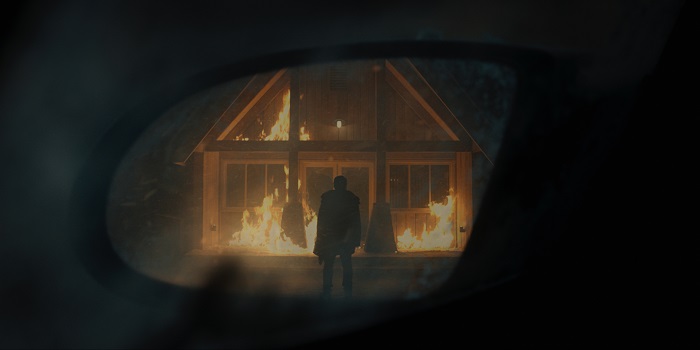
In the opening scene of Guillermo del Toro’s new film “Nightmare Alley” we watch a man dragging a dead body, tightly wrapped in a bed sheet, across the dusty floor of a remote ramshackle farm house. He strikes a match and sets the place ablaze. The man makes his way to a bus station where, once onboard, he lowers his floppy brimmed fedora over his tired heavy eyes and falls asleep, only waking up when the bus reaches the proverbial “end of the line”. In many ways that opening sequence encapsulates del Toro’s latest effort.

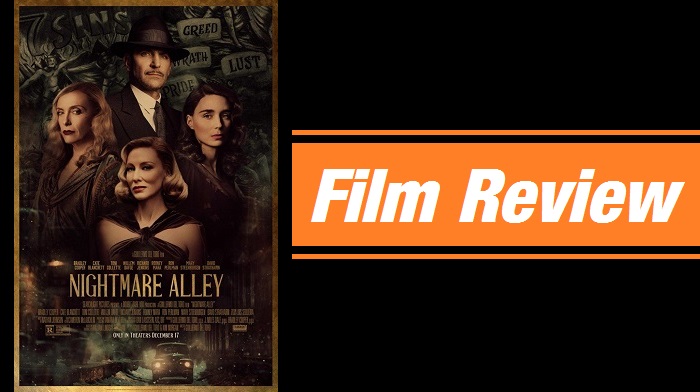
As you would expect from a del Toro film, “Nightmare Alley” is a visual feast, anchored by Tamara Deverell’s sparkling production design that transports you back to the late 1930s and early 40s. It also brings together a stellar cast that includes Bradley Cooper, Cate Blanchett, Willem Dafoe, Toni Collette, Rooney Mara, Richard Jenkins, Ron Perlman, David Strathairn, Mary Steenburgen, and Tim Blake Nelson. So automatically you have a movie filled to the brim with talent.

This pulpy neo-noir thriller (adapted from William Lindsay Gresham’s 1946 novel of the same name) tells the story of Stanley Carlisle, the man from the film’s cryptic opening. He’s played by Bradley Cooper who (aside from his come-and-go Southern drawl) is a nice fit playing a beguiling drifter packing a lot of mystery behind his disarming good looks. The moment he steps off the above mentioned bus, del Toro begins to unpack Stan’s story, and the first half of this overly long but mostly riveting two-parter kicks into gear.

Image Courtesy of Searchlight Pictures

It’s 1939, Hitler is set to invade Poland, and once again the world is about to be plunged into war. Different radio broadcasts and newspaper reports about the war are scattered throughout the movie. They provide the timeline for Stan’s story which begins in earnest when he happens upon a traveling carnival ran by a crusty barker named Clem (Dafoe). “Folks here don’t make no never mind to who you are or what you’ve done,” Clem declares as he offers the desperate Stan some steady work. It’s the perfect scenario for someone on the run from their skeleton-filled past.

As Stan works his way up the ragtag carnival’s ranks he grows closer to several of the chief acts including the “mind-reading” Zeena (an underused Collette) and her hard-drinking ex-mentalist husband Pete (the always terrific Straitharn). Sensing an opportunity, Stan begins picking their brains and learning the secrets behind their ruse. But it’s a quiet young performer named Molly (a tender and understated Mara) who really grabs his attention. She eventually takes a liking to Stan much to the chagrin of Bruno (Ron Perlman), the carnival’s strongman and Molly’s self-appointed guardian.

While the first half of the movie thrusts us into its roadshow milieu, the slow-burning second half pulls us in a much different direction. Del Toro leaves the muddy open fields and cheap lights and takes us to big city Buffalo, bathed in early 40s art deco and dripping with high society excess. This part of the story picks up two years after Stan and Molly ran away together. Now, instead of creaky makeshift carnival stages under the night sky, the couple work ballrooms, performing their own psychic bit in front of the city’s rich and privileged.

Image Courtesy of Searchlight Pictures

More con man than showman, Stan’s ambition is only outdone by his conceit. Soon he’s buying into his own press and this huckster who once hid in society’s shadows now basks in its limelight. But then he meets the story’s femme fatale, Dr. Lilith Ritter (a smoldering Cate Blanchett). She’s a psychologist who immediately sees through Stan’s act. Soon the two are using their own special brands of con artistry to swindle their wealthy targets. But who can trust who in this dubious partnership?

I’ve never seen Edmund Goulding’s generally well-regarding 1947 film adaptation, but the del Toro version highlights the filmmaker’s knack for immersive world-building. Every frame of his dark and sometimes twisted fable has something alluring to see and absorb. And every member of his superb ensemble are good fits and bring his seedy world texture and life. Even as the film stalls a bit in its second half, del Toro’s world remains a compelling place to be.

“Nightmare Alley” is a nice step up from del Toro’s last film, the pretty but hole-filled Best Picture winner “The Shape of Water”. And while it does see him step away from the supernatural, this is still a movie full of monsters. It’s essentially a cautionary tale that explores the dark side of human nature (which is nothing new for the 57-year-old filmmaker). It’s also top-notch cinema, bursting with style and grounded in the kind of grim and grimy atmosphere that should leave old-school noir fans giddy. “Nightmare Alley” opens today in theaters.

VERDICT – 4.5 STARS

REVIEW: “Night Teeth” (2021)

While it’s hard not to snicker at a title like “Night Teeth”, it’s even harder to get in sync with this light and often lethargic attempt at a hip stylish vampire flick. Directed by Adam Randall, this drab and lifeless clone of countless other bloodsucker movies has clear ambitions and its cast is able to squeeze out a few fun moments. But it’s hard to watch “Night Teeth” and not think of the much better movies it borrows from.

“Night Teeth” is what you get if you throw “Underworld”, “John Wick”, “Twilight”, and “Collateral” into one big cinematic blender. It’s a movie that gets so caught up in its desire to be cool that it forgets the need for good characters and a good story. From the blaring techno hip-hop needle-drops to the gratuitous slow motion, the movie tries everything in the book but to no avail. And while the story takes place over one brisk night in Los Angeles, it feels a lot longer.

Image Courtesy of Netflix

A likable Jorge Lendeborg Jr. plays Benny, a normal highschooler who loves his skateboard and making music. His tough guy half-brother Jay (Raúl Castillo) is a chauffeur/Uber driver, but has some secret business on the side. One evening Jay has some rather urgent business to attend to and makes the ill-advised decision to let Benny take his chauffeur duties for the night. Jay’s only requirement is that Benny pose as him for the night. Just pick up the clients and take them where they want to go. Easy, right? Well of course not!

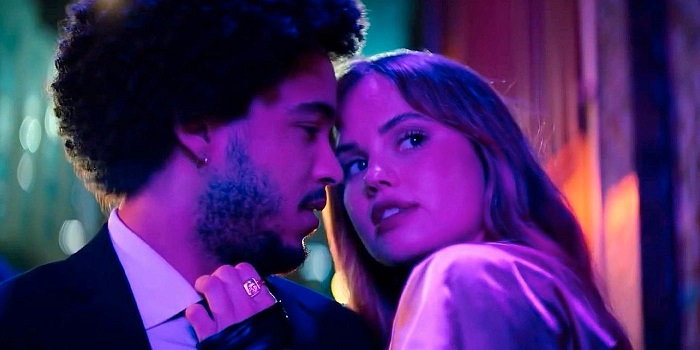
So Benny hops into Jay’s tricked out Cadillac Escalade and heads out into the LA night. He’s summoned to a posh Beverly Hills neighborhood where he picks up two mysterious women, the flirty Blaire (Debby Ryan) and the irritable Zoe (Lucy Frey). Their plans are to hit several parties across town before daybreak and Benny is to drive them, no questions asked.

Image Courtesy of Netflix

But wouldn’t you know it, the girls aren’t at all what they appear to be. In fact, they’re especially thirsty vampires who have business at each of the stops they make. And (of course) Benny ends up caught in the middle. Along the way we the audience are showered with uninteresting and often convoluted mythology about a vampire hierarchy, warring nocturnal bosses, broken truces, and so on. None of it will stick with you and worst of all none of it does much to enhance the story.

Other characters pop up along the way, most notably a prominent crime boss named Victor (Alfie Allen) who immediately becomes the film’s chief antagonist. Megan Fox even shows up in a glorified cameo playing one of Victor’s somethings (I still haven’t quite figured it out who or what she is). But they too get bogged down in the movie’s countless clichés and the backstory mumbo-jumbo. It’s that stuff that ultimately zaps “Night Teeth” of its fun and energy. And no amount of gratuitous slo-mo or bright neon lighting can save it. “Night Teeth” is now streaming on Netflix.

VERDICT – 2 STARS

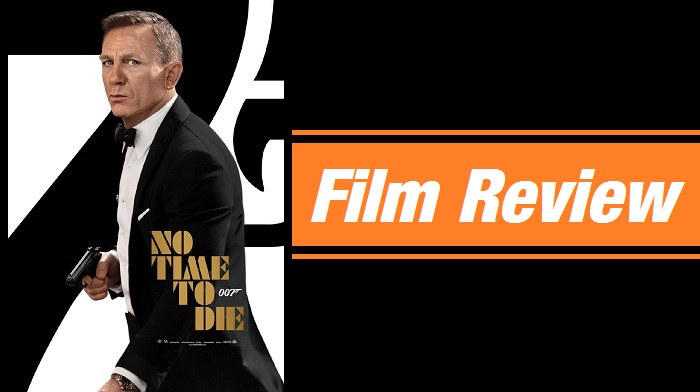
REVIEW: “No Time to Die” (2021)

What a ride it has been for Daniel Craig. He first slid into the tuxedo of the dapper 007 back in 2006. Fifteen years and five movies later Craig wraps up his terrific run with the 25th installment in the James Bond franchise, “No Time to Die”. Due to several reasons (a global pandemic chief among them), we haven’t had a Bond film since 2015. That’s a long time, but I’m happy to say it was well worth the wait.

I was pretty lukewarm on James Bond movies until Craig came along. His first entry “Casino Royale” blew me away. I like his second film, the flawed “Quantum of Solace” more than most. I loved his third movie “Skyfall” but was more mixed on his fourth, “Spectre”. With “No Time to Die”, Craig is given the chance to end his tenure on a sky-high note. And boy does he.

Directed by Cary Joji Fukunaga, “No Time to Die” comes packaged with everything you want from a Bond movie – big action, even bigger characters, plenty of style, and a special dash of heart. But Craig’s movies have added grit to that list. His Bond carries the weight of loss, and his pain often pushes him outside the bounds of agency protocol. That emotional burden and his willingness to cross the line are traits that set his 007 apart from all the rest.

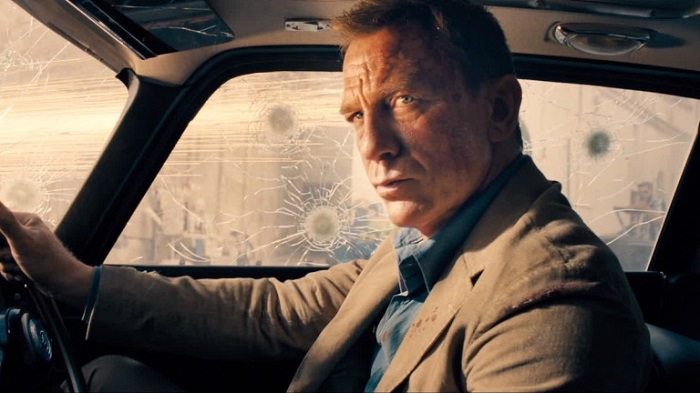
Image Courtesy of United Artists Releasing

This near $300 million sequel comes with a collection of old familiar faces as well as a few new ones. And once again this latest world-saving mission takes Bond (and us) to locations across the globe – Italy, Jamaica, Cuba, Norway, and of course London. And then you have the story itself which is not only thrilling blockbuster material, but it nails the tricky task of completing Daniel Craig‘s story arc. And it does it in an profoundly satisfying way.

The film begins with James having retired from MI6 and enjoying what resembles a normal life with Madeleine (a returning Léa Seydoux). But while on a romantic getaway in the exquisitely shot Matera, Italy, the couple are reminded why they’re always looking over their shoulders. Assassins sent by the nefarious crime syndicate Spectre ambush James leading to an exhilarating action sequence through the heart of the scenic city. Bond and Madeleine manage to escape, but he suspects her of betraying and the two split up.

Five years and one Billie Eilish Bond theme later, James is living in seclusion on a beach in Jamaica when he’s contacted by old friend and CIA field officer Felix Leiter (Jeffrey Wright). Felix needs Bond’s help tracking down a kidnapped scientist (David Dencik) who has developed a DNA-targeting bioweapon known as “Project Heracles”. Obviously, in the wrong hands the bioweapon could be catastrophic. And those hands happen to belong to Lyutsifer Safin (Rami Malek), a soft-spoken yet vengeful terrorist leader who has an axe to grind with Spectre and has a rather gnarly connection to Madeleine’s past. And just like that, Bond is back in the game.

From there the road gets curvier. Bond butts heads with MI6, particularly M (Ralph Fiennes) and a brash young 00 agent named Nomi (Lashana Lynch). The devilish Ernst Blofeld (Christoph Waltz) is still running Spectre from prison. And of course Madeleine resurfaces, now working as a psychotherapist for MI6, a job that puts her right in the crosshairs of the string-pulling madman Safin. And there are even more characters with parts to play including CIA agent Paloma (a wide-eyed and delightful Ana de Armas) who assists Bond in Cuba. And of course Q (Ben Whishaw) and Moneypenny (Naomie Harris) make welcomed returns.

But this is very much Bond’s movie. Not just in the traditional sense, but personally and emotionally. From its action-packed earliest frames, “No Time to Die” has a different pull than Craig’s other films in the franchise. Part of it may be psychological. We know this is Craig’s last ride and that realization inevitably adds some extra feeling for fans. But it’s also a conscious move from Fukunaga who manages to keep his film tonally in-tune with the others while putting a warm and empathetic spotlight on the weary and pained super spy. It’s a slippery balancing act, but Fukunaga nails it.

Image Courtesy of United Artists Releasing

Also, the movie looks amazing. Whether he’s capturing a location or shooting an elaborate action sequence, Oscar-winning DP Linus Sandgren always gives us something worth looking at. I mentioned the stunning opening in Italy. There’s also an impeccably shot edge-of-your-seat car chase/shootout in Norway. And of course, the big finish which features one particularly jaw-dropping close-quartered gunfight up a flight of stairs. Sandgren is constantly treating us to one breathtaking shot after another and frequently reminding us of why movies are always better on the big screen.

But what may be most impressive is how the movie flies by despite a hefty running time of 2 hours 43 minutes. I only checked my watch once and that was out of curiosity rather than boredom. Much of it has to do with Fukunaga’s crisp pacing and steady mix of drama and action. He never lets things get bogged down. At the same time, he never loses sight of his characters. Again, it’s a balance the film maintains that keeps it lively and engaging.

So how does “No Time to Die” match up with Craig’s other Bond movies. Well, I’m not ready to put it next to the superb “Casino Royale”, but it’s only a step or two below it. Not only has Cary Joji Fukunaga made a good Bond movie, but this is the kind entertainment I look for out of blockbusters. But perhaps most important for 007 fans, Fukunaga gives Craig a swan song that does him and his fifteen years spent On Her Majesty’s Secret Service justice. It’s a top-to-bottom fabulous finish for (dare I even say it) my favorite Bond of the franchise. “No Time to Die” opens today in theaters.

VERDICT – 4.5 STARS

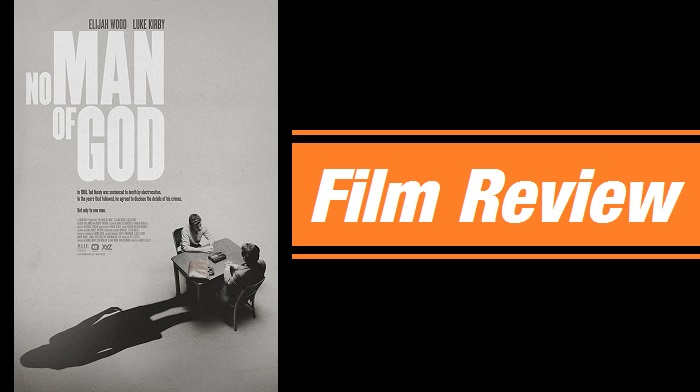
REVIEW: “No Man of God” (2021)

There is no shortage of feature films and documentaries about the notorious serial killer Theodore “Ted” Bundy. The handsome and charismatic Bundy would eventually confess to kidnapping, raping and murdering thirty women across seven states through the mid-to-late 1970’s (the actual victim count is estimated to be higher). Hollywood’s interest in Bundy’s killings remains to this day.

There has long been an unsettling mystique surrounding Ted Bundy and when making movies about him filmmakers are forced to walk a tightrope out of fear of iconizing the twisted sociopath. Director Amber Sealey takes that challenge to heart in her new film “No Man of God”.

Working from a script by Kit Lesser, Sealey dodges the usual trappings by not concentrating on the killings themselves. Instead she puts her laser-sharp focus on Bundy’s last four years. More specifically, Sealey examines Bundy through the eyes of bright-eyed FBI agent Bill Hagmaier. Her film is inspired by authentic FBI transcripts and tape recordings of Hagmaier’s interviews with Bundy leading up to his execution in 1989.

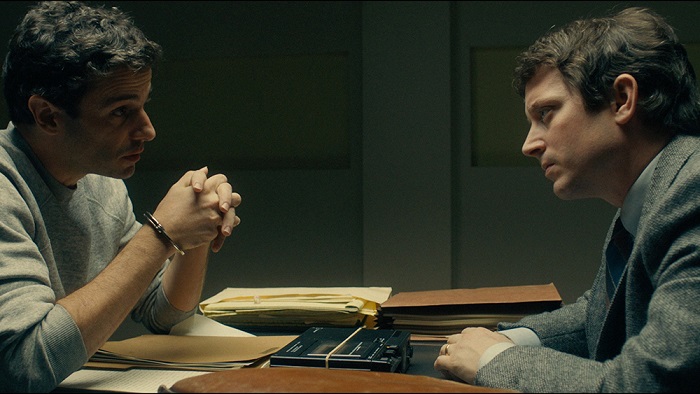
Image Courtesy of RLJE Films

The film’s eerie opening flashes back to the morning of January 24, 1989 as Bryant Gumbel gives his Today Show audience the news that Ted Buddy had died in the electric chair after ten years of appeals. It’s followed by a collage of images that pulls us into the film’s 1980s setting. It won’t be the only time Sealey uses flashes of from the past to great effect.

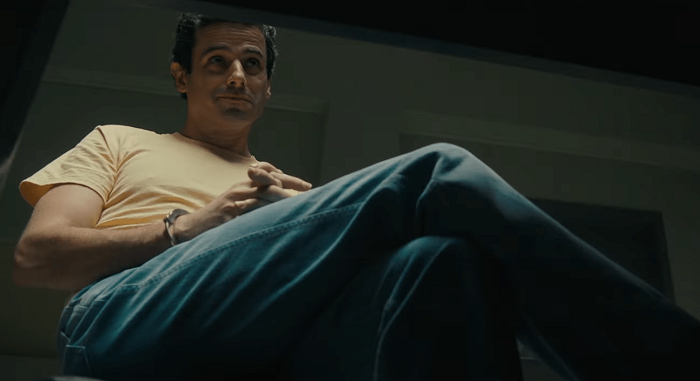
From there Sealey sits us down in 1985 where the FBI’s newly-founded Behavior Analysis Unit (BAU) assigns Bill Hagmaier, the youngest member of their five-person team, to the Ted Bundy case. Hagmaier (played by a perfectly calibrated Elijah Woods) is tasked with winning an audience with the shrewd and savvy Bundy (Luke Kirby) who sits on death row at the Florida State Prison.

The psychological motivations are some of the most intriguing elements to the story. The Bureau believes that getting into Bundy‘s head and understanding his pathology will give them an edge in apprehending other serial killers. They also hope to root out any confessions that could finally give hurting families some much-needed closure. But getting the killer to open up wouldn’t be easy. “He won’t talk to you,” laughs the prison warden. “He hates the feds.”

But Bundy surprises everyone and agrees to meet with Bill, certain he can outwit the young profiler and unearth the Bureau’s real intentions. He also has his own personal reasons. With his execution date getting closer, the crafty and confident killer needs a reprieve and he’s running out of cards to play. So maybe appearing to “help” the government can buy him some time.

And that sets up the bulk of this true-crime two-hander that follows the pair of men as they meet over the course of four years. We watch as their cat-and-mouse game yields to a mutual trust and eventually an uncomfortable camaraderie. Most of their scenes are just the two of them in a small prison room. But the magnetic script combined with Sealey’s terrific sense of pacing and trust in her actors leave us captivated and locked into every exchange.

Image Courtesy of RLJE Films

The film also benefits from its gripping female perspective that comes through via several gutsy and powerful choices. My favorite may be when the increasingly desperate Bundy grants an interview with Christian psychologist and anti-pornography crusader James Dobson (Christian Clemenson). As the two agenda-driven men prattle, Sealey’s camera hones in on a young woman standing in the background. The shot lingers on her, slowly pulling us closer. As she listens to the words of a monster her expression speaks volumes. She knows who he is. She knows what he has done. She knows it could have been her.

I can’t end the review without talking more about Kirby. He’s certainly not the first actor to portray Ted Bundy (there was Mark Harmon, Cary Elwes and Zac Efron to name a few). But none have captured Bundy’s sinister calm and unnerving vanity quite like Kirby. His performance is made all the more potent by his chilling physical likeness both in appearance and in mannerisms. It also comes through in the tone of his voice and in his handling of the dialogue. Meanwhile Sealey and cinematographer Karina Silva shoot him in a way that adds to the unease. It’s a remarkable portrayal that’s both illuminating and terrifying.

“No Man of God” may not offer much new to those who are already well-versed in Ted Bundy’s story. But the film’s focus on a particular point late in his life allows us a unique look at the smug calculated murderer, always driven by his own selfish lusts, coming face-to-face with his own mortality. And the story is just as much about Bill Hagmaier and what his encounter with Ted Bundy brought out in him. It’s these kinds of differences that make the movie stand out from all the other Bundy treatments. “No Man of God” is now showing in select theaters and on VOD.

VERDICT – 4 STARS

REVIEW: “The Night House” (2021)

(Click here to read my full review from Friday’s Arkansas Democrat-Gazette)

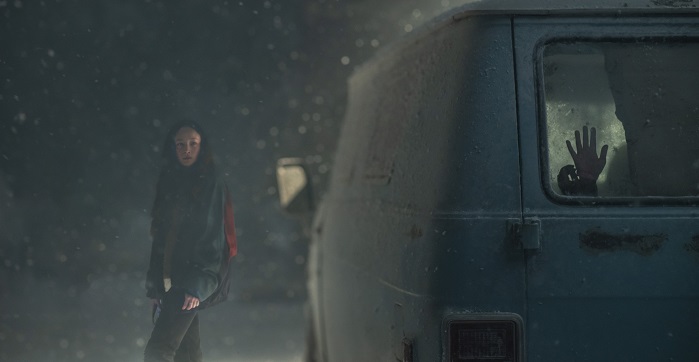
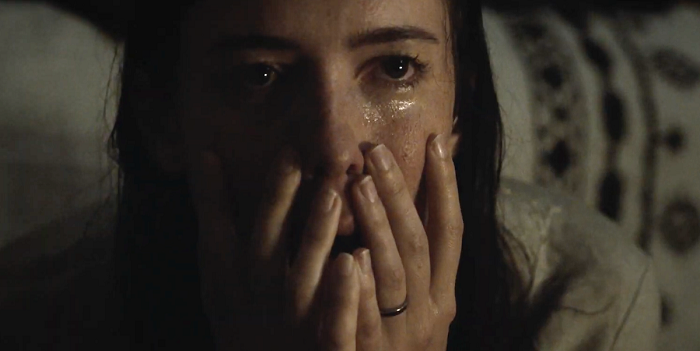
After taking in the trailers for the psychological horror film “The Night House” I was left with some rather obvious expectations: a haunted house story, a malevolent apparition, some spooky atmosphere, and (if we’re lucky) some genuine chills. What I didn’t expect to find was a meaningful character study nestled snugly within an entertaining genre film and anchored by one of my favorite performances of the year from Rebecca Hall.

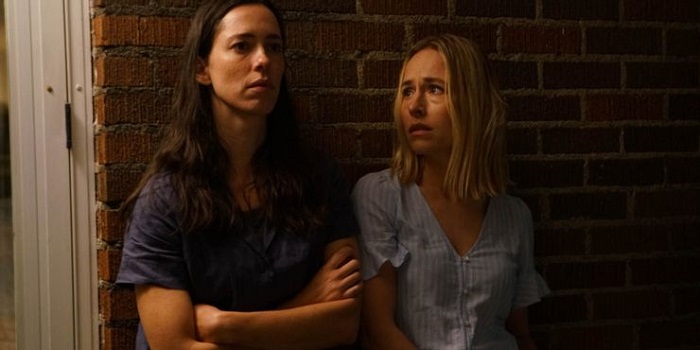
Hall plays Beth, a school teacher in upstate New York who we first meet only days after her husband Owen inexplicably took his own life. The couple had been happily married for 14 years, but now Beth finds herself abandoned, haunted by a houseful of memories and a cryptic suicide note that leaves her with more questions than answers.

Image Courtesy of Searchlight Pictures

Beth’s well-meaning friends try to take her mind of things, but she mostly keeps to herself, alone with her grief, anger and perplexity, inside of the large double-decker lake house Owen built for her. But eerie disturbances in the night make Beth (and us) question whether she’s really alone. Maybe it’s just too much wine. Is it her frayed psyche playing tricks on her? Or has Owen returned from the grave?

“The Night House” is directed by David Bruckner who has shown himself to be a smart and savvy genre filmmaker. Here he takes some familiar tricks and uses them to great effect – a stereo suddenly blasting on its own, loud knocks on the door in the middle of the night, creepy silhouettes vanishing into the shadows. With the help of DP Elisha Christian’s crafty camerawork and Ben Lovett’s uneasy score, Bruckner amps up the dread each evening when Beth falls asleep.

While Bruckner and company clearly have a good time making us squirm, the movie works well because it never strays from its chief focus – Beth’s state of mind. The script (co-written by Ben Collins and Luke Piotrowski) fills us in on a her past struggles with depression and “dark thoughts” and how it was Owen “who kept them at bay.”

Image Courtesy of Searchlight Pictures

Collins and Piotrowski do a good job keeping things under wraps while leaving a clue-filled trail of breadcrumbs (along with a few diversions) for our minds to follow. At the same time, Bruckner makes superb use of his location to feed our apprehension. The opening shots tease something idyllic, but any notion of tranquility quickly evaporates, overtaken by feelings of isolation and despair which Bruckner squeezes out of his picturesque setting.

“The Night House” is an immensely satisfying horror thriller that fully embraces its genre elements while also shrewdly dealing with some heavy topics such as mortality, depression, grief, and suicide. A few of the story’s details can get a little muddy in the final act and the ending may be a little too tidy. But the deeper the filmmakers go into the main character’s crumbling psychology the more I appreciated what they were going for. And any opportunity to see Rebecca Hall take on a meaty role like this is a treat in and of itself.

VERDICT – 4 STARS

REVIEW: “No Sudden Move” (2021)

Steven Soderbergh’s latest, the straight to HBO Max thriller “No Sudden Move”, sees the filmmaker once again doing his thing and carving his own eclectic path. This stylish crime noir sports a star-studded cast who all effortlessly fit and flow with Soderbergh’s cool and intoxicating rhythm. Honestly it’s hard to watch and not notice his fingerprints all over this thing. Of course it could be because Soderbergh not only directs but also shoots and edits the film himself. The result is something fun and unmistakably his. And to think just a few years ago he was announcing his retirement.

While watching “No Sudden Move” I instantly began thinking of the terrific and underrated “Devil in a Blue Dress”, one of my favorite Denzel Washington films. This movie puts off a lot of those same vibes with Soderbergh once again embracing his long-held love for shady characters in tough spots. Set amid the racial boil of 1954 Detroit, “No Sudden Move” captures both the idyllic facade and corrupt reality of that period. Soderbergh and screenwriter Ed Solomon immerse us in a time where black neighborhoods were being squeezed out in the name of “urban renewal” and ruthless auto companies would use any means necessary to get ahead of their competition.

Image Courtesy of Warner Brothers

It’s this simmering and shifting setting that Soderbergh and Solomon sit us down in. They fill it with low-level hoods, shifty middlemen, menacing gang leaders, and corporate shysters, all basking in the technicolor(ish) glow of amorality and self-interest. At the center is Curt Goynes (played with understated precision by a terrific Don Cheadle), an ex-con who has managed to tick off every crime boss he has worked for. Fresh out of prison and in need of money, he takes a job from a shifty fedora-wearing Brendan Fraser who works on behalf of a mysterious unknown party. It’s should be easy and good-paying work – $5000 with $3K up front for only three hours of work. No killing, no beat-downs, just “babysitting”. What could go wrong?

Curt is teamed with the antsy and ever-suspicious Ronald Russo (Benicio del Toro) and the feisty take-charge Charley (Kieran Culkin). The job calls for them to break into the home of an accountant named Matt Wertz (played by a delightfully skittish David Harbour). Curt and Ron are tasked with staying at the home and keeping an eye on Matt’s family while Charley takes Matt to his firm to retrieve some secret documents from his boss’ safe. But as you might suspect, nothing in this story goes smoothly. The documents are missing. Someone is shot and killed. And soon miscreants galore are crawling out of the city’s underbelly with vested interests in this seemingly simple score.

Curt and Ron form a brittle alliance once they realize they’ve been set up, but the allure of more money keeps them from skipping town. If these documents have this many people’s interest surely they’re worth a lot of money. And if the unlikely duo can get their hands on the documents they can sell them to this highest bidder. Considering the heat from the underworld and the corporate world, it’s probably not the smartest play. So it’s no surprise when they find themselves at odds with some of the bigger fish in the pond, namely gangsters Frank Capelli (the stern and menacing Ray Liotta) and Aldrick Watkins (the quietly charismatic Bill Duke).

Image Courtesy of Warner Brothers

Solomon’s script fully embraces the concept of dishonor among thieves. His story overflows with back-stabs, double-crosses, and an array of criminal hoodwinks. Soderbergh has a blast with it, giving the characters room to walk their own paths and dig their own holes. Visually he shoots from a wonderful assortment of perspectives and mostly through wide-angle lenses. When combined with the gorgeous lighting, the film looks both stylishly modern and like something plucked from a bygone era of filmmaking. Mix in the snazzy score from David Holmes and it’s hard not to feel like you’ve stepped into a time machine.

Will the performances are great throughout (especially from Cheadle who blew me away), a few characters are wafer-thin and scream for more attention. Jon Hamm plays a police detective who pops up here and there but with little impact (although he does appear in the two funniest scenes). Also Julia Fox (“Uncut Gems”) ends up with a pretty significant role to play but is barely visible through most of the movie. Still, it’s great to see so many quality talents filling out Soderbergh’s world and operating on his unique wavelength. It’s part of what makes all of his films (even his misfires) so fascinating to watch. “No Sudden Move” is now streaming on HBO Max.

VERDICT – 4 STARS