REVIEW: “The Other Lamb” (2020)

LAMBsmall

Is it just me or does there seem to be a resurgence of cult-related movies? Last year alone we got Ari Aster’s sophomore effort “Midsommar”, the so-so Netflix thriller “The Silence”, and even “Doctor Sleep”, the much-anticipated sequel to “The Shining”. Obviously some of these deal more directly with cults than others, but the timing of this rekindled interest is kinda fascinating.

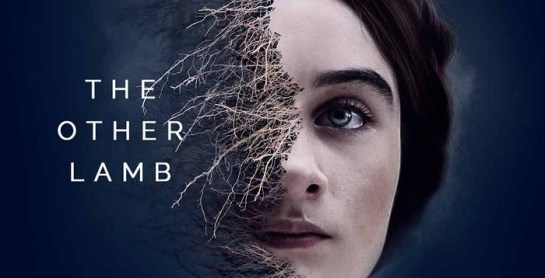
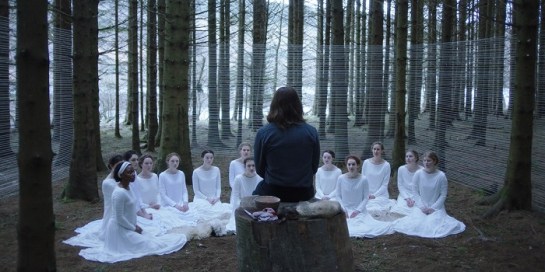
The latest cult movie entry is “The Other Lamb” and it’s pretty easy to find its modern day inspiration. Polish director Malgorzata Szumowska and screenwriter Catherine S. McMullen have made what is essentially a feminist parable set against patriarchal repression. It’s an moody mix of “Midsommar” and “The Handmaid’s Tale” built around arresting visuals and a persistent, slow-boiling sense of unease.
Lamb1

As the movie begins the unnamed sect is well established and its rituals fully ingrained within its membership. We get little in terms of background, either personal or religious. We see they live in the forest, isolated from modern society – twenty or so women with the same braided hair style wearing ankle-length dresses that only differ in color, red for the “wives” and blue for the “daughters”. They’re led by a suave, charismatic charlatan who they call the Shepherd (Michiel Huisman). His “flock” soaks up his every word with starry-eyed awe while constantly seeking to win his favor.

Like a snake oil salesman with fresh new tonic, the Shepherd peddles his vision of a “new Eden” to his adoring followers. But one lamb in his flock begins to question her blind obedience. At first Selah (played by Raffey Cassidy) is a dedicated disciple looking forward to the day when the Shepherd will extend to her his self-satisfying “grace”. But when he’s forced to lead the flock on a long, arduous journey to find a new home, Selah begins noticing the cracks in his infallibility.

“The Other Lamb” quickly evolves into a young woman’s coming-of-age awakening. Selah’s disenchantment intensifies as she grows closer to Sarah (Denise Gough), a “wife” ostracized within the community. Sarah’s wise to the Shepherd’s shenanigans which has put her on the outs with the group. “His attention is like the sun” she explains. “Bright and glorious at first, but then it just burns.” When Selah inquires about the lack of males among them, Sarah chillingly states “Only one ram in the flock child.”

Lamb2

There really isn’t much else to it. The lack of depth in the characters is mirrored in the story. But what the movie lacks in narrative it makes up for in tone and in its ability to build a steady sense of dread. Szumowska’s mood is immediately unsettling and for the rest of the way we’re never given a reason to believe things will turn out well. From the outset we know something’s not right. Whether it’s the Shepherd’s pharisaical fervor that always leads to his own gratification. Or the “broken” women clearly exploited and brainwashed into subservience.

“The Other Lamb” certainly isn’t subtle with its message. You can’t mistake it for anything other than a metaphor for abusive relationships and their punishing effects. But while it might be obvious, that doesn’t mean it’s ineffective. There is a potency especially in the visual language used by Szumowska and her DP Michał Englert. All that’s lacking is the character depth to help us know these people better. It’s the one missing ingredient that could have enriched the movie as well as our experience with it. Still, there is more than enough creative grit to make it worth your time and Raffey Cassidy is a young actress to keep your eye on.

VERDICT – 3.5 STARS

3-5-stars

Denzel Day #6 : “Out of Time” (2003)

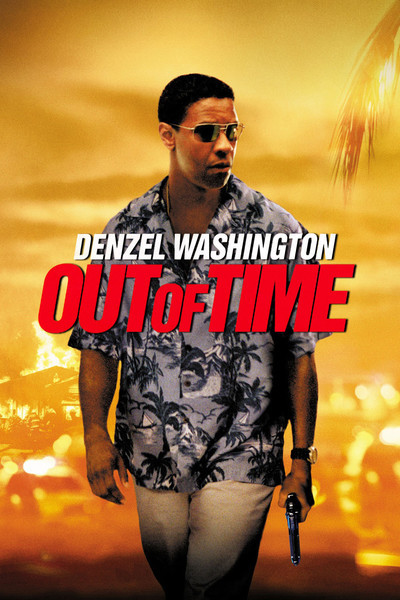
TIMEposterOver a span of two months each Wednesday will be Denzel Day at Keith & the Movies. This silly little bit of ceremony offers me a chance to celebrate the movies of a truly great modern day actor – Denzel Washington.
Alfred Hitchcock was fascinated with the idea of innocent men trying to clear their names of an assortment of offenses they didn’t commit. It’s a theme he revisited numerous times often adding his own twist to the scenario. Innocence, guilt, mistaken identity – all elements Hitchcock loved to explore. You can’t help but see that influence in director Carl Franklin’s “Out of Time”.

Franklin and screenwriter David Collard tell a story thick with Hitchcockian flavor and more twists than a classic 1940’s noir. In their film Denzel Washington plays the man with the deck stacked against him but with a small caveat. He’s not what you would call a squeaky clean victim with a spotless moral record.

Washington plays Matt Whitlock, police chief of the sleepy little town of Banyan Key which is nestled about an hour’s drive from Miami. This easy going Florida Keys community of around 1,300 people is rocked when a suspicious house fire takes the life of a local husband and wife Chris and Anne Harrison. The fire chief rules it to be arson and a homicide investigation begins.

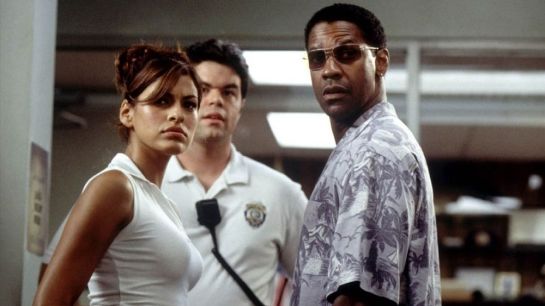
Now enter the twists. Matt has been having an affair with Anne (Sanaa Lathan), an old flame from high school, and the abusive Chris (Dean Cain) is suspicious. Things get more complicated when a cancer diagnosis, a life insurance policy, and $485,000 in seized drug money all come into play. Oh, and toss in Matt’s estranged wife Alex (Eva Mendes), recently promoted to detective and brought in to assist with the case.

Matt finds himself doing everything he can to hide his connections to the case while also carrying out a secret investigation of his own. Collard’s script has a field day putting the character through the ringer as he constantly heads off new evidence to keep the police off his trail only to avoid being caught by the skin of his teeth. The sheer lack of plausibility would make it easy to dismiss if not for Franklin’s swift pacing which never allows us too much time to dwell on any of it.

TIME1

Of course it helps to have Denzel Washington as your lead. Despite the ramped up tension (especially in the second half) Washington gives what you could call a laid-back performance. Aside from a few beads of sweat and a couple of concerned looks, Washington and his character maneuvers through the many twists and turns confidently and relaxed yet (as always) with plenty of charisma. It’s only at the very end that we see Matt lose the control he has held (though at times precariously) through the entire film.

Washington and Franklin previously worked together in the exceptional 1995 neo-noir “Devil in a Blue Dress”, a film I hold in high regard. “Out of Time” doesn’t quite reach that level but it’s a much different movie despite sharing some of the same elements. It works best as a sugar-rush thriller, light and undeniably absurd. But to be honest that’s a big part of what makes it so much fun.

VERDICT – 3.5 STARS

3-5-stars

REVIEW: “Once Upon a Time in Hollywood”

POSTER

You can say this about Quentin Tarantino – he’s consistent. His settings and timelines may change, but regardless of the movie you still see a filmmaker unshakably devoted to his style. It’s so pronounced that you’ll hardly see him step outside of his self-defined box or sway too far from his brand. Take his recent conversations about making a Star Trek movie. Right off the bat he confirmed to Empire magazine that his version would be replete with profanity, a needless addition but a glaring Tarantino trademark.

I doubt any of that will be a problem for die-hard Q.T. fans and I can understand why. But as someone who feels his stories are often smothered by his style, it makes it easy for me to keep my expectations in check whenever a new Tarantino movie arrives. His 9th film (10th by release, but whatever) comes in the form of a retro la-la land fairytale set in the waning days of Hollywood’s Golden Age and our country’s perception of innocence. It’s a movie full of surprises, none bigger than this – I kinda love it. And let me get this out of the way – I think it’d Tarantino’s best film.

ONCE1

“Once Upon a Time in Hollywood” walks in several of Tarantino’s familiar footprints. It’s set within an alternate timeline, it’s a compendium of the filmmaker’s favorite classic cinema pastiches, and it sports a fascinating array of unique and often eye-popping characters. It isn’t much interested in plot. Instead Tarantino’s focus is on these characters and recreating 1969 Los Angeles with an obsessive level of detail.

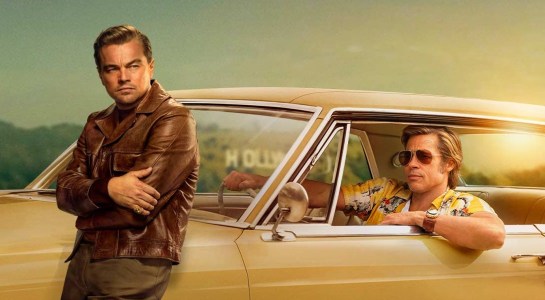
Leonardo DiCaprio stars as fading TV star Rick Dalton and Brad Pitt plays his reliable stunt double and best friend Cliff Booth. The two are drawn from an era where actor and stuntman worked closely together both on and off screen. If Rick loses an acting gig so does Cliff. And Cliff not only takes Rick’s lumps on camera but he’s his chauffeur, gopher and overall handyman.

Television westerns were Rick’s ticket to stardom (Tarantino’s flashbacks to Rick’s former hit show “Bounty Law” are spot-on and so much fun). But as Hollywood transitions to a new era, Rick senses the industry leaving him behind. Instead of adapting he spends much of his time boozing and feeling sorry for himself. Enter the easygoing Cliff, a good listener and even better encourager.

ONCE2

As with other Tarantino films, “Once Upon a Time” routinely sees fiction intersecting with fact. An example, Rick lives in a nice house at the end of Cielo Drive in Benedict Canyon. Many will remember that street name from the horrific Manson Family murders. Rick’s new neighbors are indeed filmmaker Roman Polanski (Rafał Zawierucha) and his wife, rising Hollywood star Sharon Tate (played with an effervescent beauty by Margot Robbie).

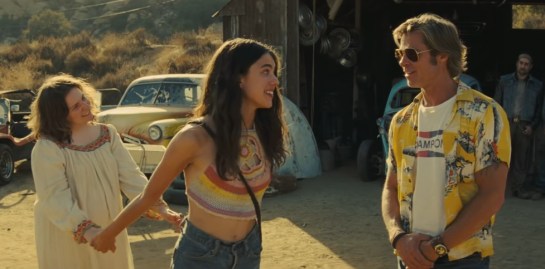
Much has been made of Robbie’s lack of dialogue, but her portrayal of Sharon Tate has a very unique role to play. In many ways she stands as a symbol as much as a character. She represents innocence, goodness, and compassion. Tate is a constant ray of light and Tarantino shoots her with an ever-present glow. That’s why we’re hit with a looming sense of dread when we get those few glimpses of Charles Manson (Damon Herriman) or when Cliff gives a young hippie hitchhiker (Margaret Qualley) a ride to Spahn’s Movie Ranch. We know what history says and where things are heading.

ONCE3

As for the leads, “Once Upon a Time” is a very character-driven movie and Tarantino gives his two biggest stars plenty of meaty material to chew on. DiCaprio goes wild in a role that’s big and showy in the same way many Tarantino roles are. Still there are layers of sadness and insecurity that DiCaprio absolutely nails. But it’s Pitt who steals the show. Not only does he look the part with his sun-bleached hair and leathery good looks, but he’s tempered, laid-back, and easy for us to connect with (despite a few potential skeletons in his character’s closet).

The film does feature some of the same Tarantino vices that we seem to get in all of his pictures. For example he has this weird fascination with profanity. He doesn’t use it for realism or emotional effect. It’s something woven so tightly into the fabric of his style and he can’t seem to break away from it. Because of that many the characters across his movies often talk alike and sound alike.

Once4

Tarantino does indulge himself a little too much specifically during a long sequence on the set of Rick’s new western. Admittedly, it’s kind of fascinating watching Tarantino essentially shoot a TV show within his movie. It’s also a segment that features several good moments including Luke Perry’s final appearance and a fabulous performance from 10-year-old Julia Butters (she’s a revelation). But it still feels detached from the film’s other moving parts.

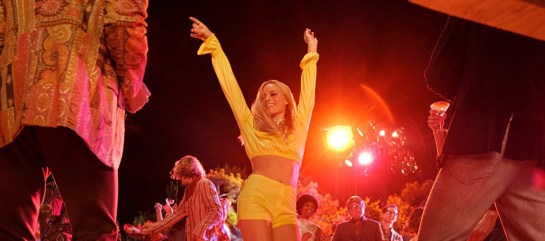
It’s hard to imagine a better looking film in Tarantino’s catalog (bold statement, I know). Every scene gives you an image worth setting your eyes on or a detail that in some way calls back to 1969. You get his nostalgic visual splurges often rooted in his pop-culture fluency. Whether it’s a Sgt Fury and his Howling Commandos comic on a coffee table or DiCaprio’s Rick grafted into a scene from “The Great Escape”. And of course there is the sheer technique seen throughout the entire movie. My favorite may be Tarantino’s knack for tracking shots best seen in a neon-bathed nighttime drive down the Sunset Strip and a subtly unnerving pan of Spahn’s Ranch.

ONCE5

So much else could be said about the rip-roaring soundtrack filled with songs of the period that haven’t been played to death in other films. About Tarantino’s surprising restraint even among such nostalgic excess and the unexpected splash of maturity seen most in his treatment of his characters. And how about the plethora of great cameos from Al Pacino, Kurt Russell, and Zoe Bell just to name a few. We could even talk about how Tarantino’s ending (in its own twisted way) offers us something his films rarely give – a glimmer of hope.

I can see “Once Upon a Time in Hollywood” getting criticized from both sides. Tarantino stalwarts who come to the movie hungry for his traditional pomp and shock may be disappointed in how little they get. Those looking for a more traditional narrative may find the movie too messy and light on plot. Me, I love how this film manages to avoid many of Tarantino’s self-induced trappings while still being unlike anything else you’ll see in the theater this year. And while I still grumble at some of his style choices, I can’t deny being completely absorbed in this crazy yet magnificent cinematic concoction.

VERDICT – 4.5 STARS

4-5-stars

REVIEW: “Overlord”

OVERLORDBIG

One of the coolest things about the J.J. Abrams produced “Overlord” is that with the slightest of tweaks it could work as a gritty and visceral World War II Picture or a fun old-school horror gorefest. It settles on being a crazy genre mashup full of far more surprises than you would ever expect.

The film begins with a high-powered opening sequence set in the night skies over France. It’s the evening before the D-Day invasion and a paratrooper squad is set to drop behind enemy lines to destroy a German radio jamming tower strategically placed atop an old village church. Director Julius Avery’s camera hones in on Private Boyce (Jovan Adepo) whose wringing hands, bouncing knee, and sweat-soaked forehead give away his  nervousness.

OVERLORD2

German AA guns begin pounding the skies and bullets rip through the hull of the plane killing many of the young troops. Boyce is pushed out into the dark war-torn sky and parachutes to the Nazi-occupied countryside just south of the village. This entire sequence is exhilarating and chaotic, full of striking visual touches and some truly intense sound design. It definitely gets things off on the right foot.

On the ground Boyce is reunited with the small handful of soldiers who survived the drop. Among them is the hard-nosed Corporal Ford (Wyatt Russell) and the obnoxious chatterbox Private Tibbet (John Magaro). They cross paths with a French Resistance fighter named Chloe (a very good Mathilde Ollivier) who reluctantly agrees to sneak them into the village where they’ll put together a game plan to take out the tower.

So far everything could pass for a thrilling WW2 film in the vein of “Saving Private Ryan”. But oh how things change when we discover what’s going on in and underneath the church. This will only speak to gamers, but “Overlord” becomes something that would be right at home in the “Wolfenstein” video game universe. I’ll let you discover it for yourself but let’s just say the horror elements you see in the trailer are only the tip of the iceberg. The film has much crazier (and gorier) things up its cinematic sleeve.

OVERLORD1

“Overlord” is best taken as straight-forward, unbridled entertainment. It doesn’t shoot for much more than that. We see this most in its handling of the characters which we learn practically nothing about. It’s not particularly necessary for the story, but it is one thing that could have given the movie a little more depth. Still the characters manage to have their own unique contributions to the story. For example Boyce serves is the film’s conscience. Ford is the grit. Chloe is the heart. Tibbet is the humor.

While the trailers scream horror, “Overlord” packs just as much period war-time action and suspense. In fact, one of the most welcoming things is how deliberate Avery and co-writers Billy Ray and Mark L. Smith are with unleashing the horror elements. When they do come it changes the movie significantly and that’s not a bad thing. I gotta say I enjoyed the second half’s blood-soaked nuttiness and its commitment to seeing its crazy concept through to the finish line.

VERDICT – 3.5 STARS

3-5-stars

REVIEW: “Operation Finale” (2018)

Finale poster

Otto Adolf Eichmann was a high-ranking Nazi SS officer and one of the key architects of Hitler’s “Final Solution”. Decorated and revered among the Nazi hierarchy, Eichmann’s fingerprints were all over the Holocaust. He would organize and oversee the mass deportation of Jewish communities to extermination camps across Eastern Europe during World War II. The hunt and subsequent capture of Eichmann is a fascinating story to behold.

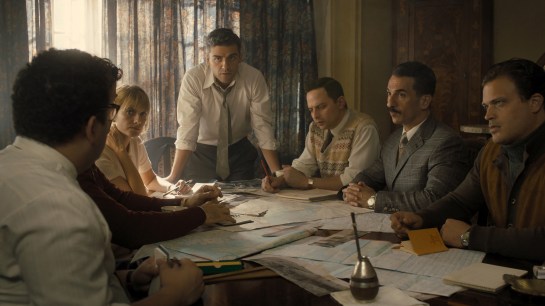
After World War II Adolf Eichmann escaped custody and hid throughout Europe before settling in Buenos Aires. “Operation Finale” from director Chris Weitz spotlights the Israeli intelligence team who located Eichmann and were tasked with bringing him back to Jerusalem to stand trial before the nation.

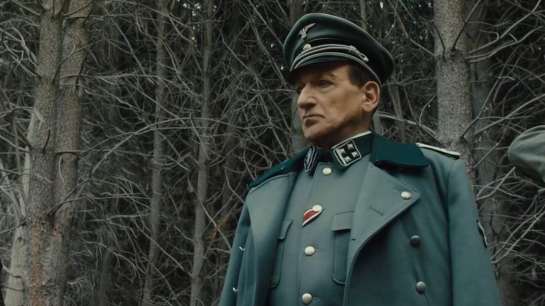
Oscar Isaac stars as Peter Malkin, a secret agent from the more aggressive wing of the Mossad. In 1960 the intelligence agency initially ignores a lead claiming Eichmann had been spotted in Argentina. But fearing public outcry, Malkin and his team are sent to South America to covertly extract Eichmann under the noses of an unhelpful local government and a rising Nazi sentiment. Ben Kingsley plays the enigmatic Eichmann, a queasy mixture of family man and outright monster.

Finale1

First time screenwriter Matthew Orton covers a lot of ground in the film’s two-hour running time. A good chunk is spent peeling back the layers of Eichmann and revealing an unexpected touch of humanity. It’s a tough juggling act particularly for Kingsley who is both unsettling and convincing. His portrayal hides Eichmann’s heinous beliefs behind a veil of good manners and fatherly devotion giving form to what historian Hannah Arendt referred to as “the banality of evil”.

Then you have the Jewish intelligence team whose pain-driven impulses for revenge routinely clash with their sense of duty. It is especially true for Peter who still finds himself haunted by flashbacks of the German atrocities. This adds another level of stress to the already demanding mission. Some good performances fill out the rest of the team – Lior Raz, Nick Kroll, and the always good French actress Mélanie Laurent. She plays a doctor and Peter’s former love interest although their relationship isn’t given a lot of detail.

An integral side story features one of my favorite young actresses Haley Lu Richardson (“Columbus”, “The Edge of Seventeen”). She plays Sylvia, the daughter of Lothar Hermann (Peter Strauss) who secretly feeds information to the Israelis regarding Eichmann’s whereabouts. But her budding relationship with Eichmann’s Nazi-sympathizing son (Joe Alwyn) puts her in a precarious position. It’s an interesting story angle but unfortunately Richardson’s character gets lost in the third act as the film crunches the timeline and focuses more on the extraction.

Finale2

The film’s slow boil may push away those looking for a snappier or more action-oriented thriller. But I appreciated its deliberate pacing and attention to character. As I said about Richardson, not everyone gets the fullest treatment, but there are some fabulous character-driven moments specifically between Isaac and Kingsley. They offer some great exchanges amid two top form performances.

Producers Fred Berger and Brian Kavanaugh-Jones have stated that there is far more truth to their story than dramatic license. That’s one reason you won’t find “Operation Finale” leaning too heavily on routine tropes and gimmicks to amp up the tension. They want it to come from a more authentic place. That gives this film a different feel – patient, even methodical to a point. It wouldn’t appear to be the easiest sell, but a strong backing from MGM Studios ensured its production.

It has been said that as the end of the war drew close Eichmann declared he could “leap laughing into the grave because the feeling that he had five million people on his conscience would be for him a source of extraordinary satisfaction.” It’s that deep-seated wickedness and unspeakable callousness mixed with their own personal losses that drove the Mossad throughout this incredible mission. “Operation Finale” shines a light on their efforts and does so with reverence, patience and with the help of one stellar cast.

VERDICT – 4.5 STARS

4-5-stars

REVIEW: “Only the Brave”

BRAVEposter

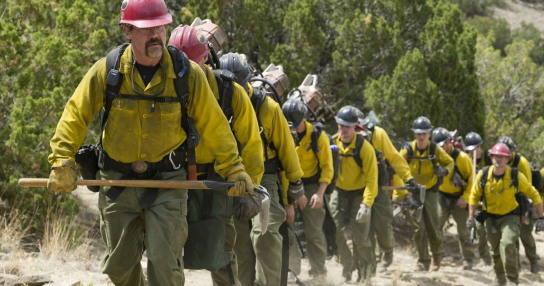
If you aren’t familiar with the story of the Granite Mountain Hotshots but plan on seeing “Only the Brave”, do yourself a favor and don’t read up on their story before seeing the movie. It’s worth it just to experience the fullness of the emotional gut punch this film packs. I had not heard of  these brave men who fought wildfires on the frontlines. I’m certain that’s why this movie provoked such a powerful response from me.

“Only the Brave” could have been several things under that familiar guise of “based on a true story”. It could have been some big studio action movie with more CGI than human element. It could have been a cliché-riddled buddy survival-thriller that Hollywood has produced by the dozens. To be honest I was expecting a bit of all that. What I got was a movie far more interested in its characters than I expected it to be. It isn’t perfect, but when focused on the right stuff (which is more often than not) it reveals a depth that will surprise a lot of people (including me).

Brave2

Eric Marsh (Josh Brolin) heads a team of firefighters in Prescott, Arizona. They are a top-notch group who find themselves constantly brushed aside by higher ranked elites. Sick of the federal bureaucracy and lack of progress for his crew, Eric seeks the help of mentor and former firefighter Duane Steinbrink (Jeff Bridges). Because of Duane’s pull a portion of the film deals with the team earning their elite certification and becoming the Granite Mountain Hotshots.

The reason this is even the slightest bit interesting is because of the characters. The writing team of Ken Nolan and Eric Warren Singer put the bulk of their focus on two of the firefighters, Brolin’s Eric and Brendan “Donut” McDonough played by a very convincing Miles Teller. Donut is a stoner looking to turn his life around following the birth of his daughter. Eric sees him as a kindred spirit of sorts hinting at some baggage looming from his past. Team-wise there is some strong supporting work James Badge Dale who plays Eric’s reliable second-in-command and Taylor Kitsch, a bit of a flake but a good-hearted one and always dependable in the field. The other firemen aren’t given much attention yet they still feel integral and important.

A lot of time is given to the team chemistry both in the field and away from it. There are plenty of good scenes that show the camaraderie of this tight-knit unit. At the same time the writers occasionally overdo it with some of their banter which I think is meant to be stereotypical “guy talk”. At times it gets a bit silly and perhaps even offensive (depending on your perspective).

Brave1

But we really see these characters open up in the scenes where these men step away from their firefighting. Eric’s story is especially compelling because we get Jennifer Connelly who is excellent playing his wife Amanda. She spends more time with the horses she nurses back to health than her husband who is always away on duty. Over time we begin to sense the stress it has on their relationship. Connelly shrewdly maneuvers through Amanda’s slowly shifting emotions never hitting a false note. She’s so good in the scenes she is given and has a great chemistry with Brolin.

All of this relationship building and character development fuels the final act which, despite some predictable narrative setup, has a profound dramatic kick. Director Joseph Kosinski needs no manipulation or gimmickry because by this point his characters are in a good place and he has the emotional heft of the true events to carry his ending. And by the end I not only knew about the Granite Mountain Hotshots, but I had an intense respect for them and their loved ones.

VERDICT – 3.5 STARS