
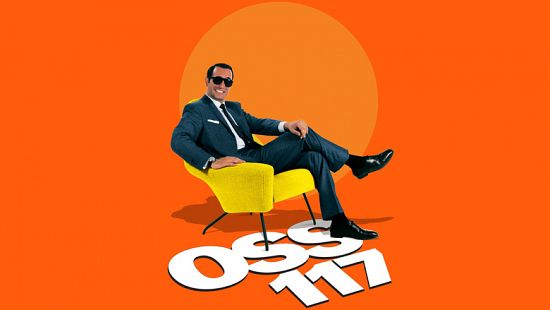
It may surprise some but the Oscar-winning juggernaut “The Artist” wasn’t the first collaboration between director Michel Hazanavicius and stars Jean Dujardin and Bérénice Bejo. In 2006 the three came together to make the spy thriller spoof “OSS 117: Cairo, Nest of Spies”. These two films couldn’t be any more different yet there is an interesting similarity. “The Artist” was a silent movie that paid tribute to an often forgotten era of moviemaking. “OSS 117” is a parody of the old 1950s and 1960s spy pictures particularly the early James Bond films. While quite different in production and intent, both have sharp eyes when it comes to the era of filmmaking they take place in.
Jean Dujardin plays OSS 117, a French secret agent who is a cross between Bond and Inspector Clouseau. He’s sent to Egypt to investigation the death and disappearance of fellow agent and friend Jack Jefferson, to stop all fighting between the Americans and Russians, and bring complete and total peace to the Middle East. To this ridiculously unreasonable task he simply replies “No problem”. In the first few scenes you get a good idea what kind of movie this is and what kind of character OSS 117 is. He has the suave and debonaire looks of Bond but the intelligence and deductive skills of Clouseau. As he was getting his assignment from his superior, I couldn’t figure out who the film was spoofing more, a nitwit secret agent or the French government for actually sending this guy. Perhaps a little of both I think.
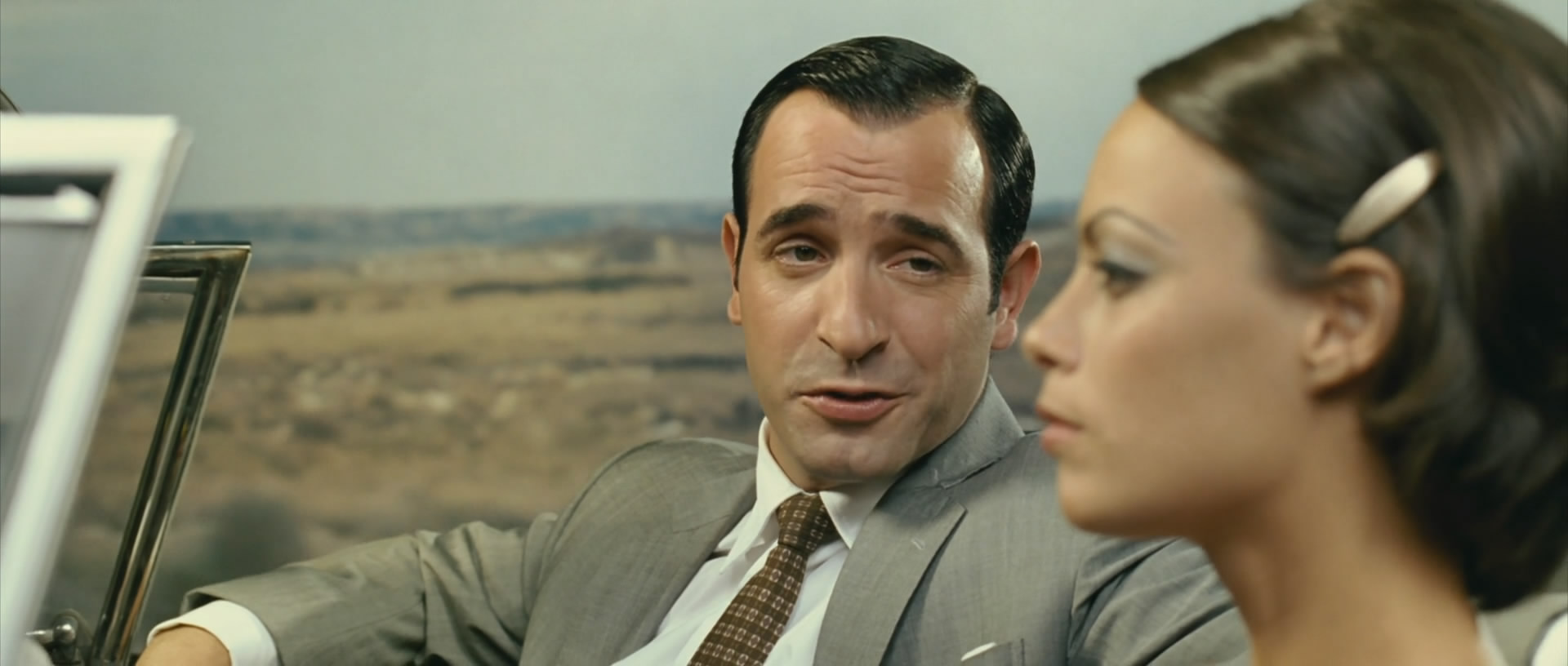
He lands in Egypt and meets with his contact, a beautiful local named Larmina (Bejo). It doesn’t take him any time to show her and us his utter stupidity as he tries to impress with his incorrect knowledge of the country and his offensive comments about it. That gets to one of my favorite things about this movie – it’s definitely politically incorrect. OSS 117 manages to unknowingly yet repeatedly put down the country, its people, and even its religion. Some of these scenes are hysterical and this is when his buffoonery stands out the most. We also quickly learn that he couldn’t recognize a clue if it were parked right behind him. There are so many leads and bits of evidence in plain sight that anyone other than our bumbling protagonist could see.
There are also several other hilarious running gags the go on throughout the film. There is his infatuation with a light switch and the effects it has in a chicken house (I’ll leave it at that), a reappearing spy who constantly calls in 117’s locations, and one gag that specifically focuses on 117’s always perfect hair. All of these worked for me. But there are scenes where the film goes a little over the top. For example, there’s an intense shootout later in the movie but not with guns and bullets. The weapons of choice? Chickens! Now I’ll be honest, I did chuckle a bit at that, but overall it felt a little too outlandish.
With the exception of the parody, this film looks and feels like it could have been made by the filmmakers of the late 1950s. It’s set in 1955 and Hazanavicius goes to great lengths to recreate that. He does so not just with the cars, clothing, and interior designs, but also by using the same style of special effects. I particular loved the driving sequences with the obvious rolling video screen behind them. There are also a couple of fight sequences that feel yanked right out of that period.
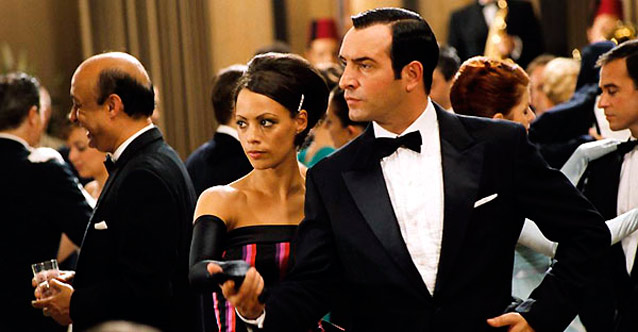
Another highlight was Dujardin. He really impressed me with his sharp sense for comedy. He’s completely believable and brings out the silly shallowness of this character who’s more interested in opportunities to wear his tuxedo and learning to smoke cigarettes. Dujardin’s wacky array of postures and facial expressions work perfectly and Bejo is a wonderful compliment. There are also several other side characters that bring in some really good laughs.
Considering the absence of good quality comedies, “OSS 117: Cairo, Nest of Spies” was a great find. I have to admit that Hazanavicius, Dujardin, and Bejo became known to me through “The Artist”. But because of the impression they made, I was immediately interested in this film just by seeing their names attached. It didn’t let me down. Now obviously this isn’t the type of comedy that everybody will respond to. But I loved the mix of subtle humor and over the top absurdity. And now I find out that Hazanavicius and Dujardin did a sequel? Sign me up!
 Keith & the Movies