REVIEW: “Silent Night, Deadly Night” (2025)

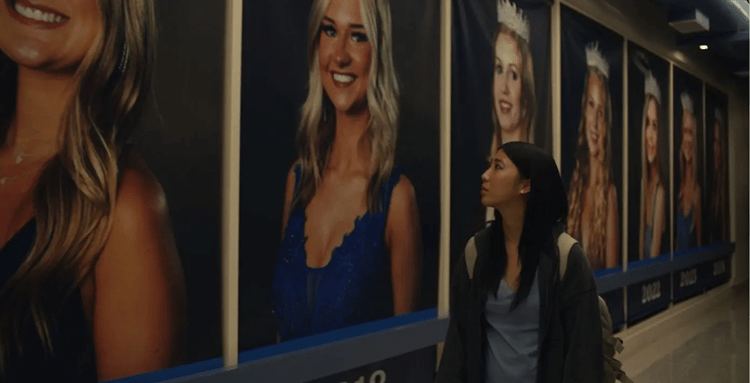
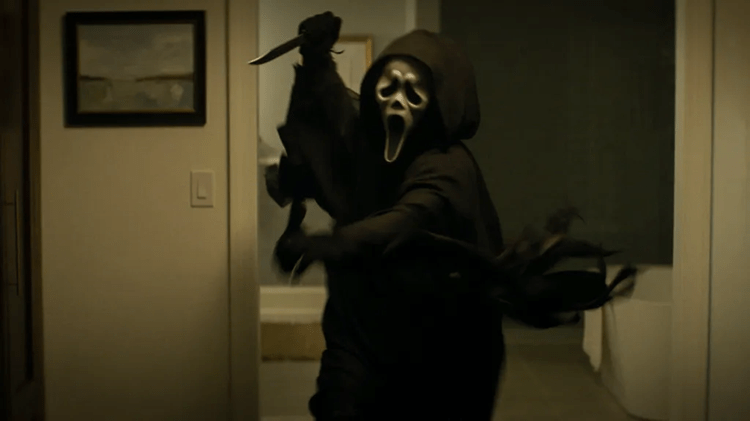
The original “Silent Night, Deadly Night” released in 1984 to significant controversy. Groups criticized the film for its graphic violence at the hands of a killer decked out in a Santa Claus suit. But over time it would gain a cult following which led to four mostly straight-to-video sequels and a loose 2012 remake. Now the psychological slasher is getting a fresh reboot just in time for the holiday season.

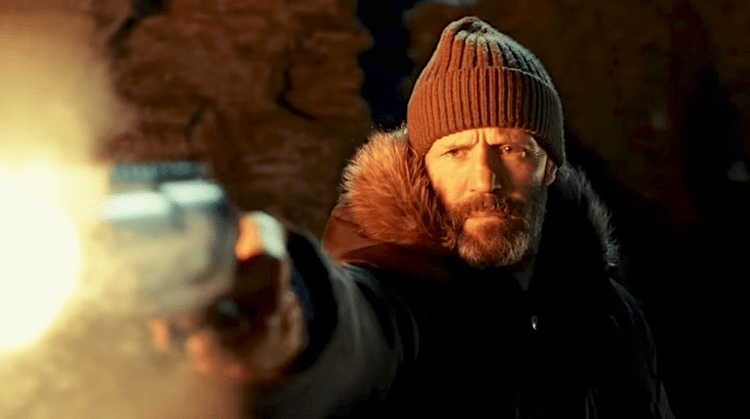
Writer-director Mike P. Nelson puts a new spin on the 1984 original film. He takes several of the same characters and completely reinvents their stories starting with his main character, Billy Chapman (Rohan Campbell). When Billy was eight-years-old he witnessed the brutal murder of his parents by a deranged man in a Santa Claus suit named Charlie (Mark Acheson). Billy’s mother manages to mortally wound Charlie. As the killer is dying, Billy comes in contact with him which has some alarming consequences.

Now years later, Billy is a drifter who moves from town to town at the behest of the voice of Charlie living in his head. Even more disturbing, the voice leads him to kill one person a day during the 24 days of Christmas as part of some grisly ritual connected to a macabre advent calendar. To make it even more twisted, Billy kills his targets while wearing a blood-stained Santa Claus suit. “Naughty boys get punished”, the creepy voice tells him.

Image Courtesy of Cineverse

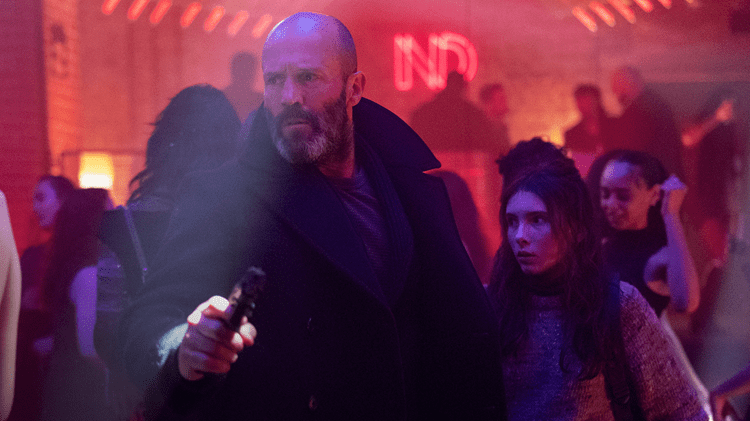
The movie takes a surprise turn when Billy arrives in the small town of Hackett. While in a diner, an attractive local named Pamela Sims (a very good Ruby Modine) catches his attention. He follows her to a Christmas trinket shop owned by her father (David Lawrence Brown). By this point, Nelson has tuned our minds to expect a blood bath. Instead, Billy gets a job at the shop and quickly falls for Pamela. But as their romance blooms, the voice of Charlie reminds Billy of his serial-killing duties.

It would be criminal to spoil where the story goes. Let’s just say Nelson takes some mammoth swings in his efforts to weave romance and horror into something cohesive and entertaining. Believe it or not he pulls it off, not perfectly, but to a degree you may not be expecting. We get several meaningful reveals and a couple of crazy turns that completely reshape everything we thought we knew. The romance works because Nelson invests time in his two characters. The horror works because he doesn’t shortchange slasher fans when it comes to gory kills.

While “Silent Night, Deadly Night” is unexpectedly entertaining, I don’t want to oversell it. It’s not likely to become a perennial holiday favorite. The story takes a few shortcuts and some characters are underdeveloped. But it’s not throwaway rubbish either. Nelson isn’t just rehashing some tired formula. He offers his own unique take on the story, tossing in plenty of gruesome kills, a warm romance, some pitch-black humor, and a strong sense of self-awareness.

VERDICT – 3 STARS

REVIEW: “Song Sung Blue” (2025)

I remember the first time I heard the catchy hook of a Neil Diamond song. It was through the 8-track tape player in my parents’s 1974 Chevrolet Malibu Classic. I was just a kid, but even I was drawn to Diamond’s distinctive baritone. While Craig Brewer’s new film “Song Sung Blue” isn’t specifically about Neil Diamond, his music and its impact can be felt from the opening frames to the closing credits.

With a title taken from Diamond’s #1 pop hit from 1972, “Song Sung Blue” is based on the Greg Kohs documentary of the same name. It tells the true story of Mike and Claire Sardina, a singing duo who performed under the names Lightning & Thunder. They called their act a “Neil Diamond Experience”. And while Mike had the look and the voice, Lightning & Thunder didn’t set out to imitate Neil Diamond. Instead, they celebrated his songs by bringing their own unique energy and emotion to their performances.

Mike (played with effervescent charm by Hugh Jackman) is a recovering alcoholic who we first meet as he’s celebrating twenty years of sobriety with his fellow AA members. Mike was a tunnel rat in Vietnam, and after returning to the States he started drinking to battle the trauma that followed him home. But he got help and found refuge in entertaining. He began singing at birthday parties, restaurants, and county fairs. And it was at a fair in Milwaukee where he met Claire Stingl (an awards-worthy Kate Hudson).

Image Courtesy of Focus Features

Claire is a single mother raising two kids, her angsty teen daughter Rachel (Ella Anderson) and her spirited younger son Dayna (Hudson Hensley). She’s a part-time hairdresser who also sings Patsy Cline tributes on the side. And that’s what initially draws Mike. The two immediately hit it off romantically and creatively, and the movie gives equal time to both. Brewer pays just as much attention to Mike and Kate as he does to Lightning & Thunder. It turns out to be a great balance of humanity and showmanship.

The movie’s first half focuses on Mike and Claire bringing together their two families while sorting out what would become their Neil Diamond act. As the two fall in love and eventually marry, Dayna latches onto Mike while Rachel finds an unexpected friend and Mike’s daughter, Angelina (King Princess). At the same time, Lightning & Thunder starts to take form. The couple get their band together, and with the help of Mike’s dentist / manager Dr. Watson (Fisher Stevens) and wannabe booker Tom D’Amato (Jim Belushi), they begin performing at small venues across Milwaukee.

But in the film’s second half, Brewer takes a sharp turn after tragedy strikes. The tone gets darker and the story is more serious after a freak accident leaves Claire indefinitely sidelined, leading to bouts with severe depression. Mike tries to keep their act going while she recovers, performing three nights a week at a local Thai restaurant while hiding his own health issues. But without Claire by his side, entertaining no longer has its allure. And keeping his family together quickly takes precedent over chasing the dream they were so close to catching.

Image Courtesy of Focus Features

For those like me who are unfamiliar with this remarkable true story, the sudden shift hits like a ton of bricks. Brewer keeps things anchored and doesn’t take any emotional shortcuts. Jackman is perfectly cast, effortlessly gushing charm and creative energy while turning it down when the movie needs him to. Equally great (if not better) is Hudson who is thoroughly convincing whether she’s glowing on stage or retreating into Claire’s despondency.

As for the music, Brewer hits us with one soaring song after another, all delivered through impassioned, full-bodied performances from Jackman and Hudson. Of course we get Neil Diamond’s eternal “Sweet Caroline”, along with other sing-along hits like “Cracklin’ Rose” and “Forever in Blue Jeans”. And there’s the energizing “Brother Love’s Traveling Salvation Show”. But Brewer also highlights the diversity of Diamond’s catalogue by including such tunes as “Play Me”, “Soolaimon”, and “Holly Holy”.

“Song Sung Blue” tells a stranger-than-fiction true story that’s sure to resonate with audiences of all kinds. Craig Brewer has crafted a rousing crowd-pleaser built on the timeless music of Neil Diamond and the spectacular chemistry between Hugh Jackman and Kate Hudson. Together they’ve made a film about the indomitable human spirit, expressed not only in making music, but through love, faithfulness, and resilience in the face of adversity. You’ll leave with your heart full and a song on your lips.

VERDICT – 4 STARS

REVIEW: “Savage Hunt” (2025)

Dutch action filmmaker Roel Reiné directs, composes, and shoots the new survival thriller “Savage Hunt”. The film falls into the ‘Man versus Beast‘ category, centering itself around the bloody rampage of a giant bear in a sleepy Montana community. It’s a fairly straightforward genre movie that attempts to add several human layers to its story. But staying involved becomes difficult due to the film’s clear budget constraints and a paper-thin script that glosses over everything that could have made the story more interesting.

Screenwriters Chad Law and Christopher Jolley begin their story with two eco-activists making their way through the wilderness after scoping out a newly cleared construction site sitting in the middle of the pristine forest. The site belongs to a multinational conglomerate with plans of building a massive resort and spa. But as the activists are planning their sabotage, they are attacked and torn to shreds by a ravenous grizzly bear.

Image Courtesy of Shout! Studios

After discovering one of the victims and recognizing a bear attack, Sheriff Riggins (Colin Mace) and a local park ranger Kate Deeks (Fotina Papatheodorou) order the site to be shut down until they can hunt down the grizzly. Initially the site manager, Jace (Anthony Barclay) isn’t happy with their order. But he’s a bit preoccupied with the arrival of his wife Lacey (Noush Skaugen) and their daughter Alex (Priya Blackburn).

In the film’s most underdeveloped side stories, we learn Jace and Lacey are separated and she has brought divorce papers to be signed. There’s also some kind of disconnect between Jace and Alex which never fully forms into something relatable. In fact nothing about their family drama feels authentic. It’s not helped by the cold and stiff performances. But it’s mostly the script which only glazes over the themes it introduces rather than give them meaningful attention.

To add even more drama, more attacks lead Kate to seek help from Joe Regan (James Oliver Wheatley), a tormented local hunter and former ranger who she shares a traumatic history with Kate. After declining due to vague reasons that eventually gets explained (sorta), Joe reluctantly agrees and sets out to track the bear. Of course he ultimately comes face-to-face with the beast. But in the process, Joe is forced to reckon with his own haunting ghosts from the past.

Image Courtesy of Shout! Studios

Again, none of the human drama has much of an impact. And it’s hard to root for anyone when they’re constantly making bone-headed decisions, such as always finding ways to put themselves in the most dangerous positions. But at least we have the human vs. bear action, right? Well, not exactly. Much of the movie consists of people slow-walking through the scenic forest and what looks like stock footage of a bear running around in the wild. The lone exception is one weird scene of the bear randomly running down the Main Street of a small town.

Of course we’re treated to several bear kills which unfortunately range from serviceable to awkwardly bad. And other issues spring up along the way such as the shaky editing and the abrupt ending that seems strange for a movie already struggling to fill its 85 minutes. And it doesn’t help that “Savage Hunt” takes itself so seriously. It’s a mostly dour and joyless endeavor that would have been much better off embracing its absurdity. Instead we end up with a glacially paced, frustratingly hollow, and ultimately forgettable snooze.

VERDICT – 1.5 STARS

REVIEW: “Sentimental Value” (2025)

“Sentimental Value” is the latest film from director Joachim Trier and his follow-up to 2022’s Oscar-nominated “The Worse Person in the World”. It sees him rejoining his regular writing partner Eskil Vogt to tell a resonant and layered story that uses the behind-the-scenes drama of a film shoot to explore the idea of reconciliation through art. It’s tricky ground to cover, but Trier succeeds thanks to his keen focus and tight grip on this mature and thoughtful material.

Trier also reteams with the extraordinary actress Renate Reinsve for their third collaboration. She plays a stage and television actress named Nora Borg. She and her younger sister Agnes (Inga Ibsdotter Lilleaas) have their world shaken when their estranged father Gustav (Stellan Skarsgård) re-enters their lives. Gustav left when the girls were still young and his reappearance brings back waves of painful feelings, especially for Nora.

Gustav has had a successful filmmaking career, but it has come at the expense of his relationships with his daughters. Yet despite his success, Gustav hasn’t released a feature film in fifteen years. But he has written a new script – one that is very close to his heart. And he uses it in as a means of reaching out to his daughters in the only way he competently knows how – through the very artistic language that pulled him away in the beginning.

Image Courtesy of NEON

In one of the film’s (and one of the year’s) very best scenes, Gustav invites Nora to a diner where they can finally have what he calls a “proper talk”. The father-daughter tension is immediate and it comes through in every word penned by Trier and Vogt. It also pours from the profoundly genuine performances of Reinsve and Skarsgård, who shrewdly convey the emotional complexities within their characters. The exchanges that follow are riveting.

Gustav tells Nora he has written what he thinks is the best script of his career. He presents her with a copy to read saying he wants her to play the lead. Galled by his nerve, a stunned Nora angrily rejects his offer. “I wrote it for you,” he declares as if expecting her to immediately reconsider. “You’re the only one who can play it.” As Nora storms out, we are naturally sympathetic to her side. But Trier doesn’t paint Gustav as a villain. Instead he leaves us with our own questions about the character. Is Gustav’s script just a tool to get back in his daughters’ good graces? Is he using Nora to get extra funding for his film? Or is there something deeper and more personal?

“Sentimental Value” is a movie about daddies and daughters. But it’s also a movie about sisters. Nora and Agnes have a thoughtfully drawn relationship that grew stronger with every family trial they endured together. Agnes seems to have the more stable life. She’s happily married and has an adorable young son. Nora’s prickly veneer hides a vulnerability that weighs on her soul. She struggles with anxiety and loneliness, trying to satisfy both with ill-advised choices that hurt more than help. But the sisters share a special connection that Trier observes through various lenses.

Image Courtesy of NEON

Another crucial character in the film happens to be the family’s ancestral home which houses several generations of memories and trauma. Gustav still owns the house – a fact his daughters learned after their mother died. Gustav was raised there, and the secrets within its walls inform why he’s reluctant to part with it. He’s still wrestling with those secrets which date back to his own childhood, and his new film is his way of reckoning with it.

The richly observed family dynamics only get more compelling with each dramatic turn. One of the biggest comes when Gustav decides to shoot his new film in the family’s house. Even more, he brings in Rachel Kemp (Elle Fanning), a popular American actress, to play the lead role that Nora turned down. It’s a compelling turn of events that allows Trier to take Nora and Gustav in revealing new directions which poignantly help to define their relationship.

“Sentimental Value” sees Joachim Trier cementing himself as one of the must-see filmmakers of our time. Some may argue he had already achieved that status. But his latest film is his best to date. In it we see Trier broadening his focus yet maintaining the intimacy that has made his other films so incisive and nuanced. His considerations of fractured relationships, past family trauma, and art as a means of healing have significant weight and are delivered with such an assured sense of purpose that we can’t help but be utterly captivated by the drama that unfolds on screen.

VERDICT – 4 STARS

REVIEW: “The Secret Agent” (2025)

“The Secret Agent” opens with a sequence that highlights how beautiful filming in PanaVision can be. In sun-soaked rural Brazil, Marcela (Wagner Moura) pulls his canary yellow Volkswagen Beetle into a rundown gas station to fill up. After an encounter with a crooked local policeman, Marcela hits the road, eventually making his way to the city of Recife which is where the majority of the movie unfolds.

This opening sequence is an impressive introduction to the stunning look of this fascinating thriller. Brazilian director Kleber Mendonça Filho and cinematographer Evgenia Alexandrova shot “The Secret Agent” with PanaVision anamorphic lenses and vintage gear which not only captures the wider field of view, but it recreates the distinct visual style of the 1970s. And it’s not just some homage. The camera transports and immerses us into the story’s vibrant setting.

You could say “The Secret Agent” isn’t an overtly in-your-face political movie, but the politics of 1977 Brazil runs throughout this captivating period thriller. It’s described as “a time of great mischief” in the opening titles. But that seems gentile compared to the true Brazil of the time. The country was in the middle of a two-decade-long military dictatorship which saw the systematic persecution and silencing of those who opposed the authoritarian regime.

Image Courtesy of NEON

Once in Recife, Marcela seeks out Dona Sebastiana (a fabulous Tânia Maria) who secretly owns an apartment building that houses political refugees in hiding. We learn Marcela is one such refugee. His real name is Armando and he once was an engineering teacher and researcher. He was far from being a major threat to the regime’s stranglehold on power – a revealing point that Filho uses to emphasize the breadth of the era’s persecution.

We learn through a lengthy flashback segment that Armando was heading a university project on the verge of being shut down by a corrupt federal official named Ghirotti (Luciano Chirolli). Seeing the lucrative potential of Armando’s lithium battery studies, Ghirotti moves to shut down their department before selling their research to a private company that he owns stock in. But Armando and his wife Fatima (Alice Carvalho) resist, making them an enemy of Ghirotti.

Back in 1977, we learn that Armando’s wife died a short time ago and their son Fernando (Enzo Nunes) lives with her parents. Armando tells Fernando that his mother died from pneumonia, but we can’t help but be suspicious, especially after their run-in with Ghirotti. Speaking of Ghirotti, he gets wind that Armando is somewhere in the Recife. So he hires two hitmen from São Paulo, an ex-military thug Augusto (Roney Villela) and his step-son Bobbi (Gabriel Leone), to track down and assassinate Armando.

Image Courtesy of NEON

As you can tell, “The Secret Agent” has a lot going on and I’ve only scratched the surface. There are other key players with significant parts to play. We get some great scenes with Armando’s concerned father-in-law Alexandre (Carlos Francisco) who is a projectionist at the local cinema. The Chief of Police, Euclides Cavalcanti (Roberio Diogenes), is a corrupt lackey for the regime, doing their dirty work with the help of his two obedient sons. Even more intriguing is Elza (Maria Fernanda Cândido), the leader of a resistance network working to get Armando out of the city.

Wrangling together this many moving parts is no easy task. Yet watching Filho succeed is nothing short of fascinating. He works with an unhurried assurance, following his own set of rules at every narrative turn. At no point does he or his movie seem bound by formula or expectation. It brings a certain freedom to his filmmaking and storytelling. Yet that very freedom doesn’t always work in his film’s favor. Take his choice include a scene of a sentient severed leg attacking locals having open-air sex in a public park. In fairness, it’s based on an absurd newspaper cover-up story and it’s meant to symbolize the regime’s oppression of minority groups. But it’s such a preposterous and tonally distracting detour.

With this much story it’s not surprising that some characters and their storylines get shortchanged. Yet there is so much in Filho’s film to soak in. His richly detailed compositions transport us back to 1970s Brazil, vividly capturing every detail and never wasting an inch of the frame. From the sweltering heat to the chaos of the Carnival celebration, Filho immerses us into this turbulent period. Meanwhile Moura shines in a role that gets increasingly more complex as the story progresses. He is a terrific centerpiece to terrific movie.

VERDICT – 4 STARS

REVIEW: “Sisu: Road to Revenge” (2025)

One of 2022’s biggest surprises was the historical action-fueled revenge thriller “Sisu”. The word “sisu” is Finnish and it has no single one-to-one English translation. It’s a word used by Finns that represents their national character. It conveys courage, grit, tenacity, and stoicism, especially in the face adversity. The movie “Sisu” embodied all of that and packaged it in a bonkers and bloody genre blast.

Now equally surprising, we have a sequel, “Sisu: Road to Revenge”. It’s pure and proud genre entertainment that’s more bonkers, much bloodier, and with a noticeable bigger budget. Writer-director Jalmari Helander is back, serving up a full-course meal for action lover’s. And Jorma Tommila returns as the film’s fury-filled silent protagonist, dishing out heaping helpings of justice on a variety of well-deserving Nazi and corrupt Soviet scumbags.

Image Courtesy of Sony Pictures

The story takes place in 1946. The Nazis have been defeated and the Soviets are taking advantage of the regional instability. Finland had been forced to cede a large portion of its land to Russia. Sitting within the now Soviet-owned territory is the old homeplace of Aatami Korpi (Tommila). He’s a former Finnish Commando still grieving the brutal murders of his wife and two sons by Nazi soldiers while he was away at war. Aatami is a quiet, solitary man. But as we saw in the first film, he’s not someone you want to upset.

Together with his beloved Bedlington Terrier, Aatami crosses the border and returns to his old home. The cabin that remains is all that’s left of his past life. So he dismantles it and loads the wood beams onto his truck, determined to transport it back to Finland and rebuild it in his family’s honor. But as he works, the Soviets get wind of Aatami’s presence. Knowing his violent reputation, a KGB officer (Richard Brake) travels to Siberia where he approaches imprisoned Nazi war criminal Igor Draganov (Stephen Lang).

We learn Draganov is the man who murdered Aatami’s family. He ruthlessly and proudly boasts of cutting Aatami’s wife and children to pieces with a shovel in order to save bullets. The KGB offer Draganov a deal – track down and kill the legend he created and he can go home a rich man. So as Aatami and his pup make their way back to the border, they’re suddenly pursued by the maniacal Draganov who throws everything at them including an APC full of troops, armored bikers, fighter planes, and more.

“Road to Revenge” opens and closes with two surprisingly moving sequences. Everything in between is quite literally non-stop action. Helander crafts one wild set piece after another, each a little bigger and a little bloodier than the one than came before it. By the end the movie reaches a point that some could argue is simply too absurd. But it works gloriously because Helander never takes the action too seriously. In fact, there are injections of black humor all throughout which ensures we never lose sight of what the movie is at its core.

Image Courtesy of Sony Pictures

It’s true, there’s not a much of a story and the characters are who they are from beginning to end. But that’s okay in a movie so assured of its identity. “Road to Revenge” prides itself in being a no-holds-barred action romp. Helander pulls no punches in letting the bullets spray, the blood splatter, and the limbs fly. As for his key players, Lang is no stranger to playing snarling villains and Blake is always fun on screen.

But it’s Tommila who sells it all the best and without uttering a single word. His steely intensity, the fury burning behind his eyes, and his fearless physicality infuse the action with grit and purpose. His straight-faced handling of humor makes the funny scenes funnier. And the amount of raw heartfelt emotion he brings to the story’s bookends begins and ends things on just the right notes. Impressively he manages it all in an openly over-the-top genre movie that never pretends to be something it isn’t.

VERDICT – 4 STARS