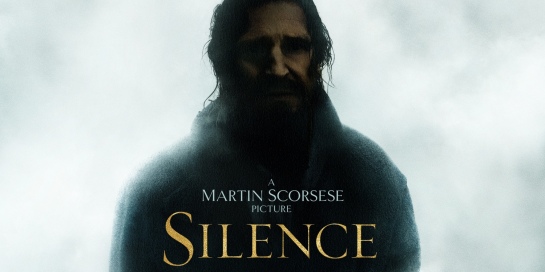
REVIEW: “Silence”

silence-poster

For Martin Scorsese bringing “Silence” to the screen has been a fascinating journey. It started as an inspiration in 1989. Over the next 25 years it grew and evolved into something deeply personal for the filmmaker. In several interviews Scorsese has intimated that the film’s conceptual evolution mirrored his very own spiritual maturation. This intimate connection seeps from every pore of “Silence” making it a profoundly affecting labor of love.

It was in 1989 that Scorsese first read “Silence”, Shūsaku Endō’s historical fiction novel published in 1966. Scorsese immediately knew he wanted to make a film adaptation but he didn’t know how. Early attempts lead to an unfinished script in 1991. Plans to begin production in 1997 were postponed. More delays came in 2004 and 2011. But these postponements weren’t without purpose. During that time Scorsese gained a better sense of what “Silence” was saying. In his words he finally figured out “the heart of the book”.
silence3

Endō’s novel is a deep exploration of the depths of faith. It drills below the surface-level perceptions of faith, down to its most bare and intimate state. Scorsese’s cinematic study of this central spiritual theme is absorbing but also challenging. The story he and co-writer Jay Cocks tells is powerful and rooted in historical significance. At the same time the film is a bruising meditation that is calling its audience to self-reflection.

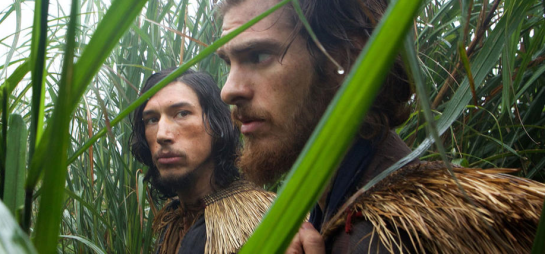
To get us to that point we follow two 17th century Portuguese Jesuit priests, Father Sebastião Rodrigues (James Garfield) and Father Francisco Garupe (Adam Driver). The two receive word that their mentor Father Ferreira (Liam Neeson) has vanished after renouncing his faith amid intense persecution in the mission fields of Japan. Unconvinced of Ferreira’s apostasy, the two priests set out to find their mentor’s whereabouts despite the cloud of danger awaiting them.

The Japan of the 17th century was controlled by the Tokugawa shogunate. Christianity was deemed a threat and subsequently outlawed. Anyone breaking these laws faced torture and/or execution. It’s here that Father Rodrigues and Father Garupe sneak ashore with the aid of a boozing local vagrant named Kichijiro (Yôsuke Kubozuka). There the “padres” connect with a small village of Christians who secretly practice their faith in the dark of night.

silence2

It’s worth noting Scorsese’s use of his camera to portray the arduous, uncompromising world these two priests enter into. It feels just as foreign to us as it does them. Even the sound design contributes to the sense of uncertainty and isolation. The heightened sounds of nature routinely take the place of a your standard musical score and sometimes the silence itself speaks volumes.

Rodrigues and Garupe establish a semblance of ministerial and sacramental normalcy for the village believers and as a result see their own faith strengthened. But the region’s ruling shogunate led by the freakishly blithe and casually brutal Inquisitor Inoue (Issey Ogata) is intent on rooting out and purging the land of Christianity. His dogged persistence paves the way to the film’s central conflict – something much deeper than a faithful Christian versus his relentless persecutor.

The further you get into “Silence” the better you understand the challenge Scorsese lays before us. The obvious storyline is compelling, but to truly understand the heart of the story requires a willingness to internalize the theme of faith and reckon with what is revealed to you. Yes, it’s a deeply spiritual film but not a preachy one. In fact it could be said it asks more questions than it answers. Still Scorsese ponders these ideas with the sincerest curiosity and unflinching patience – the essence of faith, the pain of betrayal, our human frailty. And what do we make of God’s silence in the midst of tremendous suffering?
silence1

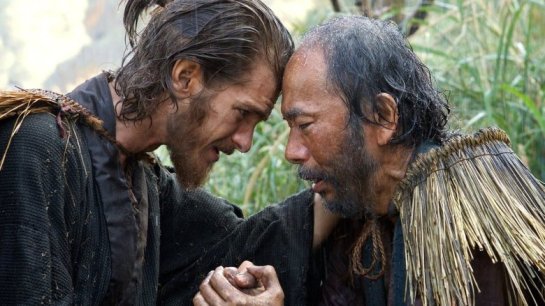
As you would expect the performances are sublime. Neeson’s portrait of anguish and conflict helps make his handful of scenes some of the film’s finest. Driver is as tense as he is gaunt which is strikingly in-tune with his type of character. That gets to Garfield, a guy who has steadily gotten better with each role he has taken. In “Silence” he literally transforms before our eyes both in character and performance. He plays it a bit safe early on but quickly tosses aside all restraints and commits every ounce of himself. Portraying spiritual struggle is tough and Garfield impressively carries the bulk of that load.

It has taken me two viewings and a lot of wrestling to truly figure out how I feel about this film and what it means to me. It’s that type of movie – one that can’t be appreciated with a mere surface reading. Despite its incredible artistry and beautifully sculpted scenes (cinematographer Rodrigo Prieto deserves an Oscar nomination), “Silence” seeks to be something more – a spiritual epic that not only reflects where Scorsese is in his personal journey but challenges us in ours.

“Silence” is a film that may not sit well with Scorsese die-hards looking for his normal cinematic swagger and it certainly doesn’t aim to be a 2 hour and 40 minute crowd-pleaser. But after a second look it clicked for me in every meaningful way. I still have questions the movie stirred up within me and I love the its unwillingness to give me every answer. In fact Scorsese isn’t saying he has every answer. But he is saying the questions are worth asking, and the answers you get just might change your life.

VERDICT – 5 STARS

5STAR K&M

5-starss

REVIEW: “Southside with You”

southsideposter

There are a handful of moments in “Southside with You” where I saw glimpses of a different movie – a better movie hidden just under the surface. They are brief moments where we get small tastes of character depth, moments where the actors feel more natural and less scripted, moments where the film hints at developing its own unique identity. Unfortunately these are only ‘moments’ and they tease us with what this film could have been.

First time director Richard Tanne’s starry-eyed treatment of President Barack and Michelle Obama’s first date is a strange bit of bio-fiction but full of meaty potential. Tanne, who also wrote the screenplay, uses the familiar true framework of their first date and fills it in with inventions of his own. The problem is a big chunk of his fiction does more to hurt the film than to help.

southside2-2

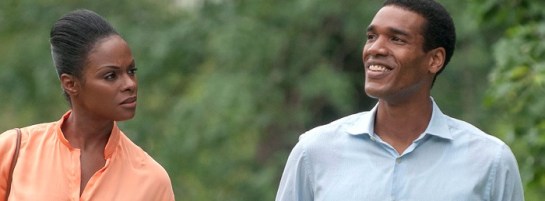
The movie begins on a warm summer Chicago day in 1989. Michelle Robinson (Tika Sumpter) is a Princeton grad and now lawyer at Chicago’s Sidley Austin law firm. She is assigned to mentor a Harvard man and summer associate named, you guessed it, Barack Obama (Parker Sawyers). Michelle is portrayed as ambitious and focused. Barack is more laid back and charismatic. Michelle is adamant about keeping their relationship professional but agrees to go out on a ‘not-a-date’ outing with the future leader of the free world.

Barack picks Michelle up in his beat-up yellow Datsun and the two spend the day in Chicago. They hit a museum for an art exhibit. They take a stroll and have lunch in a park. They attend a community event where Barack served as organizer before heading to Harvard. They hit a bar, watch a movie, and end it with ice cream and a kiss. I mention all of that because it doesn’t really spoil anything. Tanne wants this to be about what they say instead of where they go. He tries to emphasize the conversations and pulls heavily from Richard Linklater’s “Before” trilogy. Perhaps a bit too much.

The walk-and-talk formula works so well for Linklater because the conversations feel incredibly organic. Several things factor into that. First he has more seasoned actors. But the big difference is Hawke and Delpy contribute to those scripts. Their input helps make those exchanges their own. Many of Tanne’s conversations feels heavily scripted. Despite the best efforts of Sumpter and Sawyers, their dialogue is often dry and stilted. The actors are better than the material and there are moments where you see them rising above it and falling more comfortably into their characters. Sadly, the film doesn’t allow them to do it consistently.

southside1-1

Back to Tanne’s inventions, one instance where it works is in the fictitious bar scene. Tanne slows things down and loosens his grip on his actors. It allows for the most open and authentic scene in the entire film. I loved it. But then we get moments such as the community event which probably happened some time later in their relationship but here is used as a pretty significant and obvious plot device. There is also an encounter outside of the movie theater that actually happened but Tanne significantly alters. The result is a noticeably clumsy and contrived scene that simply doesn’t work.

Sadly too many things don’t work. Perhaps I’m looking at it all wrong. Maybe it should only be viewed as a lightweight romantic date movie, but I’m not convinced it works through that lens either. I tried to imagine if the story or romance would hold an ounce of interest if the two involved weren’t the future president and first lady of the United States. Without their connection the answer was a resounding “No”. And even with their connection the movie doesn’t fare much better.

VERDICT – 2 STARS

2-stars

REVIEW: “Spy”

spy-poster

I’m curious as to whether there is any middle ground with Melissa McCarthy. She’s a comic with a very in-your-face brand who does variations of the same shtick in practically every film she makes. Now if you enjoy that you’re likely to appreciate every one of her films to varying degrees. If you don’t then you’re going to struggle with every movie she makes.

Her action/comedy “Spy” is no different. It is full-blown McCarthy bouncing back and forth between self-deprecating, ‘fish out of water’ humor to loud, obnoxious, profanity-riddled “comedy”. Fans are sure to find it entertaining. I don’t fit that description which explains why I found it tedious, juvenile, and at times unbearable.

spy3

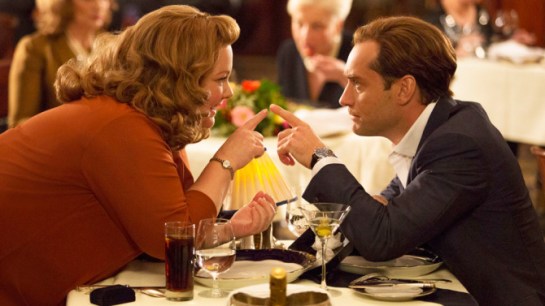
McCarthy plays her usual character – a sympathetic oddball eccentric. This time she plays a CIA Operator named Susan Cooper whose job is to sit behind a desk and relay information to debonaire field agent Bradley Fine (Jude Law). Susan aspires to be a field agent herself but lacks self-confidence. Plus she likes working with Bradley mainly due to a small but obvious crush. But he (like nearly everyone else in the film) doesn’t take her seriously which does nothing to boost her spirit.

Bradley is sent on a mission to retrieve a suitcase nuke from terrorists but things go terribly wrong. Susan is allowed in the field by her mean-spirited and reluctant boss Elaine (Allison Janney). Her job is strictly to observe, but a series of mishaps thrusts the desk-bound operator deeper into the wacky, violent spy world.

spy2

Director Paul Feig had a hit in 2011 with “Bridesmaids” but followed it with the appallingly bad “The Heat”. And this year he is credited with directing the terribly bland “Ghostbusters” reboot. “Spy” doesn’t do anything to even out his track record. There is little new here. We get the standard McCarthy weight and appearance gags. We get a vomit gag. We get body part gags. And so on and so on.

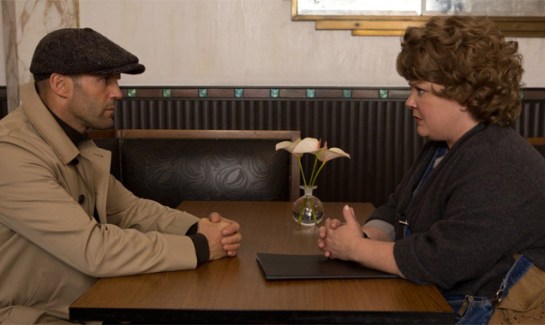
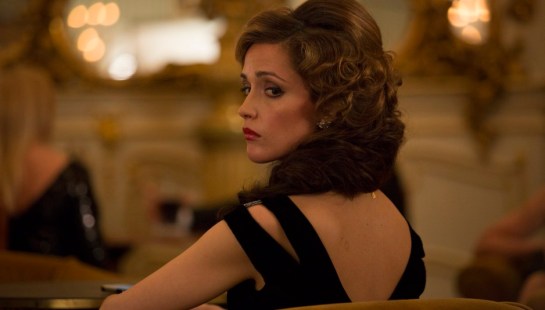
The movie does introduce a number of quirky side characters most notably Jason Statham as a belligerent and oafish field agent and Rose Byrne as the evil villainess. Both fall into their parts well. Unfortunately both characters are undercut by Feig’s puerile writing. His insistence on forcing profanity in their every sentence makes them sound ridiculous. Perhaps the one reasonably authentic character is found in Susan’s loyal friend Nancy (Miranda Hart).

SPY-04418.CR2

The story itself tries to be a globe-trotting spy spoof but its antics get tiring. It attempts to change things up midway through by giving McCarthy’s character a profound transformation. The problem is it doesn’t feel genuine or earned. Even worse I found it made Susan shallower and far more annoying.

Yes I know people loved “Spy”. I know it made a ton of money at the box office. I know it was critically praised and sits at 94% on Rotten Tomatoes. So be it. I simply don’t see the attraction. It is another in a long line of modern comedies that cling to the same methods. Much like McCarthy, if you like that type of humor you’ll probably like “Spy”. If you want something fresh, intelligent, and outside of the modern norm good luck finding it here.

VERDICT – 1.5 STARS

1.5 stars

REVIEW: “Suicide Squad”

SSQUADposter

Poor, poor DC Entertainment. Since Christopher Nolan’s departure from their cinematic playground DC has had a rough go of it. 2013’s “Man of Steel” faced more than its share of scrutiny. This year’s “Batman vs Superman” was the fashionable punching bag for both critics and many viewers alike even prior to its release. Now we have “Suicide Squad”, a DC attempt at being subversive and unique while also bowing to the overblown criticisms regarding the serious tones employed by the first two films.

Here’s the problem, critics have greeted “Suicide Squad” with the harshest reception yet (and that’s saying something). To give you a taste, “trash”, “toxic”, “unpleasant”, “disastrous”, “sadistic”, and “putrid” are just a handful of the colorful terms used by critics to describe David Ayer’s supervillain antihero ensemble piece.

SSQUAD1

I would love to dismiss all of the negativity as smug nonsense or as some form of bias against the DCEU. Unfortunately the film itself doesn’t allow me to do that. “Suicide Squad” may not deserve to be called “putrid” or “toxic”, but it should be called out for its host of faults, annoyances, and its flat-out shoddy execution in nearly every department.

I’m a generally positive guy and I tend to give a movie more credit for its fun factor and unique vision. I’m not sure you could call “Suicide Squad” a fun movie. It certainly wants to be colorful, funny, and cool. At times it seems like Ayers has convinced himself his film is all of those things. But a bright, fluorescent title screen is about as colorful as it gets, and you can count the mildly amusing moments on one hand. Also someone should tell Ayers that it takes more than a crazy amount of classic rock, a smattering of tattoos, and Will Smith’s attitude to be considered “cool”.

Ssquad2

As for a unique vision, nope. Aside from its ‘bad guys doing good’ angle (something that isn’t completely original itself), “Suicide Squad” doesn’t offer a single unique idea. The story is so poorly constructed and presented through such base level storytelling. Devious government operative Amanda Waller (played with stone-faced disinterest by Viola Davis) wants to create a covert strike team made up of metahuman criminals. There just happens to be a bunch at a high-security prison installation. A weird, out-of-the-blue threat arrives. It’s time for her team of misfits to get to work. It’s as simple as that.

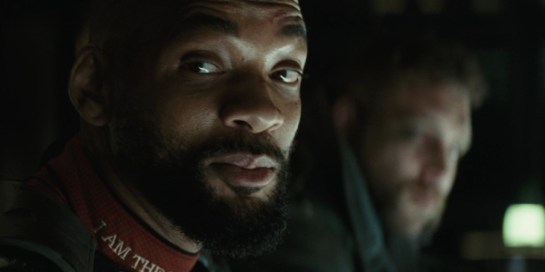
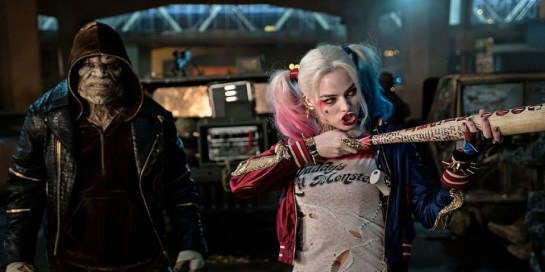
To be fair, Ayers does try to add a hint of depth to the team. His bigger stars get their own weird backstory snapshot at the beginning of the film. Will Smith plays Deadshot, a lethal assassin who hits everything he shoots at. Margot Robbie play’s Harley Quinn, an ex-psychiatrist who has a freakishly dysfunctional relationship with Jared Leto’s Joker (more on him in a second). Everyone else gets their own flashback shoehorned in at random junctures, but they’re more or less disposable. Killer Croc, Katana, Boomerang, whatever.

ssquad3

And then there is Joker, the character most people were talking about prior to release. The marketing would have you believe he is a significant player in the story but that’s not the case. He simply pops up in a few scenes mostly connected to Harley and then in a couple that feel completely disconnected. As for the Joker himself, I do give Leto credit for trying to put a unique spin on the character. But I have to say I hate the grillz, the tattoos, and the jewelry. He reminded me of James Franco from “Springbreakers”. Beyond that Leto isn’t given much space to present his version. We do get small glimpses of DC’s greatest villain, but not enough. This simply isn’t a Joker I care about watching.

While there are a few energetic moments and a fun performance from Robbie, “Suicide Squad” mostly maintains a generic look and feel throughout. A bland story, uninteresting chemistries, a boring and ridiculously lame central threat. But what stands out the most is how poorly this film is made. Bad pacing, horribly chopped-up story structure, and dull forgettable action. Every hint of what the film could have been is buried under a ton of poor execution. It clearly does a lot of box-checking for its studio, but in doing so it forgets to do the most important thing – make a good movie.

VERDICT – 1.5 STARS

1.5 stars

REVIEW: “Star Trek Beyond”

trekposter

I’ve come to terms with the fact that this new series simply isn’t the Star Trek of old. Despite their numerous callbacks it was fairly evident when the first film landed in 2009. 2013’s “Into Darkness” made it even more obvious. The third movie “Star Trek Beyond” more or less casts aside any doubt. This isn’t a series targeting the old school Trekkies. This series was clearly rebooted with the summer action movie crowd in mind. But that doesn’t mean Trekkies can’t have fun with it too.

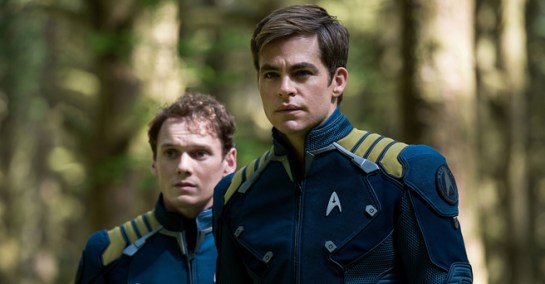
A lot has happened since the release of the last movie. The sad passing of Star Trek icon Leonard Nimoy and the tragic death of cast member Anton Yelchin adds a sobering layer to this picture. Yelchin had finished shooting at the time of his death. In “Beyond” he is given a good hunk of screen time and has fun with it. Nimoy gets a fitting tribute that isn’t just shoehorned in. It’s smartly written while offering due reverence.

Several changes were made for “Beyond”. Justin Lin of “Fast and Furious” fame takes over the directing duties from J.J. Abrams (now the head honcho of the “Star Wars” franchise). In addition to his role as Scotty, Simon Pegg and Doug Jung make up the new writing team. For the most part this new installment stays in step with the previous two films. But there are moments where you do recognize the new influences. Sometimes it’s for better but not always.

trek1

The movie’s opening one-third is its best. With origin stories behind, Lin and company jump right into the story they want to tell. The USS Enterprise is now three years into its five-year mission to boldly go where no one has gone before. Captain Kirk (Chris Pine) has grown tired of his diplomatic duties. Feeling that he and his crew need some time off, he docks the Enterprise at Starfleet’s newest most advanced space station called Yorktown (maybe the coolest and most visually impressive thing in the entire film).

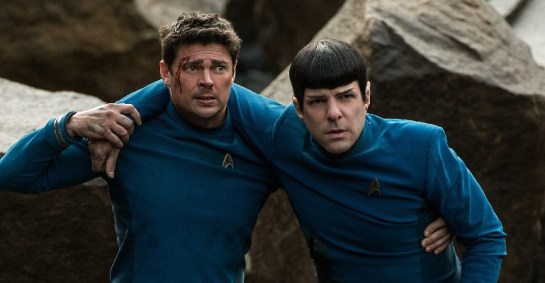
As for the crew, Spock (Zachary Quinto) is having a personal crisis which has effected his relationship with Uhura (Zoe Saldana). Bones (Karl Urban) is still surly and cantankerous. Scotty (Pegg) is still neurotic and high-strung. Basically everyone could use some down time. But that doesn’t happen. An escape pod lands at Yorktown with a lone distressed survivor who tells of an attack on her ship. The Enterprise is sent out to investigate but run into a vicious alien warlord named Krall (Idris Elba).

Lin amps up the stakes after the crew finds themselves stranded and seperated on a nearby planet. It’s here that we get some of best character interactions. Spock and McCoy are especially fun. The writers do fine job of giving every character their moment and making them feel significant. We even get an interesting new alien character named Jaylah (Sofia Boutella).

TREk2

But the further the film goes the more it seems to lose its footing. One big action set piece after another make up the entirety of the final act. There are some really impressive scenes during this run but there are also a couple that aren’t that well conceived. And then you have one particular sequence that is beyond silly and preposterous. I won’t say anymore but trust me, you’ll know it when you see it.

It should be said that the special effects are often spectacular. But there are a few instances where they are surprisingly generic. Also Lin knows how to shoot action as evident by many of the bigger set pieces. His shooting of fight scenes are a different story. Lin’s dizzying handheld cameras and quick cuts make some of the fights a chore to make out. Thankfully that only represents a small chunk of the action.

The bombastic ending is another clear reminder that this is a very different Star Trek series. But now we sit three movies into it and these films have earned the right to be judged on their merits and not those of past movies. “Beyond” is a fun and satisfying installment that fits nicely within the new franchise vision. It finally feels like the crew is exploring strange new worlds and seeking out new civilizations. At least until it turns into a fairly standard sci-fi action flick in the final act. Still it’s fun to be back with these characters and to see each of them given important roles within the story. That can often be difficult with such a large cast.

VERDICT – 3.5 STARS

3.5 stars

REVIEW: “The Secret Life of Pets”

PETS POSTER

Illumination Entertainment may not be at Pixar’s level when it comes to box office clout, but their last three animated films have certainly put them into the conversation. 2013’s “Despicable Me 2” brought in $970 million. Last year their spinoff film “Minions” made nearly $1.2 billion. Their latest is “The Secret Life of Pets” and with only five days under its box office belt, the wacky adventure comedy has already earned nearly $175 million.

Chris Renaud, one of the creative minds behind the “Despicable Me” films, directs this examination of the age-old question – what do our pets do while we are away all day? As has become the norm, an all-star cast lend their voices to an array of domesticated (and in some cases not so domesticated) members of the animal kingdom.

The film starts strong by introducing us to a host of pets in a downtown New York City apartment building. It lays out their relationships with their owners and each other while also having fun with the various identifiable pet quirks – a dog gently yelping while having a dream or a cat’s crazed infatuation with a laser pointer just to name a few.

PETS1

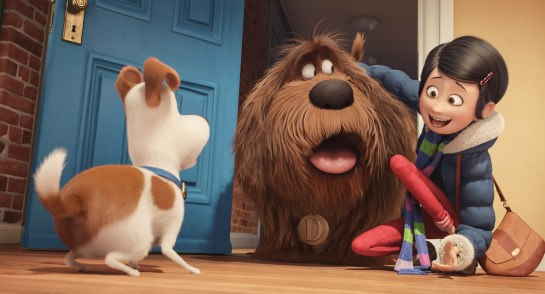
A little terrier named Max (voiced by Louis C.K.) is the lead character. His top dog status takes a hit when his owner Katie (Ellie Kemper) brings home a big shaggy Newfoundland named Duke (Eric Stonestreet). While butting heads at the park the two end up wandering too far into the city where they encounter a feline street gang led by Steve Coogan (that’s funny in itself) and are ultimately caught by Animal Control.

This is where things takes a bit of a dive. Max and Duke are busted out by an underground militant group called “The Flushed Pets”. Their mantra – “liberated forever, domesticated never”. They are led by a fluffy white bunny named Snowball. He’s voiced by Kevin Hart who is basically doing what Kevin Hart always does – giving loud, hyperactive ramblings that just aren’t that funny. And during this stretch the film backburners the fun and charming bits for more run-of-the-mill breakneck animated action.

While that portion of the story sputters, another stays true to the endearing sweetness of the first act. Realizing Max and Duke are missing, the other pets from the apartment building set out to find them led by a prissy Pomeranian named Gidget (Jenny Slate). Add to the band a plump apathetic cat (Lake Bell), a rambunctious pug (Bobby Moynihan), a calm cool dachshund (Hannibal Burress), and a directionally challenged guinea pig (voiced by Renaud).

PETS2

The camaraderie between these furry friends is fun to watch. I couldn’t help but laugh at several interactions that emphasized their unique personalities and pet-specific attributes. Renaud and company clearly have a blast playing with so many things that people (particularly pet owners) will get a kick out of.

Several other things help make this an effectively entertaining picture. Alexandre Desplat’s snazzy score amazingly keeps up and sometimes directs the film’s shifting tones. The animation is wonderfully bright and vibrant while still maintaining that silly exaggerated style that I’ve loved in Illumination’s other films. And as expected the voice acting is top-notch.

You can’t help but notice the “Toy Story” inspiration, but “The Secret Life of Pets” has a good enough premise to set itself apart. For most of the film it cleverly sticks with it. Unfortunately the lull in the middle and Kevin Hart’s unleashed performance brings it down a bit, but never enough kill the fun.

VERDICT – 3.5 STARS

3.5 stars