REVIEW: “The Six Triple Eight” (2024)

Seeing the Tyler Perry stamp on a movie tends to prompt certain expectations, many of which aren’t especially flattering. But say what you will, Perry has firmly established himself within the industry as an actor, writer, director, and producer. And I’ll give him credit, he certainly doesn’t let bad reviews or criticisms slow him down. He’s still pumping out entertainment and making a lot of money in the process.

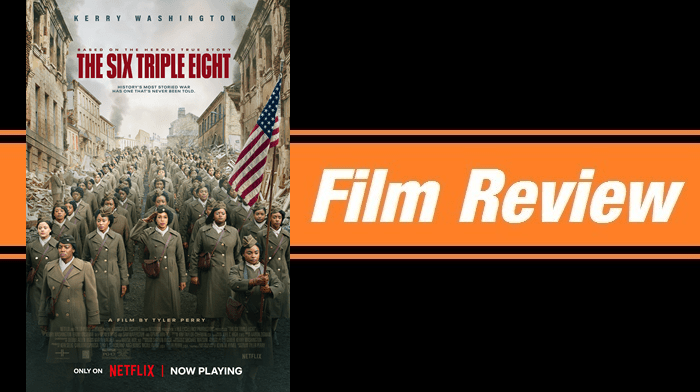
His latest feature is “The Six Triple Eight”, a historical World War II drama about the all-black and all-female 6888th Central Postal Directory Battalion. Perry writes and directs the film which is interesting considering nothing in his filmography indicates he would be the person to tackle this kind of project. As it turns out, this feels like Perry’s best work to date though it’s not without its faults.

Image Courtesy of Netflix

“The Six Triple Eight” is based on an article in WWII History magazine called “Fighting a Two-Front War” by Kevin M. Hymel. Perry begins the story in 1943 as a small-town African-American girl named Lena Derriecott King (Ebony Obsidian) falls for a persistent Jewish boy named Abram (Gregg Sulkin). After some schmaltzy courting, Abram reveals he has joined the Army and is about to be deployed. He gives Lena a promise ring and asks her to wait for him to return. He promises to write her, but his letters never come.

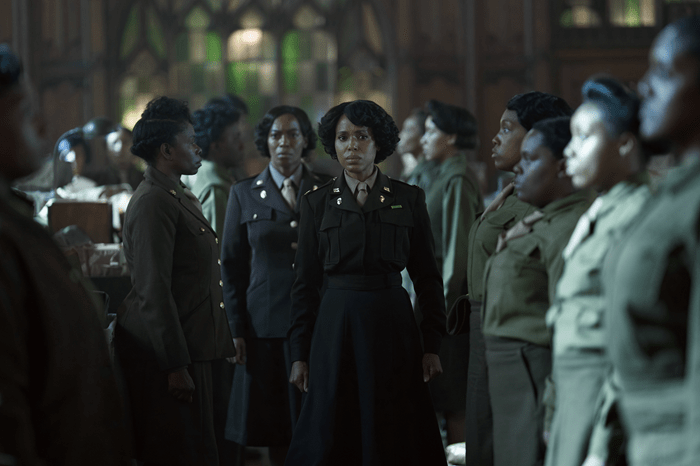
Lena’s life forever changes when she gets word that Abram has been killed in action. Shattered, she decides to join the army herself, against the wishes of her concerned family. She’s sent to Fort Oglethorpe, Georgia where she immediately runs into the numerous barriers facing military women, even more for women of color. Before heading into active duty with the Women’s Army Corps, Lena and her unit are put through basic training under the tough but inspiring Major Charity Adams (Kerry Washington).

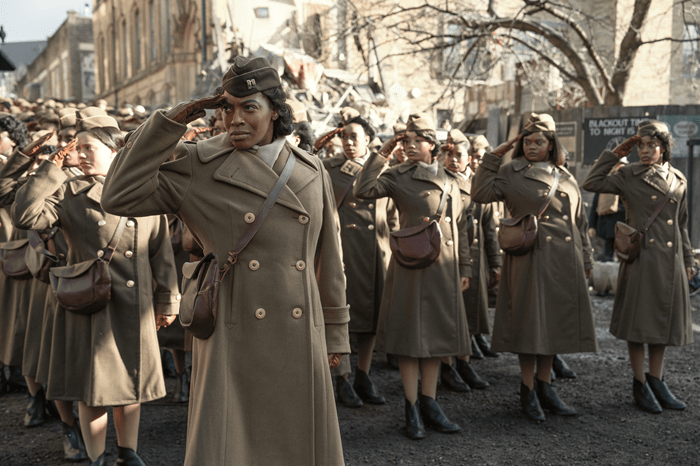
In addition to Lena, Perry adds several other characters to the unit. Most struggle to get any firm identity other than the outspoken and crass Johnny Mae (Shanice Shantay). The young women form a tight-knit bond which is strengthened by the adversity they face. That adversity is seen clearest in the skeptical and dismissive General Halt (Dean Morris) who refuses to give them a meaningful assignment. But things change after Franklin and Eleanor Roosevelt step in (Sam Waterston and Susan Sarandon in glorified cameos).

The 6888th finally get called to duty but not in the way they expect. They’re tasked with sorting through tens of thousands of letters that have been collecting in a warehouse for ten months. They’re letters written between soldiers and their loved ones back home that have yet to be delivered. At first the ladies see their task as meaningless, as do the men who assigned it to them. But they quickly start to see the importance, especially when they find a letter written from Abram to Lena.

Image Courtesy of Netflix

It takes some time for “The Six Triple Eight” to find its rhythm, but once it does Perry surprises by how effectively he captures the heart of the story. Meanwhile the performances do what’s needed with only Washington and Obsidian standing out despite some shaky dialogue. The movie also looks good with a lot of detail put into the period-accurate costumes and production design. It helps add a true-to-life texture the movie needs.

Yet “The Six Triple Eight” still feels like a small part of a much richer story. It’s as if Perry is merely scratching the surface of the inspirational true account. It’s even more true with the characters who we barely get to know beyond their immediate circumstances. These issues keep the movie from resonating as strongly as it could have. But Perry deserves credit for putting this moving real story to the screen even if it doesn’t get the full attention it deserves.

VERDICT – 3 STARS

REVIEW: “September 5” (2024)

I was barely one-year-old when the opening ceremonies kicked off the 1972 Munich Summer Olympics. The games were being held in Germany for the first time since the country had been freed from Nazi rule. But the horrific events that transpired overshadowed the actual competitions. In the early morning hours of September 5th, eight armed members of the Palestinian militant group Black September slipped into the Olympic Village and took eleven Israeli athletes and staff hostage.

“September 5” chronicles ABC Sports’ live coverage of the shocking attack and the subsequent 18-hour standoff. Director Tim Fehlbaum crafts a gripping and fast-paced thriller that respects the memories of the victims while scrutinizing some of the decisions that led to the event’s violent conclusion. But at its core “September 5” is a taut journalism procedural that goes to painstaking lengths to recreate what it was like inside the ABC Studio in Munich during the unprecedented crisis.

Fehlbaum puts together a strong and well-tuned cast who all seem to understand their assignment. The trio of screenwriters which includes Fehlbaum, Moritz Binder, and Alex David pen a screenplay that zeroes in on the professional pressures and the emotional toll the broadcast team faced during a moment in history that forever changed television news. In the process, they’ve helped make one of the most riveting edge-of-your-seat thrillers of the year.

Image Courtesy of Paramount Pictures

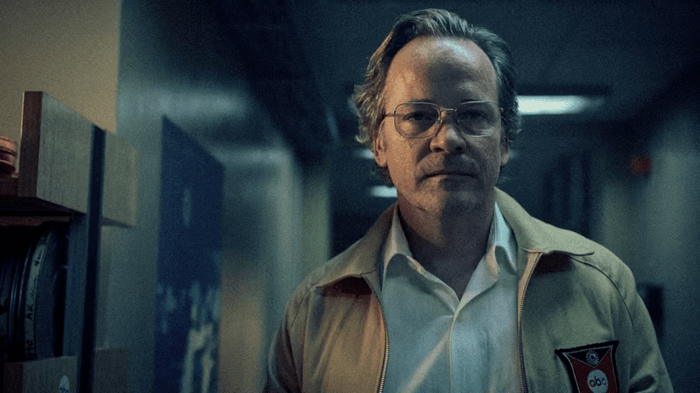
The ensemble’s actions and interactions are vital gears steadily turning to keep the propulsive story moving forward. It all plays out in real-time and is mostly set on that eponymous date. Just a few hundred yards from Munich’s Olympic Village, ABC has set up a studio that is broadcasting a live sporting event across the world for the very first time. ABC Sports president Roone Arledge (Peter Sarsgaard) runs the show, often standing in the back of the control room monitoring his team of producers and intervening whenever he sees fit.

One of those producers is newcomer Geoff Mason (John Magaro) who is about to take on his first live television broadcast for the company. Among the sizable crew is the seasoned and cautious head of operations, Marvin Bader (Ben Chaplin), the chief technician, Jacques Lesgards (Zinedine Soualem), and the crew’s German translator, Marianne Gebhardt (Leonie Benesch). Their day starts out pretty routine. That is until the echo of gunshots are heard coming from the Olympic Village.

Almost immediately reports begin pouring in and the crew starts parsing through them in order to piece together the truth. They narrow the gunfire down to the Israeli quarters and confirm that terrorists are holding several athletes and coaches hostage in two apartments. From there the decision is made to take the story to the world, providing on-air coverage of breaking news while offering live camera shots of the apartments and the surrounding chaos. Suddenly Geoff finds himself managing more than volleyball and boxing.

Image Courtesy of Paramount Pictures

The story has a natural tension baked into it as the crew attempts to navigate truly uncharted territory. But several other concerns help ratchet that tension even higher. There’s their battle with ABC’s news division who wants to take over the story. There are the questions of journalistic ethics and responsibilities as they face new unknowns. And things really intensify after they realize their efforts to keep the public informed may be putting the hostages in danger.

In addition to the incredible recreation of the studio in all its 1972 glory, Fehlbaum gives his movie the illusion of being shot on high-contrast 16mm film stock. He also incorporates a ton of archived audio and video of legendary sportscaster Jim McKay and newsman Peter Jennings along with other related footage from ABC Sports. All are effective choices that help with the immersion.

While the hectic operation of the studio is fascinating to watch, Fehlbaum maintains the human element of his story by showing how the unfolding events weigh on his characters. The very nature of events doesn’t allow them a lot of time to process, but Fehlbaum ensures that we understand their struggle. It’s those small but crucial strokes of humanity that make “September 5” more than just a stone-cold procedural. It’s an in-the-trenches examination of journalism’s search for truth and the talented but fallible men and women at the center of it.

VERDICT – 4.5 STARS

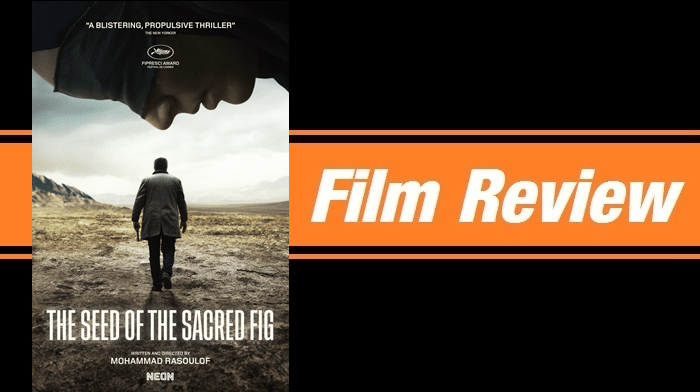
REVIEW: “The Seed of the Sacred Fig” (2024)

Iranian filmmaker Mohammad Rasoulof has endured extensive persecution for his politically charged and socially conscience art. He’s been arrested and imprisoned multiple times, banned from leaving Iran, smeared by his adversaries, and even brutally flogged. Now he stands in exile from his home country, having fled earlier this year after being sentenced on national security charges.

His latest film is “The Seed of the Sacred Fig” and it too offers an unflinching perspective on problematic systems and the oppression that comes from them (often violently). Rasoulof shot his film in secret over the course of 70 days, directing, writing, and producing what is a straightforward and unvarnished feature that tackles its heavy subject matter through the heartrending plight of a once tight-knit Tehran family.

Image Courtesy of NEON

A superb script and lights-out performances bring to life this quietly searing domestic drama with its strong political underpinning. Missagh Zareh plays Iman (Missagh Zareh), an honest but ambitious lawyer who has worked for 20 years with the current government regime. As the movie begins, Iman receives a promotion to be a state investigator which is one step away from being a revolutionary court judge. Iman’s promotion has big implications for their family including a nicer house in a better neighborhood and a more prominent social status.

But Iman’s new job also requires that his wife Najmeh (Soheila Golestani) and their two daughters, Rezvan (Mahsa Rostami) and Sana (Setareh Maleki) change their lifestyles to fit the new expectations. Iman’s new position brings more scrutiny from the government. And that can end up putting their family in danger, especially once the details of his work is fully brought into the light.

It turns out that Iman wasn’t hired for his years of experience or his judicial prowess. His predecessor was fired for refusing to approve a death indictment and his superiors want an investigator who will approve judgements without such lengthy processes as examining evidence. In fact his first assignment is to sign off on the death penalty for a case he has yet to read over. And the complications only mount from there.

Interestingly, much of Iman’s moral crisis takes place off screen while he’s away at work. During that time we’re left with Najmeh and the girls as they navigate issues of their own. Freedom protests break out across the city and are met with heavy state-led suppression by the police. And as the rallies give way to riots the violence quickly escalates. Rezvan and Sana find themselves involved once their best friend Sadaf (Niousha Akhshi) is arrested. Najmeh is caught between protecting her daughters and standing by her husband who is tasked with prosecuting the protesters.

Image Courtesy of NEON

The film’s central conflict is between a father loyal to the theocratic regime and his two daughters who begin speaking out against the oppression they witness. But it’s Najmeh who turns out to be the centerpiece and her personal journey is easily the most compelling. Golestani’s performance runs the gamut of emotions as her character gradually evolves into a much different person. She’s presents a gripping portrait of someone caught amid the political and the personal.

While Rasoulof steadily builds up the intensifying domestic drama, he frequently injects cellphone video taken from real protests which emphasize the truth of what he is depicting. It adds a significant layer of reality to what’s unfolding with the family. At 166 minutes the film extends itself a little too far. And it can be a bit unwieldy and overt in its messaging. But the burgeoning sense of fear and paranoia remains palpable, even as Rasoulof’s final 20 minutes veers dangerously close to Hollywood thriller territory.

VERDICT – 4 STARS

REVIEW: “Small Things Like These” (2024)

Cillian Murphy follows his brilliant Oscar-winning performance in “Oppenheimer” with an equally stunning turn in “Small Things Like These”, a wrenching historical drama based on the 2021 best-selling and award-winning novella of the same name by Claire Keegan. The story is set against the backdrop of Ireland’s Magdalene Laundries – institutions ran by Catholic orders with the complicity of the Irish government for over two centuries.

For those unfamiliar – in Ireland, many who were categorized as “fallen women” were sent to workhouses often posing as convents for “penance and rehabilitation”. Against their will, they were isolated from society and forced to work insufferable jobs, mostly in laundries, with no compensation. It wasn’t until 1993, when the bodies of 155 women were discovered in unmarked graves on the grounds of a Dublin convent, that the oppressive institutions were brought into the public eye.

Set in the mid-1980s, Murphy plays Bill Furlong, a loving and devoted father and a coal merchant who owns his own business, Furlong’s Coal & Fuel. Bill is a hard-working man who puts in long hours to support his wife Eileen (Eileen Walsh) and their five daughters in the Irish town of New Ross.

Image Courtesy of Lionsgate

Director Tim Mielants uses the strengths of Frank van den Eeden’s cinematography and Paki Smith’s production design to portray Bill’s lived-in and richly detailed blue-collar life. From the tight-quartered interiors of the Furlong home to Bill’s coal dust coated depot, a big effort is put into recreating a realistic representation. It’s one of the film’s many strengths.

While out delivering bags of coal, Bill makes his regular stop at a convent sitting on the outskirts of town. While there, he witnesses a distressed young woman being forced inside. It’s a troubling scene that clearly rattles Bill. Yet we’re left with the feeling that he’s not completely surprised. Over time we get the sense that not just Bill but most of the town are aware that something is going on at the convent. But the people are content with remaining quiet. They see it better to do nothing and stay on the right side of certain powerful people, namely Sister Mary (Emily Watson), the local Mother superior.

Much of the film focuses on Bill’s internal struggle with what he knows is happening and his feelings of complicity for staying silent. Mielants visualizes that struggle in a variety of ways including the image of Bill washing his hands. When arriving home each evening the first thing he does is go to the bathroom sink, fill it with water, take soap and a brush, and feverishly cleans his hands of the coal dust and grime. But over time his scrubbing gets more intense, a metaphor for his anguished efforts to cleanse himself of guilt.

Image Courtesy of Lionsgate

Bill’s feelings are amplified by his own traumatic childhood which is shared through a series of well implemented flashbacks. There we see a young Bill (played by Louis Kirwan) forced to deal with the sudden death of his mother Sarah (Agnes O’Casey). There’s also the fear of what could happen to any of his five daughters if he gets on the wrong side of the convent. “It’s none of our business”, his wife contends, more out of anxiety than apathy.

But the naturally soft-hearted Bill reaches his breaking point after discovering a visibly shaken young woman (Zara Devlin) locked in the convent’s coal shed. Does he risk his family’s well-being and incur the wrath of the Sisters just for doing the right thing? What will his wife say? Will the community rise up and support him? Mielants doesn’t answer all of those questions, and the potential consequences for Bill leave us with a lingering sense of concern.

We live in a day where there is no shortage of anti-Catholic sentiment circulating in the form of entertainment. But that doesn’t mean the Catholic Church is above scrutiny, especially with its troubled history. Mielants maintains a razor-sharp and deeply human focus that never allows his film to turn into some agenda-driven hit piece. Instead, he has made a gripping character study about turning a blind eye in the face of horrendous institutional abuse. And it’s relayed through another brilliant Oscar-worthy turn from Cillian Murphy.

VERDICT – 4 STARS

REVIEW: “Super/Man: The Christopher Reeve Story” (2024)

There was a day when superhero movies were actually a rarity. There were no big blockbuster franchises or sprawling cinematic universes. Perhaps that’s one reason 1978’s “Superman: The Movie” was such a critical and box office success. Another reason was the film’s lead, a young relatively unknown Christopher Reeve. It was a star-making role for the Juilliard alumni that over time became both a blessing and a curse.

With “Super/Man: The Christopher Reeve Story”, co-directors Ian Bonhôte and Peter Ettedgui examine the man behind the pop culture myth, exposing our penchant for idolizing characters while emphasizing what it means to be a true hero. For some, the documentary has the potential be a stirring introduction while others will see it as a moving reminder of what Christopher Reeve accomplished, endured, and overcame.

Image Courtesy of Warner Bros. Pictures

Bonhôte and Ettedgui tell Reeve’s story through interviews with his children, Will Reeve, Matthew Reeve, and Alexandra Reeve Givens. They also include some of Reeve’s acting contemporaries such as Susan Sarandon, Glen Close, and Jeff Daniels. The doc includes a wealth of archived footage and clips from old home movies. But ultimately it’s the heartfelt testimonies that offer the most insight and that give the movie its emotional weight.

“Super/Man” attempts to balance Reeve’s professional and personal lives, digging into his complicated family history while highlighting his near overnight ascent to global movie star status. With so much to cover, not everything gets the attention it needs. But Bonhôte and Ettedgui give us enough to get to picture. They tell us about his troubled relationship with his parents, mostly with his unsupportive father. We hear how he met Gae Exton, the mother of Matthew and Alexandra. We learn that five months after leaving her he met his future wife, Dana.

Professionally, we get snippets of his life as an off-Broadway actor and his eventual call to audition for the role of Superman where he beat out the likes of Arnold Schwarzenegger, Bruce Jenner, and Neil Diamond (!!!). We see Reeves catapulted to super stardom with the success of “Superman: The Movie” and later desperate to get out from under its shadow. And there’s the tragedy that struck on May 27, 1995 when Reeve’s suffered a spinal injury that left him paralyzed from the neck down.

Image Courtesy of Warner Bros. Pictures

Much of the documentary focuses on the injury, its impact on Reeve and his family, and the resilience he showed to not only keep living but to use his situation as a means to promote disability awareness. Along the way, it stresses Dana’s unwavering care and support for her husband. She’s an essential part of Reeve’s story and a hero of an entirely different kind.

Bonhôte and Ettedgui have definitely done their homework and their movie’s overarching message is easy to grasp. But not all of their choices pan out. For example, their frequent bouncing back-and-forth on Reeve’s timeline hinders more than helps. But it doesn’t lessen the heartbreak or inspiration found of this real-life Superman story. “Super/Man: The Christopher Reeve Story” is now showing in select theaters.

VERDICT – 3.5 STARS

REVIEW: “Smile 2” (2024)

2022’s “Smile” was a surprise hit both with film critics and horror fans. The movie was kickstarted by a killer promotional campaign that saw the studio’s marketing team planting actors behind home plate at several Major League Baseball games where they would stare into the television cameras with blank maniacal smiles. It was terrific viral marketing meant to get the small budget feature noticed. Now the sequel, “Smile 2” is here and the studio is hoping to capture that same lightning.

“Smile” mixed psychological horror with the supernatural to deliver a genuinely creepy chiller with a nasty edge. “Smile 2” seeks to follow the same course with a bigger budget and more ambition. But even as it’s aiming higher and upping the ante, the sequel falls short of its predecessor in a number of hard to ignore ways.

Image Courtesy of Paramount Pictures

Writer-director Parker Finn returns for “Smile 2” and begins his sequel with an intense opening that connects it with the first film. From there we’re taken to New York City where pop superstar Skye Riley (Naomi Scott) is preparing for a global comeback tour. Her career was nearly ended due to drug and alcohol abuse which contributed to a highly publicized car crash that killed her boyfriend Paul.

Now clean and sober, Skye is hard at work promoting her upcoming tour at the behest of her mom/manager, Elizabeth (Rosemarie DeWitt). But her comeback is threatened by lingering back pain from her car wreck. So she seeks out Lewis Fregoli (Lukas Gage), an old classmate and known drug dealer, in hopes of scoring some Vicodin to ease her pain. But upon arriving at Lewis’ apartment, Skye is shaken by his disturbing behavior which culminates in him killing himself right in front of her.

Rather than contact the police, a frightened Skye flees to avoid being implicated in Lewis’ death or drug dealing. But little does she know, there’s something much more sinister she needs to worry about. She begins having horrifying visions with many including people with big creepy smiles. Of course the first movie has already let us in on the secret. Skye is the new host of malevolent parasitic spirit that drives its victims to kill themselves. Better yet, it can is only be transmitted when the host commits suicide in front of someone else. Lewis had it and then passed it on to Skye.

The rest of the movie follows Skye as she’s tormented by the vicious spirit that no one else sees. As she’s mentally pushed to the brink, her visions intensify. And as they do, Finn twists our perception of what’s real and what’s an illusion. But even with that, “Smile 2” lacks the element of surprise which played a big part in the first film. This time around we know it’s an evil spirit; we know what it does; we know the only way to get rid of it.

Image Courtesy of Paramount Pictures

Finn does throw in some pretty wicked body horror and things get especially gnarly in the final act. But at the same time he leans too heavily on lame and lazy jump scares that get more annoying as the movie progresses. And even though he tackles some compelling themes such as the lingering effects of trauma and our infatuation with fame and celebrity, the story drags on for too long and gets surprisingly sloppy in its final 15 minutes or so.

Naomi Scott deserves credit for pouring every bit of herself into the lead role. She completely sells Skye’s pop star status and impressively captures her psychological collapse. But much like the movie itself, her performance starts to wear you down. Watching her get ran through the wringer gets tiring as does listening to her scream “F~CK!!!” into the air over and over again. But those aren’t problems with Scott. They’re script issues which when considered as a whole is the biggest reason “Smile 2” falls short.

VERDICT – 2 STARS