

Cillian Murphy follows his brilliant Oscar-winning performance in “Oppenheimer” with an equally stunning turn in “Small Things Like These”, a wrenching historical drama based on the 2021 best-selling and award-winning novella of the same name by Claire Keegan. The story is set against the backdrop of Ireland’s Magdalene Laundries – institutions ran by Catholic orders with the complicity of the Irish government for over two centuries.
For those unfamiliar – in Ireland, many who were categorized as “fallen women” were sent to workhouses often posing as convents for “penance and rehabilitation”. Against their will, they were isolated from society and forced to work insufferable jobs, mostly in laundries, with no compensation. It wasn’t until 1993, when the bodies of 155 women were discovered in unmarked graves on the grounds of a Dublin convent, that the oppressive institutions were brought into the public eye.
Set in the mid-1980s, Murphy plays Bill Furlong, a loving and devoted father and a coal merchant who owns his own business, Furlong’s Coal & Fuel. Bill is a hard-working man who puts in long hours to support his wife Eileen (Eileen Walsh) and their five daughters in the Irish town of New Ross.
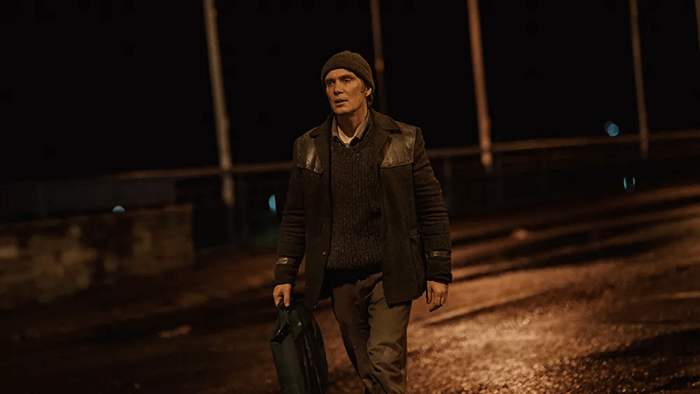
Director Tim Mielants uses the strengths of Frank van den Eeden’s cinematography and Paki Smith’s production design to portray Bill’s lived-in and richly detailed blue-collar life. From the tight-quartered interiors of the Furlong home to Bill’s coal dust coated depot, a big effort is put into recreating a realistic representation. It’s one of the film’s many strengths.
While out delivering bags of coal, Bill makes his regular stop at a convent sitting on the outskirts of town. While there, he witnesses a distressed young woman being forced inside. It’s a troubling scene that clearly rattles Bill. Yet we’re left with the feeling that he’s not completely surprised. Over time we get the sense that not just Bill but most of the town are aware that something is going on at the convent. But the people are content with remaining quiet. They see it better to do nothing and stay on the right side of certain powerful people, namely Sister Mary (Emily Watson), the local Mother superior.
Much of the film focuses on Bill’s internal struggle with what he knows is happening and his feelings of complicity for staying silent. Mielants visualizes that struggle in a variety of ways including the image of Bill washing his hands. When arriving home each evening the first thing he does is go to the bathroom sink, fill it with water, take soap and a brush, and feverishly cleans his hands of the coal dust and grime. But over time his scrubbing gets more intense, a metaphor for his anguished efforts to cleanse himself of guilt.

Bill’s feelings are amplified by his own traumatic childhood which is shared through a series of well implemented flashbacks. There we see a young Bill (played by Louis Kirwan) forced to deal with the sudden death of his mother Sarah (Agnes O’Casey). There’s also the fear of what could happen to any of his five daughters if he gets on the wrong side of the convent. “It’s none of our business”, his wife contends, more out of anxiety than apathy.
But the naturally soft-hearted Bill reaches his breaking point after discovering a visibly shaken young woman (Zara Devlin) locked in the convent’s coal shed. Does he risk his family’s well-being and incur the wrath of the Sisters just for doing the right thing? What will his wife say? Will the community rise up and support him? Mielants doesn’t answer all of those questions, and the potential consequences for Bill leave us with a lingering sense of concern.
We live in a day where there is no shortage of anti-Catholic sentiment circulating in the form of entertainment. But that doesn’t mean the Catholic Church is above scrutiny, especially with its troubled history. Mielants maintains a razor-sharp and deeply human focus that never allows his film to turn into some agenda-driven hit piece. Instead, he has made a gripping character study about turning a blind eye in the face of horrendous institutional abuse. And it’s relayed through another brilliant Oscar-worthy turn from Cillian Murphy.
VERDICT – 4 STARS




















 Keith & the Movies