REVIEW: “Tenet” (2020)

TENETposter

Christopher Nolan’s high-profile career has reached a point where every new movie of his is buzz-worthy. Every new project grabs headlines and energizes the box office. Each new film leave both critics and moviegoers eager to talk, write, scrutinize, hypothesize, and debate. And whether you like his style or not, his movies have become events especially for those of us who proudly call ourselves Nolan fans.

So naturally when I first heard of “Tenet” I was elated. When it was understandably delayed I was dejected. But now that I’ve finally seen it I’m ecstatic. Why? Because “Tenet” is an incredible experience and unlike anything you’ve seen before. “Tenet” is indelibly a Nolan picture through and through – smart, cerebral, highly original, insanely well-made, and full of big ideas. Like many of his other films it won’t be for everybody. In fact it may be his most inaccessible. But who can deny the amazing craftsmanship and cinematic wizardry Nolan (once again) showcases?
TENET1

Photo Courtesy of Warner Brothers

“Tenet” isn’t just highly anticipated. It’s also considered to be an important film particularly in this current COVID-19 global landscape. After being closed for months hurting movie houses and theater chains around the world are depending on “Tenet” to revitalize big screen enthusiasm while giving much-needed boosts to their bottom lines. Meanwhile moviegoers have set sky-high expectations which his film (and no other film for that matter) could ever fully reach. In those regards “Tenet” may not be in the most enviable position. But I see Nolan, a consummate professional at his craft and an ever-growing student of cinema, fully embracing those lofty responsibilities.

Nolan’s latest mindbender sees him once again pushing blockbuster boundaries, many that he helped set. With a massive overall budget eclipsing $300 million and an even bigger vision, “Tenet” is the filmmaker’s biggest movie to date. It’s essentially a spy thriller that takes many of the genre’s elements and turns them on their heads. And it features yet another star-studded cast rich with fresh faces and some Nolan favorites. Leading them is John David Washington, a terrific young-ish actor with an exceptional pedigree (he’s the son of Denzel). Robert Pattinson, Kenneth Branagh, Elizabeth Debicki, Michael Cane, Clémence Poésy, Dimple Kapadia and Aaron Taylor-Johnson round it out.

TENET4

Photo Courtesy of Warner Brothers

Nolan has always enjoying playing around with time, but in “Tenet” he has a field day. It’s key to note this is not a time travel movie. Instead it deals with a concept called time inversion. It’s an integral part of Nolan’s story and essential to understanding the movie’s dense and shifting plot. In the future an Oppenheimer-esque scientist develops an algorithm that can cause objects to travel back in time. Overwhelmed by the catastrophic impact such a creation could have (namely the destruction of reality as we know it), the scientist splits the algorithm into nine pieces, hides them in different places in the past, and then commits suicide. This ‘inversion’ turns out to be the marrow of Nolan’s story. It’s the cause of the conflict, it’s what drives the antagonist, and it’s the only way to save the world.

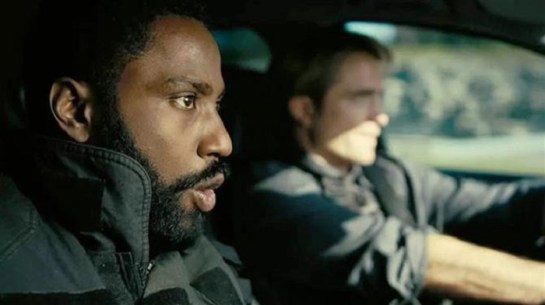
It all begins with a stunning prologue set at a Ukrainian opera house. Oozing charisma, Washington plays a CIA agent known throughout the film only as the Protagonist. He and his small team of operatives arrive at the opera house to rescue an exposed government asset from a terrorist group during a symphony performance. During the extraction the Protagonist is saved from a terrorist’s bullet by a mysterious masked man in search of an artifact. The man gets away but the Protagonist and his team are captured and tortured by the baddies. But instead of giving away his colleagues, the Protagonist takes a cyanide capsule.

TENET3

Photo Courtesy of Warner Brothers

He wakes up to even more shadowy figures who tell him the cyanide capsule was fake, his team is dead, and he has passed their group’s test. He is informed of something called Tenet and learns that the group’s scientists have discovered inverted bullets. Fearing the possible dangers, the group tasks the Protagonist with tracking down who is inverting ammunition and for what reason. The trail leads him to a Russian arms dealer named Sator (a cold and quietly menacing Branagh) who may be communicating with the future. The Protagonist tries to get close to Sator through his estranged wife Kat (Debicki) but that proves tougher than anticipated. So he and his recruit Neil (Pattinson), who always seems to know more than he’s letting on, use more “dramatic” methods to try and get what they need.

That doesn’t sound too confusing, right? Well you ain’t seen nothing yet. Thermodynamics, the Grandfather Paradox, Temporal Pincer Movements – just some of the subjects you’ll encounter along the way. But don’t worry, it’s not like sitting through a science lecture. Nolan takes a very specific approach to telling his story. He begins by bombarding you with information and terminology. Characters are rapidly added, sometimes only for a scene or two, and each have their own unique pieces to add to the puzzle. It can feel a bit overwhelming which seems to be where Nolan wants us. It makes it all the more impressive once those meticulously placed pieces begin to fit together.

TENET2

Photo Courtesy of Warner Brothers

The scale of Nolan’s imagination isn’t restricted to just the storytelling. As you would expect “Tenet” is a technical marvel and a visual feast. Once again working with cinematographer Hoyte van Hoytema, Nolan concocts some truly astonishing action sequences. Fist fights, car chases, a crazy stunt with a Boeing 747 – I hate to repeat myself, but these are moments unlike anything you’ve seen before. And two particular scenes involving what are called inversion “turnstiles” are some of the most creative sequences Nolan has ever conceived.

I can think of only one lone complaint I have about “Tenet”. Swedish composer Ludwig Göransson (filling in for Nolan regular Hans Zimmer) puts together an dazzling score. But the sheer volume during a few scenes made hearing the actors next to impossible. And this wasn’t just an issue isolated to my theater. Other than that Christopher Nolan has once again done what he does best – create an exhilarating cinematic experience aimed at wowing you visually and challenging you intellectually. It’s story is sure to be too dense for some, especially those wanting more easy-going blockbuster fare. But for everyone else buckle up, put your thinking cap on, and enjoy the ride. We don’t get movies like this very often. “Tenet” opens wide this weekend only in theaters.

VERDICT – 5 STARS

5-starss

5star

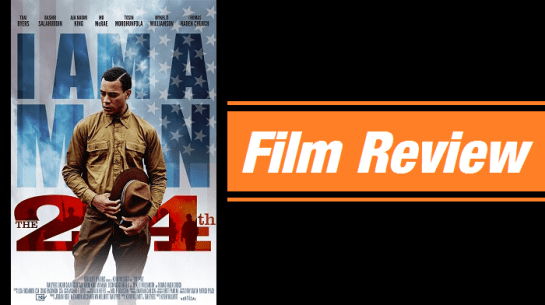
REVIEW: “The 24th” (2020)

24poster

Named for the all-black Twenty-Fourth United States Infantry Regiment, Kevin Willmott’s “The 24th” tells the story of the Houston riot of 1917. On the night of August 23rd members of the 24th, driven by relentless Jim Crow era racism, police harassment, and a bit of misinformation, took arms and marched into Houston. By the end of the night eleven civilians, five policemen, and four soldiers including a Captain in the National Guard had been killed as a result of their mutiny.

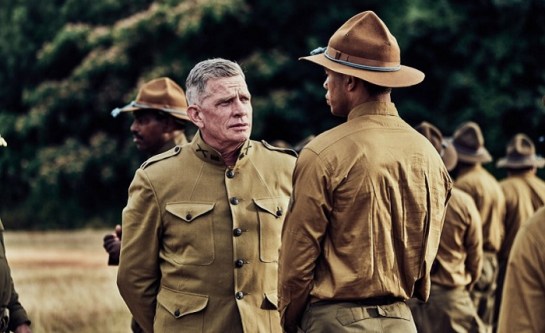
Willmott co-writes the story with the film’s star Trai Byers. Their setting is a compelling one. In the summer of 1917 World War I was brewing in Europe while at home black communities were being violently targeted by angry white mobs in several US cities. It was during this tense and racially-charged time that the 24th Infantry Division were sent to guard the construction of Camp Logan, three miles outside of the city of Houston. The camp was to train white soldiers before they were deployed to France. The 24th went there with similar aspirations of serving their country but ran head-first into hate and persecution.

241

Photo Courtesy of Vertical Entertainment

Much of the movie’s uneven first half plays like a series of racially volatile encounters. Several of them are effective on their own and they do a good job conveying the ugliness of the setting. But there isn’t much connecting one scene to another. The biggest casualty in the earlier scenes is the character building. It takes a while before any of the 24th actually develop individually. When some of the players finally do, the story gets a much-needed boost.

Byars gets the meatiest role playing William Boston, a highly educated and idealistic young soldier hungry to join the war effort. He instantly clashes with his cynical first sergeant (Mykelti Williamson) who is quick to judge Boston’s buoyancy as a sign of weakness. At the same time he and other members of the 24th routinely encounter prejudice from the camp’s white soldiers. So Boston is caught in the middle, forced to prove himself to the bigoted white officers and to his jealous fellow black servicemen. And his friendship with his sympathetic white commanding officer (a fairly wooden Thomas Haden Church) doesn’t win him any fans.

242

Photo Courtesy of Vertical Entertainment

This is the film’s most compelling dynamic and it leads up to the inevitable mutiny and march into Houston. The lid blows off as the men of the 24th are pushed to the point where the line between right and wrong are blurred at best, completely rubbed out at its worst. It’s an ugly and violent final act – a complex melding of righteous indignation and cold-blooded murder. In some scenes Willmott attempts to dull the edge of the killings. But he also makes it uncomfortable to watch and he captures the pure, pained emotions of the soldiers. “Ain’t nobody innocent here soldier,” the sergeant rationalizes. “Not them, not us, nobody.” It’s a really difficult line to walk.

As the movie ended I was left with a feeling of sadness and conflict (although I’m not sure if that was the film’s intent). Willmott and Byers do a nice job boiling up the anger in not only the oppressed 24th but also any fair-minded viewer. And while they effectively show how unconscionable treatment can push people to unconscionable actions, the film’s judgements are pretty muted. Unfortunately the movie’s dependence on archetypes shortchanges several of its characters. And some story angles don’t get the attention they need. Take Boston’s romance with a local girl named Marie (Aja Naomi King). It’s genuinely sweet yet wedged in and underwritten. Those are the kinds of things that strip “The 24th” of certain personal connections it needed to truly stand out. Still, I’m glad I watched it and it’s a story that needs to be told. “The 24th” is now available on VOD.

VERDICT – 3 STARS

3-stars

REVIEW: “Tesla” (2020)

TESLAposter

All movie genres have their conventions and biopics are no different. So many biographies are bound by certain self-imposed responsibilities and constraints that often strip them of their own style and flavor. They follow familiar paths, hitting familiar beats, and ultimately reaching familiar results. But as quick as I say that, along comes Michael Almereyda’s “Tesla” to give the biopic ‘genre’ a swift kick in the pants.

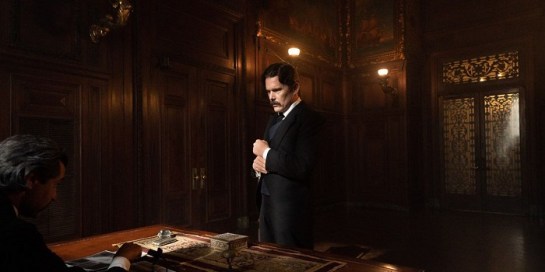
Almereyda’s fresh, quirky, and utterly fascinating foray into the life of Nikola Tesla fully embraces the mystery behind the brilliant engineer, inventor, and futurist. With style aplenty and even more audacity, Almereyda kicks aside nearly every biopic convention, crafting a biography based as much on feeling and intimation as strict history. For example Almereyda doesn’t mind showing you a scene only to stop it and tell you it never actually happened. He doesn’t do it as a stunt, but as a way of exploring the enigmatic Tesla from unique points of view.

What better fit for the film’s peculiar rhythm than Ethan Hawke. The often underrated actor plays Tesla as a man out of time, someone so forward thinking that he struggles to connect with the present. A man essentially held captive by his own genius. “Sometimes it seems as though all I do is think.” Tesla solemnly explains. “For days and weeks on end. Like my brain is burning. Who can live with that?” Hawke doesn’t give us a starry-eyed dreamer. Instead his Tesla exists in a perpetual state of awkward intensity; so confident in his brilliant theories yet too melancholic and soft-spoken to convince anyone other than himself.

TESLA1

Photo Courtesy of IFC Films

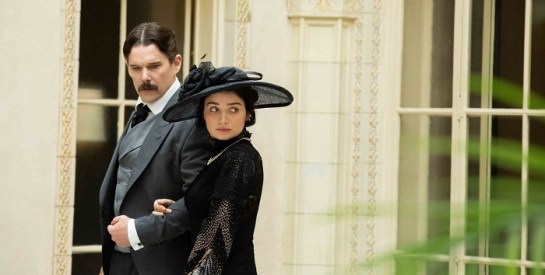
Not afraid to color outside the lines, Almereyda mixes facts with speculation to paint an abstract portrait of a man often overlooked in conversations over what became known as The Current War. Enter Anne Morgan (a really good Eve Hewson), daughter of financier and banking giant J.P. Morgan (played in the film by Donnie Keshawarz). Anne serves as our narrator and semi-historical tour guide through the life of Nikola Tesla. She also brings a shrewd female perspective to the testosterone-rich timeline. Sometimes Anne is sitting at a table with her MacBook sharing Google searches with the audience (yes, MacBook and Google). Other times it’s simple yet cutting voiceover where she shares how things might have played out. “If only Tesla had an enlightened hustler to steer him through the crass commercial world.”

That cynical yet thoughtful line of dialogue is actually a thinly veiled jab at Thomas Edison, played with a delectable balance of smarts and smarm by Kyle MacLachlan. Anne points out that you’ll only find the same four or so photos of Tesla on the web. Yet a quick Google search turns out countless images of Edison. And history bears it out. Edison’s renown has proven timeless. His success led to great wealth and notoriety. Children still learn of his work at an early age. Hotels, schools, bridges, a lake, a mountain, even an asteroid honor his name. Tesla died penniless and alone in a New York City hotel room.

Anne’s laptop, the internet references, even a later scene showing Edison with an iPhone all speak to technologies made possible by Tesla’s contributions. But Almereyda wisely keeps them brief and at a minimum, instead focusing on Tesla the man. From his early days working with Edison to their disagreement over direct current which Edison supported versus Tesla’s preferred alternating current. We watch him join Edison rival George Westinghouse (Jim Gaffigan), selling many of his patents and costing himself millions of dollars down the road. And of course we see Tesla’s move to Colorado to do his own radical experiments away from constant corporate conflicts.

TESLA3

Photo Courtesy of IFC Films

Through it all Tesla is shown to be a man stubbornly loyal to his work. Anne tries to crack through his shell, even using her father’s fortune as a lure. Tesla shows signs of interest but is overwhelmed by Anne’s game of cat-and-mouse. Even a sultry global stage celebrity like Sarah Bernhardt (Rebecca Dayan) can only capture so much of his attention. In one sense Tesla is fascinated by Bernhardt and her aura of fame. But who has time for relationships when there is so much work to do?

Almereyda’s style choices also extend to the film’s look. Several scenes are shot in front of beautiful yet blatantly obvious painted backgrounds as if we were suddenly watching a small stage production. My favorite may be a scene of Tesla walking out in front of a backdrop of Niagara Falls, his hair and raincoat soaked. It’s unmistakably evident that they are not on location, but Almereyda is fine with that, happily drawing attention to its artifice. And it fits the film in its own strange synchronistic way.

It has been fun watching the early reactions to “Tesla”. Some have been taken aback by its weird beats and it’s unorthodox structure. Others have really went for its gutsy risk-taking and avant-garde flavor. Put me down in the latter category. “Tesla” finally gives the Serbian-born visionary the big screen treatment, offering him more than than a brief cameo or a thinly sketched supporting role. It happily embraces the Tesla mystique and tells his story with an ever so sly sense of humor (Just wait until you see a hysterical out-of-the-blue musical number. I’d be a villain if I spoiled it). Thankfully the film’s blending of the past, present, and future is more than a gimmick and Hawke’s stoic, internalized performance is the perfect anchor for this spunky and stylish bio.

VERDICT – 4 STARS

4-stars

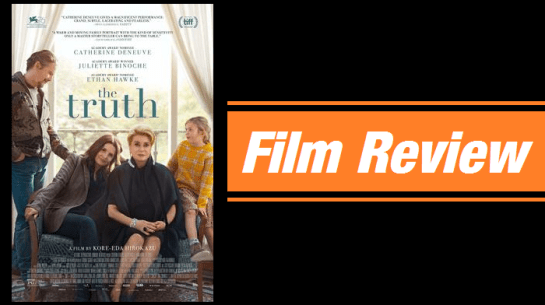
REVIEW: “The Truth” (2020)

TRUTHposter

When it comes to the new French-Japanese family drama “The Truth”, they had me at Catherine Deneuve, Juliette Binoche, and Ethan Hawke. Toss in that it is written, directed and edited by acclaimed Japanese auteur Hirokazu Kore-eda and you have one of my most eagerly anticipated movies of the year. With such craft in front of and behind the camera, it’s hard not to be drawn to its potential.

“The Truth” marks Kore-eda’s first movie shot outside of his native Japan. It’s also his first film since winning the Palme d’Or at Cannes for his 2018 gem “Shoplifters”. This time he sets his story in the beautiful City of Lights and sports a star-studded cast. But Kore-eda never forsakes his arthouse roots or loses sight of the deep personal focus his films are often known for. You’ll also find him exploring many of his signature themes and fascinations while maintaining the warm, curious, and observant gaze you’ve come to expect from the distinguished filmmaker.

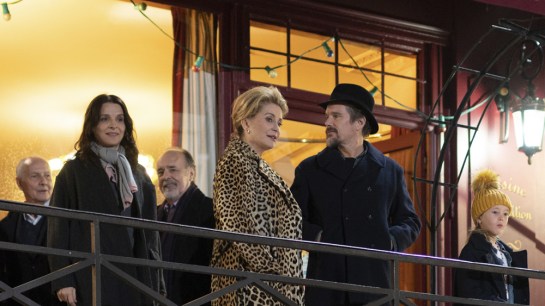
In a delightful bit of meta casting, 2-time César Award-winning French screen legend Catherine Deneuve plays a 2-time César Award-winning French screen legend named Fabienne Dangeville. The film opens with Fabienne giving an awkward interview to promote the upcoming release of her memoirs ironically titled “La Vérité” (or “The Truth”). Fabienne is instantly defined for us – a brash and unapologetic diva who at 70-years-old still feels her star status affords her special consideration. As you would expect Deneuve handles the character masterfully, infusing Fabienne with sincerity and spirit yet with a subtle air of self-imposed misery.

TRUTH1

Photo Courtesy of IFC Films

In less capable hands Fabienne could have easily become a caricature. But neither Kore-eda or Deneuve allow that to happen. Instead we are given a layered and complex character whose star may be fading but who still possesses the allure of celebrity. She can be haughty and unbearable making her ripe for disdain. This becomes especially true once it’s revealed she neglected her family for the sake of her career (and still brazenly defends doing so). But she’s far from one-dimensional and Deneuve’s performance reveals cracks of vulnerability.

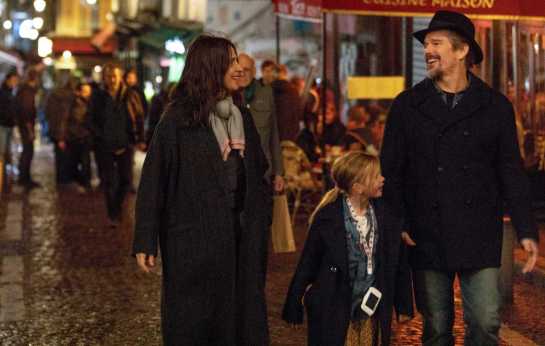
Binoche is a sublime presence playing Fabienne’s long-suffering daughter Lumir. She’s a screenwriter living in New York with her second-tier actor husband Hank (Ethan Hawke) and their precocious daughter Charlotte (Clémentine Grenier). The three arrive in Paris for the launch of Fabienne’s book and immediately old mother-daughter tensions resurface. Things move from a slow simmer to slow boil after Lumir reads her mother’s book and finds it to be far from “The Truth”. When confronted Fabienne coldly responds “I’m an actress. I won’t tell the naked truth.”

From there Kore-eda patiently let’s his story play out. It may seem like the movie is idling along with nothing much happening. But it’s quickly evident that Kore-eda is carefully unpacking his characters through the organic flow of everyday life. By simply watching and listening we learn that everyone is in some way wrestling with the past and they all seem to have something to hide. It neatly fits with Kore-eda’s lingering interest in family dynamics specifically between parent and child.

TRUTH2

Photo Courtesy of IFC Films

Kore-eda is a master of subtlety and observation, but he also has a sly sense of humor. He builds his movie around the production of Fabienne’s new film, a sci-fi arthouse oddity titled “Memories of My Mother”. These amusing scenes get us out Fabienne’s posh but stuffy Parisian estate and onto a movie set where Kore-eda pokes fun at the quirks of filmmaking while relishing the joys of creativity. At the same time the characters are always front-and-center and their stories are steadily moving forward. There’s an glaring analogy between Fabienne’s new movie and her mother-daughter drama back home, but it’s handled with sure-handed smarts.

Kore-eda pulls off a lot with “The Truth” including making a film that is indelibly French through and through. It’s a beguiling chamber piece where every line drips humanity and his characters are the chief focus. It helps to have talents like Deneuve and Binoche whose natural fluency with dialogue is unmatched. Even Ethan Hawke’s Hank, who seems like a flighty tag-along at first, is fully fleshed out and given a surprising amount of depth.

“The Truth” is a treat for those of us who love sitting back and watching great performers act. Binoche is one of our best working talents and Hawke has for years now consistently made interesting choices. But Deneuve is the star (as she should be). She has worked steadily since her debut in 1957, but it has been years since she was given such a meaty role. Her self-referential confidence and complete command of her character shows she hasn’t missed a step. And Hirokazu Kore-eda is not only smart enough to utilize this caliber of on-screen talent, he also writes the kind of engaging material that enables them to shine.

VERDICT – 4.5 STARS

4-5-stars

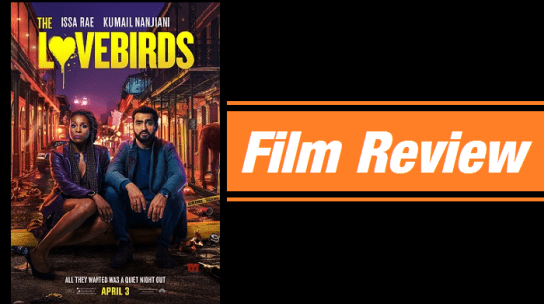
REVIEW: “The Lovebirds” (2020)

BIRDSposter

One of the earliest big screen casualties of the coronavirus theater closings was “The Lovebirds”. Paramount was in the middle of a pretty hefty promotional campaign when the coronavirus pandemic shut down movie houses and multiplexes around the globe. In a surprise move the film was sold to Netflix and now set to release on their streaming platform tomorrow.

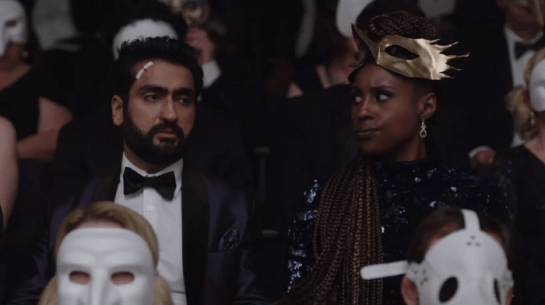
The film is directed by Michael Showalter who earned critical acclaim for his 2017 comedy “The Big Sick”. He follows it up with “The Lovebirds”, a film that reunites him with Kumail Nanjiani and adds rising star Issa Rae. Their movie plays like a slightly edgier “Date Night” (remember that Steve Carell/Tina Fey flick) but without the memorable supporting players. Instead everything here rides on the backs of the two able leads who are forced to carry the load.

BIRDS1

Photo Courtesy of Netflix

Everything starts rosy for Jibran (Nanjiani), an introvert who makes documentaries, and Leilani (Rae), a social go-getter works at an ad agency. They really hit it off on their first date and the lovestruck couple seem destined to be together. Fast-forward four years and the two are still an item but hardly the starry-eyed romantics they once were. They find themselves arguing over the most inconsequential stuff (like whether or not they could win “The Amazing Race”). This couple who once looked like a match made in Heaven now are on the verge of calling it quits.

But something crazy happens on the drive to a dinner party. While arguing (again) Jibran hits a guy on a bike who darts out in front of their car. The man gets up and speeds off, but another man claiming to be cop takes the wheel and runs the cyclist over – literally…over and over. He then takes off leaving Jibran and Leilani to take the heat. Rather than wait for the police, the two panic and run away setting up a night of close calls and off-the-cuff detective work as they try to clear their name.

Nicely set within the not-so touristy parts of New Orleans, “The Lovebirds” bounces Jibran and Leilani around the city dropping them into one ludicrous scenario after another. They start out silly but undeniably amusing such as when they’re abducted and forced to play “Let’s Make a Deal” with a saucy Southern vixen (a really fun Anna Camp). But their predicaments get more ridiculous as we go, topping off with an absurd aristocratic sex cult sequence à la “Eyes Wide Shut”. It’s something that I’m sure looked better on paper than on screen.

BIRDS2

Photo Courtesy of Netflix

And then you have the mystery/conspiracy itself (if you can find enough meat on its bones to even call it that). It’s half-baked and barely held together. It completely fizzles out by the end while the antagonist is as generic and paper-thin as any you’ll ever see. I get that these things are secondary and are only there to offer up moments for Nanjiani and Rae to do their thing. But the stakes seem like an afterthought and if it’s going to be a fundamental part of your story it should at least be mildly convincing.

The movie finds its dual saviors in Nanjiani and Rae. It’s at its strongest when the two charismatic leads are bouncing barbs back-and-forth or bickering over frivolous nonsense in the face of various dangers. Nanjiani is solidly within his comfort zone while Rae continues to open eyes and turn heads. I wouldn’t say they are brimming with romantic chemistry, but as a comedy duo they pair up nicely doing a lot with little and ultimately keeping “The Lovebirds” afloat.

VERDICT – 3 STARS

3-stars

REVIEW: “The Trip to Greece” (2020)

GreecePOSTER

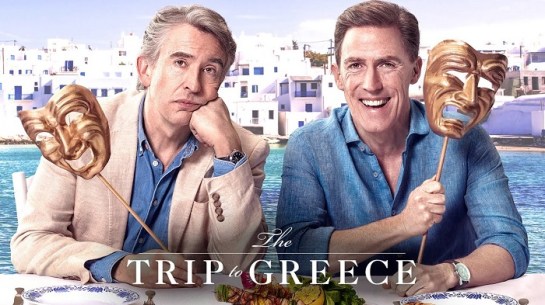
If you aren’t familiar with the “Trip” movies, they actually have an interesting origin. The brainchild of actors Steve Coogan and Rob Brydon along with filmmaker Michael Winterbottom, they began back in 2010 as an improvised six-episode BBC television series. The series was then edited into a well-received feature film. In the years following, the trio would successfully repeat their comedic TV-to-movie formula for trips to Italy and Spain.

The idea has Coogan and Brydon playing fictionalized and slightly exaggerated versions of themselves. Coogan is commissioned to venture out on a culinary road trip reviewing restaurants across various European locations. Everybody he invites to go along turns him down except Brydon. So the two set out on week-long journeys into history, culture and cuisine. But as before, the real draw is the steady diet of banter, drollery, and of course the wildly funny impersonations.

GREECE1

Photo Courtesy of IFC Films

The fourth and final “Trip” series aired earlier this year in the U.K. and this Friday we get its film version “The Trip to Greece”. This time around the pithy, chattering Brits set out to retrace the steps of Odysseus in six days beginning with a brief stop in Turkey. From there it’s across Greece’s beautiful rolling hills and along its stunning sun-soaked coasts, making stops at Ancient Stagira, the Temple of Apollo at Delphi, the Theatre of Epidaurus, the Caves of Diros, among other history-rich landmarks. Each day is wrapped up with a delectable gourmet meal at a five-star local restaurant.

While the film absolutely works as an exquisitely shot travelogue, it’s the easygoing and often hilarious conversations that sets these films apart. Coogan and Brydon have a relaxed, free-wheeling chemistry that shows itself in their off-the-cuff chats about history, mythology, and philosophy. Their good-natured riffing and playful competitiveness lead to some really funny exchanges. And then you have the slew of impersonations from Marlon Brando to Sean Connery (their “Stan Laurel and Tom Hardy” bit may be my personal favorite).

Greece2

Photo Courtesy of IFC Films

But though coated in humor, some of their topics expose a thinly-veiled middle-age melancholy. Certain discussions reveal deeper and more personal reflections – ponderings about life and death, happiness and contentment. It really comes to light in the final act where Winterbottom injects his film with a heavy dose of humanity that quite frankly caught me off guard. It’s culminates in a strong ending which taps into some important but often less recognized themes that have subtly ran throughout the entire series.

“The Trip to Greece” is a fitting and thoroughly satisfying way to end a surprisingly enduring series. It’s a joy to look at whether admiring the gorgeous seas and countryside or enviously drooling over the exquisite dishes. And it’s all threaded together by Coogan and Brydon’s terrific camaraderie. You could make the argument that this is more of the same just in a different country. You wouldn’t be wrong and that should excite fans of the previous movies. Interestingly, this may be the most mature of the four films, but it’s just as funny and entertaining even when the duo’s jokes are flying over my head.

VERDICT – 4 STARS

4-stars