REVIEW: “Train to Busan”

trainposter

The zombie sub-genre is probably the fastest growing in all of horror. While it seems to have slowed down a tad, there are still countless numbers of films about the undead. Not surprising, a lot of it is waste, but there are also thoughtful, intelligent zombie movies that manage to terrify while also having something to say.

Director Sang-ho Yeon’s blistering South Korean zombie picture “Train to Busan” is one of the good ones. More survival thriller that straightforward horror, Yeon’s film pulls influence from several movies. It’s a bit of “Snowpiercer” meets “28 Days Later” but with a dash of “World War Z” tossed in for good measure. I’m not the first person to make those comparisons but they’re almost impossible to avoid. But that’s not a bad thing. “Train to Busan” doesn’t hang its hat on those influences. It has enough of its own ideas to make it unique.

train2

The film’s central relationship is between a father and daughter (right off the bat it had me – I’m easy.) Gong Yo plays a workaholic fund manager named Seok-Woo. He’s recently divorced and spends more time at the office than with his young daughter Su-an. His disconnect with his daughter is best illustrated in one scene where he gives her a birthday gift. It’s the exact same thing he recently gave her for another occasion. Frustrated, Su-an pleads with her father to take her to her mother in Busan.

The next morning father and daughter board a bullet train from Seoul to Busan. Once onboard Yeon and writer Park Joo-suk introduce us to several side characters who will impact the story in a variety of ways. There’s a blue collar husband and his pregnant wife, two elderly sisters, a self-centered CEO, a train-hopping homeless man, and even a high school baseball team. But there is one more noteworthy passenger – a staggered young woman with a bite mark in her leg. She begins to convulse, attacks an attendant, and soon the zombie spread begins leaving a handful of survivors trapped on a speeding passenger train.

There are no guidelines to how movie zombies operate. Some creep and stumble while others run full-throttle. Some return to life over time while others turn quickly. Yeon’s zombies are fast, ferocious, milky-eyed terrors. Their transformation from victim to zombie is instantaneous. This makes for several remarkably intense sequences especially considering the claustrophobic confines of a fast-moving train. Sang-ho and cinematographer Lee Hyung-deok create some stellar scenes brimming with viciousness yet not fully relying on graphic gore. Don’t get me wrong, the zombie violence is bloody but far from excessive.

train1

And as with the best zombie flicks, it’s the human elements that makes this one rise above genre expectations. Take the key daddy/daughter relationship. For them it becomes more than a train ride and zombie attack. It’s a wake-up call for Seok-Woo and a chance at righting his relationship with his daughter. There is also a running theme of kindness and charity in the face of great horrors. Repeatedly characters are faced with the options of working together or alone. Their decisions often impact whether people live or die. The film also examines paranoia, selfishness, sacrifice, and more.

I went into “Train to Busan” expecting a thrilling, edge-of-your-seat zombie romp and it’s very much that. It’s a tension-soaked blast of a movie but with plenty of smarts both in front and behind the camera. Its good characters, deeper themes, and impeccable execution helps it to defy any dismissive genre perceptions some folks may have. Sure, it still won’t appeal to everyone, but for me “Train to Busan” is an injection of freshness into its genre and easily in the upper tier of zombie movies.

VERDICT – 4.5 STARS

4.5 STARS

REVIEW: “Three Colors: Red”

threecolorstrilogy

Krzysztof Kieślowski was at a pivotal point in his life while making his renowned Three Colors trilogy. He had determined that these would be his last movies and at the conclusion of his trilogy he announced it to the world. It was 1994 and Kieślowski was at the pinnacle of his career. Yet he stepped away from filmmaking with the intent of sitting at home and smoking while never ever visiting a cinema again. Sadly, Kieślowski would die two years later at the age 54. A true artist driven by his own rules right to the end.

Kieślowski’s Three Colors trilogy couldn’t be a better send off – a testament to a visionary’s passion for creating movies that burrow deep into the human elements that unite us. Kieślowski once said he preferred “touching on subject matters and situations which link people, and not those that divide people.” While he often spoke to the social and political climates of his times, they were too divisive and rarely his focus. He later said “Feelings are what link people together.” That very idea permeates ever frame of his Three Colors movies.

The trilogy’s name is taken from the three colors of the French flag – blue, white, and red. Each of the flag’s colors represent a particular ideal. Blue stood for liberty, white for equality, and red for fraternity. Each movie represents one of these ideals but on a human level and never within a political framework. Politics tend to divide and that was of no interest to Kieślowski. He sought to examine these principles within the confines of individual lives and all of the love, sorrow, pain, and humor that come with living. These are feelings and emotions that we all know and can connect to. All three films, while able to stand on their own, do connect in subtle and sometimes surprising ways.

redposer

With “Red”, the final film in the Three Colors trilogy, Kieślowski saves his best for last. While pulling some elements from the previous two movies, “Red” still feels strikingly unique both in look and tone. It probably has the most obvious relationship with the ideal it represents (fraternity), but that doesn’t mean it’s free of thematic exploration and nuance. Quite the obvious. Kieślowski rarely looks at his subjects literally meaning we get plenty to meditate and chew on.

“Red” features a fairly straightforward story but with a sense of mystery and wonderment. There is also a surprising amount of warmth that we don’t see in the other movies. “Blue” was cold in much of its dealings with isolation and separation. The coldness in “White” comes in the form of a broken relationship and a jilted husband’s desire for revenge. “Red” has some of the same but it slowly and steadily moves towards the warm glow of fraternity yet not without facing the quandaries of life Kieślowski loves to contemplate.

red1

Irène Jacob plays Valentine, a university student and part-time bubblegum model living in Geneva. While driving home one night she hits a German Shepherd with her car. The address on the collar leads her to a reclusive ex-judge named Joseph Kern (Jean-Louis Trintignant). Their initial meeting doesn’t go well. The soured, callous Joseph seems to care nothing about his dog and even less about Valentine. Eventually the loneliness they both share sparks a compelling bond between the two.

“Red” is a film that deals with fraternity but it’s also about miscommunication and missed connections. We see this in Valentine and Joseph’s central relationship, but there are other ways the film emphasizes it. For example, a law student named Auguste (Jean-Pierre Lorit) lives in the apartment building next to Valentine’s. The two cross paths every day yet never once seem to notice each other. Both are in less than perfect relationships, Valentine with the smug domineering Michel who we only hear over the phone, and Auguste with the flirty Karin (Frederique Feder). Both have an avenue for a potentially better relationship but constantly miss the connection.

red2

Kieślowski thoughtfully unwraps these people through their circumstances and intersects their stories in some unexpected ways. As he does so he challenges us to empathize with his characters and delve deeper into their motivations and feelings. This was common for Kieślowski whose true desire was to portray not merely what we see with our eyes but what we sense. This is so evident in his effective uses of each title’s color. In “Blue” it was moody and somber. In “White” it was often more naturalistic and at times idyllic. But in “Red” it conveys a number of feelings while also provokes our senses in a variety of ways.

“Red” is a mesmerizing and engaging experience right up to its peculiar but perfectly fitting ending. It connects itself to the previous two film but at the same time continues the trend of being surprisingly unique. All three movies have managed to be within the same world but strikingly different in terms of story, tone, aesthetic, and meaning. “Red” is a superb way to bring the trilogy to a close and it’s particularly moving in that this was the final movie Kieślowski would ever make. In “Red” he left us with an exclamation point on a fabulous career and a firm reminder that his work stands among the best of his craft.

VERDICT – 4.5 STARS
4.5 STARS

REVIEW: “Three Colors: White”

threecolorstrilogy

Krzysztof Kieślowski was at a pivotal point in his life while making his renowned Three Colors trilogy. He had determined that these would be his last movies and at the conclusion of his trilogy he announced it to the world. It was 1994 and Kieślowski was at the pinnacle of his career. Yet he stepped away from filmmaking with the intent of sitting at home and smoking while never ever visiting a cinema again. Sadly, Kieślowski would die two years later at the age 54. A true artist driven by his own rules right to the end.

Kieślowski’s Three Colors trilogy couldn’t be a better send off – a testament to a visionary’s passion for creating movies that burrow deep into the human elements that connect us. Kieślowski once said he preferred “touching on subject matters and situations which link people, and not those that divide people.” While he often spoke to the social and political climates of his times, they were too divisive and they were rarely his focus. He later said “Feelings are what link people together.” That very idea permeates ever frame of his Three Colors movies.

The trilogy’s name is taken from the three colors of the French flag – blue, white, and red. Each of the flag’s colors represent a particular ideal. Blue stands for liberty, white for equality, and red for fraternity. Each movie represents one of these ideals but on a human level and never within a political framework. Politics tend to divide and that was of no interest to Kieślowski. He sought to examine these principles within the confines of individual lives and all of the love, sorrow, pain, and humor that comes with living. These are feelings and emotions that we all know and can connect to. All three films, while able to stand on their own, do connect in subtle and sometimes surprising ways.

white-poster

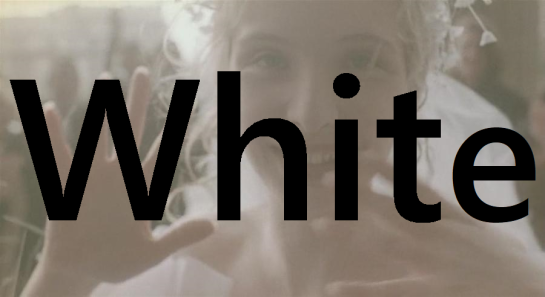
When writing about “Blue” (the first film in Krzysztof Kieślowski ‘s Three Colors trilogy) I noted the difficulties in first finding the liberty. In “White” recognizing a meaningful connection to “equality” proves even harder, but it is there for the gleaning. All it takes is a careful eye to see it in the central relationship, in the sociopolitical probing, and in viewing the story as one big sweeping allegory. And as with the color blue in the previous film, white is prominently used for a number of purposes.

But at the same time Kieślowski doesn’t seem beyond using the color white to play with his audience. Those who have watched “Blue” will remember the mood and feeling conveyed by the director’s use of that color. Having set up our inquisitive eyes with that film, you can almost sense Kieślowski chuckling as we try to do the same in “White” – as we try to decipher meaning that isn’t always there. It’s an idea seemingly unique to this installment of the trilogy, but also congruent with what is essentially a dark comedy.

white1

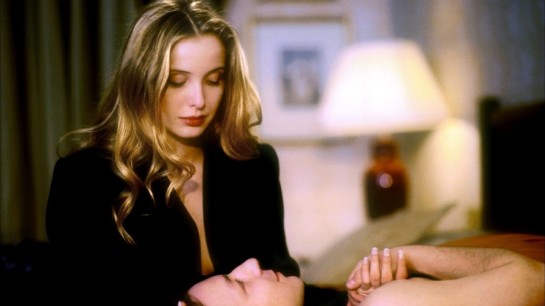
You could say “White” is a story about love, not so much through the eyes of a romantic but a realist. The love Kieślowski examines isn’t neat, warm, and bubbly. It’s peculiar, painful, and messy. That messiness is evident in the film’s opening moments as a Polish hairdresser named Karol (Zbigniew Zamachowski) is being humiliated in a Paris divorce court by his wife Dominique (Julie Delpy). She testifies that she no longer loves him and wants a divorce due to his impotency. Through a series of unfortunate mishaps he loses his home, money, and passport.

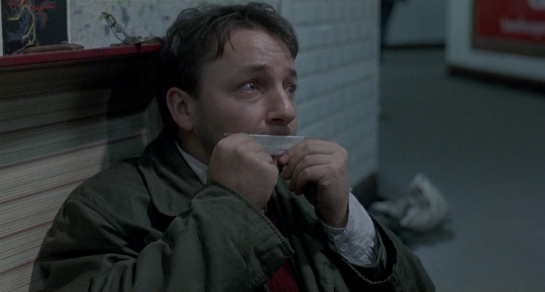
With no means of getting back to Poland, Karol resorts to panhandling in the Paris metro. There he meets and befriends a fellow Pole Mikołaj (Janusz Gajos) who helps him get back to Warsaw through the most unorthodox of means. Once home he gets his footing and sets out for revenge/equality which in Kieślowski’s film are inseparable. First Karol throws himself into the fledgling capitalist system of post-communist Poland where we hear repeatedly “everything is for sale”. It’s all part of an elaborate plan to get back at Dominique even though it’s abundantly clear that he still loves her.

white2

Zamachowski was instructed to keep Charlie Chaplin’s movies in the back of his mind when acting. Kieślowski’s intent was not to mimic Chaplin but to let his physical language influence Zamachowski’s performance. It works in two ways, first as an sly comedic device but also in portraying Karol as gentle and timid. We particularly see it in the first half of the film where Karol is seen as hapless and directionless. Much like the beat-up suitcase in the opening scene, moving along on an airport conveyor with absolutely no control of where it’s going.

Things get a little zany in the last act of “White”, but appropriately so considering the quirkiness of the story. Yet while this is easily the lightest of the trilogy, “White” clearly has much to say about a host of things pertaining to the human experience. It isn’t as meditative as “Blue” but it plays with just as many themes and delves into numerous facets of Kieślowski’s favorite subject – human nature. That makes it a worthwhile component of the Three Colors experience.

VERDICT – 4 STARS

4 Stars

REVIEW: “Three Colors: Blue”

threecolorstrilogy

Krzysztof Kieślowski was at a pivotal point in his life while making his renowned Three Colors trilogy. He had determined that these would be his last movies and at the conclusion of his trilogy he announced it to the world. It was 1994 and Kieślowski was at the pinnacle of his career. Yet he stepped away from filmmaking with the intent of sitting at home and smoking while never ever visiting a cinema again. Sadly, Kieślowski would die two years later at the age 54. A true artist driven by his own creative rules right to the end.

Kieślowski’s Three Colors trilogy couldn’t be a better send off – a testament to a visionary’s passion for creating movies that burrow deep into the human elements that connect us. Kieślowski once said he preferred “touching on subject matters and situations which link people, and not those that divide people.” While he often spoke to the social and political climates of his times, they were too divisive and they were rarely his focus. He later said “Feelings are what link people together.” That very idea permeates ever frame of his Three Colors movies.

The trilogy’s name is taken from the three colors of the French flag – blue, white, and red. Each of the flag’s colors represent a particular ideal. Blue stands for liberty, white for equality, and red for fraternity. Each movie represents one of these ideals but on a human level and never within a political framework. Politics tend to divide and that was of no interest to Kieślowski. He sought to examine these principles within the confines of individual lives and all of the love, sorrow, pain, and humor that comes with living. These are feelings and emotions that we all know and can connect to. All three films, while able to stand on their own, do connect in subtle and sometimes surprising ways.

blue-poster

For much of the film it can be difficult to find the liberty in “Blue”, the first movie of Kieślowski’s Three Colors trilogy. In fact much of the film seems to be exploring a form of bondage – to grief, to pain, to the past. But I suppose it’s true what they say – liberty/freedom is much sweeter once you’ve tasted bondage. In “Blue” liberty as a theme is present, but much more as a desire than a reality.

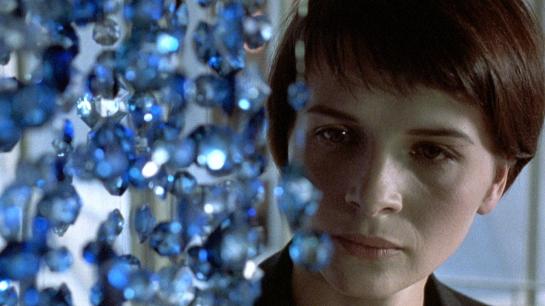
The entire trilogy was written by Kieślowski and trusted collaborator Krzysztof Piesiewicz. Their first film focuses on a woman named Julie (played by the sublime Juliette Binoche) who is dealing with the death of her famous composer husband and young daughter from a car accident. Weighed down by the burden of her grief, Julie seeks to cut all ties with her past. She puts the family home up for sale, disconnects from the people they knew, and even destroys her husband’s final unfinished commissioned score. The only thing she keeps is her daughter’s sparkling blue mobile.

Julie wants to live as someone with no past. She rents an apartment in a corner of Paris with hopes of living in anonymity. But every unintended new human connection inevitably brings her closer to the past she is trying to escape. It’s here that Julie must decide whether to burrow deeper into her hole of isolation or unearth her sorrow and pain in hopes of breaking free from their hold on her. Kieślowski doesn’t make this an easy decision. It becomes even more complicated when secrets of her husband’s past surface.

blue1

The cinematography was handled by Sławomir Idziak who shot most of Kieślowski’s early work. As you can guess Idziak finds many ways to incorporate the color blue into his shots but they never feel meaningless. Like skillful craftsmen he and Kieślowski use the tones to great effect to accentuate feeling and highlight mood. It’s both beautiful and evocative. You will also notice a plethora of other crafty visual techniques that are constantly adding new perspective.

Kieślowski was all about examining human nature and no detail was too small or without meaning. “Blue” moves steadily and confidently, traits that are no doubt reflections of its director. It’s an intimate meditation centered by a bold, piercing performance from Binoche who speaks little but tells much through her revealing outward expression. As we observe the unfolding emotional layers of “Blue” we are given plenty to soak in. And it doesn’t take long before Kieślowski has us invested in his main character and the compelling themes finally brought to the surface most notably the aforementioned idea of liberty.

VERDICT – 4.5 STARS
4.5 STARS

2016 BlindSpot Series: “Touch of Evil”

TOUCH poster

When examining Orson Welles’ career as a director you won’t find a huge volume of movies. What you will find is a filmmaker not only willing, but driven to experiment and explore every facet of making a movie. You see it in “Citizen Kane”, his most acclaimed film and what may be the greatest directorial debut. You see it in his superb period drama “The Magnificent Ambersons. But you may see it best in his 1958 crime noir classic “Touch of Evil”.

Originally hired for the supporting role of Police Captain Quinlan, Welles was convinced to also rewrite the screenplay and direct. The resulting “Touch of Evil” is considered by many to be one of the last great examples of film noir, featuring a fun cast, a twisting story, and a fantastic visual style.

touch1

The story is set in a Mexican/United States border town and begins with one of cinema’s greatest openings. A bomb is planted in the trunk of a car. A couple gets in the car and begins to drive through town towards the US border. Welles follows the car in one continuous three-minute shot stopping in traffic and slowly weaving through large numbers of pedestrians.

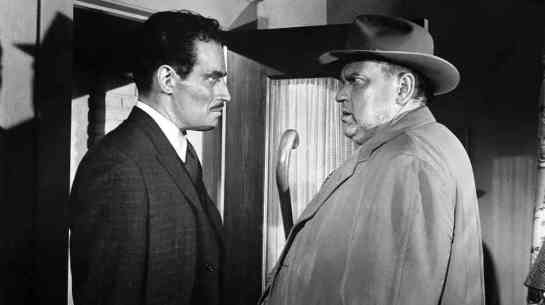
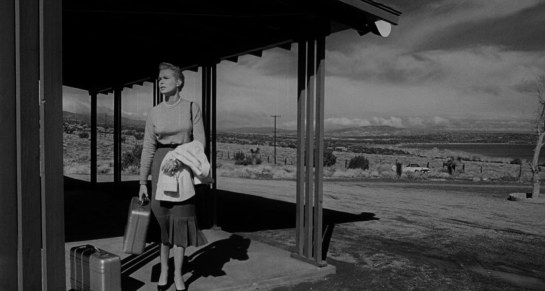
We the audience know something bad is bound to happen. We just don’t know when. Welles plays with our expectations and strings us along until the car does indeed blow. Among the nearby gathering crowd is Mexican drug enforcement officer Mike Vargas (Charlton Heston) and his new wife Susie (Janet Leigh). Vargas begins an investigation but is pushed aside by Captain Quinlan, an American police investigator who instantly butts heads with Vargas.

The film follows the investigation but it soon takes a backseat to issues of corruption, prejudice, and abuse of power. Welles’ story makes several wild and unexpected turns and the tone gets darker the further it goes. The moody camerawork embraces the visual approaches that made noir such a fascinating cinematic movement and it helps stress the edginess of Welles’ screenplay.

touch2

Heston was an odd choice but added star power and heft to the lead role. Leigh is very good and is featured in one of the film’s darker angles. Welles’ performance is also strong as the heavy, unpleasant Quinlan. But you have to tip your hat to the wild array of wonderful side characters who fill in this seedy, shady tale. Joseph Calleia is great as Quinlan’s right-hand man. Marlene Dietrich has a small but captivating role as a local ‘procuress’. Dennis Weaver is uncomfortably weird as a Norman Bates-like hotel night manager. Akim Tamiroff is a hoot playing a scuzzy gang boss. These characters and more pop in and out of Welles’ story and offer up some of the film’s best moments.

The original cut and unquestionably Welles purest vision for the film ended up being chopped, re-edited, and released in a 93 minute form. Over time it has been put back together as well as could be. That’s good for cinema fans because “Touch of Evil” is a movie filled with craft and vision. Its winding labyrinthine plot and deep moody visual style work together magnificently and highlight the very best film noir had to offer.

VERDICT – 4.5 STARS

4.5 STARS

REVIEW: “10 Cloverfield Lane”

cloverposter

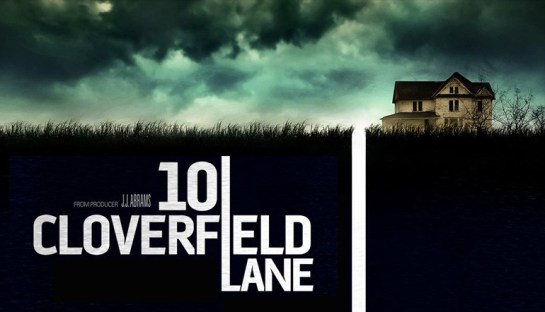
So I guess we can actually say there is now a Cloverfield franchise? That certainly seems to be the case with the release of “10 Cloverfield Lane”. Whether this is the first of several Cloverfield tie-ins, who knows, but I do wonder if the creators of the original film (a 2008 surprise hit) ever envisioned this thing being a series.

This film is nestled in the Cloverfield universe but is not a direct sequel. In fact it differentiates itself in a number of ways. Its narrative connections to the previous film are vague. The visual approach is significantly different. The first film used the once popular found-footage technique while this one (thankfully) stays away from it. The two films even dabble in completely different genres.

10 CLOVERFIELD LANE

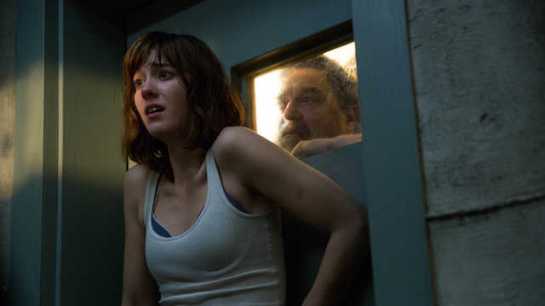
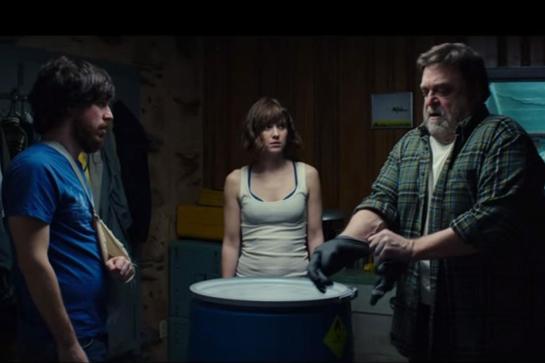
“Cloverfield” was a Godzilla-like science fiction monster movie. “10 Cloverfield  Lane” plays around in several genres, but at its core it is a psychological thriller. Mary Elizabeth Winstead plays Michelle who leaves New Orleans after an argument with her fiancé. Later that night, while driving across rural Louisiana, she has a car accident that knocks her unconscious. She wakes up to find herself chained to wall of a small concrete room.

A creepy and cryptic John Goodman plays Howard – the man who brought her to his fully furnished underground bunker. He explains that there has been an attack either by foreign countries or alien forces which left everyone on the outside dead and the air saturated with lethal radiation. An overwhelmed Michelle must determine whether to fear Howard as her captor or be thankful for him saving her life. There is one other piece of the puzzle.  Emmitt DeWitt (John Gallagher, Jr.) is also in the bunker but the reason and his intentions are a mystery.

“10 Cloverfield Lane” ratchets down on the psychological thrills. For the majority of the film the events outside the bunker take a backseat to the intense drama within. In his directorial debut Dan Trachtenberg shows an impressive understanding of pacing and tension building. His focus on character dynamics serve as the main source of tension and suspense. It slowly builds through character interactions. Trachtenberg maintains a level of uncertainty while never tipping his hand.

Cloverfield2

He does overplay his hand a bit in the final act. I wouldn’t say the film has a poor ending, but the approach, both visually and narratively, clash with the tone the rest of the film worked hard to develop. In a weird way I appreciated the sudden jolt the final act gives. At the same time I couldn’t help but feel it belonged in a different movie.

I’m actually intrigued to see where the Cloverfield franchise goes next. This installment made over $100 million against a $15 million budget so I’m sure we will get more of them. I would love to see them follow this film’s blueprint of playing around with different ideas while making characters the chief focus. But hopefully they won’t feel compelled to tack on another popcorn movie ending that feels completely at odds with everything else they are going for.

VERDICT – 4 STARS

4 Stars