
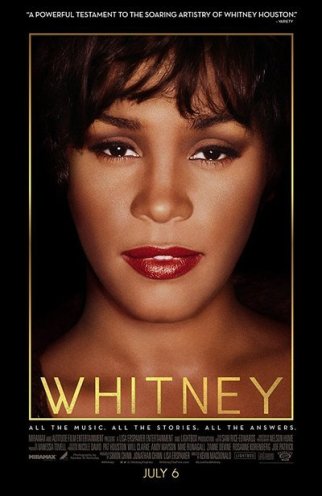
 On February 11, 2012 Whitney Houston was found dead at the Beverly Hilton in Beverly Hills, California. She was 48 years-old. The superstar’s death sent shockwaves throughout the entertainment industry and among her millions of fans. But while her death was a stunner, signs of her spiraling out of control were both obvious and everywhere.
Kevin Macdonald’s “Whitney” is a captivating new documentary chronicling the extraordinary rise and heartrending fall of this immensely talented and internationally acclaimed singer and actress. Macdonald was given the approval by Houston’s estate along with never-before-seen footage, rare performances and exclusive interviews.
Macdonald’s portrait begins by delving into Whitney’s childhood. Raised in Newark, New Jersey, she knew by the age of thirteen she wanted to be a singer. She was affectionately known as “Nippy” by those close to her and that sweet, innocent nickname would represent a certain childlike side of her personality for the rest of her life.
Whitney was born into a family of singers and we are told there was always music playing in the home. Her adoration for song also showed itself at New Hope Baptist Church in Newark. Through her own words we hear how much she loved it there. Macdonald includes a video of a young teenaged girl effortless showcasing that magical signature voice. Just a few years later she would become a breakout megastar shattering records and paving the way for others. These were among the happier times of Whitney Houston’s life.
“There have been several times the devil tried to get me.” – Whitney Houston
Whitney Houston’s life was one of unimaginable highs but also some troubling lows. Early on as a child she was bullied because of her lighter skin. Later she was deeply effected by her parents divorce, her mom’s infidelity and her father’s corruption. After her meteoric rise to stardom she endured questions about her sexuality and racially-fueled attacks by Al Sharpton among others.
But Macdonald makes a strong case that the most devastating influences came from those Whitney loved the most. She was first introduced to drugs by her brothers, the same ones who proclaimed themselves to be her protectors. It would lead to an addiction she was never able to shake. She was heartbroken by revelations that her father had been stealing from her for years. Then there are the shocking allegations of child molestation which have made headlines since the documentary’s release.
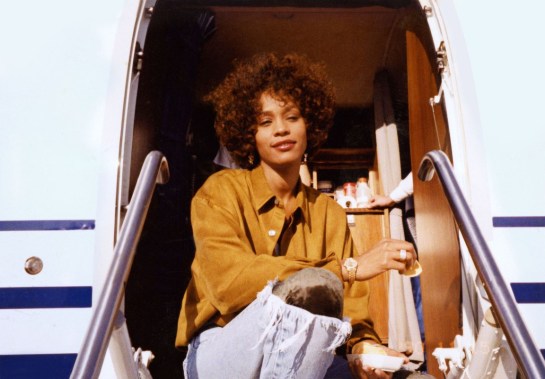
And of course there is her tumultuous 14-year marriage to Bobby Brown. Friends share that Whitney loved Bobby but it proved to be a damaging relationship. Despite popular sentiment, the film shows her drug abuse didn’t begin with Brown, but it certainly became more pronounced and grew worse over time. The two quickly became tabloid fodder. During their time together Brown had frequent run-ins with the law for domestic assault, sexual harassment, and a plethora of other high-profile arrests. When interviewed for the film Brown refused to speak of his or Whitney’s drug abuse, but Macdonald shows several painful videos of the couple that paints pretty clear pictures for us. What’s worse are the horrific effects their stormy marriage had on their young daughter Bobbi Kristina Brown.
“She was always a little girl wishing upon a star” – Cissy Houston
But as sad and tragic as the film is, it also gives us some of her high moments – welcomed reminders of the incredible singer Whitney Houston was. Moments like the 1991 Super Bowl where she delivered perhaps the most beautiful and moving rendition of the Star-Spangled Banner of all time. Macdonald makes it a little jarring by giving it a modern political spin, but it was an amazing moment for Whitney and the country. As was the slice we get of her 1994 post-apartheid performance in Johannesburg. And of course there is her venture into acting with “The Bodyguard”, a film and soundtrack that catapulted her into the stratosphere.
“Whitney” could probably use a few more of those high marks. Some fans are sure to long for more of a celebration of her music. But Kevin Macdonald manages to make a film that’s both a tribute and a tragic tale of the cost of fame. He also shatters many popular perceptions of this tremendous talent whose love and trust were exploited by many of the key people in her life. Yet despite how somber the movie is, the echoes of that breathtaking voice and the reflection of that sparkling young woman from Newark remains etched in the back of my mind. I think it always will be.
VERDICT – 4 STARS









 Keith & the Movies