REVIEW: “Z for Zachariah”

Zposter

The post-apocalypse has become one of the favorite settings for modern day filmmakers. Think about it. We’ve witnessed the aftermath of an earth ravaged by everything from nuclear war to energy depletion to zombie outbreaks. And while some may argue it has been done ad nauseam, I have to say I love it. It’s a setting that offers filmmakers opportunities to put human beings through a plethora of powerful emotional and relational situations.

So right off the bat “Z for Zachariah” places itself in this familiar setting. But the film, directed by Craig Zobel and based on a novel originally published in 1974, shows us several new things and quickly differentiates itself from the post-apocalyptic norm. Flickers of science fiction can occasionally be seen but for the most part it lingers in the background. Instead the film focuses on the most compelling and absorbing dynamic – human drama.
Z1

The movie begins after what appears to be a nuclear holocaust. There is no widespread destruction or vast wastelands. Only emptiness and radiation – vacant mountain cities filled with remnants of a once vibrant past. It is here that we meet Ann (Margot Robbie) rummaging through a radiation-soaked town before heading back to her home – a farmhouse in a miraculously radiation-free pocket of territory high in the mountains. Ann is alone, surviving by working the same farmland as her father during her childhood. She also shares her father’s deep faith believing God has sheltered their land for His own purposes.

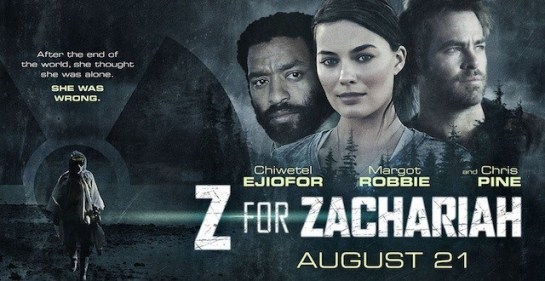
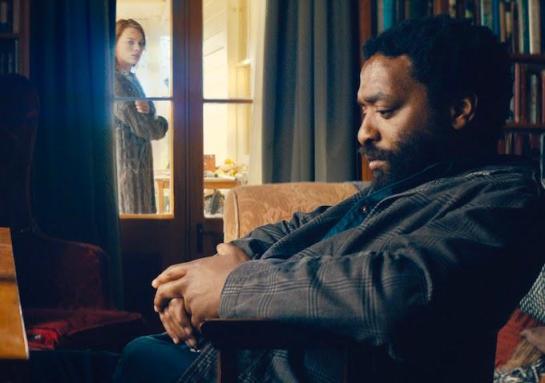
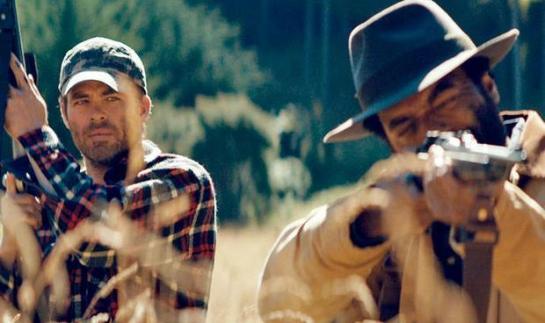
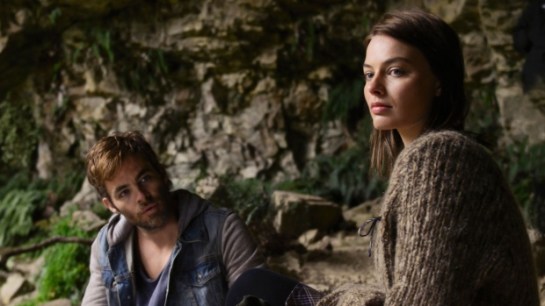
One day while out hunting Ann is stunned by what she sees – another human being. Roaming a winding mountain road in a radiation suit and pulling a cart full of his belongings is John Loomis (Chiwetel Ejiofor). After a complicated first meeting, Ann brings John to the farm where he begins sharing in the work. John was a scientist and an engineer and is respectful of Ann’s beliefs and gracious for her hospitality. We watch as a unique human relationship is formed, each approaching it from very different walks of life. But things get complicated when a mysterious stranger named Caleb (Chris Pine) arrives; a veritable ‘third wheel’ who brings an entirely new set of emotional complexities to the relationships.
Z2

This is the story Zobel seeks to tell. There are no mutated monsters, hordes of zombies, or packs of marauders. Simply three people dealing with their internal and external situations. They could just as well be the last people on Earth which adds a unique perspective to the story. Even in their incredible instances of survival, the basest and most primal human instincts still must be dealt with. And despite their miraculous situations, people will always birth conflict.

But Zobel and writer Nissar Modi look at these things through different lenses. For example there is a deep spiritual element that we see in Robbie’s character and through the rich symbolism sprinkled in the story. It allows for the pondering of several compelling points. But Loomis and Caleb bring interesting twists of perspective that ask a number of thoughtful questions. This was one of the many things that impressed me. Even in its simplicity, the story is an intelligent and nuanced exercise in human examination and internal exploration.
Z3

And what a telling performance from Margot Robbie, an actress I had given little attention. She is sublime, turning in a beautifully delicate and stripped-down performance. She is the heart of the film and in many ways its frail moral compass. But right behind her is Ejiofor. In a sagacious performance he gives us the most layered and complex character of the film. Even Chris Pine, and actor who hasn’t always impressed me, is very good in giving us an interesting and cryptic third character. These three make up the entire cast and each deliver on a high level.

“Z for Zachariah” is a breath of fresh air, a post-apocalyptic morality yarn that may play out too slowly for some. It unwinds at a deliberate pace, patiently touching on its subjects while never spelling itself out. Yet there is such a satisfying effectiveness to the slowness. Zobel engages his audience not through the normal and expected genre machinations, but by peeling back revealing layers of humanity. Layers that, when examined by an honest eye, can sometimes be quite ugly. Personally, I found it fascinating.
VERDICT – 4 STARS

“Zero Dark Thirty” – 4.5 STARS

ZERO POSTER

Kathryn Bigelow may be the boldest and gutsiest director in the business. One things for certain, she’s not scared to jump head first into a part of the film industry sandbox normally dominated by male directors. I think that’s the main reason I like her so much. Bigelow doesn’t allow others to define what type of director she is or what type of movies she’s going to make. She makes the movies she wants to make and lately they just happen to be gritty and realistic military pictures. But what’s really cool is that she does it better than almost anyone else. She doesn’t bow to gender trends, political positions, or industry traditions. She tells powerful and mesmerizing stories and does it her own way.

Bigelow’s latest film is “Zero Dark Thirty” and it didn’t take long for the cries of controversy to begin. This is also a movie that’s received a lot of praise even garnering several Oscar nominations including Best Picture. But Bigelow herself received what I think is the biggest snub of the Oscars when she was passed over for a best director nomination. This has brought speculations of gender bias from some while others believe it’s Academy backlash for what they perceive as bad politics from Bigelow. I don’t know about any of that but it’s an inexplicable snub. Bigelow has crafted a dense and thrilling film that surpasses her previous movie, the Oscar-winning “The Hurt Locker”.

ZERO1

“Zero Dark Thirty” is an edge-of-your-seat procedural that follows the decade-long manhunt for Osama bin Laden. This isn’t a paper-thin conventional Hollywood action picture. This movie follows the CIA’s taxing search through evidence, information, and leads in order to find the terrorist mastermind. It’s an arduous and toll-taking mission that weeds through enhanced interrogations, misdirections, and loss of life. Bigelow manages to condense this decade’s worth of investigation into a gripping and concise 2 1/2 hours. She stops at critical points during the manhunt, some where we made important progress and others that were disastrous.

Bigelow once again teams up with writer Mark Boal and, as with “The Hurt Locker”, they aren’t out to make political points or deliver a heavy-handed statement. Regardless of the “pro-torture” accusations from the left and the “inaccuracy” claims from the right, Bigelow and Boal throw out a lot of information and allow the audience to sort through it, process it, and come up with our own conclusions. I like that. Unlike so many Hollywood productions of this kind, I wasn’t beaten over the head with a political slant. Instead I was allowed to view the events through my eyes and interpret them accordingly. That’s one of the reasons there has been such a range of reactions and I think it’s a sign of brilliant filmmaking.

ZERO3

Before I move on let me address the “pro-torture” debate that surrounds this film. I think “pro-torture” is a self-serving term that doesn’t do the film justice. Yes the movie shows several scenes of enhanced interrogations and it does say bits of important information were gathered through them. But it also shows the heavy personal and emotional toll it takes and it asks the question ‘Was it worth it?’ Bigelow doesn’t gloss over the harsh and disturbing nature of the torture and it’s impossible to view those scenes in a “pro-torture” light. On the flipside, just when you’re questioning the at-all-cost approach to the search for Bin Laden, Bigelow injects a scene of savage terrorist violence that reminds you of the barbarism at the heart of the enemy. These scenes, along with the brief but sobering opening featuring 911 calls from the 9/11 attacks, really hit home with me and reminded me of the ruthless reality of terrorism. But I had to decide if the ends justified the means and the film makes that decision a challenge.

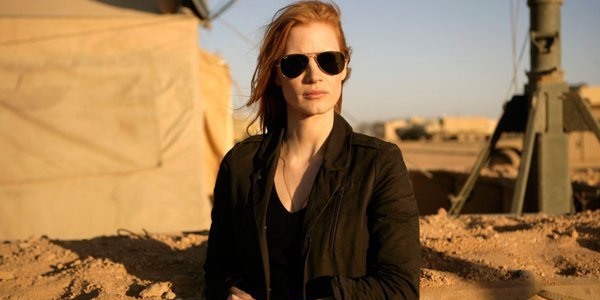
2012 has been the year of ensemble casts and “Zero Dark Thirty” may have the best of them. It’s a veritable ‘Who’s Who’ of actors that I love. It all starts with Jessica Chastain. She plays Maya, a brash and determined CIA operative whose entire career has been devoted to finding Osama bin Laden. Early on she is assigned to the U.S. Embassy in Pakistan where she grows tired of the political wrangling and red tape. She may at times look like a supermodel but she’s really a firebrand who will stir things up to get results. Maya is devoted to her mission and at times she seems like the only one interested in succeeding. But as the movie progresses we see the physical and emotional toll the manhunt is taking on her. Chastain is simply phenomenal. There’s not one disingenuous moment in her entire performance and while 2011 was a great year for her, this was superstar making work.

ZERO2

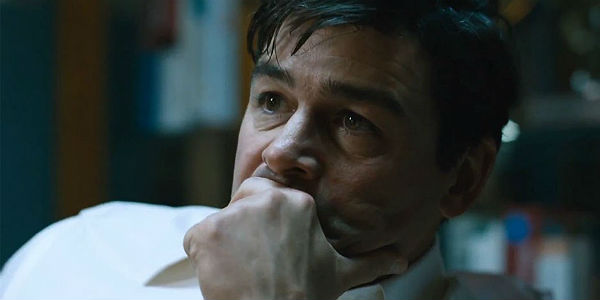
And speaking more of that ensemble cast, there are several other standout supporting performances. Jason Clarke is fantastic as a tough and slightly unhinged CIA interrogator. Kyle Chandler is wonderful as Maya’s CIA boss in Pakistan. Joel Edgerton and Chris Pratt are perfect as members of the Navy SEAL team tasked with pulling off the final mission. I loved Edgar Ramirez as a skilled CIA ground operative. The great Mark Strong plays a CIA head caught in the middle of Washington politics and the mission at hand. James Gandolfini is a lot of fun as a heftier Leon Panetta. I also enjoyed Jennifer Ehle as Maya’s co-worker who starts as a rival but ends up a good friend. This is just an enormously strong cast from top to bottom.

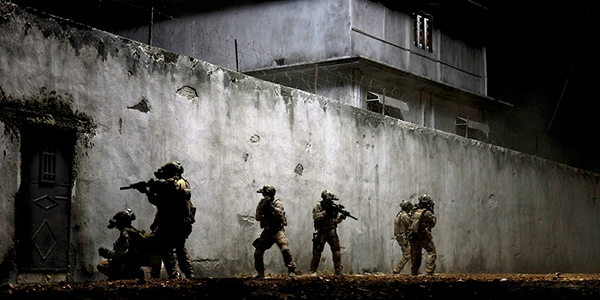
Everyone knows how “Zero Dark Thirty” ends but that doesn’t keep it from being an intense edge-of-your-seat thriller. The story starts with the frustration of bad leads and dead ends but the intensity is ratcheted up to crazy levels once the first big break comes through. I was absorbed in what I was seeing. And then there is the finale, possibly the best 20 minutes of military action ever put on screen. Bigelow never Hollywoodizes the sequence. She makes it as grounded in reality as possible. But when it comes down to it Kathryn Bigelow likes to make movies about people. This is a movie about women and men who sacrificed their skills, their lives, and some may argue their humanity to accomplish a greater good. It’s a movie that’s not afraid of asking tough questions or of challenging popular sentiments. It’s also a movie made with impeccable filmmaking  style and skill which all comes back to Bigelow. So Academy, you’ve got explaining to do!