The Public Movie Defender – “Clash of the Titans” (2010)

MOVIE DEFENDER

The idea behind The Public Movie Defender is to take up the cause of a particular movie that I believe is better than the majority of reviews it has received. These are movies which I feel are worth either a second look or at least a more open examination considering the predominantly negative opinions of them. The films chosen are ones that I like so therefore I’m taking their case and defending them before the court of negative opinion. Let the trial begin…

DEFENDANT #3 – “Clash of the Titans” (2010)
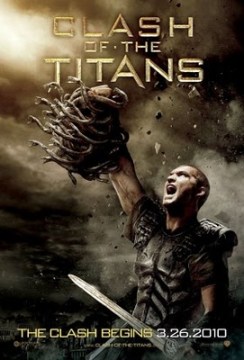
CLASH POSTERWhen I first came up with the idea for this fun little thing called The Public Movie Defender there were several movies that immediately came to mind for inclusion. Some are personal favorites that I am deeply passionate about and others are simply movies that I feel are good yet that get pounded a bit unfairly. Some aren’t that difficult to defend while others are a REALLY hard sell. 2010’s remake of “Clash of the Titans” is one of those hard sells. And while I wouldn’t categorize it as a personal favorite, I do think it’s a good movie that doesn’t deserve the level of disdain it has received.

“Clash of the Titans” had its work cut out for it. It’s a remake of a cult classic from 1981 that featured a wonderful fantasy adventure as well as the final work of stop-motion special effects master Ray Harryhausen. This time advanced makeup and a ton of CGI would serve to bring the world to life and that in itself was quite the task. While my deep affection for Harryhausen’s brilliance trumps the new computer effects, this “Clash of the Titans” features some fantastic effects that easily overshadows the few visual hiccups that we get.

And then there’s the story. There were two different approaches that the remake could have taken. The film could have taken a grittier and more serious look at the material or it could try and capture many of the nostalgic elements of the original. By that I mean the over-the-top language, the massive cheese, the classic fantasy movie plot dynamics. The filmmakers made a deliberate choice to modernize the story a bit but also tip their hat and incorporate a lot of these late 1970’s and 1980’s approaches to fantasy storytelling.

CLash 1

I think this is what alienated some people. I think this clashed with people’s familiarity with modern filmmaking and current cinematic storytelling that we get today. Personally I ate it up. The stilted and uber cheesy dialogue along with several old school plot mechanics brought back memories of the “Sinbad” films, “Ice Pirates”, “Conan”, and “Kull”. These are films that I grew up watching and I clearly see how the movie uses and embraces them. The great actors Liam Neeson and Ralph Fiennes ham it up as Zeus and Hades. Are they cheesy? Yes, more so than a pizza. But they are supposed to be. I completely understand if that doesn’t work for some people, but I don’t see it as a deep flaw in the movie itself. I responded to it with a nostalgic smile and appreciation.

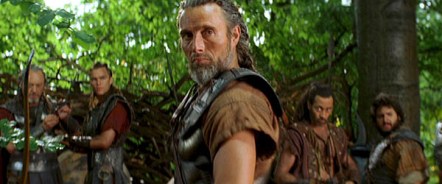
Now it’s not like everything in the movie imitates the original. A tightly shorn Sam Worthington replaces a mop headed Harry Hamlin as Perseus. Some have had issue with Worthington’s character and performance. Not me. I like this grittier and more solemn turn. Considering all that his character faces I can understand him being a bit angry and coarse. I think Worthington brings a toughness and physicality to the role that I welcomed. Add to that an interesting and fun supporting cast of traditional survival-fantasy characters (again a tip of the hat to those old-school flicks). None are better than the great Mads Mikkelsen as the gruff and tough Draco, captain of the King’s Guard.
Clash of the Titans

The movie features the classic fantasy tale. A quest is in place which takes Perseus and crew on a ‘who will survive’ adventure. Along the way they face threats such as witches, Medusa, and of course giant scorpions. And what a scene it is when the giant scorpions appear. Incredible visuals and a beautifully filmed sequence. And then there’s the Kraken. There’s perhaps nothing in this film ridiculed more than Liam Neeson’s command to “Release the Kraken”. And while I wouldn’t call it the equivalent of a great thespian’s oration, it’s not that bad of a line. Sure it’s absolute cheese, but the mockery was really fueled by the the line’s use in the trailers and TV spots. The Kraken itself looks cool and Neeson’s over-the-top unleashing fits in perfectly.

I believe that your opinion of this film will be dictated by expectations and preferences. It’s worth recognizing what the filmmakers are doing and the type of movie they’re making. I think they set a cool nostalgic target and hit it dead center. Now to be clear, I’m not saying this is a perfect film. But I really like what they did. It took me right back to those movies that I would lay in the floor and watch on Saturday afternoons. That made this a fun and entertaining experience and when considering the film in that light I see it as a success. The sequel was a massive disappointment, but for my money “Clash of the Titans” was a blast.
VERDICT: “CLASH OF THE TITANS” – 4 STARS

5 Phenomenal Movie Music Themes That Everyone Knows

movie_theatre - Phenom 5

I don’t think any fellow die-hard cinema fan would argue that music plays a tremendous part in successful movies. Today I’m taking time to focus on the music in movies, particularly popular theme music. To clarify, these aren’t popular songs featuring great lyrics and great voices. I’m talking specifically about theme music that everyone knows. Music that immediately registers with anyone who knows movies and enjoys them. Now with so many examples of great themes I wouldn’t call this the definitive list. But no one can deny that these five movie themes are absolutely phenomenal.

#5 – “Raiders of the Lost Ark”

RAIDERS

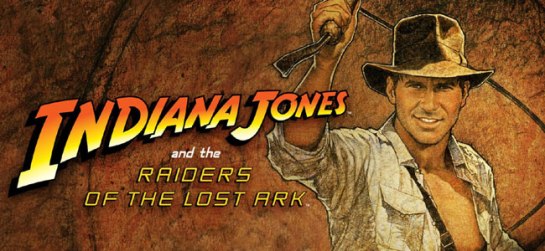
Ok seriously, what person reading this can’t hum the Indiana Jones theme to themselves right now? Indy is a truly iconic movie character. I mean who doesn’t love him? The toughness, the humor, and the wild adventures certainly contribute to the character’s popularity. But then there is that equally iconic theme music from the legendary John Williams. It’s rousing, exciting, heroic, and recognizable. But it’s also always used at the exact right moment in the film. It makes so many of the scenes all the more thrilling and it is music that everyone knows the moment they hear it played!

#4 – “Chariots of Fire”

CHARIOTS OF FIRE

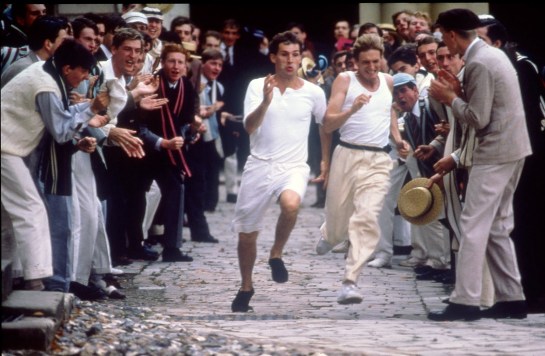
Hugh Hudson’s 1981 inspirational drama is a movie I have been meaning to revisit for a while now. It was a huge Oscar success receiving seven nominations and winning four including Best Picture. One of those Academy Awards was for the brilliant music score from Vangelis. Within that score lies some of the most beautiful and magnetic theme music ever put to film. I remember after first seeing it and how it added so much to the picture. It was a shining example of how music can strengthen any film. There’s so much about the movie which I have forgotten, but one thing I remember with great admiration is the amazing theme music.

#3 – “Halloween”

Halloween

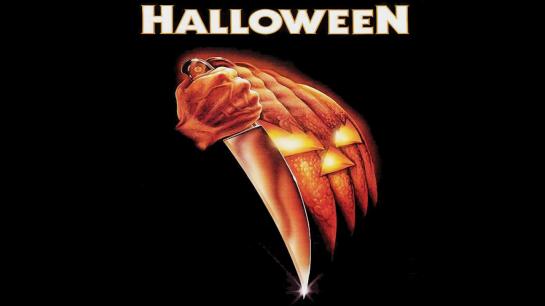
The 1978 film “Halloween” is a genuine horror classic for a number of reasons. It was a tense and uneasy movie that launched an entire sub-genre of horror. And then there is that unforgettable theme music. Part of the reason that “Halloween” was so effective was its basic but incredibly moody theme music which consisted of a fairly simple piano melody written and played by director John Carpenter himself. There is nothing difficult or complex about it yet it is so fitting with the films atmosphere. In fact, it could be said it’s a key component to the movie’s scary vibe. It’s so good and incredibly easy to recognize.

#2 – “Star Wars”

STAR WARS

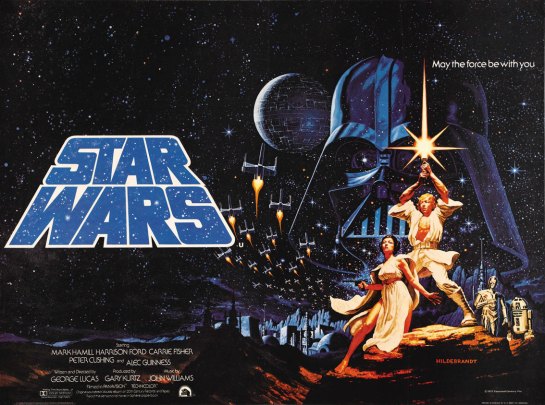
As a Star Wars fan very few things get me going like the musical transition from the 20th Century Fox logo to the Lucas logo to the scrolling intro in the Star Wars openings. When (once again) John Williams’ blast of horns simultaneously appears with the Star Wars title I want to burst out in applause. And talk about theme music that everyone knows. Whether you’re a full-fledged Star Wars geek like me or not, the Star Wars theme music has etched itself in movie history. Williams created an assortment of brilliant music for the film’s score some of which have earned their own individual praise. But it’s the theme music that resounds and instantly identifies this science fiction classic.

#1 – “Jaws”

JAWS

Without a doubt one of the greatest movie themes of all time came from the Steven Spielberg classic “Jaws”. The 1975 thriller features a creepy, moody tune that is so effective it terrorized audiences during its initial release. It’s the perfect tension-building device that amps up the intensity every time it’s used. In fact John Williams’ simple music is used more to announce the shark’s presence than anything we see visually. It’s importance in the film can’t be overstated. This score introduced Williams’ brilliance to the world and it has become some of the greatest and most suspenseful theme music ever made.

So there are my selections. Surely you’ve heard of each, right? Which ones did I miss? Please take time and share your picks in the comment section below.

Remembering Lauren Bacall

BACALL BANNER

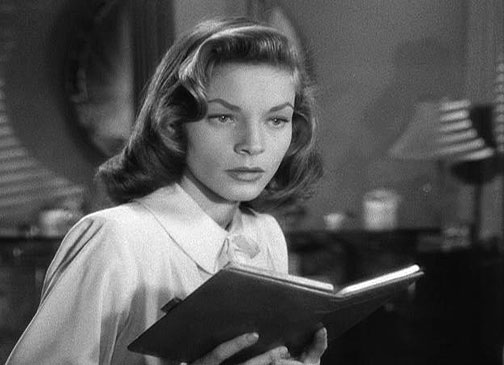
This week brought the passing of a true Golden Age treasure. Lauren Bacall died at age 89. As a humongous Humphrey Bogart fan, the passing of Lauren Bacall carries a deeper sting. The two become a huge Hollywood couple, but they were also a rare one actually built on and maintained by their strong love. They would stay married until Bogart’s death in 1957.

Bacall was born in the Bronx, New York and mostly raised by her mother. Her parents divorced when she was 5-years old and her father took off. As a teen she landed a few noticeable modeling jobs and earned a role on Broadway. But it was filmmaker Howard Hawks who would give her her big shot. He cast this relatively unknown opposite Humphrey Bogart in “To Have and Have Not”. The rest is history.

Bacall established herself as a sultry and sexy actress with a uniquely husky voice and a pair of eyes that would melt you. She would go on to make three more fantastic films with Bogart including “Key Largo”, “The Big Sleep”, and “Dark Passage”. Later she would work alongside such big names as Gregory Peck, Marilyn Monroe, Gary Cooper, Betty Grable, John Wayne, Kirk Douglas, Henry Fonda, and Paul Newman just to name a few.

Bacall’s movie career slowed down in the 60’s and 70’s but she still found the occasional standout role. She would earn her first Oscar nomination in 1997 for “The Mirror has Two Faces”. She would eventually lose the statue in what was considered by many to be a shocking upset. The Academy would later recognize her with their lifetime achievement award. It was most deserving. Bacall was a sizzling screen actress who made her impact with the big stars while only 20-years old. She went on to have a wonderful career giving us so many films we can look back on and enjoy. She not only captured Bogart’s heart, but the hearts of millions of cinema fans throughout the decades. We’ll miss you Betty!

BACALL TO HAVE

“To Have and Have Not”

BACALL BIG SLEEP

“The Big Sleep”

BACALL KEY LARGO

“Key Largo”

BACALL DARK PASSAGE

“Dark Passage”

BACALL2

BACALL1

Lauren Bacall

BACALL5

Bacall final

LAUREN BACALL (1924 -2014)

REVIEW: “Dark Passage”

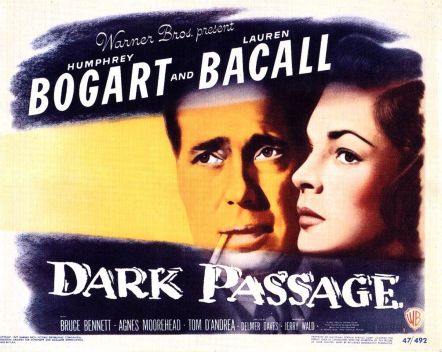
Dark Passage poster

Bogart and Bacall. Those three words always bring a smile to my face. They point to an enchanting onscreen chemistry than spanned four movies and eventually into their offscreen lives. Bacall’s beauty and saucy smarts was always the perfect match for Bogie’s cool tough guy. “Dark Passage” was the third movie that the headline-grabbing couple made together and at the time Bogart was the highest paid actor in Hollywood. The great Delmer Daves directed and wrote the screenplay for this clever film noir that had several unique tricks up its sleeve.

This film opens with a tense and brilliantly crafted jailbreak. Actually we never see the inside of San Quentin but we spot a man hiding in a barrel being driven off in a truck. Just down the road from the prison the barrel rolls off and the man is loose. Through a number of cool bits of camera trickery we never see the face of the escaped convict although we do hear his voice. Instead everything in this opening sequence is shown to us in first person. This treats the audience to a number of tricky perspectives that Daves pulls off beautifully. We learn from a radio alert than the convict’s name is Vincent Parry (Bogart) and he’s wanted for the murder of his wife.

PASSAGE1

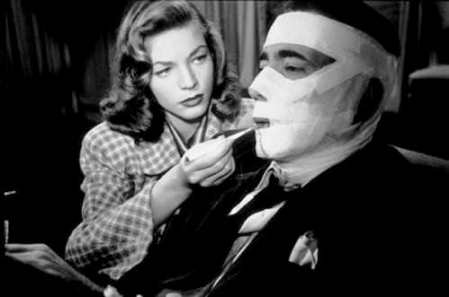
Parry is picked up by a mysterious young woman named Irene Jansen (Bacall). We learn that Irene is sympathetic towards Parry after believing he didn’t get a fair shake during his trial. She sneaks him past roadblocks and into San Francisco where he sets out to find his one and only friend George (Rory Mallinson). He also connects with a back-alley plastic surgeon who attempts to alter his appearance. Now keep in mind, up to this point we still haven’t seen Vincent’s face. Bogart works in the shadows or strictly through voice work from the first person perspective. After the surgery we finally see him only in full facial bandages. It’s not until about an hour in that the bandages are removed and we see Bogie’s mug for the first time.

We see the few central players during the first half of the film but it isn’t until Parry’s new face is revealed (in the image of Bogart) that the story changes direction. It becomes Parry’s quest to clear his name and to find out who really killed his wife. While the unfolding mystery is an interesting shift it is also a weakness. For such a dramatic setup, the revelation itself is pretty lightweight and how things unfold seems a little too on the nose. It’s not that it’s awful, but there was clearly room for a stronger and better conceived mystery.

Despite that, “Dark Passage” is still a wonderful movie because of the cool and stylish camera work, the great San Francisco locations, and the sizzling chemistry between Bogart and Bacall. There are also some really nice supporting performances from Bruce Bennett, Tom D’Andrea, Agnes Moorehead, and Rory Mallinson. “Dark Passage” sometimes gets lost in the conversations about Bogart and Bacall’s collaborations, but it’s a clever noir that does several things to set itself apart. It may soften up a tad in the third act but it is still a ton of fun.

VERDICT – 4 STARS

5 Phenomenal Stan Lee Cameos

movie_theatre - Phenom 5

Marvel’s superhero movies have certainly made their mark on the cinematic landscape. One of the real treats for comic book fans has been the inclusion of cameos by the man himself Stan Lee in almost every Marvel movie that has been made. So in honor of the man who created so many of these characters that many of us grew up reading and now enjoy watching, I thought this week I would focus on his best cameos. Now considering the number of cameos he has done I wouldn’t call this the definitive list. But there’s no denying that these five Stan Lee cameos and most certainly phenomenal.

#5 – “Hulk”

LEE HULK

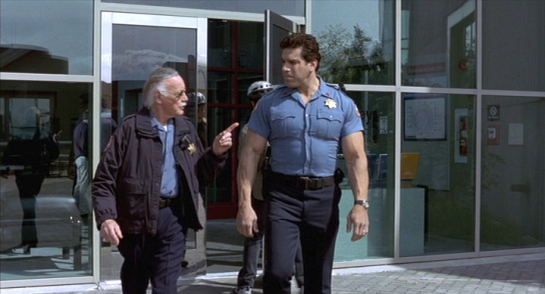
There aren’t many good things I can say about Ang Lee’s long, boring, and at times infuriating 2003 film “Hulk”. It was a monumental disappointment and, aside from some pretty good performances and a great Stan Lee cameo, I consider it one of the worst Marvel movies. But Stan’s cameo is a blast not so much for anything that happens. Lee is walking out of a building with none other than Lou Ferrigno. Both are security guards which provides a hilarious contrast. The small elderly guy and the hulking giant (pun absolutely intended). Watching these two, men who are ingrained in Hulk’s history, discuss security concerns is such a hoot.

#4 – “Iron Man”

LEE IRON MAN

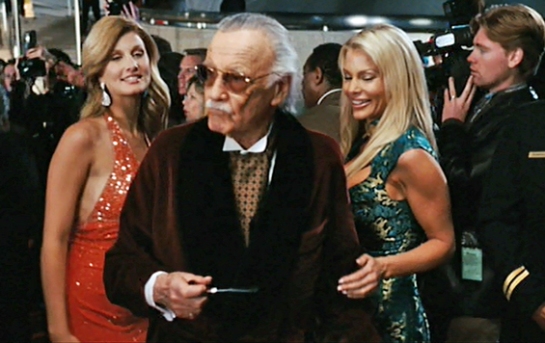
When Tony Stark arrives at a big public gala you can expect a number of things: nice cars, beautiful women, camera flashes, and the quick, dry wit that only Downey, Jr. could bring to the character. Stark briskly strolls through this sea of attention, taking time to insult one woman and intentionally mistaking one man for Hugh Hefner. We see the man from behind. He has slicked back gray hair, a fancy smoking jacket, and he’s bookended by two gorgeous woman. Obviously it’s Hefner, right? Nope! The man turns around and it’s none other than our guy, Stan Lee. It’s a hilarious scene as Lee confusedly looks around to see who just walked by.

#3 – “The Amazing Spider-Man”

LEE SPIDEY

I wasn’t too keen on there being a Spider-Man reboot so soon but that’s what we got in 2012. “The Amazing Spider-Man” was an okay movie (head and shoulders above this year’s lame sequel) but certainly not at the top of the superhero movie list. But one great thing it did have was one of the best Stan Lee cameos of them all. Spidey and the Lizard are engaged in a pretty brutal scrap which boils over into a library. The librarian is none other than Stan the Man. He is checking in some books while listening to music through noise-cancelling headphones that Stark Industries must have created. Behind him a huge fight is going on with tables and books flying everywhere. But he doesn’t see it. He just carries on with his duties.

#2 – “Fantastic Four: Rise of the Silver Surfer”

LEE FF

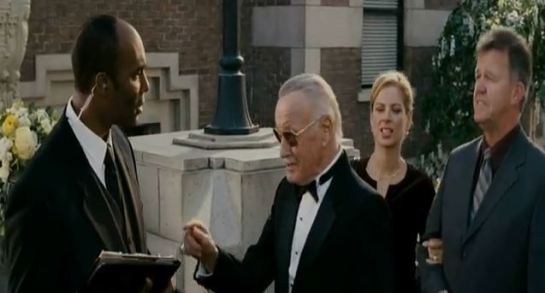
The Fantastic Four films were Marvel movies that had some really strong moments but are ultimately forgettable especially when compared to the better superhero movies out there. But the second film, Rise of the Silver Surfer, featured a Stan Lee cameo that I just can’t get enough of. The film starts with New York’s wedding of the century. Reed Richards and Sue Storm are about to be married and all of the guests are arriving. Well up walks Stan Lee, only the man who CREATED the Fantastic Four. He’s greeted by a strict doorman who stops him. Stan says “I must be on that list” and then gives him his name. The doorman will have none of it and pushes him back all while Stan keeps pleading his case. Great scene.

#1 – “Thor”

LEE THOR

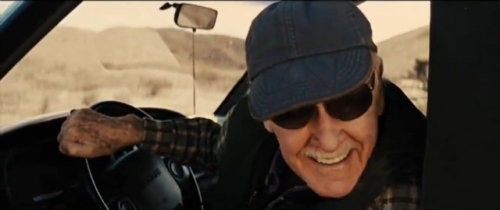
“Thor” was one of the Marvel movies that I thought had a real chance to flop. It was such fantastical material and it could have been a disaster when brought to the big screen. But Marvel knew what they were doing and they knew the tone the film needed. That’s why I thought it really worked. It also featured what is my favorite Stan Lee cameo. Thor’s hammer, the deceptively pronounced Mjolnir, has crashed to Earth. It has been found in New Mexico by a redneckish crowd who have brought out the pickup trucks, beer, and lawn chairs. As hard as they try, none of them are able to lift Mjolnir so they tie a chain to the back of a truck and floor it. The back end flies off of the truck and the driver looks out the window. Of all people it’s Stan Lee who simply asks “Did it work?” No Stan it didn’t, but you did give us what I think is your very best cameo!

So those are my choices. Do you see a Stan Lee movie cameo that I missed? Please share you thoughts on these or others in the comments section below.

REVIEW: “Play Time”

PLAYTIME POster

“Playtime” may be one of the most difficult movies to categorize or review and it may be a difficult movie for some people to process. French filmmaker Jacques Tati is known for focusing more on people and communities and allowing his stories to be told visually through their interactions. He was much more interested in visual comedy through observation than presenting a structured narrative. With “Playtime” he takes this unique style and amplifies it. But with this film he has a different intention and much bigger expectations that may be hard to appreciate at first glance.

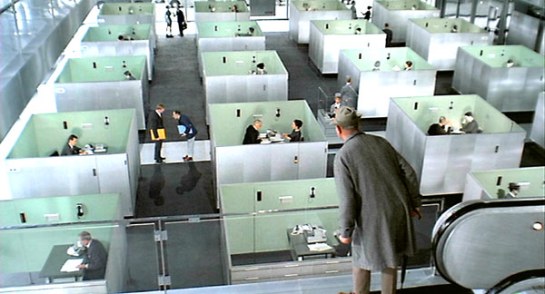
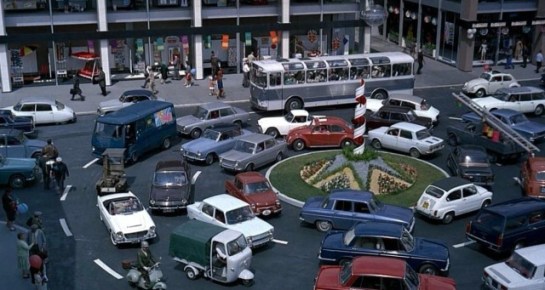
“Playtime” was Tati’s most ambitious project and at the time it was the most expensive movie in French history. It never made its money back at the box office and eventually drove Tati into bankruptcy. Much of the high cost went into the enormous set built by the filmmaker. Money issues made constructing the set drag out almost 4 years. But if you’ve seen the film it’s impossible to not be in awe of what Tati created. His set included an airport, skyscrapers, apartment buildings, office complexes, a downtown area, and several busy city streets. All of it represented the new futuristic Paris that Tati often spoke against in his films.

PLAYTIME1

This is also a movie intended to fade out Tati’s popular Mr. Hulot character. Tati was growing tired of him and used this as an opportunity to move on to something new. But some believe this is one reason the movie wasn’t as well received by the public as hoped. Mr. Hulot was incredibly popular with audiences and his limited appearances in this picture didn’t sit well with some viewers. But honestly, Mr. Hulot is only a cog in Tati’s big machine. This was never meant to be a Mr. Hulot picture in the same vein as “Mr. Hulot’s Holiday” or “Mon Oncle”.

“Playtime” does incorporate several of Tati’s signature techniques in filmmaking and comedy. The gags often hinge on timing and some of them require careful attention or you just might miss them. There is no meaningful dialogue in the picture. Instead the voices of people are simply part of the important background noise that we hear throughout the film. Sound has often played a significant part in Tati’s films and it’s no different here. Everything from the loud heels clicking on the cold, hard floors to the flatulent noises from the hip office chairs has a distinct and intentional sound.


The movie is broken down into sections. It begins in what resembles a hospital but we soon find it’s an airport. It’s here that we are first introduced to some of the film’s reoccurring characters including a tour group of women from the United States and of course Mr. Hulot. From there the movie moves into Tati’s vision of where Paris was heading – a city of long, congested, assembly-line like streets with matching skyscrapers made of steel and glass. The city’s traditional beauty and history is gone replaced by a cold and sterile modernist future. Tati does give us quick looks back at the city’s glory but they are cleverly shown reflections seen in glass doors. The reflections of the Eiffel Tower and of the Sacré-Cœur Basilica on Montmartre hill are visions of a Paris that Tati sees as disappearing in the real world.

PLAYTIME2

Mr. Hulot is lost in this new world. The second big section of the movie takes place in an office high-rise where Hulot is set to have a meeting. Tati makes the place incredibly impersonal and goes to great lengths to portray the building’s futuristic technology as silly and pointless. There is a great scene that illustrates this right after Hulot enters the office building. He’s met by a little old doorman who sits him down while he calls upstairs. To do so the old fella has to work an overly complex intercom system, all the time grumbling to himself as he carries out his perfunctory, everyday duties. He refuses to let Hulot leave his seat, making him wait and wait until the executive he’s there to meet finally arrives from upstairs. But the executive moves him into an office 10 feet away from where he’s been waiting and has him sit down and wait longer. The doorman, the intercom, and the long wait were for the most part pointless.

Hulot ends up getting lost and he stumbles upon a trade show happening in another part of the building. This is where the next section of the movie takes place. It’s followed by some time spent gazing into an apartment complex before heading to an evening at a nice restaurant. Most of the film’s second half takes place in the restaurant. Hulot ends up inside but we really see very little of him. Instead we’re introduced to the new series of characters including a loud and obnoxious American businessman, a clever doorman, an embarrassed waiter who has ripped his pants, the antsy owner, a drunk, the aforementioned tour group, and a number of other people.

The restaurant sequence is a pretty impressive thing to behold. We watch as the night starts slow but as the crowd increases and several mishaps occur, things liven up. There’s really nothing else to the scene. There isn’t a deeper story angle to latch onto nor is there one central character to follow. It’s pure observation as the camera steps back and moves from one section of the restaurant to another. We simply watch everything as if we were sitting on a stool in the corner of the room. It’s unlike anything I’ve seen. It’s a bold and inventive experiment but it’s also laced with some really funny gags. And it doesn’t stop there. There’s a really good drugstore sequence and some time spent on the congested city streets before zipping us back to the airport.

PLAYTIME3

You can’t watch “Play Time” and not be impressed with the skill and the craft of Jacques Tati. And while it certainly has some funny moments, it lacks the playfulness of the previous Mr. Hulot films and I have to admit I missed that. The shelving of Hulot is obvious as Tati intentionally loses him in the concrete, glass, and metal world he created. In fact, at times it seems that Tati is rubbing it in our faces by occasionally throwing out men who walk and dress like Hulot but we find out they are not. By shortening the screen time of his beloved character he forces us to look at the bigger picture that he’s painted on his personal canvas. He makes us look beyond what we’re familiar with and what we expect.

There is nothing conventional about “Play Time”. It’s an ambitious project that also has that signature Tati humor. But it’s nothing like the filmmaker’s previous work and that took some adjusting for me. And personally speaking, this film just didn’t resonate with me like his other work. Staying with the movie can be a bit of a challenge and the humor is spread out and more subtle. But the craftsmanship behind this film can’t be questioned and the sheer scope of the undertaking is incredible. There is so much going on throughout this picture and for a movie with no substantial plot or direction that’s a pretty amazing accomplishment.

VERDICT – 4 STARS