First Glance: “A Call to Spy”

SPY

The upcoming movie “A Call to Spy” looks to be a fascinating historical drama from a uniquely female perspective. It’s directed by Lydia Dean Pilcher with Sarah Megan Thomas writing, producing, and starring. This World War II espionage thriller dropped its first trailer over the weekend and it appears to have a powerful and timely story to tell.

Early into the war a desperate Winston Churchill organized a new task force to recruit and train women as spies for a fledgling resistance. The film follows a group of recruits, each with their own unique strengths, as they prepare and carry out missions against Nazi occupiers. It also stars Stana Katic and Radhika Apte. The period design looks sharp and the story looks to have some real meat on its bones.

“A Call to Spy” opens October 2nd in select theaters and On Demand. Check out the trailer below and let me know if you’ll be seeing it or taking a pass.

REVIEW: “Made in Italy” (2020)

ITALYposter

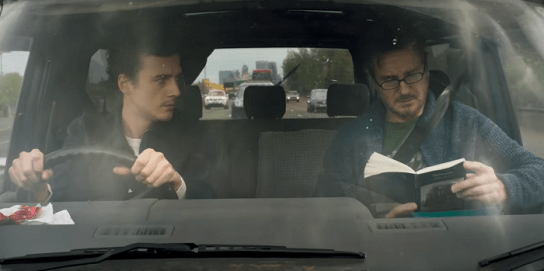
Liam Neeson has hunted down bad guys and utilized his “very particular set of skills” all across the globe. His latest film “Made in Italy” sets him down in the heart of sumptuous Tuscany. But this time he isn’t up against terrorists, human traffickers, or rogue cops. Instead he’s forced to face a dilapidated estate, a ton of pent-up grief, and a brittle relationship with his estranged son. The terrorist were puny by comparison.

“Made in Italy” is the directorial debut for British actor James D’Arcy and I have to admit, I’m a sucker for these kinds of movies. It’s a well-made family drama with a dash of humor and a misty-eyed final act that may be predictable but that justifies its emotional payoff. That’s because D’Arcy gives us characters we can care about. Yes, sometimes they do stick too close to conventional scripting, but they earn our empathy through grounded portrayals and a keen sense of humanity.

ITALY2

Photo Courtesy of IFC Films

Micheál Richardson (Neeson’s real-life son) plays Jack, the manager of a bustling London art gallery owned by the parents of his soon-to-be ex-wife Ruth (Yolanda Kettle). As a result of their messy divorce, Ruth’s parents decide to sell the gallery leaving Jack high and dry. Desperate to buy it for himself, a cash-strapped Jack will have to convince his jerk of a father Robert (Neeson) to sell their Tuscan country villa left to them by their deceased mother/wife. The problem is they aren’t what you would call ‘close’.

So father and son head to the beautiful Tuscan countryside and find the once stunning estate, neglected and vacant for 20 years, in desperate need of repair. Their delightfully snarky real estate agent Kate (Lindsay Duncan) informs them that if they don’t fix the place up they’ll never turn a profit. So Robert and Jack begin restoring the house, unpacking (predictably) years of emotional baggage along the way. Buried grief resurfaces and cloudy memories are brought into focus as the family’s history with the house is revealed.

D’Arcy smartly keeps things from getting too heavy until they need to be or too whimsical therefore undercutting the drama. And while the Tuscany backdrops are easy on the eyes, D’Arcy doesn’t milk them dry. DP Mike Eley admires the scenery without gawking, even having some fun with the notoriously arresting locations.

ITALY1

Photo Courtesy of IFC Films

It’s impossible to watch Neeson and Richardson and not think about the real-life reverberations. In 2009 their wife and mother Natasha Richardson died in a tragic skiing accident. This material has to hit home for both of them and you sense it in several scenes. But instead of fully tapping into those true experiences, the movie relies too heavily on a handful of clichés. Many of them come through Jack’s budding romance with a local restaurant owner named Natalia (Valeria Bilello). She adds some needed local flavor and is a welcomed presence. But Natalia never rises above being your standard love interest.

Rough patches aside, James D’Arcy’s behind-the-camera debut works where it needs to the most. I had no problem latching onto the two lead characters, believing their feelings of loss, and rooting for their inevitable reconciliation. Yes, some scenes are woefully overwritten and everyone (and I do mean everyone) has their moment to unload their past sorrows. But D’Arcy still manages to deliver a satisfying heartwarmer while Neeson reminds us he has more to offer than just headshots and hip tosses. “Made in Italy” opens this weekend on VOD.

VERDICT – 3.5 STARS

3-5-stars

5 Phenomenal Michael Keaton Movies

phenom-5

Few actors have the wild-eyed charisma and off-beat charms possessed by screen vet Michael Keaton. His career took off in the early 1980’s, dried up in the late 1990’s, and got its second wind in 2014. I’ve always loved seeing Keaton on screen so what better actor to highlight in a new Phenomenal 5. Narrowing down his film roles to the five best was as tough as I expected, but those are the rules. So while I wouldn’t call this the definitive list, there’s no denying that these five Michael Keaton movies are nothing short of phenomenal.

#5 – “The Dream Team”

DREAM

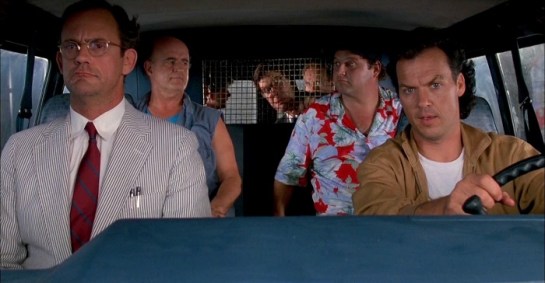
Ok, so you could call this a more sentimental choice but I absolutely love “The Dream Team” flaws and all. It’s a 1989 comedy about four mental patients loose in New York City after their field trip to Yankee Stadium goes bad. Keaton is great as the snarky and mischievous self-appointed leader of the patients as they set out to save their doctor/chaperone from some crooked cops. “The Dream Team” wasn’t a huge hit, but it was a great showcase for Keaton’s explosive personality.

#4 – “Beetlejuice”

BEETLE

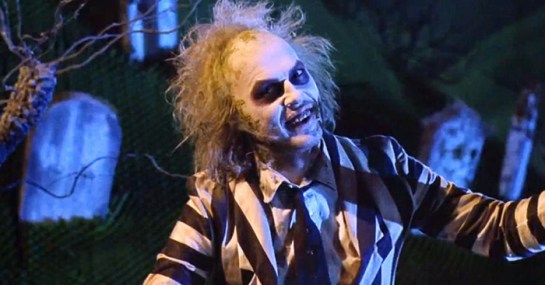
If you could have seen the look on my children’s faces when I first told them about a movie called “Beetlejuice”. Tim Burton’s 1988 horror-comedy is just as wacky as its name suggests. And despite its fun and completely game cast, the film works so well because of Michael Keaton. This is one of those roles where you can’t imagine anyone else being able to pull it off. He’s utterly ridiculous, weirdly charming, and an absolute riot from the first moment he hits the screen.

#3 – “Spotlight”

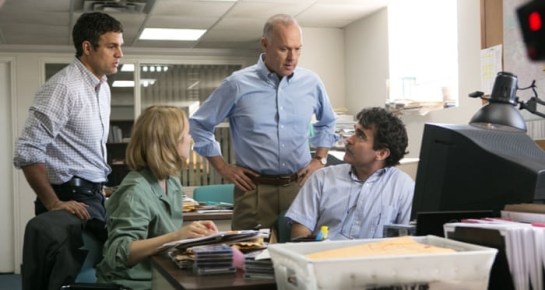
SPOTLIGHT

Tom McCarthy’s “Spotlight” was my #1 movie of 2015 and it still stands as a powerful reminder of the importance of free, unbiased journalism. Michael Keaton plays the leader of a small team of investigative journalists working for the Boston Globe. The film follows the Spotlight team as they slowly uncover and ultimately blow the lid off of a massive wide-spread sex abuse scandal within the Catholic church. Keaton gives a perfectly calibrated dramatic turn as an editor fighting for his team’s right to publish their story regardless of the costs. A much different performance from the earlier two films on this list, but a pivotal one nonetheless.

#2 – “The Founder”

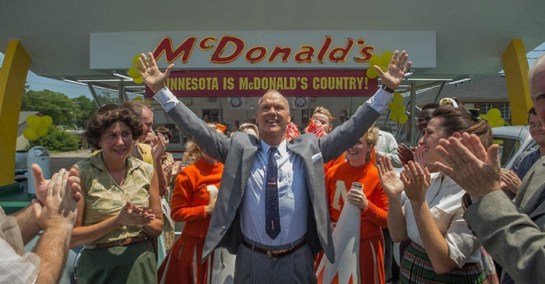
FOUNDER

Easily the most underrated role on the list and arguably the most underrated role in his entire filmography. Michael Keaton’s starring work in “The Founder” went largely unseen by audiences and apparently by awards voters, but it’s easily one of his best. The film tells the story of Ray Kroc and how he created the multi-billion dollar fast food juggernaut McDonald’s. It’s a meaty role for Keaton, blending his skills with straight drama and dry humor. Chances are you missed this one when it came out in 2016. It’s definitely worth catching up to it.

#1 – “Batman” 

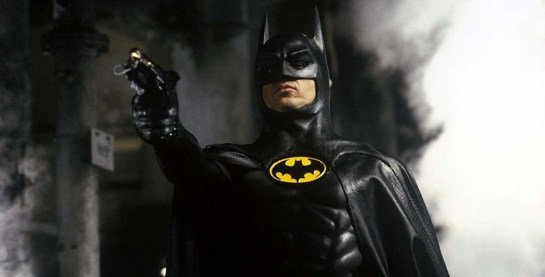
BATMAN

If for some reason you needed more evidence of Michael Keaton’s enormous range as an actor, I present to you 1989’s “Batman”. Yet another collaboration with Tim Burton that sees Keaton playing the Dark Knight before superhero movies were all the rage. I remember being a bit unsure about his casting, but that didn’t stop me from standing in line for over an hour anxiously awaiting an opening weekend viewing. And Keaton didn’t disappoint. “Batman” is very much a Tim Burton take on the Caped Crusader, but Keaton brings his own wit and charm. You never doubt him either as Bruce Wayne or the crime-fighting vigilante in a cape and a cowl. Jack Nicholson received most of the attention for his sparkling work as Joker, but Keaton proved to be crucial to the film’s massive success.

So those are my Michael Keaton movie picks. What say you? See something you agree or disagree with? Please let me know in the comments section below.

RETRO REVIEW: “Children of the Corn” (1984)

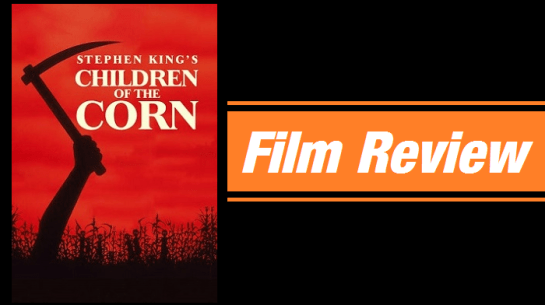
CORNposter

For the past few months I’ve dedicated several Wednesdays to doing Retro Reviews. The way it works is I put up three options on my Twitter feed (you can follow me @KeithandMovies). Followers vote, I rewatch the movie, and then post the review the following Wednesday. Whatever film finishes second comes back the next week against two new choices. So basically you pick what I watch and review.

When you hear “Children of the Corn” you almost can’t help but be amused. Not at the concept (the idea is actually quite chilling), but at the title itself. And after watching it for the first time in years the title isn’t the only thing that made me giggle. Yet despite very much being a movie of its time, there is something about director Fritz Kiersch’s folk horror feature from 1984 that I still find enjoyable.

The film is based on Stephen King’s 1977 short story of the same name. King was originally set to handle the screenplay, but the filmmakers felt his draft was too “internal” much like a novel and lacked the required cinematic quality. Much to King’s chagrin, his script was tossed and George Goldsmith was brought in for rewrites. Goldsmith invented two child characters and used their perspectives to tell much of the story.

CORN1

Photo Courtesy of New World Pictures

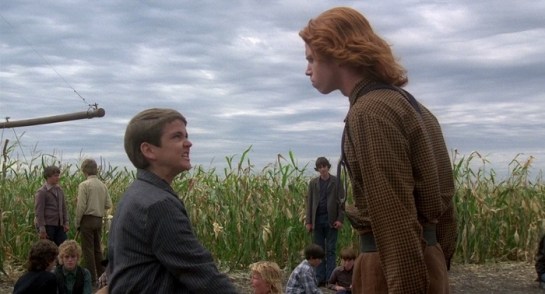
The film opens with scene-setting shots of dry, crisp corn stalks blowing in the wind, the cracked sun-baked ground, and a dilapidated old shed looking centuries old. The images are interrupted by the ringing church bells Grace Baptist Church of Gatlin, Nebraska. The sign out front advertises the Sunday sermon – “Corn drought and the Lord”. After church many of the congregation, including a young boy named Job (Robby Kiger) and his father, gather at the small town’s diner as they do every Sunday. But instead of a cozy hometown meal, the adults are poisoned and butchered by entranced blade-wielding teens. All of Gatlin’s adults were murdered that day in a series of brutal ritual killings.

That was three years earlier. Jump ahead to present day where the brainwashed kids live out in the cornfield following a creepy pre-teen cult leader named Isaac (John Franklin). He allegedly speaks for a demonic entity referred to only as “He Who Walks Behind the Rows” (catchy name). Isaac’s right-hand enforcer Malachi (Courtney Gains) handles the cult’s field work. Namely carving up nosy adults passing through, organizing the human sacrifices, and yellow cult-like things super loudly.

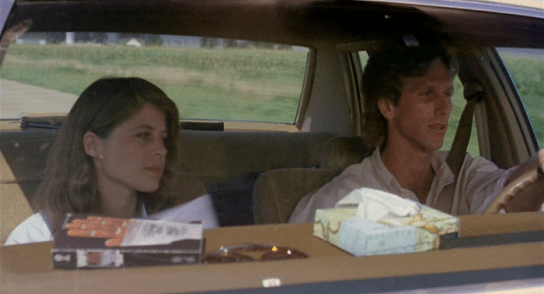
Enter Vicky (Linda Hamilton) and her boyfriend Burt (Peter Horton), a recent medical school graduate. The couple are driving across the Midwest on their way to Seattle where Burt is set to begin his first internship. While traveling through rural Nebraska a jolting accident diverts them through the deserted town of (you guessed it) Gatlin. Soon they find themselves knee-deep in killer kid cultists and the only help comes from Job and his little sister Sarah (Anne Marie McEvoy).

CORN2

Photo Courtesy of New World Pictures

“Children of the Corn” may have more lows than highs, but it does some things really well. Kiersch makes good use of the isolated farmland setting. Whether its the never-ending cornfields or the dried-up town (a possible analogy for dying small town Americana). Also I wouldn’t go as far as to call the film a slow burn, but it uncoils at a very deliberate pace which actually serves the story well and shields it from some pretty obvious limitations.

But not everything works as well. When approached with the needed suspension of disbelief, Goldsmith’s story itself is fine. But some of his dialogue is glaringly wooden and can be downright corny (sorry, I couldn’t resist). And while you never want to come down hard on child actors, some of their performances here are excruciating. Wobbly dialogue mixed with even worse acting equals some pretty bad scenes. And I feel guilty for even mentioning the special effects. Clearly the movie had budget restrictions and it wisely avoids big effects shots. But when they do come near the end of the film….ouch.

Still despite its obvious shortcomings, “Children of the Corn” remains entertaining which is a big reason it has earned a pretty loyal cult following in the 36 years since its original release. It’s hard to praise it too much, but it’s still an easy-to-digest horror picture build on some cool ideas. It’s also fun watching an early pre-Terminator Linda Hamilton performance. It hasn’t aged particularly well, but the fun hint of nostalgia I felt during the rewatch in undeniable.

VERDICT – 2.5 STARS

2-5-stars

REVIEW: “You Should Have Left” (2020)

SHOULDposter

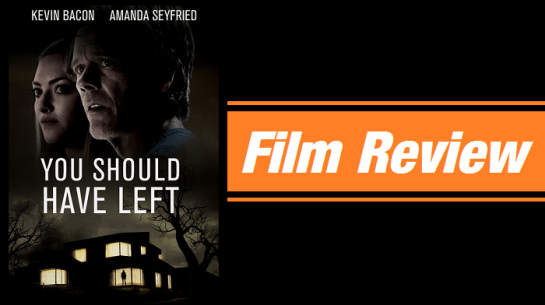
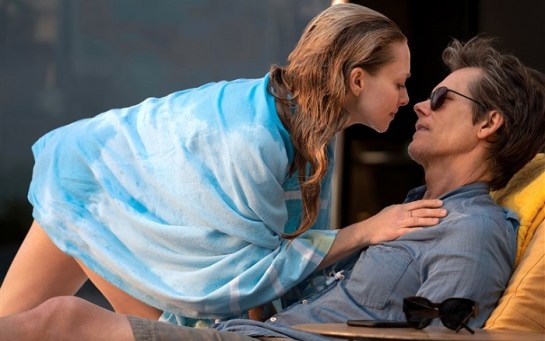
Kevin Bacon and Amanda Seyfried make an intriguing couple in the new aggressively titled psychological thriller “You Should Have Left”. Right off the bat you can’t help but notice the significant age difference (Bacon is a spry 61 while Seyfried is 34). It’s something the film is aware of and even has fun with (“You’re her dad?” a security guard sincerely asks Bacon). You may be able to squeeze some commentary out of their relationship, but the movie has other interests.

Bacon plays Theo Conroy, a wealthy ex-banker stained by a tabloid-rich scandal from his past involving the death of his first wife. Theo has steadily maintained his innocence and even the courts agreed with him. Still his high-profile case gained him unwanted notoriety and he hasn’t fared as well in the court of public opinion. As a result Theo battles frequent nightmares as well as bouts with insecurity. He combats those issues by keeping a doctor-prescribed daily journal and quietly meditating to self-help lessons.

Should1

Photo Courtesy of Universal Studios

Seyfried plays Theo’s much younger wife Susanna with whom he shares a daughter, 6-year-old Ella (Avery Tiiu Essex). Susanna is a working actress, forever tethered to her cellphone, and seemingly impervious to how some of her choices may affect her husband. Whether it’s constantly giggling and leaving the room when getting texts from a male co-star or having her husband visit the movie set on a day she’s filming a sex scene. Do you chalk it up to the age difference? Is it Theo’s petty jealousy? Or is something else going on?

Realizing they need a getaway, Theo and Susanna rent the proverbial house in the middle of nowhere – a two-story modernist home in very rural Wales. Before the three have time to settle in we begin noticing peculiar things about the house’s design. It only get weirder as lights begin coming on by themselves. Doors appear one night but are gone the next. Spooky Polaroids start popping up. And someone (or something) has scribbled a chilling warning in Theo’s journal. “You should leave – go now” followed by “You should have left.”

SHOULD2

Photo Courtesy of Universal Studios

At first it’s hard to watch and not think of “The Shining” just on a smaller scale. Clearly something’s up with the house and the longer the family stays there the more macabre things get. At the same time Theo begins to unravel in ways we’re used to seeing in these types of thrillers. But thankfully writer-director David Koepp gives his movie enough of its own identity to keep it from feeling like a routine genre exercise. He also tosses in some chilling and inspired twists. Unfortunately they run head-first into a clunky final reveal dump that basically takes place over a single phone call.

“You Should Have Left” is never really scary although it does occasionally get under your skin. I does some clever things with the haunted house formula which keep it from feeling tedious or redundant. At the same time you can’t help but notice some things that are undeniably familiar (especially if you’ve seen the recent and much better “Relic”). But the biggest draw is Kevin Bacon and even though this isn’t top quality material, it’s great to see him on screen again and he keeps us invested from start to finish.

VERDICT – 3 STARS

3-stars

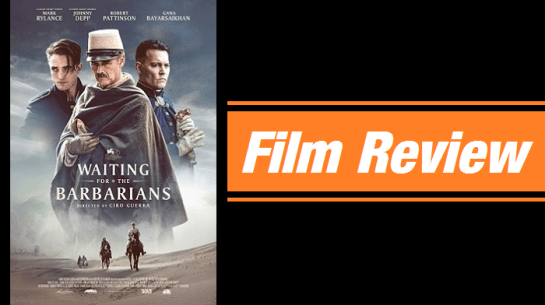
REVIEW: “Waiting for the Barbarians” (2020)

BARBposter

Set within an unnamed territory, an unnamed Magistrate oversees a remote outpost for an unnamed empire. This shrewdly calculated ambiguity has a steady presence throughout “Waiting for the Barbarians”, the new film and English-language debut from Columbian director Ciro Guerra. It’s ambiguous for a reason – to sharpen the relevance for today by not assigning or restricting what we witness to a specific time or nation. Through a broad yet clear lens Guerra indicts both the practices of the past and the mindsets of the present.

“Waiting for the Barbarians” is an adaptation of J. M. Coetzee’s 1980 novel which explored the ugliness of imperialism and its lasting influence on modern thought. Coetzee also wrote the screenplay (his first) which patiently unwraps the story through its ruminative rhythm and well-tuned characters. And even as its dense early table-setting gives way to the quieter yet more visualized tragedy of the second half, the sense of pertinence is ever-present. And let’s be honest, it doesn’t hurt to have Mark Rylance, Johnny Depp, and Robert Pattinson fleshing our your characters.

Rylance plays the well-meaning magistrate and if there ever was an actor who exuded gentle, unfeigned integrity it’s Rylance. His Magistrate manages the frontier settlement with an air of peaceful passivity. He’s content with his life there, quietly collecting and cataloging old area artifacts while occasionally mediating minor squabbles among locals. He carries himself admirably and is convinced that his benevolence makes him a welcomed presence. However, good intentions and feelings of self-fulfillment blind him to a glaring hypocrisy which he’s eventually forced to reckon with.
BARB2

Photo Courtesy of Samuel Goldwyn Films

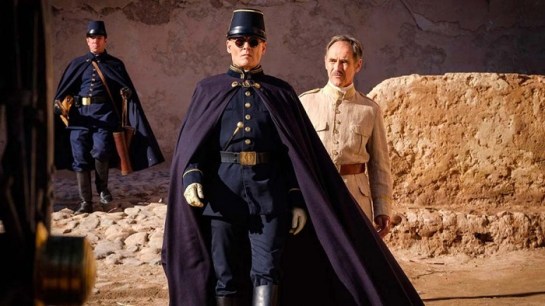
Everything changes with the arrival of Colonel Joll (Depp), a member of the Empire’s security force who has been sent to inspect the outpost and investigate alleged unrest on the outskirts of the frontier. We see hints of Depp’s patented eccentricity in his rigidly upright posture, stony-faced demeanor, and steampunkish sunglasses (they’re all the rage back home). But it’s Depp’s words that reveal the most about his character. Joll speaks with an icy malice, coldly absorbing the Magistrate’s initial hospitality before getting down to the business of his visit.

Joll begins rounding up and questioning local nomads with the avidity of an authoritarian, torturing those deemed to be “barbarians” by his superiors. No scene captures Joll’s dry and calloused ruthlessness better than his chilling explanation of the “patience and pressure” approach to interrogation (hint: far more emphasis is on pressure). “Pain is truth. All else is subject to doubt.” And just like that Guerra and Coetzee put a spotlight on the real barbarians. Meanwhile all the Magistrate can do is helplessly watch.

Joll and his soldiers depart almost as quickly as they arrive leaving the Magistrate to handle the mess they left behind. But it’s not as though he has clean hands. The almost messianic overtones of the early scenes fade as the Magistrate’s complicity, though subtle and seemingly benign, are brought to light. And as much as he wants to disassociate himself from Joll’s terror, he slowly begins to see that (though cut from a different cloth) he and Joll do the biddings of same master.

BARB3

Photo Courtesy of Samuel Goldwyn Films

As a form of self-instituted penance the Magistrate takes in an indigenous woman ravaged by Joll’s brutality (she’s opaquely played by Gana Bayarsaikhan). He nurses her back to health, but more as a balm for his own bruised conscience rather than for her well-being. It’s only when he’s jolted out of his guilt-stricken haze that he finally does the right thing. But in doing so he sparks the ire of the Empire and finds himself under the boot of the very authority he once represented.

Coetzee’s deliberately paced script gives the actors plenty of room to leave their marks. While Depp instantly grabs your attention with his convincingly sinister presence, it’s Rylance who carries the emotional workload. With a soft-spoken and heartfelt authenticity, his performance manages to secure our sympathy and pity. He’s gives us a man on a journey, who eventually finds his conviction, and willingly pays a price for it. Pattinson gets a small but effective role as young officer who’s clearly a product of the Empire. By the time he comes around, good and evil have been clearly defined.

Isn’t that what war is about?” a young officer brashly asks the appalled Magistrate, “compelling a choice on someone who would not otherwise make it?” The ugliness of the question highlights the deep-rooted metaphor at the core of “Waiting for the Barbarians”. Underneath cinematographer Chris Menges’ stunning sun-blasted desert landscapes and some key performances lies a stinging rebuke of the past, a mirror to the present, and a warning of the future. It’ll be too broad and figurative for some, but I loved its willingness to trust the viewer. And the near apocalyptic final shot only adds to the title’s richness. “Waiting for the Barbarians” premieres this Friday in select theaters and on VOD.

VERDICT – 4.5 STARS

4-5-stars