Sundance Review: “You Won’t Be Alone” (2022)

Yet another debut feature that premiered at this year’s Sundance Film Festival was “You Won’t Be Alone” from Goran Stolevski. The Australian-Macedonian writer-director has over 25 short films to his credit, and here he brings a unique and fresh twist to the familiar witch story. His folk horror concept is intriguing. His visual style is stunning. And at different times his film can be both chilling and beautiful. If only it played as well as it sounds.

Snatched up by Focus Features prior to the festival, “You Won’t Be Alone” is already slated for an April 1st release. It will be interesting to see the reactions considering how shockingly gruesome it can be. Yet it can also be quiet and soothing, with the meditative rhythm and visual sensibility of a Malick film. It fully embraces the ghoulish and grotesque, while also taking an often tender and poignant look at what it means to be human. Unfortunately, certain indulgences keep it from seamlessly combining those two extremes.

Set in a remote mountain village in 19th century Macedonia, the story begins on an disturbing note. A mother finds a hideously scarred crone (Anamaria Marinca) hovering over her newborn baby’s crib. Legend says she’s a shape-shifting witch known as the Wolf-Eateress. Others in the village refer to her as Old Maid Maria. The mother breaks down and begs the ghastly woman not to take her child. The two come to an agreement – the mother can raise her daughter until she turns 16. At that point the crone will return and take the girl for her own. But before leaving the old woman leaves her mark on the child (not an easy watch).

The mother takes her daughter to a sacred cave in the mountains. Her motives are good – hide and protect her daughter (named Nevena) from the witch. But by raising her in such stark isolation, Nevena has no understanding of the real world when Maria inevitably finds her. The old maid takes her prize to the forest and endows Nevena (now played by Sarah Klimoska) with her shape-shifting ability. But Nevena’s childlike and open-hearted curiosity infuriates Maria who casts out the young witch. Alone, Nevena wanders into the nearby village where the movie’s bigger interests unfold.

Image Courtesy of Focus Features

To say much more would be a disservice, but broadly speaking, Nevena begins (rather gruesomely) inhabiting the bodies of villagers. And with each new person she inhabits, she gets a new perspective on the world. It’s a captivating conceit – living and experiencing humanity through the bodies (and in turn the experiences) of others. It gives Nevena the opportunity to see both the ugliness and the beauty of the human condition. It also allows Stolevski to explore a number of social themes that are still relevant today.

In addition to Klimoska (Macedonia), Stolevski puts together a well-tuned international group to play the witch’s different incarnations. Noomi Rapace (Sweden) plays an abused wife who vividly portraying the travails of women, Carloto Cotta (Portugal) is a handsome village beefcake who embodies patriarchal privilege, and Alice Englert (Australia) as a sweet innocent little girl who allows Nevena a taste of the childhood she never had. Each offer moments of insight and challenge many modern-day norms despite being set in the 1800s.

While the film impresses with its surprising amount of emotional depth, some of the more practical things aren’t as convincing. Take Nevena’s strangely eloquent internal monologue which doesn’t exactly ring true considering all her time spent disconnected and in isolation. She was barely a step above a feral child when Maria found her and took her away. Yet the mellifluous and poetic flow of thoughts in Nevena’s mind at times sound like the words of a seasoned lyricist rather than a wild and untamed girl. Perhaps it’s meant to simply convey feeling, but it doesn’t come across that way.

There’s also Maria’s appearance which too often looks like a rubber suit and thick makeup. It’s unquestionably a reflection of the film’s budget, but it also keeps Maria from being as visually forbidding as she could be. But that’s okay because it’s her backstory that’s most haunting. As is often the case in stories like this, the history behind Maria’s scars are both horrifying and tragic, and Stolevski brings it to light with unsettling clarity.

With “You Won’t Be Alone” Goran Stolevski has created something that defies categorization. He brings with him an undeniably artful vision and a truly thoughtful mind. Along with it comes a few needless excesses, such as the sometimes weird and almost obsessive way he uses sex and gore. But beyond that is movie of impeccable craft. An arthouse drama with a folk horror veneer that doesn’t reach every mark it’s going for. But at least it’s reaching for something.

VERDICT – 3 STARS

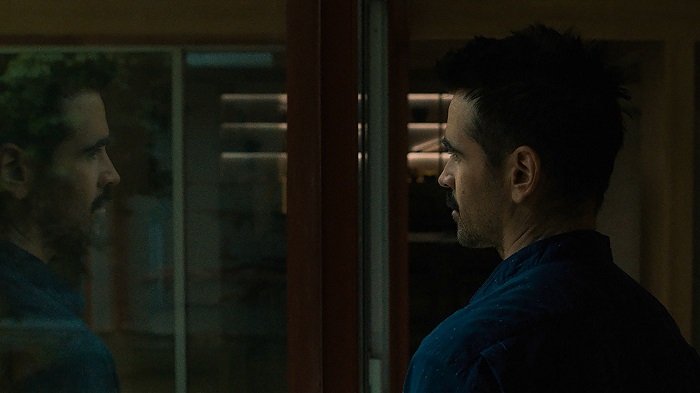
First Glance: “After Yang” (2022)

If you have followed my Sundance 2022 coverage you probably already know that I was a huge fan of “After Yang”, the new film from Kogonada. In many ways it’s the perfect followup to the filmmaker’s 2017 feature film debut, “Columbus”. Both films are thoughtful and moving meditations and both feature Kogonada’s easy narrative rhythm and elegant poetic visual style.

“After Yang” was high on my ‘most anticipated’ list and it delivered exactly what I hoped for. This endearing yet melancholy story of a family working through the sudden loss of their android turns out to be a deeper reflection on humanity, life, family, and finding your place in the world. I won’t rehash my review, but I loved the film and now A24 has released its first trailer. It has me even more excited to see it again.

“After Yang” is believed to be heading towards a March 4th release although the trailer simply says “coming soon”. Regardless, check out the trailer below and let me know if you’ll be seeing it or taking a pass.

Sundance Review: “Alice” (2022)

Genres galore make up the craziness that is Krystin Ver Linden’s “Alice”, a film that teases big things but is ultimately undone by both its ambition and execution. It’s a movie centered around an idea that has all the potential to be a wild and stylish Tarantino-esque revenge thriller. Instead, “Alice” never gets its footing and is compromised by woefully underdeveloped characters, a scattershot script, and narrative shortcuts galore.

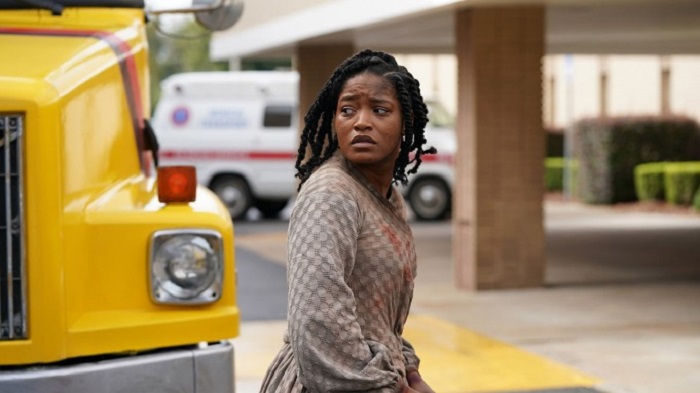
With a twist that would make M. Night Shyamalan blush, the title character Alice (Keke Palmer) escapes from a late 19th century Georgia plantation only to discover the year is actually 1973. If the premise sounds familiar that’s because 2020’s “Antebellum”, a movie that wasn’t nearly as horrible as the pounding it took would indicate, was built around a similar twist. With “Alice” it’s mostly about the revenge…kinda.

Without question, Palmer is the film’s biggest strength and she does her best with the haphazard screenplay (written by Ver Linden). But neither the early scenes on the plantation or the 1973 scenes that follow allow her room to do anything interesting with her character. And as the movie spirals from perplexing to laughably bad, Palmer is left stranded with little to do but stick with it till the end.

Image Courtesy of Sundance

Minus some missing details (possibly due to budget constraints), the early scenes are pretty convincing. In fact, another strength is in the production design and how well Ver Linden captures two vastly different periods. The plantation setting is believable in large part thanks to the location, costumes, and the immersive way Ver Linden shoots it. The issue (as it is throughout the film) is the storytelling.

While the antebellum plantation scenes look great and the performances are solid, they check more boxes than tell a good story. You have the slaves working the crops while the berating white foreman looks on. You have the by-the-book wicked plantation owner Paul Bennet (Jonny Lee Miller). You have the seemingly mandatory one scene of a slave being tortured. And you have the various attempts to escape. In between it all is Alice who we first meet as she secretly weds her love Joseph (Gaius Charles), a smart, strong and passionate fellow slave.

After learning he’s about to be shipped away to another plantation, Joseph attempts an escape, vowing to come back for Alice. But when he’s captured and beaten to a pulp, Alice can’t take it. She tries an escape of her own, running to the point of exhaustion. With little strength left, she wanders out of the woods onto a paved highway where she’s nearly hit my a big rig. Yep, it’s 1973. After fainting, the truck’s driver, Frank (Common, working at the exact same temperature and tenor as he does in every film) takes her to an area hospital, convinced she has amnesia. Oh how little he knows.

Image Courtesy of Sundance

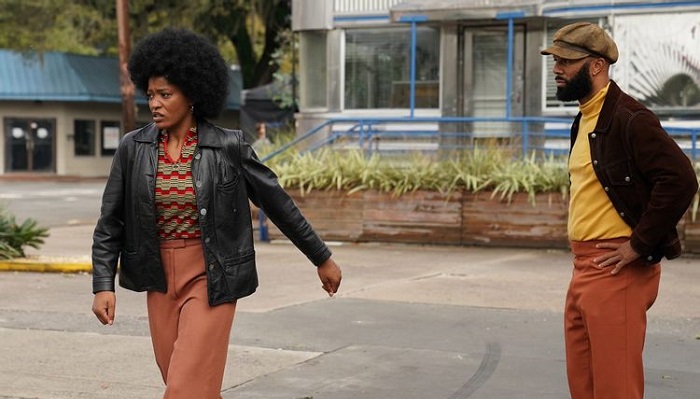
After some truly silly and narratively convenient guesswork, Frank decides to take her to his house (with little thought and practically no buildup) to help jog her memory. He starts by sharing life’s finer pleasures such as “Sanford and Son”, soul music, and bologna sandwiches. But who knew all it would take was an encyclopedia, a few newspaper clippings, and Pam Grier’s “Coffy” for Alice to get caught up on African-American history and current day fashion. Quite literally, within 24 hours Alice is fully adjusted to 1973 society and in full avenging angel mode.

“Alice” hits a point where its Blaxploitation motifs kick into gear and the movie teases something it never fully delivers. Yes, Alice puts together a plan to return to the plantation so she can free her people and dish out some good old-fashioned revenge on the Bennets. But the Pam Grier vibes are paper-thin, and other than her look, Alice never feels anything like her inspiration. Nor does this movie have any of the energy or style of those 70s era genre flicks.

“Alice” is a movie chock-full of squandered potential. Outside of Keke Palmer’s committed performance and some visual touches showing Ver Linden’s promise as a director, there’s little here to latch onto or get excited about. Its issues really come back to the writing which ranges from dreadfully shallow to glaringly on the nose. It keeps “Alice” stuck in a weird gear and never allows it to get as crazy as it could be or as insightful as it should be.

VERDICT – 1.5 STARS