
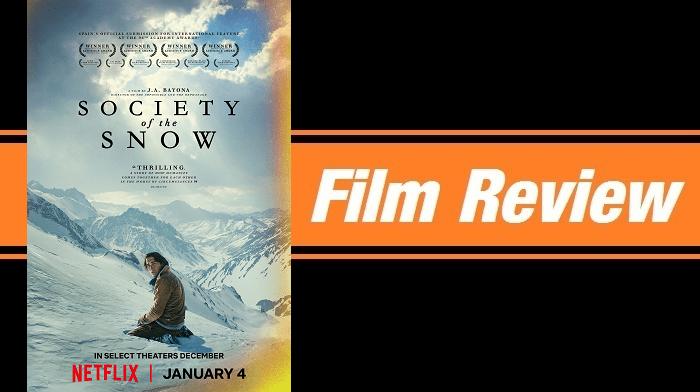
On October 13, 1972 a plane carrying an Uruguayan rugby team crashed high in the snow-covered Andes Mountains. Many among the 40 passengers and five crew members were killed instantly. Several more died shortly afterward from the severity of their injuries combined with the bitter cold temperatures. Authorities searched for the wreckage but canceled after eight days. More died from starvation, exposure, and a horrific avalanche. After surviving 72 days, 16 survivors were rescued.
The true story of that ill-fated flight has been brought to screen several times including in Frank Marshall’s 1993 film “Alive” starring a young Ethan Hawke. “Society of the Snow’ from director and co-writer J. A. Bayona is the latest and arguably the best. Appreciators of “Alive” will recognize many of the same touches in Bayona’s film. But “Society of the Snow” expands a bit further beyond the survival element and uses its own thoughtful framing device to offer a fresh and unique perspective that honors both the living and the dead.
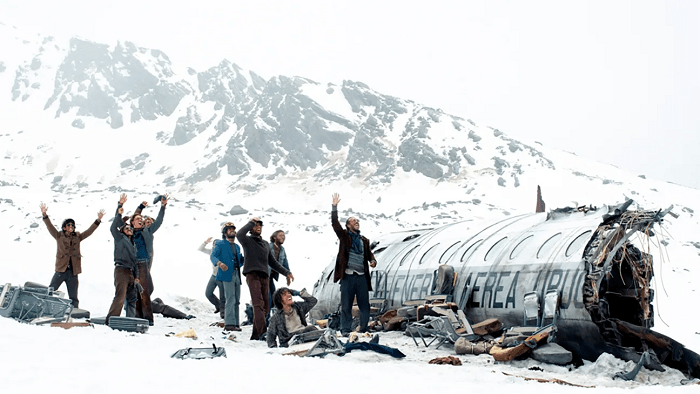
Adapted from journalist Pablo Vierci’s 2009 book of the same name, “Society of the Snow” pulls no punches with Bayona’s focus on realism. His film is uncomfortably yet respectfully authentic, staying true to every horrific detail without ever being sensational or lurid. It makes for a viscerally immersive survival saga. But just as potent as the sensory experience is the simple yet profound message at its core – one about the indomitable human spirit as seen through the steadfast will to live and the sacrifice for those you hold dear.
Bayona tells the majority of his story from the perspective of 24-year-old Numa Turcatti (Enzo Vogrincic Roldán). His voiceover offers some intriguing observations and insight. And later on he poses a haunting question, “Who were we in the mountains?” It’s a difficult, soul-straining consideration that he labors over through much of the film, ultimately answering it the best and only way he knows how.
The depiction of the plane crash itself is brief but intense and not for the faint of heart. It’s a terrifying sequence as the Fairchild FH-227D strikes a mountain, losing both wings and the tail section, and sucking out several helpless passengers. What’s left of the fuselage barrels down an icy mountain at over 200 mph. The gruesome images before it finally comes to a stop will make even the ‘toughest’ viewer wince. But wisely and mercifully, Bayona doesn’t draw it out. The whole thing lasts a couple of minutes tops and then we’re faced with the aftermath.
What follows is a harrowing story of survival that’s as unsettling as it is inspirational. We watch as those who lived through the crash suffer through even more perilous situations – intense sub-zero cold, no food, and the mounting deaths of their friends and family. As days pass hopelessness sets in, leading the weakened and starving group to make a desperate choice. With the inevitability of death lingering, they painfully decide to eat from the dead bodies. It’s a heart-rending turn handled with great empathy. Bayona stays focused on the humanity, showing the group laboring over their options, weighing the spiritual consequences, and bearing the psychological toll.
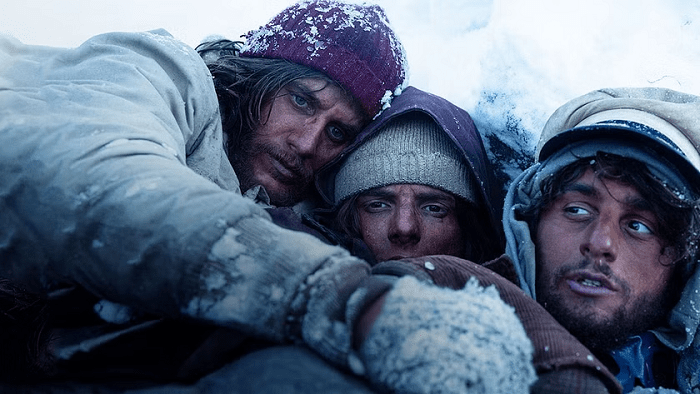
Pedro Luque’s striking cinematography is as vital as any other storytelling component. At times he takes your breath away by the sheer beauty of the scenery he captures. Yet he’s able to take those very same images a create feelings of isolation and despair. Just as effective are the intense closeups and tight quartered shots which emphasize the severity of the group’s circumstances.
Bayona’s impressive vision is also helped by the immersive sound design as well as Michael Giacchino’s resonating score. And perhaps most of all by the sublime performances from the mostly unknown Uruguayan and Argentine cast. There are so many crucial ingredients and Bayona uses them to craft what could be considered the definitive telling of this unimaginable true story. And even if you know the real account, “Society of the Snow” will still leave you astonished by the sheer tenacity of the filmmaking and the passion in its storytelling. Premieres January 4th on Netflix.
VERDICT – 4.5 STARS


Going to have to pass on this one. Sounds too gruesome for me even it there are redeeming aspects.
It handles everything very respectfully and never gets close to being lurid or sensational. Absolutely brilliant in terms of craft and storytelling. It truly is a magnificent telling of an incredible true story, but I can see if some may be concerned about it being too heavy.
I might watch this later on as I already know the story from Alive though I hope this one is much better.
I liked “Alive”, but I really love this one. Brilliantly made, respectfully told, wonderfully acted.
This sounds harrowing.
“Harrowing” is the perfect word for it.