When James Gunn was handed the keys to the DC Comics cinematic universe, he wasted no time leaving his mark with last year’s “Superman”. For many fans of the self-reverential filmmaker, it was exactly what they love and expect from Gunn. For many fans of the Superman character, it was far from the faithful adaptation of the beloved icon they had hoped for. Gunn made a James Gunn movie rather than a Superman movie.
Now we are getting his second big screen DCU installment with “Supergirl”. And while Gunn hands the directing reins to Craig Gillespie, his influence looks to be all over this thing. The first full trailer gives us a good sense of that. It features all the James Gunn hallmarks: gratuitous needle drops, irreverent humor, overly stylized action, etc.
Molly Alcock takes over as Kara Zor-El, the angsty cousin of Kal-El, aka Superman. As she and her CGI dog Krypto party across the galaxy, she is recruited by a young girl (Eve Ridley) to avenge her father’s death. Space pirates, mercenaries, human traffickers, and bounty hunters are all included in writer Ana Nogueira’s script. But the only piece that stands out is Jason Momoa as Lobo, the snarling anti-hero who the actor has long desired to play. Everything else looks like Gunn’s usual product.
“Supergirl” mopes her way into theaters on June 26th. Check out the trailer below and let me know of you’ll be seeing it or taking a pass.
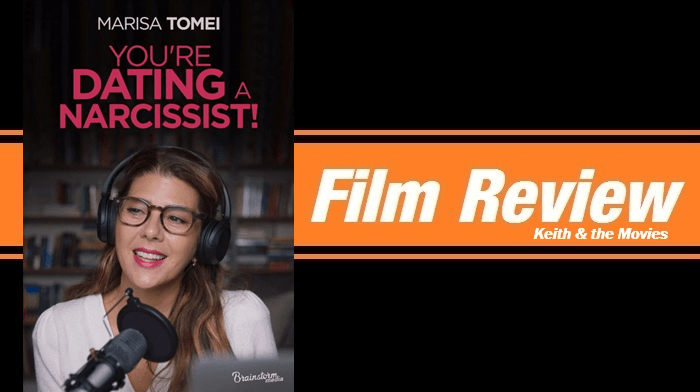
“You’re Dating a Narcissist!” teases itself as a smart and sincere anti-romcom. But the film quickly devolves into an unrelatable, formulaic, and borderline obnoxious swing-and-miss. Director Ann Marie Allison attempts to offer a modern examination of love and commitment. And she certainly has a capable star in Marisa Tomei. But it all gets lost amid the movie’s strained attempts at humor and too many half-baked characters who only exist to complicate things.
But arguably worse is the baffling journey of the film’s lead character Judy. Played by the immensely talented Tomei, Judy begins as an intelligent, self-assured and accomplished woman, albeit confident to a fault. She’s a successful author, a psychologist, and a professor at a prominent New York university. But over the course of the story, the script turns her into a raving, obsessive lunatic, often for comic purposes which generate more eye-rolls than laughs.
Judy is riding the success of her popular new book “You’re Dating a Narcissist!”, leading her to teach a class on empowering her students to recognize narcissists when looking for a partner. At the same time, her preoccupation with narcissists has turned her extremely cynical towards relationships. That’s why she’s shocked when she gets a call from her 22-year-old daughter Eva (Ciara Bravo) who has some exciting news.
Image Courtesy of Brainstorm Media
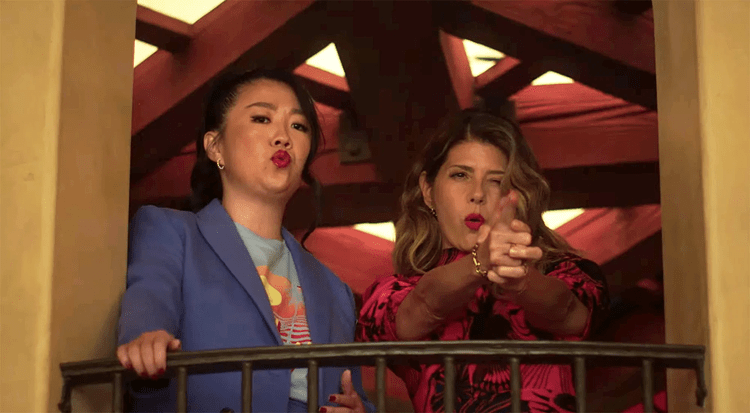
Eva is an art student studying in Los Angeles which is where she meets a hunky young doctor named Theo (Marco Pigossi). After only six weeks of dating the two get engaged. But once the lovesick Eva shares the news with her mother, a panicking Judy immediately flies across the country to “save” her daughter. She brings along her best friend Diane (Sherry Cola) because movies like this seem compelled to throw in a comedic confidante and sidekick.
Once she arrives in LA it’s almost as if a switch is flipped, turning Judy into a deranged person. Of course the movie doesn’t see her that way, and it tries to offset her bizarre behavior with thinly sketched allusions to her past that are meant to earn our sympathy. The problem is that Judy gets more unbearable as the movie bops forward, to the point that it’s hard to feel anything for her. And outside of Eva, the side characters surrounding Judy are too shallow and inconsequential to be anything other than props for her story.
“You’re Dating a Narcissist!” begins as an alluring feature with a lot of promise. But over time it’s like binge-watching a mediocre-at-best sitcom that’s not nearly as smart or funny as it wants to be. Even more frustrating is that it squanders Marisa Tomei who hasn’t missed a step and deserves more prominent starring roles. Sadly the material here doesn’t do her justice, leaving her to carry a load that’s not worth the effort.
Living up to the zaniness of its title, the new film “Mike & Nick & Nick & Alice” is a proudly bonkers concoction that’s impossible to fit in any single genre box. Originating in the mind of writer-director BenDavid Grabinski, this consistently entertaining mash-up is an action crime comedy seasoned with a dash of science-fiction. But most surprising is the film’s big heart and unexpected charm that turns a silly creation into a strangely endearing experience.
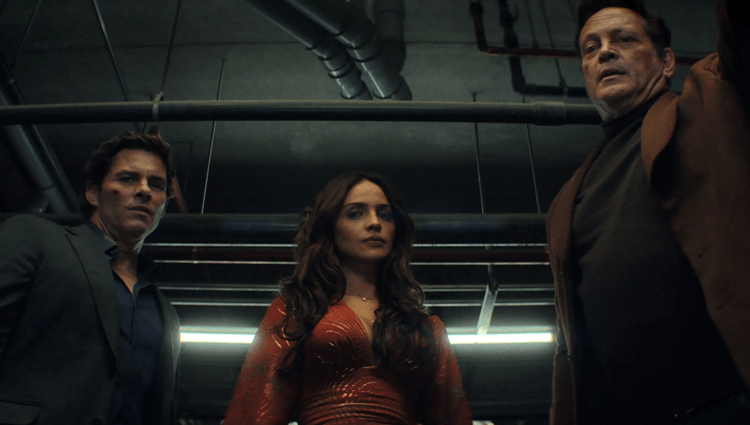
While the movie is lively, inventive, and full of personality, it’s the sparkling chemistry between its central leads that forms the sturdy foundation for everything else. James Marsden, Eiza González, Vince Vaughn, and….Vince Vaughn maintain a terrific rapport that generates a number big laughs while also striking a human chord with the audience. The story is a little messy in spots. But Grabinski never loses his focus or his control, not matter how crazy things get.
Image Courtesy of 20th Century Studios
This high-concept romp introduces us to Nick (Vaughn), a gangster and loan shark who is friends with an enforcer named Mike (James Marsden). Both work for a mob boss named Sosa (the always delightful Keith David) who is throwing a night of wild parties for his dim-witted son Jimmy (Jimmy Tatro) who was just released from prison. Sosa invites his partygoers to have a good time but informs them that he knows who set up Jimmy and they will get their comeuppance.
Sosa’s warning startles the gathering, including Mike and Nick who decide to skip the rest of the festivities. The two friends make an entertaining pair with Vaughn and Marsden bringing a ton of personality to their characters. But one terrible secret could turn the two chums against each other. What’s the secret? Well, Mike is having an affair with Nick’s wife Alice (Eiza González) who has had enough of her husband’s negligence.
Mike and Alice have made the decision to run away together. But just as they’re about to leave, Nick shows up at Mike’s apartment needing help on a job. A nervous Mike is certain he’s about to be put on ice. But instead, Nick needs Mike to help him kidnap a mystery man who turns out to be….Nick. Are you following me so far? Even if you are, you’re probably wondering, “What the heck is Grabinski doing here?
Image Courtesy of 20th Century Studios
Without giving away too much, a version of Nick from the future has traveled back in time to stop present-day Nick from making a mistake he will regret for the rest of his life. It involves both Mike and Alice, and Nick will need their help if he is to have any chance of pulling it off. Now how does time travel fit in? We get some brief backstory involving Alice’s close friend Symon (Ben Schwartz) who takes mob money and secretly builds a time machine. It’s an outrageous sidebar that is more comical than it has any right to be.
From there “Mike & Nick & Nick & Alice” bops along with an almost carefree spirit. As it does Grabinski throws everything into the pot: some good laughs, intense action, crazy side characters, a handful of killer needle drops, and even a touch of heartwarming romance. There’s no way it all should gel as well as it does. Yet it mostly clicks thanks to its lights-out cast, a wacky imagination, and a playful energy that’s only matched by its infectious charm. “Mike & Nick & Nick & Alice” is streaming now on Hulu.
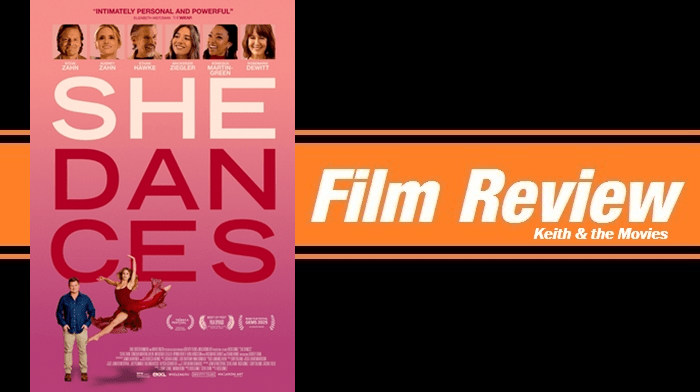
Steve Zahn gives the performance of his career in “She Dances”. It’s a funny, warm-hearted, and endearing father-daughter dramedy inspired by the actor’s own personal experience as a bonafide “dance dad” to his daughter Audrey, who makes a splash in her wonderful big screen debut. And the real-life relationship they share adds volumes to what we see on screen.
“She Dances” marks the directorial debut of Rick Gomez who works from a screenplay he co-wrote with Steve Zahn. Together they craft a story that is built upon a fairly recognizable framework. A hurting father and daughter take an unexpected trip together and end up rekindling their once close relationship along the way. That’s not what you might call a new premise. But it’s what Gomez and Zahn does with it that makes “She Dances” shine.
Image Courtesy of EKKL Entertainment
Steve Zahn plays Jason Phillips, a husband and father who lives separately from his wife Deb (Rosemarie DeWitt) and their daughter Claire (Audrey Zahn). The reason for the separation is a heartbreaking tragedy that comes more into focus as the story plays out. But in essence, they are three fragile people struggling to deal with things in their own ways. Jason has essentially shut himself off which has only made things worse.
Claire has grown up dancing. And now as a senior in high school, she’s all prepared for her final dance competition. But in order to make the trip, Claire needs to be accompanied by a parent or guardian. Circumstances make it to where Deb can’t go. So she convinces a reluctant Claire to call her dad to step in and accompany her to the competition. Jason nervously agrees, hence setting up the scenario that will force the father and daughter to finally reckon with their pain.
“She Dances” finds some good comedy in Jason’s well-intended but fumbled attempts at being a good dance dad. At times it strains too hard to squeeze laughs out of certain circumstances. But asGomez mostly finds a solid balance of heart and humor. And it never gets too silly or too schmaltzy. Rather the film maintains a firm grip on its humanity in big part thanks to the honest and organic connection between Zahn and Zahn.
Image Courtesy of EKKL Entertainment
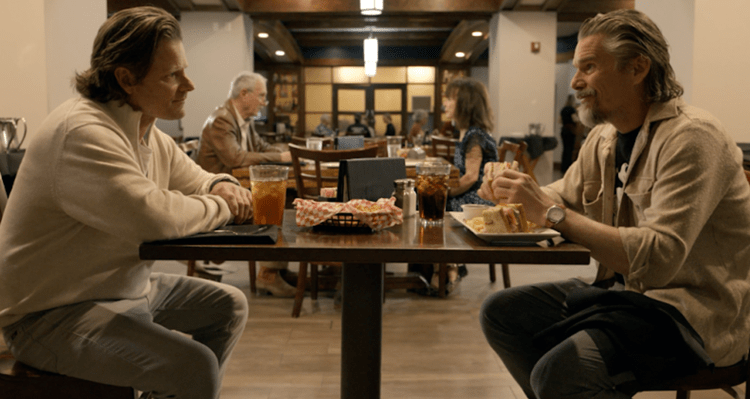
The movie is also helped by a several supporting characters who each add different layers to the story. Mackenzie Ziegler is a lot of fun playing Claire’s best friend Kat who ends up being more than just a comic tag-along. Sonequa Martin-Green gets several good scenes as Claire and Kat’s dance instructor and mentor, Jamie. And Ethan Hawke brings a his natural charisma to the small but richly empathetic role of Jason’s supportive best friend and business partner.
“She Dances” hits its marks as a routinely funny comedy and a bittersweet family drama. It’s a film that surprises on many levels, never more than when its deeper themes rise to the surface. The elder Zahn pulls inspiration from some personally meaningful places to deliver what is a career-best performance. And the younger Zahn impresses in her big screen debut, avoiding the many traps that can accompany this kind of material. She’s a revelation and I’m already excited to see what she does next.
High among my favorite international filmmakers working today is German auteur Christian Petzold. Few in his field have maintained the consistent excellence of Petzold, whose career began in 2000 and has spanned the course of eleven movies. He’s been on an exceptionally good run, starting with 2012’s “Barbara”. It was followed by the superb “Phoenix”, “Transit”, “Undine”, and “Afire”. His latest, “Miroirs No. 3” falls right in line with those quietly alluring gems.
“Miroirs No. 3” sees Petzold following his uniquely compelling formula of utilizing grounded contemporary realism while subtly engaging classic genre conventions. And as before, it results in another richly human yet slyly evasive story with a striking emotional undercurrent. But while political allegories have often been central to his movies, here Petzold brings his steady-handed and economical style to a family drama.
The film pulls much of its strength from its lead, Paula Beer. Equal parts captivating and enigmatic, Beer has long been a perfect fit for Petzold’s storytelling form. “Miroirs No. 3” is their fourth film together. And while it could be considered a minor work compared to their past collaborations, the pair once again find the beguiling harmony that has become a signature of their films.
Beer plays Laura, a piano student from Berlin who reluctantly agrees to join her boyfriend and fellow musician Jakob (Philip Froissant) on a weekend getaway with a producer he hopes to impress. Things take a fatal turn after the couple have a car wreck on a quiet rural road. Jakob is killed and a dazed Laura is found by a older woman named Betty (Barbara Auer) who witnessed the accident.
Betty walks Laura to her nearby home and calls the police. After being examined by paramedics, Laura refuses to go to the hospital. Instead she makes a strange request – she asks if she can stay with Betty. Puzzled yet accepting, Betty agrees which sets up Petzold’s unusual scenario. Similarities between the two begin to surface with both seeming lost and detached. But it’s Betty’s situation that ends up getting thenmost of the attention.
Petzold throws several early clues at us, to the point that we get a sense for what’s going on well before it actually plays out. Betty’s house in various shades of disrepair; the near maternal care she shows for Laura; the strange looks the two get from neighbors passing by. But the biggest pieces of the puzzle come with the appearances of Betty’s son Richard (Matthias Brandt) and their moody adult son Max (Enno Trebs).
I won’t spoil where things go from there, but what starts as a beguiling mystery quickly gives way to a story about grief, healing, and the power of human connection. Again, it turns out to be a nice fit for Petzold’s minimalist yet broadly observant style. The film also shares a similar ambiguity with his past films, although here it leads to a slightly less satisfying ending. But Petzold has never minded opacity. He’s more interested in patiently sorting through the emotional journeys people take. And who better than Paula Beer to be our guide?
“Ready or Not” released in 2019 and quickly became one of the biggest surprise hits of the year. The horror comedy thriller was picked up and distributed by Fox Searchlight Pictures who gave it a proper theatrical release. They were rewarded when the film brought in $58 million against its modest $6 million budget. Even better, the film was well-received by critics who were quick to brand it as an instant cult classic.
The only thing more surprising than the first film’s success is that it birthed an unexpected sequel, “Ready or Not 2: Here I Come”. The key creative minds return including co-directors Matt Bettinelli-Olpin and Tyler Gillett and co-writers Guy Busick and R. Christopher Murphy. But the most crucial returning piece is Samara Weaving, reprising her role as Grace MacCaullay, the lone survivor of the Le Domas family blood bath.
Image Courtesy of Searchlight Pictures
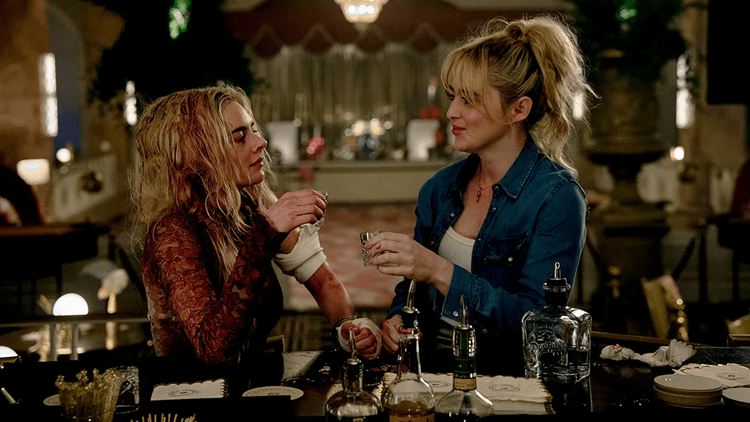
“Ready or Not 2” plays like an extension of the first film, picking up exactly where part one left off. Following what was quite literally the wedding ceremony from Hell, Grace (Weaving) passes out on the steps of the Le Domas family mansion, soaked in the blood of her dead devil-worshipping in-laws. After being transported to the local hospital, she’s visited by her estranged younger sister Faith (Kathryn Newton). The combative siblings waste no time dragging out old baggage.
But little do the sisters know, the Le Domas clan was just one of six families in an international cult of upper-crust worshippers of Le Bail. And their death triggered a clause in the by-laws putting the leadership of the cult’s ruling council up for grabs. So the heads of the remaining families converge on the lavish Danforth estate in Newport, Rhode Island, each vying for the all-powerful high seat. To win it, all they have to do is be the one to kill Grace, and by association Faith, in another game of Hide-and-Seek.
So Grace and Faith are kidnapped and brought to the Danforth mansion where they’re introduced to a new batch of pampered and power-mad hunters. Among them is the domineering Ursula Danforth (Sarah Michelle Gellar) and her impetuous twin brother Titus (Shawn Hatosy), the pompous Ignacio El Caido (Néstor Carbonell), the conniving Wan Chen Xing (Olivia Cheng), and the playboy Viraj Rajan (Nadeem Umar-Khitab).
But there are rules that must be followed, and Le Bail takes his rules seriously. So much so that the consequences for breaking them are…messy. The rules are laid out by a mysterious lawyer for Le Bail (a really fun Elijah Wood) and there are A LOT of them. Most are dropped in overly long information drops. Others pop up out of the blue, feeling more like devices to get the plot from one point to the next. But at its core it’s the same as before- Grace and Faith must survive until dawn if they want to live.
Image Courtesy of Searchlight Pictures
From there the bulk of ”Ready or Not 2” is more of the same but at a different venue and with different villains. Bettinelli-Olpin and Gillett once again playfully lather us in blood and guts. The only thing more prevalent than the chunky red stuff are the ludicrously forced f-bombs. The pointlessly potty-mouthed script dumbs things down, sometimes to the point of being a distraction. We also get a lot more lore building, but it’s nothing that will pique your interest.
While “Ready or Not 2” floods us with more gore, more lore, and more mind-numbing f-bombs than before, it also features less laughs and even fewer surprises. Still Weaving and Newton give it their all, making it easier to navigate the frustrations along the way. The inevitable kills can be fun and the overall goofiness of it all makes it easier to digest. But it’s ultimately a sequel that doesn’t offer up enough to justify its existence. And Grace probably would be better off still sitting on the Le Domas estate steps.















 Keith & the Movies