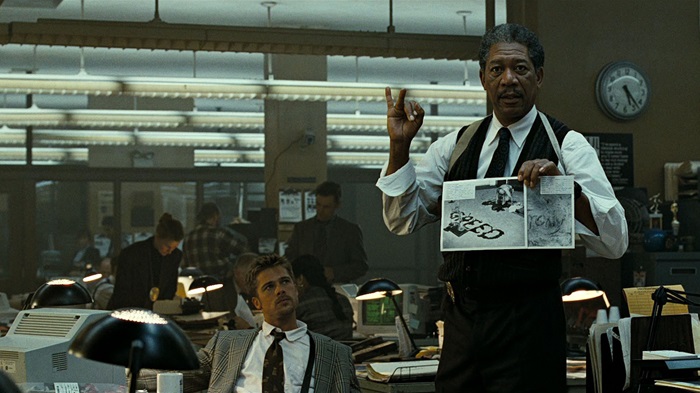
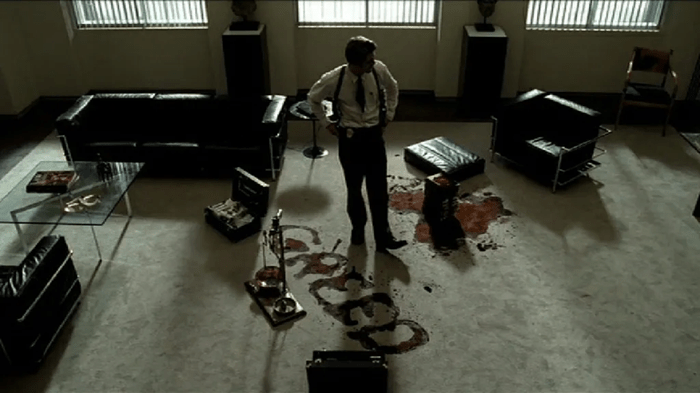
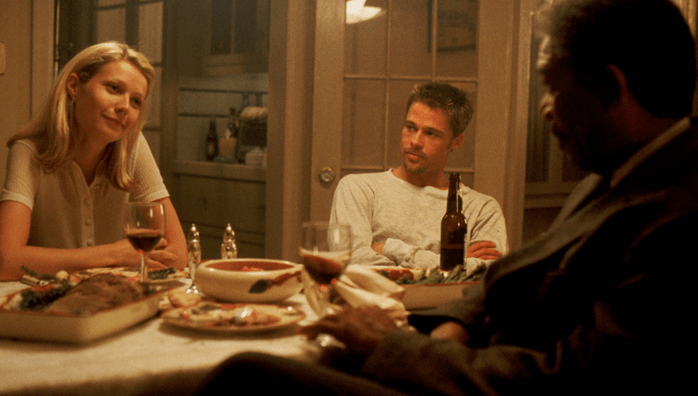
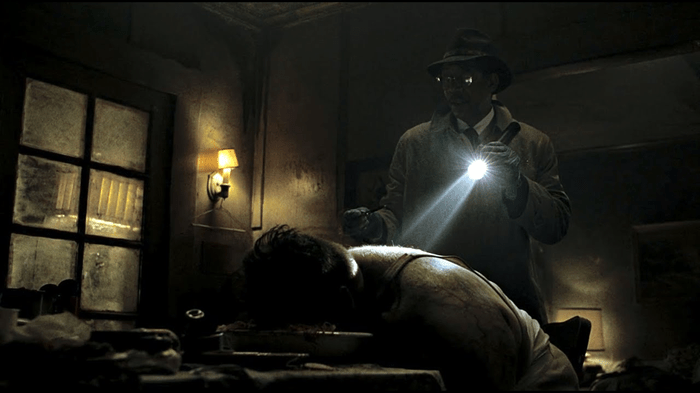
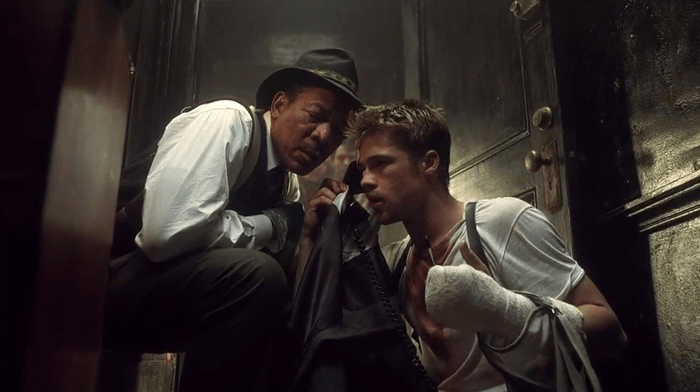
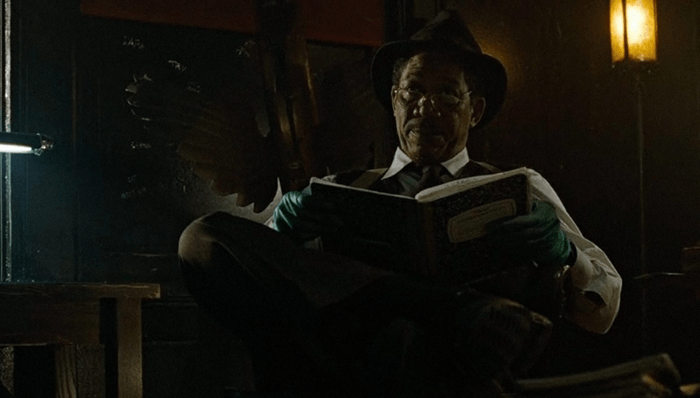
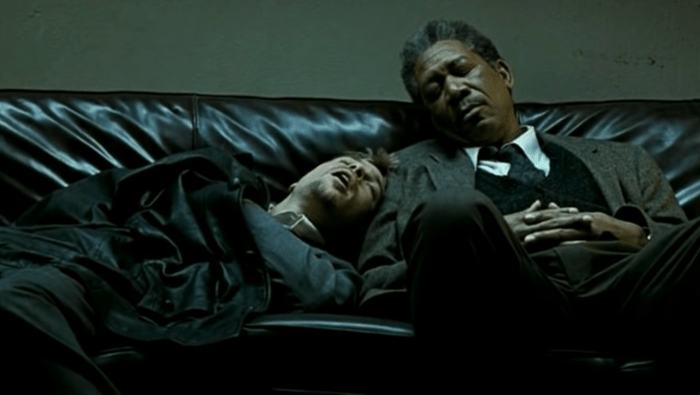
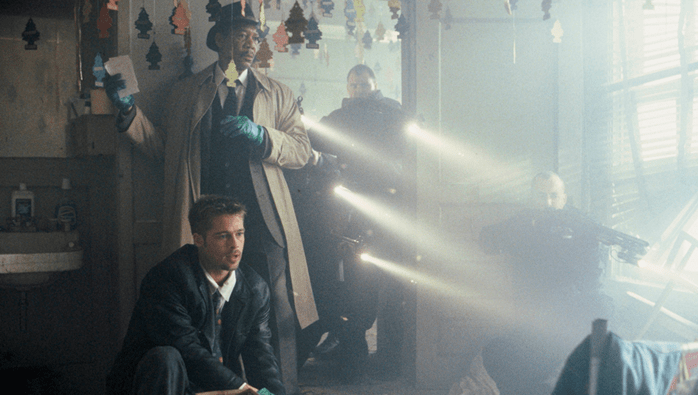
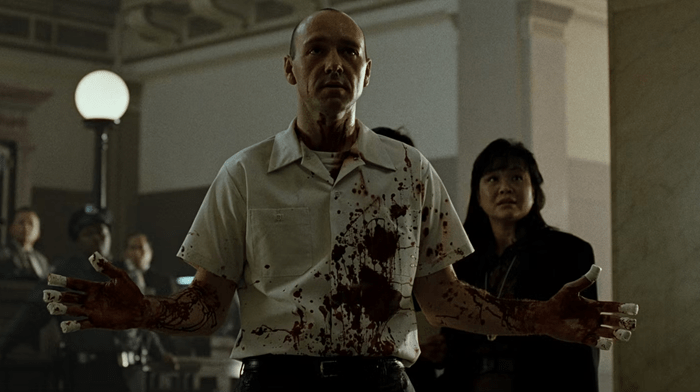
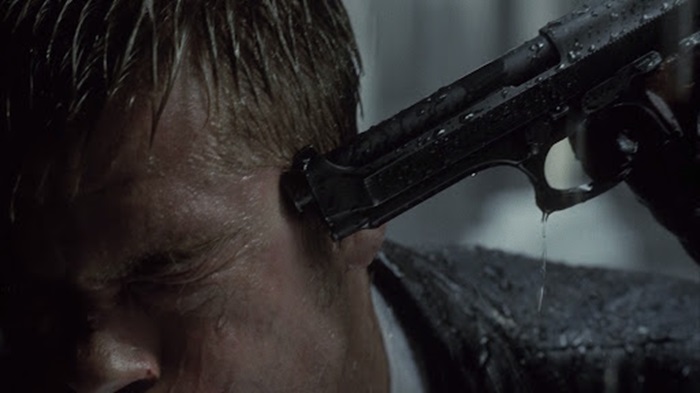
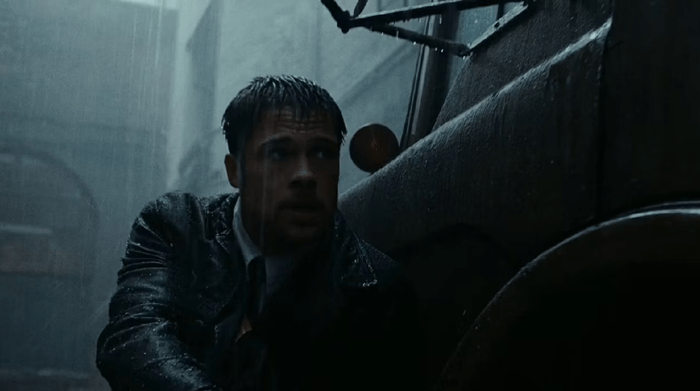
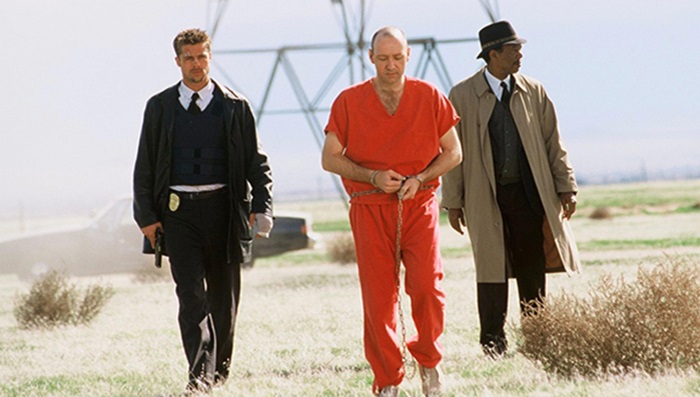
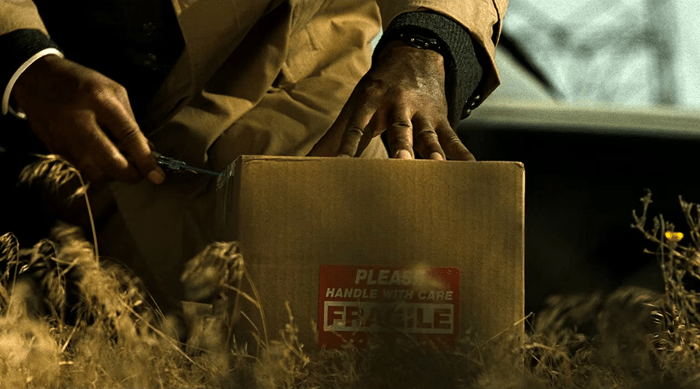
Truly great movies can leave indelible marks. It may be through an emotional connection to the story. It may be through a remarkable performance or a signature scene. But it can also be through the brilliant imagery a film can carve into your mind. That’s what this feature is all about – highlighting great images from great movies. Today we look at David Fincher’s unforgettable classic “Se7en”.
So what are your thoughts on “Se7en”? Which of these great images stick with you the most? Share your favorites in the comments section below.
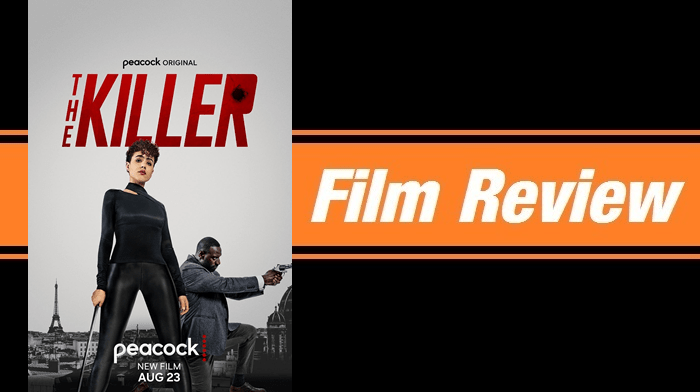
Not to be confused with David Fincher’s 2023 thriller of the same name, the latest film called “The Killer” is cut from a different clothe. It comes from the legendary filmmaker John Woo which automatically makes it a movie worth talking about. “The Killer” is a remake of Woo’s own seminal 1989 Hong Kong action classic which has been heralded as one of the most influential action films ever made and paved the way for Woo’s eventual move to Hollywood.
This new version of “The Killer” features a reimagined story written by Oscar-winner Brian Helgeland, Josh Campbell, and Matt Stuecken. They take the general framework of the 1989 film and add their own spin. They move the location to Paris, rework key characters, and add several new layers to the narrative. Woo handles the rest, directing the film with his usual verve while including all of his signatures: slow-motion, split-screens, religious imagery, duel-wielding pistols, white doves. It’s all here.
Image Courtesy of Peacock
A well-cast Nathalie Emmanuel plays Zee, a beautiful yet lethal Paris-based assassin who works under her mentor and handler, Finn (Sam Worthington). Zee is a proficient contract killer, and like most assassins she operates by a strict code. Hers is quite simple – no civilian targets. That code is put to the test after Finn gives Zee her next assignment. She’s to slip into an upstairs office at a popular night club and kill a group of gangsters. “No one leaves that room alive,” Finn instructs her. Sounds easy enough. What could go wrong?
As it turns out, a lot. Zee disposes of her targets in glorious John Woo fashion but spares the life of one person in the room – an unarmed American singer named Jenn (Diana Silvers) who loses her eyesight during the clash. As you can probably guess, that one act of mercy doesn’t sit well with Finn who knows that his client, a crime lord named Jules Gobert (Eric Cantona), won’t be happy. He immediately encourages Zee to track down Jenn and finish the job.
Meanwhile a street savvy but frustrated Paris police detective named Sey (Omar Sy) is assigned to the night club case. His investigation leads him to a pampered Saudi Prince (Saïd Taghmaoui), $350 million in stolen heroin, and a hospitalized Jenn who suddenly finds herself targeted by some mysterious men she doesn’t know. In an unexpected turn of events, it’s Zee who comes to Jenn’s rescue which immediately puts her on Sey’s radar.
The script doesn’t bring much new to the assassin movie formula, but it throws us some fun twists and creates characters who keep us locked into the story. Chief among them is a really good Nathalie Emmanuel who brings a certain charm as well as an illusive innocence to Zee. But she also shows off the kind of physicality that a John Woo film demands. Meanwhile the always sturdy Sy is a strong complement, both to Emmanuel and to Woo’s style.
Image Courtesy of Peacock
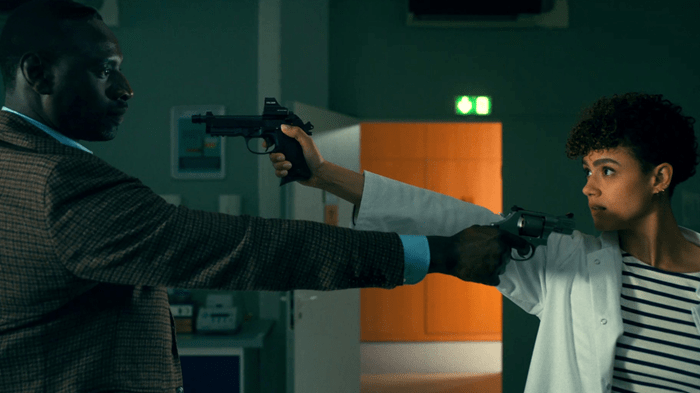
But as with any John Woo film, the action is the centerpiece. He treats us to several good chase sequences, a thrilling hospital shootout, and an electric final showdown in and around a decommissioned church. They are all fiercely shot and choreographed while being laced with most of Woo’s easy to recognize trademarks. And that’s exactly what we fans expect.
Interestingly, while “The Killer” has clear similarities to the 1989 film, Woo doesn’t attempt to recreate what many consider to be his masterpiece. Instead, the changes to characters, setting, and even tone allow him to explore his previous work in a new light. It also adds enough freshness to keep this from being a retread. And it provides Woo with new inspiration to do what he does best – create proudly violent and stylishly over-the-top action that leaves fans like me giddy. “The Killer” is streaming on Peacock.
C. Thomas Howell gives a career best performance in “Ride”, a rural family drama with a hint of crime thriller thrown in for good measure. Howell plays John Hawkins, a retired bull riding champion struggling to hold his family together in the face of numerous difficulties. John is a grizzled and world-weary soul who we watch do everything in his power to provide for his loved ones only to see it all crumble under economic hardships and past choices that come back to haunt him.
The driving force behind “Ride” is director, co-writer, co-producer, and co-star Jake Allyn. The film marks Allyn’s directorial debut and is the culmination of a deep emotional journey that saw him pouring more and more of himself into the project as it took form. As a result we get a compelling, poignant, and insightful drama with the kind of tough-minded truthfulness that can only come from the heart.
Image Courtesy of Well Go USA
Allyn co-wrote the script with his best friend Josh Plasse who also plays his kid brother in the film. Their story is set in the small Texas town of Stephenville and focuses on the Hawkins family. Allyn and Plasse build an interesting and complex dynamic that revolves around three generations of bull riders and the forces that pull at their relationships.
John is a former rodeo star in desperate need of money. He and his wife Monica (Annabeth Gish), who is the town sheriff, are drowning in medical bills from cancer treatments for their 11-year-old daughter Virginia (Zia Carlock). A potential life-saving treatment is recommended which gives their family some much-needed hope. But John needs a $40,000 first payment before Virginia can even be admitted into the clinic. John attempts to sell assets and tap into his pension which only adds unneeded stress on his already shaky marriage.
Meanwhile John and Monica’s estranged son, Peter (Allyn) arrives back in town after spending four years in prison. He reconnects with his grandfather Al (Forrie J. Smith) who helps him get settled and encourages him to get back to bull riding. But Peter immediately gets in deep with his former cell mate, a local drug dealer named Tyler (Patrick Murney), which thrusts him back into the drug-addled life that put him behind bars.
Image Courtesy of Well Go USA
We learn that Peter’s crimes damaged his relationship with his parents, leading them to never write or visit him while he was in prison. But with Virginia’s life on the line, both sides are forced to work through their own faults and failures if they are going to have any chance to save her. And that’s where the heart of “Ride” lies – in seeing these flawed people navigate through the mistakes they’ve made while at the same time being crushed by various systems that seem to be working against them.
Allyn does a nice job planting our feet in his world by offering an authentic portrayal of rodeo life and filling it with characters who feel firmly rooted in it. They’re brought to life by a solid ensemble led by an emotionally rich and soulful C. Thomas Howell performance. Allyn uses their story to take some healthy sociopolitical swings, specifically at the U.S. healthcare system. Yet he never veers from its deeply human core. And that’s what makes his movie resonate. “Ride” is available on VOD and home video.
I tend to be a sucker for cerebral science fiction as it’s one of the more fascinating slices of the sci-fi genre. It generally comes in all shapes and sizes. It can be a movie as seminal as Stanley Kubrick’s “2001: A Space Odyssey”, as epic as Christopher Nolan’s “Interstellar”, or as contained as Duncan Jones’ “Moon”. It may be something more metaphysical such as Andrei Tarkovsky’s “Solaris” or more psychological like James Gray’s “Ad Astra”.
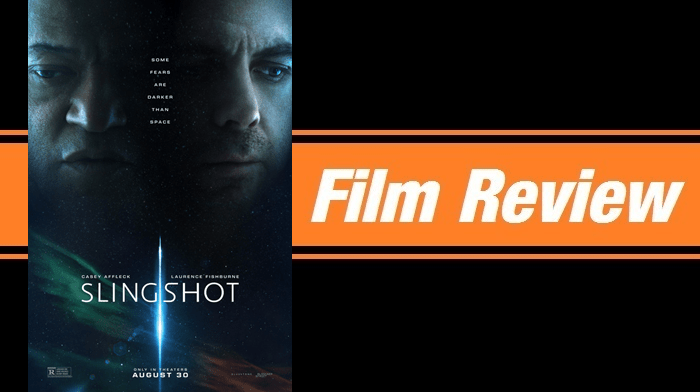
Director Mikael Håfström goes the cerebral route with “Slingshot”, a science fiction thriller that’s less about pulse-pounding action and more about the psychology of its main character played by a well-cast Casey Affleck. The story comes from screenwriters R. Scott Adams and Nathan Parker who place us with three astronauts aboard a tight-quartered state-of-the-art ship as it journeys across deep space. It’s their interactions and inevitable tensions that propel the movie. But Adams and Parker pepper their story with flashbacks to add some much needed context.
Image Courtesy of Bleecker Street
Affleck plays John, one of three men aboard the Odyssey 1. Their mission has them venturing to Saturn’s largest moon Titan. There they hope to tap into its infinite supply of methane in an effort to create a new clean energy alternative to save a dying Earth. But reaching Titan will be a challenge. It will require a dangerous gravity-assisted slingshot around Jupiter, catapulting them towards Saturn.
Joining John is his commander, Captain Franks (Laurence Fishburne) and the team’s engineer, Nash (Tomer Capone). Their long, arduous trip requires 90-day cycles of deep hibernation. In between their three-month sleeps the crew takes time to inspect the ship, confirm their course, get in some exercise, and take psyche evaluations. Then it’s back into their pods for another cycle. But for John, the drugs used to induce hibernation start having side effects. He begins forgetting details from his past. Even more jarring, he occasionally sees visions of Zoe (Emily Beecham), his girlfriend he left behind on Earth.
After yet another cycle, a sudden collision puts a dent in the ship’s hull. The damage sparks a debate on whether to continue the mission or return to Earth. Nash wants to turn around and head home. Franks sees no credible threat to the ship, and with only two more cycles to Jupiter’s orbit, he’s determined to keep going. That leaves John caught in the middle, weighing both positions while masking the psychological toll the mission is taking on him.
Image Courtesy of Bleecker Street
Affleck’s performance is tempered to fit a man full of suppressed regret and slowly losing his grip on reality. The 49-year-old has always possessed the ability to keep his feelings bottled up. But he can also convey a quiet intensity that simmers to the point of exploding. Both are key facets and precisely what his character needs. Fishburne is effortlessly rock-solid as usual while Beecham does good with what she’s given, appearing exclusively in flashbacks and giving form to the name and face haunting John.
I’m guessing Håfström worked with a modest budget, but he makes great use of every penny. There are no elaborate set pieces and much like the astronauts, we’re mostly confined to the ship. Yet “Slingshot” is a visually striking movie. Håfström and production designer Barry Chusid conceive a claustrophobic yet believably futuristic ship design with its sterile white interior, bright computer screens, and interesting technology. Meanwhile the flashbacks give us a welcomed reprieve while adding a necessary layer of humanity that comes fully into play during the film’s twist-filled finish. “Slingshot” opens in theaters today.
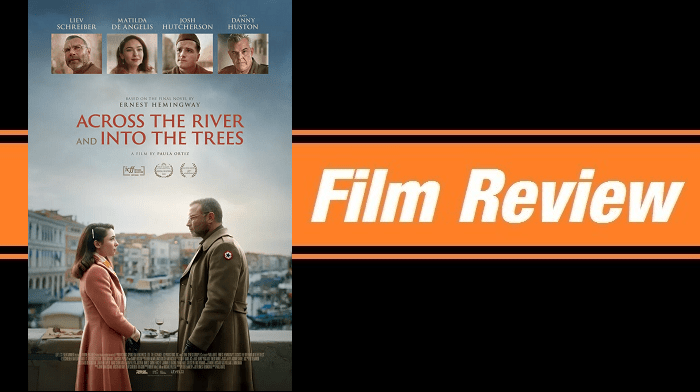
Ernest Hemingway’s “Across the River and Into the Trees” is rarely mentioned among the American writer’s more celebrated works. But it’s one I hold a special affection for. The work was first serialized in 1950 for Cosmopolitan magazine before being published as a novel later that year. Despite being met with negative reviews from the press, “Across the River” would become Hemingway’s only novel to top the New York Time’s bestseller’s list. As is often the case, literary critics and scholars have been more receptive of the work over time.
Director Paula Ortiz, working from a script by Peter Flannery, brings “Across the River and Into the Trees” to the screen in an adaptation that seeks to explore the DNA of Hemingway’s beguiling treatise on facing death, the prospect of love, and the emotional ravages of war. Their updated and safer spin first premiered at Idaho’s Sun Valley Film Festival back in March of 2022, and now it will be available for more people to wrestle with. And as with Hemingway’s novel, the reactions should be interesting.
Image Courtesy of Level 33 Entertainment
Those familiar with the novel will immediately notice the movie’s streamlined approach to setting up the story. Flannery’s script bypasses many of the book’s early details and makes some pretty significant narrative alterations. It still revolves around a complicated protagonist, the grizzled and truculent Colonel Richard Cantwell (played by Liev Schreiber). He’s a 51-year-old American Army officer and renowned hero of both World Wars stationed in Italy.
In many ways the Colonel is a quintessential Hemingway protagonist – world-weary and cynical in spirit. His ice-cold granite demeanor conceals more than the terminal illness he was recently diagnosed with. It also hides a lost soul deeply scarred by sorrow and trauma. The Colonel is a self-destructive man who drinks like a fish, is a heavy smoker, and pops nitroglycerin pills to keep his heart from exploding. Yet there’s a poorly veiled romantic side to the man which really comes out in his love for the city of Venice.
Ignoring the warnings of his concerned friend and physician Captain Wes O’Neill (Danny Huston in a small but effective role), the stubborn Colonel is determined to travel to Venice for a weekend duck hunt. O’Neill relents but assigns him a driver, the chatty Private Jackson (Josh Hutcherson). It doesn’t take long for the Colonel to shake his escort and hitch a boat ride into the city with an arresting young woman named Renata Contarini (Matilda De Angelis). He’s instantly fascinated by her which distracts him from his real reason for being in Venice.
In what feels like fate, the Colonel and Renata meet again and spend the night walking around the city marked by its beautiful sites and winding canals. It’s revealed that Renata is a countess from a once affluent family. She’s now unhappily engaged to a wealthy aristocrat named Antonio (Giulio Berruti) more to satisfy her ambitious mother than out of any feeing of true love. There’s a hint of Linklater as the two walk and talk across the alluring Italian città. But here the charm is shadowed by a looming sense of despair. It’s what makes the film both enchanting and tragic.
Image Courtesy of Level 33 Entertainment
Ortiz makes great use of her locations which are exquisitely shot by DP Javier Aguirresarobe. The film is a visual feast but in a self-restrained way that keeps it from becoming just a pretty travelogue. The camera serves the characters and their emotional pilgrimage. Venice is undoubtedly a key character, but at its heart “Across the River” is conversational and thoughtful. Flannery’s dialogue is organic and revealing; occasionally uneven but mostly authentic to the spirit of Hemingway’s prose.
With a title derived from the last words uttered by Confederate General Thomas “Stonewall” Jackson, “Across the River and Through the Trees” offers a bittersweet examination of love while emphasizing the toll war can take on the human spirit. Not all of the film’s liberties work, but Ortiz shows good instincts in keeping her film character-focused, and she captures the era’s post-war sensibilities which is a crucial element to the story. Add in a solid performance from the sturdy Schreiber and you have a warm yet haunting film that adds its own spin to one of Hemingway’s most underappreciated works. “Across the River and Into the Trees” releases in select theaters on August 30th.
These days there are few things more acidic than modern day politics. To be fair, politics have always been competitive and sometimes contentious. But there was a time when rival parties good duke it out in the hallowed halls of Washington DC and then have drinks together afterwards. I may be wrong, but we seem far removed from that today, especially at the national level.
Ronald Reagan had a way of connecting with people regardless of which side of the political aisle they sat. Like all presidents he had his detractors, but he was able to speak in a way that earned him the moniker The Great Communicator. During Reagan’s presidency people were inspired when he called on Mikhail Gorbachev to tear down the Berlin Wall. People were consoled when he addressed the nation following the Space Shuttle Challenger disaster. And people were collectively shocked when he was nearly assassinated by John Hinckley Jr. It was a different time.
Sean McNamara directs “Reagan”, a long developed biographical drama based on the life of the 40th President of the United States. Written for the screen by Howard Klausner and Jonas McCord, it’s based on Paul Kengor’s 2006 book “The Crusader: Ronald Reagan and the Fall of Communism”. It’s an ambitious project that attempts to cover more ground than it probably should, often resembling a rapid-fire series of dramatized news clips more than a fully fleshed out story. Yet, “Reagan” remains as intriguing as its subject who is portrayed by a thoroughly committed Dennis Quaid.
Image Courtesy of Showbiz Direct
The movie is framed by a conversation between a young Communist politician (Alexey Sparrow) described as the “rising star of Mother Russia” and an aged former KGB agent (Jon Voight) who followed Ronald Reagan’s rise which helped precipitate the Soviet Union’s fall. It’s through their discourse that we are transported back in time to key points in Reagan’s history. They include his small town childhood with his devout mother Nelle (Amanda Righetti) and his alcoholic father Jack (Justin Chatwin), his time as a lifeguard at Lowell Park, doing radio broadcasts, and playing football at Eureka College.
A lot of time is spent on Reagan’s Hollywood years where he made numerous feature films before and after enlisting in the military. But rather than focusing on his movies, McNamara hones in on the Reagan behind the scenes including his marriage to actress Jane Wyman (Mena Suvari) and their eventual divorce, his busy tenure as president of the Screen Actors Guild, and of course his first meeting with his future wife, Nancy Davis (Penelope Ann Miller). Through it all the film attempts to emphasize Reagan’s willingness to tackle problems head-on as well as his growing concern over the spread of Communism. And they factor into the next phase of his life – politics.
From there the movie chronicles Reagan’s rise through the political ranks beginning with his election as California Governor where he served eight years. It covers his loss to Gerald Ford in the 1976 Republican primary and his landslide 1980 victory over incumbent Jimmy Carter to become President of the United States. The filmmakers try to hit most major targets during his presidency: “Reaganomics”, Hinckley’s assassination attempt, the Iran-Contra affair, the Korean Air Lines tragedy, the famous Berlin Wall speech, and his Cold War chess match with Mikhail Gorbachev (Olek Krupa) just to name a few.
On more personal notes, McNamara often takes us back to Reagan’s loving relationship with his mother, stressing the impact she had on his life. We’re shown his mutual admiration and respect with Margaret Thatcher (Lesley-Anne Down), his friendship with Democratic Speaker of the House Tip O’Neill (Dan Lauria), and the endless support he receives from Nancy. It all culminates in the film’s touching finish that addresses his failing health including being diagnosed with Alzheimer’s disease.
Image Courtesy of Showbiz Direct
“Reagan” features an enormous cast, most of who deliver solid performances. But it’s Dennis Quaid who rightly earns the most attention. It takes some time and effort, but he is ultimately convincing with his look, voice, and mannerisms. In an attempt to make him look younger, some early scenes are visually awkward with too much digital gloss. But the story reaches a point where Quaid falls rather seamlessly into Reagan’s skin. It’s here that his performance really elevates.
The film does run into a few common biopic traps. For example its story structure is fairly routine, the writing can be rose-tinted and a little on-the-nose, and it overdramatizes a couple of key scenes. But the movie’s biggest issue is its ambition. It simply tries to cover too much. As a result, several events in Reagan’s life get shortchanged. And it can be hard to follow along as McNamara darts from one significant moment to the next. It’s a bit like watching a CliffsNotes version of Reagan’s life.
Even with its issues, “Reagan” takes us on a fascinating biographical journey through an extraordinary American life. It’s a well-made and well-acted feature that looks at Ronald Reagan through an undoubtedly sympathetic lens yet without ever turning overtly political. Instead its interests are in exploring Reagan’s challenges and achievements, balancing them with the man he was underneath. It offers a compelling perspective on a broad timeline of events. And like Reagan himself, it’s a movie that can speak to anyone who can hear beyond their own political affiliation. “Reagan” opens in theaters August 30th.