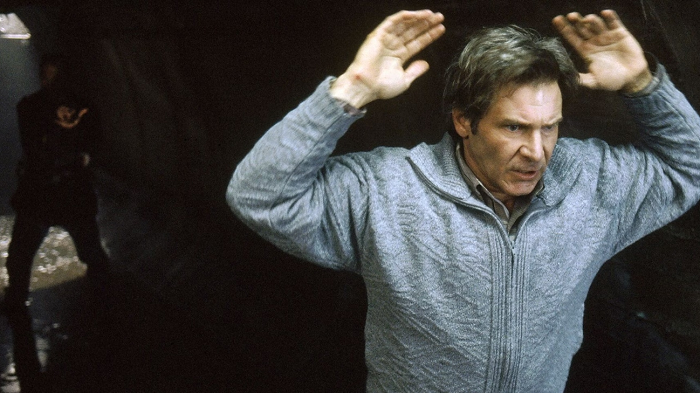
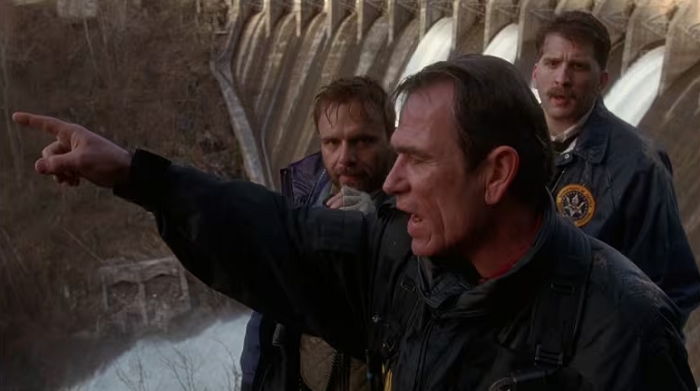
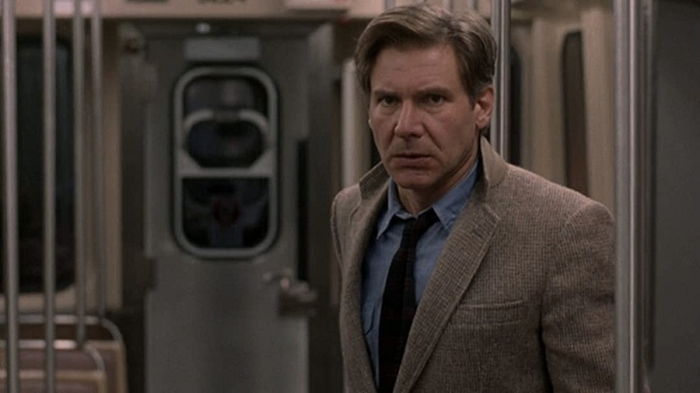
Next week Warner Brothers Home Video is releasing the classic 1993 action thriller “The Fugitive” in 4K resolution with High Dynamic Range for the very first time. Directed by Andrew Davis and anchored by two thrilling performances from Harrison Ford and Tommy Lee Jones, “The Fugitive” received widespread acclaim which culminated in 7 Academy Award nominations including a Best Supporting Actor win for Jones. This terrific new restoration is a great way to celebrate the film’s 30th anniversary.
This 4K Ultra HD edition of “The Fugitive” comes with a digital copy of the film and releases on November 21st. See below for a full synopsis and release information.
About the Film:
Year: 1993
Runtime: 130 Minutes
Director: Andrew Davis
Screenwriter: Jeb Stuart and David Twohy
Story By: David Twohy
Cast: Harrison Ford, Tommy Lee Jones, Sela Ward, Joe Pantoliano, Andreas Katsulas, Jeroen Krabbé, Daniel Roebuck, Tom Wood, Julianne Moore, Jane Lynch, L. Scott Caldwell, Ron Dean
Rating: PG-13 for a Murder and Other Action Sequences in an Adventure Setting
“The Fugitive” stars Academy Award nominee Harrison Ford as Dr. Richard Kimble and Tommy Lee Jones as Deputy U.S. Marshall Sam Gerard. The film also stars Sela Ward, Joe Pantoliano, Andreas Katsulas, and Jeroen Krabbé. The film is based the television series “The Fugitive” which was created by Roy Huggins and ran from 1963 to 1967. The film was produced by Arnold Koppelson.
Special Features:
“The Fugitive“Ultra HD Blu-ray disc contains the following previously released special features:
I really didn’t know what to expect heading into “May December”, the new film from Todd Haynes that’s ever so loosely based on the headline-making Mary Kay Letourneau scandal. For those unfamiliar, in 1997 the 34-year-old Letourneau was arrested and convicted on two counts of felony second-degree child rape for having sexual relations with her 12-year-old student, Vili Fualaau. While serving her seven and a half year sentence, Letourneau gave birth to two daughters with Fualaau. Once released she and Fualaau married.
So what would a filmmaker like Haynes do with such a lurid and queasy story of sexual abuse? Did he need to choose this very specific material, which will undoubtedly hit painfully close to home for many, just so he can examine ideas such as identity, perception, and mass media culture? It’s a question I feel unfit to answer. But let me say there’s more to his movie than any surface-level reading might reveal. And it’s the genius inclusion of one crucial character (played by a sublime Natalie Portman) that allows Haynes the opportunity to examine and critique his film’s troubling central relationship among a handful other things.
In screenwriter Samy Burch’s story the offense is the same but a few details have changed. Gracie (Julianne Moore) had a sexual affair with a 7th grade boy named Joe (played as an adult by Charles Melton). She was 36 and he was 13. Their shockingly salacious story dominated the news outlets and tabloids. Now some twenty-plus years later, it has mostly faded from the public consciousness. Since then the couple and their three children, one already in college and two on the way, have lived deceptively normal lives in the comfort of their cozy Savannah estate.
Image Courtesy of Netflix
But their story is about to be revived thanks to an upcoming independent film based on the scandal. Elizabeth Berry (Portman), a well known television actress with Juilliard credentials, is set to play Gracie and has been invited to the couple’s home to help prepare for her role. Gracie and Joe hope their input can help shape how they’re portrayed in the movie. Elizabeth’s motives are somewhat murkier despite her thoughtful and empathetic veneer.
Elizabeth arrives as Gracie and Joe are hosting a neighborhood garden party. It’s all smiles and laughter with the lone exception being a package of feces left at their front door (Joe is quick to point out that such demonstrations of disgust don’t happen as often as they once did). Almost immediately, with pencil and notepad firmly in hand, Elizabeth begins observing and absorbing every detail of Gracie’s life.
At first Gracie and Elizabeth have a mutually respectful rapport. But the more Elizabeth digs the more cracks she finds in Gracie’s domestic facade. She begins interviewing those close to Gracie (or once close) including her ex-husband (D.W. Moffett) and her estranged son from her first marriage (Cory Michael Smith). It’s all meant to help Elizabeth slither deeper into Gracie’s skin. After all, it’s all about enhancing her performance, right?
Image Courtesy of Netflix
As for Gracie, the sanctioned intrusion into their lives proves to be more trying than she anticipated. She puts on a good show, inviting Elizabeth to dinner, sharing old memories (of her choosing), even showing how she fixes her hair and applies her makeup. But alongside Elizabeth, we pick up on subtle clues that tell a different story. Clues like Gracie’s poorly concealed insecurities; her bursting into tears over the smallest things; her passive-aggressiveness mothering of her husband whose demeanor and body language hints at a wounded child buried inside a 36-year-old man’s body.
In reality both women are performing. The reasons behind Gracie’s act are obvious. But it’s Elizabeth who is the most beguiling, especially once Haynes slyly turns his critical eye towards her. Elizabeth is building her own character, partly from the information she has gathered but also from her own obsessive compulsion. She turns into a destabilizing force but also a sexual deviant. We see the latter in the way she relishes the lustful gaze of a teenage boy, in the suggestive way she describes shooting sex scenes to a high school drama class, and most of all in her subtle self-satisfying come-ons to a confused and vulnerable Joe.
I could go on and on about this fascinating feature that’s destined to be divisive yet certain to be analyzed for years. It’s a film that plays in moral gray areas while a pitch-black cloud perpetually looms above it. It’s discomforting but with unexpected dashes of wry humor that are often accompanied by the delightfully intrusion piano chords of Michel Legrand’s theme from “The Go-Between”. There are a few on-the-nose metaphors and some puzzling omissions. For example, is there even a mention of Gracie’s years in prison? Still, there’s so much to mine out of this crafty and complex Todd Haynes concoction. “May December” releases November 17th in theaters and on Netflix.
Denzel Washington’s “The Equalizer 3” releases on home video today and I’m thrilled to announce an exciting free giveaway. A special 4K Ultra HD Steelbook edition of “The Equalizer 3” will be available exclusively at Best Buy. It features the film in stunning 4K Ultra HD and also comes packed with Blu-ray and digital copies of the film. This new steelbook looks amazing and they’re sure to go fast. But don’t worry…
I’ll be giving away a copy of this exclusive “The Equalizer 3” steelbook to one lucky winner courtesy of Sony Pictures Home Entertainment.
The rules to enter are easy. Simply tell me your favorite Denzel Washington movie in the comments section below and you’ll be entered. Be sure to *INCLUDE YOUR NAME* and follow me on Twitter/X, check back here, or include a way to contact you (email address, etc.) in case you win. One name will be randomly drawn from all the entries on November 17th and the winner will be announced and can claim their prize.
Head to the comments now and tell me your favorite Denzel Washington movie and you’ll have a chance to win.
Zack Snyder’s sprawling, highly original, big budget space opera “Rebel Moon” gave us a nice teaser trailer a couple of months back. This past weekend Snyder and Netflix released their first full trailer for the first film in what is set to be an epic two-parter. This new look at “Part One: A Child of Fire” sees the director and co-writer telling a story uniquely his own. I for one can’t wait to see what he has imagined and created.
The film stars Sofia Boutella as the fiercely driven Kora who rallies together a team of warriors from across the galaxy to take on the powerful and oppressive Imperium and its tyrannical ruler Regent Balisarius (Fra Fee). This action-heavy first chapter looks to be full of cool characters, exciting locations, and plenty of eye-popping set pieces. It also features an intriguing supporting cast that includes Charlie Hunnam, Djimon Hounsou, Michiel Huisman, Staz Nair, Doona Bae, Ray Fisher, Jena Malone, Ed Skrein, and the voicework of Anthony Hopkins.
“Rebel Moon – Part One: A Child of Fire” releases December 15th on Netflix. Check out the trailer below and let me know if you’ll be seeing it or taking a pass.
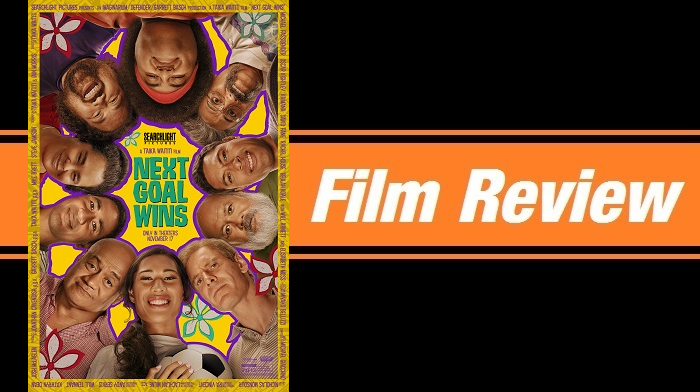
My biggest question going into “Next Goal Wins” was simple. Is this a return to form for director Taika Waititi. The director of such deliciously quirky treats such as “What We Do in the Shadows”, “Hunt for the Wilderpeople”, and “Jojo Rabbit” found himself drawn into the moneymaking blockbuster machine known as the Marvel Cinematic Universe. The results weren’t great. “Thor: Ragnarok” was tolerable yet frustrating. “Thor: Love and Thunder” was an abysmal mess.
So following on the heels of “Love and Thunder” is the feel-good sports comedy “Next Goal Wins”. So I ask again – is it a return to form for the undeniably talented Waititi? Well, not exactly. Instead it’s a mind-boggling misfire that sees the filmmaker more absorbed in his preoccupations than with telling a good story. It’s even more bewildering that a filmmaker so notorious for doing his own thing would make a film this glaringly by the numbers.
Image Courtesy of Searchlight Pictures
The movie has a great lead in Michael Fassbender and the story (written by Waititi and Iain Morris) starts promising. Inspired by true events and (at least for a time) laced with Waititi’s wacky sense of humor, “Next Goal Wins” sees Fassbender playing Thomas Rognen, a volatile American soccer coach on the outs with the United States Soccer Federation. But rather than straight-up fire him, the board, which includes his estranged wife and her new beau (played by the woefully underused Elisabeth Moss and Will Arnett), assign him to the most undesirable job in all of football.
In the 2001 World Cup Qualifiers the American Samoa national team suffered the worst defeat in the history of international football – a 31-0 drumming by Australia. Believe it or not, since then they’ve only gotten worse. In fact, we learn they’ve never scored a goal in the history of their team. Enter the boozy, soured, and frustrated Thomas who has been sent to American Samoa to coach their national team.
Early on Waititi teases us with an amusing fish out of water culture-clash comedy. There are some hilarious bits with Fassbender’s embittered and self-centered Thomas clanging against the deeply religious and hard-working Samoan locals. Equally funny are some of the early scenes with Thomas and his team, a talentless but good-hearted bunch who are as bad on the field as their reputation says. Yet they never lose the support of Tavita (Oscar Kightley), the President of the Football Federation of American Samoa who gives Thomas a single task – just score one goal.
But this is where the storytelling starts to go off track as Waititi’s more obsessive interests derail other facets of his movie. Take Thomas and his team. You would think their relationships would form the core of the story. Well, they do but only in a broad sense. Instead Waititi gets caught up in telling an on-the-nose side story involving a transitioning faʻafafine player named Jaiyah (played by Kaimana). So much so that most of the other players are nothing more than faces. We’re supposed to care about them, but hardly anyone other than Jaiyah gets a backstory or even a personality. Even Waititi’s camera stays so fixated on Jaiyah that the rest of the team feel like tag-alongs.
Image Courtesy of Searchlight Pictures
But not only do the majority of the relationships get shortchanged, so does the entire sports angle itself. Nothing about it comes across as authentic mainly because Waititi doesn’t put the time or effort into making it believable. We never see any kind of practice or preparation that would make us believe the American Samoan team could ever function in a qualifying match much less score a goal. That’s because Waititi’s interests are elsewhere.
That would be fine except Waititi wants us to buy into the film’s big feel-good finish – a lazy, super cheesy, emotionally inert retread of ground covered by countless other sports movies. We get the big game, the lovable underdogs, the mean and overly cocky opposing team, the moment where all seems lost, the big inspirational speech, and the rousing triumph where the music swells as everyone goes wild. It’s a surprisingly unoriginal and frustratingly hollow ending from a filmmaker trying to skate by on just representation and a few good gags. Or maybe he doesn’t expect much from his audience. Either way, Waititi’s latest misses the net by a mile. “Next Goal Wins” hits theaters November 17th.
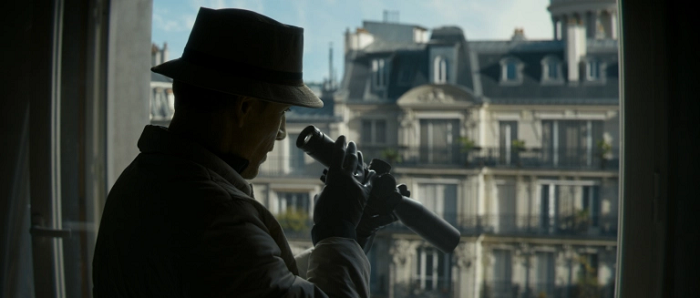
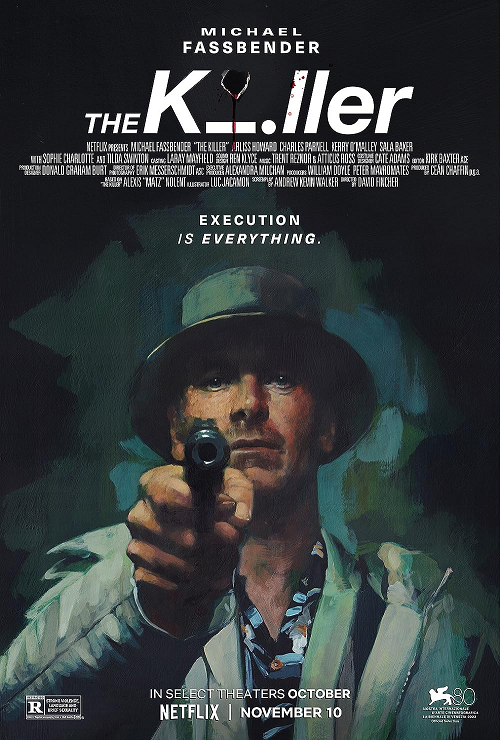
David Fincher’s “The Killer” premieres TODAY on Netflix and it should immediately be put near the top of your queue. Michael Fassbender gives a lights-out turn as a cold, calculated, and extremely efficient hitman who finds himself breaking his own rules to pay back those who have turned against him. Not only is the smart and stylish action-thriller one of 2023’s best movies, it also features what might be my favorite movie posters to release this year.
So make plans to watch “The Killer” this weekend (you can read my full review HERE). In the meantime, check out the three stunning posters designed by Neil Kellerhouse and illustrated by James Patterson.