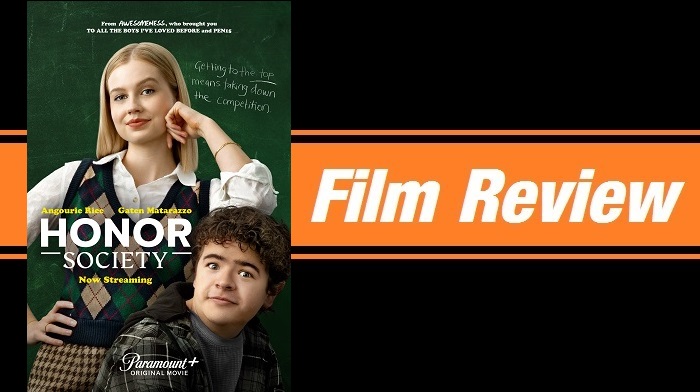
REVIEW: “Honor Society” (2022)

Director Oran Zegman and screenwriter David A. Goodman team up for “Honor Society”, a high school coming-of-age comedy wedged right between freshly original and disappointingly conventional. It’s a movie with plenty of its own ideas and a charismatic star who helps the film consistently subvert our expectations. But there are also times where it resorts to the more familiar teen movie formula. That’s when you can see the filmmakers checking boxes and leaning on tropes rather than using them in interesting ways.

While “Honor Society” may not be the most balanced movie, it does have its own distinct personality and allure which keeps you locked in. It all starts with the film’s lead character, Honor Rose, played by a delightfully snarky and devilishly charming Angourie Rice. Honor is an ambitious and determined overachiever in the final days of her senior year of high school. Since her freshman year, Honor has stuck to her own strict and obsessive four-year academic plan with only one goal in mind – acceptance into Harvard. There are no contingency plans, no second choices, no rethinking it if something goes wrong. It’s Harvard or bust, and she’ll trample anyone in her path to get there.

Image Courtesy of Paramount+

The framing of the story is interesting. Basically, Honor is walking us through her story, constantly breaking the fourth wall to let us know how she really feels about what we’re seeing. It’s revealing as we learn she’s not only brutally honest, but also conceited, condescending, and astonishingly self-serving. She’s ready to ditch her small town and leave middle-class life in the dust. And she lets us know she has just the kind of ego to do whatever it takes to make it happen. Rice conveys all of these qualities with jarring clarity, and she gives us a character we are appalled by but also strangely admire. I mean her point-of-view on certain things may be a bit harsh, but they can also resonate.

Essential to Honor’s plan is her perverted guidance counselor, Mr. Calvin (Christopher Mintz-Plasse) who happens to have Harvard connections. Honor needs him to write her a letter of recommendation and has tried to use his utterly inappropriate feelings towards her to her advantage. But instead of writing her the letter, he informs her that she’s among his top four choices. Only one will get his Harvard recommendation. Of course that is unacceptable for Honor who immediately starts putting together her next course of action.

Honor narrows down her competition to Travis Biggins (Armani Jackson), the hunky captain of the lacrosse team; Kennedy Park (Amy Keum), an eccentric and ignored introvert who wears historical costumes to school; and Michael Dipnicky (Gaten Matarazzo), a brilliant but bullied outcast. Honor hatches several plans to preoccupy the three so that they bomb their mid-terms. But in her efforts to manipulate everyone for her benefit, she unknowingly ends up changing some of their lives for the better.
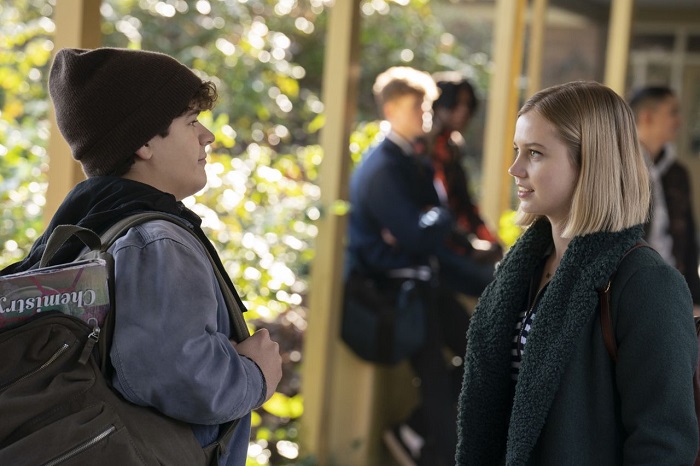
Image Courtesy of Paramount+

As the plot unfurls more characters are introduced which is where the movie begins to veer towards the conventional. Collectively most feel like typical teen movie types and neither them nor their story angles move beyond that. Some characters fare better than others. But most hit all too familiar beats with very predictable trajectories. And it’s not without its corn and cringe. Take the all too tidy finale that comes right after a smart and surprisingly wicked twist. The sappy and groan-worthy final few moments land with a thud.

But the most stable force from start to finish is Angourie Rice. This should be an attention-getting performance and a star-making turn for the 21-year-old Australian. Regardless of where the story goes she keeps us anchored, brilliantly juggling acting directly into the camera and with other actors. And despite a few tired conventions, there’s still some good material here that let’s Rice take her character to some unanticipated places. That’s when “Honor Society” is at its best. “Honor Society” is now streaming on Paramount+.

VERDICT – 2.5 STARS

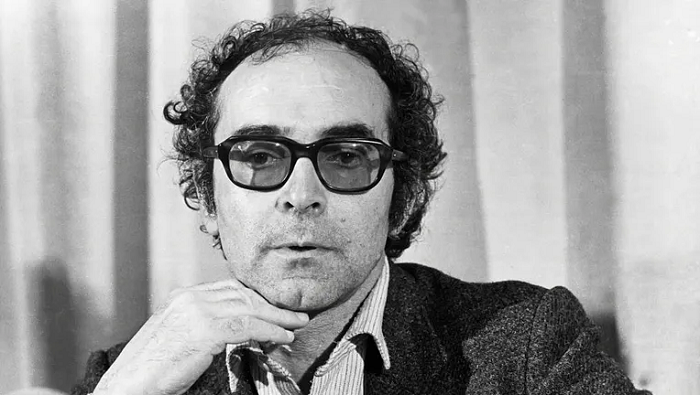
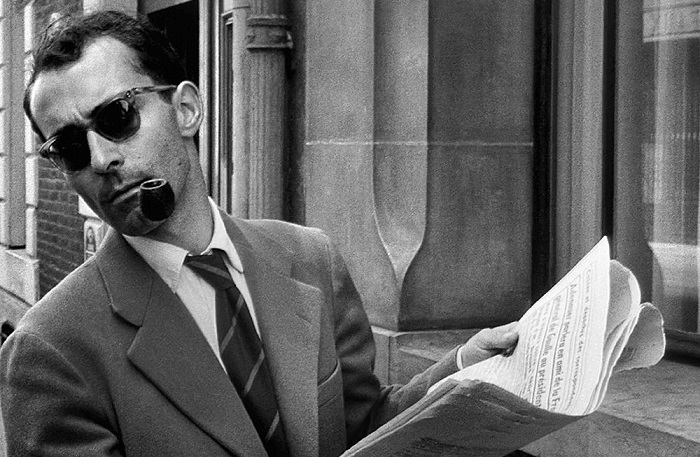
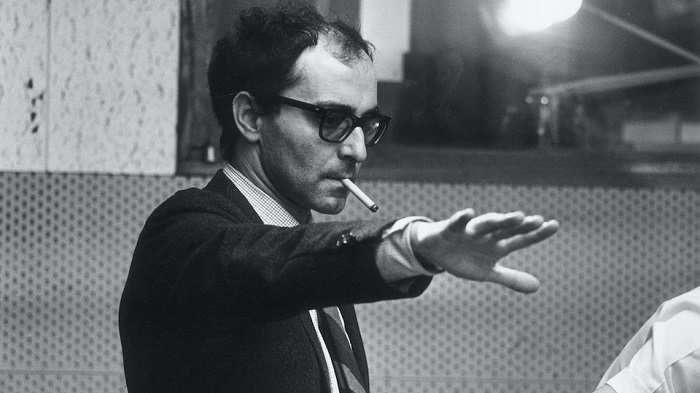
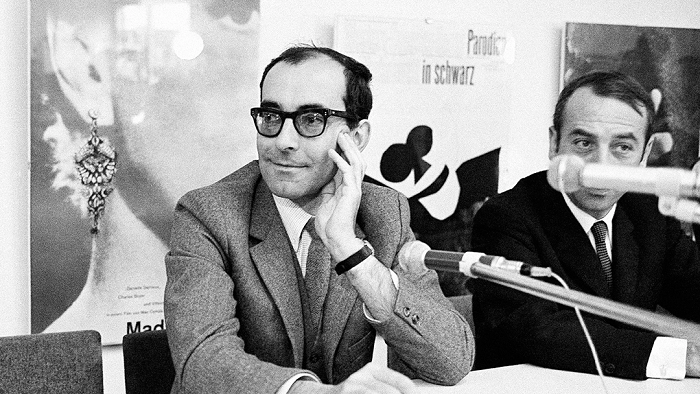
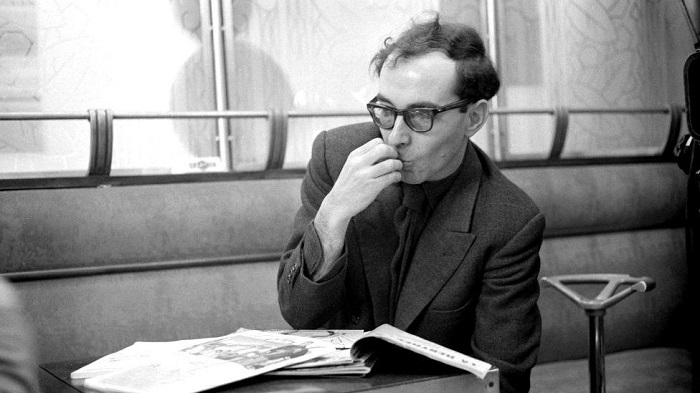
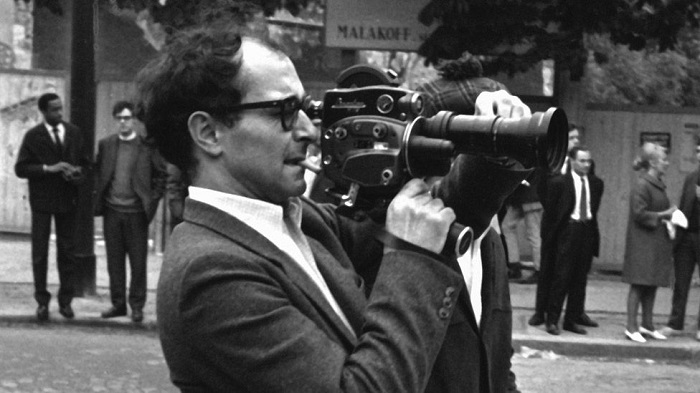
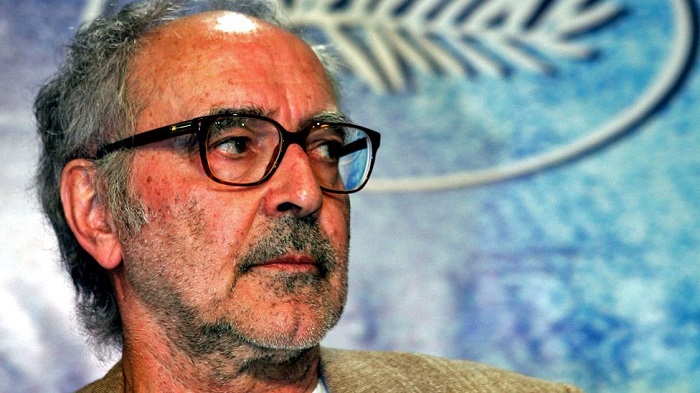
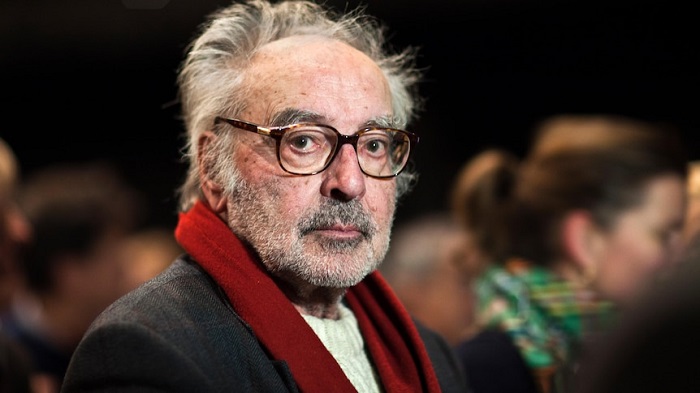
Jean-Luc Godard (1930 – 2022)

The great Jean-Luc Godard has passed away.

A renowned movie critic, screenwriter, and director, Godard was a pioneer and architect of the French New Wave, a film movement of the 1960s that significantly reshaped the way movies were being made. Along with other cinema revolutionaries such as Truffaut, Rohmer, Chabrol, Varda, Rivette, and Resnais, Godard challenged not only the way filmmakers approached movie-making, but also the way they viewed life through their lenses.

Godard is without question one of the most influential and groundbreaking filmmakers in cinema history. And storytellers are still drawing from his work to this day.

Jean-Luc Godard was 91.

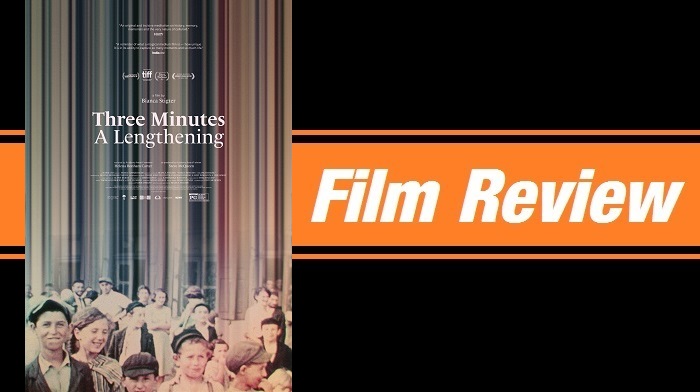
REVIEW: “Three Minutes – A Lengthening” (2022)

With “Three Minutes – A Lengthening”, Bianca Stigter has given us one of the most compelling documentaries of 2022. The film centers on three minutes of 16mm home movie footage from 1938, shot in the Jewish neighborhood of Nasielsk, Poland. These three brief minutes are full of smiles, joy, and laughter as members of this lively Jewish community enjoy the attention of the camera. But in a few short months, most of the people in the footage would be gone – victims of Nazi Germany’s systematic genocide of European Jews.

The weight of that truth hangs over “Three Minutes – A Lengthening”. Stigter’s approach makes sure it’s etched into our minds. At the same time, this isn’t a film solely fixated on the horrors that befell this community. It’s far more about memorializing them by piecing together these few fragments of their lives preserved on the film. It’s an effort to remember them; to let their lives speak beyond the abhorrent atrocities they faced at the hands of their barbaric oppressors. And while identifying the people proved mostly impossible, Stigter honors them through her deep reverence and forensic precision.

Image Courtesy of Super LTD

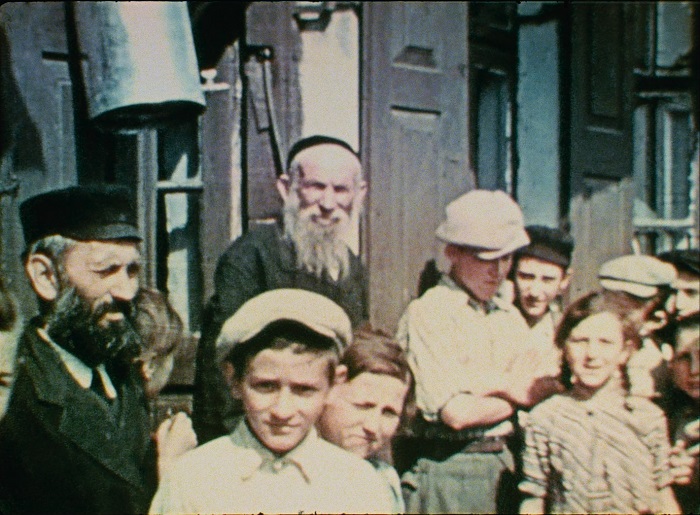
Stigter begins by playing the full video uninterrupted, without narration or voice-over of any kind. All we hear is the sound of the film running through a 16mm projector. It’s a sobering three minutes. I watched this opening three times before continuing the movie, and in that time several noticeable faces stuck with me. The old bearded gentleman leaning up against the wall. The rambunctious lad sticking his tongue out at the camera. The two manly chaps standing stoically on the left side of the frame. The young girl in a pale red dress with a well-combed bob and a big smile. And several others. I immediately started wondering about them. Who were they? What were their stories? And sadly, were they among the very few who survived?

From there the movie chronicles the search for answers about the town and the people we see. Interestingly, the movie never strays from the actual footage itself. We never see the narrator (a superb Helena Bonham Carter) nor do we see the small handful of contributors. We simply hear their voices as we continually watch those solemn three minutes. But it’s not in a continual loop. Stigter freezes frames, rewinds clips, zooms in on details, etc., all in her efforts to glean whatever information she can. Often that requires examining every inch of the frame: the door posts, the trees, the clothing patterns and fabrics. It all helps paint a clearer picture of the community.

A key voice in the film is that of Glenn Kurtz, the man who discovered the three-minute celluloid in a closet in Florida. Nearly aged passed the point of saving, Glenn donated the film to U.S. Holocaust Memorial Museum where it was restored and digitized. Over time we learn the film was shot by his grandfather, an American named David Kurtz, who in 1938 took a trip to Europe. After stops in Paris, London, Amsterdam, and Geneva (among other places), David took a detour to Poland to visit his hometown of Nasielsk.

Image Courtesy of Super LTD

We learn that Nasielsk, some 30 miles north of Warsaw, is where David Kurtz shot the eponymous three minutes of footage. In 1938, Nasielsk had a population of 7,000 of whom 3000 were Jews. But by 1942, less than 100 of the town’s Jewish population would be alive. The deportation of the Nasielsk Jews is shared in a grim and stomach-churning eyewitness account. It adds even more potency to the three minutes of film we’ve come to intimately know by that point in the movie.

While watching “Three Minutes – A Lengthening” you can’t help but notice its nods to the power of filmmaking, the importance of historical research, and the unequaled treasure of memory. All of those things are profoundly realized throughout the film’s compact 111 minutes. But the people on that small 16mm reel are always the centerpiece. Stigner never loses sight of that, and as a result we don’t lose sight of it either. “Three Minutes – A Lengthening” is out now in select theaters.

VERDICT – 4.5 STARS

First Glance: “The Good Nurse”

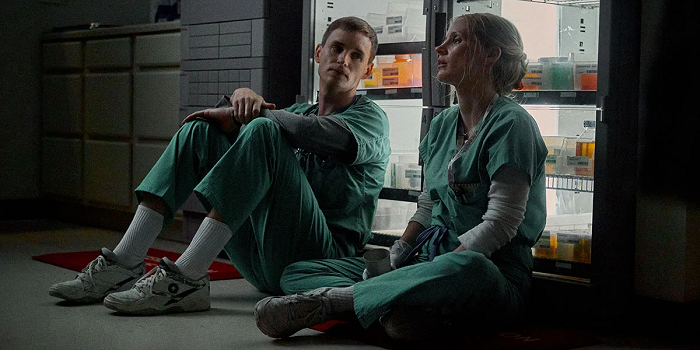
Out of the recent flurry of awards season trailers, one that has stuck with me most is “The Good Nurse”. The film comes from Tobias Lindholm who co-wrote two of my favorite movies of the last decade, “The Hunt” and “Another Round”. Here Lindholm directs from a script by Krysty Wilson-Cairns (“1917”, “The Last Night in Soho”). That combination mixed with the star power of Oscar winners Jessica Chastain and Eddie Redmayne puts this unsettling thriller for Netflix high on my list.

Chastain plays a nurse named Amy Loughren and Redmayne plays her co-worker Charles Cullen. Cullen was a real-life serial killer who eventually confessed to murdering a confirmed 29 people while working as a nurse in New Jersey. The most chilling part of his story is that it’s believed Cullen may be responsible for as many as 400 deaths. Both Chastain and Redmayne look tremendous in this, and the story itself carries a disturbing weight. This could be a winner for Netflix.

“The Good Nurse” opens in select theaters October 19th before streaming on Netflix October 26th. Check out the trailer below and let me know if you’ll be seeing it or taking a pass.

REVIEW: “Medieval” (2022)

(CLICK HERE to read my full review in the Arkansas Democrat-Gazette)

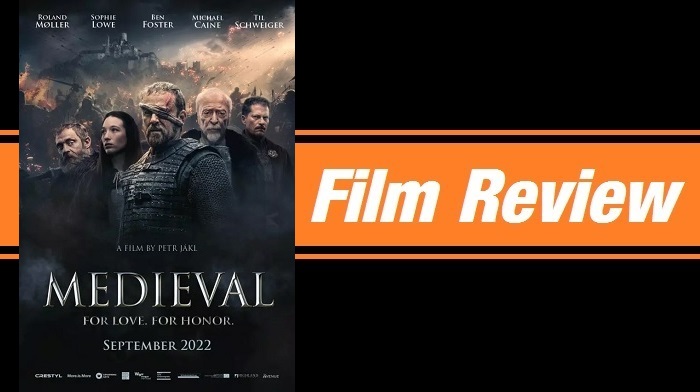
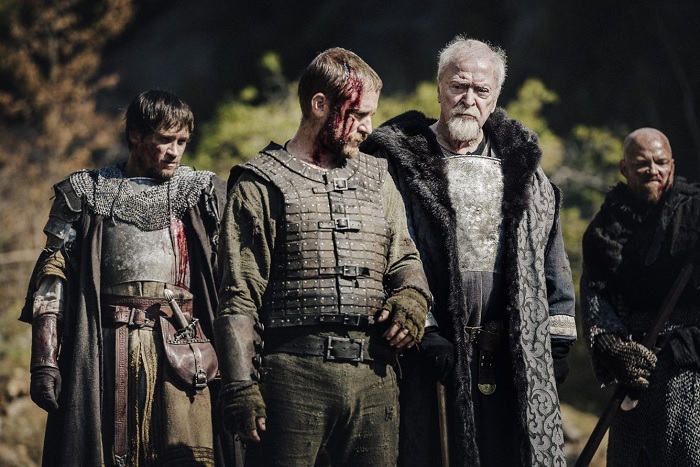
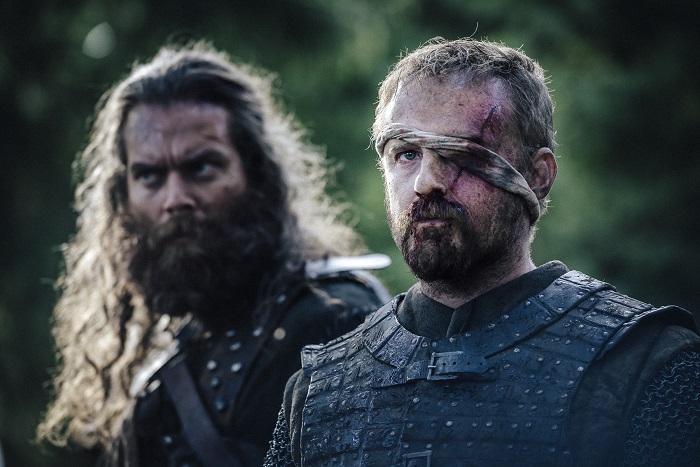
Petr Jákl writes and directs “Medieval”, a new historical action-drama billed as the most expensive Czech Republic film ever made. In it, Ben Foster plays Jan Žižka, a Hussite general and Czech national hero who is considered one of the greatest military leaders and tacticians of his day. “Medieval” tells Žižka’s story prior to his time as a renowned leader of a peasant revolt against a coalition of corrupt Catholic crusaders during the Bohemian Wars of the early 15th century.

“Medieval” sits us down in a historically and dramatically rich time period. It might help to at least have a passing knowledge of the period’s background, because outside of some very brief opening narration, the movie doesn’t do much past some surface level setup. Just knowing a little bit of the history adds a layer of context that helps the movie and more specifically the characters.

Image Courtesy of The Avenue

Jákl opens his film in 1402 with Europe already plunged into chaos. It’s a time of war, plague, and famine as powerful men with their lusts for sovereignty lead a land ruled by lawlessness and oppression. It’s believed that only the coronation of a new Holy Roman Emperor can restore the rule of law. But the Catholic Church is bitterly divided into two factions, each under the leadership of a rival pope. And both sides are determined to have their say on who is chosen as the next emperor.

It’s in this political and hierarchical powder keg that we meet Jan Žižka, who Foster plays as the proverbial stoic man of few words. Jan and his band of loyal mercenaries do an assortment of odd (and aggressively violent) jobs for well-paying dignitaries including the entirely fictional Lord Boresh (Michael Caine). But Jan soon finds himself caught in a chess match between two feuding monarchs, the Bohemian King Wenceslaus IV (Karl Roden) and his ambitious half-brother King Sigismund of Hungary (Matthew Goode).

Things heat up when Lord Boresh, a Wenceslaus loyalist, approaches Jan and his men about kidnapping Lady Katherine (Sophie Lowe). She’s the fiancé of a powerful and devious nobleman, Lord Rosenberg (Til Schweiger) who’s in cahoots with Sigismund. Against his better judgement, Jan agrees. But the act sets off a bloody chain of events with consequences he never anticipated. And while Sigismund’s brute-for-hire Torak (Roland Møller) savagely combs the countryside in search of Jan, he gives the naive Lady Katherine a first-hand look at her future husband’s cruelty.

Aside from its healthy buffet of political posturing, double-dealing, and betrayal, the movie offers a steady diet of medieval hack-and-slash violence. Much of the film’s hefty budget can been seen in the combat which is often fierce and quite brutal. And even more money is visible in the locations, costumes, and production design which vividly recreates this harsh and relentless period.

Image Courtesy of The Avenue

Yet while the movie looks great, feels authentic, and is punctuated by some intense well-shot action, it feels like there’s something missing. Even with its compelling setting and story arc, “Medieval” never quite kicks into a higher gear. It’s not bad by any stretch, it simply lacks distinction. It’s as if it’s missing that one ingredient that would set it apart from the countless other action period pieces of its kind. So you could say its glaringly generic title is fitting.

Part of the problem may be the film’s stone-faced protagonist. I get stoicism and how it’s meant to play in a story like this one. But it’s hard to mine any feeling out of Foster’s character. He’s haunted by dreams of a past trauma, and he’s troubled by the consequences his actions have on others. But it’s hard to find any other emotions in Foster’s performance. It really stands out in the later scenes with Jan and Katherine. We’re supposed to believe a relationship sparks, but there’s hardly any warmth between them. Still, amid the beards, blood, and grime is a solid blend of history and genre. Toss in some good underlying themes of faith, heroism, and sacrifice, and you have a movie that may be garden-variety, but its entertaining nonetheless. “Medieval” is in theaters now.

VERDICT – 3 STARS

REVIEW: “The Man From Toronto” (2022)

With practically no fanfare whatsoever, Netflix’s “The Man From Toronto” dropped on the streaming platform with a thud. And it’s pretty obvious why. This action-driven buddy-comedy from director Patrick Hughes (“The Hitman’s Bodyguard”) is so strictly beholden to countless other movies that came before it. It has its moments, but not enough of them to make up for the overwhelming feeling that we’ve seen all of this before.

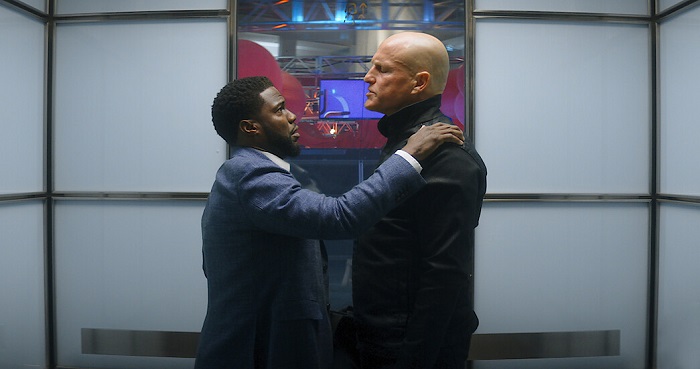
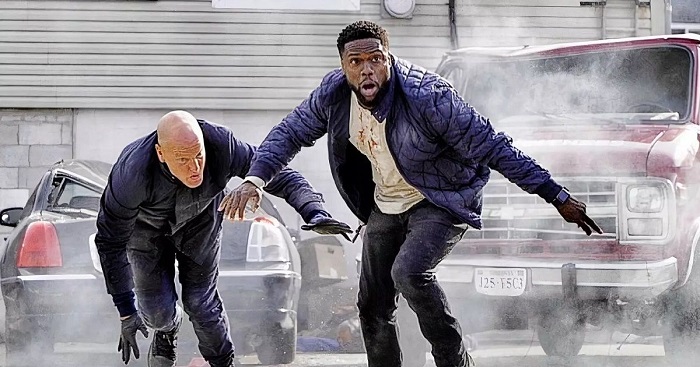
“The Man From Toronto” puts together the mismatched couple of Kevin Hart and Woody Harrelson in a movie that’s never as funny as it tries to be or as thrilling as it wants to be. It features Hart doing his usual little-man routine and Harrelson doing variations of several characters he has played in the past. As usual, Hart is skittish, shrill, and utterly reliant on a straight man for his act to work. Harrelson is a decent foil despite never being as menacing or funny as the movie needs. He looks like Christopher Lloyd‘s Judge Doom from “Who Framed Roger Rabbit” – decked in black with a round brimmed hat and dark glasses.

Image Courtesy of Netflix

Hart plays Teddy Jackson, a failed inventor (sort of) and wannabe fitness instructor. He’s a guy who always has big (and often dumb) ideas but never pays attention to the details. So it’s no surprise that they inevitably fail. Yet despite his constant blunders and languid career, Teddy still has the love and support of his incredibly tolerant wife Lori (a good but woefully underused Jasmine Matthews). For her birthday, Teddy whisks her away to the resort town of Onancock, Virginia. But wouldn’t you know it, his slapdash antics makes a mess of things.

Harrelson plays a ruthless interrogator/hitman simply known as “The Man From Toronto”. He’s part of a network of assassins, each named after the different cities around the world where they’re based. He gets his jobs from a mysterious voice on his phone called The Handler (Ellen Barkin). After successfully collecting a healthy payday in Utah, TMFT gets a call from The Handler who offers him a $2 million job. It’s a two-phase extraction that (wouldn’t you know it) begins in Onancock, Virginia.

After arriving in Onancock, Terry drops Lori off at a day spa and heads to their rental cabin to meet with the owner. But, he goofs up and ends up in the wrong cabin where he is mistaken for The Man From Toronto. Meanwhile, the actual TMFT watches from a distance. From there, the FBI gets involved and force Teddy to carry on his ruse while an exiled Venezuelan Colonel (Alejandro de Hoyos) and his equally sinister wife Daniela (Lela Loren) plot to assassinate Venezuela’s president. Oh, and there’s an exploding cake.

Image Courtesy of Netflix

If that sounds like a jumbled up mess, it’s because it kinda is. Co-writers Robbie Fox and Chris Bremner toss in and spin together too many story angles, most of which are fairly conventional on their own. We also get several amusing yet overall inconsequential side-characters. For example, singer and telenovela star Jencarlos Canela plays a debonair FBI agent tasked with watching over Lori while Teddy is at work for the government. Pierson Fodé gets in a few good licks playing The Man From Miami. Even Kaley Cuoco shows up later with her signature zany energy. But her character isn’t given an inkling of a backstory and is handcuffed by some really bad writing.

Ultimately it all falls on Hart and Harrelson who make for an quirky pairing. As Teddy and TMFT rollick along in full buddy-movie mode, the two actors give it their all. They deliver the occasional comical moment and we get a couple of good action scenes (there’s one hilariously kinetic and proudly over-the-top fight sequence near the end that almost saves the movie). Interestingly, Jason Statham was originally tagged to play the titular character, and it would have been interesting to see what he would have brought to the film. But in his defense, Harrelson isn’t the issue here. It’s the movie’s beat-by-beat familiarity and lack of punch. I suppose it’s passable entertainment. Just don’t expect too much. “The Man From Toronto” is streaming now on Netflix.

VERDICT – 2 STARS