REVIEW: “National Lampoon’s Christmas Vacation” (1989)

(Originally Reviewed in 2012)

Fans of the “Vacation” films have followed the Griswold family on a cross-country vacation, a European vacation, and even a Las Vegas vacation. “National Lampoon’s Christmas Vacation” is arguably the funniest of the “Vacation” movies and focuses on their attempt at a “good old-fashioned family Christmas”. Of course anyone familiar with the Griswolds knows this is easier said than done, especially with the well-meaning but blundering patriarch Clark at the helm. For audiences the results are pretty hilarious.

Chevy Chase reprises his role as Clark Griswold. He’s still not the sharpest knife in the drawer, but a he’s good husband and father. As mentioned, this time he sets out to have a traditional family Christmas. That includes venturing out in the wild to find a real Christmas tree, aggressively decorating the outside of his house with Christmas lights, and inviting his parents and in-laws to his home for the holidays. Naturally Clark’s lovable ineptitude ensures that none of his ideas work out as planned, and that’s a big part of the fun.

Beverly D’Angelo returns as Clark’s ever-patient and supportive wife Ellen who (as in every “Vacation” movie) perfectly understands her husband’s propensity for overdoing things. She’s the sometimes calming voice of reason and a perfect complement to her nutty husband. Chase and D’Angelo have always had a terrific chemistry which has always been a strength in every “Vacation” movie.

VACATION1
Image Courtesy of Warner Bros.

Aside from Clark and Ellen, the movie is filled with an assortment of great and infinitely quotable characters. This time around Juliette Lewis plays their daughter Audrey while Johnny Galecki plays their son Rusty. E.G. Marshall steals several scenes as Clark’s cantankerous father-in-law, Art. Doris Roberts is really good as Ellen’s boozy mother, as is John Randolph as Clark’s supportive father. There’s also William Hickey as the stogie-chomping Uncle Lewis and Mae Questel as the near-senile Aunt Bethany. They arrive later in the film but bring some big laughs with them. And how can I not mention Julia Louis-Dreyfus and Nicholas Guest as the Griswolds’ snooty next-door neighbors.

But the real stand-out is Randy Quaid as cousin Eddie, a character who has earned his pop-culture renown. He and his family show up to the Griswold home uninvited, and that’s when things really turn wacky. Eddie is a dimwitted bum and unashamed moocher, but he’s family nonetheless. Everything from his wardrobe to his mannerisms firmly fit into the ‘crazy uncle’ mold. And then Quaid throws in some zany touches all his own. It’s safe to say he doesn’t just steal scenes, he steals the movie.

Like the other films in the “series”, Clark eventually loses his mind and things go from bad to worse as every one of his good intentions blow up in his face. And we get to shamelessly laugh all the way through. At the same time, the ‘National Lampoon’ tag means you’re going to get innuendo and a handful of gags risqué enough to keep this from being what some will consider “family friendly”. But its laughs are undeniable and the script (written by the late, great John Hughes) hits nearly every note.

“Christmas Vacation” has so many scenes and just as many lines that you just can’t forget. Director Jeremiah Chechik has a blast taking so many of the familiar family and Christmas traditions and accentuating them in a way that only the Griswolds could. It’s hard to believe that “Christmas Vacation” is already 33 years old. Yet during that time the film has evolved into a perennial holiday classic. Who would’ve thought?

VERDICT – 4 STARS

REVIEW: “Elf” (2003)

(Originally reviewed in 2012)

Christmas movies are their own special brand of films. Much of what makes them good is centered on how well they tie into this wonderful holiday season. You can’t separate them from the holiday, and their success depends on that relationship to Christmas. Jon Favreau’s “Elf” is a perfect example. Soaked with Christmas lore, “Elf” captures the sentimental spirit of Christmas within its clever and often times hilarious story. “Elf” is inseparable from Christmas and your perception of the holiday will naturally impact your perception of this movie. That’s probably why I can forgive its few flaws and appreciate it as a true holiday treat.

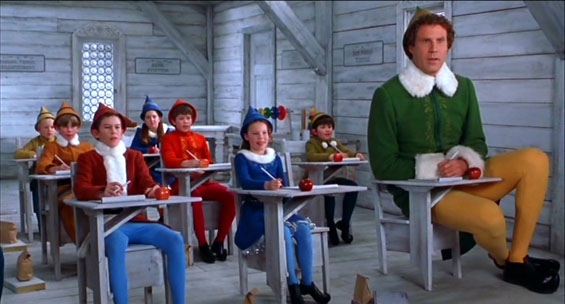
Will Ferrell stars which can sometimes throw up a few red flags for me. Ferrell and this movies often follow a fairly overused formula where he plays someone in an absurdly out-of-place position (see movies such as “Semi-Pro” and “Blades of Glory”). But unlike those movies, it really works here. He plays Buddy the Elf, a toymaker at Santa’s workshop in the North Pole. How’s that for a wacky fit?

But there are several noticeable differences between Buddy and his fellow elves, none more glaring than the fact that he’s 6’5 and not very good at making toys. His father, Papa Elf (hilariously played by Bob Newhart, fully decked out in a bright elf costume with green tights) decides it’s time to reveal to Buddy that he’s really a human being. Feeling uncertainty about where he truly belongs, Buddy sets out on a journey to find his real father. His quest takes him to the magical world of New York City.

ELF 1
Image Courtesy of New Line Cinema

It’s here that the absurdity really kicks in. Buddy arrives in the Big Apple in full elf garb where his elf mentality immediately clashes with the concrete jungle. He comes face-to-face with many new and exotic things including New York cabbies, coffee shops, and the Lincoln Tunnel. It’s often hysterical watching Buddy’s elf sensibilities smash up against big city life. The fish-out-of-water script provides plenty of funny moments. Of course it gets a little sappy at the end, and the baked-in holiday cheer means the ending is fairly predictable. But that goes hand-in-hand with Christmas movies. You pretty much know what you’re going to get.

Then there’s the terrific and committed supporting performances. I especially love James Caan as Buddy’s real father, Walter Hobbs. He’s a shrewd children’s book publisher who spends more time at work than with his wife (Mary Steenburgen) and his young son (Daniel Tay). Then there’s Zooey Deschanel as Jovie, a Gimbel’s department store worker who catches Buddy’s eye. Much like Walter, she’s in desperate need of some Christmas spirit, something that Buddy has in spades. Ed Asner is a wonderful fit as Santa Claus, and Faizon Love has several great scenes as the Gimbels toy department manager.

“Elf” is utterly absurd and unashamedly silly and I say that as a compliment. Even if you aren’t a Will Ferrell fan, he’s an absolute blast in this fun and festive holiday treat. It may be handcuffed by its Christmas movie boundaries, and it certainly dips into sentimentality at the end. But it’s such a warm and clever film; one with plenty of good gags and family-friendly laughs. It may not be up everyone’s alley. But for many, it’s a film that has become one of the “must watch” movies of the Christmas season. That’s certainly the case at our house.

VERDICT – 4 STARS

The Top 10 Films of 2022

It seems like only yesterday that we film critics were putting the 2021 movie year to bed and hashing out our obligatory Top 10 lists for the year. Now here we are again, sifting through everything we’ve seen over the last 365 days and choosing what we deem to be the “best” of the bunch. It’s all pretty silly but undeniably fun. As always, leaving certain films off my list was pretty agonizing. But that’s the nature of these things. So without further ado, let’s get to it. It’s time to recognize the “best” movies from 2022 (according to me, for whatever that’s worth).

So let’s kick off this annual ritual by giving some love to the terrific movies that just missed my Top 10. Here is my #11-20….

  • #20 – “The Fabelmans”
  • #19 – “Thirteen Lives”
  • #18 – “After Yang”
  • #17 – “Brian and Charles”
  • #16 – “The Menu”
  • #15 – “The Eternal Daughter”
  • #14 – “Avatar: The Way of Water”
  • #13 – “Women Talking”
  • #12 – “Bardo, False Chronicle of a Handful of Truths”
  • #11 – “RRR”

#10 “Broker” – South Korean filmmaker Hirokazu Kore-eda makes movies I often love. So it’s no surprise that his latest, “Broker” ended up on this list. It’s yet another beautifully composed and constructed character study from Kore-eda. One that navigates some thorny moral ground yet is wrapped in the filmmaker’s signature warmth and grace. “Broker” has a lot going on, but Kore-eda always keeps his characters at the center. And with the help of some top-form performances, these emotionally complex characters bring humanity to this equally heartfelt and heartbreaking story.

#9 “Top Gun: Maverick” – Who knew that after 36 years a “Top Gun” sequel would gross nearly $1.5 billion at the box office? Even better, who knew it would be one of the year’s very best movies? Yet here we are with Tom Cruise reprising his role as Pete “Maverick” Mitchell in a film that’s everything you want a blockbuster to be. And while I don’t deny the film’s nostalgic draw, Cruise and company aren’t just rehashing old material. They’ve given us a meaningful next chapter along with the best aerial fighter footage ever put on screen. It’s an jet-fueled blast from start to finish.

#8 “The Quiet Girl” – Few movies from 2022 had an affect on me quiet like “The Quiet Girl”, the astonishing feature film debut from writer-director Colm Bairéad. This tender yet subtly heartbreaking coming-of-age drama is as hushed as its young lead character (delicately played with by a wonderful newcomer, Catherine Clinch). The story’s patient, organic rhythm sucks you in, and Bairéad conveys so much information and emotion through his quiet observations. And the film ends with arguably the most crushing final shot that I’ve seen this year or in recent years. Bairéad is truly a filmmaker to watch.

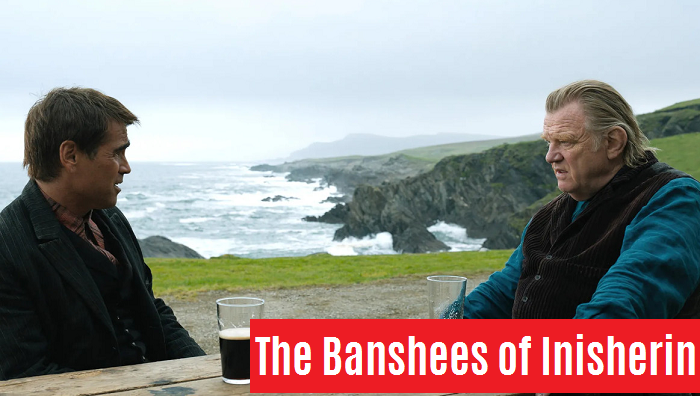
#7 “The Banshees of Inisherin” – I’ve had a pretty up-and-down relationship with the films of Martin McDonagh. But I fell so hard for his latest, which turns out to be one of the funniest movies of the year and also one of the saddest. It features a brilliant ensemble ripe with awards worthy turns from Colin Farrell, Brendan Gleeson, Kerry Condon, and Barry Keoghan. But it’s all anchored by McDonagh’s brilliant screenplay which takes us to some dark and somber places yet has us laughing nearly every step of the way.

#6 “Decision to Leave” – South Korean auteur Park Chan-wook is impossible to put in a box. Case in point: his latest feature “Decision to Leave” which is arguably his best film to date. At times this juicy genre stew plays like a hard-boiled noir; other times it’s a simmering psychological romance. It can surprise you with its unexpected dark humor and move you with deep sense of longing. Its visual language is as compelling as the mystery, and the whole thing keeps us guessing throughout. It’s a hard movie to define, but that’s part of what makes it so special.

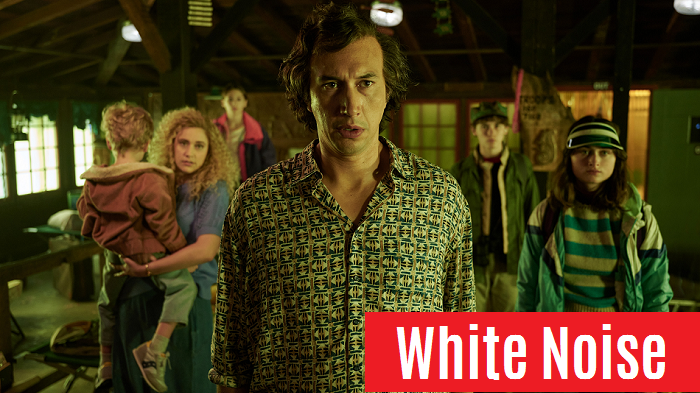
#5 “White Noise” – No movie on my list marches to its own wacky beat quite like “White Noise”. And that’s one reason I love the film so much. Noah Baumbach turns out to be the near perfect choice to tackle Don DeLillo’s “unfilmable” 1985 novel. While “White Noise” left an impression on me after seeing it the first time, it completely won me over after a second viewing. Baumbach gives us plenty to relish that is outside his normal comfort zone. But his signature humor and character work remain, giving the film the same offbeat allure that us Baumbach fans adore.

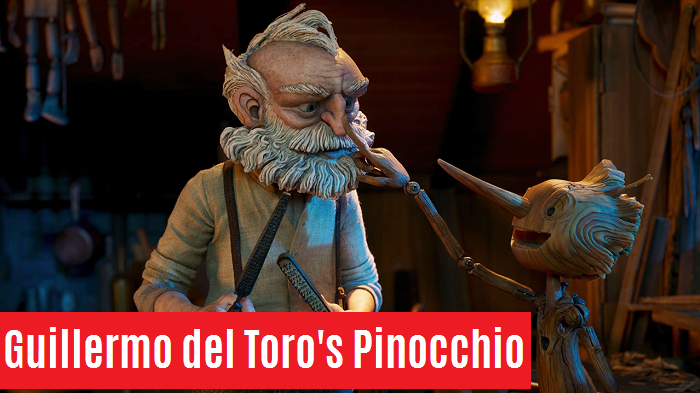
#4 “Guillermo del Toro’s Pinocchio” – I’ve always had a soft spot for the story of “Pinocchio”, and I wasn’t about to miss Guillermo del Toro’s take on the age-old tale. What I wasn’t expecting was to be completely swept away by his stunning stop-motion triumph. Nothing about the movie feels rehashed. Del Toro adds his own spins to the story, his own twists to the characters, and his own imagination to the world-building. It’s enchanting and heartfelt yet darkly funny and a bit macabre. It’s voiced to perfection, immaculately scored, and animated with painstaking detail and incredible artistry.

#3 “Apollo 10 1/2: A Space Age Childhood” – I’ll watch anything Richard Linklater puts out, and this year he released a movie I’ll be watching over and over again. “Apollo 10 1/2” is a smile-inducing autobiographical jaunt which beautifully braids Linklater’s own childhood memories with a surprisingly tender youthful fantasy. There really isn’t much in terms of plot. Instead, it plays like a motion picture scrapbook, and I loved every second of it. And the cool mix of rotoscope with 2D and 3D animation was icing on the cake. Now if only Netflix had promoted it!

#2 “The Batman” – I had my concerns about cranking up another Batman series/franchise. But in the film’s gritty opening scene, director Matt Reaves proved he had a fresh new take that was well worth exploring. Everything that followed clicked right into place, from the spectacular cast to the immersive world-building to the dark and ominous tone. And rather than following the stock comic book movie blueprints of today, “The Batman” falls more in line with the edgy crime thrillers of David Fincher. Overall it’s a welcomed jolt to the genre and a showcase for Reaves who has something pretty special on his hands.

#1 “All Quiet on the Western Front” – 92 years after Lewis Milestone’s 1930 film, Edward Berger has delivered a jaw-dropping remake of a landmark classic. This searing epic-scaled polemic brandishes the same scathing anti-war messaging. But Berger and DP James Friend utilize today’s technology to deliver powerful imagery both on the battlefield and on the faces of the young soldiers sent to die there. It’s a relentlessly bleak account that emphasizes the brutality and inhumanity of war, resulting in some of the most visceral battle sequences ever put to film. Yet the human cost always remains its focus. An unforgettable masterpiece.

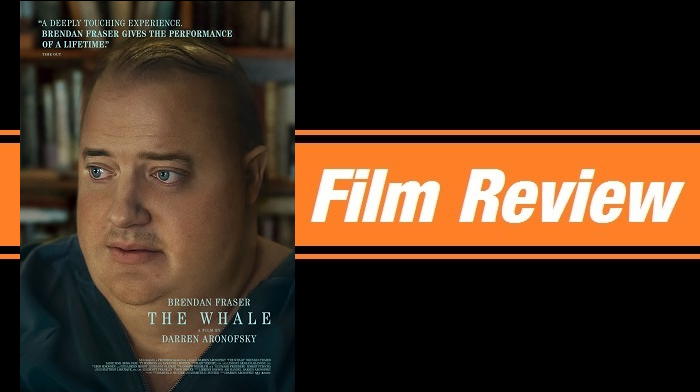
REVIEW: “The Whale” (2022)

The buzz for Darren Aronofsky’s “The Whale” has been deafening with most of the excitement swirling around Brendan Fraser’s lead performance. As a long-time appreciator of Fraser, it’s nice to see him back on screen with a meaty attention-getting role. I just wish he was attached to a better movie. As it is, “The Whale” sinks under its heavy theatrics, some frustrating character treatment, and occasions of off-putting insensitivity.

Penned by Samuel D. Hunter who’s adapting his own 2012 play, this stagy chamber piece is a hard movie to grasp. “The Whale” has enough baked-in subject matter to prompt quite a response, and it has a way of making us root for it. But getting past some of its questionable choices and shaky storytelling proved to be a big ask. Even worse, there’s a dull but nagging falseness to the film that no amount of melodrama could fully numb. And while Aronofsky demands our empathy (more so than earning it), his film can be as mean-spirited as it is heartbreaking.

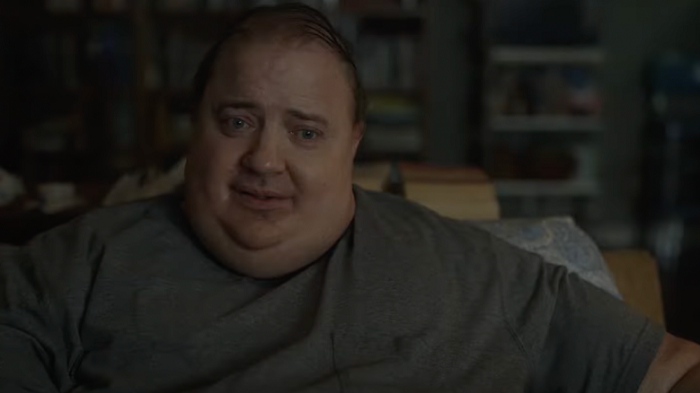
Fraser dons pounds of latex and makeup to play a morbidly obese man with congestive heart failure named Charlie. At 600 pounds, Charlie can barely get around and is home-ridden. He teaches college classes from his couch via Zoom, but hides his appearance from his online students by saying his laptop camera is broken. Even worse, Charlie has sunken into a deep depression following the death of his partner, a former student he ran off with, deserting his wife and eight-year-old daughter. The combination of grief and guilt has driven Charlie to eat himself to death.

The entire film takes place in Charlie’s dark stuffy house which contributes to its staginess. But Fraser holds our attention through a performance that features more than just a physical transformation. He’s also the movie’s emotional core. But for someone who is in nearly every scene, it’s surprising how little we learn about Charlie from Charlie. Instead, Aronofsky leans on four supporting characters who stop by the house from time to time. It shortchanges Fraser by forcing him to sit back, watch, and react to the speechifying of others.

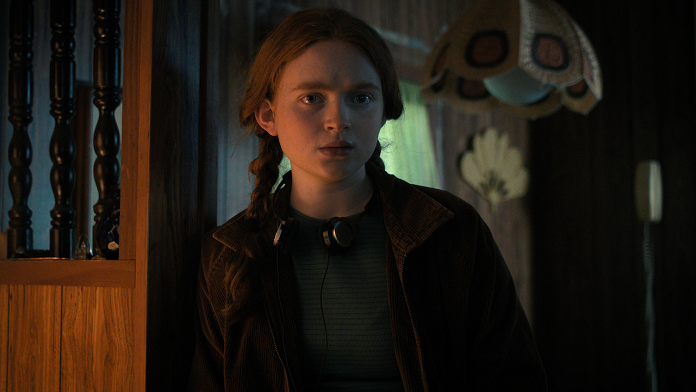
Easily the most interesting of the supporting characters is Liz (Hong Chau), Charlie’s lone friend and personal nurse. She’s irritable nearly to the point of being annoying early in the film. But we get a better grasp of her once the reasons for her frustrations surface. It’s a little different for Ellie (Sadie Sink), Charlie’s estranged daughter who’s still bitter because he abandoned her and her mother Mary (Samantha Moon). Sink is a terrific young actress, but Aronofsky keeps her stuck in one gear – perpetually angry and cruel to the point of being a bit robotic. It isn’t until her final scene that she’s actually given a chance to lower the temperature and show another side of her character.

The most poorly conceived character of the bunch is Thomas (Ty Simpkins), a door-to-door missionary who makes Charlie his own personal redemption project. Thomas belongs to some vague non-denominational church called New Life which is custom-made to be Aronofsky’s punching bag. It’s too easy of a target. But where Thomas’ story really goes off the rails is in the second half when Aronofsky introduces all sorts of corny, overwrought family drama. Thomas quickly goes from fairly interesting to annoying.

“The Whale” is weighed down by a few other frustrations. Take how the supporting characters unload their stories through glaringly staged monologues or confessions (their “big moments”). Or how the movie beats us to a pulp with its heavy-handed messaging rather than revealing it organically. You won’t find an ounce of subtlety anywhere.

But worst of all is how Fraser’s performance is sometimes lost under the heavy latex and makeup. Not due to anything he’s doing, but because Aronofsky’s gawking at the actor’s transformation sometimes veers too close to heartless voyeurism. There are times when the film seems to look at Charlie with disgust, which is at odds with its bigger message of finding a person’s beauty and goodness within. And no amount of hokey sentiment and emotional manipulation can fully earn our empathy, especially during the moments when the movie doesn’t seem to have any. “The Whale” is now showing in select theaters.

VERDICT – 2 STARS

First Glance: “Oppenheimer”

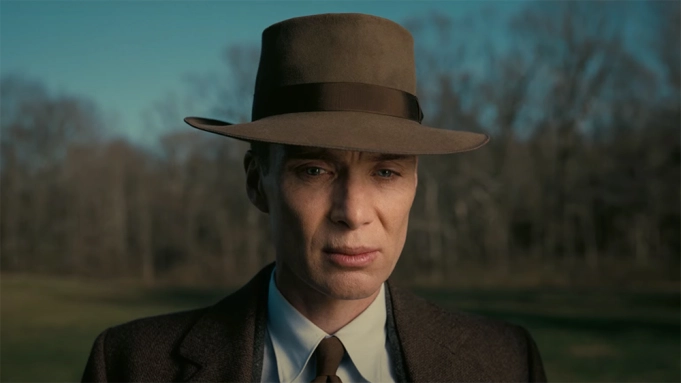
Is 2023 the year Cillian Murphy finally gets an Oscar nomination? It certainly looks like he has the material in Christopher Nolan’s “Oppenheimer”. Written and directed by Nolan, the film is his first since breaking away from Warner Brothers. It features a jam-packed cast that includes Murphy, Emily Blunt, Robert Downey Jr., Matt Damon, Rami Malek, Florence Pugh, Benny Safdie, Kenneth Branagh, and Josh Hartnett among others. That alone makes for an highly anticipated feature, but it’s the brand new trailer that really gets me excited.

The film sees Murphy as J. Robert Oppenheimer, a theoretical physicist whose role in the Manhattan Project earned him the title of “father of the atomic bomb”. The glimpses we get are of a conflicted man caught in what he feels is a no-win situation. The set and costume design looks spot-on, and you can already get a sense from the trailer than Nolan has done a ton of research. So we have a fascinating historical figure and a noted filmmaker with an incredible cinematic prowess. We might be in for something special.

“Oppenheimer” releases exclusively in theaters on July 21, 2023. Check out the trailer below and let me know if you’ll be seeing it or taking a pass.

REVIEW: “Bardo, False Chronicle of a Handful of Truths” (2022)

It seems we’re in an interesting phase where seasoned directors are using their platforms to reflect back on their pasts. Alfonso Cuarón did it with “Roma”. Last year, Kenneth Branagh did it with “Belfast”. Already this year, James Gray has done it with “Armageddon Time” and Spielberg with “The Fabelmans”. With “Bardo, False Chronicle of a Handful of Truths”, two-time Oscar winning director Alejandro González Iñárritu takes his shot, but not in any conventional sense.

Iñárritu has made a movie that demands we get into his headspace. If you can’t, odds are you’ll probably struggle with his latest film. For that reason I can see general audiences bowing out before the halfway mark. But for those who can get in sync with it, “Bardo” has a lot to offer. Of the above mentioned movies, it’s most like “Roma”, with its deeply intimate self-reflection and its cutting observations of the Mexican homeland. But what sets it apart are Iñárritu’s Fellini-like flourishes which can come across as pretentious and indulgent. But that actually plays directly into what the filmmaker is after.

With “Bardo”, Iñárritu gives us what can best be described as a narcissistic exercise in self-deconstruction. The film is undeniably self-regarding as Iñárritu makes himself a centerpiece. But there’s more going on here than some vainglorious self-promotion. Iñárritu takes a scalpel to his image and his success; his hubris and his insecurities, dissecting them the best way he knows how – cinematically. Yes, it’s a narcissistic work. But what better way for an auteur to probe and scrutinize the path they’ve traveled and the person they’ve become?

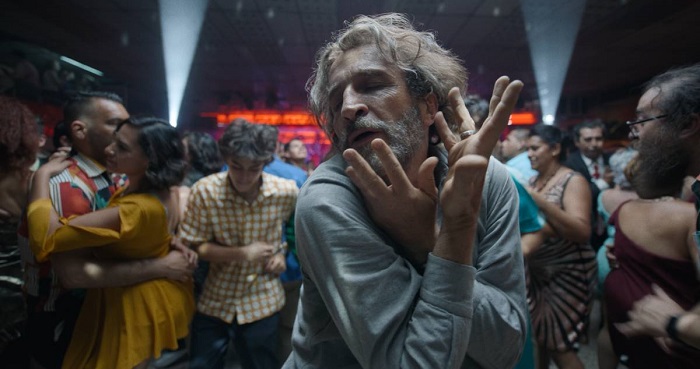
Image Courtesy of Netflix

As with “Roma”, Mexico itself is an ever-present interest as Iñárritu seeks to reconnect with his homeland through his lead character and alter ego, Silverio (a magnetic Daniel Giménez Cacho). With the help of cinematographer Darius Khondji and Oscar-winning production designer Eugenio Caballero, Iñárritu envisions Mexico in a number of ways both real and surreal. It could be a scene of people collapsing at a crowded Mexico City intersection as Silverio helplessly looks on. Or an unsettling shot of him climbing a mountain of dead bodies in order to speak to Spanish conquistador Hernán Cortés who awaits at the top. There’s no shortage of alluring imagery.

Iñárritu’s story (which he co-wrote with Nicolás Giacobone) is just as immersive and incisive as the visuals. Its fractured free-flowing structure can be disorientating, and some segments make little sense on their own. But they’re individually compelling (a testament to Iñárritu’s vision) and hold our attention until everything is braided together in an emotionally satisfying final 15 minutes. In a way it does resemble a memory play, except here the people and places we see are dug out of Silverio’s unreliable memory and displayed through dreamlike recreations in his mind. Some feel painfully real while others have a Dali-like surreality. Some are deadly serious while others are utterly preposterous.

Silverio Gama is an acclaimed Mexican-born journalist and documentarian who left his home country for Los Angeles 15 years ago. Now he’s been named the recipient of a major award from the American Society of Journalists. Needing to prepare an acceptance speech, Silverio and his family travel to Mexico where he hopes to reconnect with his birth nation. But rather than find inspiration, he finds himself caught in an existential web. Soon he’s wrestling with everything from his own identity and mortality to his perception of Mexico itself, past and present. And as we’re thrust deeper inside of Silverio’s head, we’re quickly reminded that memories can’t be trusted. They tend to change as we change and are often shaped by emotion rather than truth.

Image Courtesy of Netflix

Regardless of how bonkers some scenes get, there’s always a deeper emotional tenor. For example, one of the earliest scenes takes place in a hospital operating room where Silverio’s wife Lucía (Griselda Sicilian) gives birth to their first child. I won’t spoil it, but something so utterly absurd happens that you can’t help but laugh. Yet the sheer weight of the moment has an effect that resurfaces many times throughout the story. It’s one of several instances of black comedy being fused with consequential drama.

“Bardo” can also be glaringly pretentious and self-indulgent, and Iñárritu is 100% aware of it. He’s constantly poking fun at himself and his movie. In one moment of glorious meta subversion, a character sharply critiques the very film we’re watching, relaying every real-life criticism that has been and will be hurled its way. Iñárritu’s self-awareness also shows in more biting scenes. Such as Silverio being chided for his haughtiness and hypocrisy by his wife, his son Lorenzo (Íker Sánchez Solano), and his daughter Camila (Ximena Lamadrid).

I don’t throw out the tag ‘labor of love’ often, but with “Bardo” it fits. In addition to directing, editing, co-writing, and co-producing, Iñárritu clearly sees some of himself in his lead character. In fact, with Cacho’s unruly hair, dark sunglasses and similar build, there are times you’ll swear you’re seeing Iñárritu on the screen. And you can sense the filmmaker’s touch in the searing self-critiques and the playful jabs; in the expressions of heartfelt joy and heart-crushing loss. It’s all conveyed through this near undefinable sensory experience and technical marvel. It’ll challenge you, but the ultimate payoff is worth the effort. “Bardo” is now streaming on Netflix.

VERDICT – 4.5 STARS