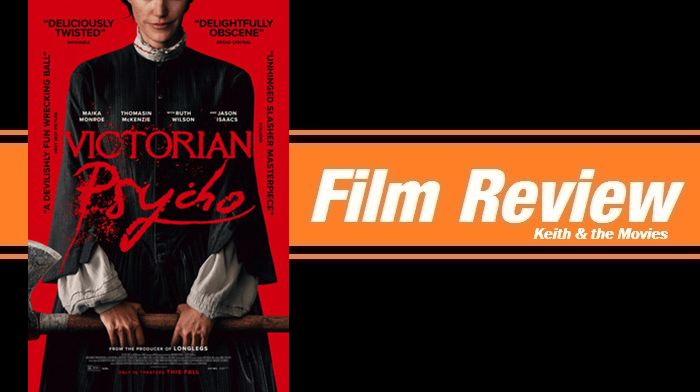
Maika Monroe goes fully unhinged in the devilish horror thriller “Victorian Psycho”. Based on the 2025 Virginia Feito novel of the same name, the film takes the framework of a Victorian-era period drama and infuses it with bloody slasher horror. It results in something that often succeeds in realizing its warped vision yet that doesn’t quite live up to the gonzo potential teased in its opening fifteen minutes or so.
Monroe immediately establishes herself as one of the film’s biggest strengths. She plays Winifred Notty (that’s “Notty” for those who get her name wrong), an eccentric young governess in 19th century England who is quick to inform us that she’s the sanest person she knows. The film opens with Winifred taking a carriage ride to her next assignment. It’s a brief sequence where director Zachary Wigon puts most of his cards on the table. By the end, I was wishing he had kept a few up his sleeve.
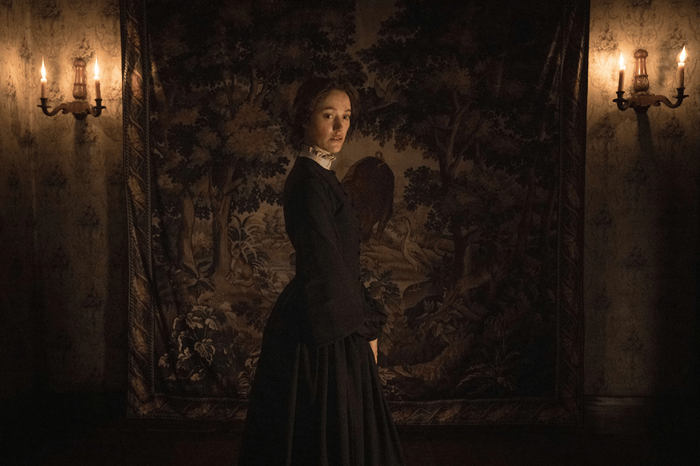
It’s glaringly obvious from the start that Winifred is unwell, thanks to Wigon’s disorienting camera and Monroe’s off-kilter narration that goes along with her dead-eyed stare. In no time she arrives at the bougie Ensor House, home to the affluent Josh and Emily Pounds (Jason Isaacs and Ruth Wilson) and their two children: the favored son, Andrew (Jacobi Jupe, so good in “Hamnet”), and the neglected oldest, Drusilla (Evie Templeton).
Upon arrival, Winifred is immediately routed to the servant’s entrance – the first of several signs pointing to the film’s class-conscious themes. She’s led to her quarters where Wigon reinforces Winifred’s psychotic state through a scene involving a severed ear that still doesn’t make sense. Anyway, she learns her main job is to have the snotty Andrew ready for boarding school by the end of the year. But she has her own motivations for being there. And they hastily come to light as her flimsy facade starts to crumble.
It doesn’t take a detective to read the clues beyond the film’s rather pronounced title. Winifred’s warped inner monologue drips lines like “this won’t be like the other times” while her uncomfortable directness with the children is a queasy mix of humorous and unnerving. But it’s the bloodshed that reveals just how deranged Winifred really is. And there is no shortage of grisly deaths once she begins feeding her inner “darkness”.
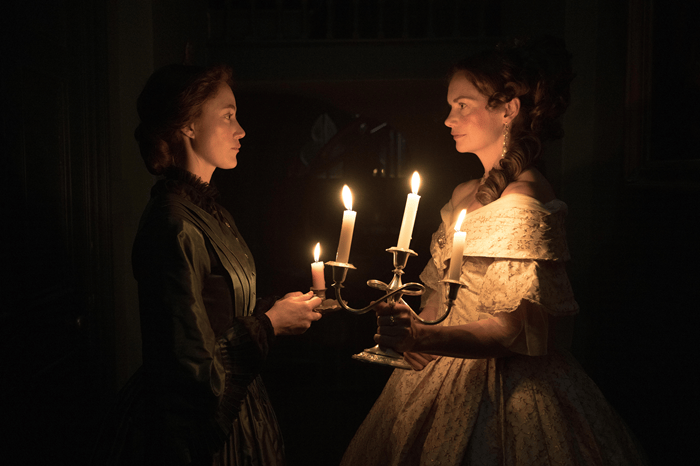
But as Winifred gets more….unbalanced, so does the movie. This especially shows in the diluted big finale that doesn’t live up to its billing. Everything pointed to a gonzo gore-glazed final act blowout in line with Feito’s book. Instead we’re given something considerably tamer than what the film had been building towards. While the violence is certainly there, Wigon merges visions with reality in a way that has a dizzying effect. It’s a peculiar choice, and a case of the movie never fully committing to its deranged vision.
“Victorian Psycho” is littered with smaller frustrations that don’t fully undermine its strengths but that do add up over time. Some are simple logic issues, such as no one noticing when servants suddenly go missing. There’s also the wasting of good supporting cast members (sorry Thomasin McKenzie). And how are we supposed to view Winifred when the movie seems conflicted itself? These are nagging problems rather than dealbreakers. But they add to a list that weighs the movie down and keeps it from being what it should have been.
VERDICT – 2.5 STARS