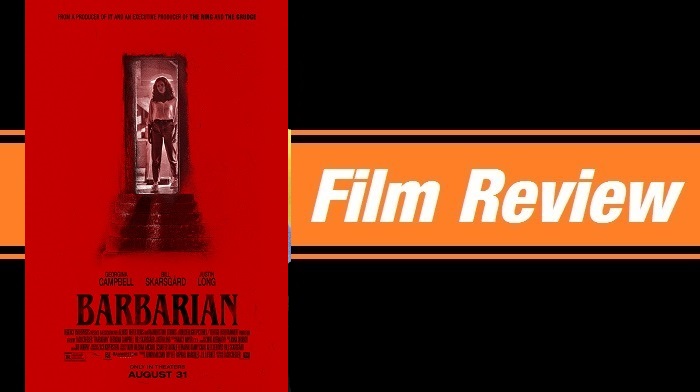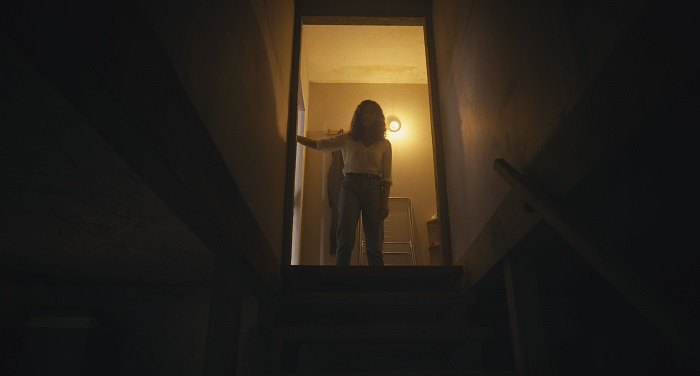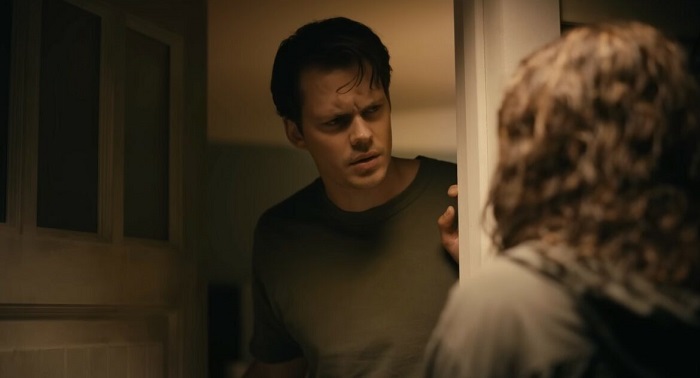
The new trailer for “Barbarian” is full of moments that’ll have you constantly thinking “That’s a bad idea!”. Characters do some things that are absolute no-no’s in the horror genre. Yet the trailer still leaves a lot under wraps. Rather than tipping his hand, writer-director Zach Cregger keeps us wondering by teasing us rather than showing too much. I have no idea how the movie will turn out, but I do appreciate that aspect of the trailer.
The story goes like this: Georgina Campbell plays Tess who arrives in Detroit for a job interview. She gets to her Airbnb only to find it occupied by Keith (Bill Skarsgård). He’s as shocked as she is and immediately tries contacting the house’s owners. Unable to reach them, Keith invites Tess to stay the night until they can get things worked out. She agrees. Bad idea. Soon she learns the house is full of terrifying secrets and she’s caught like a rat in a deadly maze. I like the look of this. Does it have anything fresh and original to offer? That’ll be the big question.
“Barbarian” opens in theaters August 31st. Check out the trailer below and let me know if you’ll be seeing it or taking a pass.
“Mr. Malcolm’s List” is sure to be comfort food for fans of light and breezy period rom-coms. It also provides a happy escape for moviegoers who might be seeking refuge from the wave of tent-pole summer blockbusters that are currently in full force. And while a Jane Austen-ish feature film won’t be everyone’s cup of tea (normally myself included), I was surprised by just how much I enjoyed this quaint and witty regency-era romance.
Directed by first-time feature filmmaker Emma Holly Jones, “Mr. Malcolm’s List” boasts a fresh multiracial cast yet still tells a story that very much feels a part of its British romantic comedy sub-genre. Comparisons to the popular Netflix series “Bridgerton” seem inevitable. But far more visible is the loose inspiration of Austen’s “Pride and Prejudice”. Either way, Jones adds enough of her own special sauce to give her film its own flavor, despite some fairly obvious final act predictability.
The story is written by Suzanne Allain and based on her own 2009 self-published novel of the same name. It’s set in the prim and proper 19th century London where the marriage game is as competitive as any sport we obsess over today. The dashing Mr. Jeremiah Malcolm (Ṣọpẹ Dìrísù) is a most eligible bachelor who’s considered the biggest catch of the 1818 “season”. Despite lacking a proper title of his own, his maternal aunt left him a sizable fortune and a large country estate. That was more than enough to catch the attention of every young aristocratic maiden in the region.
Image Courtesy of Bleeker Street
One such bride-in-waiting is the wealthy and entitled Julia Thistlewaite (a pitch-perfect Zawe Ashton). She’s a bit of a snoot and sees Mr. Malcolm as a means of cementing her position in society’s upper-crust. But Jeremiah isn’t a shallow man. He’s looking for a bride with qualities beyond high standing and a flirty smile (gold-diggers and social climbers need not apply). Rather, Jeremiah is the kind and gentlemanly sort who has a literal list of qualifications for the woman he hopes to spend the rest of his life with.
So it’s no surprise that the haughty Julia’s date with the highly sought-after Mr. Malcolm flops. And after he doesn’t extend a second call, her rejection becomes the talk of the public gossip circles. Adding to her humiliation, Julia learns of Mr. Malcolm’s notorious list. So she enlists the help of her push-over cousin, Lord Cassidy (a slyly comical Oliver Jackson-Cohen) and the two immediately hatch a plan for revenge.
Julia calls on her childhood friend, Selina Dalton (Freida Pinto), a sweet rural girl and the daughter of a country vicar. The two first met as classmates at Mrs. Finch’s Ladies Academy where they made a pact to always have each other’s back. When Selina arrives at Julia’s swanky London manor she reluctantly agrees to go along with her friend’s scheme. It goes something like this: Train Selina to check off all the boxes on Mr. Malcolm’s list, win his heart, and then turn around and give him a taste of his own medicine.
Image Courtesy of Bleeker Street
You can probably guess what happens next. Selina sees a much different side of Mr. Malcolm. “I’m just not sure he’s the villain you paint him to be“, she contends. But Julia will have none of it and is determined that Mr. Malcolm gets his comeuppance. “I want him humiliated” she exclaims, “just like I was.” Selina and Jeremiah inevitably grow closer while Julia’s poorly veiled jealousy and resentment festers.
While that may sound like a pretty toxic recipe, Jones keeps things from souring by maintaining a slightly whimsical tone. It never goes the full-on comedy route of something like Whit Stillman’s deliciously vicious and sharp-tongued “Love and Friendship”. But there is plenty of baked-in humor, much of it from the stellar supporting cast that includes Jackson-Cohen, Ashley Park, Theo James and the hilariously expressive Divian Ladwa.
My lone gripe is with the film’s conventional and by-the-book final act. It plays it so aggressively safe. But in its defense, there’s practically an expectation for how these stories should end. It’s a formula deeply ingrained in these types of movies. So criticizing it almost sounds frivolous. And besides, there’s still plenty to appreciate in this surprisingly enjoyable period piece. “Mr. Malcom’s List” opens today in theaters.
The terrific trio of George Clooney, Julia Roberts and Kaitlyn Dever drive the upcoming feature “Ticket to Paradise”. Ol Parker directs and co-writes this romantic(ish) comedy from Universal Pictures. The film reunites Clooney and Roberts who worked together in two “Oceans” movies and “Money Monster”. The first trailer manages to be both fun and a tad cringy. But for me it’s worth seeing just for star power alone.
Clooney and Roberts play a divorced couple who are brought back together when their daughter Lily (Dever) announces her sudden engagement to a young man from Bali. Fearing she’s repeating a mistake they made, her cynical parents reluctantly set aside their bitterness towards each other and join forces to stop their daughter’s plans. Silly and cheesy hijinks ensue. Not sure exactly how to feel about this one. But I’d be lying if I didn’t admit that it looks kinda fun.
“Ticket to Paradise” lands in theaters October 21st. Check out the trailer below and let me know if you’ll be seeing it or taking a pass.
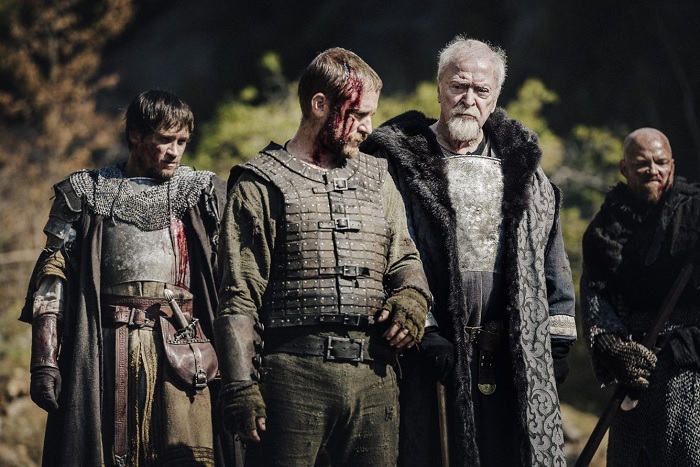
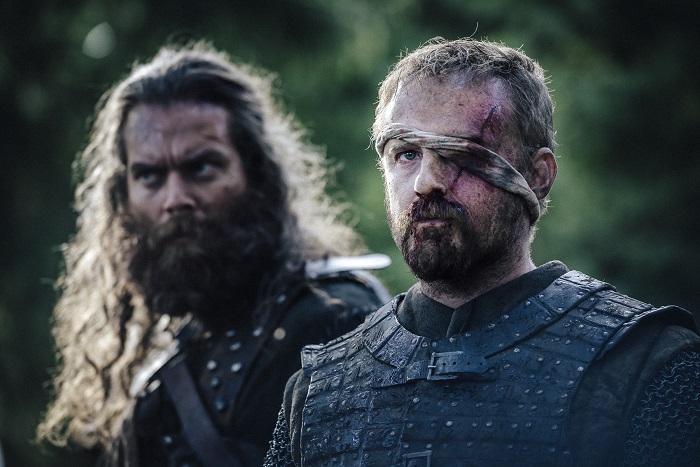
Russell Crowe, Ray Winstone, and Matt Hookings shine in the new trailer for “Prizefighter: The Life of Jem Belcher”. While it explores the life of the bare-knuckle fighter and first ever world champion, the film is also about the birth of boxing itself. The British-American feature is directed by Daniel Graham from a script penned by the film’s star, Hookings. It’s had a rocky production, marred by infighting and money issues. But it was finally finished with Amazon Prime set to distribute.
The story takes place at the turn of the 19th century. Hookings plays the titular character while Winstone plays his trainer and father-figure Bill Warr. A burly Russell Crowe plays Belcher’s rough and tough grandfather. Belcher seems to follows in his grandfather’s shoes, making the same mistakes but also excelling as a fighter. The period costumes and production design looks great and having the always reliable Crowe and Winstone onboard really adds to the appeal.
“Prizefighter: The Life of Jem Belcher” hits Amazon Prime Video on July 22nd. Check out the trailer below and let me know if you’ll be seeing it or taking a pass.
Ethan Hawke as a masked child-abducting psychopath in the late 1970s? Yep, I’m in. That’s part of the setup for “The Black Phone”, a spooky supernatural horror film from director Scott Derrickson (“Sinister”, “Doctor Strange”). I was onboard after first hearing the names involved. One great trailer and a creepy poster later and “The Black Phone” moved pretty high up on my ‘Most Anticipated’ list.
This Blumhouse produced chiller is based on a 2004 short story by Joe Hill, son of Stephen King. Derrickson co-wrote the script with his frequent collaborator C. Robert Cargill. For “The Black Phone”, the pair pull from several horror sub-genres, even injecting their story with a crafty crime-thriller element. But what it does best is capture its period setting and develop a truly menacing atmosphere. There are a couple of hard-to-miss oversights which had me scratching my head. But as a whole, the movie sucks you in and keeps you firmly planted on the edge of your seat.
Image Courtesy of Universal Pictures
Set to a well conceived 1978 backdrop, the story unfolds in a tight-knit neighborhood in North Denver. A young boy named Finney (Mason Thames) has plenty to fear. He’s constantly hassled by a pack of punk bullies at school. His widowed father (Jeremy Davies) is an abusive drunk who takes out his loneliness and grief on his children. Oh, and then there’s the string of missing children in the area, some who Finney knows well.
At least Finney has his precocious little sister Gwen (a terrific Madeleine McGraw). The two are extremely close and often find refuge in each other. While Finney is a bit more reserved and non-confrontational, Gwen couldn’t be more different. She’s a fireball and (unfortunately) one way the filmmakers show it is with the tired and overdone potty-mouthed child trope which they milk for a cheap laugh or two. What makes Gwen so compelling isn’t her slinging f-bombs. It’s her come-and-go psychic abilities similar to ones her late mother possessed. It adds a compelling layer to the her character and the story.
Strangely, despite the rash of neighborhood child abductions, parents seem pretty lax and let their kids roam the streets unattended. So it’s no surprise when Finney is snatched by the man dubbed “The Grabber”. Hawke plays him with an unsettling calm, laced with brief yet terrifying bursts of violence. I love Derrickson’s choice not to reveal his face. We get one slightly blurred image during Finney’s abduction. Otherwise his face remains mostly hidden by a hideously disturbing mask.
Interestingly, we never really learn anything about The Grabber. His anonymity is meant to add to the dread. He poses as a part-time magician who cruises around town in a black van with the words “Abracadabra” painted across it. There are also his black balloons that may or may not be a signature. The aura of mystery mostly works although the character does fit a tad too neatly into the movie serial killer archetype. Still Hawke is pretty great and his first foray as a true villain is quite effective.
Image Courtesy of Universal Pictures
Finney is thrown into a concrete soundproof basement with a dirty toilet, a mattress bolted to the floor, and a disconnected black rotary phone hanging on the wall. To the boy’s surprise, the phone periodically rings and on the other end are voices that I won’t spoil, by they offer tips to help him escape. And then you have Gwen’s dreams which seem to reveal hints to where her brother may be. In a sense these supernatural components offer a cool twist. But they also bring a “Stranger Things” vibe to parts of the story. That’s not necessarily a bad thing, but don’t expect something grittier and more grounded.
Though its story is hardly seamless, “The Black Phone” keeps its audience locked in by maintaining its sinister tone and building some true edge-of-your-seat suspense. And it’s a lot of fun watching Hawke dig into such an evil character. To no one’s surprise he’s really good. And while I wish there was a little more backstory to The Grabber, Hawke carves out such a frightening presence that you’re too engrossed to focus on the missing details. “The Black Phone” is out now in theaters.
I’ve never owned an Elvis Presley album. I’ve never been to Graceland. I’ve never watched his famous “Aloha from Hawaii” concert. I’ve never cared for his movies. Yet despite all of that, I fully understand the greatness of Elvis Presley. I’ve always recognized his long-lasting impact on American culture. And you can’t help but respect his legions of passionate fans who truly love the man dubbed the “King of Rock and Roll”.
Though I’m not what you would consider a true fan, I do like a handful of Elvis’ songs and it’s hard not to be fascinated by the larger-than-life presence he still maintains, some 45 years after his untimely death. That’s a big reason I was excited for “Elvis”, the new biographical odyssey from director and co-writer Baz Luhrmann. For me, the name Luhrmann comes packaged with uncertainty. I enjoyed his take on “The Great Gatsby” more than most. But I’ve struggled to connect with his style-driven filmmaking and haven’t particularly enjoyed his other movies (in fairness, I’ve yet to see “Strictly Ballroom”).
“Elvis” is quite the undertaking, and while Luhrmann’s style is certainly present, it never overpowers the film or festers into overindulgence. In fact, it often energizes the movie in a way similar to how Elvis himself would energize a crowd. Most importantly, Luhrmann shows enough restraint to keep this about the man himself. As a result, we get a film that brilliantly captures Elvis’ outer grandeur but also his inner demons. Call it an exhilarating cinematic portrait of triumph and tragedy.
Image Courtesy of Warner Bros. Pictures
It can’t be easy taking on a lead role destined to be so heavily scrutinized. But Austin Butler not only takes it on, he gives a star-making turn that makes any qualms with his portrayal feel like nitpicks. It’s more than just a spot-on impression. Butler burrows into the very soul of Elvis, highlighting his many ups and later his devastating downs. It’s a tough ask for a young actor that’s made even tougher by Luhrmann’s feverish directing style. But Butler is magnetic in what is a nomination-worthy performance.
“Elvis” attempts to cover a ton of ground in its hefty 159-minute running time. From his poverty-ridden childhood to his final days pushing himself to perform despite his failing health. It makes many personal and career stops in between, never staying in one place very long (especially in the first half of the movie). I’m not sure how much will be new to the well-studied Elvis fan. But for people like me, there’s a lot to soak up. It’s like fever-pitch CliffsNotes for the Elvis uninitiated.
In an interesting move, Luhrmann and his team of co-writers (Sam Bromell, Craig Pearce, and Jeremy Doner) choose to tell much of the story from the perspective of Elvis’ long-time manager and promoter Colonel Tom Parker (played by Tom Hanks in various layers of latex and body suits). It’s framed as Parker on his deathbed, defending himself and his dubious reputation. Over the course of film, we’re asked the question: Was Colonel Tom Parker a villain or a visionary? The movie credits him as both, even making the case that Parker both made Elvis and killed him.
Image Courtesy of Warner Bros. Pictures
Col. Parker was a P.T. Barnum wannabe who saw gold in a good-looking young man from Memphis. Elvis was driving a truck by day to help support his family. When off work, he spent his time losing himself in the music of Beale Street. His long-held love for the Blues and African-American spirituals would forever shape his music. It was a song the younger Elvis recorded with Sun Records that caught the attention of Parker who quickly signed him and took him on his Southern tour which also featured country music artist Hank Snow (David Wenham).
Things take off in 1954 at the Shreveport-based Louisiana Hayride. That’s when Parker knew he had something special. Before long Elvis was his top draw. Parker secured his budding superstar client a deal with RCA Records, booked numerous television appearances, and tapped into the lucrative world of merchandising. Soon the “snowman” was raking in 50% of the “showman’s” earnings, taking advantage of Presley’s star wattage for his own personal gain
Luhrmann whips us through Elvis’ meteoric rise in popularity while also showing the harsh accusations of indecency and vulgarity he would face (The movie speaks to a deeper motive behind the outrage, namely Elvis’ connections with African-American music in the deeply segregated South). It touches on his short-lived tenure as a movie star, his triumphant comeback special in 1968, and his multi-year deal with The International Hotel in Las Vegas.
On the personal side, Luhrmann does a good job capturing Elvis’ closeness with his mother, Gladys (Helen Thomson) and the loving yet businesslike relationship with his father, Vernon (Richard Roxburgh). He shows us Elvis falling for and eventually marrying Priscilla Beaulieu (a very good but underutilized Olivia DeJonge). We see his purchase of Graceland and the pride he took in being able to support his family. And of course we see his genuine love for music and performing which shines most whenever Elvis took the stage.
Image Courtesy of Warner Bros. Pictures
But there was also the dark side of Elvis’ story. Luhrmann shows the crushing loss of his mother; his disappointment in his father; the revelation of Col. Parker’s double-dealing. We see his marriage crumble, watch his health deteriorate, and witness his growing reliance on pills. It culminates in a heartbreaking yet undeniably beautiful performance of “Unchained Melody” from 1977, just days before his tragic death at the age of 42.
While Luhrmann’s direction is key, Elvis is most vividly brought to life through Butler who pours his heart and soul into his portrayal. Everything about his performance clicks, from the few quiet moments to the high-energy stage numbers where his resemblance to Elvis really kicks in. It leaves you wanting more screen time for Butler. Unfortunately too much of the focus is on Parker who is both narrator and a steady presence throughout. The performance is fine, but too often all I could see was Tom Hanks in prosthetics rather than Colonel Tom Parker. I wanted more Butler.
At times Luhrmann’s kinetic pacing can make things a blur. And it doesn’t allow you to settle down and get comfortable during any stop the story makes on the Elvis Presley timeline. Normally that’s something I would struggle with. But here it feels right, especially for such an electrifying roller-coaster of a life. To Luhrmann’s credit, his film had its hooks in me from its first moments. And even though I’m not a big-time Elvis fan, this movie brought him to life in ways I wasn’t expecting. Now if you’ll excuse me, I’m off to plan a trip to Graceland. “Elvis” is now showing in theaters.