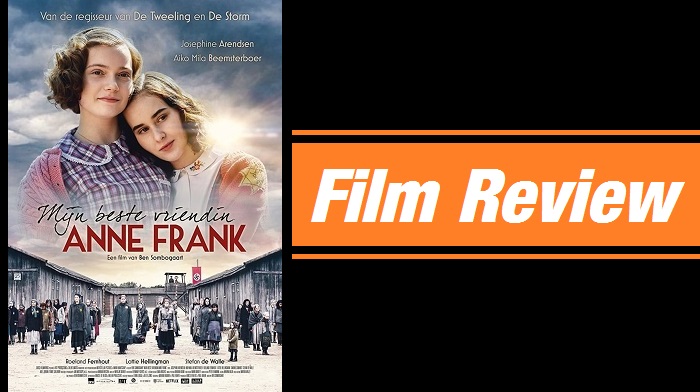
REVIEW: “My Best Friend Anne Frank” (2022)

Dutch filmmaker Ben Sombogaart directs the new Netflix drama “My Best Friend Anne Frank”. The movie is inspired by the real-life friendship between Anne Frank and Hannah Goslar. And while it’s a mostly fictional account, Sombogaart approaches the subject with sincerity and sensitivity.

But this isn’t just another Anne Frank movie. The story is really about Goslar and her own remarkable true story. One that may not have gotten as much attention as her more famous best friend’s, but it’s remarkable nonetheless (the 93-year-old Goslar is still with us today and resides in Jerusalem).

Working from a screenplay by Marian Batavier and Paul Ruven, the story is based on “Memories of Anne Frank: Reflections of a Childhood Friend” by American author Alison Leslie Gold. The story chronicles this friendship which began in 1942 at the 6th Montessori School in Nazi-occupied Amsterdam. After moving from Germany following the election of Adolf Hitler, Anne Frank (Aiko Mila Beemsterboer) and her family moved to Amsterdam. At school, she met and became close friends with Hannah Goslar (Josephine Arendsen).

Image Courtesy of Netflix

The movie’s fractured structure bounces us back-and-forth between two key times in the lives of these friends. One is set in happier days where the inseparable Hannah and Anne playfully bounce around the city. They act silly, talk about boys, and dream about traveling the world. But in the background, ominous signs of what’s to come are everywhere as the Nazi presence intensifies.

These scenes are interesting because Sombogaart doesn’t sugarcoat or romanticize Anne’s personality. At times we see her as rebellious, cruel, and even a bit of a bully. This really comes out when the high-energy Anne tries to impress the most popular girl in school, often at Hannah’s expense.

Quite the opposite, Hannah is shy and kind-hearted. She spends much of her time helping her pregnant mother (Lottie Hellingman) take care of her baby sister Gabi. Meanwhile Hannah’s tense and distracted father (Roeland Fernhout) is clearly burdened with the knowledge of what he knows is on the way. Forbidden to leave a country that doesn’t want them, he knows it’s only a matter of time before his family will be rounded up like many other Jewish families from his neighborhood.
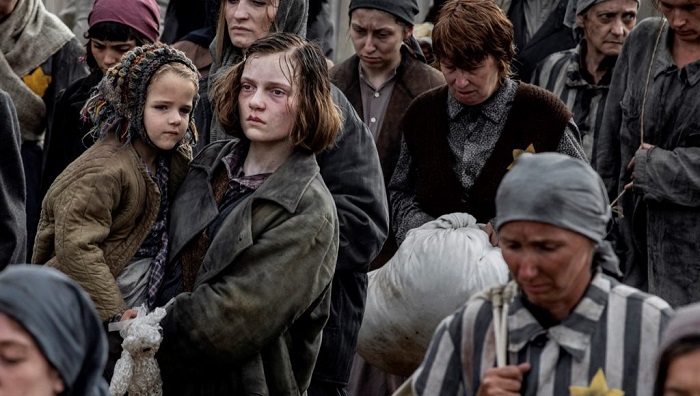
Image Courtesy of Netflix

The other timeline takes place a year or so later. Rather than the bustling streets of Amsterdam or the warmth of home, these scenes are set within the heavily guarded walls of Bergen-Belsen concentration camp in northern Germany. There, Hannah and Gabi struggle to survive amid the cold, cruel conditions. But little does Hannah know, her friend Anne, thought to have left for Switzerland with her parents, is in another part of Bergen-Belsen. One that’s considerably harsher and far more savage.

Sombogaart’s choice to shuffle us between these two timelines makes sense, but it doesn’t feel necessary. It works for the most part, but it makes the movie feel out of rhythm, especially in the first half. That said, DP Jan Moeskops does some interesting things visually to help differentiate the two periods. Take the sharp contrast in colors – the brighter sun-soaked glow of the Amsterdam scenes versus the bleak, grim browns and grays of the camp. Alongside Moeskops’ camera are the beautiful strings and aching piano chords from Merlijn Snitker’s simple yet affecting score. Together they help drive the emotions Sombogaart is going for.

“My Best Friend Anne Frank” may have structural issues and there are some slow patches, especially in the early camp scenes. But Ben Sombogaart’s vision conveys the sadness and the tragedy that was such a significant part of Hannah Goslar’s life. And while not as well known as her friend Anne Frank, Sombogaart presents Goslar’s story as one worthy to be told. And knowing she’s still alive today makes this all the more moving. “My Best Friend Anne Frank” is now streaming on Netflix.

VERDICT – 3.5 STARS

70 Years Later: “Singin’ in the Rain”

(CLICK HERE to read my full piece in the Arkansas Democrat-Gazette)

In their heyday studio musicals brought with them an entirely new philosophy of moviemaking as colorful and vibrant music-driven set-pieces often trumped more dramatic storytelling. While these light and frothy concoctions did little to showcase what the burgeoning medium would soon become, they did offer audiences a much needed respite from the growing hardships of the real world. They was about transporting moviegoers; whisking them away with song and dance; providing a whimsical and sometimes dreamy escape from their troubles.

In the early 1930s, Depression-era audiences found their escape in the kaleidoscopic showgirl productions of film director and choreographer Busby Berkeley. A few years later, Fred Astaire and Ginger Rogers would begin their celebrated RKO Pictures run. And then there was MGM. Starting in earnest in 1939 and continuing for nearly two decades, MGM revolutionized the movie musical under the creative arm of producer Arthur Freed. Names like Judy Garland, Mickey Rooney, and Gene Kelly would drive the studio’s and the genre’s success.

In 1952, MGM would release what remains one of the most beloved movie musicals of all-time – “Singin’ in the Rain”. This year the movie turns 70 and to celebrate Warner Home Video is releasing a 70th Anniversary 4K Blu-ray edition on April 26th. It has been revisiting theaters across the country as part of TCM’s Big Screen Classics series, and if by some chance you’ve never seen this timeless classic, there’s no better time than now.

In 1951, MGM was coming off of a big hit with Gene Kelly’s “An American in Paris” which won six Oscars including Best Picture. It was a tough act for Freed, Kelly, and the studio to follow. Yet they did so with “Singin’ in the Rain”, a musical romantic comedy that most people (and history) agree is the better movie. Though initially met with positive reviews, its early reception was hardly that of a film many today regard as the greatest from its genre. But reassessments (beginning as early as the 1960s) quickly and rightly saw the true greatness in Gene Kelly’s singular vision.

Though he co-directed with Stanley Donen, “Singin’ in the Rain” was Gene Kelly’s show, both in front of and behind the camera. It was Kelly’s vision to fuse song and dance with storytelling, and he relied on Donen’s technical know-how to help bring that vision to the screen. For the script, screenwriters Betty Comden and Adolph Green penned the original draft with Kelly and Donen helping with re-writes. And of course, Kelly was intensely involved in the choreography which in turn produced some of the genre’s best dance numbers.

In front of the camera, Kelly gives one of his best performances playing Don Lockwood, a popular silent movie star who falls for young stage actress Kathy Selden, played by the delightful Debbie Reynolds. Only 19-years-old at the time, Reynolds was a gymnast rather than a dancer, and her lack of experience often frustrated her perfectionist teacher and co-star Kelly. “The two hardest things I ever did in my life are childbirth and “Singin’ in the Rain””, she once famously said. But the two became friends with Kelly later admitting, “I wasn’t very nice to Debbie. I’m surprised she still speaks to me.”

Equally vital to the movie is Donald O’Connor, an accomplished dancer and Vaudeville performer who was cast as Don’s best friend Cosmo. In addition to being a perfect on-screen sidekick for Kelly, O’Connor’s “Make ’Em Laugh” is one of the film’s most unforgettable (and physically demanding) numbers. And watching the remarkable duo of O’Connor and Kelly navigate the sublime high-energy tongue-twister “Moses Supposes” is still as hilarious and breathtaking as ever.

There’s also the fabulous Jean Hagen who played Don’s conniving, entitled and unimaginably shallow leading lady Lina Lamont. She quickly becomes the story’s villain as her studio manufactured romance with Don is threatened by Kathy. But she also gets some of the film’s funniest bits with Hagen conveying Lina’s high-pitched petulance for some big laughs.

While “Singin’ in the Rain” is known most for its song and dance, it also has a surprising satirical wit. It’s set in the late 1920s during a transitional period in Hollywood as silent films were slowly giving way to “talkies”. The story pulls back the curtain and has a lot of fun poking at the artifices of the big studio system. There’s actually a lot of truth in the film’s movie-within-a-movie conceit, and you could consider it a behind the scenes primer on how Tinseltown once functioned.

But let’s be honest, it’s the musical numbers that first come to mind when considering “Singin’ in the Rain”. And none are better than the film’s magical centerpiece, where a lovestruck Gene Kelly sings the title song while dancing along a studio street in his soggy tweed suit; twirling his umbrella in a man-made downpour; spinning around a lamppost with an effervescent grace and splashing in puddles with a childlike exuberance (the story goes Kelly was sick with a 103° fever while shooting the sequence, but you would never know it). It’s an iconic movie moment that still shines after 70 years. And you could say the same for the movie as a whole. It’s a cinematic slice of a bygone era, yet one that will forever stand the test of time.

30 Years Later: “The Last of the Mohicans”

(CLICK HERE to read my full piece in the Arkansas Democrat-Gazette)

One of the movies cemented on my personal list of ‘all-time favorites’ is Michael Mann’s stellar adaptation of James Fenimore Cooper’s 1826 novel “The Last of the Mohicans”. It’s hard to believe, but this year the film turns 30-years-old, yet in many ways it still feels overlooked and undervalued. And while it sits handsomely at 93% on Rotten Tomatoes, it’s a film that rarely finds its way into conversations about the best movies from that last three decades. Allow me to make a case for why it should.

There have been countless big screen adaptations of “The Last of the Mohicans” dating as far back as 1920. But in 1992, Michael Mann not only delivered what’s arguably the best film version of the well-traveled classic, but also one of the most finely crafted and purely cinematic period pieces of its day. You could call it an unflinching frontier action movie unfolding across a beautiful yet war-torn setting. But at the same time, there’s also a passionate love story at its core. It’s a romance of clashing cultures that is essential to the plot and never feels tacked on or disingenuous. In fact, it fuels and drives the narrative all the way to its powerful final 15 minutes.

The film stars Daniel Day-Lewis who gives what I believe is one of his more underrated performances. He plays Nathaniel, the adopted white son of Mohican chief Chingachgook (Russell Means). Joined by Uncas (Eric Schweig), Chingachgook’s only blood son, the three find themselves pulled into the festering politics and violence of the French and Indian War.

Image Courtesy of 20th Century Studios

The drama begins as the three trackers pick up the trail of a Huron war party on its way to ambush British soldiers. The troops are escorting Cora (Madeleine Stowe) and Alice (Joghi May), daughters of a British Colonel stationed at Fort William Henry. Nathaniel, Chingachgook, and Uncas rescue the two sisters while the Huron leader Magua (the ever terrific Wes Studi) escapes into the forest. Realizing more Huron are on the way, Nathaniel agrees to lead Cora, Alice, and Major Duncan Heyward (Steven Waddington) safely to the fort. From there relationships develop, jealousy and deception is revealed, and the horrors of a new kind of war take center stage.

The story is energized by a truly wonderful cast. Day-Lewis has a sparkling chemistry with Stowe, and their onscreen romance feels genuine despite feeling a little hurried. Lewis also excels in the action sequences along with Schweig and Means. The action is beautifully shot and framed with the natural setting playing a big role. Also fun to watch is Studi as Magua, a twisted Huron warrior who wants to kill as many “grey hairs” as possible. But what makes his character so compelling is the history that drives his rage. He’s a complex villain who doesn’t fit into your prototypical “bad guy” mold.

While not purely faithful to Cooper’s novel, Mann and co-writer Christopher Crowe put together a sweeping cinematic adaptation that still sticks to the heart of the classic tale. It shrewdly contrasts the rugged demanding frontier life with the haughty aristocratic attitudes of the English and French. Inevitably, that monarchist arrogance and sense of entitlement crashes against the harsh and violent reality of the frontier. It also doesn’t shy away from the gritty and sometimes brutal nature of frontier combat. Yet with the exception of one particular (yet memorable) scene, the violence never feels gratuitous or senseless.

Image Courtesy of 20th Century Studios

I’ve mentioned the wonderfully shot action sequences, but the same could be said for the picture as a whole. This is a gorgeous movie. Filmed in North Carolina’s Blue Ridge Mountains, the movie features countless scenes of natural beauty. Through DP Dante Spinotti’s lens, the breathtaking locations gives the setting an uncharted and untouched look. And whether it’s intense closeups or exquisite wide shots, the visuals impress at every turn.

And I have to mention the outstanding score by Trevor Jones and Randy Edelman. Of all the movie scores I’ve heard (and there is no shortage of great ones out there), few have impacted a film or affected me more than this one (fun fact: a couple of tracks even made their way into my wedding). From the percussion-driven orchestration during the battle at Fort William Henry to the emotionally rich string arrangement of the film’s unforgettable finale. Each note hits perfectly, and the score adds to the mood and tone of almost every scene.

After 30 years, “The Last of the Mohicans” still looks great, sounds great, and plays great. It’s an exhilarating action film, a sweeping romance and a historical drama all wrapped into one narrative and technical wonder. Yet despite all of its time-tested strengths and achievements, it still sits as a well liked movie, but one rarely (if ever) mentioned among the greats. Obviously all of this stuff is subjective, but I think “The Last of the Mohicans” deserves a spot in that conversation. If you haven’t seen it in a while, give it another look. If you’ve never seen it, what better time than now? It’s still as impressive as it was on opening day in 1992.

REVIEW: “The Bubble” (2022)

Despite putting in the effort, I’ve never been all that high on the comedies of producer, director, and screenwriter Judd Apatow. I know several of his movies have legions of loyal followers, and I can certainly respect that. But for some reason his brand hasn’t always clicked for me. But comedy is arguably the most subjective genre in cinema which is a good reason why talents like Apatow have enjoyed successful careers.

Then you have “The Bubble”, Apatow’s new comedy for Netflix that could very well stretch that above-mentioned subjectivity to its limits. This COVID-era clunker attempts to riff on everything from the pandemic to Hollywood celebrity status. But it ends up being a scattershot mess that’s so full of itself that it’s completely unaware of how unfunny it is. And that’s a shame because there are some fun names attached to the cast.

Image Courtesy of Netflix

Written by Apatow and Pam Brady, “The Bubble” chronicles the making of a movie during the COVID-19 pandemic. It attempts to find humor in nearly every pandemic mandate and protocol that so many of us endured as much of the world basically went into shutdown. It pokes fun at masks, social distancing, quarantines, COVID tests, etc. In the process it inadvertently manages to make light of many of the mental health consequences many people (especially those in less privileged circumstances) suffered through – isolation, loneliness, depression, etc.

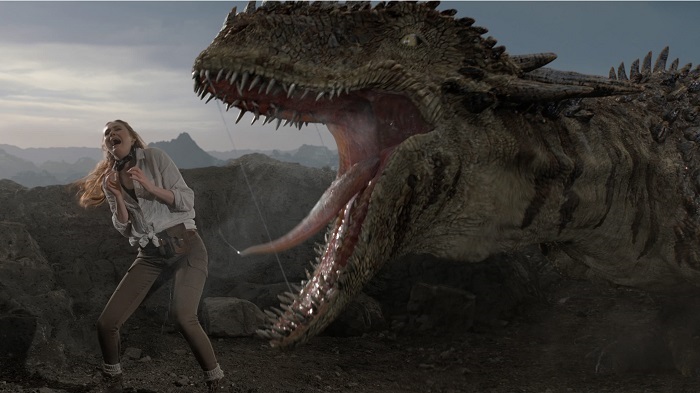
The story is about the making of “Cliff Beasts 6”, the latest installment of the 23rd most popular franchise of all-time. With its hefty $100 million budget, the corny creature-feature is set to be the first major production shot during the pandemic. The producer Gavin (Peter Serafinowicz) gathers his movie’s motley cast together at a ritzy English countryside hotel where they will all stay together for the duration of the shoot. It’s within this supposedly safe production bubble that we spend the bulk of the film’s grueling two hour-plus running time.

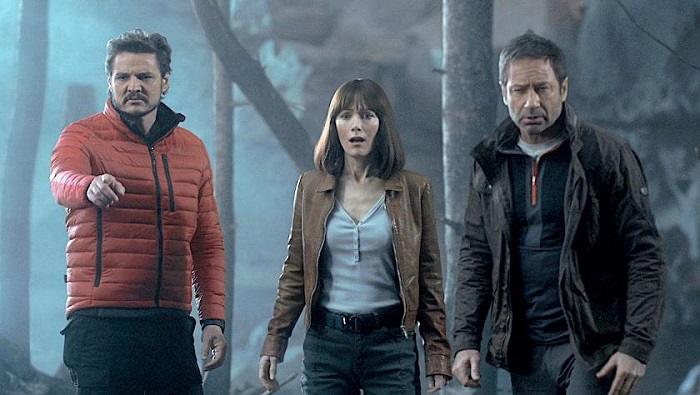
Among the “Cliff Beasts 6” cast is Carol (Karen Gillan), a struggling actress coming off a controversial flop. She agrees to come back to the franchise in hopes of rejuvenating her career. Dieter (Pedro Pascal) is a hedonistic veteran actor. Dustin (David Duchovny) is the film’s self-absorbed lead. There’s Lauren (Leslie Mann) who has a kid with Dustin. Sean (Keegan-Michael Key) is a wellness guru and cult leader wannabe. Howie (Guz Khan) is the film’s not too funny comic relief. And Krystal (Iris Apatow) is a newcomer and a TikTok sensation who’s mainly cast because of her massive social media following. Fred Armisen plays Darren, the lucky director who has to make a movie out of all of this nonsense.

Image Courtesy of Netflix

From there Apatow throws in a parade of cameos that includes James McAvoy, John Cena, Daisy Ridley, and a handful of others. None of them add much other than a few familiar faces. But the movie ends up needing A LOT more than that to cover its flaws. The seemingly endless parade of bad jokes and dumb dialogue equals a movie desperately flailing for any laugh it can get.

Calling “The Bubble” uneven seems too kind. It’s actually a haphazard mishmash of bad gags, bad characters, and bad energy. And at over two hours, this insufferable slog will test even the most devoted Apatow fan’s patience. There’s probably a good idea for a movie lost somewhere in “The Bubble”, but I’m not willing to endure a second sitting to see if I can find it. “The Bubble” is now streaming on Netflix.

VERDICT – 1 STAR

REVIEW: “Ambulance” (2022)

For the most part you know what you’re going to get from a Michael Bay movie. Granted, he’ll occasionally throw in a few small twists on his formula. But more often than not, his movies tend to follow a pretty familiar blueprint. And that blueprint has earned the director and producer lots of commercial success as well as a few vocal detractors.

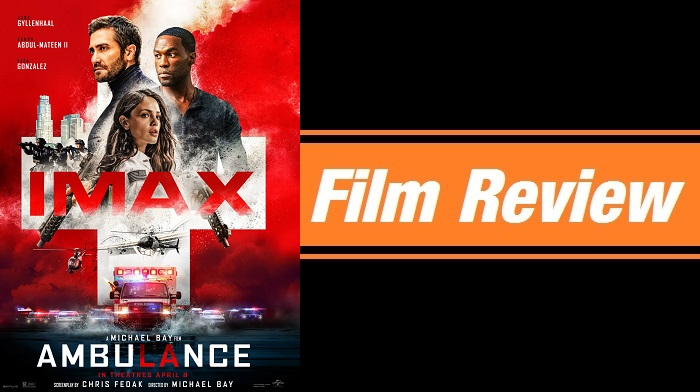
As you might expect, Bay’s new film “Ambulance” follows his blueprint to the letter. In fact, in some ways it plays like a celebration of Bay’s formula, even throwing in a couple of references to the director’s past movies. And then there are those Bay visual flourishes which he comes back to in the movie over and over and over again, almost to the point of overkill. So you could say this is Bay at his most indulgent. Yet despite all of that, his no-nonsense approach, three strong performances, and the central hook of the story gel together for something that’s quite entertaining.

Image Courtesy of Universal Pictures

Danny (Jake Gyllenhaal) and Will (Yahya Abdul-Mateen II) are childhood friends and adoptive brothers who, despite their sincere love for each other, have gone down very different paths in life. Will joined the military and served in Afghanistan. Now he’s back home where he has a baby boy with his wife (Moses Ingram). The charismatic Danny has followed in their father’s footsteps and runs a criminal outfit. Though not as unhinged as their late father, Danny has his hands in a lot of bad things.

With Amy in desperate need of a life-saving surgery and his military insurance refusing to cover it, Will approaches Danny for a loan. But rather than a measly $230,000, the ever persuasive Danny convinces Will to join him and his crew on a job to swipe $32 million from a bank in downtown Los Angeles. What could possibly go wrong, right? Well, everything.

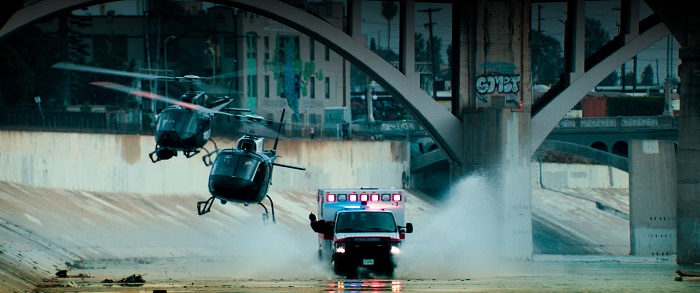
The heist goes bad as cops converge on bank and a ferocious “Heat” inspired gunfight breaks out. With the rest of their crew dead, Danny and Will scramble to find a way out. They end up hijacking an ambulance where in the back EMT Cam Thompson (Eiza González) fights to save the life of a police officer (Jackson White) who Will mistakenly shot during the chaos. What follows is nearly two hours of mostly kinetic, high-energy action across LA as Will, Danny and their two hostages try to shake the dogged LAPD and the FBI.

One thing about a Michael Bay movie, it’s going to look good. The visuals in “Ambulance” don’t disappoint and they certainly add to the film’s energy. At the same time, they eventually lose some of their kick as Bay goes back to the same camera tricks over and over again. In some cases, he repeats them so often it gets a little silly. But if you can get past that, there are plenty of exhilarating sequences that throw plausibility out the window and ratchets down on the high-octane excitement. And it doesn’t take long to get it all started. Bay doesn’t waste time on build up. He knows the kind of movie he’s making and he makes no apologies. Within 15 minutes the action has taken center stage.

Image Courtesy of Universal Pictures

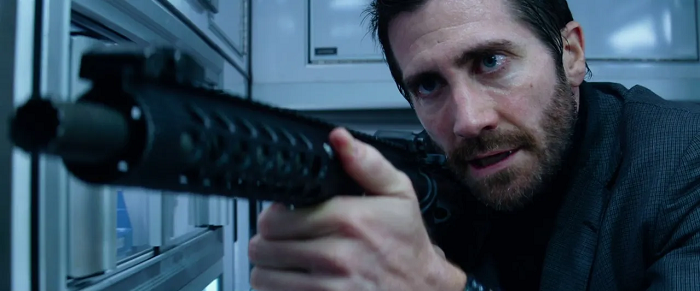
Gyllenhaal, Abdul-Mateen II, and González make for a lively trio. Their performances are dramatically different yet their chemistries are pretty seamless. Gyllenhaal is the most entertaining and he plays his scenes as if he were high on caffeine. Abdul-Mateen II adds an emotional level and brings the silliness down a notch. Meanwhile González gets her moments, but I wish she was given a few more. Garret Dillahunt adds to the fun playing a tenacious LAPD captain willing the chase the brothers all over the city if necessary.

There are some weird swings at humor (a few land, many don’t) and the movie begins to run out of gas well before the two-hour mark. But there are some good twists that keep this from being your conventional heist-turned-chase movie. For example, I liked the idea of having the wounded cop in the ambulance which ties the police’s hands and offers a unique set of challenges. Not all of their strategies make sense. And that’s kinda like the movie as a whole. This really is a case of turning off your brain and just going along for the ride. And sometimes that’s all your looking for in a movie. “Ambulance” is now playing in theaters.

VERDICT – 3.5 STARS

REVIEW: “Apollo 10 1/2: A Space Age Childhood” (2022)

(CLICK HERE to read my review in the Arkansas Democrat-Gazette)

I’m a big Richard Linklater fan. The 61-year-old Texas-born director, screenwriter, and producer has one of the most eclectic filmographies out there. From his hangout classic “Dazed and Confused” to his critically acclaimed “Before” trilogy to his audacious “Boyhood”. I had a chance to meet and listen to Richard Linklater during an appearance at Arkansas Cinema Society’s Filmland event. Hearing him talk about his deep love for cinema, the inspiration that has helped shape his wide-ranging style, and his uniquely personal approach to filmmaking only solidified my appreciation for his body of work.

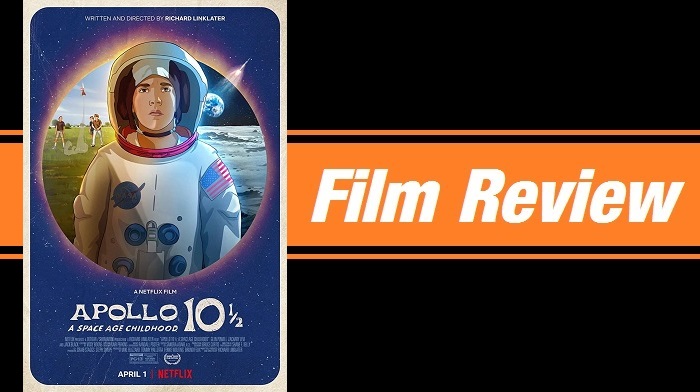
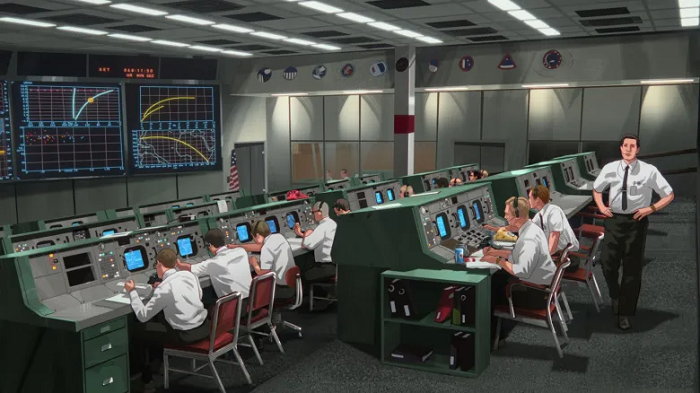
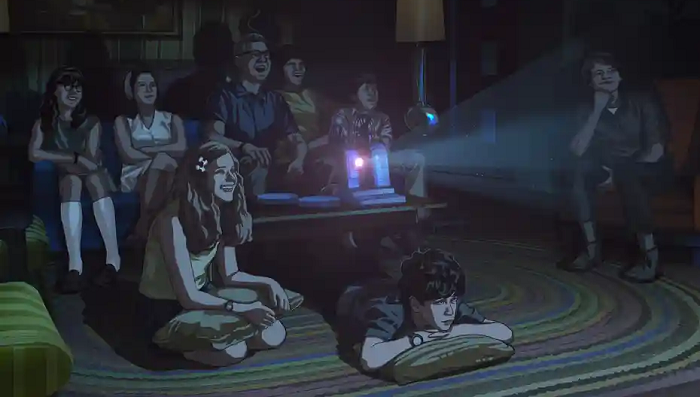
With all of that said, how on earth did Linklater’s latest movie nearly slip by me (It’s partly due to weak promotion, but that’s another write-up for another day)? “Apollo 10 1/2: A Space Age Childhood” premiered March 13th at South by Southwest and now it is available to stream on Netflix. This animation/live-action hybrid once again sees Linklater venturing into new spaces while at the same time showing off many of his signatures – a sharp wit, a lights-out soundtrack, an amazing grasp of time and setting.

Image Courtesy of Netflix

Born in 1960 near Houston, Linklater grew up in close proximity to NASA headquarters. It was a time when nearly every adult in his lively suburb worked for NASA, and the influence of the space program could be found in everything from used car commercials to playground equipment. Suddenly the prefix “astro-” became commonplace. There were the Houston Astros (formerly the Colt .45s), the Astrodome, AstroTurf, and even a theme park called AstroWorld. For these close families and tight-knit neighborhoods, space became synonymous with everyday life.

Linklater brings these intimate and heartfelt memories to life in “Apollo 10 1/2”, a time capsule of a movie set in the late 1960s. While it is certainly a celebration of the Apollo space missions and their impacts culturally, politically and personally, the film is much more an nostalgic and faithful portrait of a bygone era. A time of Jiffy Pop and RC Cola; The Archies and The Association; Admiral television sets and Sundazed Records. And while further out in the real world, Vietnam was festering and the Cold War was taking a new form, so many of the nation’s eyes were on the Space Race.

All of these things (and so much more) make their way into Linklater’s autobiographical film which beautifully braids his own childhood memories with a surprisingly tender youthful fantasy. Interestingly, there isn’t much in terms of plot. Instead, it plays more like a motion picture scrapbook and we’re ushered through it by a narrator named Stan (wonderfully voiced by Jack Black) who gazes back on his past with a full-hearted affection. “Let me tell you about life back then,” he says as he takes our hands and our imaginations on a trip down memory lane.

Image Courtesy of Netflix

But scattered throughout these lovingly rendered flashbacks is a delightfully absurd tale – the kind that could only originate in the vivid imagination of a star-gazing 10-year-old. It starts one sunny afternoon at Ed White Elementary School in the small Houston suburb of El Lago, Texas.

Young Stan (voiced by Milo Coy) is approached by two NASA officials (Glen Powell and Zachary Levi). Somehow in their race to beat the Russians to the moon, NASA accidentally built their lunar module too small for an adult. After scouting Stanley both in the classroom and on the kickball court (because isn’t that where all young astronauts excel?), NASA believes him to be the perfect candidate for their mission. What mission you ask? To test their too-small module on the moon’s surface.

At first it’s a little hard to tell where Linklater is going with this light hearted side-story. But as it plays out in snippets the filmmaker’s vision becomes clearer. Just like everything else in his movie, it’s meant to emphasize what it was like growing up in that very specific place during that very specific era. For Stan, his five siblings, and his imperfect yet devoted parents (pitch-perfectly played by Lee Eddy and Bill Wise) it was a vastly different world than today’s, and Linklater’s knack for conveying such worlds really comes through.

Image Courtesy of Netflix

Even the visual choices play into it. The strategic mix of rotoscope with 2D and 3D animation gives the film a dreamlike yet stunningly realistic quality, where the period’s defining colors and textures pop off the screen. Other touches add to the authenticity, such as digitally animating old live-action footage from television shows, movies, and newscasts. And it’s all bound together by nearly 50 smile-inducing, head-bobbing late 60s tunes from the likes of The Marketts, Cliff Nobles, and The T-Bones.

Sadly, “Apollo 10 1/2” hasn’t received much promotion from Netflix yet it’s a must-see, especially for fans of Linklater or anyone with the slightest attachment to the era. Will it play the same for younger audiences? Probably not. But while I wasn’t born until 1971, so many things in the film still echo back to my own childhood. And the sturdy connection to the 1960s provided to me by my parents only enriched my experience. So while this gorgeously animated, intensely detailed, nostalgia-soaked gem is clearly personal for Linklater, he won’t be the only one reflecting on their childhood after watching. “Apollo 10 1/2: A Space Age Childhood” is now streaming on Netflix.

VERDICT – 5 STARS