Sundance Review: “God’s Country” (2022)

Grief is such a popular subject in movies and for a number of reasons. It’s a subject that strikes a chord in some way with most every viewer. There are many facets of it that can be explored through cinema. And when done well, its depiction in movies can be a cathartic release both for the filmmaker and the audience. Needless to say, there is no shortage of movies that deal with this powerful emotion.

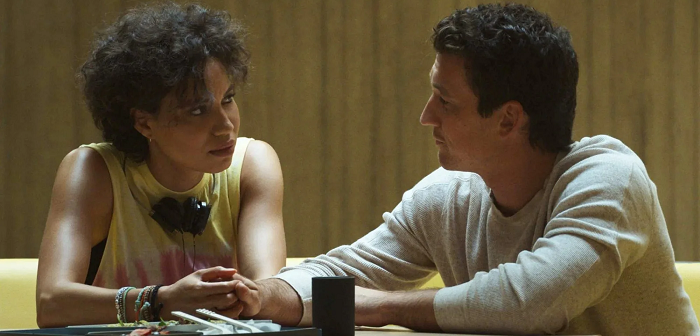
Grief is the central theme for first-time director Julian Higgins in his new film “God’s Country”. This diverting yet overly ambitious thriller hands the too often overlooked Thandiwe Newton a well-deserved and long overdue meaty leading role. She plays a grieving college professor at odds with a couple of backwoods brothers. And while Higgins does a great job building tension between his lead character and two antagonists, it’s often undermined by his attempts to squeeze in every hot-button issue under the sun.

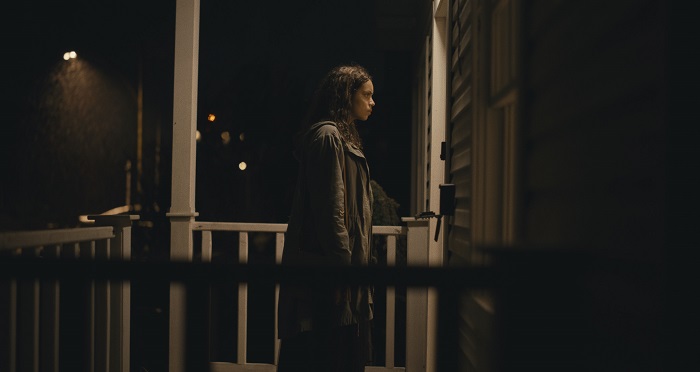
To no surprise Newton is wonderful as Sandra Guidry, a New Orleans transplant now teaching public speaking at a nearby unnamed university. After school, she retreats to her home in a remote snowy canyon outside of town where she sorts through the things of her recently deceased mother. The beautiful rugged isolation is a good place for peace, quiet, and coping with her grief. But she also learns it’s not the safest place to be, especially for a single woman.

Image Courtesy of Sundance

One evening Sandra comes home to a red Ford pickup truck parked on her property. There’s no signs of its owner so she leaves a note asking them not to park on her land. Later that evening she finds the truck gone and her crumpled note laying on the ground.

The next day while chopping wood she notices the same red pickup coming up her driveway. It parks again and out steps the Cody brothers, the older Nathan (Joris Jarsky) and the loose cannon younger Samuel (Yellowstone’s Jefferson White). Sandra approaches the two and asks them to leave much to their chagrin. Later, after she discovers their truck parked a third time, she has had enough.

Sandra meets with the acting sheriff Gus Wolf (Jeremy Bobb), the only law enforcement officer in a 300-mile jurisdiction. He’s reluctant to get involved saying most disputes are handled between the parties (that’s helpful). He does meet with the brothers and tells them to stay off Sandra’s property. But as you can probably guess, this does little to ease the tensions between the two sides, and soon Sandra is forced to take matters into her own hands.

Image Courtesy of Sundance

Again, all of that makes for a good setup, and Higgins utilizes everything from the performances to his setting to build a tense and at times chilling central conflict. There’s also the undercurrent of grief which both Higgins and Newton navigate with true genuine feeling. The problem comes when the movie wanders from those two narrative strengths.

Rather than exploring these angles deeper, Higgins (who penned the script with Shaye Ogbonna) stuffs the story with a bevy of political issues. Patriarchy, policing, race, gender inequality in the workplace, Hurricane Katrina, animal rights – they all find their way into the narrative, yet none are given the time they need to feel meaningful. They’re meant to be contributing factors to Sandra’s growing frustration and deteriorating state of mind. But their superficial treatment leaves them feeling tacked on rather than important to the story.

Several other things bring the movie down. The revelation of Sandra’s past work in New Orleans gives us one of Newton’s very best scenes. But it also provides us with an amusing convenience that I never fully bought into. Also, there are some out-of-the-blue supporting character pairings in the last act that are both weird and woefully underdeveloped. These knocks are annoying mainly because they drag down an otherwise gripping thriller. And while grief still gets a reflective and thoughtful treatment, even it feels subverted by too many unnecessary detours.

VERDICT – 3 STARS

Sundance Review: “After Yang” (2022)

(CLICK HERE for my review in the Arkansas Democrat-Gazette)

One of my favorite directorial debuts in recent years came from the South Korean-born American filmmaker Kogonada. His artful and quietly stirring “Columbus” from 2017 really left its mark on me. It was a movie full of longing and soul-searching. It also showed off Kogonada’s moving contemplative style. One he honed while working as a video essayist, spotlighting legendary auteurs from cinema’s rich history.

His latest film “After Yang” has a similar emotional depth and texture as “Columbus”. Set in the not-to-distant future, the story hits me in one of my soft spots – daddy/daughter relationships. In this case, it’s a father looking for a way to repair his little girl’s beloved android companion named Yang. The science-fiction twist may give pause to fans of Kogonada’s previous work. But rest assured, “After Yang” features the same mix of emotion and craft that made “Columbus” such a joy.

Already nabbed for distribution by A24, “After Yang” has rightfully received mostly positive reviews following its North American premiere at Sundance. Much like “Columbus”, this is far from a mainstream film and those unable to get in tune with its quiet patient rhythm and introspective gaze may find themselves checking out. But without question, it’s completely worth your effort.

What Kogonada has given us is essentially a reflection of humanity, full of thoughtful meditations on life, loss, the meaning of family, and finding our place in the world. He takes his fairly simple premise and adorns it in sci-fi dressing. But at its heart, the movie seeks to engage your mind, heart, and senses. But for that to work, we have to be immersed in its world. Kogonada does that by using some of his favorite ingredients – nature, architecture, rich colors, the soothing piano chords and aching strings of the score. These familiar creative strokes help give Kogonada’s films their identity.

Jake Flemming (Colin Farrell), his wife Kyra (Jodie Turner-Smith), their adopted daughter Mika (Malea Emma Tjandrawidjaja), and their android Yang (Justin H. Min) make for a sweet and happy family. Jake owns a tea shop where he spends much of his time exploring new recipes. Kyra is a businesswoman whose job requires her to work long hours. That leaves Mika with Yang, a “certified refurbished” big brother figure, purchased by Jake and Kyra to help their daughter connect with her Chinese heritage. The two become inseparable to the point where Yang knows Mika better than her parents do.

But then one evening Yang shuts down and won’t restart. Jake sets out to have him repaired, begrudgingly at first but urged on by his daughter’s heartbreak. He quickly learns that buying an android (called “techno-sapiens”) secondhand was a mistake. Yang should still be under warranty, but finding the dealer to honor it proves impossible. He tries an uncertified repairman (Ritchie Coster), but all he gets are half-baked conspiracy theories about techno-surveillance and secret android spyware.

Image Courtesy of Sundance

Meanwhile Yang’s absence has a ripple effect across the household with each member feeling the weight of their loss. While he was chosen and bought specifically with Mika in mind, Yang was a sweet, compassionate and supportive presence for the entire family. Kyra and especially Jake quickly begin to understand the power of their attachment to Yang and the sense of loss that comes with his absence.

Running out of options, Jake seeks out an A.I. museum curator named Cleo (Sarita Choudhury) who helps him connect to a database of recorded memories stored inside of Yang. As Jake begins perusing these short video clips (one for every day of Yang’s ‘life’), he’s taken on a bittersweet journey of self-discovery. He finds himself deeply affected by Yang’s warmly poetic way of looking at the world. It moves him to take stock of himself and reflect on the life he’s been living. Like George Bailey in a much lower key, he has a wonderful life and it takes him seeing it through an android’s eyes for him to open his own.

But there are also secrets buried deep within Yang‘s memories. A mysterious young woman (Haley Lu-Richardson) who Jake has never seen before pops up in several of Yang’s memory clips. It’s forms the heart of a sweet and subtle mystery that Kogonada delicately unpacks to reveal something unimaginably beautiful yet in its own way even more heartbreaking.

Kogonada’s goal is to engage you emotionally and a key means of accomplishing it is through the visuals. There are subtle yet undeniably artful choices with things like color and aspect rations that help convey the film’s solemn and soulful mood. Take the distinctions between Jake’s world and Yang’s memories. Jake is routinely surrounded by dim gloomy shadows accented by the dull glow of orange and blue neon – a perfect way to convey his feelings of sorrow and detachment. Contrast that with Yang’s memories where the colors grow richer and brighter and even the framing of shots lends to the sensation of innocence and wonder.

If there is one gripe I have, it’s that I wish we were given a few more scenes with Yang prior to his malfunction – scenes that would let us develop our own connections to him. Instead, we’re solely dependent on pieces of memory from his family. It’s enough, but I can only imagine the punch it would pack if we had been given more time to nurture our own feelings. But ultimately that’s a small gripe and one that I barely struggle with.

Despite its compelling sci-fi elements, “After Yang” is very much an intensely human drama, quietly profound and gracefully subdued. Loosely adapting an Alexander Weinstein short story, Kogonada uses his camera just as much as his script to pull us into his world and tell this metaphor-rich story. There’s so much detail, from the East Asian influence guiding Alexandra Schaller’s production design and Arjun Bhasin’s costumes to the meticulously conceived compositions. But there’s also the performances, so grounded and rooted truth. Ultimately all of its pieces prove vital to the experience. And what an experience it is!

VERDICT – 4.5 STARS

Sundance Review: “Resurrection” (2022)

In “Resurrection”, the new film from writer-director Andrew Semans, Rebecca Hall plays a seemingly all-together single mother named Margaret. She’s a confident, poised, and successful businesswoman who is all about control. Whether its in the advice she gives to a struggling young intern or in the affair she’s having with a married co-worker. It’s most evident at home which drives her brash and headstrong 17-year-old daughter Abbie (Grace Kaufman) crazy.

But when a terrifying face from her past comes back to haunt her, this self-assured working mom begins to unravel. It starts at a seminar where she gets a glimpse of a man that sends her running out of the building in a panic, sprinting all the way home to check on her daughter. A couple days later she sees him again, this time in a department store while shopping with Abbie. And then again while sitting in the park. Her dread-filled panic attacks and horrific nightmares intensify with each new sighting.

We learn the man’s name is David (Tim Roth). Margaret hasn’t seen him in 22 years, but the wounds from their past relationship are still painfully fresh. While the details of that relationship are better left unshared, just know that its sinister underpinning leads to some downright disturbing revelations.

Image Courtesy of Sundance

Semans does a great job growing the tension between each encounter Margaret has with David. While Roth is disgustingly great, everything in the film rides on the back of Hall who is next-level good. Every facet of her performance works, from her early scenes of seemingly shatterproof confidence to the later scenes where she desperately tries to hold it together. And we get even another side of her once she shifts from prey to predator.

Rebecca Hall playing solitary women on the brink of breakdown is nothing new. Think back to movies like the criminally underseen “Christine” and last year’s terrific “The Night House”. But she’s such a good actress that none of these performances feel one and the same. Here it’s no different. The Margaret she portrays is a complex and layered woman. Strong and determined yet carrying so much buried guilt and self-blame. The best scene in the movie captures all of these traits. It’s a seven-minute-long uncut take where the camera sits on her as she explains her unsettling history with David to a friend. It’s riveting stuff and an absolute acting masterclass.

The one place where “Resurrection” slips is in its finish. Or does it? I’m genuinely conflicted. In one sense the grisly and ghoulish final 15 minutes is devilishly unexpected, and I found myself relishing the gruesome and gory depths Semans was willing to go. On the other hand, the ambiguity-tinged final moments lead to some shaky interpretations. I’m still not certain whether I’m satisfied with the ending or frustrated by its vagueness.

Adapted from a short story by Alexander Weinstein, “Resurrection” is a bold and mostly gripping psychological thriller with an anxiety-inducing allure and a deliciously weird (yet kinda funky) finish. Andrew Semans’ expert handling of tension and pacing keeps the unnerving energy steadily growing, right up to its gonzo finish. The film also gives us yet another stellar Rebecca Hall performance, one that (once again) cements her as one the best actresses working today.

VERDICT – 4 STARS

Movie Poster Spotlight: “The Batman”

Easily one of my most anticipated movies of 2022 (barring another frustrating delay) is Matt Reeves’ “The Batman”. Warner Brothers has already dropped several top-notch trailers. Now they’ve released the film’s new poster and it’s pretty amazing. Though it uses a very familiar movie poster template, I love the design. It fits exactly what I’m expecting this movie will be. Check it out and tell me what you think.

DIRECTOR – Matt Reeves

WRITER – Matt Reeves, Peter Craig

STARRING – Robert Pattinson, Paul Dano, Zoe Kravitz, Jeffrey Wright, John Turturro, Colin Farrell, Andy Serkis, Peter Sarsgaard

RELEASE – March 4, 2022

Sundance Review: “Honk for Jesus. Save Your Soul” (2022)

If its title didn’t grab your attention the film’s two co-stars should. The always great (and in this case perfectly cast) Regina Hall and Sterling K. Brown play a megachurch power couple in the upcoming “Honk for Jesus. Save Your Soul”. It marks the directorial debut for Adamma Ebo who gives us a biting and often hilarious critique of pseudo-Christianity and megachurch corruption. It’s a snarky satire that uses a mockumentary style to lambaste the lavish self-serving absurdity at the heart of these rackets.

From its opening moments, those familiar with the megachurch phenomenon will immediately notice the spot-on detail. Ebo has clearly done her research and she uses it to expose these wealthy scam-artists who put price tags on righteousness and sell their version of salvation for profit. And of course she delivers plenty of laughs, always at the hucksters’ expense. But Ebo’s craftiness shows in the glimmers of humanity she brings out of her characters, even amid their glaring over-the-top chicanery.

Lee-Curtis Childs (Brown) is the pastor of Wander to Greatest Paths Baptist Church in Atlanta (how’s that for a name?). It was once a prominent megachurch with an estimated 25,000 congregants. He and his wife Trinitie (Hall), who’s proudly flaunts the haughty, self-aggrandizing title “First Lady” (not uncommon in these circles), live a opulent lifestyle complete with matching Ferraris, a helicopter, a palatial mansion, closets full of expensive dresses and designer suits, all in the name of the Lord’s service of course.

Image Courtesy of Sundance

You won’t find words like “humility” “moderation” or “contentment” in this couple’s vocabulary, with Lee-Curtis excusing his high-priced indulgences as “divine additions” while Trinitie buys $2000.00 hats at a boutique called Bathsheba’s Bonnets (the irony is both obvious and hilarious).

And then came the fall. Lee-Curtis found himself embroiled in a sexual misconduct scandal which rocked his cash-cow empire, resulting in a mass exodus of church members and the eventual closing of the church. But rather than bowing out and slithering away in shame, Lee-Curtis and Trinitie are prepping for their big comeback, marking down Easter Sunday for their church’s grand re-opening. And to help capture the occasion (and to shamelessly get as much publicity as possible), they’ve brought in a film crew to shoot a documentary.

And so we get the movie’s come-and-go mockumentary style which begins one month before their big Easter event. Ebo has her faux filmmakers follow Lee-Curtis and Trinitie over the next several weeks as they share their “vision” for the future of WGPBP. But instead of demonstrating remorse and repentance, we get the same two charlatans, still decked in Prada and still finding ways to rationalize their sin.

Though a bit uneven, the mockumentary conceit allows for many of the film’s funniest moments. Such as the various times the couple inadvertently expose their true selves in front of the camera. Or in the rivalry we see between the Childses and Keon and Shakira Sumpter (Nicole Beharie and Conphidance), the husband and wife co-pastors of the bustling Heaven’s House Baptist Church. There are some shakier scenes where the movie drifts away from its whole mockumentary framing (one particularly cringy rap-song sing-a-long being a prime example). But it never takes it long to get back on track.

While the humor is a real strength, the movie often feels at odds with itself when it steers away from straight satire and ventures into more serious drama. That’s when its intentions get a little muddied, especially in its portrayal of Trinitie. At times it seems to paint her as both a hero and a victim. Not totally unlike last year’s “The Eyes of Tammy Faye”, another film examining a corrupt couple living large in the name of ministry. In that film, most of Tammy Faye Bakker’s wrongdoings were scrubbed clean in an effort to make her more saintly. Here we actually see many of Trinitie’s sins firsthand which makes embracing her as a victim lot harder.

Image Courtesy of Sundance

While she is clearly a victim of Lee-Curtis’ insatiable self-centeredness, Trinitie is no weak powerless damsel nor is she witless or gullible. In fact, you could say she’s the brains and the backbone of the outfit. So rather than a victim, this plays better as a redemption story of a woman who stood by her disgraced husband in order to protect her life of luxury. But as the only Childs with a sliver of conscience, she’s had enough and is ready to finally own up to her part in the hustle. I think that reading gives a more honest and cohesive image of Trinitie. I’m just not sure the movie itself agrees.

Of course the real victims are those who are swindled by these prosperity gospel peddlers who turn shepherding into a performance art and rake in the cash while doing so. Ebo uses some hilariously outrageous antics (which aren’t that far removed from reality) to pose the question, “Who would ever buy what these people are selling?”

Though a little messy, “Honk for Jesus. Save Your Soul” holds together thanks to a filmmaker’s keen understanding of her subject and two pitch-perfect leads. Hall especially shines, shrewdly navigating some sketchy character work to give us some semblance of a rooting interest. And while the film asks us to overlook much of what we’ve seen in order to feel a certain way about her character, Hall (miraculously) finds a way to not only earn our respect for Trinitie but also our sympathy.

VERDICT – 3.5 STARS

Sundance Review: “892” (2022)

First time feature director Abi Damaris Corbin tells the heartbreaking real-life story of Lance Corporal Brian Brown-Easley in her new film “892” which just had its premiere at Sundance 2022. Jonathan Majors was originally slated to star but had to leave due to his obligations to the Marvel Cinematic Universe. Enter Jon Boyega (“Star Wars”, “Small Axe”) who plays the former Marine and war veteran who loses all hope after his disability check fails to come through from Veterans Affairs. Faced with the possibility of homelessness, Brian makes a desperate decision with tragic consequences.

Corbin also co-wrote the script alongside Kwame Kwei-Armah. In addition to Boyega, the film features the final performance from the late Michael K Williams. It also stars Nicole Beharie, Connie Britton, Jeffrey Donovan, and Olivia Washington. All do a good job filling out this character-driven thriller which drags a bit in the middle, but never loses sight of the important issue its tackling.

Full disclosure: I’ve always been a bit on the fence when it comes to Jon Boyega. It’s not that I think he’s a bad actor. I’ve just had a hard time connecting with his performances. Well, call me a Boyega convert. Everything about his performance in “892” clicks. Every line he delivers comes with conviction. Every emotion he gives us feels true. It’s a heavy role and the 29-year-old Brit pours every bit of himself into it.

Set in Atlanta, “892” wastes no time getting things underway. When we first meet Brian, he is already in a bad place. We learn via flashbacks that he was working two jobs to make ends meet, but due to his health he was forced onto veteran’s disability. But after Veteran’s Affairs find what they deem to be an outstanding debt, they use Brian’s benefits to cover the past-due amount. He insists it’s a mistake and pleads with the VA rep to help him. But instead of getting his $892.00 disability check, Brian is handed a pamphlet on homelessness.

Image Courtesy of Sundance

Reasonably frustrated and seemingly out of options, Brian decides to do something drastic; something that will send a strong message to the VA and expose their poor treatment of its vets. After calling his precious young daughter Kiah (London Covington) and his ex-wife, Cassandra (Olivia Washington), Brian walks to Wells Fargo Bank. Once inside, he slides a handwritten note to a teller named Rosa (Selenis Leyva) that reads “I have a bomb.” The only words the paralyzed Rosa can utter is “What do you want me to do?” Brian’s response is unexpected, “Trigger the alarm.”

As the rest of the movie unfolds, Corbin treats her audience to a suspenseful thriller but also a relevant and deeply affecting drama. She takes her time unpacking her main character, showing Brian Brown-Easley to be a kindly yet troubled soul. There are scenes showing his bouts with PTSD following two tours in Iraq. But we also get plenty of revealing moments of gentleness and compassion (there’s a great scene where he takes a message from a bank customer calling about their 401(k)). Corbin’s keen attention to the emotional details earns our empathy and makes the journey we take all the more heartbreaking.

In addition to Boyega, the rest of the cast is strong top to bottom. Nicole Beharie is terrific as the able and resourceful bank manager Estel, one of Brian’s two hostages. Michael K Williams is also good playing a police officer doing everything in his power to get Brian out alive. And Connie Britton gets some good scenes playing a television reporter caught between the big scoop and journalistic ethics.

“892” shines a much-needed spotlight on the VA’s failures in its treatment of America’s military veterans. Corbin doesn’t sugarcoat the issue, but she never gets heavy-handed with it either. She maintains a good and steady balance with it and the handful of other social issues she brings to light. The film loses some of its steam in the middle as the police are slowly building their presence outside of the bank and Brian waits to some kind of response from the outside. But it still packs an emotional gut-punch, and Abi Damaris Corbin proves herself to be a filmmaker to watch.

VERDICT – 3.5 STARS