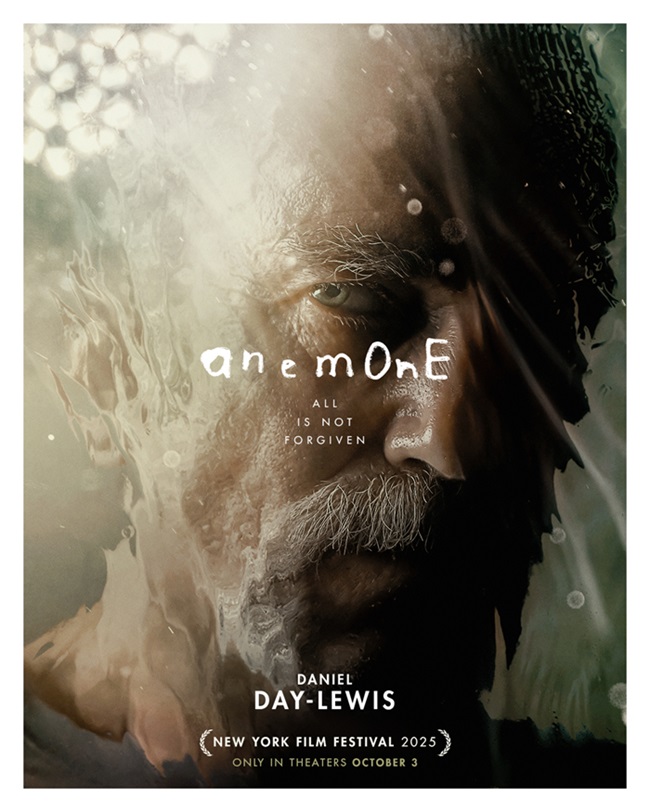
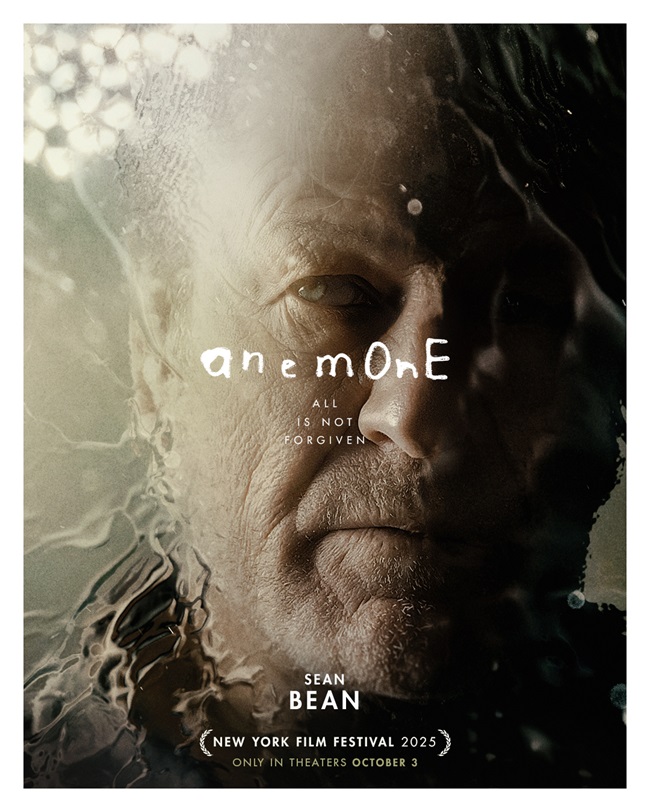
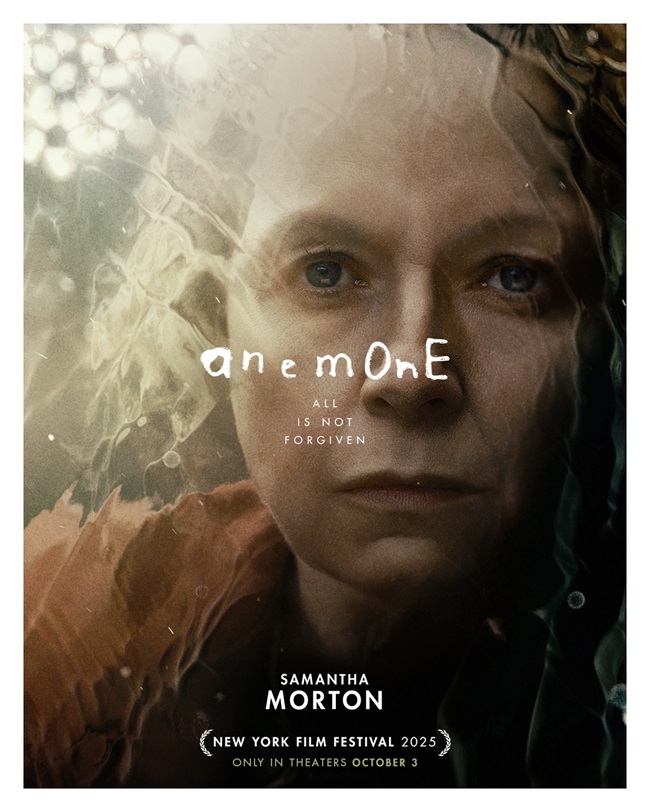
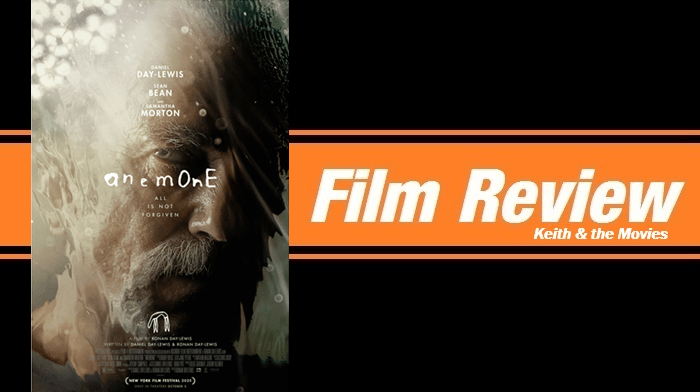
Focus Features has released three stunning new character posters for “Anemone” coinciding with the film’s weekend release in select theaters. “Anemone” marks the return to acting for Daniel Day-Lewis following eight years in retirement. The new posters are brilliantly fitting for this dark psychological family drama that also stars Sean Bean and Samantha Morton. And it’s directed by Ronan Day-Lewis, the son of Daniel Day-Lewis, who also co-wrote the screenplay with his revered father.
“Anemone” deftly uses the complex relationships between fathers, sons, and brothers to examine such heavy and uncomfortable themes as childhood trauma, PTSD, strained family bonds, isolation, and self-condemnation versus self-forgiveness. It’s a movie overflowing with artistic vision from a daring first-time director and anchored by a brilliant return performance from a generation’s best actor. “Anemone” is one of the year’s best films.
Check out the new posters below and check out my full review of “Anemone” [HERE].
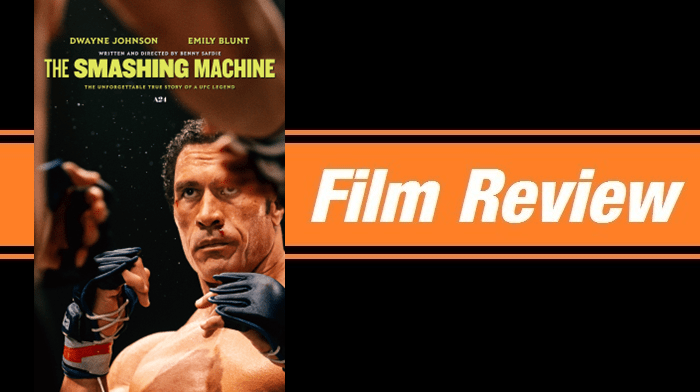
Dwayne Johnson and Emily Blunt reteam in a movie that’s far removed from their lighthearted “Jungle Cruise” adventure. “The Smashing Machine” is a biographical sports drama based on the 2002 John Hyams documentary “The Smashing Machine: The Life and Times of Extreme Fighter Mark Kerr”. As you can probably guess, it highlights the career of Mark Kerr, one of the pioneers in the world of mixed martial arts.
“The Smashing Machine” premiered at the Venice Film Festival where its director, Benny Safdie won the Silver Lion. And it was produced and is being distributed by none other than A24. Those things alone raised expectations. But surprisingly, “The Smashing Machine” is a fairly conventional sports drama. It follows a pretty familiar blueprint but with some notable traits all its own.
As many have rightly said, Dwayne Johnson delivers a revelatory performance portraying Mark Kerr. As a professional wrestler turned action star, it’s no surprise that the musclebound Johnson has the sheer brawn and in-ring prowess for a role like this. It’s what he does beyond the physicality that surprises most. It’s here that Johnson loses himself in the role (and he’s not the easiest guy to lose into anything).
Image Courtesy of A24
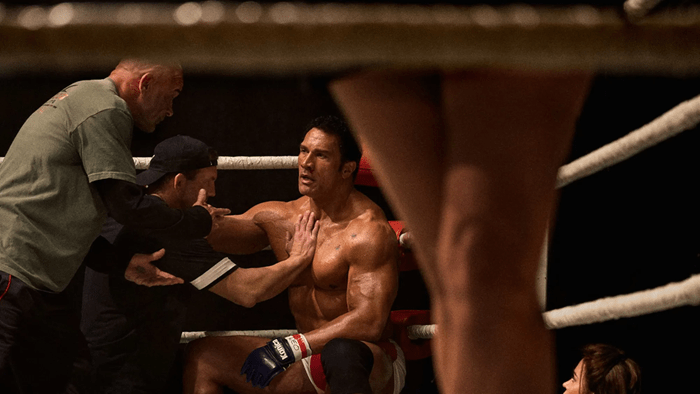
In many ways “The Smashing Machine” looks and plays like a slice-of-life documentary. Visually, Safdie (directing solo for the first time) and cinematographer Maceo Bishop shoot the film in a variety of formats, most notably VHS and 16mm. As a result, the gritty and grainy texture conveys authenticity as well as a distinct sense of time. Narratively, the movie sticks with one segment of Kerr’s life from 1997 to 2000, offering us a documentary-like profile of the man rather than more plot-focused story.
We first meet Kerr in the early stages of his professional career, before mixed martial arts became a global phenomenon. It was a time of few rules, no regulations, and no infrastructure around the sport. After turning heads with an undefeated run in Brazil, Mark agrees to a few fights in the growing Ultimate Fighting Championship. From there he takes off to Japan where he joins Pride FC with his close friend, trainer, and fellow fighter, Mark Coleman (Ryan Bader).
Safdie makes a point to show the crafted perception of the fighters and Mark’s determination to live up to it. The MMA organizations would portray their fighters as fiercely violent warriors surrounded with an aura of invincibility. But for Mark, the reality is dramatically different. Behind his brawny public image is a disarmingly kind and gentle man. He possesses a near childlike tenderness when things are going well. But when things get tough, it can be more of a childlike petulance. And things get really tough for Mark.
Image Courtesy of A24
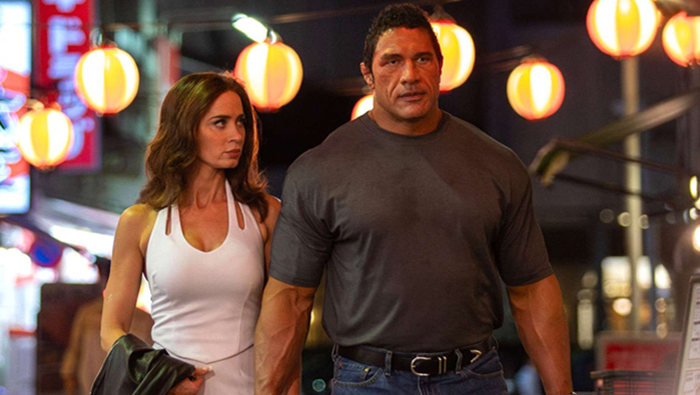
Mark’s professional troubles begin in Japan with his shocking first loss – the result of a referee not calling the match according to the recent rule changes. His frustrations only get worse after his body begins showing signs of wear and tear, leading to an addiction to pain killers. Meanwhile at home, his volcanic relationship with his girlfriend Dawn (Emily Blunt) is an emotional rollercoaster with problems all its own.
The film is at its best when Mark and Dawn are together. Their beautiful yet blustery coexistence produces moments of potent domestic drama. The two truly love each other but frequently fight, sometimes due to Mark’s petty passive-aggressiveness; other times from Dawn’s bruising self-righteousness. There’s undeniably a dysfunctional quality to their relationship, but neither are villains. Their love is real but so are their frustrations which boil over into several heated clashes.
Johnson looks right at home in combat leading to some visceral fight scenes, effectively shot in a way that emphasizes the brutality. But it’s the humanity outside the ring that makes his performance so powerful. Blunt is equally good, bringing a whirlwind of emotional to a critical supporting character. That is until she suddenly vanishes for a big chunk of the second half. Along with the immersive visual style, these are all strengths that set this otherwise conventional sports drama apart from the many others that come down the pipeline. “The Smashing Machine” is in theaters now.
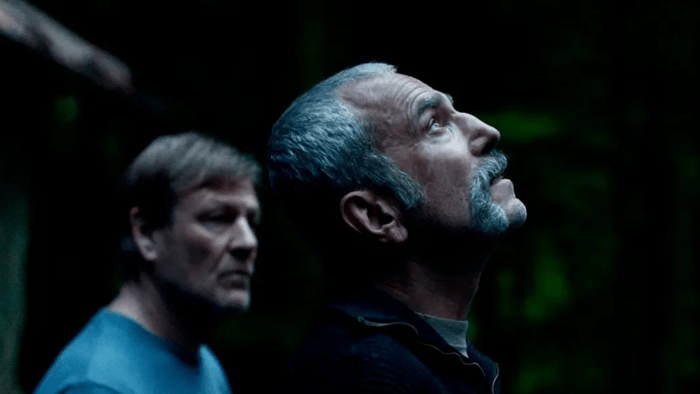
Danial Day-Lewis makes his triumphal return to acting after an eight year retirement in “Anemone”, delivering what should be one of the most talked about performances of the year. It’s yet another richly complex character for Day-Lewis to dissect and explore, and he does so with the kind of intensity and precision that has marked the three-time Oscar winner’s career.
This isn’t just a case of Day-Lewis simply returning to a craft he loves. “Anemone” is a true passion project which he co-wrote with his son, Ronan Day-Lewis. Also, the younger Day-Lewis directs his father in what is the 27-year-old’s feature film debut. Their intimate connection beyond the camera finds its way onto the screen, adding a compelling perspective on fathers and sons and the ties that bind them.
“Anemone” is a dark family drama with a piercing psychological edge that delves into some heavy and uncomfortable subject matter including childhood trauma, PTSD, strained family bonds, isolation, and self-condemnation versus self-forgiveness. It’s a visually captivating film where the camera is as essential as the pen when it comes to storytelling. Narratively it’s a methodical slow-burn, patiently and quite brilliantly unwinding its characters and the conflicts that have defined them.
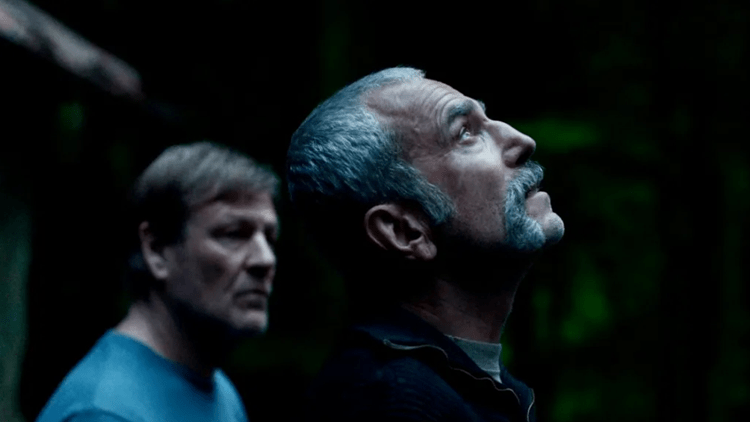
Image Courtesy of Focus Features
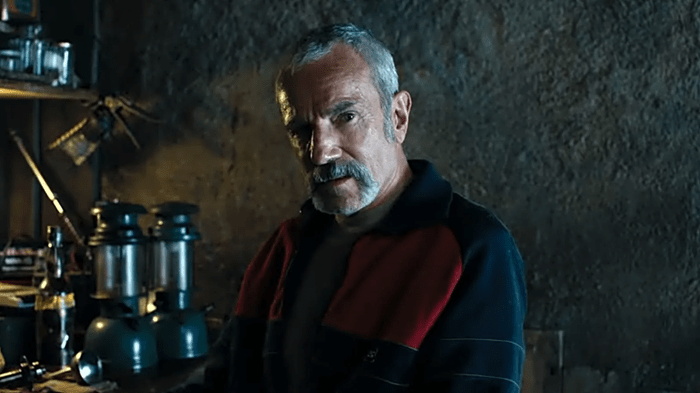
The elder Day-Lewis plays Ray Stoker, a damaged soul who has condemned himself to a life of isolation for reasons that painfully become clear as the story unfolds. Ray lives in a secluded one-room stone cabin, deep in the forest on a tiny patch of land that’s unreachable by vehicle. Ronan Day-Lewis and his DP, Ben Fordesman use the haunting beauty of nature to set the tone and to ground us in the setting. The churning clouds in the overcast skies. The thick forest canopy swaying in the heavy winds. The steady patter of rain on Ray’s tin roof. It’s a stunning bit of visual table-setting.
One afternoon Ray’s self-imposed disconnection from society is interrupted by an unannounced visit from his brother, Jem (Sean Bean). The tension between the two is obvious from first glance and the root of it is patiently revealed over the course of Jem’s stay. We watch as the two brothers spend the next few days together, revisiting ghosts of their pasts, picking at scabs from old wounds, and slowly piecing together their family history, ultimately arriving at the real reason for Jem’s visit.
The differences between Ray and Jem are striking, yet the bond of brotherhood is still real and present. We learn that they’re both men of violence, with pasts that have shaped who they have become. The key difference is one was able to find a measure of peace through faith while the other has built a wall around himself and his demons. Shades of bitterness, resentment, and contempt boil to the surface during their time together. But we also see moments of authentic connection.
Their time together is broken up with swings back to civilization where Jem’s wife Nessa (Samantha Morton) is having a hard time with her son Brian (Samuel Bottomley). He has found himself in trouble after nearly beating someone to death during military training. He’s been sent home where he struggles to understand his actions while Nessa worries that he’s following in some troubling footsteps. The connections between these scenes and Jem’s visit to Ray are better left unspoiled, but they add significant layers to the story that pay off in a powerful way.
Image Courtesy of Focus Features
The film’s script is an impressive display of audacity, peculiarity, and incisiveness. It tells a mostly contained and character-centric story with an equal reliance on dialogue, performance, and visual language. While the dialogue is rich and Day-Lewis delivers some mesmerizing monologues, the moments of silence are just as captivating, especially between the brothers who sometimes seem as if they’re communicating telepathically.
As for the performances, Daniel Day-Lewis once again disappears within another enigmatic and complicated character. He burrows deep into Ray’s psychology, relaying his inner turmoil with a simmering rage and even slivers of sharp-edged humor that cut right to the bone. Yet Day-Lewis never loses sight of Ray’s humanity. Bean makes for a brilliant foil. He’s quiet but possesses a strong presence while remaining sharply focused and ever observant. He’s a crucial part of the film and a fixture in its very best scenes.
“Anemone” won’t be for everyone. Its dark themes and brooding tone can be a challenge. And it isn’t a movie driven by spoon-fed, by the book plotting. Its storytelling bucks nearly every convention, shrewdly oscillating between expressionistic and raw gritty realism. Yet it’s a movie bursting with artistic vision from a daring first-time director and anchored by a sublime return performance from a generation’s best actor. When you consider it altogether, “Anemone” is one of the year’s best films.
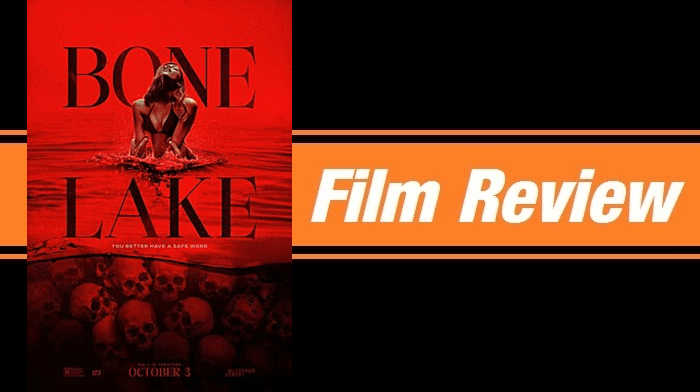
In several ways, the first hour of “Bone Lake” plays like one of those steamy thrillers that frequented late-night cable television in the late 80s and early 90s. It works hard to be seductive, even veering towards trashy on occasions. And it attempts to give its story a sharp psychological edge. But neither the pseudo-eroticism or the overly familiar mind games can make this genre flick crackle the way it clearly wants and desperately needs to.
Directed by Mercedes Bryce Morgan, “Bone Lake” seems to have a clear vision of what it wants to be yet it never fully commits to it. Though never boring, much of it feels like reheated material from other features. It isn’t until the last fifteen minutes that the movie lets its proverbial hair down. Its big crazy finish wraps things up with a devilishly gory payoff that really doesn’t make much sense but is a lot of fun nonetheless.
Image Courtesy of Bleecker Street
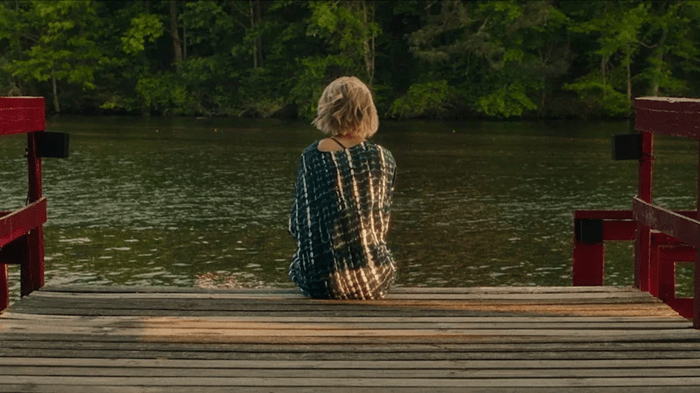
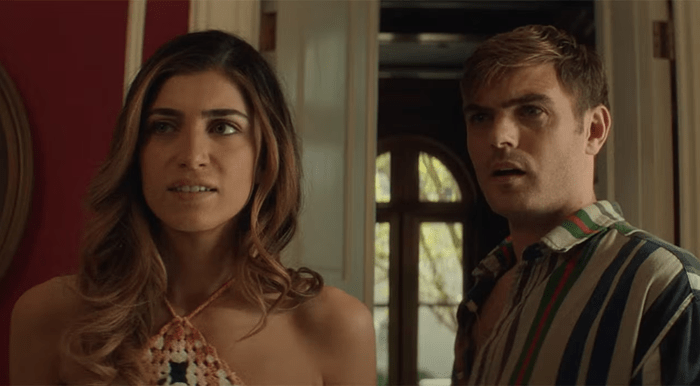
Diego (Marco Pigossi) and Sage (Maddie Hasson) are a seemingly happy couple who book a weekend getaway at a lavish lakeside estate. A nervous but excited Diego plans on asking Sage to marry him. But Sage clearly has some buried reservations about their relationship which comes more into play as the story moves forward. But things really get complicated with the sudden and unexpected arrival of a second couple.
Diego and Sage are surprised by the arrival of Will (Alex Roe) and Cin (Andra Nechita). “It’s short for Cinnamon,” she’s quick to clarify. The latter couple reveal they too have booked the place for the weekend which leads to a table-setting conundrum. With both couples unable to reach the property owner and with the nearest hotel some 50-plus miles away, they make the ill-fated decision to share the place for the night. Bad idea.
From there it doesn’t take long for one of the movie’s more noticeable flaws to surface. “Bone Lake” makes the mistake of tipping its hand too early and openly. Simply put, Will and Cin are too transparent from the start. In no time they are openly flirting, planting lies, and manipulating Diego and Sage in ways that can be frustrating to watch. It’s one of those cases where most of the issues could easily be solved with the slightest bit of communication. Unfortunately…
Image Courtesy of Bleecker Street
Diego and Sage only make their situation worse through their maddening choices which move the plot to where it needs to go but leaves them looking like buffoons in the process. Such as Sage taking off and driving into town with the flirty Will while Diego stays behind in the house with the seductive Cin. What could possible go wrong? And when our protagonists finally have the conversations they should have had much earlier, it’s too late (of course).
Again, the movie does finish with an entertaining blood-drenched final 20 minutes that almost makes it worth the journey to get to it. But outside of that, “Bone Lake” tells an familiar story patched together with ideas from more recent films like “Barbarian” to earlier movies like Michael Haneke’s “Funny Games”. The performances are serviceable and the gore is a blast (minus a pointlessly graphic opening sequence). But the film never goes as bonkers as it needs to, leaving us with little more than a tame and trite time-passer. “Bone Lake” opens in theaters October 3rd.
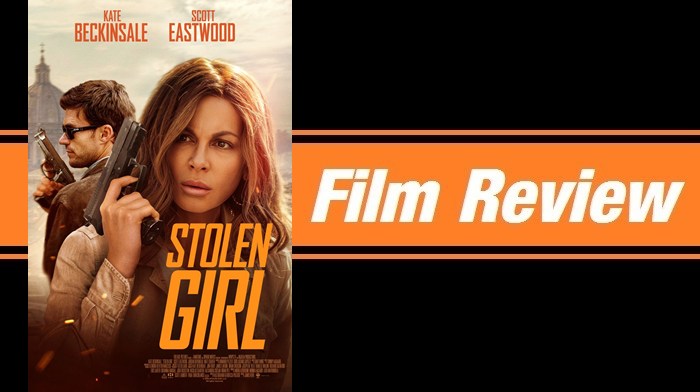
In “Stolen Girl” Kate Beckinsale plays Mara, a down on her luck, divorced single mother living in Ohio with her four-year-old daughter Amina and her ailing father Joe (Matt Craven). Mara’s world is turned upside down after Amina wanders off while in a grocery store and is abducted. That kicks off this complicated story about a determined mother and the many obstacles she navigates in her efforts to find her daughter.
Directed by James Kent, “Stolen Girl” is inspired by a true story although the storytelling doesn’t always feel like it. Nagging frustrations such as narrative shortcuts, undercooked relationships, and instances of clumsy editing sometimes distract from the more serious issues at hand. But Kent, along with screenwriters Kas Graham and Rebecca Pollock, don’t take their subject lightly. And inside the film’s 1990s thriller veneer is a strong message that’s worth listening to.
Things escalate quickly after Amina’s disappearance as Kent hurries us through the first act. Basically Mara is convinced her ex-husband Karim (Arvin Kananian) took their daughter. The police check Karim’s home only to find it cleaned out with no signs of him. Everything points to Karim having left the country, but no one, from the local police to the CIA, offer much help. Two years leads to four years, and despite Mara’s determined efforts, there’s still no headway made.
A glimmer of hope comes when Mara is approached by a man who goes by Robeson (Scott Eastwood), an ex-Marine who now works as a child recovery specialist (aka a mercenary). He makes her a deal – help him find other people’s kids and he’ll help her find Amina. She agrees and a few scenes later she is accompanying Roberson and his partner Carl (Jordan Duvigneau) to Colima, Mexico. Her job is to “play mother” by keeping the recovered child calm while they transport him back to his rightful parent.
Too much of the film’s first half unfolds with very little meaningful buildup. Mara’s work to get answers both locally and in Washington DC is referenced more than it is realized. Her jump to mercenary fieldwork happens with practically no training whatsoever. Even her relationship with Roberson goes from strictly business to making out in a motel without a hint or spark of attraction.
But the story’s focus sharpens in the second half as the thriller elements take form. Eight years after Amina first disappeared, Mara gets a lead that Karim is in Lebanon. But unexpected obstacles arise from unexpected places paving the way to a surprising finish that packs the kind of emotional heft that almost makes you forget the rocky road to get there.
While the storytelling is a bit messy (specifically early on), the same could be said for the handful of action sequences that are hampered by clumsy edits, shaky cameras, and an over reliance of quick cuts. But to Kent’s credit he manages to hold it all together in large part thanks to Beckinsale. The sheer conviction in her performance brings home the weightiness of the subject matter. And there is never a moment where we question her character’s pain, frustration, and resolve. “Stolen Girl” is now available on VOD.
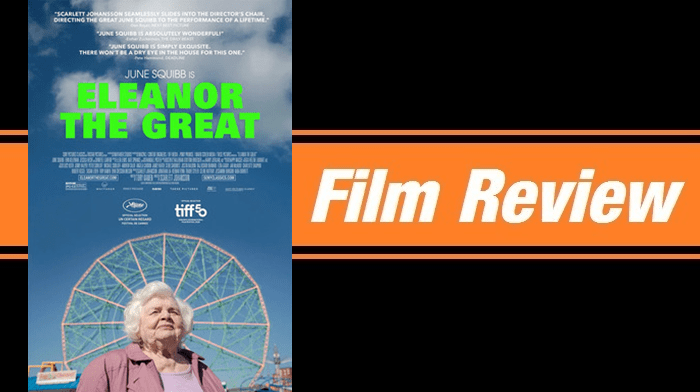
The indomitable and irresistible June Squibb once again shines in “Eleanor the Great”, the directorial debut for Scarlett Johansson. Written by Tory Kamen, this unusual little drama sees the 95-year-old Squibb once against putting her playfulness and charm on full display, Yet while she certainly gets in a few good zingers, the movie is more of a heartfelt drama that offers a thoughtful meditation on grief through very different life experiences.
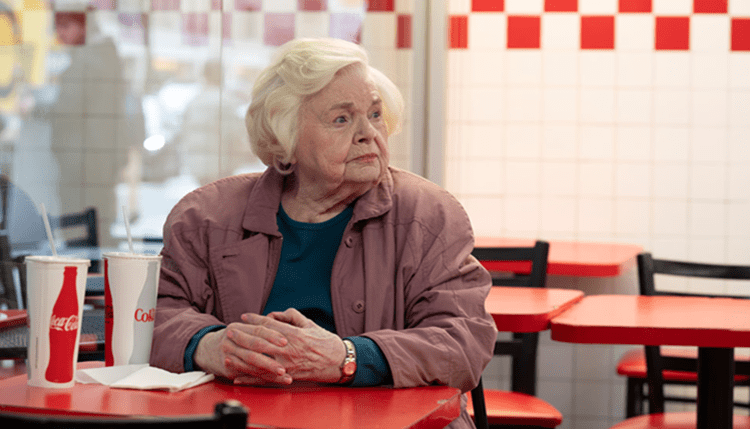
The 95-year-old Squibb plays 94-year-old Eleanor Morgenstein, a feisty and straight-shooting New Yorker living in Florida with her best friend and roommate Bessie (a sublime Rita Zohar). Since their husbands died, the two longtime friends have done everything together from taking walks down by the beach to shopping. But their closeness is seen most in the times at home when Bessie, a Holocaust survivor still haunted by traumatic memories, pours her heart out to Eleanor.
Eleanor’s life is shaken to its core when Bessie dies. Unable to stay alone, Eleanor moves back to New York to stay with her daughter Lisa (Jessica Hecht) and her grandson Max (Will Price). The move proves to be a challenge for all three. Eleanor hasn’t been close to her daughter for years. Lisa is a career woman who’s worried about leaving her mother alone during the day. Lisa would rather she be in a senior care home which Eleanor resists.
Image Courtesy of Sony Pictures Classics
Johansson and Kamen take time to consider this complex mother/daughter dynamic – showing yet not overplaying the tension between them while empathizing with both sides and their set points of view. Some of the film’s best laughs come in Eleanor’s moments with her daughter (a well-timed Guantanamo reference had me laughing out loud). But it’s the more serious aspect of their relationship that is the most compelling, and I wish it was given more attention.
While visiting the Manhattan Jewish Community Center, Eleanor stumbles into a Holocaust survivors support group meeting where she ends up sharing Bessie’s survival story as her own. It’s a lie for sure, but one born out of her own grief. The story he shares grabs the attention of Nina (Erin Kellyman), a 19-year-old NYU journalism student siting in on the group’s session. Eventually an unlikely friendship forms as both Eleanor and Nina find someone they can connect with.
Nina is the daughter of a workaholic television news anchor named Roger Davis (the always reliable Chiwetel Ejiofor). At home, Roger has been distant and closed-off ever since his wife and Nina’s mother died six months earlier. As a result, Nina has been emotionally stranded and left to deal with her grief on her own. It’s a heart-wrenching storyline that adds new layers to the movie’s treatment of loss. Especially once Eleanor enters their lives.
Image Courtesy of Sony Pictures Classics
Johansson knows the treasure she has in Squibb and she allows the actress the space to both cut loose and dial it back. Squibb offers up a brilliant balance of feistiness and vulnerability. But the nicest surprise is Kellyman who matches her cast mate step for step. Kellyman gives an emotionally nuanced performance marked by some wonderfully subtle touches while at times being profoundly affecting. She’s a revelation.
Some may take issue with the movie’s conceit – more specifically, a story of someone falsifying their connection to the Holocaust. But neither Johansson nor Kamen make light of Eleanor’s offense or paint it as acceptable. Eleanor herself is uncomfortable with where her lie takes her, and there are significant consequences despite the film’s somewhat tidy ending. But Johansson is all about the humanity behind the actions, and her film examines it all maturely and with reverence.
“Eleanor the Great” tells an emotionally rich and morally complex story built around well-defined characters and their own personal bouts with grief. It’s an impressive directorial debut for Johansson who proves to be keenly in touch with her characters and the material. Her style is fittingly straightforward and shines most in her willingness to let her actors work. It may sound like a small detail, but Johansson conveys volumes by simply setting her camera on Squibb, Kellyman, Ejiofor, or Zohar and letting them go. It’s those instincts that leaves me excited for what she’ll do next. “Eleanor the Great” is in theaters now.








 Keith & the Movies