Well, we’ve done it again. We’ve came to the end of yet another year. For many people 2021 was a tough one. For me it was a year of several highs but some significant lows. On the down side, I lost two uncles and one aunt in 2021 and I considered myself close to all of them. Many others have lost loved ones as well. My heart goes out to you.
But on the positive side, 2021 was a great year for movies. I was worried for the first several months, but there were some really strong releases in the second half of the year. Personally, 2021 saw some exciting doors opened up. I was brought on as a film critic for a newspaper I’ve known my entire life, the Arkansas Democrat-Gazette. It marks the first time I’ve actually been paid for reviewing movies. Also, this site received more traffic than any year since it began back in 2010.
In a very real way I owe both of those accomplishments to you all – the readers, the engagers, the commenters. Every visit, every ‘like’, every conversation I’ve had with you all has been an encouragement. I’m also grateful for the film friends I’ve made through this goofy little website. You all add an extra layer of enjoyment to watching movies.
So with another film year in the books, I just want to say THANK YOU. Also, I want to wish all of you a Happy New Year and may 2022 be full of rich blessings for you and your loved ones. I can’t wait to see what kind of movies we get to talk about in the coming year.
It seems I say this too much, but I can’t believe another movie year has come and gone. 2021 was a strange yet hopeful year for cinema as we looked to make our way back from a global pandemic and (hopefully) closer to some semblance of normalcy. Movies still found themselves in a unusual place, with several big delays especially in the early part of the year. But some of the heavy hitters finally came to theaters while independent films continued to show their resiliency and importance.
That brings me to this annual ritual of looking back at the movie year that was. In the grand scheme of things, these lists are pretty silly. At the same time I always enjoy doing them and comparing them with others. Before I get to my Top 10 films from 2021 I always like to give some love to the great movies that just missed the cut. So without further ado, here is my #11-20….
#20 – “Lamb”
#19 – “Oxygen”
#18 – “Old Henry”
#17 – “The Lost Daughter”
#16 – “The Dry”
#15 – “Being the Ricardos”
#14 – “The Card Counter”
#13 – “Memoria”
#12 – “Cyrano”
#11 – “The Last Duel”
And now my Top 10 Films of 2021
#10 – “CODA” [REVIEW] One of the most talked about movies to come out of Sundance 2021 was Sian Heder’s joyously earnest and deeply affecting “CODA”. This heartwarming coming-of-age story followed a 17-year-old (played by a fantastic Emilia Jones) who is the lone hearing member of her culturally deaf family. It also features sublime supporting work by Troy Kotsur and Marlee Matlin. And while it has a pretty familiar exterior, underneath is a warmth and authenticity that’s hard to resist. It’s also genuinely funny with plenty of laughs that come naturally and frequently. What a treat.
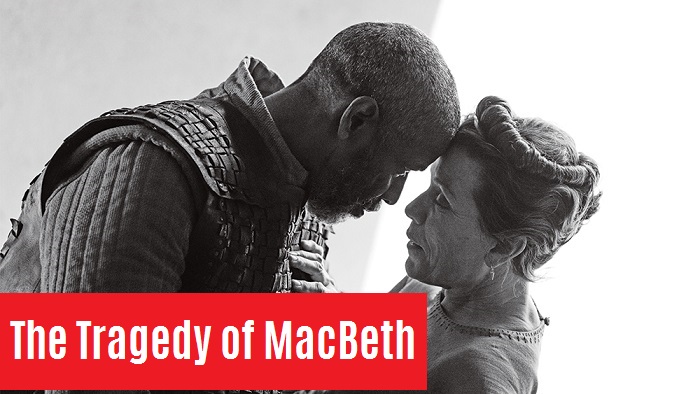
#9 – “The Tragedy of MacBeth” [REVIEW] Adapting William Shakespeare’s classic tragedy “MacBeth” is nothing new. But leave it to one-half of the Coen brothers to give us a version unlike any we’ve been treated to before. Joel Coen’s visually arresting approach gives us scene after scene of striking imagery, creating a grim and forbidding atmosphere in the process. And then there’s the amazing cast led by Denzel Washington who (if there’s any justice in the world) should be in line for another Oscar nomination. I wasn’t sure if we needed another “MacBeth”, but I’m sure glad Joel Coen gave us one.
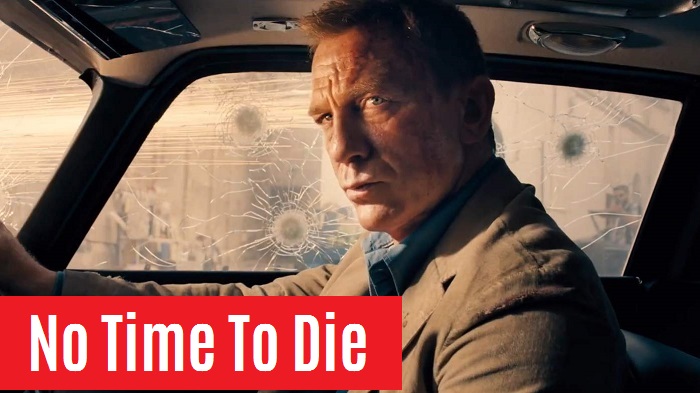
#8 – “No Time to Die” [REVIEW] Daniel Craig’s last hurrah as James Bond had potential to both sink or shine. It turned out to be everything I hoped it would – a sprawling blockbuster with eye-popping action and rich with characters that over the years I’ve grown to love. Director Cary Joji Fukunaga attempts to tie up most of the loose ends while also fully embracing the elements that made Craig’s run so memorable. Most importantly it makes for a fitting conclusion to a story arc that will be hard for the next Bond to match.
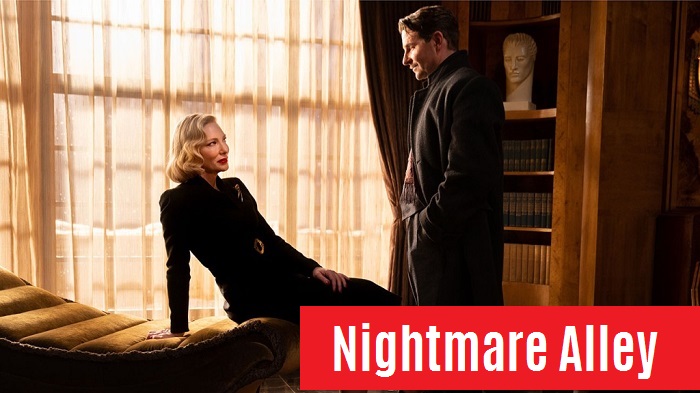
#7 – “Nightmare Alley” [REVIEW] More than any other movie on this list, “Nightmare Alley” is the one I wrestled with the most. But in wrestling with it I quickly realized just how much I loved it. Guillermo del Toro’s pulpy neo-noir thriller is a visually stunning throwback film with a captivating cast and a story that digs deep into the dark side of human nature. Del Toro’s world-building is unmatched and I found myself transported by what he creates here. This is top-notch cinema, bursting with style and grounded in the kind of grim and grimy atmosphere that left me giddy.
#6 – “Mass” [REVIEW] After first seeing “Mass” at Sundance I knew I had seen something special. After seeing it a second time later in the year, I knew it was one of the best movies of 2021. Not only is “Mass” powerful and moving, it’s also intensely timely as it attempts to tackle a difficult subject from a unique and distinctly personal point-of-view. Each of the four stars at the center are emotional forces and they’re key to making it all work. Jason Isaacs, Martha Plimpton, Ann Dowd, and Reed Birney give nomination worthy performances in a movie that cuts deeply and honestly.
#5 – “A Hero” [REVIEW] For my money, Iranian auteur Asghar Farhadi is among the handful of must-see filmmakers working today. He’s a consummate storyteller with a cinematic vision and voice so profound that I’m compelled to see every movie he puts out. “A Hero” embodies everything I love about a Farhadi film. It’s yet another deeply human story grounded in everyday life that uses its characters to pose a number of thought-provoking moral questions. With its seamless naturalistic dialogue and engaging story structure, this makes for a wonderful addition to Farhadi’s already impressive filmography.
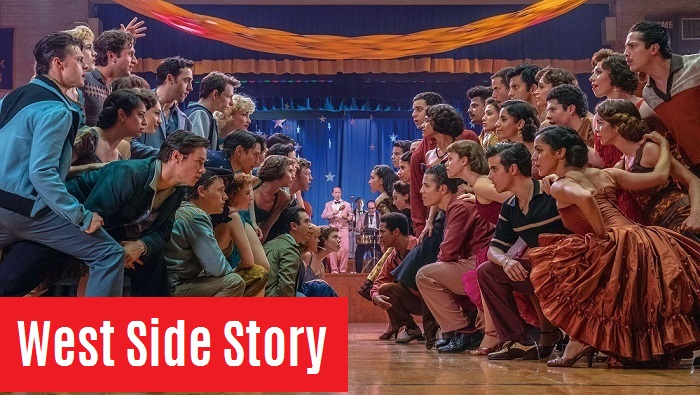
#4 – “West Side Story” [REVIEW] Now here’s a movie that I went into with no expectations and left on an emotional high. Steven Spielberg’s adaptation of “West Side Story” swept me away with its incredible production design, rousing songs, high-energy dance numbers, and some performances that are easily among the year’s best. Spielberg captures all the style and verve of the classic movie musical and fuses it with a modern day sensibility. It all comes together in a joyous and at times heartbreaking big screen experience that has stuck with me in ways I never imagined.
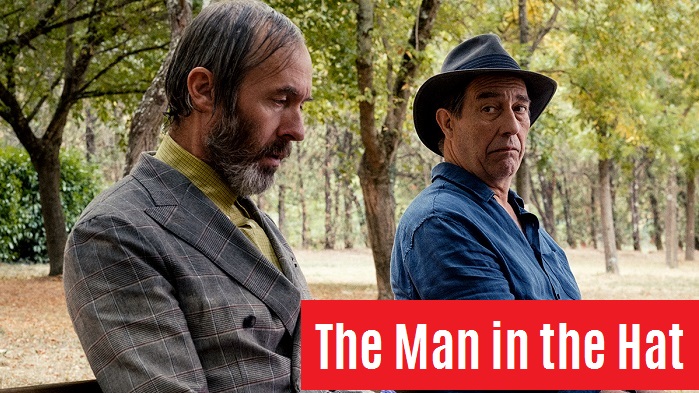
#3 – “The Man in the Hat” [REVIEW] Sometimes it’s the gentlest movies that moves you the most. Such is the case in this delightful and warm little yarn from John-Paul Davidson and Stephen Warbeck. It’s a simple and savory road trip movie that is a feast for the senses and feels plucked out of a bygone era of cinema history. It’s driven by the wonderfully expressive Ciarán Hinds who conveys everything we need through his gentle manner, tender smiles, and melancholy gaze. This movie had me under its spell from its opening scene and it’s a movie more people need to see.
#2 – “Belfast” [REVIEW] Kenneth Branagh’s “Belfast” is a warm and tender reflection on his time in the city of his childhood. Set during the tumultuous late 1960s, Branagh’s story plays out to the backdrop of violence and unrest, yet it maintains a heartfelt focus on family and community. It features incredible performances top to bottom and is flavored with the deep personal touches of a filmmaker giving a full-hearted thank you to the neighborhood and the people who shaped and molded his life. “Belfast” may not be for everyone, but I found it to be one of the most beautiful movies of 2021.
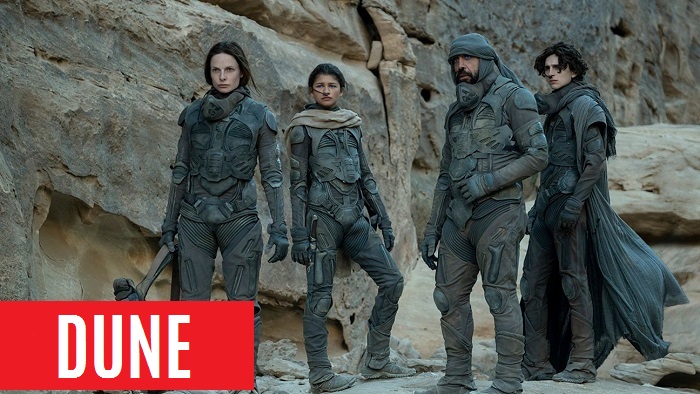
#1 – “Dune” [REVIEW] While I’m a proud Denis Villeneuve fan, admittedly I didn’t really know what to expect from his incredibly ambitious “Dune”. I have no real history with the source material or with the past attempts at bringing it to the screen. What I got was an exhilarating and transporting blockbuster that sucked me into its world from its opening shot. Not only is “Dune” the best movie I saw in 2021, it was also the best theater experience I’ve had in a long time. It was truly made for the big screen. I loved everything about “Dune” and I can’t wait for the sequel to usher me back into Villeneuve’s breathtaking world.
And that wraps up another movie year. Please take time to share your thoughts on what I got right and what I got wrong with this year’s list.
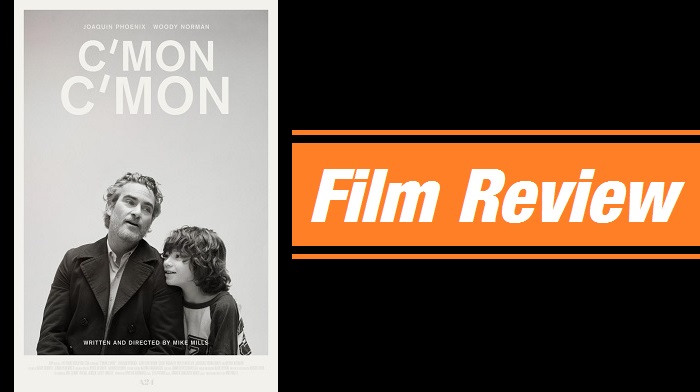
The ever enigmatic yet insanely talented Joaquin Phoenix follows up his Oscar-winning turn in “Joker” with a dramatically different performance in a much different movie. “C’mon C’mon”, written and directed by Mike Mills, is a surprisingly sweet and heartfelt drama that may look familiar on the surface, but that avoids many of the snares that often accompany films in this vein.
A warm and gentle Phoenix is once again in nomination worthy form in “C’mon C’mon”. He plays a single middle-aged documentarian named Johnny who travels around the country with his tiny production team interviewing kids about their views of the world and their dreams for the future. He asks these questions to a diverse group of children from a variety of backgrounds. Sometimes the answers he gets denotes hope and optimism. But often the responses are rooted in fear, uncertainty, and skepticism.
Image Courtesy of A24
While working in Detroit he gets a call from his sister Viv (Gaby Hoffmann) in Los Angeles who he hasn’t seen since their mother died a year earlier (Mills comes back to their old baggage at different points in the film, unpacking it delicately and truthfully). Viv tells Johnny her bipolar and estranged husband Paul (Scoot McNairy) is in a bad way in Oakland and needs her help. But she can’t find anyone to watch her eccentric nine-year-old Jesse (Woody Norman).
So Johnny flies out to LA, a little nervous about taking care of an energetic youngster on his own, but its only for a few days. “Are you ready for this?”, Viv asks. It’s a question you could also ask the audience. Because what follows isn’t a sudsy melodrama or a kiddie comedy. Much like the scenes with Johnny interviewing children, this is a movie about listening and connecting. Everything Mills does (the gorgeous black-and-white cinematography, the eclectic score) works towards that purpose. He wants his audience to listen and feel as his characters listen and feel.
Image Courtesy of A24
Just as essential as Mills’ honest and heartfelt touch are the three wonderfully nuanced central performances. Phoenix brings a quiet and earnest sincerity to Johnny which really comes out in his scenes with young Norman. The two have a sparkling chemistry which only gets stronger as the story takes them from LA to New York. Norman is terrific in a year full of terrific child performances. Meanwhile Hoffmann doesn’t get as many scenes, but she does a great job visualizing Viv’s buried pain and frustration.
“C’mon C’mon” moves at its own subtle harmonious pace, muting any sense of showiness or sentimentality in order to keep us focused on the relationships at the core of its story. There are some good laughs, some genuine emotions, and a depth to its characters that makes us care about them and their efforts to reconnect. The movie does require patience, because (much like in real world) life often happens at its own pace. We feel that during our time with Johnny, Jesse, and Viv. It’s part of the film’s beauty and charm. “C’mon C’mon” is now showing in select theaters.
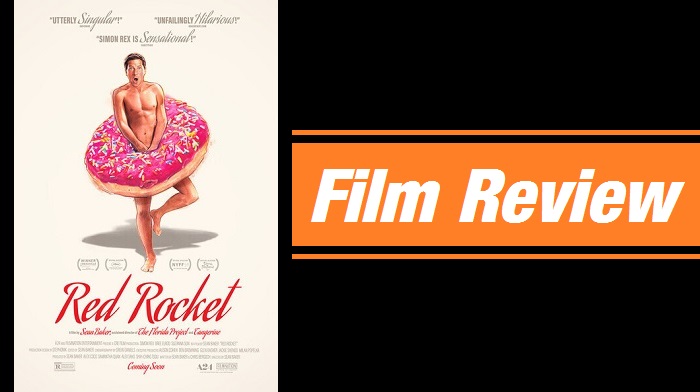
In “Red Rocket”, if Sean Baker’s goal was to create the worst person ever to be put on screen, he didn’t miss by much. For the sake of clarity, there’s nothing wrong with telling stories about bad people. I’ve never subscribed to the notion that all the main characters in movies need to be likable. If they were, we would never have Daniel Day Lewis’ heartless oilman Daniel Plainview from 2007’s “There Will Be Blood” – one of the greatest characters and greatest performances in cinema history (yep, I said it).
The problem with Mikey, Simon Rex’s “Red Rocket” lead character, isn’t just that he’s a reprehensible and morally bankrupt human being. He’s also a rambling, unpleasant and insufferable presence, and no amount of good acting from Rex can make him the slightest bit appealing. Perhaps most off-putting is Baker’s approach to Mikey as the character’s behavior grows more and more repugnant.
Image Courtesy of A24
Sean Baker (who serves as director, co-writer, co-producer, and editor) certainly doesn’t put his stamp of approval on Mikey’s behavior. But he doesn’t exactly wrestle with it either. Instead you can see him working hard to make Mikey come across as charming. It doesn’t work. I’m guessing Baker was trying to strike some kind of balance in our reactions to the character. But I could never muster anything other than utter disdain for the guy, and the longer he stayed on screen the more I wanted the movie to be over.
We first meet Mikey as he’s hopping off a bus in Texas City. His body is bruised from head to toe and he has nothing with him except the clothes on his back. He walks to a low income neighborhood, stopping at the house of his estranged wife Lexi (Bree Elrod) who lives with her mother Lil (Brenda Deiss). Mikey desperately needs a place to crash for a couple of days, but neither Lexi or her mother want anything to do with him (lots of old baggage comes to light later). But we quickly see his snake oil salesman side and soon he’s convinced his ex to let him stay until he’s up on his feet.
The problem with Mikey is that he’ll never be up on his feet. He’s a walking train wreck. We learn he’s back in Texas City after being ran out of Los Angeles where he worked in the porn industry. He wants to go back, but it’ll take some cash. To his credit, he tries to get a legitimate job. But he’s turned down whenever his work history comes up. So he turns to selling weed for a old acquaintance and local drug dealer named Leondria (Judy Hill).
Image Courtesy of A24
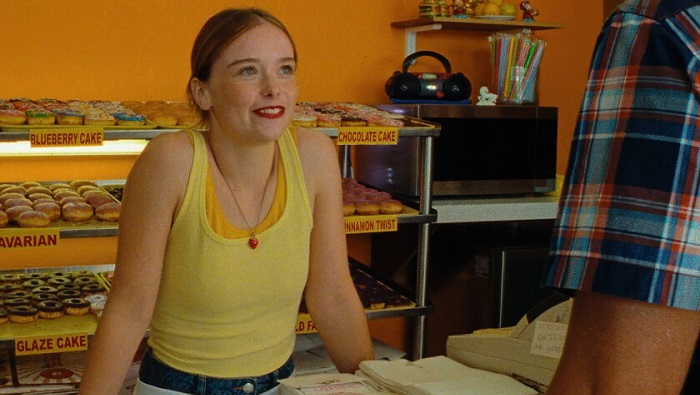
A big chunk of the movie follows this disgraced slug of a man as he cons nearly everyone he meets for his own selfish gain. Whether it’s his wife(ish) and her mother, or an easily impressed neighbor named Lonnie (Ethan Darbone), or 17-year-old Strawberry (Suzanna Son) who works part time at a donut shop. It’s when Mikey meets the latter that the film descends to the deepest depths of the gutter. It would be different if the film had something meaningful to say or to tackle. Instead it burrows deeper into the muck, seemingly enjoying itself, hiding behind the veil of “art”, and giving us nothing of value to chew on.
That may sound like a prickly and abrasive take-down of the movie but don’t worry, “Red Rocket” lives down to that impression. There’s really nothing to take away from Baker’s film. It’s tempting to commend the movie’s representation of Southern poverty, but even that’s handled with a sliver of condescension. So we’re left a movie that’s biggest goal seems to be to push the envelope. And while doing so, it may let us in on the lead character’s repulsive mindset. But it could leave some questioning the filmmaker’s. “Red Rocket” is out in limited release.
Denzel Washington directing? Michael B. Jordan starring? You bet I’m in on the new romantic drama “A Journal for Jordan”. The film is based on the 2008 memoir written by Dana Canedy about her fiancé, United States Army First Sergeant Charles Monroe King. It tells the true story of how the couple met and eventually fell in love. It also tells of Charles’ deployment during the Iraq War, while a pregnant Dana Was back home waiting to deliver their baby boy, Jordan.
Adapted by Oscar-nominated screenwriter Virgil Williams, “A Journal for Jordan” tells a story that you can’t help but admire. Its romantic angle is sweet and sincere while the inescapable sense of tragedy looms over the entire film. On screen, the movie is energized by the chemistry between stars Jordan and Chanté Adams. Behind the camera, Washington’s patient approach is both a blessing and a curse. It gives the movie’s central relationship room to breathe and take root. But it also drags things out longer than they need to go.
In a way “A Journal for Jordan” feels like a movie from another time. Most of today’s franchise-formed preferences have all the patience in the world for the latest big tent-pole blockbuster. But an old-fashioned straight-shooting melodrama (the kind audiences 30 years ago would gobble up no questions asked) is a hard sell these days. That’s one reason I wouldn’t be surprised if the film gets a mixed reception.
Image Courtesy of Sony Pictures
Another reason is the overall conventional feel of the story, specifically during the first half. Though sweet and genuine, watching the sprouting relationship between Dana and Charles, complete with its highs and lows, rarely gets out of first gear. Jordan and Adams add a romantic spark and Washington’s unrushed direction allows us time to get to know these characters. But outside of the lingering hand of fate waiting to be dealt, the story never generates much buzz. Washington seems to know this so he shakes things up a bit by moving back-and-forth across the timeline.
Adams gives an eye-opening performance playing Dana who we first meet as an ambitious and hard-working reporter for the New York Times. While visiting her parents for the weekend, she meets Charles for the first time. He’s a noble and gentlemanly soldier who has been in the army for 11 years. The two opposites attract and begin a long distance relationship that (eventually) blooms into a full-blown love story.
But as the world changes post 9/11, Charles is sent to Iraq adding an extra obstacle to their relationship. But Dana is convinced she’s ready to start a family so the two decide to have a baby. She gives Charles a journal to write to his on-the-way son Jordan while overseas. The journal becomes a key piece of the story once Charles is killed by an IED during a mission.
Image Courtesy of Sony Pictures
That may sound like a spoiler, but it’s a plot point the movie doesn’t try to hide. In fact, Washington uses it as the film’s emotional center as he traverses his timeline. It adds a tragic layer to the romance we see in the flashback sequences, and it’s the catalyst for how the later-set scenes play out.
When you put it all together it’s hard to knock what “A Journal for Jordan” is going for. The characters feel authentic and true. The true story of their relationship is both inspiring and heartbreaking. And Washington’s deliberate and unvarnished direction is the kind we rarely get these days.
Yet there’s something missing that I can’t quite put my finger on. It’s a little too long and the story doesn’t feel particularly balanced. But there’s something else – something that doesn’t quite give the movie the gut-punch it needs. It tries to compensate with a really effective final scene. But it seems like there was so much more the movie could have done with this deeply moving story. “A Journal for Jordan” is now showing in theaters.
The first full trailer for Matt Reeves’ “The Batman” was an exhilarating stunner. Now Warner Brothers has dropped yet another killer trailer to wet our appetites for the upcoming superhero adventure. Set to release in 2021 but postponed due to the pandemic, “The Batman” gives us a new iteration of the Caped Crusader, one that may be the darkest take on the character to date.
The new trailer gives a deeper look at the tension between the brooding Robert Pattinson and the mysterious Riddler (Paul Dano). We also get to see more of Zoe Kravitz’s Selina Kyle (aka Catwoman). There are some cool lines from Andy Serkis who plays Alfred as well as another glimpse of that intense car chase between Batman and the unrecognizable Colin Farrell who plays a new version of the Penguin. I love everything Reeves has shown us so far and I can’t wait for this to hit theaters.
“The Batman” opens in theaters March 4th. Check out the trailer below and let me know if you’ll be seeing it or taking a pass.