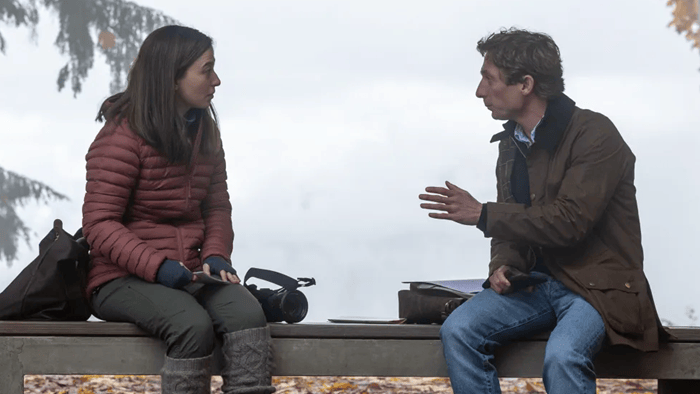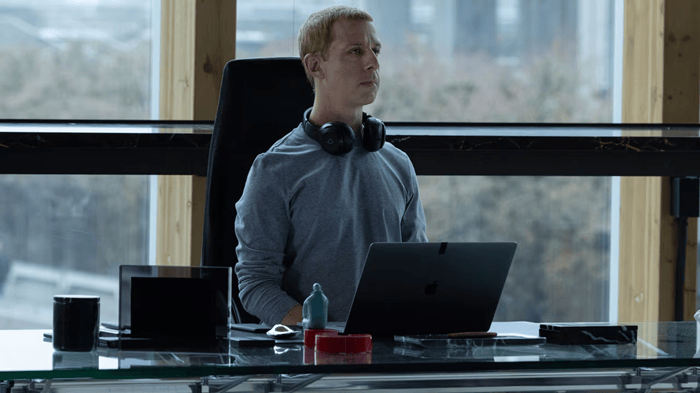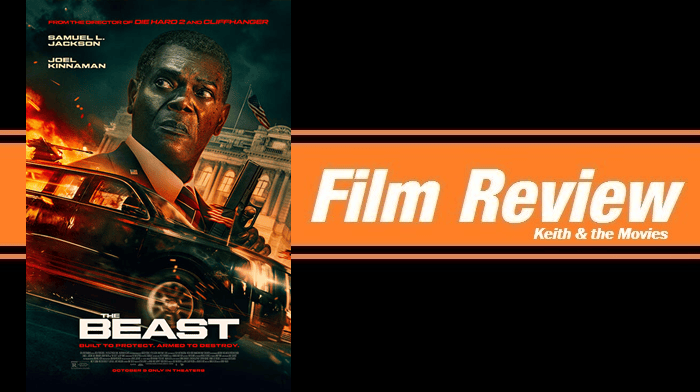
McConaughey Day at Filmland 2026

Everyone involved with Filmland 2026 knew that August 14th was going to be a huge day. In fact, it was shaping up to be the biggest day in the event’s nine-year history. And that’s saying something considering Filmland has featured an impressive array of special guests from the movie industry. Guests like Richard Linklater, Adam Driver, Jessica Chastain, Margot Robbie, Colman Domingo, Michael Shannon, Jay Duplass, and more.

But August 14th was going to be different. The buzz was louder. The enthusiasm was greater. The energy was off the scale. Local television channels were sharing the big news. Social media accounts were spreading the word. This was looking to be a day unlike any the Arkansas-based Filmland had ever attempted before. And who stood at the epicenter of this seismic local eruption? None other than the equally acclaimed and beloved actor Matthew McConaughey.

For those who may not know, Filmland is an annual curated film festival hosted by the Arkansas Cinema Society. Based in Little Rock, ACS has dedicated itself to growing and nurturing the Arkansas film culture. Much of its focus goes into educating, encouraging and equipping local filmmakers. Co-founder Kathryn Tucker and her team tirelessly work at the local level, planning and organizing events while filmmaker and co-founder Jeff Nichols uses his many industry connections to bring incredible talent to the state he loves. Among those connections is Matthew McConaughey.

To no one’s surprise, there was a ton of excitement at the news that McConaughey was coming to Filmland. But then tickets went on sale, with sponsors and members getting first dibs. I’m not sure how many tickets that left for the public, but they sold out in 90 seconds which ended up souring a lot of people. To help, the Filmland team organized a ‘rush line’ for those unable to get a ticket. It wasn’t ideal, but it was a worthwhile effort to accommodate as many people as possible. And because of it, many more folks were able to share in the experience.

On the day of the event, (fittingly dubbed McConaughey Day), I heeded the advice of an email and arrived early. But apparently so did a couple of hundred other attendees. The large foyer area of the Arkansas Museum of Fine Arts was buzzing with activity as people were checking in and lining up to grab the best seats available. Meanwhile the friendly Filmland staff, which this year included well over 100 volunteers, were constantly on the move, answering any questions and steering people in the right direction. Among them was publicist John Wildman who kindly ushered me to my press seat for the first event – a one-on-one conversation between McConaughey and Nichols.

With every seat in the theater taken and an overflow room full of others watching by simulcast, the show finally began and it was well worth the wait. It was an enthralling conversation that covered much of McConaughey’s career but through the lens of the many directors he has worked with. McConaughey spoke about his experiences with the likes of Martin Scorsese, Christopher Nolan, Steven Spielberg, Richard Linklater, Robert Zemeckis, Joel Schumacher, and of course Jeff Nichols among many others. He talked process, style, and approach. But he also shared countless personal anecdotes that really brought his experiences to life.

After the conversation wrapped, several local dignitaries took to the stage, most looking as starstruck as any of the fans crammed into their seats. They awarded McConaughey with a couple of honors before he was swept to the red carpet where a line of reporters peppered him with questions which he cordially answered with his signature Southern charm. After a small break it was back into the theater where McConaughey was presented with Variety’s Legend & Groundbreaker award which is given for breaking down barriers within the industry.

With the theater once again filled, McConaughey and Nichols introduced the actor’s latest film, “The Rivals of Amziah King”. Without reciting my review (you can read it HERE), the film comfortably sits among the best of the year, and it was great seeing it again, this time with a live audience. Afterwards McConaughey and Nichols came out for a brief Q&A. They took a few questions from the audience, although sadly very few were about the movie we had just watched. Still, it served as a nice conclusion to what was a truly memorable experience.

Image Courtesy of ACS

McConaughey Day was a massive undertaking, and considering the enormous demand and equally huge turnout, the Filmland team pulled it off remarkably well. It’s true that some were disappointed in not being able to attend. Others were bummed that they weren’t able to shake the actor’s hand, get an autograph, or take a picture with him. But if that kind of uncontrolled access had been allowed, McConaughey would probably still be standing in the foyer. There was some confusion and at times it all felt a little overwhelming. But for an event of this size, the Filmland team earned their flowers.

For me, McConaughey Day was about sitting in the room with one of cinema’s most accomplished and beloved actors and hearing him firsthand as he passionately talked about the industry he knows and loves. It was about listening to him express his affection for his new movie and then watching it with a crowd who were all there for the same reason. For most of us, it’s not every day that we get to experience such a thing, especially here in Arkansas. But on August 14th, we did. And we can all thank Filmland for it.

FILMLAND 2026 REVIEW: “The Brink of War” (2026)

[“The Brink of War” screened at Filmland 2026 followed by a Q&A with director Michael Russell Gunn]

October 11, 1986 was an overcast and blustery day in Reykjavík, Iceland. It was marked by heavy rains and high wind gusts which was nothing out of the ordinary for a North Atlantic autumn. But October 11, 1986 was no ordinary day. It was when United States President Ronald Reagan and Soviet General Secretary Mikhail Gorbachev were to meet face-to-face in hopes of easing Cold War tensions. The 48-hour summit was held at the Höfði house, a whitewashed waterfront home overlooking Faxaflói Bay. Though technically considered a failure, the summit was crucial in laying groundwork for future nuclear arms treaties.

With “The Brink of War”, writer-director Michael Russell Gunn chronicles the Reykjavík Summit, offering fascinating historical and political perspectives into the talks, their ultimate collapse, and the shaky trust that grew between the two leaders. Gunn’s lengthy research included transcripts of the 1986 summit as well as an interview with former Secretary of State George Shultz prior to his death in 2021. It results in a compelling and insightful drama that carries the necessary weight of the subject matter.

Image Courtesy of Angel Studios

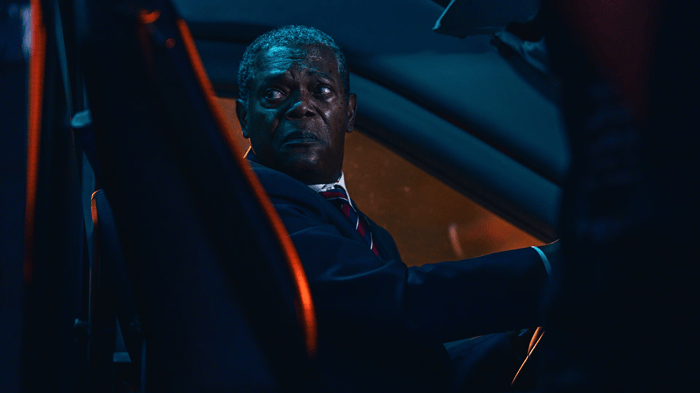
Set at the tipping point of the Cold War, President Ronald Reagan (Jeff Daniels) arrives in Reykjavík with his trusted Secretary of State George Shultz (J.K. Simmons). Not far behind them is General Secretary Mikhail Gorbachev (Jared Harris) and his wife Raisa (Branka Katić). As their staffers feverishly prepare the Höfði house for the summit, the two world leaders ready themselves for a meeting of seismic importance – one that could shape the very existence of the world as they know it.

Filmed on location at Höfði in Reykjavík, Gunn wastes no time kicking off his high-stakes chess match. Within their first session together, we get a good sense of each leader’s strategy. High on Reagan’s priority list is the Soviet Union’s many human rights violations. Gorbachev repeatedly diverts the discussion to the US’s Strategic Defense Initiative. Both subjects prove to be tense sticking points in the negotiations, so they’re regularly tabled to come back to later.

At the same time, a surprising amount of common ground is found, specifically in regard to nuclear disarmament. But with so much on the line, will their sharp differences be too much for the two leaders to get past? History answers that question for us. But Gunn is still able to generate drama through his snappy script which heavily relies on compelling dialogue and performances to convincingly relay the gravity of the moment in history. It’s an essential mix and the movie would fall apart if either fell short.

The film also has fun with the real-life rivalry between Raisa and Nancy Reagan (Hope Davis). As the Soviet First Lady strolls around Reykjavík for the cameras, Mrs. Reagan remains in Washington DC, annoyed that she ended up staying behind. The two never share a scene together but they don’t pass up chances to take shots at each other from afar. Their antics provide some of the film’s more amusing moments while giving us a needed break from the negotiating table.

Image Courtesy of Angel Studios

As Daniels and Harris nail their respected characters, the wiley Simmons is the glue that holds the film together. Interestingly none of the actors bear a particularly strong resemblance to the characters they play. But aside from a few obvious ticks from Daniels, it never becomes a problem, which is a testament to the overall strength of the performances and to the sharpness of Gunn’s screenplay. It’s also energized by a number of very precise camera tricks including overhead angles, split screens, shifts in perspective, and more.

The movie does run off-track with a handful of scenes between two reporters, one American and one British. Their scenes are little more than uninteresting diversions that feel forced upon the story rather than organic to it. But thankfully they only play a small part in what is otherwise a compelling movie that shines a spotlight on a seemingly small but consequential moment in world history. It also marks the impressive feature film directorial debut for Michael Russell Gunn, who succeeds it sharing a story about bridging divides. And in our current climate, that’s a message we all need to hear.

VERDICT – 4 STARS

FILMLAND 2026 REVIEW: “The Rivals of Amziah King” (2026)

[“The Rivals of Amziah King” will be screening on August 14th at Filmland 2026 followed by a Q&A with its star, Matthew McConaughey.]

With 2019’s “The Vast of Night”, director Andrew Patterson delivered one of the most impressive feature film debuts in recent memory. The film was a smart and stylish genre-bender set in 1950’s New Mexico that took a familiar B-movie science-fiction concept and enriched it with two entertaining central characters, absorbing dialogue, and a mystery that was easy to get involved in. Altogether it was an absolute treat for those who love genre filmmaking.

Patterson’s much anticipated follow-up is the wildly different yet equally terrific “The Rivals of Amziah King”. It features some of the same ingredients that made “The Vast of Night” such a delight – a distinct rural setting, a vibrant sense of community, and the shrewd blending of genres in a number of surprising ways. Yet Patterson’s latest stands out most for its sheer unpredictability. It never stops surprising us. And it certainly doesn’t hurt having the star-wattage of Oscar-winner Matthew McConaughey, who manages one of his very best performances.

“The Rivals of Amziah King” is a movie that is impossible to pigeonhole. Just when you think it’s one thing, it suddenly morphs into something else. It begins as a charming, community-rich comedy laced with the kind of absurd laughs that will have you grabbing your side. Then we get a scene where the music takes over, and songs full of local flavor transport us to a drive-in or a living room in rural Oklahoma. And just as our hearts are full, Patterson breaks them with a second half coming-of-age angle that evolves into a crime thriller/heist movie hybrid, punctuated with a crowd-pleasing finish.

Image Courtesy of Black Bear Pictures

That may sound like a lot of movie, and in many ways it is. But the miracle is in Patterson’s ability to weave it all together into a richly detailed tapestry of the American South. His love for the people, the region, and the culture seeps from every pore of the production, from his storytelling to his craftsmanship. And who better to anchor it all than the cinematic face of Southern charm, Matthew McConaughey. From his very first scene, this is a role that feels custom-made for him.

The 56-year-old McConaughey slides right into the skin of Amziah King, a small-town Oklahoma honey-maker who loves nothing more than tending to his bees and making folk music with his friends. He owns and operates a small business called King Honey where he and a modest crew collects honeycomb frames from his bee hives, extracts the honey, drains it, strains it, and bottles it up to be sold. When not making honey he’s making music with his friends, plucking his mandolin and singing his heart out.

One day Amziah runs into a young waitress named Kateri (Angelina LookingGlass). We learn that when Kateri was a little girl, she and her brother spent a couple of years with Amziah and his late wife. The children ended up with another foster family and the two haven’t seen each other since. Their sweet reunion leads to Amziah offering Kateri a job helping him tend to his bees. From that moment it’s hard not to be drawn to their unique relationship.

The first half offers up the film’s most endearing moments, whether we’re watching Kateri and Amziah as protégé and mentor or as a young woman and her only real father figure. McConaughey and LookingGlass have an easygoing chemistry that makes their scenes all the more authentic. Then there is the humor which pops up at the most unexpected times and in the most unexpected ways. It may be a bonkers experience with a honey extracting machine or a hilarious elementary school sequence that nonchalantly descends into pure comic chaos.

Image Courtesy of Black Bear Pictures

But the second half begins with an unexpected jolt that catapults the story in an entirely new direction. Stolen beehives, a powerful criminal enterprise, a daring heist – all are significant plot points that turn this big-hearted slice-of-life dramedy into a high-stakes mystery/crime thriller. Yet somehow Patterson makes this dramatic shift both smooth and organic. And he does so in ways that keep us immersed in his world and even more invested in his growing collage of characters.

That vast array of characters is one of the film’s biggest strengths. McConaughey is effortlessly great and LookingGlass gives a fabulous debut turn. But it’s the supporting cast that seasons the story: a perfectly cast Kurt Russell as a corrupt businessman, the great Rob Morgan as Amziah’s friend and spur-of-the-moment lawyer, Scott Shepherd as a good-hearted but nearly unintelligible local (think Boomhauer from “King of the Hill”), Cole Sprouse as a fast-food tech guru, and Jake Horowitz as a loyal bee worker who comes through in the clutch.

Six years ago Andrew Patterson wowed us with a sparkling feature film debut. Now he’s made one of the best movies of the year. “The Rivals of Amziah King” is a full-hearted celebration of community and culture that pulsates with Southern flavor and rural charm. It transports us to the very real world of potlucks, pickups, and folksy bluegrass jam sessions. It’s also a genre lover’s delight, taking us down roads we never expected to travel and entertaining us in ways we never could have imagined. And all from a young filmmaker who possesses the kind of fresh and invigorating voice that doesn’t come along too often.

VERDICT – 4.5 STARS

RETRO REVIEW: “Lawrence of Arabia” (1962)

Director David Lean’s “Lawrence of Arabia” still stands as one of cinema’s most universally celebrated motion pictures. The breathtaking and beloved 1962 historical epic was the winner of seven Academy Awards including Best Picture. It also won Best Film at the BAFTAs and Best Motion Picture – Drama at the Golden Globes. But perhaps the ultimate testament to its greatness lies in the many acclaimed filmmakers it has influenced – Martin Scorsese, Steven Spielberg, George Lucas, Ridley Scott, Sam Peckinpah, Kathryn Bigelow, Oliver Stone, and James Cameron, just to name a few.

“Lawrence of Arabia” is an astonishing accomplishment, or as the late film critic Roger Ebert described it, “a bold, mad act of genius“. It’s a movie born out of ambition and imagination that dared to defy the conventional Hollywood formulas of its time. For example, it exchanged the traditional big screen war hero with a quirky, flawed protagonist. It fearlessly spends nearly four hours centering its grand spectacle with a deeply psychological character study. And it relies more on visual cinematic language than dense dialogue-driven exposition.

There are countless ways that “Lawrence of Arabia” could have went belly-up. Yet David Lean captains the production with confidence and even a necessary defiance. The screenplay by Robert Bolt and Michael Wilson is based on the life of British officer and diplomat T.E. Lawrence, and their portrayal of him and key moments in his history stirred up several controversies. But Lean doesn’t treat this as a standard biography or a purely historical piece. It’s a cinematic experience first and foremost, although one brimming with rich themes of imperialism, reality vs myth, and the corrupting nature of power.

Prior to “Lawrence of Arabia”, actor Peter O’Toole was a relatively unknown actor. But after first picks Albert Finney and Marlon Brando turned down the role of T.E. Lawrence, O’Toole was hired for the part that would make him a star. With his uniquely sculpted face, crystal blue eyes, and golden blonde hair, the lanky Englishman looked the part of the eccentric misfit in the British Army who would become a ruthless military leader struggling to live up to the growing myth surrounding him.

As the First World War is being waged, the enigmatic Lieutenant Lawrence is stationed in Cairo where he spends his time outlining maps and doing match tricks. He’s summoned by General Edmund Allenby (Jack Hawkins) and Mr. Dryden (Claude Rains) of the Arab Bureau who assign him a mission in the Arabian desert. He’s to meet with Prince Faisal (Alec Guinness) who is leading a revolt against the Turks. With the help of Colonel Harry Brighton (Anthony Quayle), Lawrence is to observe and assess the Prince’s forces and report back to Cairo.

But Lawrence steps beyond his orders in ways that impresses Prince Faisal. He goes from mere observer to a crafty strategist, urging the Prince to sanction a surprise attack on the heavily guarded Turkish port of Aqaba. Faisal gives Lawrence just fifty of his men including his most trusted advisor, Sherif Ali ibn el Kharish (Omar Sharif). Rather than being deterred, Lawrence gathers the men and heads for Aqaba. But it’s no ordinary journey. It’s a dangerous trek that requires crossing the harsh and unforgiving Nefud Desert.

The crossing of the Nefud Desert is one of the film’s most gripping scenes, in large part due to Freddie Young’s spectacular sun-soaked cinematography. Young shot the film on Super Panavision 70mm which features an ultra-wide, high-resolution aspect ratio that vividly captured the vastness of the scorching desert. It’s just as astounding elsewhere as we’re treated to one grand vista after another. Or when literally hundreds of extras fill the wide frame to a jaw-dropping effect.

The sands take its toll, but it’s also where Lawrence earns the trust of his men. They not only follow him across the desert, but into the camp of rival tribe leader Auda Abu Tayi (Anthony Quinn), who Lawrence cunningly recruits to join them for the attack on Aqaba. Now with an army at his disposal, Lawrence can carry out his true goal of Arab independence, by unifying the many tribes into one powerful force against the Ottomans. But he learns unity among lifelong enemies and independence in a land coveted by powerful foreign interests may be nothing more than pipe dreams.

Lawrence’s successes turn him into a near mythic hero. But his attempts at living up to the myth cause him to slowly lose his moral compass. He begins a guerrilla war against the Turks which only feeds his growing god complex. Lawrence’s psychological evolution is masterfully explored and it forms the backbone of the story. Lean shows the intoxicating allure of notoriety and power. We also witness how violence hardens hearts and scars humanity. In Lawrence’s case, once reality sets in, he’s left broken and disillusioned. It makes for a riveting case study wrapped within one of the most visually stunning epics ever made.

In 1988, “Lawrence of Arabia” received an extensive restoration after film historians Robert A. Harris and Jim Painten discovered rusting film cans holding the original negative of Lean’s final cut sitting in the Columbia Pictures vault. The painstakingly reconstructed director’s cut featured over 30 minutes of restored footage that had been cut by distributors. Since then the film has received a digital restoration and is now available in full 4K resolution. So there’s no better time than now to finally see or revisit this true time-honored classic.

VERDICT – 5 STARS

REVIEW: “The Last House” (2026)

Everyone remembers where they were when the rains came.” Those early words introduce us to the high-concept premise of Netflix’s new apocalyptic science fiction thriller “The Last House”. Director Louis Leterrier, working from a script by screenwriter Matthew Robinson, takes a suspenseful setup, infuses it with survival elements, and even dabbles in classic creature feature territory. But it surprises most as a domestic drama, where family dynamics are challenged as the situations intensify.

Robinson wrote a big chunk of “The Last House” during the COVID-19 pandemic, and much of his story mirrors the emotional and psychological impact the lockdowns had on people across the globe. The same feelings of fear, isolation, and uncertainty that paralyzed many parts of society is baked into Robinson’s story. And it fits nicely within the dystopian sci-fi world he and Leterrier creates.

Image Courtesy of Netflix

Wagner Moura plays Jason Delgado, an unemployed engineer and part-time fisherman who lives in Seattle with his wife Ann (Greta Lee) and their two children, 12-year-old Graham (Noah Alexander Sosnowski) and 8-Year-Old Ruth (Riley Chung). After a sudden and unexpected rainstorm drives them inside, the Delgado family makes an alarming discovery. They and everyone in their neighborhood find themselves sealed inside their homes by the mysteriously anomalous rainwater.

Jason tries everything – breaking windows, hammering through walls, even escaping through the attic. But every attempt is thwarted by the seemingly sentient rainwater which forms impenetrable barriers that he can’t break through. While they have electricity, water, and gas, they immediately lose phone and internet service. It’s the same with all their neighbors who the Delgados are able to communicate with via signs. Yet with plenty of food and water, Jason and Ann have the supplies needed for what they hope is a short confinement.

But that’s not the case. Quickly days turn into weeks, and soon months turn into years. Rather than giving up, the family adapts, turning their home into its own micro-ecosystem. As Ann finds a way to grow vegetables inside, Jason rigs several contraptions to catch animals outside. But things take a chilling turn when the family discovers terrifying creatures that only come out when it rains. Suddenly surviving gets a little tougher as they now must avoid drawing the attention of the monsters.

The family dynamic is a good one with Jason relishing his role as family protector. He keeps everyone alive, but as time goes by and reality sets in, his ‘survival is living’ mentality crumbles. On the flip side, despite being gripped by fear early on, Ann later grows better in tune with their circumstances and becomes the reality check Jason needs. Meanwhile the kids watch and absorb it all, losing key years from their childhood which takes a psychological toll.

Image Courtesy of Netflix

Again, it’s hard to miss seeing the movie as a COVID allegory. Perhaps it’s a little on the nose, but Leterrier manages to capture the intense feelings of isolation and dread in a number of visceral ways. He also has a lot of fun with the sci-fi and survival components which take center stage in the film’s second half. And he really goes for broke once the final act arrives and the movie goes full creature feature. Some will inevitably push back on the choice. But as a genre fan, I loved the ambition.

To be honest, things do get a little corny in the final twenty minutes as the Delgado family goes full MacGyver. We’re also left with a ton of questions that never get answers. And the ending is a little too tidy considering everything that came before it. Still “The Last House” remains solid entertainment, especially for anyone with the right expectations and a hearty appetite for end-of-days thrillers and old-fashioned monster movies. It had me onboard from the start and kept me involved till the very end.

VERDICT – 3.5 STARS

REVIEW: “The Last Picture Shows” (2026)

I still have memories of the first movie screen I ever saw. They’re faint but definite, and very precious to me. Once upon a time my small South Arkansas hometown had a drive-in movie theater. And while I don’t remember the specific movies playing while I was there, I do remember sitting in the backseat of my family’s 1974 Chevelle Malibu Classic and being in awe of the images bouncing off the massive outdoor screen. That theater has been gone for decades now. But those memories remain, and I’m grateful for them.

That childhood memory, along with other experiences that would follow, are big reasons I responded so strongly to the new documentary “The Last Picture Shows”. Writer, director, and producer Rustin Thompson set out across the American West in search of small-town movie houses either still in operation or long gone. The film is Thompson documenting his findings. Along the way he injects some compelling history while voicing valid concerns about the future of cinema, and not just for the struggling movie houses that have steadily been fading from existence.

Image Courtesy of Foghorn Features

Thompson’s journey across the American West spanned ten states and covered 10,825 miles. As he made stops in such communities as Burns, Oregon, Goldfield, Nevada, Susanville, California, Cortez, Colorado, and Springer, New Mexico (just to name a few), he came upon the remains of countless movie houses that once buzzed with life. As his movie’s opening scroll succinctly puts it, “they’ve been abandoned, destroyed, replaced, or forgotten.”

But Thompson also discovered a handful of locally owned theaters still open for business. He has several insightful conversations with the owners who candidly share their struggles. They talk about the difficulty in turning profit, the costly transition from 35mm projection to digital, the crippling impact of the COVID mandates, the restrictive demands of the studios, the influx of streaming, and the challenge of competing with big multiplexes. They’re fascinating testimonies from people who have poured their hearts and souls into keeping these cultural landmarks alive.

Image Courtesy of Foghorn Features

Thompson’s film is more than a nostalgic stroll down memory lane. He does take time to chronicle the history of moviegoing, from the genesis of movie theaters, to the boom of the 1940s, the decline in the late 60s and early 70s, and the blockbuster resurgence. But it all builds towards a timely warning about where things are heading. He notes how we’re nurturing a collective disregard for the movie theater experience. As a result, there is a younger generation who hasn’t developed a love for moviegoing meaning they’ll have nothing to pass on to the next generation.

It’s said that in 1929 there were 22,000 theaters in the United States. Today there are fewer than 3,000. Those are sobering stats for those of us who deeply cherish the history and the experience of watching movies in a theater. Thompson impressively transports us back in time while also connecting us to the reality of today. And it’s all evocatively filmed in ways that will bring both a nostalgic smile to your face and a melancholic tear to your eye as you lament a bygone era and feel the growing uncertainty for the future.

VERDICT – 4.5 STARS