
REVIEW: “Relic” (2020)

RELICposter

Plowing new ground in the horror genre is a bit of a challenge. It’s almost impossible to watch a horror movie and not see things that have been used before. Yet this genre above all others has proven that smart, inspired filmmakers are still finding ways to take something familiar and make it their own. That’s what we get from director/co-writer Natalie Erika James and her new film “Relic”.

This American-Australian chiller has all the markings of your standard haunted house picture – creaky doors, bumps in the walls, eerie noises at night. But what separates “Relic” is the deeply human heart at its core. Everything in the movie from the family drama to its unsettling horror flows from the same raw emotional center and its brought to light through three absolutely stellar performances.

Relic — Still 1

Photo Courtesy of IFC Films

Emily Mortimer plays Kay, a workaholic who gets a phone call saying her elderly mother Edna (Robyn Nevin) hasn’t been seen for days. Kay and her twenty-something daughter Sam (Bella Heathcote) drive out to her mother’s rural homeplace but find it empty. They file a police report, question neighbors, and form search parties but to no avail. The only real clues are in a number of Post-it notes scattered around the house. They range from common reminders (“Take my pills”) to more troubling warnings (“Don’t follow it”).

Through these early scenes James (and her co-writer Christian White) cleverly let us in on several key details. We learn that Edna has been showing signs of early-stage dementia. While talking with the police Kay reveals that she doesn’t regularly speak to her mother hinting at past family tension. There are also hints that Edna friendship with a neighborhood boy with Down syndrome has mysteriously soured.

And then Edna suddenly reappears – her hair disheveled, her feet caked with dirt and grime, and a fresh bruise on her chest. Even worse, she gives no indication to where she has been. She’s clear-minded and lucid one minute, lost and frustrated the next. Kay and Sam chalk it up to dementia because sadly that’s often our first impulse. But is there more going on than just a frail failing mind? Absolutely.

Relic — Still 3

Photo Courtesy of IFC Films

James’ movie is soaked in feelings of guilt and regret. Remorse over time wasted on family grudges and past traumas. Helpless attempts to make amends as a loved one deteriorates right before your eyes. Even worse is the sufferer’s loss of identity and crushing sense of isolation. This is most vividly seen in the house itself – a painful allegory for the devastating effects of dementia. DP Charlie Sarroff’s camera creeps from room to room with unsettling effectiveness capturing eerie signs that something is amiss. Black inky mold spreads across its walls (both symbolic and a wink to Japanese horror). And like Edna’s mind, the house grows increasingly cluttered, becomes harder to navigate, and slowly begins to collapse. Meanwhile, composer Brian Reitzell’s low ominous rhythms ensure we’re never fully at ease.

“Relic” isn’t a movie of big scares. Instead it burrows under your skin, patiently building and then sustaining a chilling sense of dread. It’s a savvy and assured debut from Natalie Erika James who covers some immensely personal ground that many will be able relate to. It’s cryptic final scenes could be an obstacle for some, but I appreciate its open-ended finish which (just like everything else in the movie) has a lot more going on under its surface. “Relic” premieres July 10th on VOD.

VERDICT – 4 STARS

4-stars

REVIEW: “Greyhound” (2020)

GREYposter

By now it’s pretty obvious that Tom Hanks can do just about anything on screen. Think about it. In his 40-year film career he has been a baseball coach, an astronaut, an Irish gangster, a pilot, a newspaper editor-in-chief, a wooden toy cowboy. Heck he’s even played Walt Disney and Mr. Rogers. His latest movie “Greyhound” puts him on familiar ground – playing a ship’s captain (he did that in “Captain Phillips”) during World War II (“Saving Private Ryan” of course).

“Greyhound” was originally picked up by Sony Pictures for an early June theater release. But like many films, it was delayed following the COVID-19 outbreak. In a bold move Apple acquired worldwide distribution rights from Sony for a whopping $70 million. Now the movie is set to premiere July 10th on their relatively new Apple TV+ streaming service and it instantly adds some real heft to their platform. That’s a lot of money, but it turned out to be a really good grab.

“Greyhound” is the sophomore effort from director Aaron Schneider and his first film since his quirky 2010 Southern drama “Get Low”. This is (obviously) a much different movie. It’s based on C. S. Forester’s 1955 novel “The Good Shepherd” with Hanks starring and also writing the screenplay (his first script since 2011’s “Larry Crowne”). It’s set in February 1942, shortly after the United States entered World War II and takes place in the heart of the Battle of the Atlantic.

GREY1

Photo Courtesy Apple Originals

Hanks plays Captain Ernest Krause, a career Navy officer who is finally given his first command aboard the Fletcher-class destroyer Greyhound. After a quick two months of training with his new crew, Krause is sent to the North Atlantic where he is tasked with escorting 37 merchant ships carrying soldiers and vital supplies to the allies in England. But to get there he must lead them across The Black Pit, a treacherous area out of air support range and swarming with German U-boats. For over 50 hours the convoy would be completely on their own.

Schneider’s tightly packaged war thriller wastes no time ratcheting up the tension. Within five minutes we’re in a white-knuckled game of cat-and-mouse as six German submarines (menacingly called a wolfpack) begin circling the convoy like sharks around their prey. It makes for some thrilling naval combat where instinct and strategy is as much the focus as torpedoes and cannon fire. The film does a great job of making every decision feel like a high-stakes decision. And from the blasts of ocean spray to the boom of the 5″ 38 caliber deck guns, when the action comes the intensity and sense of peril is palpable.

In addition to shooting exhilarating combat, cinematographer Shelly Johnson’s tight-quartered camerawork moves fluidly throughout the cramped ship and around the deck, capturing the close-knit synergy of the crew and putting us right in the middle of it. His crafty framing mixed with Mark Czyzewski and Sidney Wolinsky’s crisp editing keeps things moving at a high-energy pace while adding gravity to each Captain’s order and every exchange between sailors. And thankfully we never get lost in the slew of rapid-fire Navy jargon. Hanks (the writer) pens dialogue that’s organic, believable, and most importantly comprehensible for those of us without our sea legs.

GREY2

Photo Courtesy of Apple Originals

“Greyhound” is obviously Tom Hanks’ movie, but no other character even rises to the point of being memorable. There are no bad performances and everyone plays their roles well. But you’ll be hard-pressed to remember anyone other than Krause. Yet it works because Hanks (as you would expect) is terrific and a natural fit for his character. His expressions speak volumes and you never doubt an action he takes or an emotion he relays.

As for his script, Hanks borrows the outline for Krause from Forester’s book, but passes on many of the details. For example Hanks hints at but doesn’t explore Krause’s bouts with insecurity and self-doubt. Instead his film version shows a confident captain with a steady hand yet with quieter concerns. Little is made of it being his first command either narratively or dramatically. Hanks also gives Krause a love interest played by Elizabeth Shue, but frankly it amounts to nothing more than a cameo and their relationship is only skimmed over in a brief opening scene.

That’s because “Greyhound” is all about fully immersing its audience in the critical tactics and perilous execution of World War II naval combat. For a taut 90 minutes the film sticks to that focus, carrying its viewers across the enemy-infested North Atlantic and putting us into the heads of the men navigating it. It could have done more with its characters or built more of a backstory. But it’s the willingness to stick to its guns (no pun intended) that makes the movie such a thrilling war-time experience. “Greyhound” premieres July 10th on Apple TV+”

VERDICT – 4.5 STARS

4-5-stars

REVIEW: “Ordinary Love” (2020)

OrdinaryPOSTER

The latest in the growing number of movies dealing with illness is “Ordinary Love”. But simply sticking that label onto this affecting drama would be both reductive and unfair. Co-directors Lisa Barros D’Sa and Glenn Leburn along with writer Owen McCafferty have more on their minds, namely exploring the ordinary life of a loving, devoted couple rocked by a cancer diagnosis and how they cope with it both individually and hand-in-hand.

“Ordinary Love” follows Joan (Lesley Manville) and Tom (Liam Neeson), happily married for many years. The film looks at their lives together through a very still and natural lens. It follows the most ordinary of routines: breakfasts together, feeding their fish, afternoon walks, and evenings watching television. But when Joan discovers a lump in her breast their life journey takes an unexpected turn. Barros D’Sa and Leburn takes us through Joan’s breast cancer diagnosis, surgeries, and chemotherapy. Most importantly they plow the deep emotional ground, but with care and compassion.

Ordinary1

Photo Courtesy of Bleeker Street

The movie’s biggest strength is in how it thoughtfully examines the processes of both Joan and Tom in coping with the cancer. Manville is a force intensely committed to both the physical and emotional demands of her role. Through her we see Joan’s fear and uncertainty, but also resolution and strength. Neeson perfectly portrays the complexity of feeling men struggle with when in Tom’s situation. He’s great showing how men often try to mask their worry through optimism (“It’s nothing“, “Everything will be fine“). He’s even better when that optimism gives way to denial and frustration. Most importantly it’s all handled without an ounce of melodrama or sentimentality.

Unfortunately the movie seems to lose some of its focus in the final act where it spends too many scenes focused on other people. They’re intended to introduce a coping method into the story that helps Joan and Tom navigate her illness. Instead it’s a tacked on narrative thread that feels more scripted than organic.

Aidan Monaghan/Normal People

Photo Courtesy of Bleeker Street

Also, despite the extraordinary chemistry between the two leads, we still never really get to know Joan and Tom. Do they have any family or friends? Do they have jobs or are they retired? What are their interests or hobbies? We learn they lost a daughter but how and how long ago is never shared. McCafferty’s script is heavily invested in walking us step-by-step through the cancer diagnosis, treatment, and after-effects. Not one single second of it feels false or unrealistic. At the same time the characters are fastened so tightly to the cancer storyline, there is little room for many personal details outside of it.

Yet “Ordinary Love” stays afloat thanks to Manville and Neeson, two seasoned actors with great emotional resonance and a natural chemistry. You can’t help but be touched by the sensitivity and humanity both bring to their roles. If only they were given deeper, fuller characters to explore. I can’t help but think about Michael Haneke’s brilliant “Amour”, a film that showed the harsh reality of illness while still coloring in its two leads with vivid, heartfelt detail.

VERDICT – 3 STARS

3-stars

First Glance: “Ava” (2020)

AVAsmall

In “Ava” Jessica Chastain plays an assassin who has a weird fascination with chatting with her targets before and after she offs them. This seems to annoy Colin Farrell who believes she has become a liability to their ‘organization’. He puts an open contract on her life much to the chagrin of her mentor John Malkovich. Toss Geena Davis and Common into the mix and you have the upcoming action thriller from director Tate Taylor.

Obviously there is more to the story (at least I hope so). But I gotta say it looks like something we have seen before. Maybe a little John Wick-ish? Regardless, Taylor puts together an interesting cast and I have no doubt Chastain will make for a tough, compelling lead. It’ll all come down to the script and whether it can carve out its own unique space in the familiar territory.

“Ava” is set to release September 25th. Check out the trailer below and let me know if you’ll be seeing it or taking a pass.

REVIEW: “Au revoir les enfants” (1987)

REVOIRposter

“Au revoir les enfants”, which means “Goodbye Children”, is a 1987 Oscar nominated drama from French filmmaker Louis Malle. This autobiographical film is unquestionably Malle’s most personal project and its story is taken from actual events of his childhood. He wrote, produced, and directed this stirring film that grounds its storytelling in authenticity and in earned emotion.

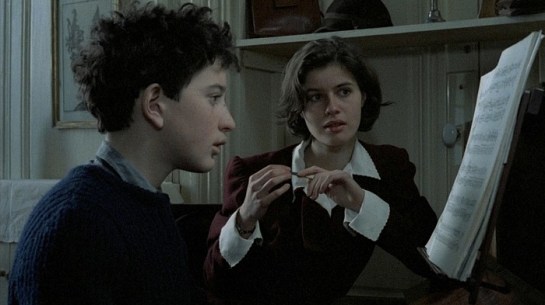
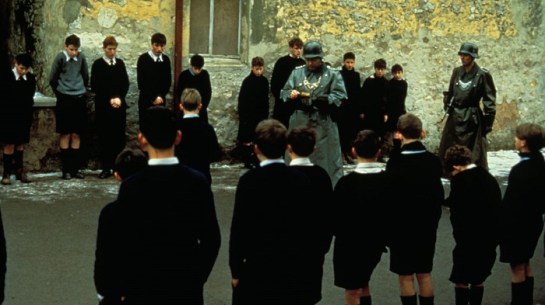
The film is set in 1944 and almost all of it takes place at a Catholic boarding school in Nazi-occupied France. Children are sent to the school by wealthy parents in hopes of protecting them from the dangers of the war. One such student is young Julien (Gaspard Manesse). He is respected by the other kids but he’s still a bit of an outsider. He would prefer to read novels and learn piano rather than the usual horseplay the boys engage in. He’s tough and strong-minded but we also see a tender and somber side to him as well. He doesn’t like being away from home and he never seems completely happy at school.

Revoir1

Things at the school change when three new students are introduced. One is Jean Bonnet (Raphaël Fejtö) a quiet and unassuming boy who is quickly assimilated into the school’s routine. Jean is teased and picked on, sometimes by Julien, but he soon finds his own small place to fit in. Over time Julien becomes fascinated with Jean due to his talents in math and music. Julien is also curious after noticing several differences in how Jean is treated by the school’s headmaster and teachers. Despite some contentious early dealings, the two boys develop a respect and friendship which makes the film’s later turns all the more crushing and heartbreaking.

There are several things that stand out about Malle’s technique. First off he’s not the least bit interested in the normal Hollywood-style melodrama or cliches. He doesn’t milk emotion or stage scenes in ways that feel false. Instead he puts great emphasis on the natural flow of school life in its purest form. You get a sense that he is recollecting and expressing things to his audience. These kids look, feel, and act like kids both through their virtue and their degeneracy. Malle wants us to believe what we are seeing because it’s true and personal to him.

REVOIR2

Another interesting thing is how the war quietly lingers in the distance for most of the film. It rarely makes its presence known other than through the occasional air raid sirens which the children hardly take seriously. But it is definitely there and we get a handful of strategic scenes that serve as a reminder. And as the film moves forward the boys are faced with several war-related moral quandaries that reveal the darker and more upsetting side of their world. It is through these moments that we the audience fully realize the loss of innocence particularly with young Julien.

It’s impossible to watch “Au revoir les enfants” without being deeply moved by its poignant story and obvious personal touch from Louis Malle. It’s a meticulously crafted film that builds up our emotional connection to the characters and then crushes them on the rocks of cold reality. The movie looks at the time and events through the eyes of these boys and it never loses that point-of-view which is vital to the story’s power. It’s such an amazing movie and a beautiful piece of film history.

VERDICT – 4.5 STARS

TEST star

REVIEW: “Wasp Network” (2020)

WASPposter

“Wasp Network” was going to be a tough movie to make for any filmmaker wanting to stick reasonably close to the facts. That’s because the actual true story is a tangled web of characters, organizations, and allegiances. For that reason French writer-director Olivier Assayas deserves a ton of credit for sticking close to the true account even though it makes his movie a little difficult to keep up with.

Without question “Wasp Network” will resonate more with those who either remember or read up on the real events that inspired it. In its own way it tells the story of the Cuban Five, a group of men sent to Miami by the Cuban government to infiltrate anti-Castro exile factions in the 1990s. Some of these groups sought simply to inspire the Cuban people to stand up against Castro’s regime. But others were terrorist outfits funded by drug money and targeting Cuba’s tourist industry. The Cuban Five were to spy on the various groups and report the findings to the Cuban government.

WASP2

Photo Courtesy of Netflix

Taking from a 2011 Fernando Morais book “The Last Soldiers of the Cold War”, Assayas attempts to cover a lot of ground. His structure feels episodic, focusing big chunks of his film on individual players and then weaving the numerous narrative threads together in a tangled yet fascinating final act. Sometimes his storytelling seems more didactic than dramatic as it straightforwardly lays out the facts. Yet it has a palpable emotional center, putting as much emphasis on the personal sacrifices and consequences as the politics of his story.

A terrific Édgar Ramírez provides our entry point, reminding us of how good an actor he is when given quality material. He plays René González, a pilot in Havana who swipes a plane and defects to Miami leaving behind his wife Olga (Penélope Cruz) and their young daughter Irma (Carolina Peraza Matamoros). René begins a new life in the States, joining a covert anti-Castro group to help other defectors boating over from Cuba. Meanwhile Olga is left alone and struggling to put food on the table. This moral haze hangs over much of the film’s first half.

The next person we meet is Juan Pablo Roque (Wagner Moura), a pilot himself and high-profile Cuban celebrity. He too defects, actually swimming from Cuba to Guantanamo Bay. Once granted asylum he moves to Miami and joins the exile group. Unlike René, Juan Pablo lives a lavish lifestyle winning over and marrying a young beauty named Ana Margarita (Ana de Armas). But she (and we) soon learn that Juan Pablo is a man of many secrets.

The third key player is Gerardo Hernandez (Gael Garcia Bernal) who works directly with the Cuban government. He’s sent to Miami to oversee the Wasp Network’s infiltration of the militant groups. Of the three he’s the one we learn the least about. Bernal’s performance is solid, but his character could have used more attention. Ultimately it’s René who resonates most. His story packs the most personal stakes in large part thanks to Cruz’s Olga who ends up being our emotional anchor. De Armas doesn’t fare as well. Her performance is excellent, but its hard to tell if Assayas is most interested in her as a character or as eye candy.

WASP3

Photo Courtesy of Netflix

Things ramp up when the exile group’s goals fully come into focus. We get tense scenes revealing drug smuggling from Columbia. Assayas even covers the 1997 Havana hotel bombings. Even more layers are added when the CIA gets involved and we get defectors among the defectors. It certainly makes things harder to follow and keeping a running tab on who’s who is a challenge. At the same time the craft behind the camera is evident and there are several visual choices to admire.

I can’t deny the film’s faults, especially for those with no familiarity with the true events whatsoever. So take my advice – do some quick reading on the backstory before watching. It will lessen the confusion and open up a lot of what Assayas is doing. With “Wasp Network” it’s fair to say he may have bitten off more than he can chew. But I appreciate the ambition and I’m glad he took the route he did rather than playing it safe.

VERDICT – 3.5 STARS

3-5-stars