First Glance: “Wendy”

WENDY1

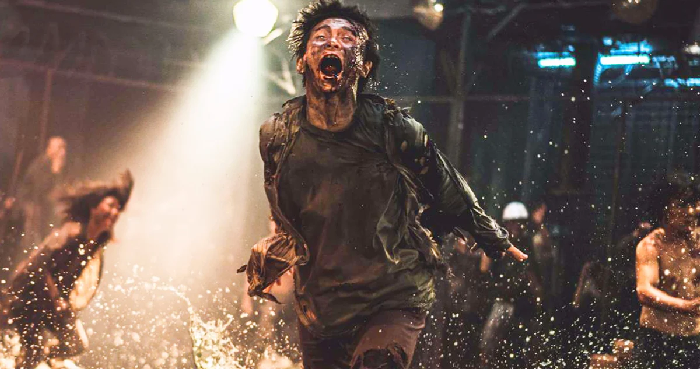
I have been anxiously awaiting Benh Zeitlin’s second feature since first seeing his sublime debut “Beasts of the Southern Wild”. That was all the way back in 2012. Now seven years later we get the first trailer for his followup “Wendy” and it was worth the wait. The earliest shops shows

From the trailer we can instantly tell this is a fresh take on J.M. Barrie’s Peter Pan. But as Zeitlin showed in “Beasts”, he has a real knack for digging into the imaginations of young children. “Wendy” looks to be trading much of the fantasy element for a more grounded, real-world approach. And many of the images we’re shown aim to convey a healthy array of heartfelt youthful emotion. For an early trailer, it really got to me.

“Wendy” is set for a February 28, 2020 release (limited I’m sure). Check out the trailer below and let me know if you’ll be seeing it or taking a pass.

REVIEW: “Batman: The Killing Joke”

BatmanPoster

The 1988 graphic novel “The Killing Joke” has been heralded as one of the very best Batman stories ever told. I tend agree with that. Writer Alan Moore and artist Brian Bolland’s award-winning work shook the Batman universe to its core and the ripple effect is still being felt.

With such widely held appreciation and popularity, I’m surprised it took until 2016 to get an animated adaptation. It is material that seems ripe for the Warner Brothers Animation treatment especially in light of the popularity of “Batman: The Animated Series” and its feature film one-shots. Then again an argument could be made that it would have been best left alone.

Veteran Batman writer Brian Azzarello handles the screenplay duties and the results are bizarrely uneven. This is namely due to a jarringly out of tune prologue that is completely new to the “Killing Joke” story. In it Batgirl/Barbara Gordon (voiced by Tara Strong) becomes the object of a young mobster’s affections. As the thug draws Barbara deeper into his obsession, Batman (Kevin Conroy – the quintessential voice of Batman) grows concerned and demands she backs off.

Batman2

It seems the entire point of the prologue is to develop the relationship between Barbara and Batman. But there is an added twist that is completely out of left field. It weirdly sexualizes the Barbara Gordon character in a way that feels terribly unnecessary. Even worse it doesn’t connect well with the rest of the movie which turns out to be a pretty faithful representation of the graphic novel. This relationship Azzarello concocts between the two is essentially rendered mute and ineffective.

Once it gets away from its puzzling prologue the movie hits its stride. The Joker (Mark Hamill) finally appears providing a much needed jolt of energy. As expected the animation is spot-on and the voice acting, particularly from “Animated Series” veterans Conroy and Hamill, is one of biggest highlights. Fans of both the novel and “Batman: The Animated Series” will certainly appreciate what the movie eventually becomes. But getting to that point makes for a puzzling ride.

VERDICT – 2.5 STARS

2-5-stars


K&M Commentary: Scorsese, Marvel, and the Meaning of Cinema

IMG_1001-0

If you keep up with the world of movies you have undoubtedly heard Martin Scorsese’s recent take on the Marvel franchise. In an interview with Empire Magazine the acclaimed director was commenting on the state of the industry when he said this about the Marvel movies:

I don’t see them. I tried, you know? But that’s not cinema. Honestly, the closest I can think of them, as well made as they are, with actors doing the best they can under the circumstances, is theme parks. It isn’t the cinema of human beings trying to convey emotional, psychological experiences to another human being.”

Scorsese’s comments spread like a wildfire stirring up a wide range of critical responses. And the buzz won’t go away. Since then he has stood by his comments and most recently wrote an op-ed in the New York Times clarifying his position (you can read it HERE). It goes without saying the words from such a celebrated filmmaker carry a lot of weight. But it’s also obvious that the MCU has a huge presence in the modern day movie culture. So what do we make of it all?

Not to be a fence-straddler but Scorsese is both right and wrong. Many of his concerns are valid and those who enjoy smaller and more original independent movies are finding it harder to see them on the big screen. The truth is today’s movie landscape is saturated with big-budget franchises. As Scorsese points out, there are far fewer independent theaters than there were ten years ago. This leaves many filmmakers with limited options for showing their movies.

Scorsese is also right when he states “there are some in the business with absolute indifference to the very question of art and an attitude toward the history of cinema that is both dismissive and proprietary — a lethal combination.” On the surface this may sound like a snobbish thing to say, but it comes from a genuine concern over the future of cinema. Many franchise films do feel like studio processed entertainment, meaning they are crafted for easy audience consumption and maximum box office returns. The “elimination of risk” he speaks of is exhibited in the familiar formulas these movies routinely employ (this is especially true for MCU movies). And as audiences flock to these films the riskier and (again) more original non-studio pictures are being squeezed out of the multiplex.

Scorsese also takes a shot at the supply and demand argument; that theaters and studios are just giving the people what they want. But there is truth to that. The reason theater chains are showing the latest MCU movie on ten screens is because the demand is that high. And in many ways these superhero event films are keeping some theater chains afloat. But Scorsese’s perspective shouldn’t be brushed off. It makes sense that if audiences are only fed one type of cinema entertainment that’s what they’re going to want more of.

So Scorsese isn’t trying to pick a fight with Marvel or look down on those who love big franchise movies. His worries are centered around the growing inability of smaller films to reach big screen audiences. And lesser access to these movies inevitably leads to a lesser appreciation for them. That leaves huge franchise movies to define the big screen experience for the many who are content to let them. I’m with Marty on this. As someone who lives in a smaller market, I see first-hand how difficult it is to get certain movies in our area. Now compare that to how many local screens a new Spider-Man movie shows on.

But where Scorsese goes wrong is in uttering the three words “that’s not cinema”. These are the words that riled so many and rightfully so. The problem with Marty’s statement is that it reveals a very narrow view of cinema. And while he tries hard to acknowledge the talents of those both in front and behind the cameras, it would be hard not to take his comment as at least a small slight.

Here’s the thing, many fans of the MCU could use Scorsese’s own parameters to show Marvel movies are indeed cinema. Emotional connections, deep family tensions, dramatic stakes, well-defined characters full of contradiction and complexity, good versus evil and the gray area in between. These are just a few of the things that have drawn millions to Marvel’s sprawling inter-connected universe. It’s also why the majority of critics (whether I agree with them or not) give many of these films high marks. Yes, their paths to the screen are heavily vetted, but that doesn’t mean there aren’t meaningful stories being told and visual artistry on display.

Think of the great days of classic 1940’s film noir. While it’s impossible to lump all noir together, many of those movies used the same ingredients: hard-boiled heroes, mysterious femme fatales, low lighting, deep shadows, and many of the same themes. Of course we (along with Scorsese) would consider those films “cinema“. What about the great wave of 1950’s sci-fi? They too could clash with Scorsese’s guidelines but are most certainly cinema.

It’s true, we’ve never seen anything quite like the MCU. But that hardly disqualifies it from being considered as cinema. Saying Marvel films lack some specific level of creative heft to be counted not only dilutes the meaning of cinema but makes it sound like a pretentious and self-congratulatory club reserved only for those who meet standards created by its members.

Do I wish more modern audiences knew the works of Bresson, Truffaut, Bergman and Fellini? More than anything. Would I like to see the movies of Malick, Wes Anderson, Linklater, PTA, and Farhadi on more screens? Absolutely. Is it getting harder for these films to find their way into theaters? Sadly yes. That’s why Scorsese’s personal criteria for what qualifies as cinema hardly matters. Instead we should be listening to what he has to say about the future of movies and the big screen experience. In that regard he’s a filmmaker with some very important things to say.

THE END

Denzel Day #10 : “The Mighty Quinn” (1989)

QUINN poster

In 1989 you could say Denzel Washington was on the cusp of super stardom. His film “The Mighty Quinn” came right on the heels of “Cry Freedom” and his first Academy Award nomination and right before “Glory” and his first Oscar win. Everything was clicking for Washington and his career was set to take off.

“The Mighty Quinn” is one of Washington’s movies that kinda gets lost in the shuffle. Perhaps that’s due to it being book-ended by two attention-getting Oscar-nominated pictures. Or maybe it’s because the film really doesn’t stand out at all. That may sound like a sharp criticism, but it really isn’t. “The Mighty Quinn” is simply a light and laid-back crime caper that doesn’t reinvent the wheel but that has fun doing what it’s doing.

QUINN2

The film is based on Arthur H. Z. Carr’s 1971 crime novel “Finding Maubee” and its title is inspired by a Bob Dylan penned folk-song. It’s directed by a relatively unknown Carl Schenkel but written by Hampton Fancher who is best known for co-writing Ridley Scott’s “Blade Runner” and its eventual sequel “Blade Runner 2049”. Needless to say this is a MUCH different movie.

Washington plays Xavier Quinn, the chief of police on a Caribbean island with a strong Jamaican resemblance. The people respect Chief Quinn and he’s in good standing with the local governor (Norman Beaton). The only bump in the road is at home with his frustrated wife Lola (Sheryl Lee Randolph) who is tired of his job and the lack of time he spends with her and their son.

Things take a turn when a wealthy American businessman is brutally murdered at a fancy island resort. The stuffy and smug owner Thomas Elgin (James Fox) works to sweep the the crime under the rug and the local government is quick to oblige. They immediately pin the murder on a local free-spirited con-artist and Quinn’s childhood friend Maubee (Robert Townsend). Quinn doesn’t buy it and sets out to uncover the truth amid loads of corruption of cover-ups.

QUINN1

The film has much of what you want out of a crime thriller but there is also a subtle playfulness to it. You see it in the vibrant locations, in the interesting array of locals, in the steady wave of island music, and most of all in Washington’s performance. He brings a fun and interesting flavor to his character, balancing serious intensity with well-tempered humor. Sure his accent sometimes wanders off, but he’s still a great fit.

Once again, when looking at Denzel Washington’s filmography it’s understandable how “The Mighty Quinn” may have fallen between the cracks. It’s not the kind of movie that would draw a lot of attention especially when placed next to other films from the actor’s impressive body of work. It’s also unfortunate because this is a fun movie that sets the table for some of the roles Washington would later become famous for.

VERDICT – 3.5 STARS

3-5-stars

REVIEW: “The King” (2019)

KINGposter

It would be really hard for David Michôd’s “The King” to be misconstrued as a thorough treatment of William Shakespeare’s “Henriad”. Some of the earliest scenes tell us otherwise. Instead his new film is a much more concentrated adaptation that puts its focus primarily on young Henry V and his rise from dissolute prince to the reluctant King of England.

“The King” is more than a condensed version of the Bard’s renowned series of plays. It’s still a medieval yarn about early 15th century power and the men who wield it. But it’s a uniquely contemporary retelling that takes plenty of liberties while sporting a slyly modern philosophical edge. It marks the third feature film collaboration between Michôd (director and co-writer) and fellow Aussie Joel Edgerton (co-writer and supporting actor).

Whether it’s earned or not, Timothée Chalamet has been the hottest thing in Hollywood since, I don’t know, Jennifer Lawrence. And much like her, he is immensely talented and has been showered with an almost unfair level of adulation. Here he shines, first as young Prince Hal, the rebellious son of the ailing King Henry IV (the always good Ben Mendelsohn). Hal is content with swilling ale with his boozy friend and mentor Falstaff (Edgerton), once a proficient knight on the battlefield but now the Prince’s portly protector and confidante.

KING1

Hal’s defiance prompts his father to name his more devoted and by-the-royal-book son Thomas (Dean-Charles Chapman) as the heir to his throne. There’s an interesting family dynamic here, but one of the few weaknesses of Michôd and Edgerton’s script is in how little they explore it. Instead we breeze through the demise of the petulant and overly-ambitious Thomas, their father’s inevitable death, and Prince Hal’s coronation as King of England.

Hal, now King Henry V, is a pacifist at heart and determined not to follow in the footsteps of his warmongering father. But he quickly realizes the urgings towards war aren’t easy to quell especially when so many around him seem to want it. And finding a trustworthy voice among the politicians and clergy proves to be difficult. Re-enter Falstaff who is brought in out of the rabble and into the King’s court as a military adviser. Needless to say, his presence irks many of those already in the King’s ear.

It’s here that Chalamet’s performance really grabs your attention. With maturity and gravitas, he brings a deep, troubled solemnity to his character. At the same time his internalized portrayal shrewdly conveys the deep psychological conflict of a young king aspiring for peace while burdened under his father’s shadow. Chalamet’s chemistry with his co-stars is a real strength particularly Edgerton who gives us a much different take on Falstaff.

The King

We also get a stellar supporting turn from Sean Harris who plays the hissing Chief Justice William Gascoigne. Lily-Rose Depp gets a small but meaty moment playing Catherine of Valois. Thomasin McKenzie briefly but effectively offers some gentle wisdom as Hal’s sister and the Queen and Denmark. But the real scene-stealer (and sure to be off-putting for some) could be Robert Pattinson as the Dauphin, the pompous heir to the French crown and perpetual thorn in Henry’s side. Pattinson swans around with a healthy dose of camp and enough absurdity to lighten up the otherwise dark and gloomy proceedings.

Michôd and cinematographer Adam Arkapaw bathe the first half of their film in the washed out blues and grays often seen with these types of period pieces. Yet despite its familiarity, the color palette fits and works well within the early setting. But the visuals truly pop once Hal and his army leave the dark castle for the shores of France. Specifically, it’s the fierce, mud-splattered Battle of Agincourt that stands out the most. It’s exquisitely shot from its tense buildup to the brutal, claustrophobic hand-to-hand combat.

“The King” does a good job reinventing Shakespeare’s characters and using them to offer up a meaningful critique of imperialism and the politics of war. It’s also a compelling character study of a son who wants no part of his father’s royal legacy but struggles to forge his own path as king. Shakespeare purists are sure to grit their teeth at Michôd’s dramatic license and willingness to take the popular story in new directions. But I loved the gritty fresh take and the strong, sturdy performances that drives the film from start to finish.

VERDICT – 4.5 STARS

4-5-stars

REVIEW: “Tell Me Who I Am” (2019)

TELLposter111

The extraordinary new film “Tell Me Who I Am” is further proof that the most potent documentaries aren’t always the one’s focused on prominent people or major events. Sometimes it’s the docs which tell the more intimate and deeply personal experiences that are the most compelling.

‘Intimate’ and ‘deeply personal’ certainly describes “Tell Me Who I Am”. Through the entire film we only hear two voices, those of identical twin brothers Alex and Marcus Lewis. Director Ed Perkins puts us face-to-face with the twins as they tell their remarkable story through their own emotionally crippling points-of-view. And Perkins’ approach to their story is (wisely) more therapeutic than probing.

TELLposter

In 1982 when the British brothers were 18-years-old Alex was left in a coma following a serious motorcycle accident. He woke up with long-term amnesia, unable to remember anyone or anything with one exception. From his hospital bed he looked over and immediately recognized his brother Marcus. But regarding everything else Alex states “My head was just blank.”

After being released from the hospital the family returns home and Alex begins the daunting journey to rediscover his identity. He leans heavily on his brother whom he trusts implicitly. Like a jigsaw puzzle Marcus begins putting pieces together for Alex and painting a portrait of a happy childhood with two loving parents. But years later the discovery of one single photo changes everything and brings into question all that Alex has been led to believe about his past.

TELL22

I don’t want to give away much more but suffice it to say there is more to their childhood than Alex knows and it was intentionally kept from him by the one he trusted most in the world. Now 54, the brothers are still wrestling with their situations. Alex struggles with the vast hole in his memory and the broken bond of trust with his brother. Marcus is burdened by his actions and the moral dilemma of telling Alex the truth or keeping something from him that could cause tremendous pain.

Perkins slowly builds the tension by structuring each of the first two acts around the individual brothers. That sets up a heart-shattering third act that brings every raw feeling and deeply rooted emotion to the surface. It also brings the entirety of the film together in a truly affecting way. It’s absolutely devastating even though it feels like we are only scratching the surface of their story. At the same time I didn’t want to go further. I already felt as if I was invading their painful pasts. Thankfully Perkins shows restraint and allows the brothers to dictate what is revealed and what is kept private. Any other way and the film would be unbearable.

VERDICT – 4.5 STARS

4-5-stars