REVIEW: “28 Years Later” (2025)

Danny Boyle put his own unique spin on the zombie genre with his acclaimed 2002 horror gem “28 Days Later”. He stepped aside for the 2007 sequel, “28 Weeks Later” – a movie that wasn’t as well received as its predecessor but that I personally enjoyed just as much. Now after 18 years, Boyle has returned with “28 Years Later”. And joining him again is the first film’s screenwriter, Alex Garland. The two make for a captivating creative pairing.

Much of “28 Years Later” delivers the bleak and visceral experience teased in its trailers. Boyle creates a dark, gruesome, and forbidding hellscape where any notion of hope hangs by a thread. It’s also helped by four rock-solid performances from Ralph Fiennes, Jodie Comer, Aaron Taylor-Johnson, and young Alfie Williams. But despite its ability to fully immerse us, the storytelling is hampered by plot holes, glaring questions, and a bonkers cliffhanger ending that feels yanked from an entirely different movie.

Image Courtesy of Sony Pictures Releasing

After a horrifying opening set in the Scottish Highlands, we’re introduced to the world 28 years after the second outbreak of the Rage Virus. It turns out the virus, which instantly turns anyone infected into a ravenous zombie, has been contained throughout much of Europe. Yet a ravaged England remains under a strict quarantine. Just off the coast, a group of people have built a community on a small island that’s only connection to the mainland is a heavily fortified causeway that can only be accessed during low tide.

Taylor-Johnson plays Jamie, a father who is preparing his 12-year-old son Spike for the community’s rite of passage ritual. It’s where a father accompanies his kid to the mainland for the first time – acquainting them with its dangers and guiding them to their first “kill”. For Spike (who is two years younger than the normal age), the ritual is especially trying, not just because of the perils he will face, but because he hates to leave the side of his ailing mother, Isla (Comer).

Once on the mainland, Jamie leads Spike deeper inland, showing him how to use his training to navigate the treacherous landscapes. Spike eventually gets his first kill, but soon after the pair is forced to flee after a violent zombie horde appears. They seek refuge in the attic of a dilapidated house where they find safety from the zombies. But it causes them to miss their window to return home by crossing the causeway.

As they spend the night in the attic, Spike notices the glow of a large fire in the far distance. Jamie tells him it’s probably Dr. Ian Kelson (Fiennes), a reclusive survivor dismissed by the community as a savage crazy man. After a few harrowing encounters – one with a hulking mutated zombie called an Alpha – Jamie and Spike make it back to the community. As the town celebrates his return, a frustrated and disillusioned Spike is more interested in his mother. Defying his father, Spike sneaks Isla out of the community and across the causeway in hope of finding Kelson and potentially a cure for her sickness.
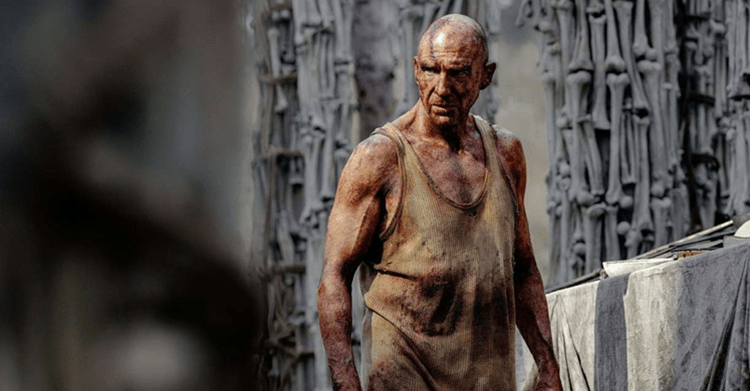
Image Courtesy of Sony Pictures Releasing

From there “28 Years Later” turns into a perplexing mix of harrowing survival horror and coming-of-age drama. Some scenes are raw and genuinely unsettling and will leave you rattled. Other scenes are surprisingly tender, specifically between Spike and Isla. Boyle and Garland manage to create a number of truly captivating sequences. The problem lies with the connecting narrative tissue (or lack thereof). Things don’t always sense and there are holes in the story that are too big to simply look over.

“28 Years Later” is the first of a two-part story which becomes aggressively obvious in the film’s final scene. Without spoiling anything, let’s just saying the movie ends on a rather preposterous note that doesn’t really help cover its other shortcomings. Still, Boyle delivers several scenes fueled by in-the-moment tension to make the movie worth seeing. The world he creates is a fittingly grim representation of a society collapsed, and the pure horror of the zombie attacks is undeniable. If only there was more connecting its big moments. “28 Years Later” is in theaters now.

VERDICT – 3.5 STARS

First Glance: “The Naked Gun” (2025) Full Trailer

You can consider me a proud and unapologetic fan of “The Naked Gun” movie trilogy. The intentionally silly crime spoofs took their inspiration from the 1982 television “Police Squad!” which embraced the absurd humor of the comedy classic “Airplane!”. A key reason for the trilogy’s success was the late, great Leslie Nielsen who so effortlessly channeled Lieutenant Frank Drebin’s idiocy and charm. Now some thirty years later we’re getting a fourth film and the first trailer isn’t very encouraging.

Simply titled “The Naked Gun” (again), the newest installment has Seth MacFarlane producing and Akiva Schaffer directing. It sees Liam Neeson playing Frank Drebin Jr. and Paul Walter Hauser playing Frank’s partner, Captain Ed Hocken Jr. – the son of the character originally played by George Kennedy. Pamela Anderson, Danny Huston, Kevin Durand, CCH Pounder, and Busta Rhymes also star. Unfortunately the attractive cast can’t overcome the remarkably dull attempts of humor and complete lack of charm. Granted, it’s just a trailer, but it’s not a great first impression.

“The Naked Gun” lands in theaters on August 1st. Check out the trailer below and let me know if you’ll be seeing it or taking a pass.

REVIEW: “The Unholy Trinity” (2025)

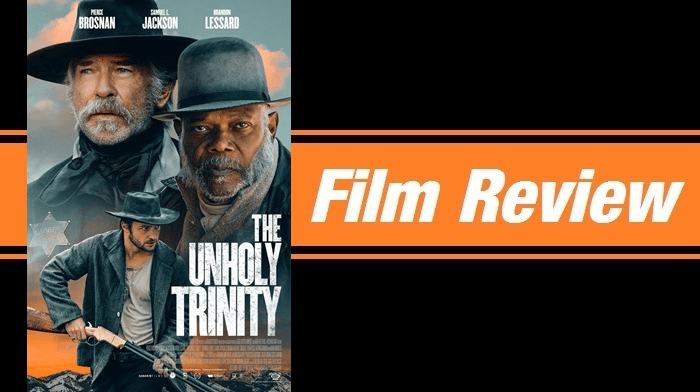
Revenge fuels “The Unholy Trinity”, a new Western from Australian director Richard Gray. Set high in the scenic Montana Territory during the late winter of 1988, “The Unholy Trinity” takes place in and around the small town of Trinity. Its story (written for the screen by Lee Zachariah) follows a number of characters driven by their own personal vengeances and the upright local lawman trying to keep order among the growing chaos.

Sadly, Westerns have had a tougher time resonating with modern audiences, especially Westerns that might fall into the more traditional category. In many ways “The Unholy Trinity” is very much a traditional Western, embracing an assortment of familiar tropes, character types, and themes. Its story doesn’t break new ground or reshape the genre. Yet the storytelling is solid and efficient. And there is enough mystery and intrigue to keep us involved.

Image Courtesy of Saban Films

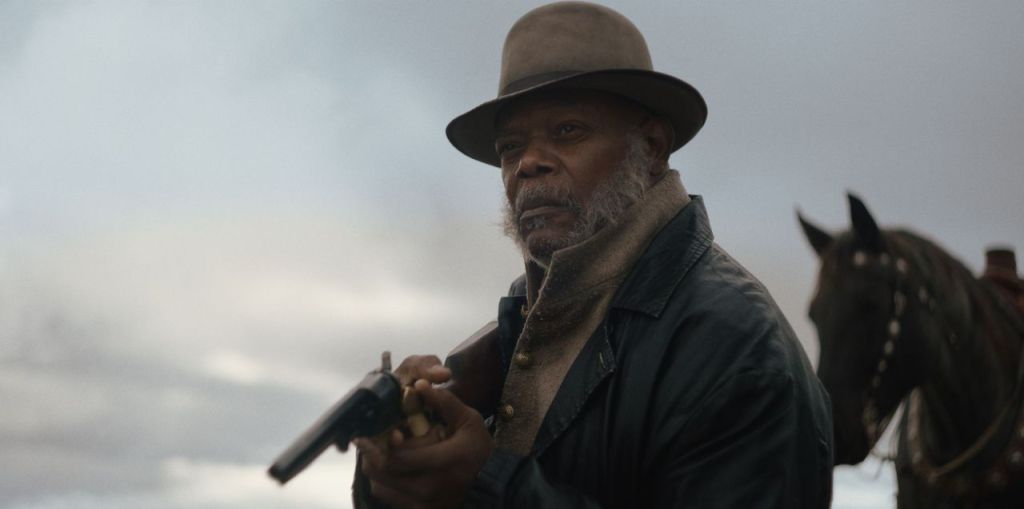
Gray leans on the star wattage of Pierce Brosnan and Samuel L. Jackson. Both deliver the kind of sturdy performances you would expect in portraying two dramatically different characters. But it’s actor Brandon Lessard who begins as the centerpiece. He plays Henry Broadway, a young man who is intent on avenging the death of his father (Tim Daly). Henry’s father was imprisoned and executed after he was framed by Saul Butler, the corrupt sheriff of a small Montana town called Trinity.

Henry travels to Trinity where he plans to spread his father’s ashes and kill the town’s sheriff. But those plans hit a snag when he arrives and discovers that Saul Butler is dead and buried. Butler’s trigger-happy war buddy Gideon (Gianni Capaldi) believes he was murdered by a young Blackfoot woman (Q’orianka Kilcher) hiding out in a nearby grove. Gideon wants revenge which he masks as a call for justice. But the new sheriff, Gabriel Dove (Brosnan) refuses to act without proof of guilt.

Through a near fatal misunderstanding, Henry is introduced to Gabriel who has sympathy for the boy. But Henry’s stay in Trinity is complicated after he kills a local thug in self-defense, making him the target of the hombre’s revenge-obsessed brothers. Henry escapes from the town with the help of a former slave who goes by Saint Christopher (Jackson). The mysterious Christopher claims to have once ran with Henry’s father. But his motivations are unclear and his intentions are even murkier.

Image Courtesy of Saban Films

As the story plays out we’re treated to shifting allegiances and unexpected alliances. And there are several decent plot twists that keep things interesting. The action we get is decent, especially during the inevitable final showdown. But the shootouts are not the movie’s chief focus. Gray and Zachariah are more interested in unfolding the characters through their ever-changing circumstances. Some fare better than others, but overall it makes for a mostly entertaining feature set firmly within a classic Western framework.

“The Unholy Trinity” may not change the minds of those with no affection for Westerns. But it’s plenty appetizing for those hungry for more from the nearly forsaken genre. From start to finish, the movie plays out much as you would expect, and for some that seemingly lack of originality may hold it back. But its classic style, which may be viewed as a weakness to some, may be seen as a strength to others. And that will make “The Unholy Trinity” a welcomed treat for genre fans. “The Unholy Trinity” is in theaters now.

VERDICT – 3 STARS

REVIEW: “Materialists” (2025)

Céline Song burst onto the scene with her beautifully bittersweet romantic drama “Past Lives”. Her film released to near universal acclaim and would go on to earn Academy Award nominations for Best Picture and Best Original Screenplay. It deserved every bit of the praise. “Past Lives” was a sophisticated and heartfelt feature that brought a talented new filmmaker onto the scene.

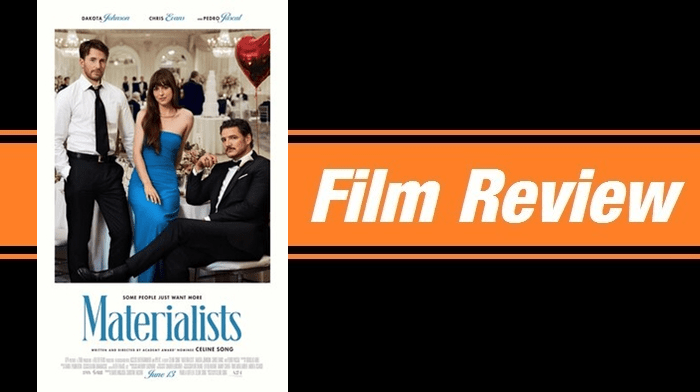
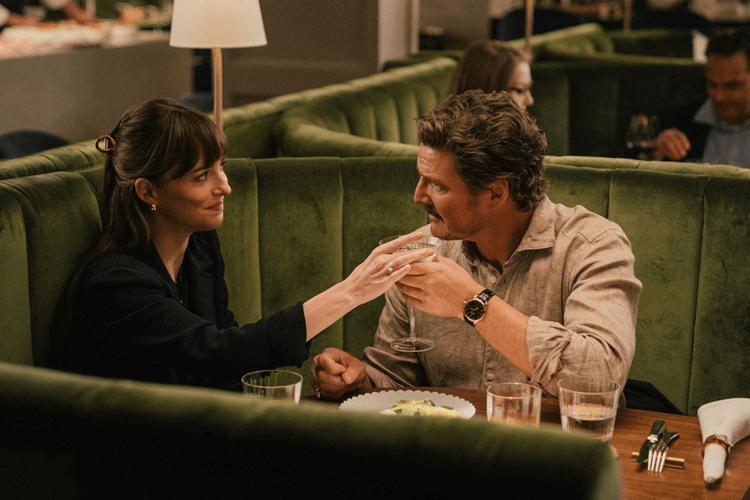
Song follows her 2023 gem with “Materialists”, yet another romantic drama but without the lasting grip of her first film. This time she’s working with bigger names in Dakota Johnson, Chris Evans, and Pedro Pascal. But there’s no Greta Lee caliber standout performance. Johnson is a solid lead in a very Johnson-like role. Evans tones things down a few notches to deliver a fairly standard-issue character. And Pascal is fittingly suave but surprisingly dry with the exception of one lone scene where he delivers dialogue that doesn’t feel right off the page.

Image Courtesy of A24

Following a brief and unintentionally hokey prologue, “Materialists” kicks off by taking us into the unusual world of high-end big city matchmaking. It’s where we meet Lucy (Johnson), a professional Cupid who works for Adore Matchmaking in downtown Manhattan. Her job is to offer services to struggling singles who are having a hard time finding the love of their lives. In her profession people are measured with sabermetrics. Matches are little more than equations. And if two people check enough boxes, Lucy puts them together with their eventual marriage as her trophy.

Lucy likes her job and by their own peculiar standards she seems to be good at it (we see Lucy and her fellow matchmakers celebrate her 9th client marriage). As far as her personal life, Lucy has remained voluntarily single while setting her own extremely high standards for any man she’ll date. “The next person I date I’m gonna marry,” she says without a moment’s hesitation.

But those standards are challenged when she attends her most recent client’s wedding. It’s there that she meets one of the groomsmen, Harry (Pascal). He’s handsome, confident, gentlemanly, and extremely wealthy. By her company’s stat-driven scale he’s a textbook perfect 10. But as the two are getting acquainted, Lucy is surprised to see John (Evans), an old flame working as a waiter at the wedding reception.

Immediately the table is set for yet another movie love triangle. But thankfully Song isn’t interested in taking us down that well-worn route. Her story explores relationships and the modern big city dating scene. But there’s no macho rivalry with Lucy caught in the middle. Even more, neither Harry or John are bad guys. Instead they represent two very different kinds of relationships. You could say there is a blue-collar versus white-collar dimension to the story. But neither are demonized or unfairly portrayed.

Image Courtesy of A24

While the movie’s views on dating, love, and especially marriage are all over the map, it makes for an intriguing study of modern perspectives. Interestingly it’s the romantic relationships themselves that are the weakest parts of the story. Lucy’s connection with John feels the most authentic yet it’s also the most derivative. Meanwhile her connection with Harry only occasionally goes deeper than surface level. Far more compelling is a side story involving a client named Sophie (Zoë Winters) and the impact it ultimately has on Lucy.

“Materialists” may disappoint those hoping for another “Past Lives” level feature. It lacks the emotional richness, sincere longing, and heartfelt candor of Song’s magical debut. Yet she remains a thoughtful and keenly observant filmmaker who again brings together insight and craftsmanship. Sadly not everything gels as intended. Feelings are often explained rather than shown. Love is treated more as a concept than something expressed. And the film’s cynicism and earnestness often feels at odds with its more romantic swings. Still it’s all easy to soak in – a testament to what makes Song such a compelling filmmaker. “Materialists” is in theaters now.

VERDICT – 3 STARS

First Glance: “Eddington”

It was 2018 when filmmaker Ari Aster burst onto the scene with his brilliant supernatural psychological horror film “Hereditary”. He has followed it up with the almost great “Midsommar” and the unmitigated mess “Beau Is Afraid”. Aster’s latest looks dramatically different than any of his previous films. “Eddington” is described as a contemporary Western but it looks to have a lot of other elements. It also has a sparkling cast that includes Joaquin Phoenix, Pedro Pascal, Emma Stone, Austin Butler, Deirdre O’Connell, Luke Grimes, Micheal Ward, Amélie Hoeferle, Clifton Collins Jr., and William Belleau.

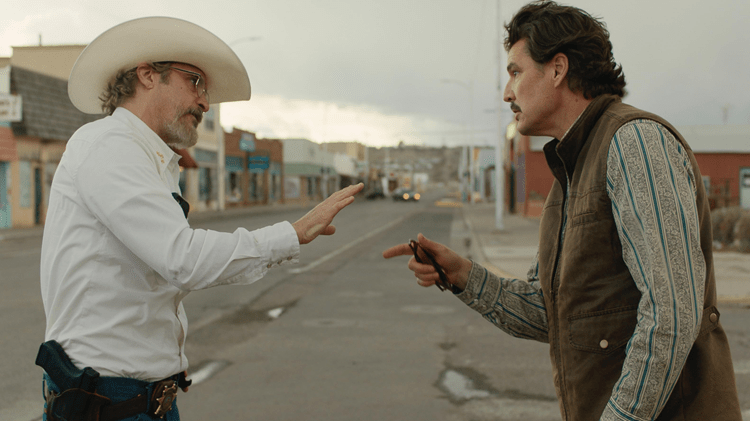
Set during the COVID-19 pandemic, tensions rise in the small town of Eddington, New Mexico between the anti-mask local sheriff (Phoenix) and the town’s mandate-pushing mayor (Pascal). It doesn’t take long before the sweeping paranoia turns to anxiety and the anxiety turns to violence. The first trailer has dropped and reveals a gritty, rural texture. While Aster hasn’t quite matched his freshman film’s success, his latest looks loaded with potential. And its cast really stands out, even for those of us experiencing some Pascal fatigue.

“Eddington” is set to release on July 18th. Check out the trailer below and let me know if you’ll be seeing it or taking a pass.

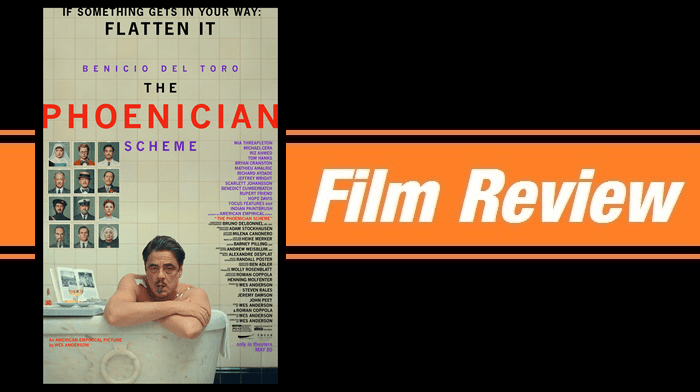
REVIEW: “The Phoenician Scheme” (2025)

I wonder if there has ever been a filmmaker more devoted to his or her style than Wes Anderson? If you went into a movie blind, chances are you would know it was a Wes Anderson movie midway through the opening credits. His new film, “The Phoenician Scheme” is about as Wes Andersonian as a Wes Anderson movie can be. So your appreciation for his latest will undoubtedly hinge on your feelings towards his work as a whole.

I proudly consider myself a Wes Anderson fan and (sometimes) apologist. For that reason, “The Phoenician Scheme” was a must see for me. But that doesn’t mean I’ve fallen for every movie he has made (sorry “The French Dispatch”). But there’s so much admire in a Wes Anderson production – the immaculately detailed compositions, his distinct color palette, the quirky characters, the hilarious deadpan performances, etc. His latest features all of those elements plus some.

Image Courtesy of Focus Features

Yet despite having all the Andersonian hallmarks, “The Phoenician Scheme” stealthily surprises with its mix of humor and heart. There are plenty of wry and whimsical laughs scattered throughout the movie’s zany adventuring, corporate espionage, and family melodrama. But at its core is a sweet father-daughter reconciliation story. And while it takes some time to fully develop, the slow and subtle healing of that central relationship adds an unexpected tenderness that leads to a heartfelt payoff.

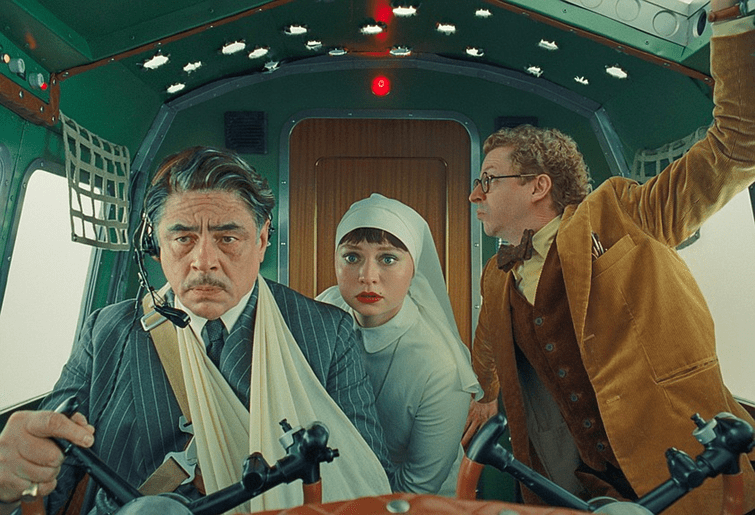
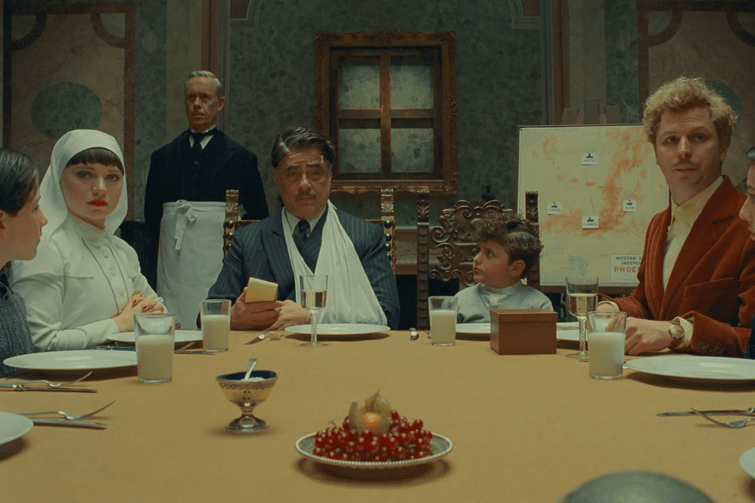
“The Phoenician Scheme” brings together another colorful ensemble that mixes longtime Anderson favorites with fresh new faces. Benicio Del Toro gets top billing playing Anatole “Zsa-Zsa” Korda, a ruthless industrialist and overall controversial figure who narrowly escapes the latest in many assassination attempts from an unknown enemy. It prompts him to reach out to his estranged daughter, Liesl (Mia Threapleton) who is studying to become a nun.

Liesl reluctantly meets with her father where she learns he wants to make her the sole heir to his fortune and the overseer of his grandest and most ambitious scheme yet. Korda’s meticulously planned scheme involves a number of large infrastructure projects meant to revitalize the long-dormant region of Phoenicia. Of course Korda sets himself up to make a nice profit, namely a 5% annual revenue share for the next 150 years. Liesl is suspicious and hesitant, but she eventually agrees, hoping she can bring some good out of her father’s shady plans.

Unfortunately for Korda, it doesn’t take long for his scheme to hit a snag. A clandestine international business consortium led by a driven bureaucrat codenamed Excalibur (Rupert Friend) use their power to fix the prices of essential construction materials. Realizing the crippling effects of a funding deficit, Korda sets out to meet with each of his underground investors, hoping they will help financially cover the gap. He’s accompanied by Liesl and Bjørn (Michael Cera), a nerdy entomologist who gets promoted to Korda’s administrative assistant.

Image Courtesy of Focus Features

As the motley trio travel across the region they encounter all kinds of threats from business rivals, hired assassins, and terrorists. Meanwhile each stop they make plays like its own Anderson vignette, and each eccentric investor they visit have their own distinct peculiarity. They’re wonderfully portrayed through the finely tuned talents of Riz Ahmed, Tom Hanks, Bryan Cranston, Mathieu Amalric, Jeffrey Wright, Scarlett Johansson, and Benedict Cumberbatch.

While Benicio del Toro is a pitch-perfect lead and we’re treated to my very favorite Michael Cera performance, it’s Mia Threapleton who will have most people talking. Her bone-dry delivery and off-kilter charm gels perfectly with Anderson’s world. And it’s a world we know well. “The Phoenician Scheme” has all the visual artistry, striking symmetry, and stunning production design fans have grown accustomed to. And the dense dialogue has that same witty tenor. But to his credit, Anderson often delivers something unique amid all the creative sameness. And that is certainly the case with his latest.

VERDICT – 4.5 STARS