RETRO REVIEW: “Duel” (1971)

Before he became the legendary director behind “Jaws”, “Raiders of the Lost Ark”, “Jurassic Park”, “Schindler’s List”, and “Saving Private Ryan”, Steven Spielberg found success in an unexpected place – an ABC television movie of the week. At only 24 years-old, the ambitious and immensely talented Spielberg made “Duel”, a movie that would be the launching pad for one of the great filmmaking careers of our time.

While technically not Spielberg’s first feature-length film (that honor goes to the self-made “Firelight” which has never been made public), “Duel” is considered to be the filmmaker’s first officially released movie. As you watch, the very technique and craftsmanship that would define his extraordinary career is present in its early stages. It results in propulsive action thriller built upon the classic tenets of good old-fashioned suspense.

Image Courtesy of Universal Studios

The script was written by Richard Matheson who was adapting his very own short story that was published in Playboy magazine. The film is light on dialogue, with Spielberg intent on letting the two led vehicles do most of the “talking”. The rest is left to Spielberg’s wizardry that utilizes both visuals and sound to drive this harrowing and high-octane nailbiter.

Spielberg cranks things up with an outstanding opening credits sequence that features a camera mounted on the front of a car as it drives through Los Angeles, out to the freeway, and eventually down a mostly barren two-lane rural road. Behind the wheel is David Mann (played by a pitch-perfect Dennis Weaver), a mild-mannered traveling salesman driving his Plymouth Valiant as an AM radio talk show plays in the background.

A few miles into his trip he encounters the film’s antagonist – a rusty and grime-covered 1951 Peterbilt tanker truck with thick smoke billowing from its stack pipe and license plates mounted on its front bumper like trophies from his past victims. We never see the face of the truck’s driver, only getting a few glimpses of his arm (and later his brown boots). Even scarier, we never get a sense of his motive for the terror he’s about to unleash.

Their encounter starts with David passing the truck only to have the truck pass him less than a mile later. The truck driver then slows down, forcing David to pass him again. As David speeds along the truck bears down on him, riding his bumper and blaring his horn. Quickly what resembles an instance of road rage boils over into a dangerous game of vehicular cat-and-mouse.

Image Courtesy of Universal Studios

As you ride along with “Duel” it’s impossible to miss the Hitchcockian vibe which is felt in everything from the crisp direction to the score (composed by Billy Goldenberg). Spielberg insisted on shooting the film on location and he did so in only thirteen days. It ends up making a significant difference by creating a palpable sense of authenticity. Meanwhile Weaver is a terrific centering point, selling us on his character’s fear by his physical intensity and through internal monologues which emphasize David’s rattled state of mind.

“Duel” first aired on November 13, 1971 and was an instant hit. In fact, it was so popular that Spielberg was brought back to shoot a few more scenes, lengthening its runtime to 88 minutes in preparation for an eventual big screen release in 1983. What’s great is that the movie still holds up well today in large part thanks to its taut and straightforward story and the way it’s told by a savvy young director with an extraordinary vision that would only get better in the years that followed.

VERDICT – 4 STARS

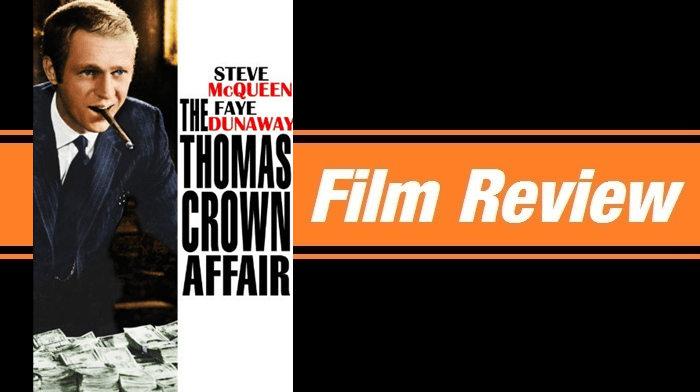
RETRO REVIEW: “The Thomas Crowne Affair” (1968)

Only one year removed from directing the Best Picture winner at the 40th Academy Awards (“In the Heat of the Night”), Norman Jewison followed up with a very different but equally lasting film, “The Thomas Crown Affair”. By ‘lasting’ I don’t mean the two film’s have the same weight or the same impact. But both movies still resonate nearly 60 years after their original releases albeit for much different reasons.

Aside from its alluring title, “The Thomas Crown Affair” had the draw of bona fide star power with Steve McQueen and Faye Dunaway. McQueen was at the front end of a run that would forever define his career. But he already had several big movies on his résumé as well as an Oscar nomination. Dunaway was still a young star, but she had just garnered major attention for her role in the smash-hit “Bonnie and Clyde”.

Richard Burton and Sean Connery were first in mind to play Thomas Crown but both turned it down. The role eventually went to McQueen who goes against type playing the eponymous lead. Thomas Crown is a successful Boston financier who has made millions of dollars through his own thriving company. In addition to being a prominent tycoon, Thomas is also thrill-seeker who satisfies his lust for adventure through high-stakes golf matches, flying gliders, playing polo, and riding dune buggies on the beach.

Image Courtesy of United Artists

But his biggest kick comes from organizing bank heists – not for the money but for the sheer rush. He’s the man behind the plan, orchestrating every detail right down to the cemetery drop-off location. Then he watches his players pull it off. He keeps his identity a secret, hiring five complete strangers yet never meeting them face-to-face. His only in-person involvement is picking up the money at the designated location.

The movie opens with an explosion of style as Jewison and cinematographer Haskell Wexler shoot Thomas’ latest heist through a series of fascinating compositions. The bank robbery goes off without a hitch to the tune of $2.6 million. After paying off his men, Thomas moves the rest of the money into a Swiss bank account and then sits back to enjoy his spoils.

With no leads and no suspects, the police eventually give up. But the bank’s insurance company has too much at stake, so they call in Inspector Vicki Anderson (Fay Dunaway) to help investigate the case. We learn quick that she’s ruthless and is not bound by any laws. She’s in it for the money – driven by the 10% she gets of whatever she’s able to recover. And as her tactics show, she’ll do anything to get her earnings.

Image Courtesy of United Artists

Through connections that are threadbare at best, Vicki hones in on Thomas as her chief suspect. She wastes no time introducing herself to him and doesn’t attempt to hide her identity or her intentions. Confident yet curious, Thomas plays along in what becomes a sultry game of cat-and-mouse. The two begin dating and even fall in love. But establishing trust is a different story. Soon Thomas finds himself playing the ultimate thrill game against a seductive opponent who’s up for the challenge.

McQueen was an interesting choice to play Thomas Crowne and his performance ranges from spot-on to strangely out of place. Through much of the film he’s ruggedly dashing and convincingly assured. But there are instances where his working class screen image clashes with the rich and dapper magnate he plays. He ultimately pulls it off. And McQueen creates some sizzling chemistry with Dunaway whose playful exterior masks a more devious side.

“The Thomas Crown Affair” was a success at the box office despite being greeted with lukewarm reviews from critics. It would go on to win the Best Original Song Academy Award for Michel Legrand’s “The Windmills of Your Mind” and over time has received more favorable reevaluations. It even led to a successful 1999 remake starring Pierce Bronson and Rene Russo. As for the 1968 film, it doesn’t sit among Norman Jewison’s best films. But “The Thomas Crown Affair” has maintained a lasting appeal that (for the most part) still holds up today.

VERDICT – 3.5 STARS

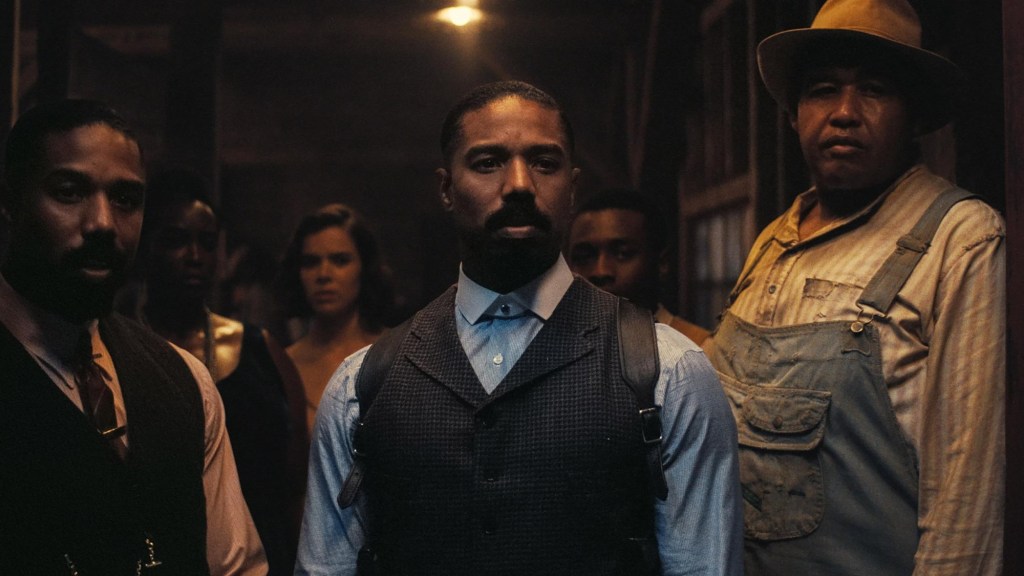
Movie Poster Spotlight: “Sinners”

Ryan Coogler reteams with Michael B. Jordan in “Sinners”, a period horror film set in the 1930s Jim Crow-era South. Jordan gets double duty playing twin brothers who attempt to leave their troubled lives behind by returning to their small hometown. But instead of a warm welcome, they’re faced with a brutal supernatural evil that has them fighting for their lives. The trailers for “Sinners” have done a great job setting the table. Now Warner Bros. has released a killer new poster for a movie that looks to be a blood-soaked and action-packed good time.

DIRECTOR – Ryan Coogler

WRITER – Ryan Coogler

STARRING – Michael B. Jordan, Hailee Steinfeld, Jack O’Connell, Miles Caton, Delroy Lindo, Wunmi Mosaku, Jayme Lawson, Omar Benson Miller, Li Jun Li, Lola Kirke, Yao, Peter Dreimanis

RELEASE – April 18, 2025

Check out the new poster below and let me know what you think.

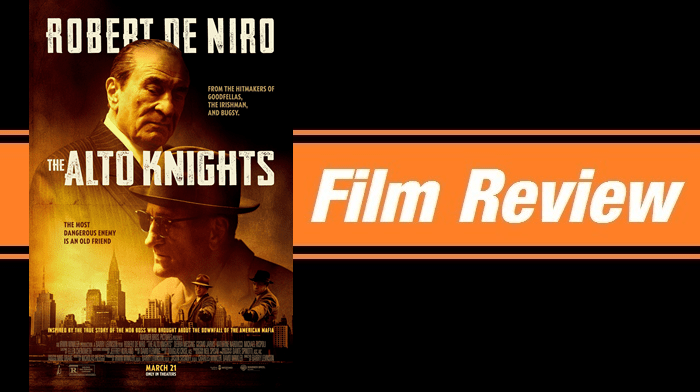
REVIEW: “The Alto Knights” (2025)

I’ve long been fascinated with the history of the Mafia in the United States. Over the years I’ve read countless works of nonfiction and biographies. And I’ve soaked up numerous documentaries covering the Mafia’s violent rise and inglorious fall, both of which left an indelible mark on 20th century America. Of course by extension that makes me a sucker for Hollywood’s storied gangland treatments – “The Godfather”, “Once Upon a Time in America”, “The Departed”, “The Irishman”, just to name a few.

The latest mob movie to join the ranks is “The Alto Knights”, a gangland drama that certainly comes with impressive credentials. It is Oscar-winning director Barry Levinson’s first big screen feature since his 2015 clunker “Rock the Kasbah”. It’s penned by 92-year-old Nicholas Pileggi whose screenwriting credits also include “Goodfellas” and “Casino”. And it stars Robert De Niro, an Academy Award winner himself who’s no stranger to gangster fare.

To be truthful, “The Alto Knights” doesn’t belong in the same company with the superior mob movies mentioned above. That’s because of some nagging shortcomings that hold it back (more on those in a moment). But the film hones in on a fascinating relationship set during an equally fascinating time in the history of the American Mafia. Pileggi’s script shows he has done his homework, and Levinson makes it a point to ensure the film stick close to the facts.

Image Courtesy of Warner Bros.

“The Alto Knights” tells the true story of childhood friends turned mobsters Frank Costello and Vito Genovese (each played by De Niro). Both grew up together on the New York City streets and both rose in the mob ranks under boss Charles “Lucky” Luciano. While they would often work together, Costello and Genovese had dramatically different tactics when it came to mob business. Costello preferred power through influence, often controlling politicians, judges, cops, and city officials. Genovese was more prone to use violence and even murder as a means to an end.

But tensions would form and fester between the two powerful men. Some came from Vito’s involvement in the bustling drug trade which was drawing unnecessary heat from the feds. But most was due to Vito’s desire to become the “boss of all bosses“. The ambitious Vito had long felt he deserved the top seat, but he had one significant obstacle – Frank Costello. After Vito was forced to flee the country to avoid a murder charge, an imprisoned Luciano named Costello acting boss. When Vito returned he begin plotting to gain the title from his old friend.

The movie opens with De Niro’s Frank Costello walking into his apartment building. As he waits for the elevator, a gunman, Vincent Gigante (Cosmo Jarvis) shoots him in the head by orders of Vito Genovese (also De Niro). Miraculously the murder attempt only amounted to a flesh wound, but it convinced Frank to relinquish his power. Yet the ever paranoid and growingly volatile Vito doesn’t buy it and isn’t sold on Frank’s sudden urge to retire.

Image Courtesy of Warner Bros.

From there Levinson takes us back in time to show key moments that led these one-time friends to become high-ranking rivals. He eventually works his way back to the murder attempt and then shifts to the events that follow. Along the way the film highlights the power, the politics, the insecurities, and the inevitable violence that is inherent to the true account. It’s all helped along with solid supporting work that includes Debra Messing as Frank’s wife Bobbie, Kathrine Narducci as Vito’s wife Anne, and Michael Rispoli as Albert Anastasia, the notorious mob enforcer with close ties to Frank.

While the story itself is quite interesting, the storytelling device Levinson uses is wobbly as best. For some reason the story is told through what resembles a video diary shared by an older Frank. Sometimes it’s Frank narrating while sitting in a dark room watching old slides. Other times he’s breaking the fourth wall while sitting outside in some park or garden. There’s no real rhythm or cohesion to any of it, making it more distracting than clever.

“The Alto Knights” recycles a few things from other mob movies and can almost be too straightforward and workmanlike in how it relays parts of its story. But it remains compelling throughout, especially for those familiar with the history and its key players. De Niro’s double duty turns out to be more than a gimmick as he breathes life and personality into these two complex figures. Overall, Levinson and Pileggi add another worthwhile entry into the mobster movie catalog.

VERDICT – 3.5 STARS

REVIEW: “Locked” (2025)

From director David Yarovesky and producer Sam Raimi comes “Locked”, a tightly wound high-concept action thriller that brings together the hardworking Bill Skarsgård and the effortlessly great Anthony Hopkins. “Locked” is an English-language remake of Mariano Cohn’s 2019 Argentinian film “4×4”. It was filmed and is set in Vancouver, Canada which adds a vivid urbanized texture while playing a big part in the storytelling.

Skarsgård plays Eddie Barrish, a down on his luck petty thief whose bad choices put him in a perilous predicament. Eddie is broke, unable to muster the $475 needed to get his beat-up van out of the garage. So he resorts to snatching wallets, buying scratch-offs, and breaking into cars. To make matters worse, he’s in hot water with his ex-wife for routinely standing up his young daughter, Sarah (Ashley Cartwright).

Image Courtesy of The Avenue

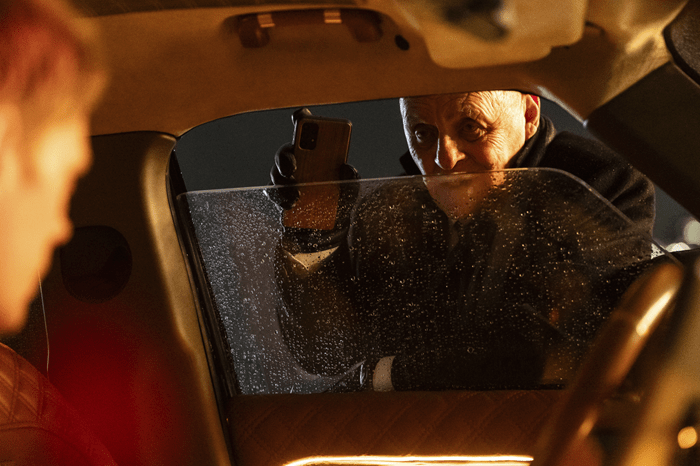
While cutting through a near vacant backstreet parking lot, Eddie notices a fancy black SUV appropriately branded “Dolus”. He checks the door and finds it unlocked. Jumping in unnoticed, he immediately begins rummaging for anything to sell but finds nothing. When he tries to get out, he discovers the doors are locked. He attempts kicking out the glass but to no avail. He learns all cell signal is blocked and its soundproof so he can’t scream for help. After several more vain attempts at escaping, Eddie realizes he’s trapped.

As Eddie panics over his sudden predicament, the vehicle’s phone rings. On the other end is an elderly man who introduces himself as William (Hopkins). The two engage in a hostile back-and-forth in which William exercises his dominance. He watches his trapped prey through six embedded cameras, shocking Eddie with the electrified interior whenever he gets out of line. William even resorts to torturing Eddie with heat, cold, and (in a darkly comical turn) blaring polka music.

Image Courtesy of The Avenue

Why is William doing this? Well it’s best you find out on your own. But it’s all a sick game built upon his sociopathic sense of justice. As William and Eddie continue their tête-à-têtes, we learn more about each of them – their pasts, their circumstances, and in some instances their motivations. A few arguments feel a bit fabricated, such as one conversation that quickly evolves into on-the-nose political commentary. But most build towards the film’s harrowing final act which is set in motion once the the sleek high-tech SUV hits the streets.

While there’s no denying the ultimate absurdity of the premise, “Locked” rides along on the firm commitment of Skarsgård and Hopkins. The duo does everything they can to keep the story driving forward even as the movie struggles to fill its lean 95 minutes. And while its midsection lulls bog things down a bit, there’s just enough meat on the bones of this gritty genre two-hander to hold your interest. “Locked” hits theaters March 21st.

VERDICT – 3 STARS

REVIEW: “Ash” (2025)

Science fiction and horror collide in the nightmarish new feature “Ash” from DJ, record producer, and filmmaker Flying Lotus. With its audacious visuals and masterfully managed tone, “Ash” sucks you into its forbidding far-away world, embracing several familiar conceits along the way while adding its own gnarly twists to them. The results may not redefine the sci-fi horror genre. But does every movie need to?

“Ash” takes a fairly conventional science fiction story and tells it through its own wickedly artful lens. It’s a movie that takes on numerous forms and blends elements from several horror sub-genres. It’s a deep-space chiller with a dark psychological edge. But there are also bites of survival horror all through it. At times it resembles a grisly midnight crowdpleaser yet it’s almost experimental in some of its techniques. What’s impresses most is how it all gels together – a testament to Flying Lotus’ keen vision and tight control.

Image Courtesy of Shudder

Its backstory is pretty generic – Earth has become nearly uninhabitable resulting in crews being sent into space to find a planet capable of sustaining human life. While I admit to being a sucker for that tried-and-true setup, screenwriter Jonni Remmler doesn’t spend too much time on why the crew is there. Instead he goes straight to the present, submersing us into his protagonist’s terrifying scenario as both she and we try to piece together the mystery as it unfolds.

Originally set to star Tessa Thompson, the lead role eventually went to Eiza González who gives what deserves to be heralded as a breakout performance. Her physical and emotional commitment is essential to the film’s effect. González is superb playing Riya Ortiz, an astronaut who wakes up battered and bloodied in a space station on a distant planet designated KOI-442.

After she gathers herself, Riya discovers the station has been ravaged and her four fellow crew members killed in expressly gruesome fashion. Even worse, Riya has no idea who she is, where she’s from, or what happened. As she investigates the heavily damaged facility and examines the mangled bodies of her crew mates, Rya is shaken by the sudden appearance of a man named Brion (Aaron Paul) who claims to be responding to an SOS call sent from the station to the orbital he mans off planet.

Brion’s presence feeds into the greater mystery of what happened on planet KOI-442 (which the crew has nicknamed “Ash”). Flying Lotus drip-feeds us information, partially through Riya’s discoveries, but mostly via jolts of violent flashbacks. In them we see the fates of Adhi (Iko Uwais), Kevin (Beulah Koale), Catherine (Kate Elliott), and Shawn Davis (Flying Lotus) in gory detail. But as Riya’s memory returns, the flashbacks extend and offer more clarity.

Image Courtesy of Shudder

While “Ash” may be light on plot, it’s enriched by savvy storytelling and world-building. Beginning in its earliest moments, the movie is all about creating and sustaining its dread-drenched atmosphere. It’s accomplished through some inspired craftsmanship that utilizes the impact of both sight and sound. DP Richard Bluck uses a range of shots from stunning widescreen to harrowing first-person perspectives. Add in the creepy interiors shaded in red and indigo and some killer gore effects that aren’t for the squeamish. And it’s all accompanied by the film’s menacing electronic score composed by Flying Lotus himself.

Those desperate for something groundbreaking that significantly moves the needle in the space-horror genre may leave “Ash” disappointed. But those who enjoy immersive experiences from visionary cinematic craftsmen will have a blast. Those with an affection for tense and moody sci-fi chillers will get all they want. And those who appreciate eye-opening performances will love what Eiza González brings to her role. “Ash” opens in theaters Friday, March 21st.

VERDICT – 4 STARS