
REVIEW: “Michael” (2026)

The latest music biopic to come down the pipeline is none other than “Michael”, a film highlighting the King of Pop himself, Michael Jackson. But surprisingly much of the early conversation has revolved around the scathing reception from a cynical segment of fellow critics, who desperately wanted a darker, more incisive character study rather than a celebration of music and artistry that defined an era. That’s certainly their prerogative. But there’s a fine line between critiquing a movie for what it is and for what you want it to be.

That’s not to say “Michael” should be free from criticism or that it isn’t due some. It’s true that the film’s starstruck perspective doesn’t allow much room for a deeper understanding of Michael Jackson the man. And it doesn’t draw clear lines from some of the issues it itself introduces to the root causes of them. But “Michael” is far from the disaster it’s portrayed to be. It’s an engaging and often electrifying tribute that centers on the one thing about Jackson that is undeniable – his music took the world by storm and is still beloved today.

Image Courtesy of Lionsgate

Director Antoine Fuqua doesn’t stray too far from the standard biopic formula. But he energizes it with a strong focus on the timeless music and unforgettable performances that made Michael Jackson a legend. But there is more to “Michael” than just great tunes. Screenwriter John Logan (“Gladiator”, “Skyfall”) hones in on a specific sliver of Michael’s family life. His story tells of a domineering father, a nurturing mother, and a talented son eager to take charge of his own career.

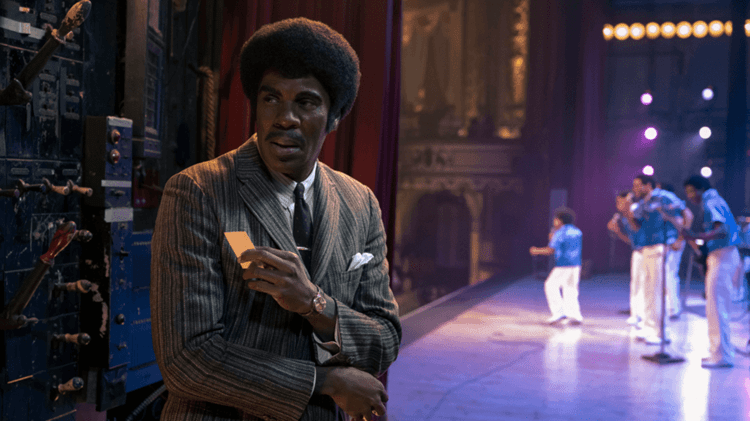
The story begins in 1966 with the blue-collar Jackson family living in Gary, Indiana. That’s where Joseph Jackson (portrayed with uncomfortable intensity by Colman Domingo) brings his five sons together to form a music group he calls the Jackson 5. The youngest is 10-year-old Michael (played by an extraordinary Juliano Krue Valdi), the group’s sweet yet eccentric lead singer who loves Peter Pan and watching movies with his mother, Katherine (Nia Long).

The cold-hearted and abusive Joseph sees the Jackson 5 as his ticket out of the steel mill. So he pushes his sons through a punishing schedule of rehearsals and area gigs until they’re finally noticed and signed by Motown Records. It doesn’t take long for their album to reach the top of the charts and the Jackson 5 quickly becomes a household name. Joseph wastes no time moving his family out of Gary and into a mansion in Encino, California.

Image Courtesy of Lionsgate

As years go by, the Jackson 5 remain a successful act while growing up on stage for the entire world to see. But by 1978, Michael (now played by MJ’s real-life nephew Jaafar Jackson) had grown tired of Joseph’s suffocating control. So he teamed up with producer Quincy Jones (Kendrick Sampson) to make a solo album. “Off the Wall” was Michael’s chance to reintroduce himself to the world. The album was a smash hit, much to the chagrin of Joseph who only saw himself as the reason for Michael’s success. This sets up the father-son conflict that propels much of the story.

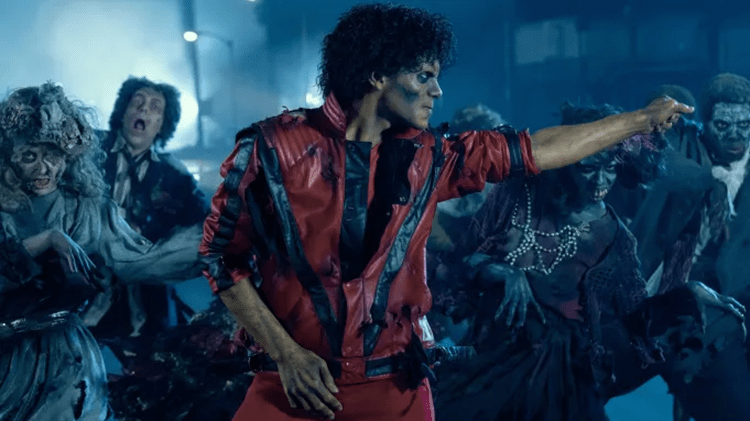
I won’t spoil every stop on the movie’s timeline, but Fuqua hits several key points in Michael’s career, my favorite being the development of the all-time best-selling album, 1982’s “Thriller”. We see the origins of “Beat It”, his close partnership with attorney John Branca (played by Miles Teller), his push to get his videos on MTV, the Pepsi incident, the Don King promoted Victory Tour, and so on. More personally, we’re shown Michael’s insecurities in his “friendship” with animals, in his childlike private life, and in his first cosmetic surgery (“I have to be perfect.”).

But undoubtedly many will be quick to point out what the movie doesn’t include. It’s true that the film avoids the more complicated parts of Jackson’s legacy. We never see the growing tension between Michael and his brothers; nothing about the construction of Neverland; no mention of his whirlwind marriages or his growing health issues; and it never addresses the sexual abuse allegations which he vehemently fought against. But in fairness, “Michael” ends in 1984 before the bulk of the controversies played out. And Fuqua teases there may be more to come by ending his film with an exhilarating recreation of Jackson’s 1988 performance of “Bad” at Wembley Stadium followed by the words “His story continues”.

Image Courtesy of Lionsgate

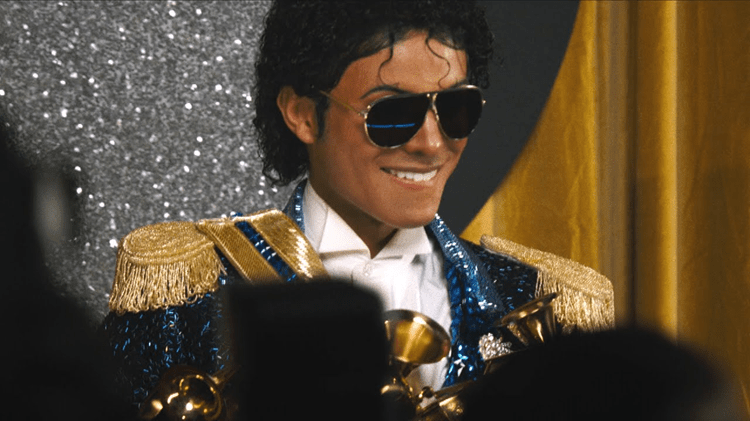
“Michael” is worth seeing for the enduring music alone. But you’ll be just as blown away by the performances that bring the King of Pop to life. Valdi is astonishingly good, fully capturing a younger Michael’s tenderness at home and his magnetic charisma on stage. But most people will be talking about the amazing debut performance from Jaafar Jackson whose uncanny resemblance to his superstar uncle can’t be overstated. From his vocals and mannerisms to his incredible dancing, Jaafar poured years into studying and mastering Michael’s moves. But it’s the added touches of vulnerability that make this more than a mere impression.

You wouldn’t be wrong to say “Michael” was made by Michael Jackson fans for Michael Jackson fans. In that regard, the movie knows what it is and who it’s for. That won’t sit well with those hungry to have certain personal feelings about the singer fed. But it’s a cinematic experience that is sure ramp up the pulses of fans all across the globe. It’s slick and polished entertainment. It’s also nothing short of dazzling. And if you go in with the right expectations, you’ll be tapping your foot, bobbing your head, and fighting the urge to sing for most of the film’s music-filled two hours. I know I was.

VERDICT – 3.5 STARS

REVIEW: “Ready or Not 2: Here I Come” (2026)

“Ready or Not” released in 2019 and quickly became one of the biggest surprise hits of the year. The horror comedy thriller was picked up and distributed by Fox Searchlight Pictures who gave it a proper theatrical release. They were rewarded when the film brought in $58 million against its modest $6 million budget. Even better, the film was well-received by critics who were quick to brand it as an instant cult classic.

The only thing more surprising than the first film’s success is that it birthed an unexpected sequel, “Ready or Not 2: Here I Come”. The key creative minds return including co-directors Matt Bettinelli-Olpin and Tyler Gillett and co-writers Guy Busick and R. Christopher Murphy. But the most crucial returning piece is Samara Weaving, reprising her role as Grace MacCaullay, the lone survivor of the Le Domas family blood bath.

Image Courtesy of Searchlight Pictures

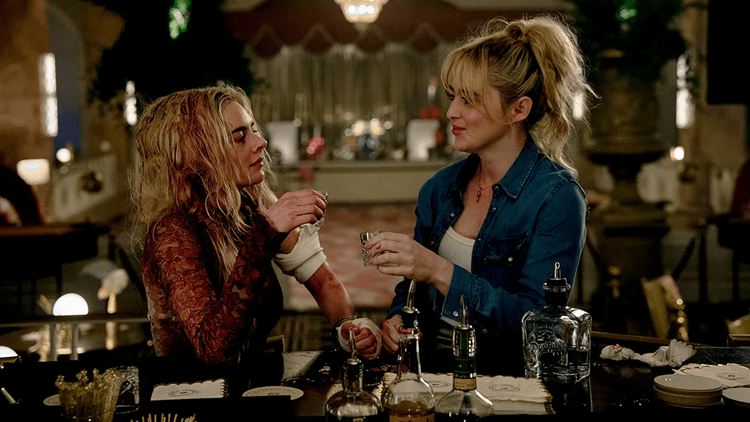
“Ready or Not 2” plays like an extension of the first film, picking up exactly where part one left off. Following what was quite literally the wedding ceremony from Hell, Grace (Weaving) passes out on the steps of the Le Domas family mansion, soaked in the blood of her dead devil-worshipping in-laws. After being transported to the local hospital, she’s visited by her estranged younger sister Faith (Kathryn Newton). The combative siblings waste no time dragging out old baggage.

But little do the sisters know, the Le Domas clan was just one of six families in an international cult of upper-crust worshippers of Le Bail. And their death triggered a clause in the by-laws putting the leadership of the cult’s ruling council up for grabs. So the heads of the remaining families converge on the lavish Danforth estate in Newport, Rhode Island, each vying for the all-powerful high seat. To win it, all they have to do is be the one to kill Grace, and by association Faith, in another game of Hide-and-Seek.

So Grace and Faith are kidnapped and brought to the Danforth mansion where they’re introduced to a new batch of pampered and power-mad hunters. Among them is the domineering Ursula Danforth (Sarah Michelle Gellar) and her impetuous twin brother Titus (Shawn Hatosy), the pompous Ignacio El Caido (Néstor Carbonell), the conniving Wan Chen Xing (Olivia Cheng), and the playboy Viraj Rajan (Nadeem Umar-Khitab).

But there are rules that must be followed, and Le Bail takes his rules seriously. So much so that the consequences for breaking them are…messy. The rules are laid out by a mysterious lawyer for Le Bail (a really fun Elijah Wood) and there are A LOT of them. Most are dropped in overly long information drops. Others pop up out of the blue, feeling more like devices to get the plot from one point to the next. But at its core it’s the same as before- Grace and Faith must survive until dawn if they want to live.

Image Courtesy of Searchlight Pictures

From there the bulk of ”Ready or Not 2” is more of the same but at a different venue and with different villains. Bettinelli-Olpin and Gillett once again playfully lather us in blood and guts. The only thing more prevalent than the chunky red stuff are the ludicrously forced f-bombs. The pointlessly potty-mouthed script dumbs things down, sometimes to the point of being a distraction. We also get a lot more lore building, but it’s nothing that will pique your interest.

While “Ready or Not 2” floods us with more gore, more lore, and more mind-numbing f-bombs than before, it also features less laughs and even fewer surprises. Still Weaving and Newton give it their all, making it easier to navigate the frustrations along the way. The inevitable kills can be fun and the overall goofiness of it all makes it easier to digest. But it’s ultimately a sequel that doesn’t offer up enough to justify its existence. And Grace probably would be better off still sitting on the Le Domas estate steps.

VERDICT – 2.5 STARS

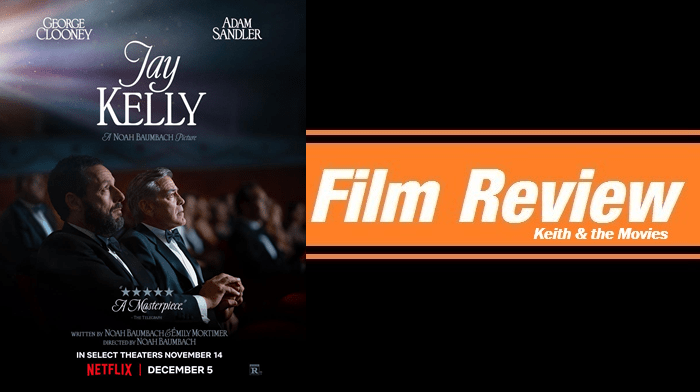
REVIEW: “Jay Kelly” (2025)

File Noah Baumbach under ‘Filmmakers I’ll Watch No Matter What’. I have been drawn to his unique body of work since his early Wes Anderson collaborations. And I have enjoyed most of the films he has directed from high-spirited indies à la “Frances Ha”, to serious-minded dramas such as “Marriage Story”, to utterly bizarre concoctions like “White Noise”. I just love his eccentric style, off-beat perspective, and rich dialogue.

His latest is “Jay Kelly” and it’s very much a Noah Baumbach movie. Yet at the same time, it distinctly stands out in a number of interesting ways. Unlike Baumbach’s tightly focused settings, this one plays out on a noticeably grander scale. And rather than tell something more intimate, this time he broadens his story significantly. Even the filmmaking feels different, using a style that calls back to classic Old Hollywood productions.

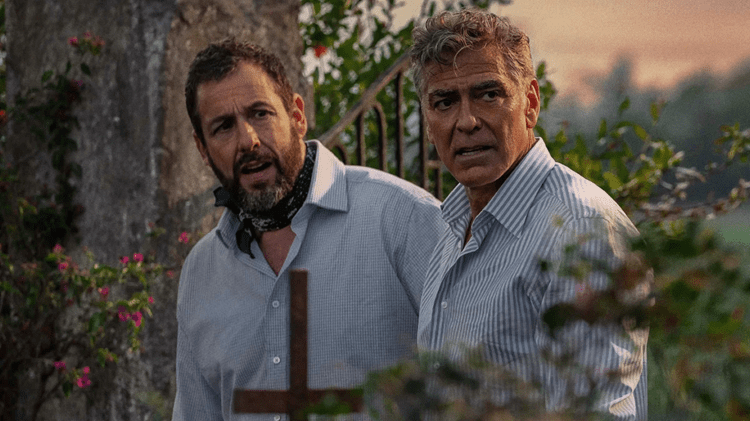
In a nifty bit of casting, George Clooney plays the titular Jay Kelly, a celebrated actor whose existential crisis forces him to reevaluate what matters most in his life. The movie opens with Jay wrapping his latest film, “Eight Men From Now”. Jay’s hard-working and intensely loyal manager Ron (a terrific Adam Sandler) already has his famous client’s next feature lined up. But Jay throws Ron a curveball when he announces he’s pulling out of his next movie and taking a trip to Europe.

Image Courtesy of Netflix

Jay’s out-of-the-blue decision puts his handlers in a panic as they scramble to make sense of his actions. Ron is forced to set aside his own family plans and join Jay and his entourage on a plane bound for Paris. There he plans on surprising his youngest daughter Daisy (Grace Edwards), who’s traveling abroad with friends. Afterwards he plans on hopping a train for Tuscany where he’s to accept a career achievement award that he had previously declined.

Ron’s main job is to coddle his star client while convincing him not to quit his next movie. But the blasé Jay is more interested in mingling with adoring fans and tracking down Daisy, who would rather be with her traveling companions. It all frustrates Jay’s handlers, especially his volatile publicist Liz (Laura Dern). But amid the chaos, we begin to see the real reason for Jay’s inward sabbatical. He begins reflecting on his life, from his career successes to his failings as a father.

In his melancholy, Jay begins weighing his past choices which forces him to reckon with their consequences, mostly involving his two daughters. While he at least has some connection with the younger Daisy, his relationship with his oldest daughter Jessica (Riley Keough) has soured. The fallout from prioritizing himself and his career has left a divide that she’s not ready to bridge. Keough only gets a couple of scenes, but she provides the story’s most heart-wrenching moments.

Image Courtesy of Netflix

Baumbach also gives time to Jay’s relationship with Ron which plays a key role in the star’s journey. Clooney and Sandler have terrific chemistry and consistently find humanity and humor in the scenes they share. Clooney slides right into Jay’s skin, at times so convincingly that you could interpret it as him playing a version of himself. Meanwhile Sandler gives one of the best supporting performances of the year and one of the best performances of his career. In many ways he’s the beating heart of the story, embodying the many things Jay has lost sight of in the name of success.

Early on, Jay makes the revealing statement, “All my memories are movies.” Could it mean that he has invested so much of his life to movies that it’s hard to find a memory that’s not in front of a camera? Or does he mean he has no memories of his own; that his memories are movies – scripted, directed, and produced for others to relish? Both can be true, and both add to Jay’s overwhelming feeling of regret.

Baumbach’s soulful script (which he co-wrote with Emily Mortimer) has us accompany Jay Kelly on a painful personal journey of self-reflection. But to Baumbach and Mortimer’s credit, they don’t turn it into a clean-cut redemption story. While they do find empathy for Jay, there’s no tidy reprieve from the personal consequences or the collateral damage he has left behind. Together with its rich, nuanced performances, lush cinematography, and Baumbach’s vibrant direction, “Jay Kelly” resonates as both a contemplative character study and a meaningful cautionary tale.

VERDICT – 4.5 STARS

REVIEW: “Die My Love” (2025)

Jennifer Lawrence and Robert Pattinson are a couple trapped in a doomed relationship in director Lynne Ramsay’s grueling new feature, “Die My Love”. This is her first film since 2017’s much different but equally grim “You Were Never Really Here”. Though based on a 2012 Ariana Harwicz novel, Ramsay’s adaptation says nearly everything it has to say within the first half-hour. The remaining 90 minutes plays like misery porn as we watch a woefully unhappy woman barreling towards destruction.

“Die My Love” is written by the trio of Ramsay, Enda Walsh, and Alice Birch. Their story pitilessly blends motherhood and madness in a way that is surprisingly cold and unforgiving towards the lead characters, the lead cast, and the audience. It toys with such themes as postnatal depression and isolation. But Ramsay’s smothering approach spends more time breaking down and laying bare Lawrence’s character (as much physically as psychologically) than doing much meaningful with the themes that are introduced.

Image Courtesy of Mubi

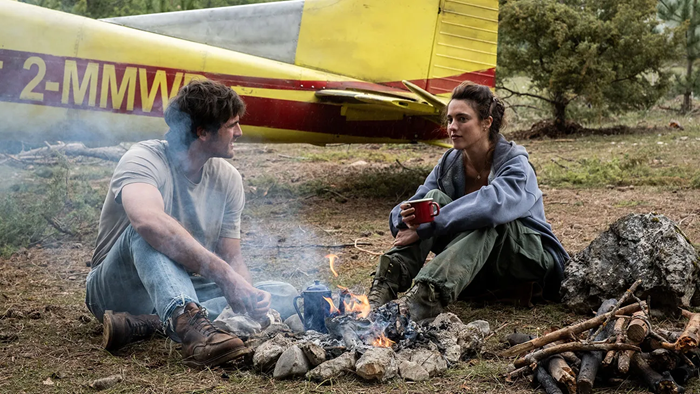
The film opens by introducing us to an unstable young couple, Grace (Lawrence) and Jackson (Pattinson). The two have moved away from the hustle and bustle of the big city to an old house in rural Montana that Jackson inherited from his late uncle. The couple settles into their new home, and following a rather ludicrous sex montage, they have a baby boy. From there to the final frame, the movie follows the slow disintegration of their ill-fated relationship.

Both Grace and Jackson are dissolute and self-destructive, to such a degree that we know things aren’t going to end well. But while Jackson has his own set of issues, it’s Grace who finds herself in the center of Ramsay’s sights. She’s a stalled writer who loses all inspiration and motivation after becoming a stay-at-home mother. She gets little support from Jackson who is off working for days at a time. And when he is home, his insensitivity (which seems to spring from nowhere) only pushes her closer to the edge.

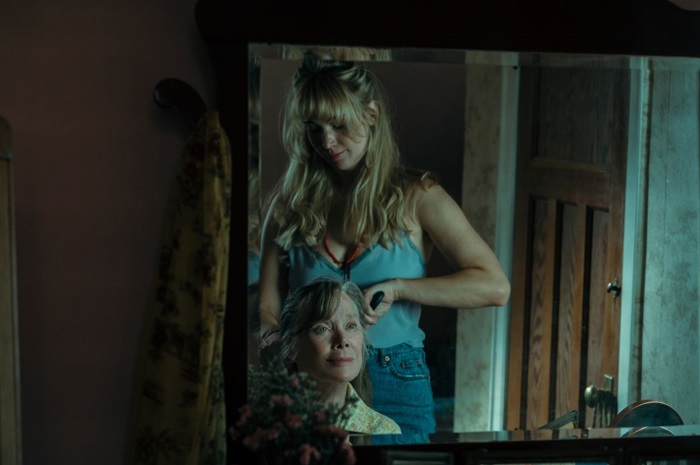
But none of this is especially surprising considering Grace and Jackson never really feel like a true-to-life couple. They never have real-world conversations and so many of their interactions appear staged for the camera. Brief supporting work from Sissy Spacek and Nick Nolte does more to ground Grace and Jackson than anything they do together. It’s a critical issue that leaves us with two shallow and intemperate hipsters rather than an organic couple with actual depth and complexities.

It ends up being all about Grace and her downward spiral. Her behavior gets increasingly bizarre, soon resembling full-on psychosis more than postpartum depression. Lawrence fully commits, crawling around on all fours, rabidly barking at Jackson’s annoying dog, furiously clawing away at wallpaper until her fingers bleed, throwing herself through a glass door, and randomly taking off her clothes whenever Ramsay asks. It’s the kind of performance awards voters often fall for, yet here it feels so hollow.

Image Courtesy of Mubi

Unlike Ramsay’s previous films, “Die My Love” is full of empty provocations that are more interested in shocking the audience than challenging us with substance. When not assaulting us with weird needle-drops and stylistic flourishes, Ramsay is sprinkling gasoline on the fire that is Grace’s sanity. And for what purpose? The movie has already played its hand by the 20-minute mark. Even later, when we’re led to believe Grace is “better”, we can easily see through her sudden turn towards domesticity.

“Die My Love” ends up being a maddening experience. It’s essentially the equivalent of lighting a fuse and waiting two hours for your main character to finally blow. It’s just pointless misery with rarely a reprieve. Ramsay is a talented filmmaker who is no stranger to working with dark and unsettling material. But with “Die My Love”, she seems too focused on her own abrasive formalism and with pushing her acclaimed lead actress to ridiculous lengths.

VERDICT – 2 STARS

REVIEW: “A House of Dynamite” (2025)

Kathryn Bigelow’s highly anticipated and long awaited next movie has finally arrived via Netflix. It’s “A House of Dynamite” and it’s Bigelow’s first feature film since her 2017 historical crime drama “Detroit”. This is another audacious swing from the Oscar-winning director who delivers a harrowing ‘what-if’ nail-biter that’s infused with a sobering sense of urgency. It’s one of the best films of the year.

“A House of Dynamite” is a riveting thriller that can also serve as a pressing wake-up call to the ever-present danger of living in this new nuclear age. Written for the screen by Noah Oppenheim, the story plays like a hardcore military/political procedural laced with 1990s thriller vibes. But it’s Bigelow’s striking efficiency and razor-sharp precision that makes the movie’s engine hum. She maintains such control of the story’s many moving parts while keeping her audience firmly in her grip for the duration.

Bigelow is helped by a star-studded ensemble who fill out this three-pronged story. The narrative structure follows one significant event but tells it from three distinct yet interconnected perspectives. It begins at the 49th Missile Defense Battalion at Fort Greely, Alaska. Major Daniel Gonzalez (Anthony Ramos) and his unit pickup an unidentified ballistic missile in the air. At first they believe it’s a test. But by failing to detect the launch’s point of origin, they don’t know for sure.

Image Courtesy of Netflix

Fort Greely informs the White House situation room in Washington DC where Captain Olivia Walker (Rebecca Ferguson) and her team monitor potential threats to the country. Experts soon inform Walker that the missile is not a test and is only 19 minutes away from striking the continental United States. Multiple agencies spring into action, making efforts to intercept the missile while narrowing down its impact zone. As the clock counts down, fear and anxiety sets in.

We then hop back in time to when the missile was first detected but shift our focus to Offutt Air Force Base in Nebraska where General Anthony Brady (Tracy Letts) leads the US Strategic Command and Control. Brady’s team is able to determine the missile’s target to be Chicago and its 9.2 million people. With a nuclear attack seeming imminent, Brady pushes for the President to immediately consider a counter attack. But Deputy National Security Advisor Jake Baerington (Gabriel Basso) disagrees, insisting they get more information before thrusting the world into a nuclear war.

The movie transports us back once more, this time focusing on the President of the United States (played by an impressively grounded Idris Elba). We follow him as he gets word about the inbound missile and works under immense pressure to decide the best course of action. Does he follow Brady’s recommendation and counterattack before their window closes? Or does he listen to Baerington and wait, despite the dangers of doing so?

Image Courtesy of Netflix

The cast is full of other supporting players who have their own roles in the story. Jason Clarke plays the senior Situation Room officer and Walker’s boss. Greta Lee plays an intelligence agent with the NSA. Moses Ingram plays a FEMA official. Jared Harris plays the Secretary of Defense. Renée Elise Goldsberry plays the First Lady. Jonah Hauer-King plays the President’s retaliatory adviser. These are just some of the characters serving as key pieces in the story, who either provide vital information that moves the plot forward or add needed humanity to the chaos.

“A House of Dynamite” wastes no time lighting its fuse and it steadily burns right up to the film’s gutsy finish. It’s a near certainty that some viewers will be upset with where Bigelow pulls the plug. But I can’t imagine a more effective ending for the kind of impression she wants to leave. The palpable fear, the unnerving uncertainty, the sobering real-world relevance – it all hits like a hammer in the film’s final shots which Bigelow lands just as intended.

With “A House of Dynamite” Bigelow reminds us of how close we are to annihilation and how helpless we would be once those dominoes started to fall. At the same time, her film maintains its human pulse, never losing sight of the personal stakes for many of the people involved. The changes in viewpoints work surprisingly well within the ticking clock formula in large part thanks to Bigelow’s laser-focused execution. The urgency is emphasized in Barry Ackroyd’s documentary-style cinematography while the tone resonates through the ominous groan of Volker Bertelmann’s score. It all creates a tension-fueled movie that offers a prescient warning for our current day. “A House of Dynamite” premieres October 24th on Netflix.

VERDICT – 4.5 STARS

REVIEW: “Black Phone 2” (2025)

Scott Derrickson’s 2021 horror gem “The Black Phone” left a mark with its sinister tone and edge-of-your-seat suspense. But its ace in the hole was Ethan Hawke who took on a role unlike any other in his brilliant forty-year career. Hawke played The Grabber, a serial killer and child abductor who terrorized the residents of a Denver suburb. Hawke lost himself in the character and delivered a horror movie antagonist that was both chilling and fascinating.

Derrickson returns to direct and rejoins C. Robert Cargill in writing the script for “Black Phone 2”, a sequel set four years after the events of the first film. Even more exciting, Ethan Hawke returns as The Grabber who (and this may be a spoiler for series newcomers) was killed at the end of the first film. But Derrickson and Cargill have created a surprisingly compelling angle to bring their villain back, and they manage to extend the original story in a unique and effective way.

“The Black Phone” drew its inspiration from a 2005 short story by Joe Hill. It laid the groundwork for the unexpected narrative twists of “Black Phone 2”. Set in 1982, the sequel continues the stories of brother and sister Finney and Gwen Blake (played by the returning Mason Thames and Madeleine McGraw). Now 17-years-old, Finney has tried burying his trauma since grabbing headlines as the lone survivor of The Grabber’s murder spree.

Image Courtesy of Universal Pictures

But the movie is most interested in Finney’s kid sister Gwen, whose mysterious power (or curse) played a big part in the first movie. Gwen’s clairvoyance is manifested in dreams that she doesn’t fully understand. Lately they’ve been horrifying nightmares where she witnesses the brutal murders of three young boys. There is also the piercing rings of a black rotary phone – a potential connection to The Grabber. Each new nightmare gets more vivid and more disturbing. And each points to Alpine Lake Youth Camp high up in the Rocky Mountains.

Desperate for answers, Finney, Gwen, and her wannabe boyfriend Ernie (Miguel Mora) head to Alpine Lake to investigate. Posing as counselors in training, the trio arrive in the middle of a blizzard and are greeted by a limited staff including the owner, Armando Reyes (Demián Bichir). While there, Gwen’s terrifying dreams intensify. They begin with horrific encounters with the three mutilated little boys. But soon it’s The Grabber himself, now a raging vengeful spirit with an ax to grind with Finney and Gwen.

Derrickson really leans into the added supernatural spin, taking an already dark and unnerving story and making it even more unsettling. Along the way, we’re treated to several intriguing connections and unexpected reveals, some of which change our perspective on the first film in some surprisingly clever ways. They tell us more about The Grabber’s violent history as well as Finney and Gwen’s family struggles.

The performances from the young stars are generally good although the script trips them up on occasion. This is especially true with McGraw who is routinely forced to blurt out 80s-inspired insults which sound more hokey than authentic. Otherwise both she and Thames meet the many demands of their roles. We also get good supporting turns from Bichir and Jeremy Davies as Finney and Gwen’s father, Terrence.

Image Courtesy of Universal Pictures

As for Hawke, aside from a few glimpses in a handful of early flashbacks, it’s nearly an hour before we see him as The Grabber. And once he appears he is every bit as chilling as before, lurking in the shadows of Gwen’s dreams while grimly uttering his lines with an ethereal menace. He’s a haunting presence with powers inspired by Freddy Krueger, but whose vengeful rage and sadism is far more serious and focused.

The movie makes a number of impressive choices, but some of the most effective involve its bold visuals. Derrickson shoots Gwen’s dream sequences using Super 8mm and 16mm, giving them a grainy old home video quality. Together with the crackle of static in the audio, it creates an eerie and dread-soaked atmosphere. It’s a very specific and potent visual choice that’s more than just a gimmick. And it stands out even more once Derrickson begins integrating it with the digital photography of the ‘real world’.

“Black Phone 2” is a terrific sequel that many of us didn’t know we needed. From its well-developed character arcs to its sinister set pieces, the movie uses every facet of filmmaking to make us squirm in our seats but also empathize with its characters as they navigate such common yet weighty themes as processing trauma, facing fears, family bonds, and the testing of faith. Admittedly the rules of ‘dreams versus reality’ aren’t always clear, especially in the final act. But it’s easy to look past such small gripes after considering the keen vision and first-rate execution of this worthwhile sequel that’s full of proud callbacks and original twists all its own.

VERDICT – 4 STARS