Celine Song gave us one of the best directorial debuts in recent history with 2023’s “Past Lives”, an aching drama that earned Academy Award nominations for Best Picture and Best Original Screenplay. As a result, many of us have been anxiously anticipating what she was going to do next. Now we get a taste following the release of the first trailer for “Materialists”, a romantic drama with three pretty big names leading the way.
Dakota Johnson, Pedro Pascal, and Chris Evans star in a film that looks as if it’s leaning into a more traditional romantic story. Johnson plays Lucy, a successful matchmaker who suddenly finds herself torn between two men, a dashing millionaire named Randy (Pascal) and a re-emerging old friend named John (Evans) who she has a lot of history with. Again, the story doesn’t sound like anything new. But Song has such a compelling cinematic voice and I’m excited to see what she has to say. Meanwhile Johnson and Pascal are intriguing pieces. Evans – we’ll see.
“Materialists” opens in theaters June 13th. Check out the trailer below and let me know if you’ll be seeing it or taking a pass.
Denis Villeneuve has done the impossible by adapting Frank Herbert’s seminal science-fiction novel series “Dune” for the big screen. Of course he’s not the first to attempt it. But Villeneuve’s two films have fully captured Herbert’s epic vision which has long been declared “unfilmable”. Villeneuve makes some meaningful alterations. But he never loses sight of what Herbert intended and what Dune fans love about the universe.
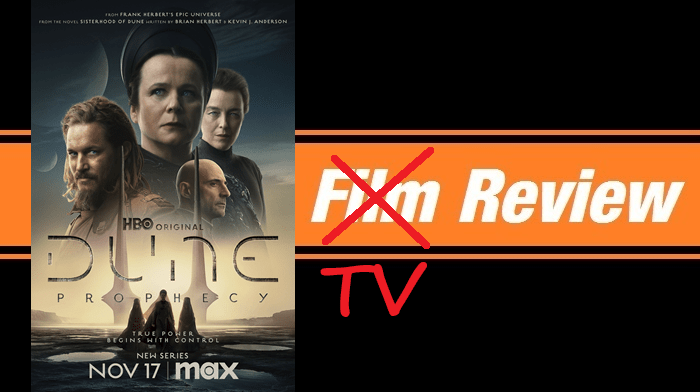
The success of Villeneuve’s films has also opened the doors for further explorations of Herbert’s vast Dune mythology. And that leads to “Dune: Prophecy”, a big-budget HBO series streaming exclusively on MAX. “Prophecy” is a six-episode prequel that focuses on the origins of the Bene Gesserit Sisterhood – a matriarchal sect who hold great power and influence in the universe. Outwardly they individually pose as Truthsayers for each of the major Houses. Secretly they’ve developed a breeding program to manipulate royal bloodlines to their own advantage.
Image Courtesy of HBO
But as its title teases, “Dune: Prophecy” has some interesting connections to the Villeneuve films. I won’t spoil them all here, and to be honest showrunner Alison Schapker wisely doesn’t show all of her cards in this first season. Let’s just say much of the second Dune movie revolves around a specific prophecy devised and planted by the Bene Gesserit on the spice-rich planet of Arrakis. Is Schapker setting up the Missionaria Protectiva’s work on Arrakis which inadvertently gave rise to Paul Atreides as the Kwisatz Haderach?
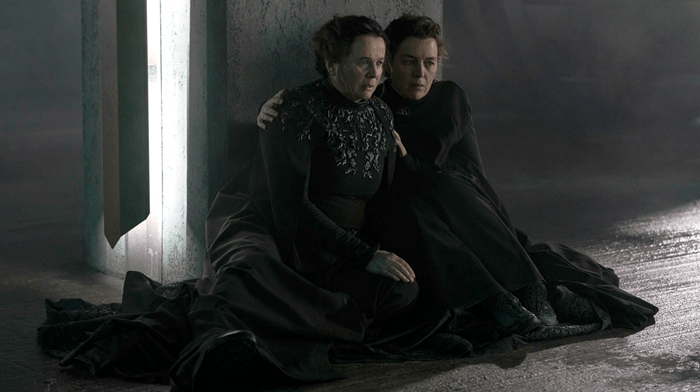
Taking place 10,148 years before the birth of Paul Atreides, “Prophecy” shows us the fledgling Bene Gesserit through the story of two sisters, Valya (Emily Watson) and Tula (Olivia Williams) Harkonnen. The story follows their troubled childhood, their introductions to the sisterhood, and ascent to Reverend Mothers. Though slow out of the gate, lovers of Dune lore will find a lot to soak up especially in the later episodes when things get clearer and connections to the films begin to develop.
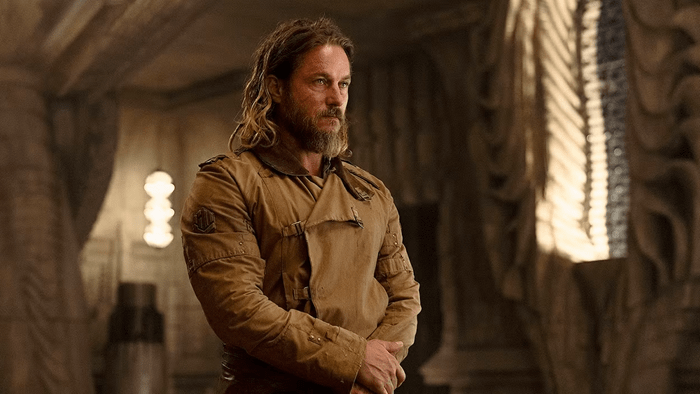
Another key part of the series involves House Corrino and its leader, Javicco (played by Mark Strong). He is the sitting Padishah Emperor of the Known Universe who finds himself managing the fragile peace between the Houses. That peace is put in jeopardy with the arrival of the mysterious Desmond Hart (Travis Fimmel), a soldier believed to have died with the rest of his regiment following a surprise attack on Arrakis. As Desmond methodically wins Javicco’s trust, more is revealed about his dark past and self-serving motives which eventually intersects with the Sisters.
Image Courtesy of HBO
This only scratches the surface of “Dune: Prophecy” and its story which opens far more doors than it closes. But this is television, and with a second season already in the works, we have a lot of Dune to look forward to on big and small screens. Hopefully a second season will offer even more connections to the Villeneuve films while taking the time dig into more unexplored corners of Herbert’s vast world. Schapker and company shrewdly set the table for that.
“Dune: Prophecy” most certainly isn’t the best entry point for newcomers. The series almost demands at least some working knowledge of the Dune universe, particularly as seen through the lens of the Villeneuve films. The series clearly has “Game of Thrones” aspirations which in some ways hamper the early episodes. But it helps in other key ways, namely in its similar grand ambition that shines through in the storytelling, the terrific production design, and costumes. Add in an incredible ensemble and the meatiness of the source material and you have a prequel series that kicks off something that could be truly epic.
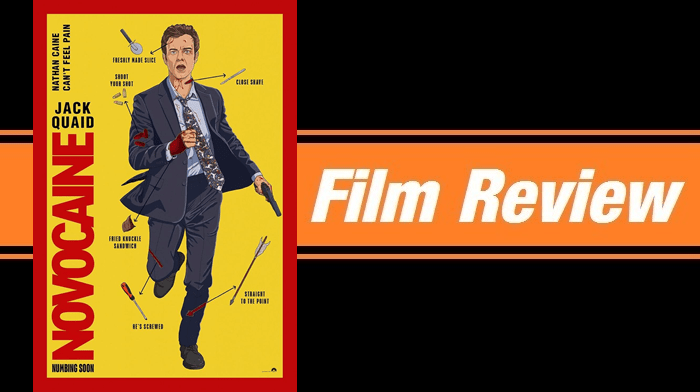
Directors Dan Berk and Robert Olsen team up for “Novocaine”, an outrageous action comedy that squeezes every ounce of humor it can out of its one joke. But lucky for them it’s a pretty good joke and they’re able to get a lot of mileage out of it. They’re even luckier to have Jack Quaid, whose performance is so impressively in-tune with his character that he’s able to keep the film on the road even as its wheels come off in the final act.
Written by Lars Jacobson, “Novocaine” starts by introducing us to Nathan “Nate” Caine, the kind-hearted assistant manager at San Diego Trust Credit Union. He’s a bit antsy and socially awkward with his lone friend being his online video gaming buddy Roscoe who he’s never actually met in person (he’s played by Jacob Batalon who’s doing a variation of the same character he plays in most of his movies). Nate doesn’t go out and he doesn’t date, but he does have a crush on Sherry (Amber Midthunder), a teller at his bank.
Image Courtesy of Paramount Pictures
Here’s the thing – Nate is hiding one whopper of a secret. He has an extremely rare genetic disorder that makes him unable to feel pain. It may sound amazing, but it causes a number of problems that the movie has fun exploring. He opens up about his condition to Sherry after the two become romantically involved. Suddenly Nate’s life is looking up. That is until three heavily armed Santas bust into the bank, steal the money from the vault, and escape with Sherry as their hostage.
After a pretty great setup, the remainder of the movie follows Nate as he takes it upon himself to track down the robbers and rescue the newfound girl of he dreams. Meanwhile two detectives with the San Diego police department (Betty Gabriel and Matt Walsh) follow the trail of carnage while trying to determine if Nate is a hero or in on the heist. Of course Nate’s resistance to pain and natural timidity come into play in a number of wild and genuinely funny ways.
Image Courtesy of Paramount Pictures
“Novocaine” does a decent job finding that elusive balance between action and comedy. The humor ranges from sweet and amusing to laugh-out-loud absurd. And there is no shortage of blood and gore in the action. It doesn’t all land the way it’s intended, but having Quaid at its center is invaluable. He does a little bit of everything including earning our empathy, thrilling us with hard-hitting violence, and making us chuckle at certain points along the way.
Unfortunately things unravel mightily near the end as the movie loses its humor and charm in its blaring action-driven finale. It leaves us feeling as numb as the film’s protagonist, despite our earlier investments. But while its ending may clang, “Novocaine” hits plenty of good notes. It earns enough goodwill along the way, both thrilling and amusing us with its blood-soaked action slapstick while disarming us with its surprisingly big heart. “Novocaine” is in theaters now.
Only three years removed from making the $1.5 billion mega-hit “Top Gun: Maverick”, director Joseph Kosinski is back in a cockpit of a different kind. This time he’s entering the fuel-injected world of Formula One racing with the aptly titled “F1”. Joined by an all-star cast of actors and real-life drivers, Kosinski and company have made a movie with a broad appeal. Whether you’re a racing fan or not, “F1” looks terrific. Just check out the killer new trailer for proof.
Brad Pitt plays Sonny Hayes, a former F1 driver who retired following a devastating crash. He’s persuaded by his old friend and Formula One team owner Ruben Cervantes (Javier Bardem) to come out of retirement and help mentor a young hotshot prodigy (Damson Idris). While the chance to race again is too good to pass up, the kid’s cockiness proves to be more than Sonny bargained for. The great Kerry Condon, Tobias Menzies, and Shea Whigham also star in what looks to be an exhilarating experience.
“F1” races into theaters on June 27th. Check out the trailer below and let me know if you’ll be seeing it or taking a pass.
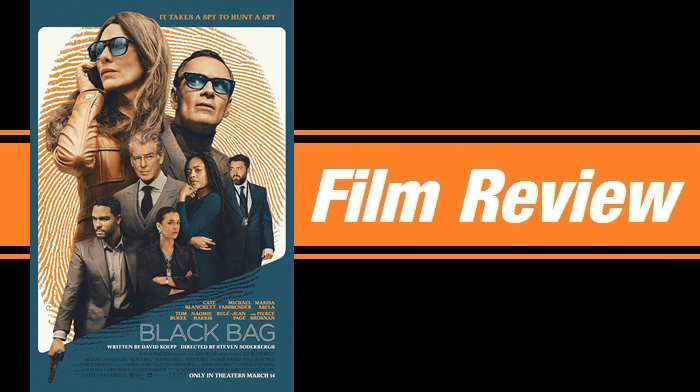
Two Steven Soderbergh movies on the big screen in less than two months – we cinema lovers are eating good. And while it’s true that I didn’t fully go for his January release, “Presence”, Soderbergh always has something compelling to offer. And when he hits his mark the results can be pretty magical. Such is the case with “Black Bag”, a tight and taut spy thriller that has the flavor of an old school genre film yet a freshness all its own.
“Black Bag” could sell itself on its two brilliant leads alone – Cate Blanchett and Michael Fassbender. Both are supremely talented and endlessly versatile while oozing charisma out of every pore. But then you add in Soderbergh whose signature style and precision energizes every facet of the storytelling, from his deft handling of the narrative to his striking visual approach. It all clicks into place with “Black Bag”.
Image Courtesy of Focus Features
Written for the screen by David Koepp, “Black Bag” follows Kathryn St. Jean (Blanchett) and George Woodhouse (Fassbender), a happily married and deeply devoted couple who both happen to be high-level intelligence agents. Soderbergh wastes no time getting the story underway, sucking us in with a killer opening tracking shot of George entering a night club to meet with a contact. We learn there is a traitor in their agency and George is given a list of five potential suspects, one of which is Kathryn.
From there the movie follows George’s investigation of the five suspects with most of his attention aimed at Kathryn, especially as clues implicating her begin to mount. As the mystery unfolds, two key questions emerge. Is Kathryn guilty of treason and where do George’s loyalties ultimately lie – to his marriage or to his country? Soderbergh and Koepp have us studying the screen, hanging on every word and measuring every reaction in hopes of finding answers.
One of the biggest treats in “Black Bag” is its heavy reliance on character over action. And it all starts with George and Kathryn. He is intensely focused, detail obsessed, and has a very specific disdain for lying. She is disarmingly suave, both captivating and beguiling, and impossible to read, even for an agent as seasoned as her husband. To no surprise Fassbender and Blanchett have an electric chemistry and Soderbergh smartly utilizes it to the nth degree.
Image Courtesy of Focus Features
The four other suspects within the agency all get their due as well. They’re introduced to us during a superbly executed dinner party scene at George and Kathryn’s home. James Stokes (Regé-Jean Page), Zoe Vaughan (Naomie Harris), Clarissa Dubose (Marisa Abela), and Freddie Smalls (Tom Burke) all think they have been invited over for a casual get-together. Instead they’re unknowingly a part of George’s investigation which turns the evening into something completely unexpected.
From there, all of the characters impact the story in interesting ways. Koepp’s sizzling dialogue and Soderbergh’s crisp pacing keep things gripping for the duration of the film’s compact 94 minutes. And while once again serving as his own cinematographer, Soderbergh surrounds this tightly plotted thriller with the kind of visual craftsmanship that has become a hallmark of his movies. Toss in the delectable Fassbender and Blanchett, and you have one of the best films of this young movie year.
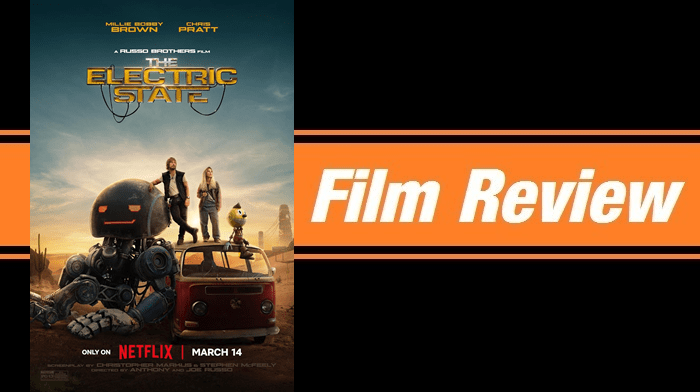
You can be certain that some will go into “The Electric State” with their knives already sharpened. Afterall, it’s a $320 million streaming blockbuster from Netflix which makes it an easy target. But this latest small screen creation (that would look amazing on the big screen) is nowhere near the trainwreck it has been tagged as. But it also doesn’t live up to its status as one of the most expensive movies ever made.
With “The Electric State”, the directing duo of Anthony and Joe Russo continue to find their post-Marvel footing, reteaming with frequent collaborators, screenwriters Christopher Markus and Stephen McFeely. This time they’re adapting Simon Stålenhag’s dystopian sci-fi graphic novel of the same name after acquiring the rights back in 2017. They’ve brought this massive undertaking together with a hefty backing from Netflix who apparently handed the brothers a blank check.
From the very start you’ll notice “The Electric State” sports a star-studded ensemble providing both live-action performances and voicework. The featured talent includes Millie Bobby Brown, Chris Pratt, Ke Huy Quan, Stanley Tucci, Giancarlo Espositio, Woody Harrelson, Anthony Mackie, Colman Domingo, Jenny Slate, Brian Cox, Alan Tudyk, Woody Norman, and Jason Alexander among others. Just listing the names gives you a good sense of where a lot of the money went.
Image Courtesy of Netflix
As for its storytelling, “The Electric State” struggles to find its own voice. So much of its story follows a familiar and well-traveled trajectory. We feel three steps ahead of it the entire way. There’s also no nuance in the handling of its themes. They’re mostly plastered on the surface rather than thoughtfully explored through the characters and their journeys. So that leaves the movie leaning heavily on its star power and impressive visuals.
Its 90’s set story takes place in the aftermath of a war between humans and robots. We learn humans had made robots the backbone of the world’s workforce, shaping them to do whatever labor mankind desired. Eventually the robots, led by the noble Mr. Peanut (voiced by Harrelson), began pushing for freedom and equality. But a paranoid humanity resisted which led to a global war.
After much fighting, the humans finally gained the upper-hand with the invention of the neurocaster by a wealthy CEO, Ethan Skate (Tucci). While the technology empowered mankind to win the war, Slate turned it into a virtual reality network that connected the entire world. Soon humans became obsessed with neurocasters, losing themselves in the VR worlds it created. Meanwhile robots have been banished, either disassembled or sent off to the reservation styled Exclusion Zone.
It’s within this world that we meet Michelle (Brown), a ward of the state ever since she lost her parents and was separated from her brilliant but anxious kid brother, Christopher (Woody Norman). Late one evening Michelle is shocked when a small robot in the form of Christopher’s favorite cartoon character, Kid Cosmo (voiced by Alan Tudyk) sneaks into her room. Within the robot is a part of her brother’s consciousness (at least I think) who tells Michelle he desperately needs her help.
Image Courtesy of Netflix
So Michelle sets out for the west coast to find, rescue, and reunite with her brother, guided by an illegal robot who draws all kinds of unwanted attention. But she finds help in an unexpected place – a smuggler named Keats (Chris Pratt in a hideously bad mop) and his robot sidekick, Herman (voiced by Anthony Mackie). They agree to escort Michelle and her Cosmo-bot across the war-torn wasteland of the Midwest towards Seattle. But of course there are plenty of dangers along the way from rogue robots to Ethan Skate, the nefarious CEO who we quickly learn is the movie’s big baddie.
To its credit, “The Electric State” looks amazing thanks in large part to cinematography Stephen F. Windon and the VFX team led by supervisor Matthew Butler. There is an incredible amount of detail put into the world from the retrofuturistic cities to the rust and grime of old battlefields. There are also tons of cool and amusing robot designs. Similarly, the action scenes are well choreographed and shot, incorporating both style and humor into the sequences.
If only the story had more weight. If only it made us feel something for the characters. If only it made the stakes seem as high as we’re told they are. If only its themes of tech dependency, family, and human connection were more seriously treated. Instead we’re left with stunning visuals, a slew of needle drops, and a great cast (some of whom are woefully underused). That was enough to hold my attention and keep me mildly entertained. But it also left me frustrated. The Russos have created a fascinating world that feels like it’s still waiting to be discovered. And no matter how hard I tried, I never felt a connection to it.